
Reviewed · WALKING TOURS IN VIENNA
Vienna: Walking Tour of the Historic Ringstrasse
Vienna’s Ringstrasse is more than a handsome boulevard. It is a giant 19th-century statement in stone, built after Emperor Francis Joseph ordered the old city walls torn down. This private walk helps you read that statement, from public museums and theaters to oversized palaces paid for by bankers eager for status. I especially like the mix of architectural styles and the short pauses in gardens where flower beds and statues give your eyes a rest. The tour also adds human stories, including the Ephrussi family linked to The Hare with the Amber Eyes. The main consideration is its fixed two-hour length: with so much to see, some stops receive only a quick explanation.
I like the private format for groups of up to eight, since you can ask about a building, family, or statue without competing with a crowd. The route is also wheelchair accessible, and the guide can lead you in English, German, or Polish. Still, one past booking found the content too thin, so the quality may depend on the individual guide and how actively you ask questions.
Key details of Vienna’s Ringstrasse walk
- A grand imperial building project: Follow the boulevard created after the demolition of Vienna’s city walls.
- Palais Ephrussi: Hear about the Jewish banking family whose story appears in The Hare with the Amber Eyes.
- A concentrated route: See Votive Church, the University, City Hall, Burgtheater, Parliament, Heldenplatz, museums, gardens, and the Opera House.
- Private attention: The guide leads only your group, with a maximum of eight people.
- Three guide languages: Choose English, German, or Polish when available.
- Useful practical limit: The walk lasts two hours, and a public transport ticket is not included.
Vienna’s Ring begins where the city walls once stood
Start at the Liebenberg Monument on Mölker Bastei, a location that quietly points to Vienna’s older defenses. You should arrive 10 minutes early, since the tour begins on foot and the group needs to set off together.
The story starts about 150 years ago, when Emperor Francis Joseph ordered the city walls demolished. His plan was not simply to make room for traffic. He wanted a grand belt of public buildings that would give imperial Vienna a new face.
That vision explains the unusual range of buildings along the Ringstrasse. Opera, theater, museums, university buildings, the Academy of Fine Arts, Parliament, and City Hall were all part of the plan. The route was designed as a complete urban ensemble, with broad roads, trees, and separate paths for carriages, riders, and pedestrians.
I find this background useful because it turns a long row of impressive facades into a planned political project. You are not just looking at isolated monuments. You are seeing how Vienna wanted to present power, culture, education, and civic life at the same time.
More Walking Tours in Vienna
- Vienna: Guided Walking Tour of City Center Highlights
★ 4.7 · 4,989 reviews - Vienna: Vienna Central Cemetery Guided Walking Tour
★ 4.8 · 3,307 reviews - Vienna: Guided Walking Tour of City Highlights & Hidden Gems
★ 4.9 · 2,180 reviews
Palais Ephrussi brings the grand boulevard down to earth
Palais Ephrussi is one of the most personal stops on the route. It was commissioned by a wealthy Jewish banking family, and its scale reflects the social competition of Ringstrasse Vienna. Industrialists and bankers used these new addresses to display their wealth, gain influence, and sometimes secure noble titles.
The palace matters for another reason. The fate of the Ephrussi family is described in The Hare with the Amber Eyes, a book that traces the family’s fortunes and losses. Your guide can use the building to explain how Vienna’s elegant public face was tied to private families whose lives changed sharply with the political upheavals of the 20th century.
This is the kind of detail that improves a walking tour. A palace can look remote when you only photograph its columns and roofline. Once you hear about the family who commissioned it, the building becomes easier to remember.
The route also gives room for the less polished side of the project. Artists, architects, planners, bankers, and industrialists came to Vienna from across Europe. Poor workers arrived too, often laboring in difficult conditions to build the city that wealthy families would inhabit. That contrast is essential. Ringstrasse architecture was grand, but the work behind it was not grand for everyone.
Votive Church and the University show Vienna’s public ideals
The Votive Church is one of the route’s major visual markers. Its Gothic form adds a strong contrast to the classical and historicist buildings nearby. The tour is especially useful here because the Ringstrasse is known for combining styles rather than following one clean architectural rule.
You can expect the guide to point out how the buildings borrow from earlier periods. Some look medieval, some classical, and some draw from Renaissance or Baroque ideas. The result can feel overwhelming at first. A good explanation gives you a way to sort the details instead of treating every facade as one large blur.
The main building of the University of Vienna follows the public purpose of the Ring. It represents education and scholarship, placed beside other institutions meant to shape civic life. You will hear background information about the architects, planners, and people who were drawn to Vienna by the scale of the project.
One strength of a private tour is that you can stop and ask what you are seeing. If a building’s style seems unclear, ask the guide to compare it with the church or palace nearby. The supplied tour languages are English, German, and Polish, so confirm your preferred language when booking.
City Hall and Burgtheater create a civic theater
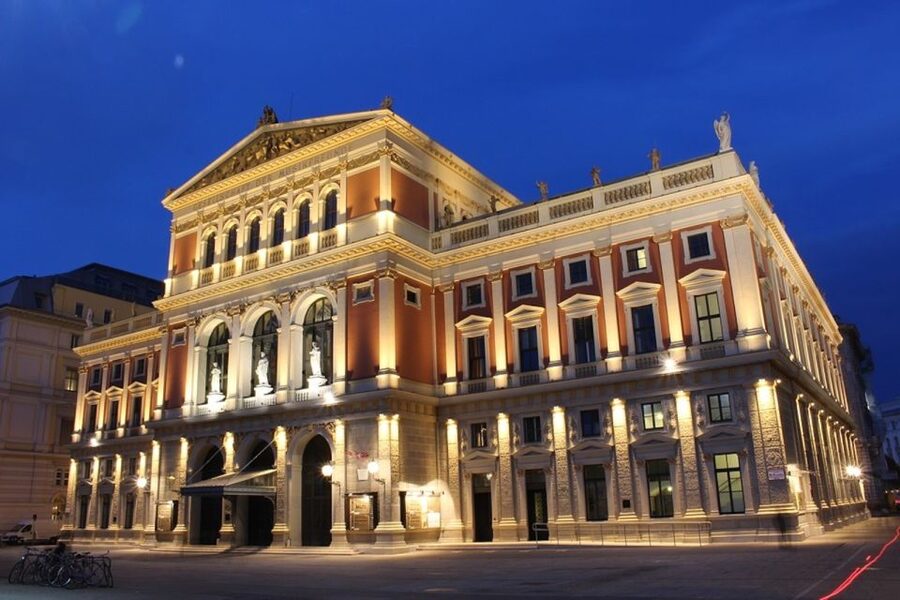
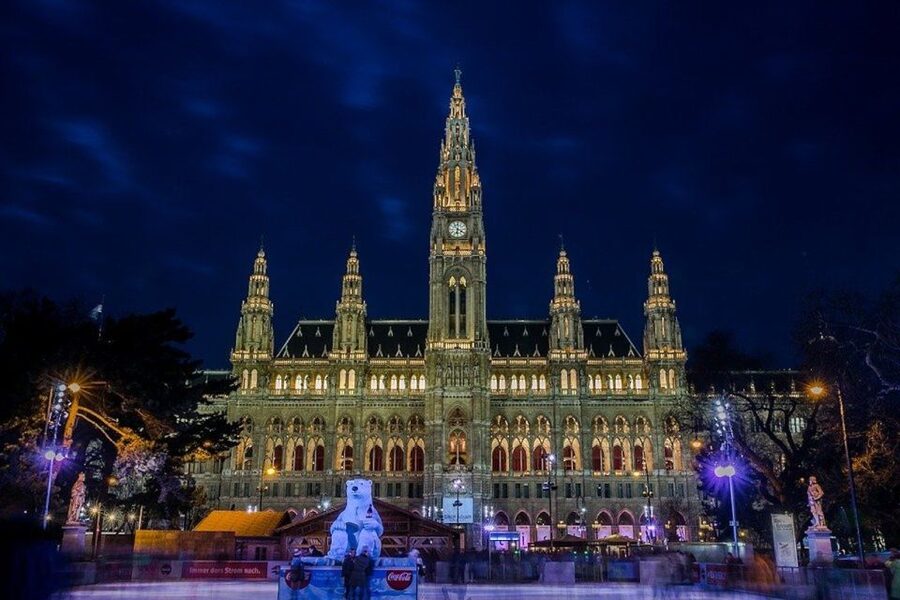
City Hall is one of the Ringstrasse’s most recognizable public buildings. Its size and decoration fit the boulevard’s grand ambitions, but its function is practical: it represents municipal government. The building helps explain how Vienna’s civic identity was given a monumental setting.
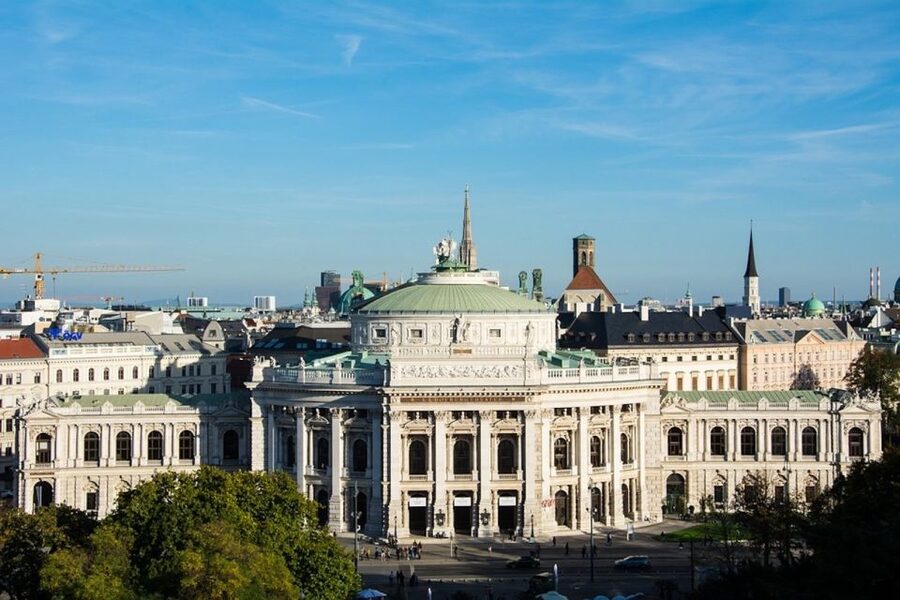
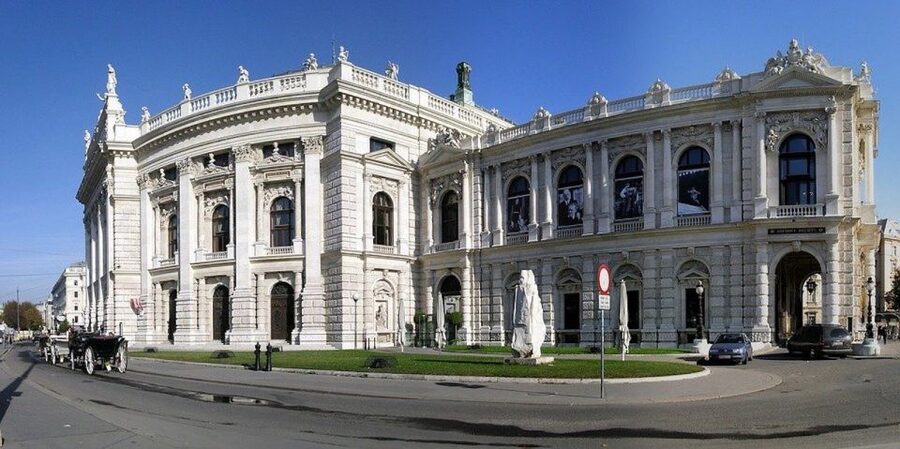
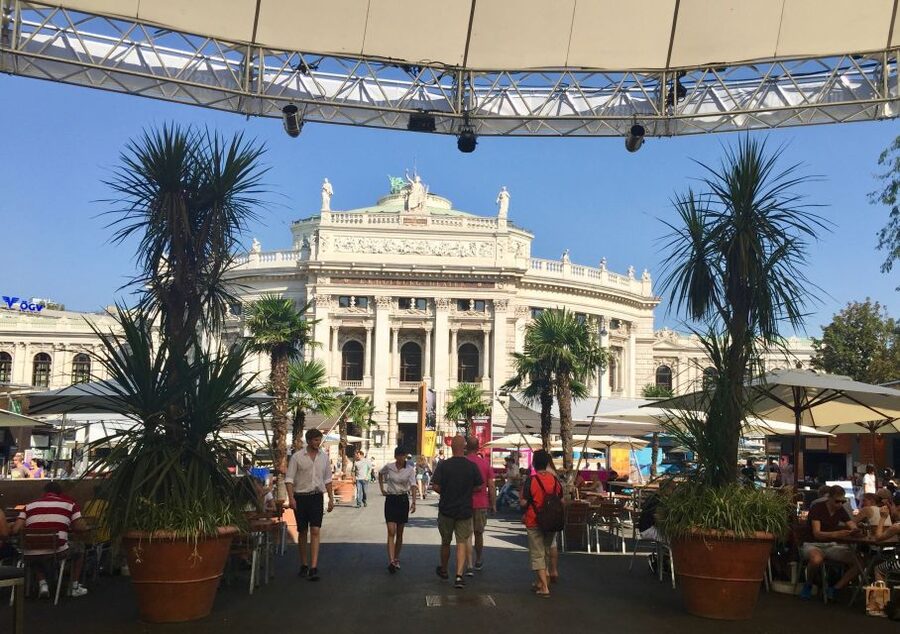
Near it, Burgtheater adds the world of performance. This is where the Ring’s cultural purpose becomes easy to see. Opera, theater, museums, and public institutions were placed along the new boulevard so the city could present itself as a center of art and learning.
The route is not an interior sightseeing program. The included service is a guided city walk, so you should expect exterior views and explanations rather than extended visits inside every building. That is important if you are hoping to tour the interiors of City Hall, the theater, Parliament, or the museums.
I would use this walk as an orientation tour. You get a clear sense of where the main buildings are and why they were built. Later, you can choose which interiors deserve your time, if your wider Vienna schedule allows.
More Historical Tours in Vienna:
- Vienna: Time Travel and Magic Vienna History Tour
★ 4.6 · 3,879 reviews - Vienna: World War II Historical Walking Tour
★ 4.8 · 1,772 reviews - Vienna Historic Center Small Group Walking Tour
★ 5.0 · 1,746 reviews - Time Travel-Magic Vienna History Tour Ticket
★ 4.5 · 1,099 reviews
Gardens and statues provide welcome breathing space
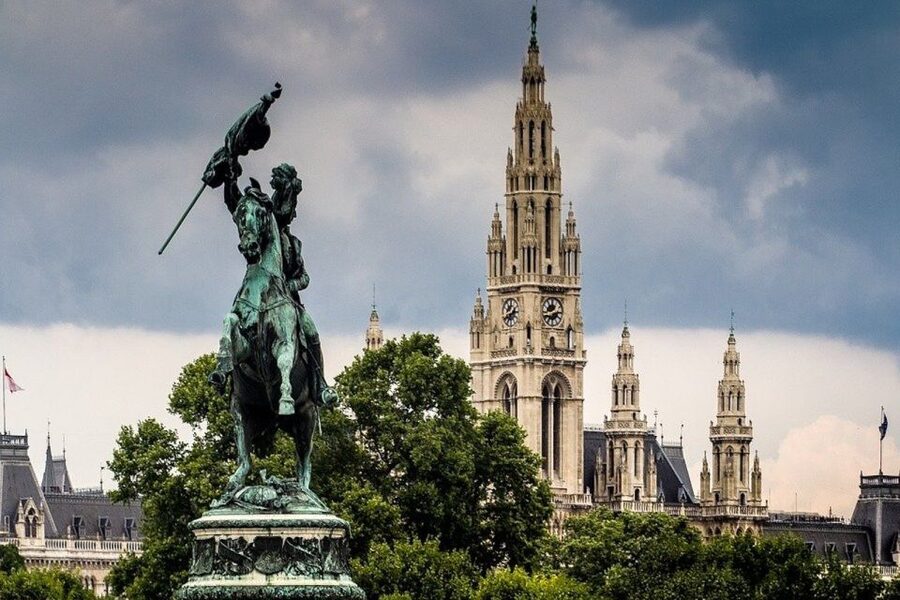
The Ringstrasse is not wall-to-wall stone. The tour includes short breaks in spacious gardens, with flower arrangements and statues offering a change of pace. These pauses matter during a two-hour walk, especially when the architecture begins to pile up.
Volksgarten is among the green spaces on the route. Its flowers and statues give you a quieter setting for the guide’s stories. You can look back toward the surrounding buildings and see how the planners used open space to soften the boulevard’s monumental scale.
The statues also provide small human anchors. You may encounter the monument to Mayor Liebenberg and the statue of Pallas Athene, among others. These figures represent different parts of Vienna’s political and cultural image, and they give the guide more than facades to discuss.
I like this part of the itinerary because it prevents the walk from becoming a march past buildings. You get a few minutes to look, take photographs, and ask questions. If the weather is poor, bring suitable clothing. One guide kept the tour engaging in rainy conditions, but open-air walking remains more pleasant with a coat or umbrella.
Parliament and Heldenplatz reveal power in different forms
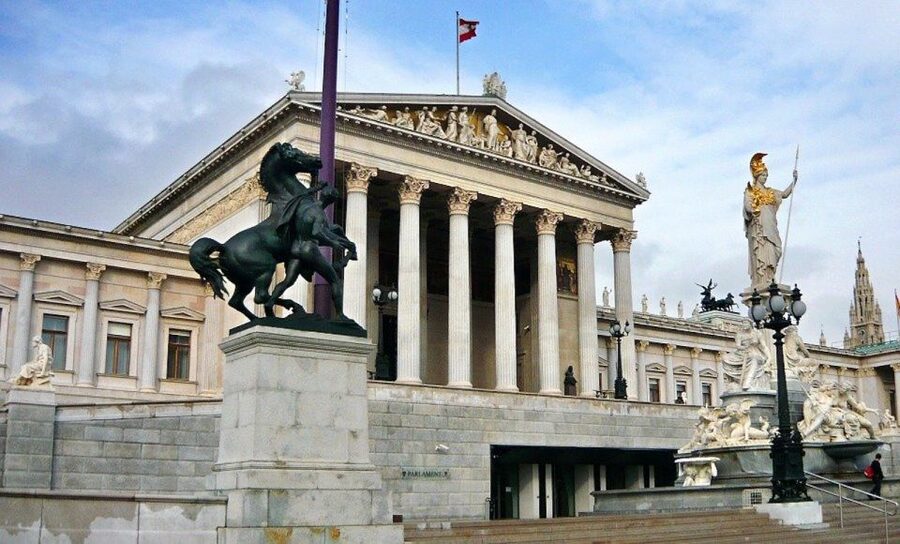
Parliament continues the Ringstrasse theme of public institutions presented in monumental form. Its decoration and scale were meant to give political life a serious setting. Your guide can explain how the building fits into the larger plan rather than treating it as a single photo stop.
Heldenplatz shifts the mood. It is an open ceremonial space connected with Vienna’s imperial past. Here, the scale of the city’s public architecture becomes especially clear. Wide open ground, monumental buildings, and formal views all work together to create a sense of power.
This is where I would pay close attention to the guide’s stories. The tour promises background about famous architects and artists, wealthy patrons, and poor workers. Those details help you understand that the Ring was made by many different kinds of people, even though the finished buildings mainly celebrate rulers, institutions, and the wealthy.
The amount of detail can vary. One booking described the content as thin, while another found the tour very informative and said the guide handled questions well. You can improve your experience by asking about the building’s style, its original purpose, and who paid for it. A private group gives you room to steer the conversation.
Museums and the Opera House complete the grand procession
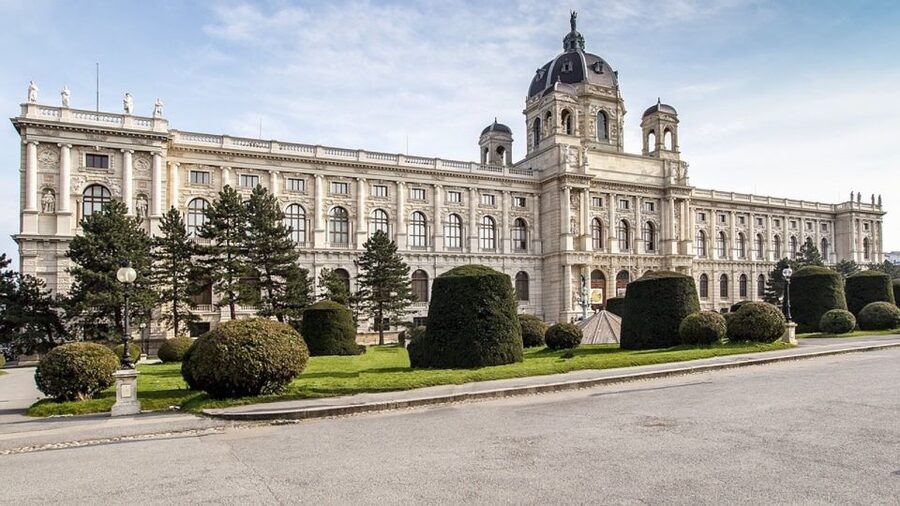
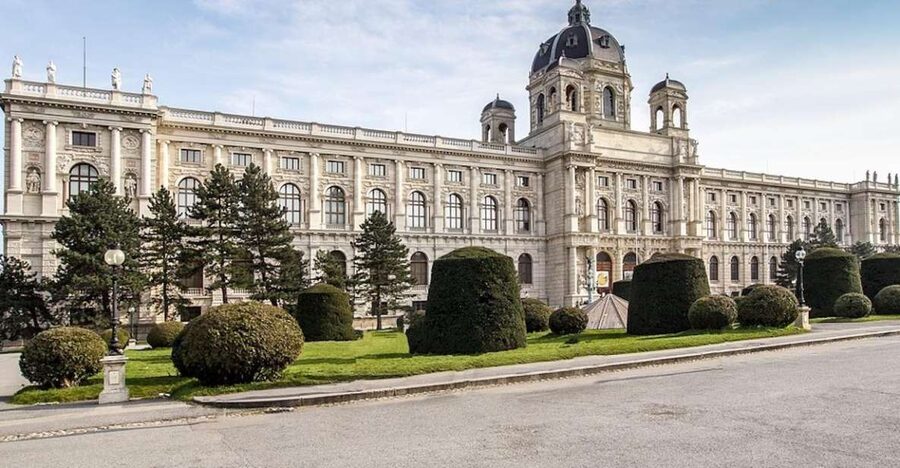
The museum area adds another layer to the route. These buildings were part of the emperor’s plan to create a cultural center around the new boulevard. Even from outside, their scale helps you understand the importance Vienna placed on art, learning, and public display.
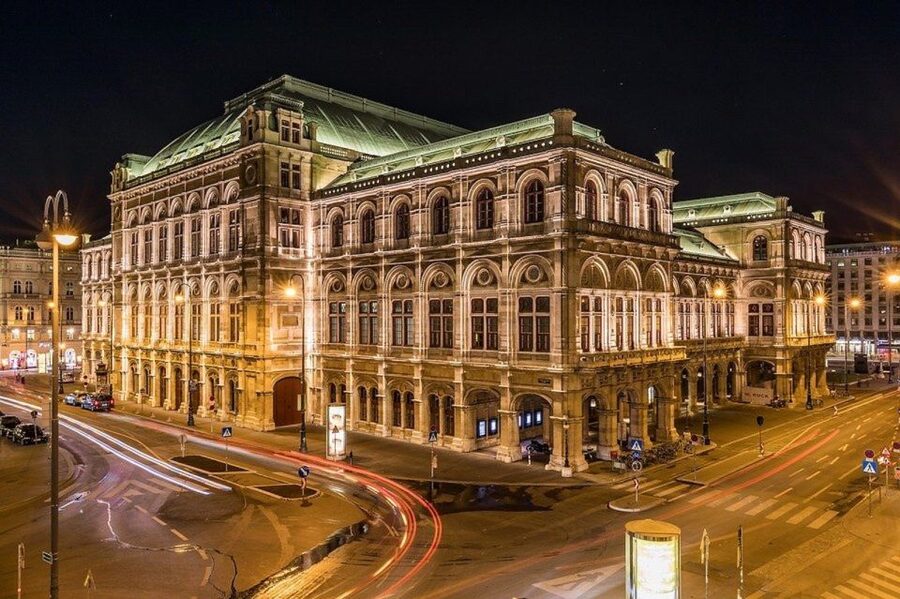
The tour ends near the Opera House, a fitting finish to a route built around culture and ceremony. Ending there also gives you a useful central location for the rest of your day. The route does not include a hotel transfer, so you will need to make your own way to the starting point and continue independently after the Opera.
Because the walk finishes after two hours, you can pair it with a later visit to an interior attraction. Just do not assume the guided walk itself includes admission to the Opera, museums, Parliament, or other buildings. The listed inclusion is the guided city tour.
What the private format is worth at $353
The price is $353 per group of up to eight, not per person. That makes the value depend heavily on your party size. For eight people, the cost works out to about $44 per person. For four people, it is about $88 each. For two people, it becomes a much more expensive way to see the Ring.
The private setup is most attractive for families, friends, or a small group who want their own pace and language. You can ask about the Ephrussi family, compare architectural styles, or pause for photographs without holding up a large public group.
For solo visitors or couples, the value is harder to defend unless private guiding is a priority. The Ringstrasse is easy to admire independently, and the tour lasts only two hours. You are paying for interpretation, route planning, and personal attention rather than admissions or transport.
A public transport ticket is not included. Bring one, as the practical information for the activity specifically lists a public transport ticket among the things to bring. Hotel pickup and drop-off are also excluded.
The booking terms are flexible: you can cancel up to 24 hours before the activity for a full refund, and you can reserve now and pay later. Those terms help if your Vienna plans are still shifting, but they do not change the basic price calculation.
Who will get the most from this walk
I would recommend this experience to you if you want a focused introduction to Vienna’s Ringstrasse and prefer a guide who can connect buildings with people and politics. It suits first-time visitors who want to understand the city’s grand central boulevard before choosing which buildings to enter.
It is also a good fit for small groups with different interests. One person can ask about architecture, another about the wealthy families who built palaces, and another about gardens or statues. The guide’s ability to work in English, German, or Polish adds practical value.
You may want something else if you prefer long interior visits, museum time, or a slower photography walk. Two hours passes quickly, and the route covers many major sights. The tour offers a broad reading of the Ring rather than a detailed study of every building.
The wheelchair-accessible format is helpful, though the activity remains a city walk. If mobility is a concern, confirm the exact route and any surface conditions with the provider before booking. The meeting point is Liebenberg-Denkmal, Mölker Bastei 8, 1010 Vienna.
My advice before you book
Arrive 10 minutes early and have your public transport ticket ready. Wear comfortable shoes, since the experience is entirely on foot, and bring weather protection for the garden and boulevard sections.
Prepare two or three questions. Ask who commissioned a building, why its style was chosen, and what happened to the people connected with it. The guide can then shape the experience around your interests, which is one of the strongest reasons to choose a private group.
The tour has a solid 4.7 rating from 10 bookings, with especially strong praise for guides who notice small details and share stories about palace owners. One German-language booking found the content lacking, so I would treat the guide as the key variable. If you want the best result, be clear about your preferred language and ask for the level of historical detail you want.
Should you book Vienna’s Ringstrasse walk?
Book it if you are traveling with a group of up to eight and want a personal, story-driven introduction to Vienna’s grand boulevard. The combination of public buildings, gardens, statues, architectural contrasts, and the Ephrussi family story gives the walk more substance than a simple list of sights.
Think twice if you are a couple watching costs or want to spend most of your time inside museums and palaces. At $353, the tour makes the most financial sense when divided among a larger group. For the right party, it is a practical way to understand why Vienna’s Ringstrasse looks the way it does, and who paid the price for making it grand.
FAQ
How long does the Vienna Ringstrasse walking tour last?
The tour lasts two hours.
Where does the tour begin?
It begins at the Liebenberg Monument, Mölker Bastei 8, 1010 Vienna.
Where does the tour end?
The walk ends near the Vienna Opera House.
How early should I arrive?
You should arrive at the meeting point 10 minutes before the activity starts.
What languages are available?
The live guide is available in English, German, or Polish.
Is this a private tour?
Yes. It is a private group experience for up to eight people.
Is the tour wheelchair accessible?
Yes. The activity is listed as wheelchair accessible.
Is public transport included?
No. A public transport ticket is not included, and you should bring one.
Are hotel pickup and drop-off provided?
No. Hotel pickup and drop-off are not included.
Can I cancel for a full refund?
Yes. You can cancel up to 24 hours in advance for a full refund.
Can I reserve now and pay later?
Yes. The activity allows you to reserve your place and pay later.
Recently added around Vienna
- Vienna: Private tour Mauthausen and Linz★ 4.1 · 3 reviews
- 2-Day Prague Tour from Vienna with private Transfers and Lunches★ 5.0 · 3 reviews
- Vienna Self Guided Sherlock Holmes Murder Mystery Game★ 4.5 · 3 reviews
- Vienna Private Schönbrunn Palace Tour, Extra Rooms and Gardens★ 5.0 · 3 reviews
- Salzburg and Lake Region Private Day Trip from Vienna★ 5.0 · 3 reviews
- Small-group Vienna Wine Tour★ 5.0 · 3 reviews
- True Crime mobile puzzle rally Vienna★ 4.0 · 3 reviews
- Exploring the Gutenstein Alps★ 5.0 · 3 reviews
Walking Tours in Vienna, compared.

Guided Walking Tour of City Center Highlights
Read our review →
Guided Walking Tour of City Highlights & Hidden Gems
Read our review →
Vienna Historic Center Small Group Walking Tour
Read our review →


Ghosts and Legends Guided Nighttime Walking Tour
Read our review →

Browse the lists this tour appears in