
Reviewed · VIENNA TOURS
Time Travel-Magic Vienna History Tour Ticket
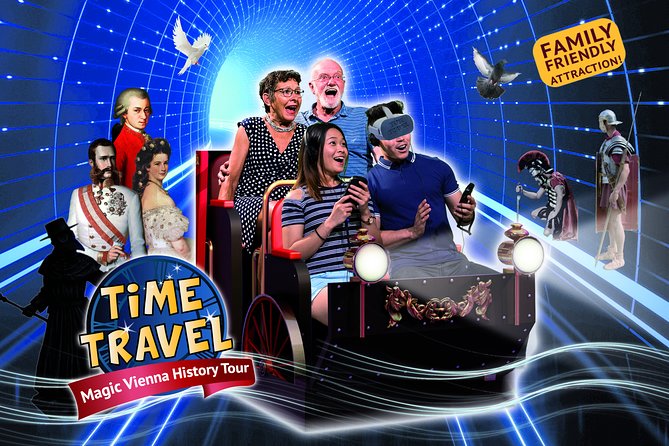
Vienna’s past arrives here by 5D cinema, virtual reality, animatronics, and short rides, not by a long lecture. You move from Roman Vindobona to Habsburg courts, plague-era streets, Mozart and Strauss, and a WWII air raid in about an hour. It is a lively first look at the city, especially useful when you want history without another formal museum.
I like the quick sweep through many periods, and I like the mix of technology and physical sets. The VR, wax figures, holograms, simulated rides, and air-raid shelter create variety, while host Marie has been singled out as friendly and helpful. The main drawback is that the history is simplified and brief, so adults seeking a detailed account of Vienna may find it light.
Key points to know before you book
- Roman Vindobona to modern Austria: The show covers ancient Rome, medieval plague, the Habsburgs, music, WWII, and the return to modern Vienna.
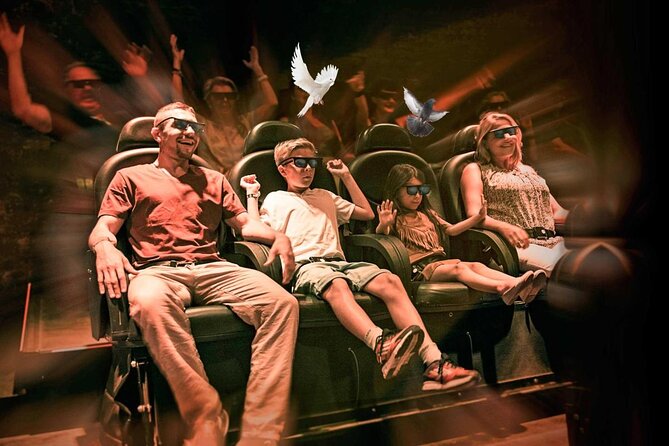
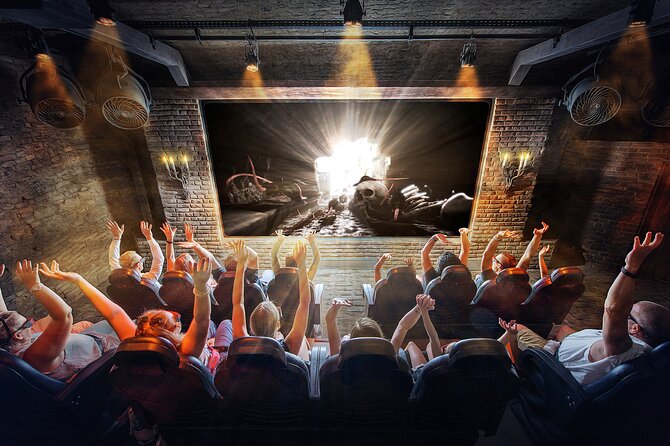
- Several kinds of special effects: Expect a 5D cinema, VR goggles, animatronics, wax figures, video, holograms, and simulated rides.
- Good for families: Children and teenagers have plenty to watch and do, though a noisy group can make the translated audio harder to follow.
- A fast orientation: In roughly one hour, you get a broad introduction to Vienna’s people, major events, and landmarks.
- Ten audio languages: English, Spanish, Italian, French, Japanese, Chinese, Russian, Hungarian, Polish, and Czech are available.
- Central indoor stop: The experience takes place in the historic vaults of the Michaelerkloster, near public transportation and central sights.
A fast trip through Vienna’s long story
Time Travel Vienna is best understood as a history show with moving parts. It does not ask you to stand quietly beside display cases and read panels. Instead, you pass through a series of set-piece rooms, each using a different way to present the city’s past.
That format matters when you are visiting Vienna with children, or when you have only a short stay and want basic context before seeing the city itself. You get a broad timeline in one sitting, with enough names and events to make later sightseeing more meaningful.
The tradeoff is depth. The show offers glimpses rather than a full historical study. If you already know Austrian history, some scenes may feel familiar or too simple. If you know little about Vienna, the quick pace can leave you wanting more explanation.
The tour is held in the old vaults of the 400-year-old Michaelerkloster. That setting gives the experience a real historic backdrop, even though most of the presentation relies on modern effects. It is also a useful indoor activity when you need a break from churches, palaces, and city streets.
More Historical Tours in Vienna:
- Vienna: Time Travel and Magic Vienna History Tour
★ 4.6 · 3,879 reviews - Vienna: World War II Historical Walking Tour
★ 4.8 · 1,772 reviews - Vienna Historic Center Small Group Walking Tour
★ 5.0 · 1,746 reviews
Roman Vindobona gives Vienna a starting point
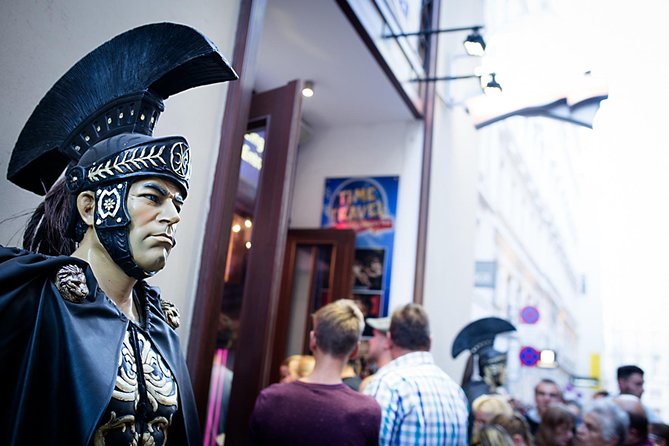
The journey begins with Roman Vienna, known as Vindobona. This is an important starting point because Vienna was not created by the Habsburgs alone. The Roman camp provides the earliest layer in the show’s story and helps you see the city as part of a much older European route.
You should expect a short, visual presentation rather than a detailed archaeological lesson. The technology lets you picture the Roman period quickly, then moves you onward through the centuries.
That speed is part of the appeal. You are not spending an hour on a single era. You are getting a timeline that shows how Vienna changed from military settlement to medieval city, imperial capital, musical center, and modern European capital.
The plague scene adds a darker turn
The medieval section takes you toward the plague-hit city and a plague pit. This is one of the more memorable changes in mood. Vienna is often presented through grand palaces, elegant music, and imperial ceremony, but disease and death were also part of city life.
The plague sequence gives the tour some needed variety. It prevents the show from becoming a parade of emperors and composers. The presentation is designed to be felt through effects and atmosphere, so it may be more striking than a simple explanation on a wall.
You should keep the tone in mind if you are visiting with a sensitive child. One teenager was reportedly frightened during the experience, although the visit still became enjoyable. The scenes are theatrical, but the show does touch on serious subjects.
The Habsburgs arrive with spectacle
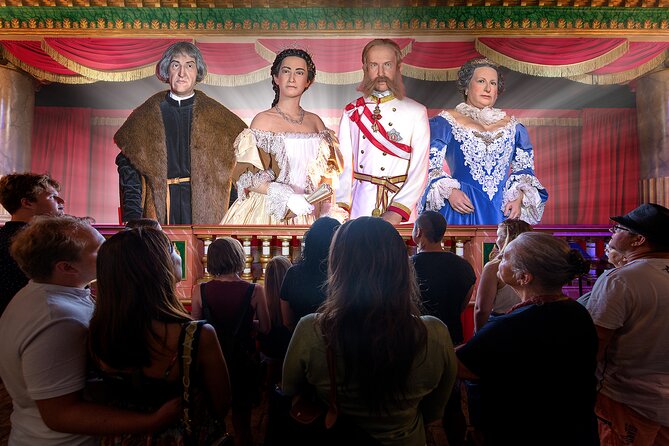
The Habsburg period is a central part of any introduction to Vienna. Here, you follow the dynasty through visual scenes rather than a conventional palace tour. You get a sense of how the imperial family shaped the city and why Vienna became known for court life, ceremony, and power.
This section works best as preparation for places such as the Hofburg and Schönbrunn. The show will not replace those visits. It gives you a basic framework, so you can recognize the Habsburg story when you later see imperial apartments, grand courtyards, or royal portraits.
The presentation is light in tone. It aims to keep you moving and entertained rather than explain every succession, war, or political change. That makes it approachable for families, but less satisfying for anyone hoping for a serious imperial history lesson.
A few more Vienna half-days to weigh up
- Vienna: Vivaldi’s Four Seasons Concert in Karlskirche
★ 4.7 · 14,951 reviews - Vienna: Spanish Riding School Training
★ 3.9 · 9,281 reviews - Vienna: Skip-the-cashier-desk-line Giant Ferris Wheel Ride
★ 4.5 · 7,859 reviews - Vienna: Schönbrunn Palace & Gardens Skip-the-Line Tour
★ 4.7 · 7,739 reviews
Mozart and Strauss arrive by spinning waltz car
Vienna’s musical past gets one of the show’s most playful treatments. You meet Mozart and Strauss, then ride a spinning waltz car through the city’s musical heritage.
This is a clever choice because music is not just another topic in Vienna. It is part of how the city presents itself. The spinning ride turns that idea into a physical experience, giving children and adults something to remember beyond a list of composers.
The ride is also a good example of the show’s limits. You get an entertaining introduction to Vienna’s musical identity, but not a concert or a serious account of the composers’ lives. Think of it as a spark for later exploration. Afterward, you may be more inclined to look for a concert, a composer memorial, or the places associated with Vienna’s musical tradition.
The WWII air raid shelter changes the mood
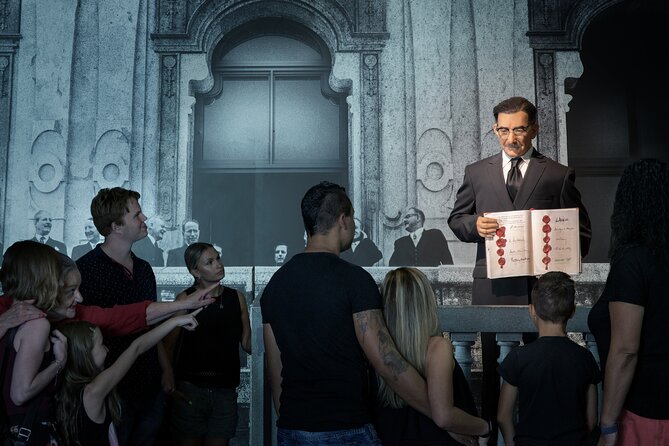
One of the strongest scenes is the original air raid shelter. The experience places you in the setting of a bombing raid and later recalls the declaration that Austria is free.
This part gives the show a more serious edge. Imperial Vienna and waltz music can make the city’s past seem polished and romantic. The air-raid shelter reminds you that the twentieth century brought fear, destruction, and political change.
The simulated raid has been described as realistic and thought-provoking. It is still a staged presentation, but the physical shelter gives it more weight than a simple video. The treatment of WWII is brief, however. If this period is your main interest, you should not expect a full account of the war or Austria’s complicated twentieth-century history.
Virtual Vienna arrives on a fiaker ride
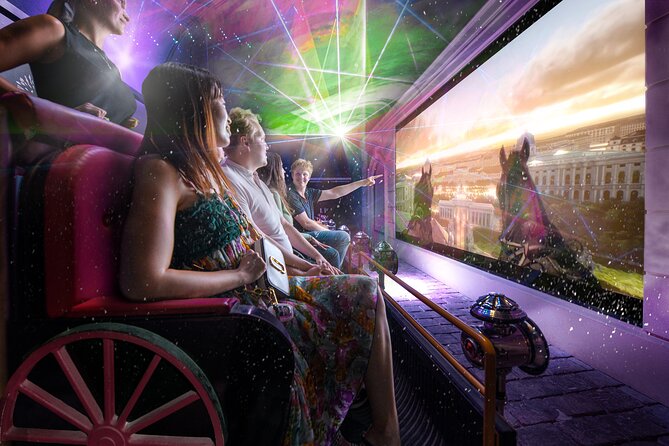
Near the end, a magical carriage ride brings you back toward the present. You also get a virtual fiaker ride that shows major Vienna landmarks in a way you cannot experience from a real horse-drawn carriage.
This is one of the most useful parts for first-time visitors. You see famous places from a different angle, and the virtual format lets the attraction move quickly across the city. It gives you an overview of what you may want to see on foot afterward.
The ride is not a replacement for walking through Vienna. A real visit gives you time to notice street details, enter buildings, and set your own pace. Still, the virtual view can help you get your bearings fast, especially at the beginning of a short visit.
How the audio translation works
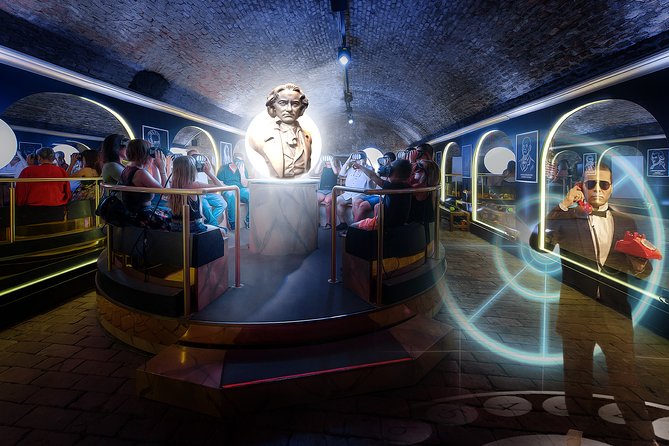
German commentary is presented live and translated through headphones into ten languages. English is included, along with Spanish, Italian, French, Japanese, Chinese, Russian, Hungarian, Polish, and Czech.
This setup lets the show retain a live German presentation while giving you access to a language you understand. The audio is important because several rooms rely on narration, dialogue, and timing. If nearby children or other visitors are noisy, it can be harder to follow the translation.
The attraction is offered in English, and the mobile ticket is convenient. You do not need to carry a printed voucher. The group size is capped at 32 people, which keeps the experience from becoming a huge crowd, though a full group can still feel lively in the enclosed rooms.
What the technology adds, and what it cannot do
The strongest feature is the constant change in presentation. One room may use video, another animatronics, another VR goggles, and another a simulated ride. Wax figures, holograms, robotics, and special effects keep the hour moving.
I especially like this format for mixed-age groups. A child may remember the VR or spinning car, while an adult takes away the Habsburg or WWII sections. You do not have to persuade everyone to study the same panel at the same time.
The technology is not flawless history. Effects can make a scene memorable, but they can also make it feel like an amusement attraction. One of the clearest limitations is the simplified storytelling. You will gain an overview, not the full political, social, or artistic background behind each period.
That distinction helps you decide if the price is right. At $27.76 per person, the attraction is reasonable if you value a compact indoor activity with several effects and a clear timeline. It is less compelling if you only want detailed facts or a traditional guided walk.
Who will get the most from this hour
I would recommend Time Travel Vienna most strongly to families, first-time visitors, and anyone who wants a fun introduction before tackling the city’s major museums and palaces. Children of different ages have something to watch, and teenagers may respond well to the VR and simulated scenes.
It also suits adults who enjoy theatrical history. The experience has a playful side, but it includes darker material and a few thought-provoking moments. The mix makes it more varied than a simple sightseeing film.
You may want to skip it if you prefer slow, detailed interpretation. The show moves quickly, and some historical periods receive only a short treatment. It is also less useful if you already have a strong grasp of Austrian history and want new scholarly detail.
The one-hour length makes it easy to fit between other plans. Since it is close to central Vienna and public transportation, you can pair it with nearby sightseeing before or after. The indoor setting is another advantage when you need a change from outdoor touring.
Practical details that affect your visit
The tour costs $27.76 per person and is usually booked about ten days ahead. That advance pattern suggests you should reserve in advance if your schedule is tight, especially if you need a particular time.
You receive confirmation at booking, and the activity accepts mobile tickets. Hotel pickup and drop-off are not included, so plan to reach the Michaelerkloster on your own. Food and drinks are also not included, but the short duration makes this easy to combine with a café or meal elsewhere.
Animals are not allowed inside Time Travel Vienna. Most people can take part, but the experience includes standing, moving between rooms, VR, and simulated effects. The provided information does not give detailed accessibility specifications, so contact the operator before booking if you have specific mobility or sensory needs.
Free cancellation is available up to 24 hours before the start time for a full refund. Changes or cancellations inside that 24-hour window are not accepted for a refund. Pay close attention to any time change made through a booking platform, and confirm the revised time directly with Time Travel Vienna, since a platform confirmation may not always match the attraction’s reservation record.
Should you book Time Travel Vienna?
Book it if you want a short, lively introduction to Vienna with VR, 5D film, animatronics, music, and a virtual carriage ride. The mix works particularly well for families and for adults who want a break from formal museums.
Skip it if your main goal is detailed history, extensive WWII coverage, or a quiet expert-led walk. At $27.76, the value comes from variety and entertainment, not scholarly depth.
For many visitors, the best use of this experience is at the start of a Vienna trip. It gives you a quick timeline, introduces the city’s major themes, and points you toward the places worth seeing in person. Just treat it as an entertaining orientation, not a substitute for the Hofburg, Schönbrunn, Vienna museums, or a real walk through the historic center.
FAQ
How long does Time Travel Vienna take?
The experience lasts approximately one hour. Some visitors may spend closer to an hour and a half, depending on the pace of the presentation and time spent moving through the rooms.
How much does the ticket cost?
The listed price is $27.76 per person.
Is the experience available in English?
Yes. English is one of the available audio languages.
Which other languages are available?
Audio guides are available in Spanish, Italian, French, Japanese, Chinese, Russian, Hungarian, Polish, and Czech. German commentary is translated through headphones.
What historical periods does the experience cover?
The show covers Roman Vindobona, medieval Vienna and the plague, the Habsburg era, Vienna’s musical heritage, WWII bombing raids, and Austria’s return to freedom.
Does the ticket include transportation or food?
No. Hotel pickup and drop-off, food, and drinks are not included.
Are children allowed to participate?
Yes. Most people can participate, and the experience is suitable for families. Some scenes may frighten sensitive children, and noise from children can make the audio translation harder to hear.
Can I cancel the ticket for a refund?
You can cancel up to 24 hours before the start time for a full refund. Cancellations or changes made less than 24 hours before the experience are not refunded or accepted.
Recently added around Vienna
- Vienna: Private tour Mauthausen and Linz★ 4.1 · 3 reviews
- 2-Day Prague Tour from Vienna with private Transfers and Lunches★ 5.0 · 3 reviews
- Vienna Self Guided Sherlock Holmes Murder Mystery Game★ 4.5 · 3 reviews
- Vienna Private Schönbrunn Palace Tour, Extra Rooms and Gardens★ 5.0 · 3 reviews
- Salzburg and Lake Region Private Day Trip from Vienna★ 5.0 · 3 reviews
- Small-group Vienna Wine Tour★ 5.0 · 3 reviews
- True Crime mobile puzzle rally Vienna★ 4.0 · 3 reviews
- Vienna: Wachau Valley Private Kayak and Wine Tour★ 5.0 · 3 reviews
Vienna Tours, compared.
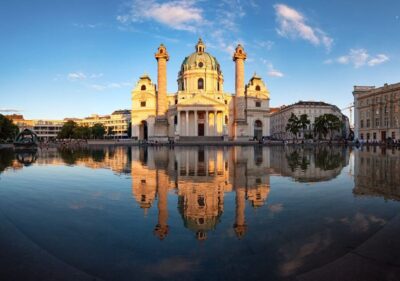
Vivaldi’s Four Seasons Concert in Karlskirche
Read our review →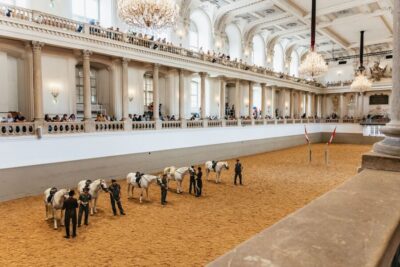
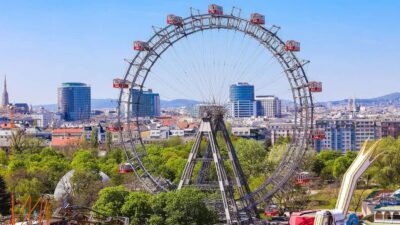
Skip-the-cashier-desk-line Giant Ferris Wheel Ride
Read our review →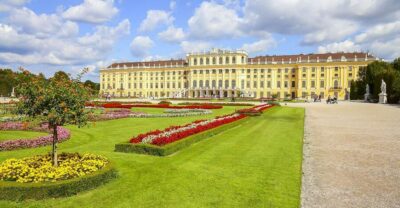
Schönbrunn Palace & Gardens Skip-the-Line Tour
Read our review →
Light of Creation Votive Church Immersive Light Show
Read our review →
Skip-the-Line Sisi Museum, Hofburg and Gardens Tour
Read our review →
Hallstatt & Alpine Peaks Day Trip with Skywalk Lift
Read our review →Browse the lists this tour appears in