
Reviewed · VIENNA TOURS
Vienna: Time Travel and Magic Vienna History Tour
Vienna’s past comes at you through 5D cinema, VR headsets, animated figures, and moving sets at Time Travel Vienna. In one hour, you go from the Roman camp of Vindobona to postwar Austria and finish with a virtual horse-drawn flight over today’s city.
I like the brisk pace and the smart mix of entertainment with useful background. The VR music sequence and the wartime bomb-shelter scene give the hour real variety, while the central location makes this easy to fit between the Hofburg, Graben, and Stephansplatz. The main drawback is that it is a staged attraction rather than a traditional guided walk, and some people may prefer real actors or more time in each historical period.
Key points to know before booking
- 2,000 years in one hour: The route moves from Roman Vindobona through imperial Vienna, World War II, postwar Austria, and the present day.
- Several formats, not one long film: You pass through different rooms with animated figures, a portrait gallery, special effects, VR, and a simulated flight.
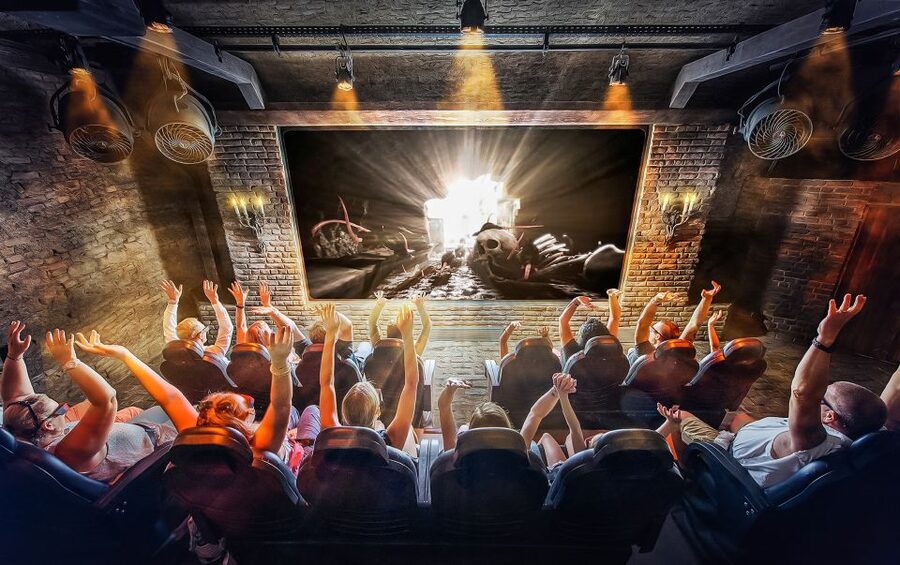
- The 5D cinema is a family favorite: It uses physical effects to make ancient Vienna feel close and immediate.
- A strong first-day activity: The overview helps you recognize the Habsburg story, city colors, landmarks, and major themes during the rest of your stay.
- Central but below ground: The entrance is at Habsburgergasse 10A, close to the Hofburg and Stephansplatz, in historic cellar spaces.
- Plan for stairs: There are about 50 steps over two levels, no elevator, and the attraction cannot accept wheelchair users.
A fast introduction to Vienna beneath St. Michael’s
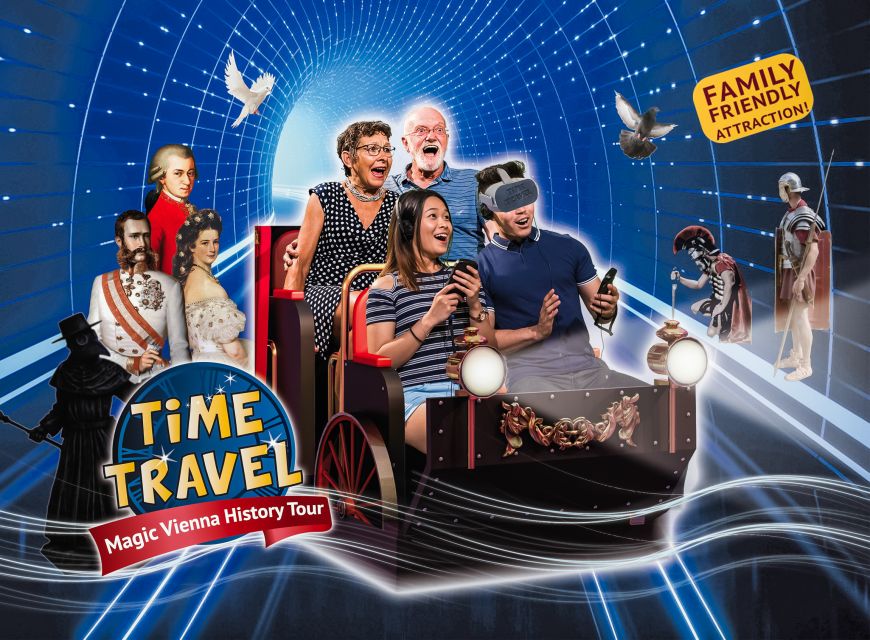
Time Travel Vienna is designed to give you a quick sense of how the city grew and changed. You do not sit through a long lecture. Instead, you are guided from room to room, with each section handling a different chapter.
That format works well if you are new to Vienna. The city can seem to be all grand palaces, polished coffeehouses, and classical music, but its story also includes Roman military roots, disease, war, political change, and a hard-won return to peace. This attraction puts those pieces in one continuous sequence.
The setting helps. The experience takes place in extensive cellars connected with St. Michael’s monastery, rather than in a modern theater or open gallery. You should expect theatrical rooms and historic-looking surroundings, not original archaeological displays at every turn. The value is in the presentation and the overview.
A multilingual audio guide is included. Staff members lead the movement between sections and help keep the group on schedule. The tour is planned for about one hour, so the experience keeps moving instead of letting any single scene drag.
More Historical Tours in Vienna:
- Vienna: World War II Historical Walking Tour
★ 4.8 · 1,772 reviews - Vienna Historic Center Small Group Walking Tour
★ 5.0 · 1,746 reviews - Time Travel-Magic Vienna History Tour Ticket
★ 4.5 · 1,099 reviews
Roman Vindobona and the first steps through Vienna’s past
The opening section reaches back to the ancient Roman camp of Vindobona, the settlement that helped establish Vienna’s early importance. You get a broad explanation of the city’s beginnings before moving into later centuries.
Do not expect a detailed archaeology lesson. The attraction is giving you orientation, not every date and excavation result. I find that useful at the start of a Vienna visit because it gives you a basic timeline before you begin visiting the Hofburg, museums, churches, and other historic sites.
The rooms use sound, lighting, projected images, and physical effects to make the past easier to picture. One early sequence deals with the Black Death in Vienna. It can feel intense, especially for younger children, but it makes a point that a list of dates cannot: the city’s story was not always elegant or comfortable.
You will also see how the city’s built character developed. The Habsburg period receives plenty of attention, and the presentation helps connect the imperial family to the grand buildings you will see outside. One useful detail raised during the experience is the link between the Habsburg era and the ochre color found on many Viennese buildings.
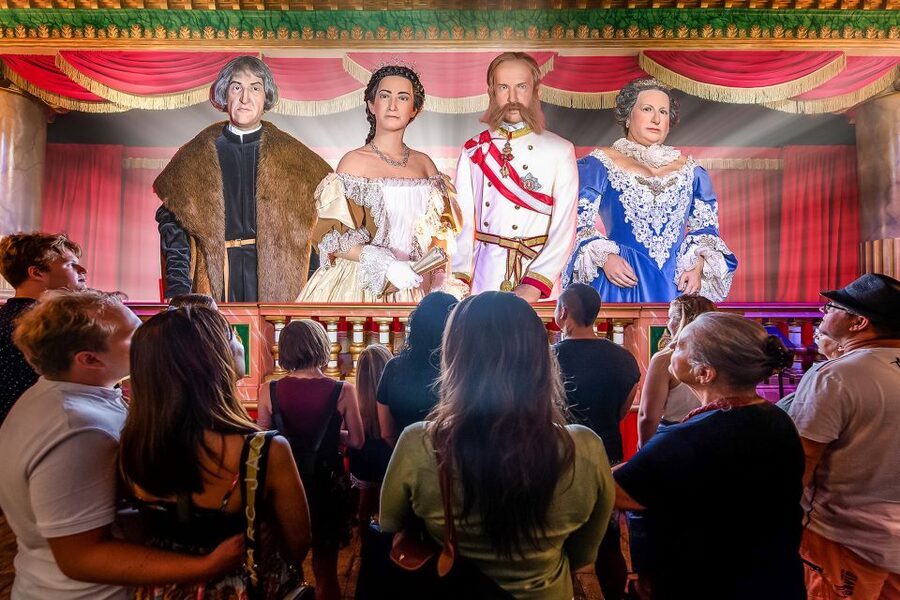
The portrait gallery brings famous figures into the room
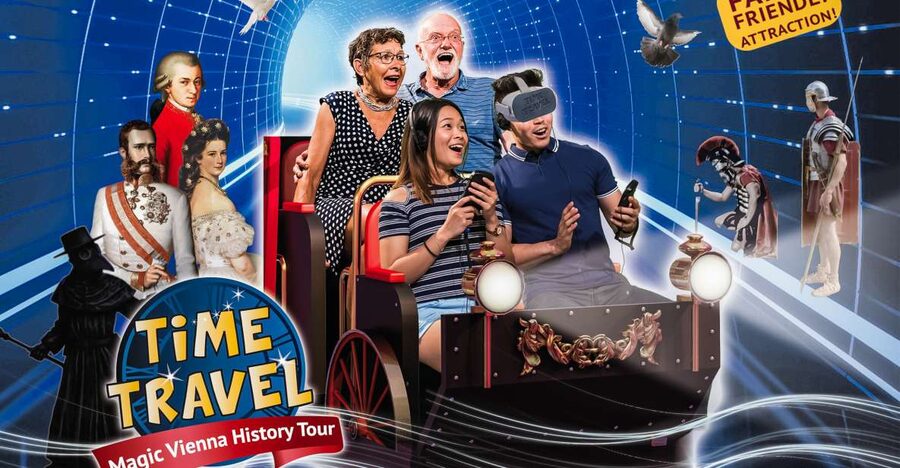
The portrait gallery introduces important people from Vienna’s past through animated or multimedia presentations. Instead of reading labels in silence, you hear historical figures address you directly.
This is one of the better choices for families. Children can follow a face and a voice more easily than a wall of small print, while adults get a quick reminder of who shaped the city. The approach is broad rather than scholarly, so you should treat it as an introduction and not a substitute for a palace museum or a focused history tour.
The imperial family receives its own section. You meet members of the royal household through staged presentations and get a sense of court life, rank, and public image. This part connects especially well with a visit to the Hofburg, which is only about 200 meters away.
I like the way the attraction makes the Habsburg story personal. Vienna’s imperial history can feel like a parade of names and titles. Here, the royal family becomes easier to remember as a set of people and personalities. The tradeoff is that the portraits are designed for quick impact, so you will not receive a full account of dynastic politics.
The 5D cinema makes ancient Vienna physical
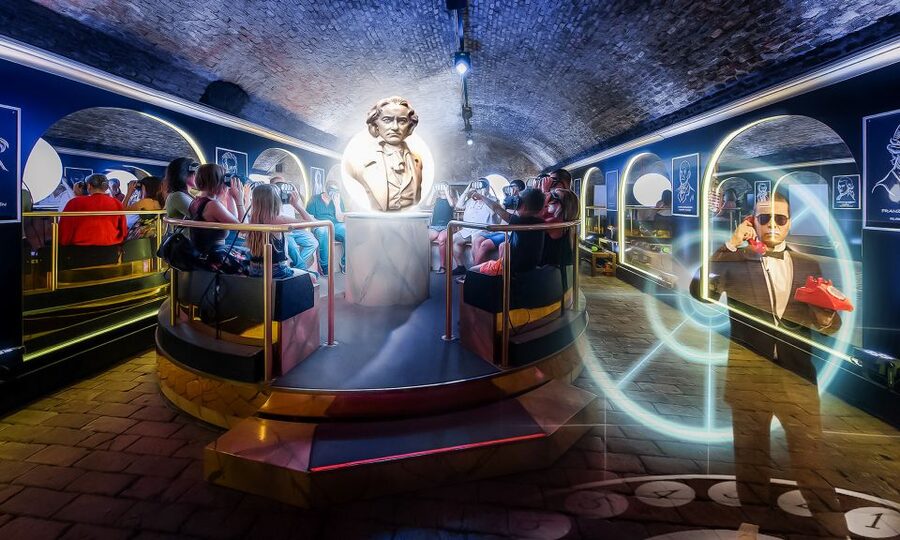
The 5D cinema is one of the major set pieces. Some descriptions of the experience call the film 4D, but the idea is the same: moving seats or physical sensations combine with the screen and other effects.
You are meant to feel as if you are present in ancient Vienna. The scenes are short, energetic, and made for a wide age range. Several people find this one of the most enjoyable parts, though the short running time is also its main limitation. If you enjoy film attractions, you may wish it lasted longer.
This section is best understood as theatrical storytelling. It is not a museum film with quiet narration and careful detail. It turns history into a sensory event, which makes it memorable but also means that some facts pass quickly.
For families, that is often a fair exchange. A child who might switch off during a lecture can stay interested through movement, sound, and visual effects. Adults should come with the right expectation: the attraction aims to make Vienna’s past approachable, not to provide a complete academic account.
A few more Vienna half-days to weigh up
- Vienna: Vivaldi’s Four Seasons Concert in Karlskirche
★ 4.7 · 14,951 reviews - Vienna: Spanish Riding School Training
★ 3.9 · 9,281 reviews - Vienna: Skip-the-cashier-desk-line Giant Ferris Wheel Ride
★ 4.5 · 7,859 reviews - Vienna: Schönbrunn Palace & Gardens Skip-the-Line Tour
★ 4.7 · 7,739 reviews
Music history through virtual reality
The VR portion follows Vienna’s musical tradition in a simulated world. With the glasses on, you move through a visual interpretation of the city’s music history rather than simply listening to an audio track.
This gives the one-hour route a useful change of mood. After the imperial rooms and the 5D film, the VR sequence feels like a separate way of seeing Vienna. It also reinforces why music matters so much to the city’s identity.
The equipment is part of the attraction’s appeal, especially for older children and teenagers. You should remember that VR can be less comfortable for some people, though the supplied information does not specify any medical restrictions or minimum age. If you dislike headsets or motion effects, this may be the least appealing section.
The multilingual audio guide helps visitors follow the story, but the exact language choices are not listed in the available information. If you need a particular language, check before booking rather than assuming it is offered.
World War II, the bomb shelter, and Chancellor Figl
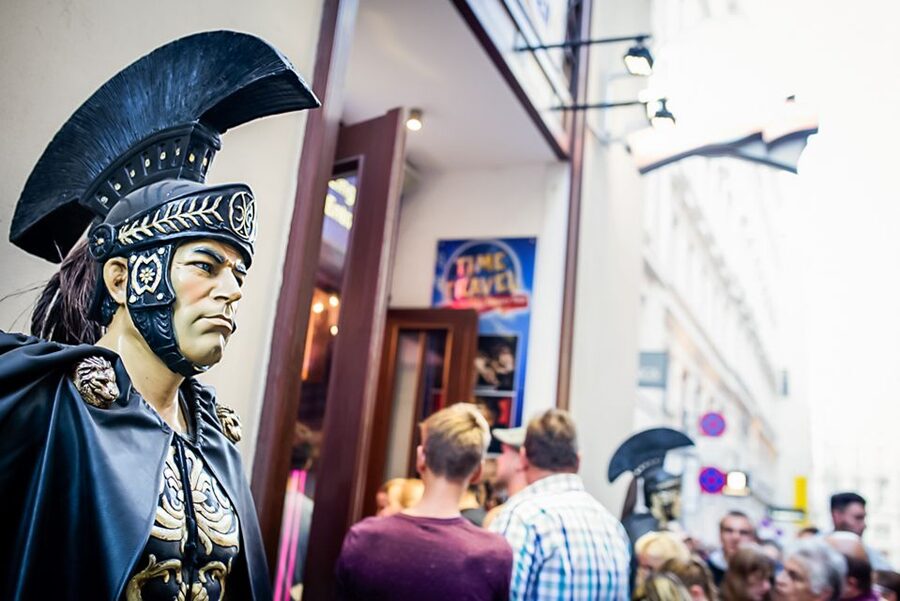
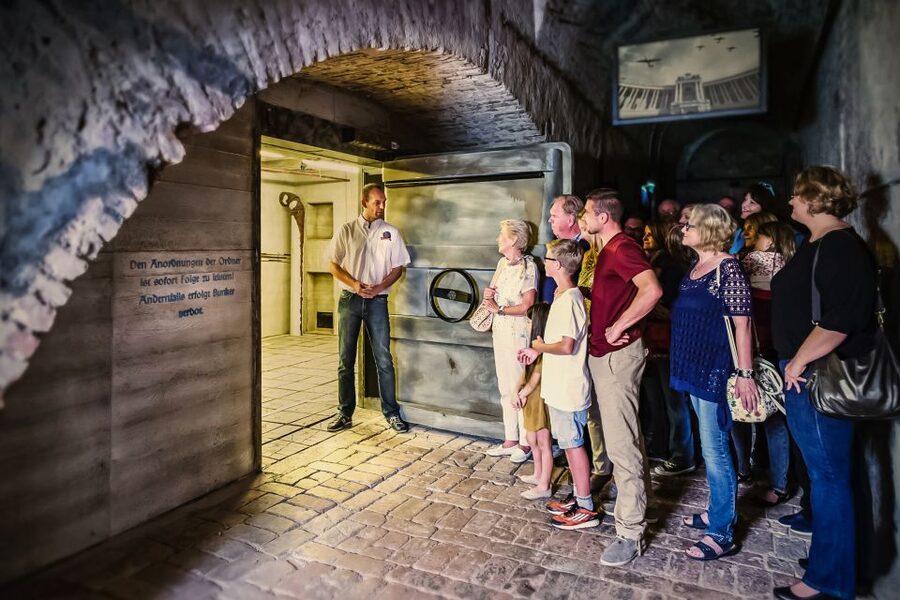
The tone changes sharply with the Enemy Aircraft! sequence. You enter a bomb-shelter setting and experience the sense of Vienna under air attack during World War II.
This is not presented as a light amusement ride. The sound and enclosed setting are meant to suggest fear and uncertainty, giving the history a more serious edge. It is a useful reminder that the city’s elegant center also carries the marks of a violent twentieth century.
The next section focuses on postwar Austria. In Austria is free!, you hear Chancellor Leopold Figl’s moving speech among the battered remains of Vienna. The moment represents relief after the war and the return of hope for Austrian citizens.
I appreciate this shift in tone. The attraction could have stayed with imperial glamour and cheerful special effects, but the wartime and postwar scenes give the timeline weight. They also help explain why modern Vienna feels different from the city of the Habsburg court.
Parents may want to prepare younger children for the aircraft and bomb-shelter section. The information describes simulated danger, not a real emergency, but the noise and atmosphere may be strong for sensitive children.
The final flight over Vienna
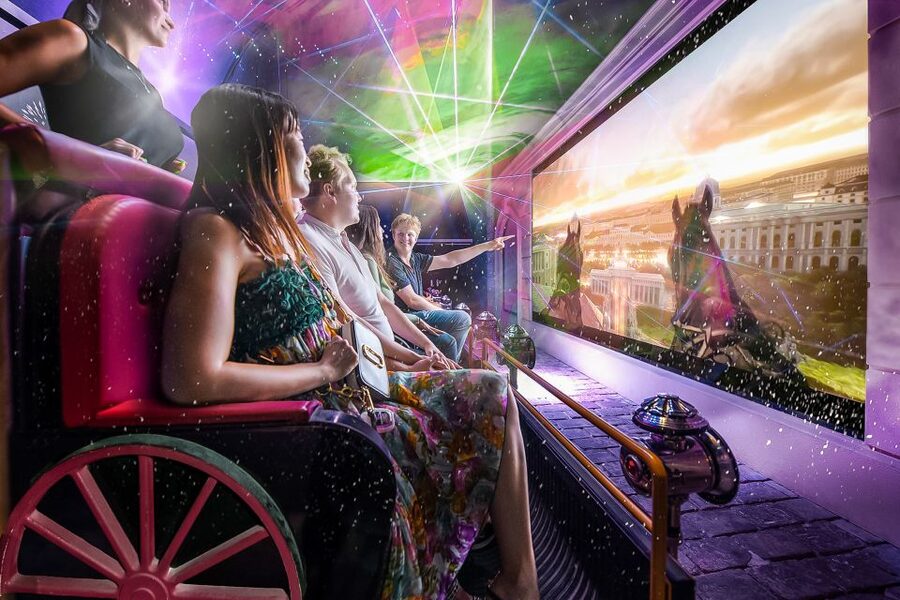
The experience ends on a lighter note with a simulated flight above the roofs of present-day Vienna. You ride in a virtual horse-drawn carriage and see the city from above.
It is a playful ending and a good way to bring the history back to the city you are about to explore on foot. After seeing Vienna through Roman, imperial, wartime, and postwar scenes, you finish with a modern view rather than another lesson.
Do not book this expecting an actual rooftop lookout or a substitute for a tower visit. The flight is a simulated attraction, but it gives you a pleasing visual overview and closes the experience with a sense of movement.
Why the location works so well
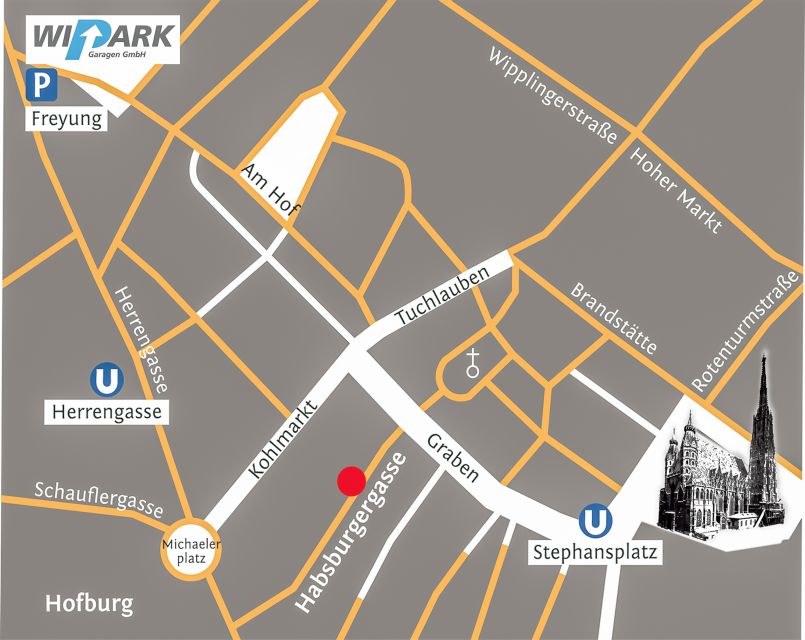
Time Travel Vienna is at Habsburgergasse 10A in the Altstadt, the historic center. It is about 200 meters from the Hofburg and roughly 100 meters from Graben, Kohlmarkt, and Stephansplatz.
That makes it easy to combine with major sights. You could use it early in your stay to build a mental map, then walk outside and see the imperial buildings with more context. Or you could place it indoors during a rainy afternoon when a full outdoor walking route is less attractive.
The nearest underground stops are Stephansplatz on U1 and Herrengasse on U3. If you drive, reduced-price parking is available at the Freyung garage. Since last admission is at 19:00, allow enough time to arrive before then, rather than treating the stated closing window as a flexible late-night option.
Reservations are strongly recommended. The experience lasts one hour, but the start times can affect the rest of your day, especially if you plan to visit the Hofburg or take a scheduled meal break afterward.
Is $27 a fair price for one hour?
At $27 per person, this is not the cheapest way to learn about Vienna. You are paying for a polished entertainment attraction with staff, multimedia equipment, VR, special effects, and several themed rooms.
I think the price is reasonable if you value variety and want an introduction rather than a detailed museum visit. The hour includes enough different formats that you are unlikely to feel trapped in one presentation. The 5D cinema, VR music section, historical figures, bomb shelter, and virtual carriage ride each serve a different purpose.
The value is strongest for families and first-time visitors. A family can cover the city’s main historical storyline without asking children to stand quietly through a long guided talk. It is also useful for anyone with limited time who wants a quick framework before exploring Vienna independently.
The value is weaker for history specialists or visitors who prefer original objects, long explanations, and real actors. One child-friendly activity comes with a clear limit: you get a lively outline, not a detailed study of Roman Vienna, the Habsburgs, World War II, or Austrian politics.
The free cancellation option up to 24 hours before the experience and the reserve-now, pay-later arrangement also reduce the risk of fitting it into a changing schedule.
Who should book, and who should skip it?
I would recommend Time Travel Vienna to families, first-time visitors, and anyone who learns better through pictures, sound, movement, and short scenes. It is also a strong choice for a first planned activity because it can give you useful context for the rest of your time in the city.
It suits adults, too, if you approach it as an entertaining overview. The hour is short enough to hold attention, and the range of topics keeps the experience from feeling repetitive.
You should think twice if you want a quiet museum, a rigorous history seminar, or a walking tour led entirely by a live historian. One clear limitation is the lack of real actors, which some people may prefer for a more human presentation.
The route is not accessible to wheelchair users or people with mobility impairments. There is no elevator, and you need to manage about 50 steps across two levels. The attraction also does not allow pets or video recording.
A useful pairing is Sisi’s Amazing Journey, located across from Time Travel Vienna. The two attractions cover related imperial themes in different formats, so combining them can make sense if you want a fuller treatment of Vienna’s royal past.
Final verdict: a lively first look at Vienna
Book this if you want a fast, family-friendly history lesson with special effects rather than a conventional museum. The best parts are the variety, the 5D cinema, the VR music experience, and the serious wartime section that keeps the story from becoming only palace decoration.
At $27 for an hour, it offers fair value when you want a fun orientation to Vienna, especially on your first day or during poor weather. Skip it if stairs are a problem, if you need wheelchair access, or if you prefer original artifacts and live storytelling.
For most visitors who enjoy interactive attractions, I would make room for it near the start of a Vienna visit. You will leave with a basic timeline, a clearer sense of the Habsburg legacy, and more context for the streets and buildings waiting just outside.
FAQ
How long does Time Travel Vienna last?
The experience lasts one hour. Starting times vary, so you need to check availability when choosing a visit.
Where is Time Travel Vienna located?
The meeting point is Habsburgergasse 10A in Vienna’s historic center. It is about 200 meters from the Hofburg and about 100 meters from Graben, Kohlmarkt, and Stephansplatz.
How do I reach the attraction by public transport?
You can take the underground to Stephansplatz on line U1 or Herrengasse on line U3.
Is an audio guide included?
Yes. A multilingual audio guide is included with the entry ticket. The specific language choices are not stated in the available information.
What historical periods does the experience cover?
The route covers about 2,000 years, from the Roman camp of Vindobona through imperial Vienna, World War II, postwar Austria, and present-day Vienna.
Does the experience include VR?
Yes. A VR sequence presents the course of Viennese music history in a simulated world.
Is the attraction wheelchair accessible?
No. There is no elevator, and the route includes about 50 steps across two levels. The attraction cannot accept wheelchair users because of structural and legal restrictions.
Are pets allowed inside?
No. Pets are not allowed.
Can I cancel my booking?
You can cancel up to 24 hours in advance for a full refund. You can also reserve now and pay later.
Recently added around Vienna
- Vienna: Private tour Mauthausen and Linz★ 4.1 · 3 reviews
- 2-Day Prague Tour from Vienna with private Transfers and Lunches★ 5.0 · 3 reviews
- Vienna Self Guided Sherlock Holmes Murder Mystery Game★ 4.5 · 3 reviews
- Vienna Private Schönbrunn Palace Tour, Extra Rooms and Gardens★ 5.0 · 3 reviews
- Salzburg and Lake Region Private Day Trip from Vienna★ 5.0 · 3 reviews
- Small-group Vienna Wine Tour★ 5.0 · 3 reviews
- True Crime mobile puzzle rally Vienna★ 4.0 · 3 reviews
- Exploring the Gutenstein Alps★ 5.0 · 3 reviews
Vienna Tours, compared.
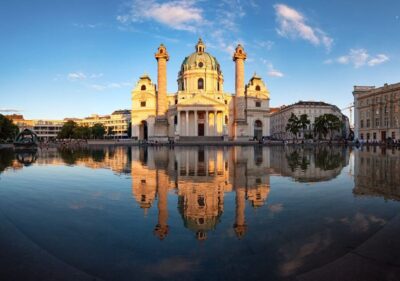
Vivaldi’s Four Seasons Concert in Karlskirche
Read our review →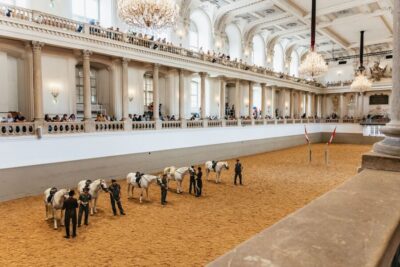
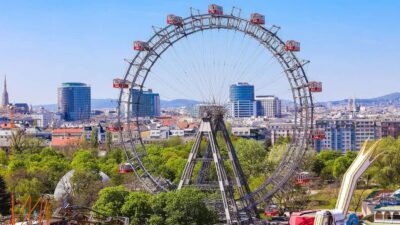
Skip-the-cashier-desk-line Giant Ferris Wheel Ride
Read our review →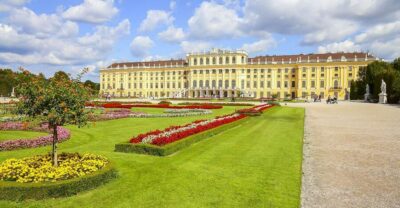
Schönbrunn Palace & Gardens Skip-the-Line Tour
Read our review →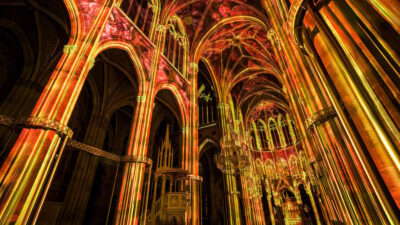
Light of Creation Votive Church Immersive Light Show
Read our review →
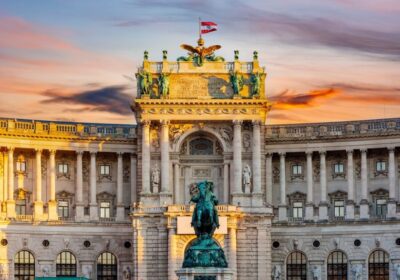
Skip-the-Line Sisi Museum, Hofburg and Gardens Tour
Read our review →
Hallstatt & Alpine Peaks Day Trip with Skywalk Lift
Read our review →Browse the lists this tour appears in