
Reviewed · WALKING TOURS IN VIENNA
Vienna: World War II Historical Walking Tour
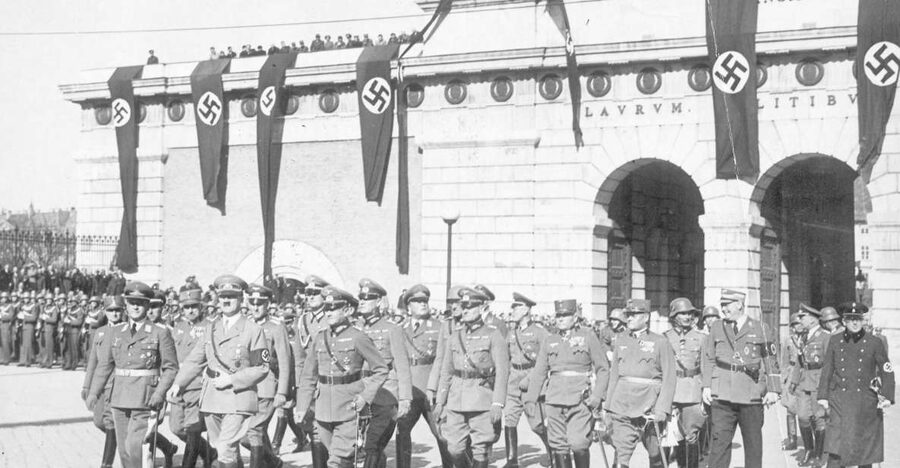
Vienna’s grand center can make the Second World War feel far away. This tour changes that. Starting beside the Opera House, it traces how Hitler’s early years in Vienna, antisemitism, the 1938 annexation, wartime destruction, and postwar occupation shaped the city you see today. The only synagogue to survive the Nazi regime and Vienna’s stark Holocaust memorial give the subject a human and visible focus.
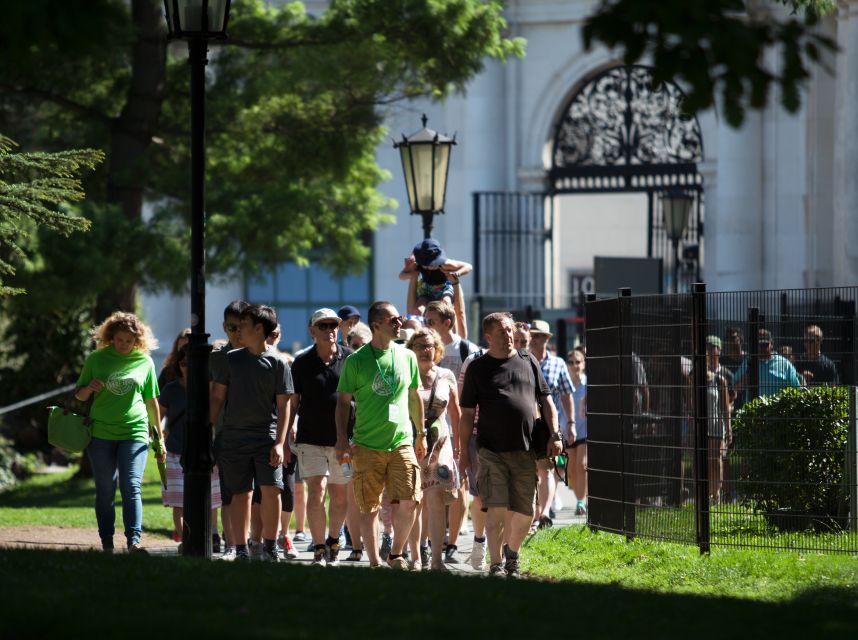
I like the tour’s Austrian point of view, which places Vienna’s role under examination rather than treating Austria as a simple bystander. I also like the practical pace: about four kilometers over two and a half hours, with regular pauses, indoor shelter when possible, and headsets for larger groups.
The main consideration is the subject itself. This is a serious tour about persecution, dictatorship, mass murder, and destruction, not a light sightseeing stroll. It also does not return to the starting point, so wear good shoes and allow a little time to find your next stop at the end.
Key points at a glance
- Hitler’s Vienna: Learn how the young art student experienced the city and how his later ideology developed.
- The surviving synagogue: See the only synagogue in Vienna that remained intact through the Nazi period.
- Holocaust remembrance: Visit the city’s somber memorial and consider how public memory has changed.
- Wartime damage: Hear how more than 100,000 bombs affected Vienna and see surviving traces of the conflict.
- Postwar division: Understand why Vienna was divided among the Allied powers after 1945.
- A well-managed walk: Expect roughly 150 minutes, about four kilometers, and a route supported by headsets, sitting breaks, and pauses.
Starting beside the Albertina and the Opera House
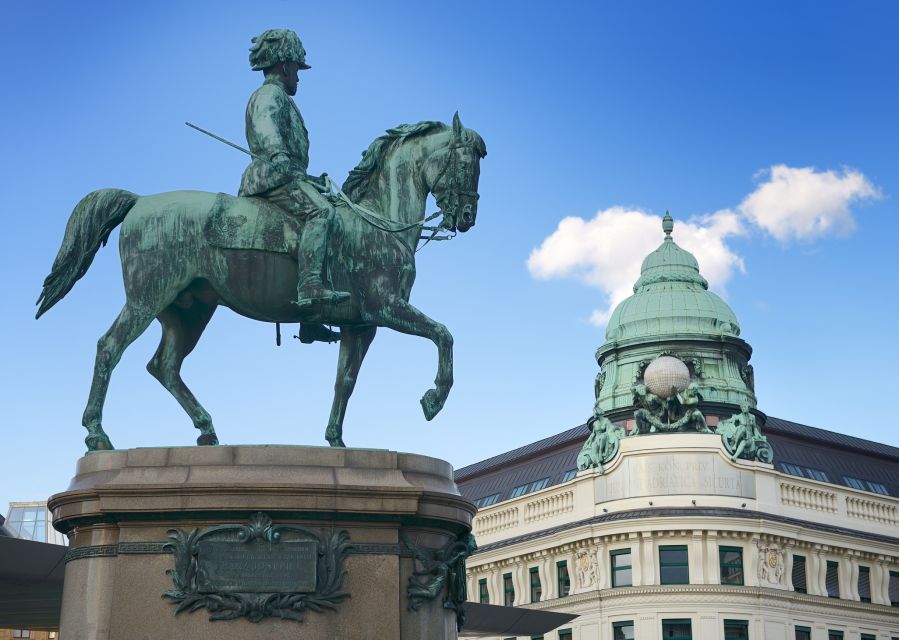
The meeting point is easy to recognize if you know what to look for: find the green umbrella in front of the Albrechtsbrunnen fountain, below the Albertina Museum and next to the Opera House. Karlsplatz/Oper is the nearest subway stop.
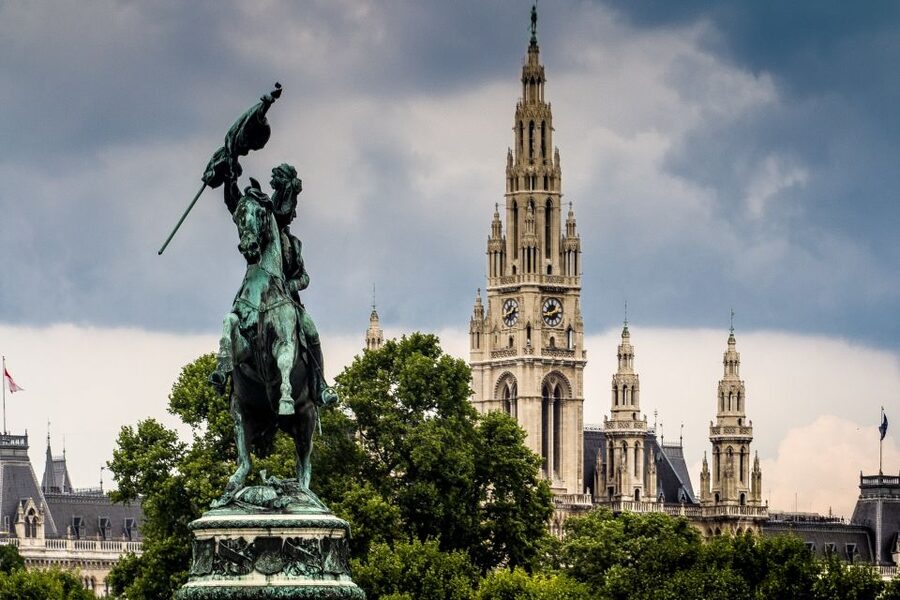
This is a useful starting place because you are already in Vienna’s ceremonial heart. The Opera House, Albertina, and surrounding streets present the polished imperial image most people associate with the city. The tour then adds the uncomfortable political story beneath that image.
Your guide sets the stage before the walking begins in earnest. Guides named Dieter, Stefan, Michael, Wolfgang, Charles, Florian, and Siggi have led this experience at different times. The exact guide is not something you can count on when booking, but the format is consistent: an English-speaking guide explains events at the places where they happened, rather than delivering a long lecture detached from the city.
That approach matters. Vienna is not just a backdrop here. Its institutions, public spaces, Jewish quarter, wartime scars, and postwar arrangements all help explain the story.
More Walking Tours in Vienna
- Vienna: Guided Walking Tour of City Center Highlights
★ 4.7 · 4,989 reviews - Vienna: Vienna Central Cemetery Guided Walking Tour
★ 4.8 · 3,307 reviews - Vienna: Guided Walking Tour of City Highlights & Hidden Gems
★ 4.9 · 2,180 reviews
Hitler’s early years in Vienna
The opening section looks at Adolf Hitler before he became the dictator most people know. The focus is on his time as a young man and art student in Vienna, along with the social and political climate he encountered there.
A good guide does not present a neat cause-and-effect story in which Vienna alone created Hitler. Instead, you examine the broader mix of ethnic rivalry, fear, political agitation, and antisemitism that shaped public life. The tour connects those conditions with Hitler’s developing worldview while keeping the distinction between influence and personal responsibility clear.
That balance is one of the experience’s strongest features. Guides such as Dieter and Wolfgang are praised for putting facts into context and offering interpretation instead of simply reciting dates. You can ask questions as you go, and the presentation is built to encourage thought about how prejudice becomes normal in public life.
If you already know the broad outline of Hitler’s rise, do not assume this part will feel repetitive. Seeing the city connected to his early years gives familiar events a more specific setting. You are also examining Vienna’s role, not only Hitler’s biography.
Vienna’s Jewish community and the Nazi takeover
The tour then moves into one of the hardest subjects: what happened to Vienna’s large Jewish community as ethnic hostility and fear took hold.
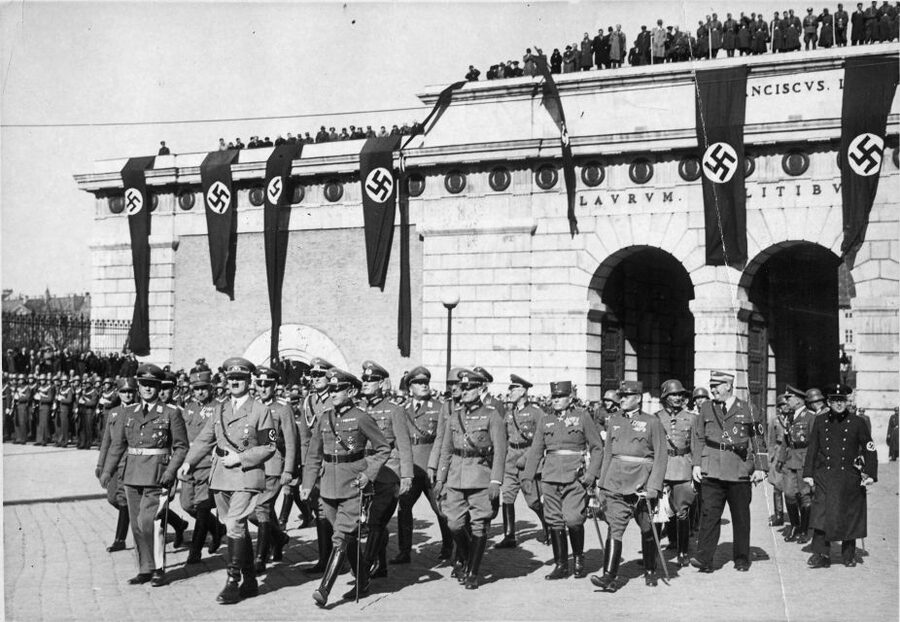
The city’s Jewish population faced persecution before and after the 1938 annexation of Austria by Nazi Germany. The guide explains the political shift and shows how public pressure, official policy, and intimidation affected ordinary people. This is where the tour’s moral purpose becomes clearest. It asks you to consider how a society can move from prejudice to organized exclusion and violence.
The route is particularly useful for people who know the Holocaust mainly through museums or schoolbooks. Here, the story is linked to streets and buildings in central Vienna. You are not simply hearing that a community was destroyed. You are standing in the city where that community lived, worked, worshipped, and was then targeted.
The tone is serious but not theatrical. Several guides are praised for handling difficult material with care and sympathy. That is important on a subject where a dramatic style can quickly become insensitive. The best moments come from clear explanation and quiet attention, not forced emotion.
The synagogue that survived the Nazi regime
One of the central stops is Vienna’s only synagogue to survive the Nazi regime. It is a powerful stop because its survival was unusual, and because the building offers a direct link to Jewish life in the city before, during, and after the war.
The visit is generally an exterior historical stop rather than a guaranteed interior admission. Entrances to attractions are not included, so you should not book this expecting a formal synagogue tour or a museum visit. The value comes from seeing the building in place and learning why it survived when so many other Jewish sites did not.
Your guide may use photographs or other visual material to show how the area looked at different points in time. Siggi, for example, has been praised for using printed images to make historical events easier to understand. Those simple visual aids can be especially helpful when you are trying to picture changes that are no longer obvious from the modern street.
This stop also gives the tour a useful pause in its pace. You are not rushing from one dramatic subject to another. The guide can explain the building, answer questions, and give you time to take in what it represents.
More Historical Tours in Vienna:
- Vienna: Time Travel and Magic Vienna History Tour
★ 4.6 · 3,879 reviews - Vienna Historic Center Small Group Walking Tour
★ 5.0 · 1,746 reviews - Time Travel-Magic Vienna History Tour Ticket
★ 4.5 · 1,099 reviews - Skip-the-Line Schonbrunn Palace Guided Tour and Vienna Historical City Tour
★ 3.5 · 940 reviews
The Holocaust memorial and public memory
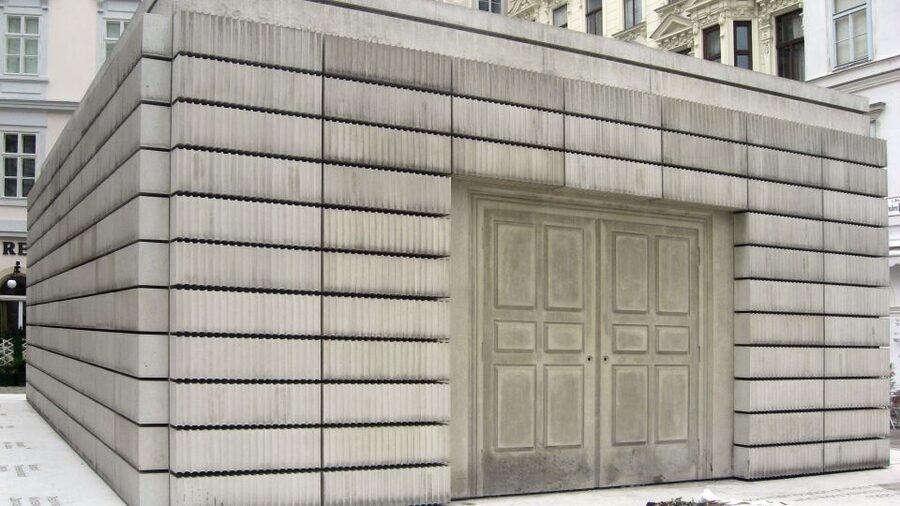
The Holocaust memorial is the tour’s most solemn stop. Its severe design asks you to slow down and think about the millions of Jewish victims murdered under Nazi rule, including people from Vienna and Austria.
The memorial is not presented as a decorative sight. The guide explains its place in Vienna and helps connect the physical structure with the city’s difficult process of facing its past. That context makes the stop more meaningful than a quick photograph.
I appreciate that this section is not treated as an isolated monument. It follows the discussion of Vienna’s Jewish community and persecution, so the memorial becomes part of a continuous story. You first learn about the people and society affected, then confront the public reminder of what happened.
Expect a quiet, reflective moment rather than entertainment. If you are visiting with children or teenagers, you may want to explain beforehand that this tour deals directly with Nazi crimes and the Holocaust. The material is suitable for people seeking serious historical context, but it is not softened into a general city walk.
Bombing, destruction, and the scars left behind
The tour also covers the physical effects of the war. More than 100,000 bombs fell on Vienna, and the guide points out surviving scars and remnants connected with the conflict.
This section helps correct the impression that central Vienna escaped the war simply because its famous monuments still look impressive. The city suffered major damage, and rebuilding changed the way some areas looked and functioned. You learn to notice what remains, what was repaired, and what has disappeared.
The route does not turn into a military tour filled with battlefield detail. Its focus stays on the city and its people. You hear how bombing affected Vienna, then connect that destruction with the political events that led to the war and the military events that ended it.
The city walk itself is a major part of the experience. You cover around four kilometers, although the precise distance can vary with the route. The pace is considered manageable by people with different walking abilities, and one participant with mobility issues related to MS found the distance workable. Still, you should plan for a substantial amount of time on your feet.
Liberation and the four Allied zones
The final part looks at Vienna after the war, when the city was divided among the United States, Britain, France, and the Soviet Union.
Vienna was unusual because all four Allied powers administered zones within the same city. This arrangement gave postwar Vienna a special political character and helps explain why the city’s recovery and public life developed differently from a simple occupation by one power.
The tour treats this as more than a footnote. You see how the end of the war did not instantly solve Vienna’s problems. The city had to deal with destruction, political change, responsibility for Nazi crimes, and the practical realities of Allied rule.
This postwar section gives the walk a useful ending. The story moves from Hitler’s early years, through annexation and persecution, to bombing, liberation, and division. You leave with a sense of how the war altered Vienna physically and politically, not just a list of wartime dates.
Guides, headsets, and the pace of the walk
The guides are the main reason this experience works. Dieter is repeatedly described as a strong storyteller who answers questions patiently and links separate parts of the story. Stefan is praised for his broad subject knowledge and engaging delivery. Wolfgang and Charles are noted for bringing complex events into clear context, while Siggi uses photos and adjusts explanations to the interests of the group.
Those details tell you what kind of guiding to expect. The experience depends on interpretation, not on entering a long list of attractions. A dull guide would make the same route feel slow. A strong one can make an ordinary street corner meaningful.
Headsets are supplied for larger groups, and they are a real practical advantage. You can hear the guide while walking through city streets instead of crowding close around one person. They are especially useful when traffic, weather, or a large group makes it hard to stay within a few feet of the guide.
The walk includes stops where you can sit, use a bathroom, or take a snack break, according to the route and conditions. Guides have also adjusted pauses for heavy rain and found indoor shelter during cold or wet weather. That does not make Vienna’s weather predictable, so dress sensibly and wear comfortable shoes.
The tour ends away from the Albertina rather than circling back to the starting point. A nearby metro stop makes onward travel easier, but you should not plan a tight connection immediately after the finish.
Is $31 a fair price?
At $31 per person, this is a good value if you want a guided historical framework rather than a series of paid entrances.
The price includes the live English-speaking guide and walking tour. It does not include admission to attractions, and the experience is not a transport tour. You are paying for the guide’s research, storytelling, local setting, and ability to connect scattered evidence across central Vienna.
The value is strongest if you are new to Vienna or want to understand the city before visiting other museums and memorials. Several people who took the tour early in their stay found it useful for getting their bearings and understanding what else they were seeing.
It is less useful if you want to spend most of the time inside museums, examine original documents, or focus narrowly on military operations. This walk offers broad historical context and visible city sites. It does not replace a dedicated Holocaust museum or a full museum visit.
Free cancellation up to 24 hours before the start and the option to reserve now and pay later also reduce the risk of fitting it into a changing schedule.
Who should book this Vienna WWII tour?
I would choose this tour if you:
- Want to understand Vienna’s role in the Nazi period and the Second World War
- Prefer history explained at the actual locations connected with it
- Are interested in Hitler’s early years but want more than a biography
- Value an Austrian perspective on annexation, persecution, liberation, and responsibility
- Can manage roughly four kilometers of city walking over 150 minutes
- Prefer a serious, discussion-friendly guide to a fast sightseeing circuit
I would look elsewhere if you want a relaxed tour of palaces, cafés, and famous architecture with only a brief mention of the war. I would also avoid scheduling it after a long day of walking if you are tired, since the subject requires attention and the route is not a quick loop.
The tour is conducted in English. Since the experience deals with the Holocaust and Nazi persecution, it suits adults, older teenagers, students, teachers, and anyone who wants a fuller picture of Vienna beyond its imperial image.
Should you book it?
Yes, if Vienna’s twentieth-century story matters to you. For $31, you get two and a half hours of guided context, several significant sites, and a route that connects Hitler’s early years with the persecution of Vienna’s Jewish community, the Holocaust memorial, wartime bombing, and postwar Allied rule.
Book it near the beginning of your stay if you can. You will look at the city differently afterward, and later visits to museums, monuments, and historic streets will have a clearer frame.
Just bring comfortable shoes, clothing suited to the weather, and the right mindset. This is a thoughtful history walk, not a cheerful city tour. Its reward is a more honest understanding of Vienna.
FAQ
How long does the Vienna World War II Historical Walking Tour last?
The tour lasts 150 minutes, or two and a half hours.
Where does the tour meet?
Meet in front of the Albrechtsbrunnen fountain downstairs at the Albertina Museum, next to the Opera House. Look for the green umbrella. The nearest subway stop is Karlsplatz/Oper.
What language is the tour conducted in?
The live tour guide speaks English.
Is admission to attractions included?
No. Entrance fees to attractions are not included. The booking covers the live guide and walking tour.
Does the tour return to the Albertina Museum?
No. The walk does not return to its starting point. A metro stop is close to the ending area.
How much walking is involved?
The tour covers about four kilometers over two and a half hours, according to the route details provided during the experience. You should wear comfortable shoes.
Can I cancel the tour for a full refund?
Yes. You can cancel up to 24 hours in advance for a full refund. You can also reserve now and pay later.
Recently added around Vienna
- Vienna: Private tour Mauthausen and Linz★ 4.1 · 3 reviews
- 2-Day Prague Tour from Vienna with private Transfers and Lunches★ 5.0 · 3 reviews
- Vienna Self Guided Sherlock Holmes Murder Mystery Game★ 4.5 · 3 reviews
- Vienna Private Schönbrunn Palace Tour, Extra Rooms and Gardens★ 5.0 · 3 reviews
- Salzburg and Lake Region Private Day Trip from Vienna★ 5.0 · 3 reviews
- Small-group Vienna Wine Tour★ 5.0 · 3 reviews
- True Crime mobile puzzle rally Vienna★ 4.0 · 3 reviews
- Exploring the Gutenstein Alps★ 5.0 · 3 reviews
Walking Tours in Vienna, compared.
Guided Walking Tour of City Center Highlights
Read our review →
Guided Walking Tour of City Highlights & Hidden Gems
Read our review →
Vienna Historic Center Small Group Walking Tour
Read our review →
Ghosts and Legends Guided Nighttime Walking Tour
Read our review →
Browse the lists this tour appears in