
Reviewed · WALKING TOURS IN VIENNA
Vienna: 1.5-Hour Underground Walking Tour
Vienna’s grand center has a second city under its streets. This tour takes you from the Roman remains at Michaelerplatz into old cellars and the Baroque crypt of St. Michael’s Church, where preserved mummies give the past an unusually human face. I like the mix of archaeology and personal stories, and I like that the tour reaches places you cannot simply wander into on your own.
The main catch is language: the live tour is in German, not English. Some guides, including Christopher and Bridgett, have offered short explanations in English, but that is not guaranteed. The route also includes stairs and chilly underground rooms, so it is not suitable for wheelchair users and deserves a sweater in your day bag.
Key points to know before booking
- Roman Vienna appears beneath Michaelerplatz: See remains of the old Roman settlement, an old city wall, and a 17th-century cellar in the heart of the center.
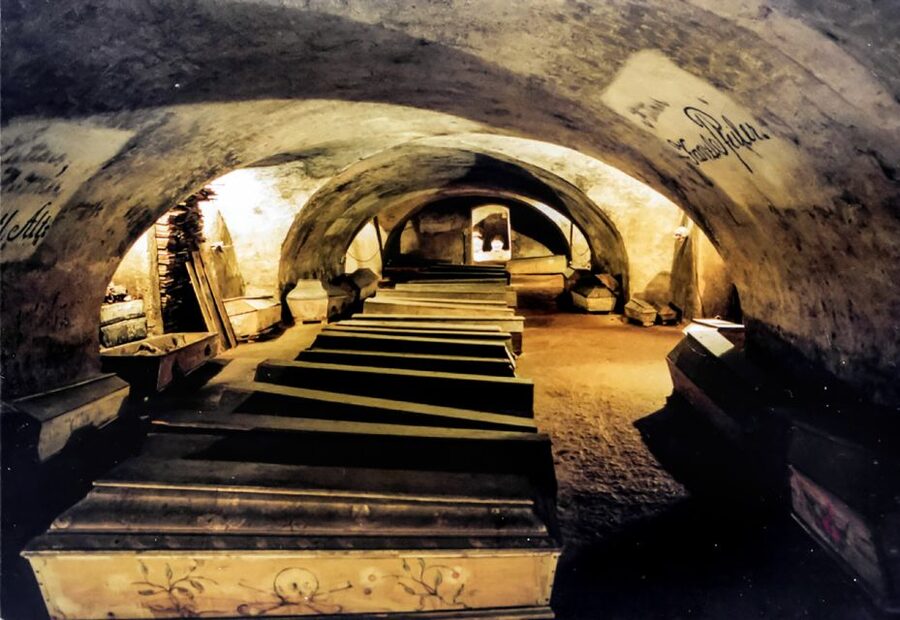
- St. Michael’s crypt is the emotional high point: More than 4,000 people are buried here, including prominent Viennese citizens whose mummies are remarkably well preserved.
- The tour is conducted in German: Guides may explain selected points in English, but you should not book it expecting a full English presentation.
- You visit several underground rooms: This is more than a single crypt stop, though the route does not take you through an extensive tunnel network.
- Cool temperatures and stairs are part of the experience: Wear practical shoes and bring a sweater. Large bags, luggage, cameras, pets, and smoking are not allowed.
- At $32, the access is the real value: The price includes entrance fees and a live guide, but not food, drinks, or transport.
Michaelerplatz reveals Vienna’s oldest layers
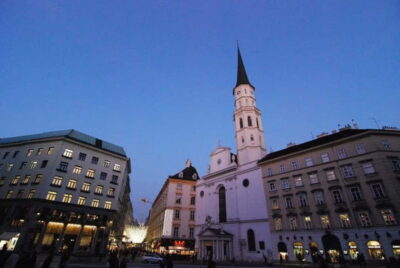
Meet in front of the main entrance of St. Michael’s Catholic Church, right by Michaelerplatz. This is one of the easiest meeting points in central Vienna, but it can also be a busy place, so arrive with enough time to locate the church entrance rather than relying on a last-second dash across the square.
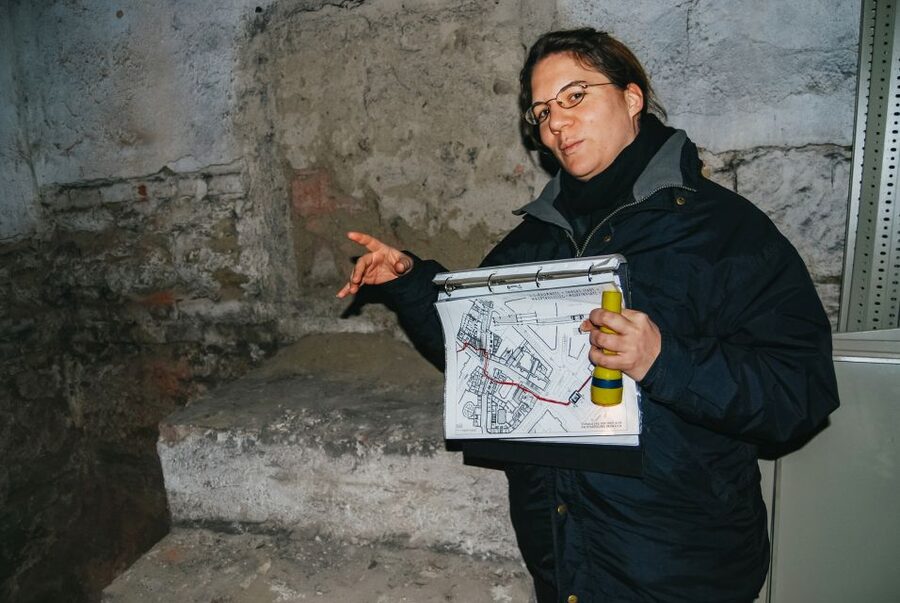
Before you even go underground, the setting gives the tour its main idea: Vienna is not one city, but many cities built on top of one another. Michaelerplatz sits in the center of the historic city, and building work exposed part of the old Roman settlement beneath the modern streets.
The archaeological site is not a grand ruin complex. That is worth understanding before you book. You will see remnants in an urban setting, with today’s Vienna directly around them. For me, that makes the stop more useful than a detached archaeological park because you can connect the remains to the city you are exploring above ground.
You will also see a cellar from the 17th century and part of the old city wall. These details help bridge the gap between Roman Vienna and the later medieval and Baroque city. The tour is not just about old stones. It is about how practical spaces, defensive walls, storage rooms, and religious buildings accumulated beneath the city center.
Your guide provides the story that turns these fragments into a readable scene. The guides who have led this experience, including Christopher and Bridgett, have been praised for humor, enthusiasm, and strong command of Vienna’s past. The exact guide depends on the date, but you should expect a live, story-led walk rather than an audio guide or a self-guided visit.
More Walking Tours in Vienna
- Vienna: Guided Walking Tour of City Center Highlights
★ 4.7 · 4,989 reviews - Vienna: Vienna Central Cemetery Guided Walking Tour
★ 4.8 · 3,307 reviews - Vienna: Guided Walking Tour of City Highlights & Hidden Gems
★ 4.9 · 2,180 reviews
St. Michael’s crypt brings the past close
The visit to St. Michael’s Church is the strongest reason to choose this tour. More than 4,000 people are buried in the crypt, and the underground rooms contain the preserved mummies of wealthy and prominent Viennese citizens.
This is not a polished museum display designed to make the past feel comfortable. The mummies are direct, unsettling, and fascinating. Their preservation gives you a physical sense of people who lived in an earlier Vienna, rather than only dates and names in a guidebook.
The crypt is Baroque, so the setting itself matters. You are not looking at isolated remains in a modern exhibition room. The burials belong to a church beneath one of the city’s major historic buildings, and the surroundings connect religious practice, social rank, and the daily life of old Vienna.
I would plan your expectations carefully. This is a historical and religious site, not a theatrical horror attraction. The interest comes from the condition of the mummies, the stories attached to the crypt, and the fact that the burial rooms are part of an active historic church setting. If you are uncomfortable with human remains, this may not be your best choice in Vienna.
The underground temperature can be noticeably cool. A sweater is a sensible idea even in warm weather. The floor and access points may also feel less comfortable than a standard city walk, so wear shoes that handle stairs and uneven historic interiors.
The extra cellars add texture, not spectacle
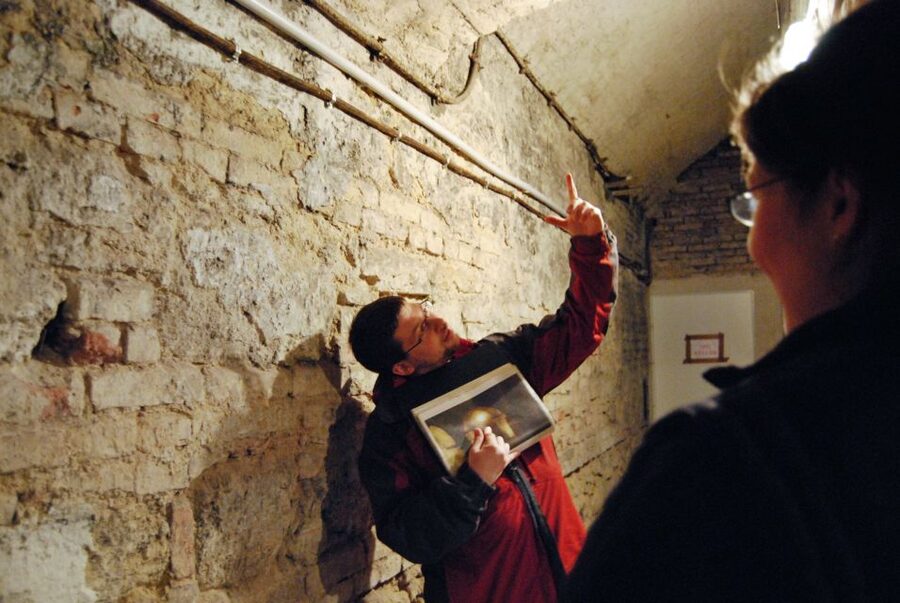
After the main crypt visit, the guide takes you through several more basements. This section gives the tour a broader feel. You are not simply visiting one famous underground site and then returning to the street. You get a glimpse of the less visible spaces that supported Vienna’s old urban life.
The supplied details do not promise a vast maze of tunnels, and you should not picture an underground adventure stretching for miles. One past booking account wished the route went farther into the tunnels and described the visit as limited to a few rooms. That is a fair caution. The experience is best understood as a compact archaeological and crypt tour with several basement stops, not a full subterranean expedition.
That limitation does not make the cellars uninteresting. Their value is in the contrast between ordinary spaces and major historical monuments. A cellar can show how a building was used, altered, and fitted into a growing city. The guide’s explanations are especially important here because bare walls and foundations need context.
The format also suits anyone who has already seen Vienna’s grand palaces and churches. You get a different side of the city without leaving the center. It is a good way to use part of an afternoon when you want history with a more unusual edge.
German language is the biggest booking decision
The official tour language is German. That is not a minor footnote. If you understand little or no German, you may see the main sites but miss much of the explanation that makes them meaningful.
Some guides have helped non-German speakers with short English summaries. Christopher, for example, has been praised for offering English assistance, and another guide, Bridgett, was described as an enthusiastic historian. Other participants have used phone translation tools, though underground data service can be unreliable.
You can still find value in the visual side of the tour if you do not speak German. The archaeological site, crypt, mummies, and old rooms do not require translation to make an impression. But I would only book if you are comfortable accepting partial understanding or if you speak enough German to follow a guided talk.
Do not assume that an English tour will be available on your selected date. The information provided for this experience lists German as the language and says there is no dedicated English option. If English access is essential, contact the provider before paying rather than hoping the guide will translate the full route.
For German speakers, the language issue becomes an advantage. You can follow the stories, jokes, and historical detail as intended. The strongest praise has focused on guides who make the material lively rather than dry, so the spoken presentation is a central part of the experience.
A different way to spend an afternoon here:
- Vienna: Vivaldi’s Four Seasons Concert in Karlskirche
★ 4.7 · 14,951 reviews - Vienna: Spanish Riding School Training
★ 3.9 · 9,281 reviews - Vienna: Skip-the-cashier-desk-line Giant Ferris Wheel Ride
★ 4.5 · 7,859 reviews - Vienna: Schönbrunn Palace & Gardens Skip-the-Line Tour
★ 4.7 · 7,739 reviews
What $32 includes, and where the value lies
The cost is $32 per person, with entrance fees included. Transport, food, and drinks are not included, but you do not need a transfer for this central meeting point. You can reach the church as part of a day in Vienna’s historic core.
I consider the price reasonable if the crypt is high on your list. Entrance to the underground sites is part of the cost, and you get a guide to explain the archaeological layers and burial rooms. The value is not measured by the number of places visited. It comes from access to spaces that are not obvious from the street and would be difficult to interpret alone.
The calculation changes if you do not understand German. Paying $32 to understand only fragments can feel less worthwhile, even if the sights themselves are unusual. English speakers who decide to go should treat the tour as a visual visit supported by whatever English help the guide can provide, not as a standard English-language walking tour.
The booking terms are useful for a flexible schedule. You can reserve and pay later, and cancellation is free up to 24 hours before the start time for a full refund. Check the available starting times when you book, since the duration is listed as 100 minutes and times can vary.
Allow a little extra space in your schedule. The stated duration is 100 minutes, while one past booking account described a tour lasting almost three hours. That may reflect a particularly detailed guide or an unusual day, but I would not place a dinner reservation immediately afterward.
Practical limits inside the underground route
This tour is not wheelchair accessible and is not suitable for wheelchair users. The information also prohibits pets, cameras, smoking, luggage, and large bags.
The camera rule matters because you may be used to photographing every corner of Vienna’s churches and archaeological sites. Here, you should plan to experience the rooms without taking pictures. Leave large bags at your accommodation if possible, since the restrictions are specific and underground spaces can be tight.
The lack of photography may disappoint anyone who wants a visual record of the mummies. On the other hand, it keeps the visit focused on the guide and the site rather than on a constant scramble for the best shot. Bring a small, practical bag only if it meets the provider’s rules.
The route is a walking tour, but the most demanding part is not distance. It is the movement through old underground spaces, including stairs and cooler rooms. Comfortable shoes matter more than athletic ability.
Who will enjoy this Vienna underground tour
I would recommend this experience to several kinds of visitors:
- History fans: The Roman remains, medieval layers, old walls, cellars, and crypt create a compact lesson in how Vienna changed over time.
- Repeat visitors to Vienna: If you have already visited the major palaces and museums, this offers a less familiar view of the city center.
- People interested in funerary customs: The preserved mummies at St. Michael’s provide the most distinctive part of the route.
- German speakers: You will get the full benefit of the guide’s stories, explanations, and humor.
- Curious first-time visitors: The tour adds context to the streets and monuments you see above ground.
I would hesitate to recommend it to anyone who needs English throughout, dislikes enclosed spaces, is uncomfortable around human remains, or cannot manage stairs. It is also not the right pick if you expect a large underground tunnel system. The route visits several rooms, but it is a focused historical walk rather than an extensive catacomb expedition.
Families need to make an individual call. The supplied information does not set an age limit, but the crypt and mummies may not suit young children, and the German presentation could be hard for children who do not speak the language. Older children with an interest in archaeology or unusual history may find it memorable.
How to fit it into a Vienna day
The meeting point at St. Michael’s Church makes this easy to pair with other central sights, though the tour itself does not include transfers. You can arrange your day around the church and Michaelerplatz, then continue exploring the center after the underground visit.
I would avoid scheduling it immediately before an important timed entry or train departure. The advertised 100 minutes is manageable, but guides sometimes add detail, answer questions, or move at a slower pace. Give yourself a buffer.
The tour works especially well on a day when the weather is poor because much of the experience takes place indoors. Remember that underground does not mean warm. A cool crypt can feel refreshing in summer and chilly in winter, so dress in layers.
Since food and drinks are not included, plan those separately. The experience is short enough to fit between meals, but the exact start time should guide your choice.
Final verdict: book it if the crypt matters more than the language
Book this tour if you want to see Vienna from below, are intrigued by preserved mummies, and can follow German or accept limited English assistance. At $32, the combination of entry fees, a live guide, Roman remains, old cellars, and St. Michael’s crypt offers solid value.
Skip it if you need a full English tour, cannot use stairs, or want a long tunnel journey. For the right audience, though, this is an unusual and worthwhile change from Vienna’s grand rooms and polished façades. The crypt alone may justify the price, while the archaeological stops explain how much of the city’s past is still under your feet.
FAQ
Where does the Vienna underground tour meet?
Meet in front of the main entrance of St. Michael’s Catholic Church at Michaelerplatz.
How long does the tour last?
The listed duration is 100 minutes, or about one hour and 40 minutes.
What language is the tour conducted in?
The live tour guide speaks German. Some guides may provide brief explanations in English, but a full English-language tour is not listed.
Is the tour available in English?
No dedicated English tour is specified. English-speaking participants may receive occasional help from the guide, but this cannot be guaranteed.
What will I see at Michaelerplatz?
You will see an archaeological site connected to Vienna’s Roman past, along with a 17th-century cellar and part of the old city wall.
What is inside St. Michael’s crypt?
The crypt contains more than 4,000 burials, including well-preserved mummies of wealthy and prominent Viennese citizens.
Are entrance fees included?
Yes. Entrance fees are included in the tour price.
Are food, drinks, or transfers included?
No. Food, drinks, and transfers are not included.
Is the tour wheelchair accessible?
No. The tour is not wheelchair accessible and is not suitable for wheelchair users.
Can I cancel or pay later?
You can reserve now and pay later. Cancellation is free up to 24 hours before the start time for a full refund.
Recently added around Vienna
- Vienna: Private tour Mauthausen and Linz★ 4.1 · 3 reviews
- 2-Day Prague Tour from Vienna with private Transfers and Lunches★ 5.0 · 3 reviews
- Vienna Self Guided Sherlock Holmes Murder Mystery Game★ 4.5 · 3 reviews
- Vienna Private Schönbrunn Palace Tour, Extra Rooms and Gardens★ 5.0 · 3 reviews
- Salzburg and Lake Region Private Day Trip from Vienna★ 5.0 · 3 reviews
- Small-group Vienna Wine Tour★ 5.0 · 3 reviews
- True Crime mobile puzzle rally Vienna★ 4.0 · 3 reviews
- Exploring the Gutenstein Alps★ 5.0 · 3 reviews
Walking Tours in Vienna, compared.
Guided Walking Tour of City Center Highlights
Read our review →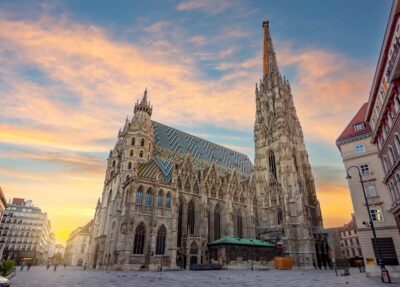
Guided Walking Tour of City Highlights & Hidden Gems
Read our review →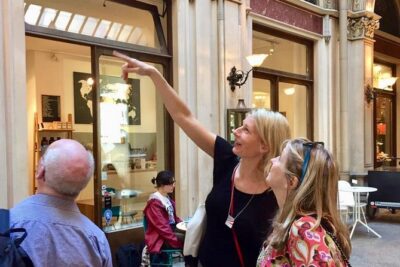
Vienna Historic Center Small Group Walking Tour
Read our review →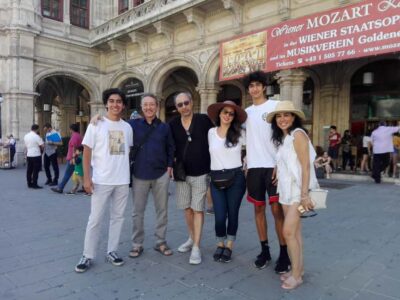
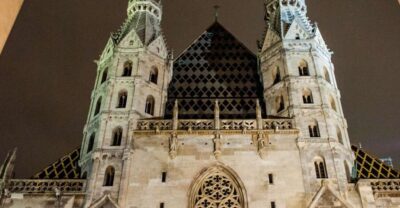
Ghosts and Legends Guided Nighttime Walking Tour
Read our review →
Browse the lists this tour appears in