
Reviewed · WALKING TOURS IN VIENNA
Historical Hitler Walking Tour of Vienna
Hitler’s Vienna is best understood through the city’s streets, memorials, grand buildings, and silences. This 2.5-hour walking tour links Hitler’s early years with Austria’s political collapse, the Nazi takeover, wartime bombing, and the destruction of Vienna’s Jewish community. It is history told at the places where it happened, not a museum lecture.
I like the route’s strong Vienna focus and its stop at the Akademie der bildenden Künste, the art school that rejected Hitler. I also like the way it includes Jewish sites that survived, including the concealed Stadttempel Synagogue. The main caution is simple: this is not a narrow Adolf Hitler biography or a dedicated World War II battlefield tour. It is a broader history walk about Hitler, Vienna, antisemitism, fascism, and the city’s response.
Key points to know before you book
- Hitler’s Vienna is the starting point: Learn about his early years in the city and the art school that refused him admission.
- The route covers major Nazi-era sites: See Heldenplatz, the State Opera, Morzinplatz, and memorials connected to war and fascism.
- Jewish Vienna receives serious attention: Visit the Judenplatz Holocaust Memorial and learn why the city’s main synagogue is hidden behind an apartment building.
- Guides add the real value: Dieter, Wolfgang, Stephan, Charles, and other guides are praised for clear English, thoughtful context, and strong storytelling.
- Expect an easy but lengthy outdoor walk: Comfortable shoes, water, sun protection, and rain gear matter, especially on cold or wet days.
- The price is fair for a small-group history tour: At $32.65 per person, you get a licensed guide and about two and a half hours of focused interpretation.
What this Vienna history walk is really about
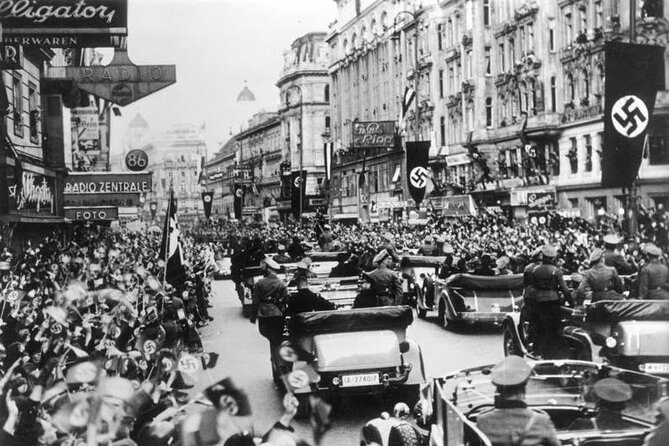
The title may suggest a tour devoted only to Hitler. That is not quite the right expectation. The route uses Hitler’s years in Vienna as a doorway into a much larger story: the social climate that shaped him, the growth of antisemitism, Austria’s enthusiastic support for the Anschluss, the persecution of Jewish citizens, and the damage left by war.
That broader approach is one of the tour’s strengths. You are not simply ticking off places connected to one historical figure. You are looking at how a city’s politics, culture, religion, and public spaces changed under National Socialism.
The tour is offered in English and costs $32.65 per person. For that price, I consider it good value if you want a guide to connect scattered sites that would otherwise seem unrelated. There are no admission fees at the listed stops, so you are paying mainly for the guide’s research, storytelling, and ability to place each location in context.
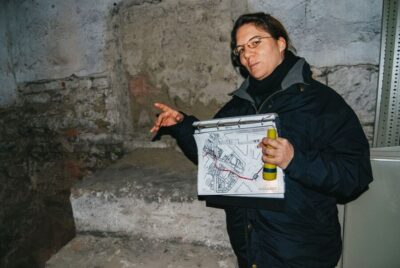
The group can include up to 25 people. That is not an intimate private walk, but it is still a manageable size for a central Vienna tour. Guides such as Dieter, Wolfgang, Stephan, Charles, and Siggy have been praised for their clear delivery and careful handling of difficult material. Some use maps or historical images on a tablet, which can help you picture places as they looked in the 1930s and 1940s.
More Walking Tours in Vienna
- Vienna: Guided Walking Tour of City Center Highlights
★ 4.7 · 4,989 reviews - Vienna: Vienna Central Cemetery Guided Walking Tour
★ 4.8 · 3,307 reviews - Vienna: Guided Walking Tour of City Highlights & Hidden Gems
★ 4.9 · 2,180 reviews
Beginning at the Albertina and Vienna State Opera
The meeting point is Albertinaplatz, outside the Albertina Museum. The tour begins at 2:30 p.m., then moves toward the Vienna State Opera.
The opera house gives the guide a useful way to explain Vienna before and after 1938. It opened in 1869 with Mozart’s Don Giovanni, in the presence of Emperor Franz Joseph and Empress Elisabeth. For generations, it represented the city’s imperial culture and artistic prestige.
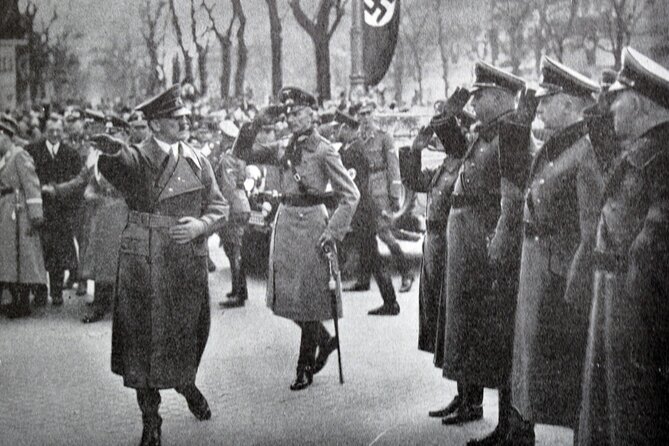
After the Anschluss, that cultural world changed sharply. Hitler visited the opera in 1938, while Jewish artists and employees were forced out, persecuted, or murdered. Some works were banned from performance. The stop helps you see that Nazi rule did not affect only government offices and military sites. It reached into Vienna’s concert halls, theaters, museums, and daily cultural life.
You spend about ten minutes here, but the guide may use the opera as a launch point for a longer explanation. Look up at the grand façade and remember that this was not an isolated monument. It was part of the city’s public identity, and that identity was reshaped by political terror.
The Memorial Against War and Fascism
The walk continues to the Memorial Against War and Fascism in Albertinaplatz. Austrian sculptor Alfred Hrdlicka created the memorial, which was installed in 1988. Its purpose is to confront the darkest parts of Austria’s 20th-century past.
This is an important stop because Austria spent decades presenting itself mainly as a victim of Nazi Germany. The memorial pushes you toward a more difficult question: how much responsibility did Austrians bear for persecution and collaboration?
The site is not polished in the way many central Vienna monuments are. It is direct, physical, and uncomfortable. That is appropriate here. Your guide explains the meaning of the sculptures and connects them to war victims, fascism, and the destruction of civilian life.
The tour also discusses the more than 100,000 bombs that struck Vienna during World War II. Much of the historic center survived, but the city suffered major damage. As you walk through streets that now look orderly and grand, the scale of that destruction is easy to miss without a guide pointing out what changed.
Hitler’s rejected art school
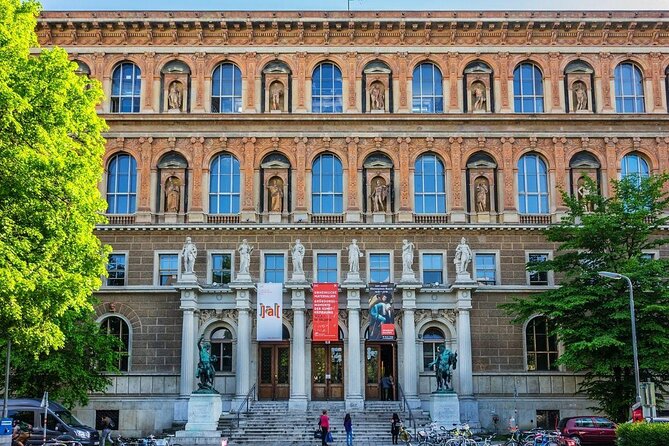
At the Akademie der bildenden Künste, you learn about Hitler’s early ambitions. He applied to the art academy and was not accepted.
This is a familiar detail, but the setting gives it more weight than a paragraph in a biography. The academy was part of the world Hitler wanted to enter, and his failure there formed one piece of his difficult years in Vienna. The guide places this episode within his early life rather than presenting it as a single cause of everything that followed.
This is also where the tour’s limits become clear. You will not get a full account of every year of Hitler’s life, and the walk is not designed as a psychological diagnosis. Instead, it asks you to consider how personal frustration, political movements, and the social climate of Vienna overlapped.
I appreciate that distinction. Simple explanations are tempting with a subject like this, but the best guides keep the story tied to evidence and place. Guides including Dieter and Wolfgang are particularly praised for presenting the material with care and allowing questions.
More Historical Tours in Vienna:
- Vienna: Time Travel and Magic Vienna History Tour
★ 4.6 · 3,879 reviews - Vienna: World War II Historical Walking Tour
★ 4.8 · 1,772 reviews - Vienna Historic Center Small Group Walking Tour
★ 5.0 · 1,746 reviews - Time Travel-Magic Vienna History Tour Ticket
★ 4.5 · 1,099 reviews
Heldenplatz and the March 15, 1938 speech
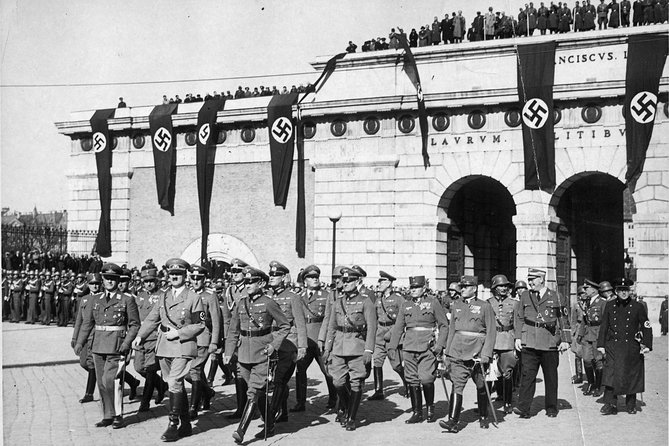
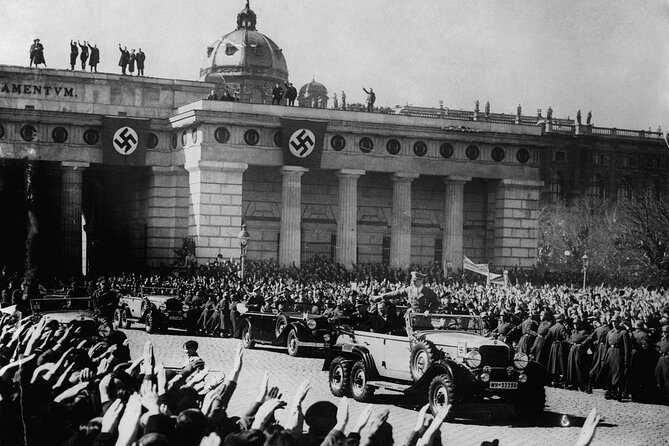
Heldenplatz is one of the most powerful places on the route. On March 15, 1938, Hitler addressed a huge crowd from the balcony of the Neue Hofburg after Nazi Germany annexed Austria.
The speech became a symbol of the Nazi seizure of power and the public support that greeted it. Standing in the square, you can picture how the imperial setting was turned into a stage for political theater. The grand buildings that once projected Habsburg authority now framed a speech announcing Austria’s absorption into the German Reich.
This stop is valuable because it challenges the idea that Austria was simply occupied from outside. The story includes pressure, intimidation, and terror, but it also includes public enthusiasm and cooperation. A good guide will explain that uncomfortable mix rather than reducing the event to a simple national narrative.
Allow the guide time here. Heldenplatz is one of Vienna’s most important civic spaces, and its connection to 1938 makes it more than a scenic stop near the Hofburg. The historical meaning remains visible even though the crowds and political banners are long gone.
Judenplatz and the Austrian Jewish victims of the Shoah
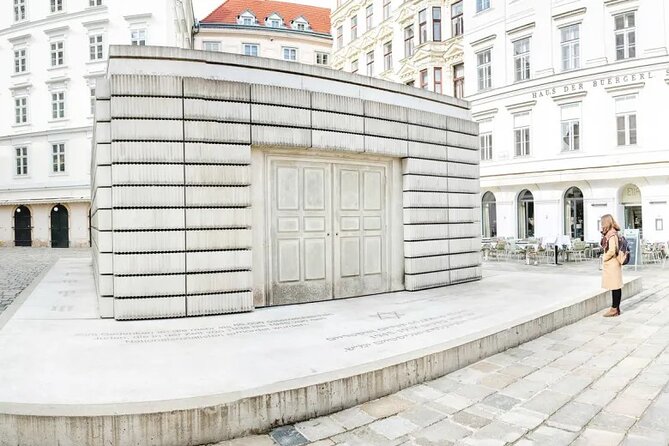
The route then crosses the historic center toward Judenplatz. Here, the Holocaust Memorial commemorates the more than 65,000 Austrian Jews murdered by the National Socialists between 1938 and 1945.
The memorial is often called the Nameless Library. Its closed shelves suggest books that cannot be opened and lives that cannot be recovered. The design avoids a long list of names, instead creating a physical sense of absence.
This is one of the tour’s most important pauses. You are not only hearing about persecution in general terms. You are being asked to remember the Jewish population of Austria and the scale of the murder carried out against it.
The guide also explains the long presence of Jewish life in Vienna and how quickly that life was attacked after 1938. The tour visits Jewish architecture that survived the Holocaust, but survival should not be confused with an unbroken community. The memorial makes clear how much was lost.
This section may be emotionally heavy. That is not a flaw, but you should book with the understanding that the tour deals openly with deportation, murder, antisemitism, and the choices forced on people under Nazi rule.
Morzinplatz and the former Gestapo headquarters
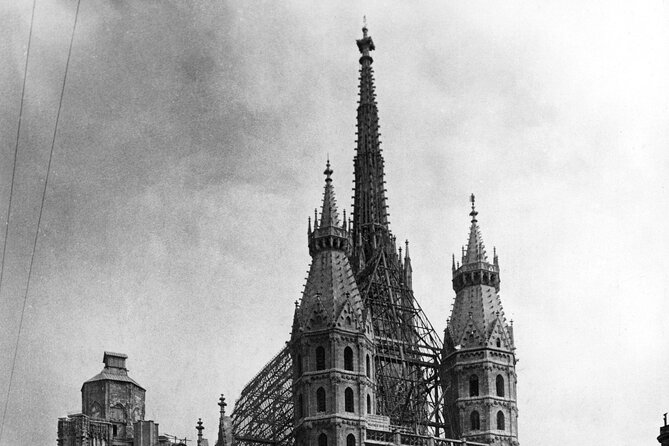
At Morzinplatz, you see a memorial marking the site of the former Hotel Metropole. Before the Nazi period, it was a luxury hotel. Under National Socialism, it became one of the Gestapo’s most brutal headquarters in the Third Reich.
The contrast between a fashionable hotel and a center of interrogation and terror is stark. It shows how ordinary urban buildings can be turned into instruments of repression. Today, the site does not look like the frightening place it once was, which makes the guide’s explanation especially useful.
This is the kind of stop you might walk past without noticing. There is no grand palace façade to announce its importance. The memorial and the guide’s account restore the location to Vienna’s historical map.
The tour’s less famous sites are a major reason to book it. You will see celebrated landmarks, but the darker story often comes through most clearly at places that are easy to overlook.
The concealed Stadttempel Synagogue
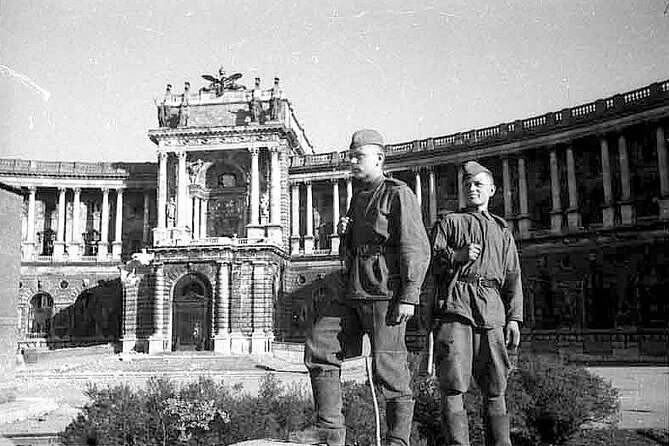
Near the end of the walk, the group reaches the Infopoint Jewish Vienna and learns about the Stadttempel, Vienna’s main synagogue on Seitenstettengasse.
The synagogue is hidden behind a five-story apartment building. Under regulations in force at the time, non-Catholic houses of worship could not be visible from the street. The synagogue therefore sits behind the street-facing building rather than presenting a public façade.
That arrangement tells you something about the religious restrictions built into Vienna’s architecture. It also explains why the synagogue can be easy to miss if you do not know where to look. Above the entrance gate is an inscription meaning come to his gates with thanksgiving, to his courts with praise.
This final section gives the tour a different tone. You have spent much of the walk looking at persecution and state violence. Here, you also consider continuity, faith, and the survival of Jewish life in the city.
The tour includes other locations beyond the main stops listed here. The exact balance can depend on the guide and the pace of the group, but the central themes remain Hitler’s Vienna, Nazi rule, the Holocaust, and the city’s memory of the period.
How difficult is the 2.5-hour walk?
The tour requires moderate physical fitness. It is an outdoor walking experience through central Vienna, with pauses at monuments and public spaces. You should wear comfortable shoes and clothes rather than treating this as a short sightseeing stroll.
Weather is an important practical issue. Vienna can be cold, windy, rainy, or sunny within the same week, and the afternoon start can lead into a chilly evening. Bring water, sunblock, and a raincoat or umbrella.
Several guides make indoor pauses when conditions are unpleasant, which can help on very cold days. Still, you should not rely on the route being mostly indoors. One cold-weather account specifically notes that the walk remained worthwhile but required warm clothing.
The tour uses a mobile ticket and ends near Schwedenplatz after roughly two and a half hours. That makes the finish convenient. Schwedenplatz is served by the U1 and U4 lines and has many restaurants, so you can easily continue to dinner or return to your hotel.
One practical concern is the busy meeting area at Albertinaplatz. Arrive early, identify the guide or meeting-point staff, and make sure you are with the right group before the walk begins. The operator asks guides to keep the group together, but it is still sensible to pay attention when the tour sets off.
How good is the $32.65 value?
At $32.65, this tour sits in a reasonable range for a guided central Vienna walk lasting about 150 minutes. You do not pay for attraction admission, food, drinks, or hotel transport. The licensed guide is the central product.
That is good value if you would otherwise spend time reading plaques, searching for addresses, and trying to connect the sites yourself. The guide provides the chronology and the moral context, which are difficult to reconstruct from the monuments alone.
The value depends heavily on your interest. If you want grand interiors, classical music, or a general introduction to Vienna, a standard city walk may suit you better. If you want a focused account of Austria’s Nazi past and Jewish history, the price is fair.
The strongest guides add a great deal. Dieter is praised for careful organization and philosophical questions. Wolfgang is noted for his warm manner and broad historical knowledge. Stephan has used maps and pictures on an iPad to make the past easier to visualize. Charles and Siggy are also described as engaging and clear.
Guide quality can vary, as it does on any scheduled group tour. A single poor experience has also raised concerns about a group moving off too quickly and becoming difficult to find. That is a useful reminder to arrive early and stay alert at the start.
Who should book this tour?
You should book it if history is one of the main reasons you visit Vienna. The route suits you especially well if you want to understand Hitler’s connection to the city, the political climate around the Anschluss, the treatment of Jewish Austrians, and the way Vienna remembers the Nazi era.
It also works for people who already know a fair amount about World War II. The focus remains on Vienna and Austria, so you may hear details that a general European war tour would skip.
You may want to choose another activity if you dislike serious subjects or prefer a relaxed architectural walk. The tour includes beautiful parts of central Vienna, but the mood is reflective rather than light. It also is not a museum visit, and the main reward comes from listening carefully outdoors.
The walk is offered in English, allows service animals, and operates near public transportation. It requires good weather and a minimum number of participants. If the operator cancels because of weather or insufficient bookings, you can choose another date or receive a full refund. You can cancel for a full refund up to 24 hours before the start time.
Should you book the Historical Hitler Walking Tour of Vienna?
I would book this tour if you want a serious, place-based look at Vienna from Hitler’s early years through the Nazi takeover and Holocaust. The strongest reasons are the city-specific route, the Judenplatz and Stadttempel stops, and the guides’ ability to connect grand landmarks with less obvious sites of terror.
Go in expecting a broad historical walk, not a two-hour biography of Hitler. Wear warm, comfortable clothing, arrive early at Albertinaplatz, and be ready to spend much of the afternoon outside. At $32.65, it is a solid choice for a history-minded visitor who wants context, not just photographs.
FAQ
Where does the Historical Hitler Walking Tour of Vienna start?
The tour starts outside the Albertina Museum at Albertinaplatz, 1010 Vienna. The scheduled start time is 2:30 p.m.
Where does the walking tour finish?
The tour ends near Schwedenplatz in central Vienna. The area has U1 and U4 underground connections and many restaurants.
How long does the tour last?
The experience lasts approximately 2 hours and 30 minutes.
What places are included on the route?
The main stops include the Vienna State Opera, Memorial Against War and Fascism, Akademie der bildenden Künste, Heldenplatz, Judenplatz Holocaust Memorial, Morzinplatz, and the Infopoint Jewish Vienna near the Stadttempel Synagogue. The guide also visits other sites along the way.
Is the tour focused only on Adolf Hitler?
No. The tour covers Hitler’s early life in Vienna, but it also explains Austria’s political and cultural history, the 1938 Anschluss, World War II damage, Nazi persecution, the Holocaust, and Jewish Vienna.
What happens if the weather is bad or I need to cancel?
You can cancel up to 24 hours before the start time for a full refund. If poor weather or insufficient bookings causes the operator to cancel, you can receive a full refund or choose another date or experience.
Recently added around Vienna
- Vienna: Private tour Mauthausen and Linz★ 4.1 · 3 reviews
- 2-Day Prague Tour from Vienna with private Transfers and Lunches★ 5.0 · 3 reviews
- Vienna Self Guided Sherlock Holmes Murder Mystery Game★ 4.5 · 3 reviews
- Vienna Private Schönbrunn Palace Tour, Extra Rooms and Gardens★ 5.0 · 3 reviews
- Small-group Vienna Wine Tour★ 5.0 · 3 reviews
- Salzburg and Lake Region Private Day Trip from Vienna★ 5.0 · 3 reviews
- True Crime mobile puzzle rally Vienna★ 4.0 · 3 reviews
- Vienna: Wachau Valley Private Kayak and Wine Tour★ 5.0 · 3 reviews
Walking Tours in Vienna, compared.
Guided Walking Tour of City Center Highlights
Read our review →
Guided Walking Tour of City Highlights & Hidden Gems
Read our review →
Vienna Historic Center Small Group Walking Tour
Read our review →
Ghosts and Legends Guided Nighttime Walking Tour
Read our review →
Browse the lists this tour appears in