
Reviewed · WALKING TOURS IN VIENNA
World War II History Vienna Old Town Private Walking Tour
Vienna’s grandest streets carry some of Europe’s darkest stories. This private walk links the assassination of Franz Ferdinand, Hitler’s annexation of Austria, the Holocaust, and Vienna’s bombing and liberation, turning familiar sights such as Hofburg and St. Stephen’s Cathedral into places with sharper meaning. I like the expert commentary and the chance to ask questions without a large public group. I also like that the guide can shape the two hours around your interests, whether you want more politics, military history, or the fate of Vienna’s Jewish community.
The main drawback is the price: at $214 per person, this is a serious spend for a two-hour walk, especially for a couple or family. You also need comfortable shoes and weather-ready clothing, since the tour stays outdoors and covers the Old Town on foot.
Key points to know before you book
- Morzinplatz begins the story at the former Gestapo headquarters, where the Memorial to the Victims of Nazi Terror sets a sober tone from the first minute.
- The route connects major sights with lesser-noticed evidence, including Remembrance Stones and wartime memorials you might pass without understanding on your own.
- The private format gives you room to ask difficult questions, with one guide for groups of up to 25 people.
- Hofburg and Heldenplatz bring Austria’s political story into focus, including the country’s relationship with Hitler and the Nazi period.
- The ending near the Vienna State Opera recalls the 1945 bombing, giving the walk a clear final chapter.
- Guides include Peter, Sanda, Alexander, and Frau Heuberger, with tours available in 12 languages.
Why this Vienna history walk matters
I like history tours that use a city as their classroom. This one does exactly that. You are not spending two hours in a room looking at dates on a screen. You are walking through Vienna’s center, where imperial power, Nazi rule, Jewish persecution, wartime destruction, and postwar remembrance meet within a compact area.
The route also handles both world wars rather than treating World War II as an isolated event. You begin with the political tensions surrounding World War I and the assassination of Franz Ferdinand, then follow the consequences into Austria’s later history. From there, the guide explains Hitler, Austrian Nazis such as Ernst Kaltenbrunner, Austrofascism, the annexation of Austria, and the Holocaust.
That wider frame is useful because Vienna’s wartime story is not simple. Austria was not merely an innocent victim of German aggression, and the tour addresses that difficult subject directly. You will hear about German occupation, Austrian involvement, political propaganda, and the suffering of Jewish citizens.
I especially like the focus on ordinary city streets. The tour is not limited to famous palaces. As you move through the Inner Stadt, the guide points out places tied to remembrance and persecution, including the Holocaust Memorial and Remembrance Stones. These details can be easy to miss when you are sightseeing alone, yet they help explain how history remains present in today’s Vienna.
More Walking Tours in Vienna
- Vienna: Guided Walking Tour of City Center Highlights
★ 4.7 · 4,989 reviews - Vienna: Vienna Central Cemetery Guided Walking Tour
★ 4.8 · 3,307 reviews - Vienna: Guided Walking Tour of City Highlights & Hidden Gems
★ 4.9 · 2,180 reviews
Starting at Morzinplatz and the Gestapo story
Your meeting point is the Memorial to the Victims of Nazi Terror at Morzinplatz 4. This is a strong beginning because it immediately places the tour in Vienna’s Nazi past rather than easing in with a general palace tour.
The memorial is near the former Hotel Metropol, which was used as Gestapo headquarters in Vienna from 1939. Your guide uses this location to explain Nazi terror, the political climate of occupied Austria, and the people affected by the system.
I would allow a few quiet minutes here before the walk gets moving. The subject is grim, and the memorial gives you a physical place to think about what the guide is describing. If you arrive early, check the exact meeting point carefully. Morzinplatz is central, but a clear starting point matters when you are meeting a private guide in a busy European capital.
This opening also helps you understand the tour’s tone. It is not a light sightseeing stroll with a few wartime facts added at the end. The focus is serious, and the guide will discuss Nazi violence and the Holocaust in direct terms.
Walking through Vienna’s Jewish memory
As the tour continues through the Old Town, the guide discusses the tragic fate of Vienna’s Jewish citizens. You pass the Holocaust Memorial and several Remembrance Stones, linking broad political events to individual lives and local places.
This part of the route may be the most valuable for people who want more than military history. Battles and political leaders often dominate World War II tours, but the memorials in Vienna bring attention to persecution, deportation, and loss. The guide’s job is to explain what these sites represent and how they fit into the city’s wartime story.
The private setup helps here. You can ask for clarification, pause at a memorial, or request more detail about Jewish life, Nazi policy, or postwar remembrance. A public group may need to keep moving, while your guide can respond more directly to your questions.
The tour is also suitable for families with older children who can handle serious material. One guide, Peter, received praise for answering questions carefully and showing patience with a family traveling with a two-year-old. That does not turn this into a children’s tour, but it suggests that the guide can adjust the pace when a small child needs attention.
Hofburg, Heldenplatz, and the politics of power
The Hofburg is one of Vienna’s grandest sights, and the tour views the imperial palace complex from the outside. Here, the setting helps explain Austria’s old imperial identity and its later political upheaval.
You will also visit Heldenplatz, where the tour includes a Memorial Crypt dedicated to victims of World War I and World War II. This is an important stop because it places sacrifice and remembrance beside the symbols of imperial power. The contrast is hard to miss: monumental architecture on one side, memorial space on the other.
The guide discusses the political changes that shaped Austria before and during World War II, including Austrofascism and Hitler’s annexation of his homeland. You will hear about Hitler and Austrian Nazis such as Ernst Kaltenbrunner, along with the effects of propaganda and German occupation on daily life.
I like this section because it avoids treating Vienna’s beautiful buildings as separate from modern history. Hofburg is not just a palace photo stop. In the context of this walk, it becomes part of a story about authority, national identity, political control, and the way governments use public spaces.
The tour does not include interior visits to Hofburg. That keeps the walk focused and helps fit the route into two hours, but you should know what you are buying. If you want imperial apartments, museum rooms, or long architectural detail, you will need a separate visit.
More Historical Tours in Vienna:
- Vienna: Time Travel and Magic Vienna History Tour
★ 4.6 · 3,879 reviews - Vienna: World War II Historical Walking Tour
★ 4.8 · 1,772 reviews - Vienna Historic Center Small Group Walking Tour
★ 5.0 · 1,746 reviews - Time Travel-Magic Vienna History Tour Ticket
★ 4.5 · 1,099 reviews
Burggarten and the memory of Franz Joseph
At Burggarten, the guide points out the monument to Emperor Franz Joseph I. This stop connects the earlier imperial period with the conflicts that reshaped Europe.
The value here is not simply seeing another statue. Your guide can use Franz Joseph’s image to explain the older Austria that existed before World War I, then connect that world to the assassination of Franz Ferdinand and the political chain that followed.
For many visitors, Vienna’s imperial sights can seem polished and detached from the violence of the twentieth century. This stop helps correct that impression. You see how the old monarchy, the First World War, later authoritarian politics, and the Nazi period fit into one long historical line.
Because the tour is only two hours, expect a guided explanation rather than a long stop with extensive background on every emperor. That is a fair trade if your main interest is the transition from imperial Vienna to wartime Vienna.
Ending near the Vienna State Opera
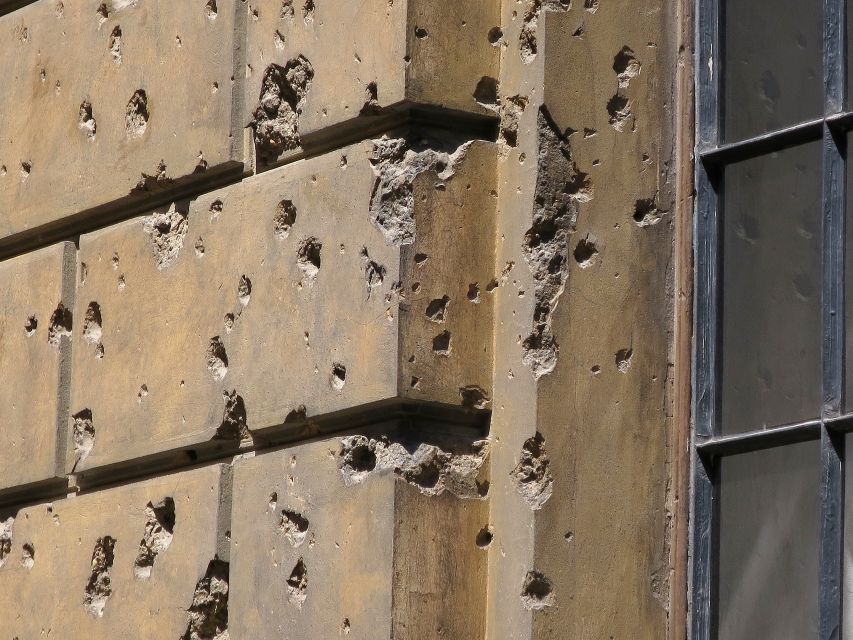
The route ends at the Monument Against War and Fascism near the Vienna State Opera. The opera house itself was heavily damaged by the 1945 bombing, giving the final stop a direct connection to the destruction of Vienna during the war.
This is a fitting end because the tour has moved from political causes and persecution to the physical cost of war. You finish with a monument that addresses both war and fascism, rather than ending at a palace or shopping street.
The location is also practical. The Vienna State Opera is a major central landmark, so you can continue sightseeing after the tour. You might visit another nearby attraction, find a café, or simply use the opera as a clear point for your next plans. The activity itself does not include an interior visit to the opera house.
I appreciate the route’s beginning and ending. Morzinplatz brings you face to face with Nazi terror, while the opera district shows how the war damaged the city itself. Between those points, the memorials and historic buildings give the story a strong sense of place.
What the private format adds
A private tour is most useful when you have specific questions. You can ask about Austria’s political choices, the role of Austrian Nazis, Jewish history, the meaning of a particular memorial, or how the war affected Vienna’s streets and buildings.
The group limit is one to 25 people per guide. That is a fairly broad range. A private tour for two or four people should feel personal, while a group of 20 or 25 will be more like a small organized excursion. Larger groups require additional guides and cost more.
Your guide may be Peter, Sanda, Alexander, Frau Heuberger, or another licensed guide assigned in your chosen language. Sanda was described as very professional, Alexander received a short but strong endorsement, and Frau Heuberger was praised for adjusting the walk to personal wishes. During a period of intense heat, she balanced explanations with pauses and moved the group between shaded places.
That last detail matters. Vienna can be hot in summer, and this is a walking tour with no promise of indoor stops. If you book for a hot day, ask your guide to manage pauses. The route is more enjoyable when you can listen properly instead of thinking only about your feet and the sun.
Languages and guide style
You can request English, German, Italian, French, Spanish, Russian, Polish, Chinese, Japanese, Croatian, Portuguese, or Arabic. That range makes the tour useful for mixed-language families and international groups.
A private guide fluent in your selected language can explain difficult subjects with more care than a short audio guide or a sign at a memorial. The quality of any live tour depends partly on the individual guide, but the available names and comments point to a team that can adapt its delivery.
You should also use the private format actively. Tell the guide at the start if you want more World War I, more Holocaust history, more information about Hitler and Austrian Nazis, or more attention to architecture and memorial design. The experience is described as tailored to your needs, so your questions can help shape the balance.
Is two hours enough for Vienna’s wartime story?
Two hours is enough for an introduction and a focused walk through central Vienna. It is not enough for every event, person, or memorial connected with both world wars.
The advantage is concentration. You move through a clear sequence of sites without spending half a day on a single museum. The disadvantage is that some explanations may need to remain brief, especially if the group asks many questions or stops for photographs.
I would book this early in your Vienna stay if modern history is important to you. It can give you a framework for later visits to museums and memorials. It also helps you notice wartime traces that you might otherwise overlook during palace and cathedral sightseeing.
The route includes exterior sightseeing, so it works best if you want history on the street. If you prefer long indoor exhibits, original documents, and large collections, this walk should supplement a museum visit rather than replace one.
Price, pace, and practical value
At $214 per person, the tour is expensive for two hours. The value depends heavily on group size and how much you want personal guidance.
For one or two people, the cost may be difficult to justify unless you place a high value on a private guide, a chosen language, and the ability to ask detailed questions. For a larger family or private group, the per-person cost can feel more reasonable, especially when the guide adjusts the pace and subject matter to your interests.
You are paying for a licensed guide, private-group attention, historical commentary, and a route that combines several difficult subjects. You are not paying for museum admission, transport, or an interior visit to Hofburg. Keep that distinction in mind when comparing it with other Vienna activities.
The tour lasts two hours, and starting times depend on availability. Cancellation is free up to 24 hours before the tour, and you can reserve now and pay later. Check your email the day before for important meeting information, then wear comfortable shoes and dress for the weather.
Who should book this walk?
I would recommend it to you if you want a clear introduction to Vienna’s role in World War I and World War II, especially if you prefer places and monuments to a long indoor lecture.
It is a good fit for:
- Couples or families who want a private guide and flexible questions
- History-focused visitors with limited time in Vienna
- People interested in the Holocaust and Jewish remembrance
- Visitors who want to understand Austrofascism and Austria’s Nazi period
- Groups needing a tour in one of the 12 available languages
- Returning visitors who have already seen the major imperial sights and want a darker, more modern side of the city
I would think twice if you want an upbeat general introduction to Vienna, extensive interior sightseeing, or a cheap activity. The subject matter is heavy, and the price is high for a short walk.
Should you book the World War II History Vienna Old Town tour?
Book it if you want a serious, focused account of Vienna’s wartime past and you value direct access to a private guide. The strongest features are the route from the former Gestapo headquarters to the Monument Against War and Fascism, the attention to Holocaust memorials, and the chance to connect imperial Vienna with the political disasters that followed.
Skip it if your main goal is to see palace interiors or cover Vienna’s general highlights at the lowest possible cost. For everyone else, this is a useful two-hour history lesson on foot, provided you arrive ready for difficult subjects and make the most of the guide’s flexibility.
FAQ
How long does the World War II History Vienna Old Town tour last?
The tour lasts two hours.
Where does the tour begin?
Meet your guide in front of the Memorial to the Victims of Nazi Terror, Denkmal der Opfer des Faschismus, at Morzinplatz 4, 1010 Vienna.
Where does the tour end?
The tour ends at the Monument Against War and Fascism near the Vienna State Opera.
Is the tour private?
Yes. It is offered as a private group experience.
How many people can join one guide?
The group size is limited to 1 to 25 people per guide. Larger groups require additional guides, and the price will be higher.
Which languages are available?
The tour is available in English, German, Italian, French, Spanish, Russian, Polish, Chinese, Japanese, Croatian, Portuguese, and Arabic.
Does the tour enter Hofburg?
No. Hofburg is viewed from the outside during the walking route.
What should I wear?
Wear comfortable shoes and dress appropriately for the weather because the tour takes place on foot outdoors.
Can I cancel the tour?
Yes. You can cancel up to 24 hours in advance for a full refund. You can also reserve the tour and pay later.
Recently added around Vienna
- Vienna: Private tour Mauthausen and Linz★ 4.1 · 3 reviews
- 2-Day Prague Tour from Vienna with private Transfers and Lunches★ 5.0 · 3 reviews
- Vienna Self Guided Sherlock Holmes Murder Mystery Game★ 4.5 · 3 reviews
- Vienna Private Schönbrunn Palace Tour, Extra Rooms and Gardens★ 5.0 · 3 reviews
- Salzburg and Lake Region Private Day Trip from Vienna★ 5.0 · 3 reviews
- Small-group Vienna Wine Tour★ 5.0 · 3 reviews
- True Crime mobile puzzle rally Vienna★ 4.0 · 3 reviews
- Exploring the Gutenstein Alps★ 5.0 · 3 reviews
Walking Tours in Vienna, compared.

Guided Walking Tour of City Center Highlights
Read our review →
Guided Walking Tour of City Highlights & Hidden Gems
Read our review →
Vienna Historic Center Small Group Walking Tour
Read our review →


Ghosts and Legends Guided Nighttime Walking Tour
Read our review →

Browse the lists this tour appears in