
Reviewed · WALKING TOURS IN VIENNA
Private Vienna Highlights History Walk — WWII and Post War Vienna
Vienna’s imperial beauty takes on a sharper meaning on this private walk. You move from Belvedere Palace and its postwar symbolism to the Soviet memorial, Hitler’s Anschluss speech site, a Holocaust memorial, and St. Stephen’s Cathedral, where the war left its mark. The route connects grand sights with difficult history.
I especially like the flexible private format, which lets your guide adjust the route around your interests and prior sightseeing. I also like the practical help with trams, trains, and the subway. The main consideration is that three hours goes quickly, and public transport fares, food, drinks, and hotel drop-off are not included.
Key points to know before booking
- WWII and postwar focus: The route links the 1945 Soviet memorial, the 1938 Anschluss site, Vienna’s Flak towers, the Holocaust memorial, and wartime damage at St. Stephen’s Cathedral.
- Private group of up to 10: You get one licensed Austria Guide for your party, rather than joining a large group.
- Hotel pickup included: The guide can meet you at a Vienna hotel, vacation rental, train station, or the Reichsbrücke pier.
- Public transport may be part of the route: A short tram ride and possible subway or train use help cover more ground, but tickets are extra.
- Strong guide choice matters: Walter, Brigitte, Alex, Andrea, Hannes, and Dr. Stollhof are named among the guides who have led this company’s private walks.
- Best for a first Vienna visit: You see many central landmarks in three hours, but the schedule is more of an informed overview than a museum-by-museum visit.
Why this walk gives Vienna more meaning
Vienna can be easy to admire and hard to understand. The palaces, churches, gardens, and formal squares are beautiful, but they also reflect military ambition, monarchy, dictatorship, occupation, religious power, and national recovery.
This walk helps you read those layers in sequence. It begins with the Belvedere, where imperial ambition and modern Austrian identity meet. It then moves through memorials and public spaces tied to liberation, Nazi rule, Jewish persecution, and the rebuilding of civic life.
I like that the route does not treat WWII as an isolated subject. You see how the war fits into Vienna’s longer story, from the Habsburg court to the modern republic. That broad frame is useful if you are visiting Vienna for the first time or have only a day in the city.
The private setup also changes the tone. You can ask why a memorial looks the way it does, pause for photographs, or request more detail about architecture, religion, politics, or daily life. The guides are described as warm, witty, organized, and good at answering questions. One guide even followed up on a question outside the planned subject, which gives you a sense of the personal service this format is meant to provide.
More Walking Tours in Vienna
- Vienna: Guided Walking Tour of City Center Highlights
★ 4.7 · 4,989 reviews - Vienna: Vienna Central Cemetery Guided Walking Tour
★ 4.8 · 3,307 reviews - Vienna: Guided Walking Tour of City Highlights & Hidden Gems
★ 4.9 · 2,180 reviews
Belvedere Palace: from Prince Eugene to the Second Republic
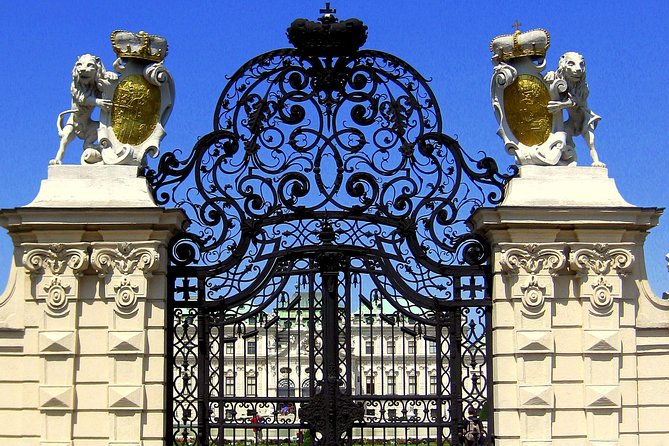
The tour begins at Upper Belvedere, one of Vienna’s best viewpoints. Prince Eugene of Savoy built the palace complex. He was a celebrated military commander, but not a reigning monarch, and his former residence makes a useful opening point for a discussion of power.
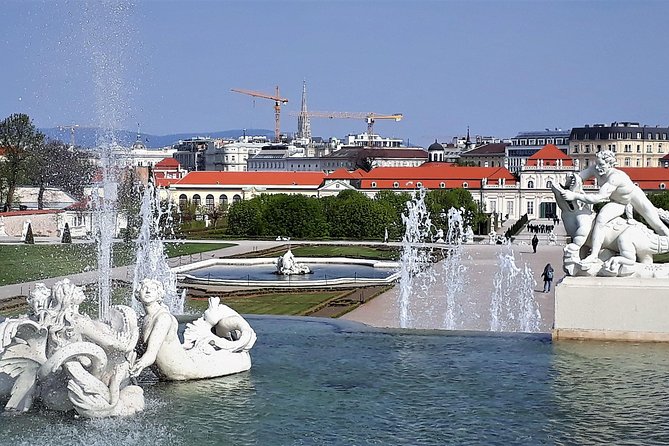
From the terrace, you look across Vienna before descending through the formal Belvedere Gardens. The view is not just decorative. It reflects the ordered style of the Baroque age, with its central axis, controlled planting, and carefully arranged relationship between palace and garden.
The guide also connects the palace to 1955, when Austria signed the State Treaty at the Belvedere. That agreement restored Austrian independence after the postwar occupation and helped shape the country’s policy of neutrality. The contrast is striking: a palace built to project military and aristocratic power became linked with the birth of Austria’s Second Republic.
You spend about 20 minutes at Upper Belvedere, followed by a walk through the gardens and past Lower Belvedere. Admission to the tour stops is listed as free, so you are seeing the exteriors and public spaces rather than taking a full museum visit.
That distinction matters. If you want to see the Belvedere art collection inside, you will need separate time and admission. The palace is famous for Gustav Klimt’s paintings, but this walk uses the complex mainly to explain Vienna’s political past and provide an impressive opening view.
Schwarzenbergplatz and the memory of 1945
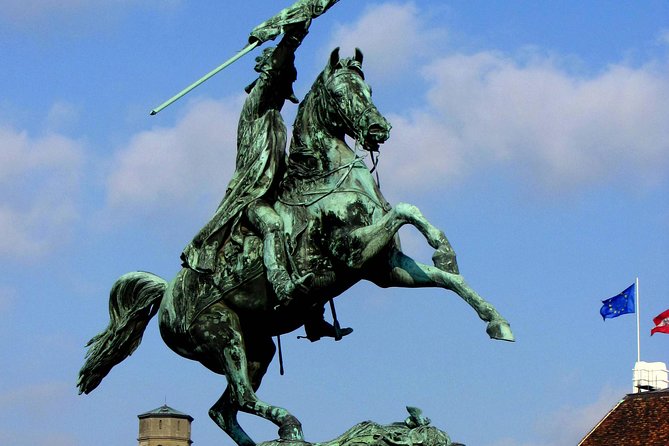
From Belvedere, the route continues to Schwarzenbergplatz and the Soviet War Memorial. The monument honors Red Army soldiers who died in the fighting that ended Nazi rule in Vienna in 1945.
This is one of the most useful stops because it introduces a difficult truth. The Soviet Army helped defeat Nazi Germany and end the dictatorship in Austria, but Soviet forces also remained as an occupying power after the war. Liberation and occupation are both part of the memory attached to this monument.
The guide can help you understand why the memorial remains politically and emotionally complicated. You are not simply looking at a monument to victory. You are looking at a public reminder of the price of liberation and the years that followed.
Nearby, the Hochstrahlbrunnen fountain and French Embassy add another layer. The fountain celebrates Vienna’s alpine water supply, while the elegant embassy reflects a different Allied presence and architectural language. The stop is brief, around 10 minutes, but it shows how much history can sit within a short walk.
A tram ride along Vienna’s grand Ringstraße
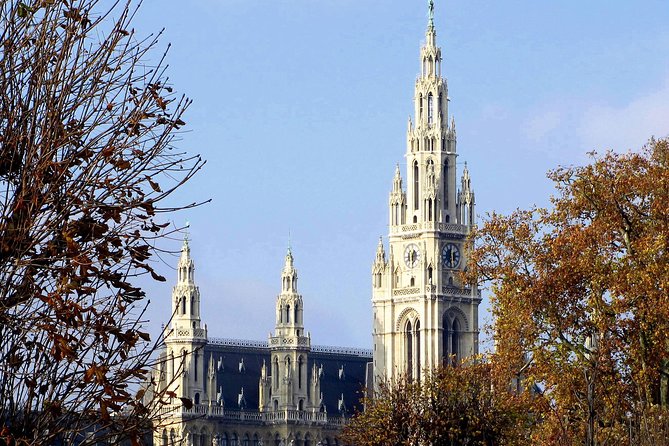
A short tram ride along the Ringstraße gives the tour a change of pace. Public transport is not just a way to save your feet. It helps you cover more of central Vienna and see the grand boulevard as part of the city’s 19th-century modernization.
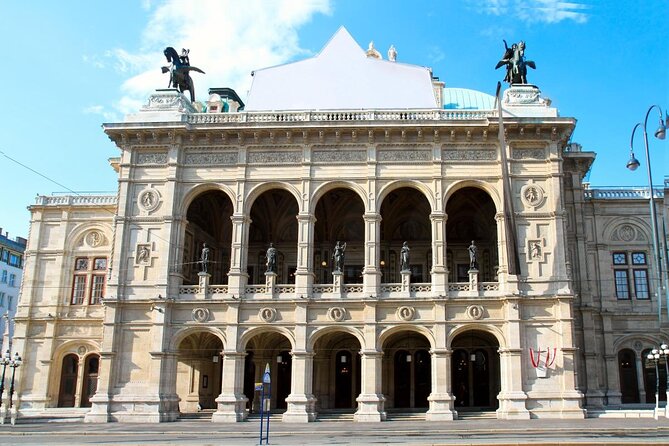
The Ringstraße was created as a prestige project around the former inner city. Along it are major civic and cultural buildings, including the State Opera. The opera house was damaged during WWII and later rebuilt, making it a useful example of cultural continuity after destruction.
I appreciate this practical part of the experience because Vienna’s transport system can seem confusing during a short visit. Guides such as Walter are praised for handling subway, tram, and train connections with confidence. You still pay your own fares, but learning the system can make the rest of your stay easier.
The exact amount of riding may depend on the group’s interests and starting point. Confirm the transport plan before setting out, especially if you are trying to manage a tight schedule.
More Historical Tours in Vienna:
- Vienna: Time Travel and Magic Vienna History Tour
★ 4.6 · 3,879 reviews - Vienna: World War II Historical Walking Tour
★ 4.8 · 1,772 reviews - Vienna Historic Center Small Group Walking Tour
★ 5.0 · 1,746 reviews - Time Travel-Magic Vienna History Tour Ticket
★ 4.5 · 1,099 reviews
Burggarten and the story of Hitler’s rejected art-school application
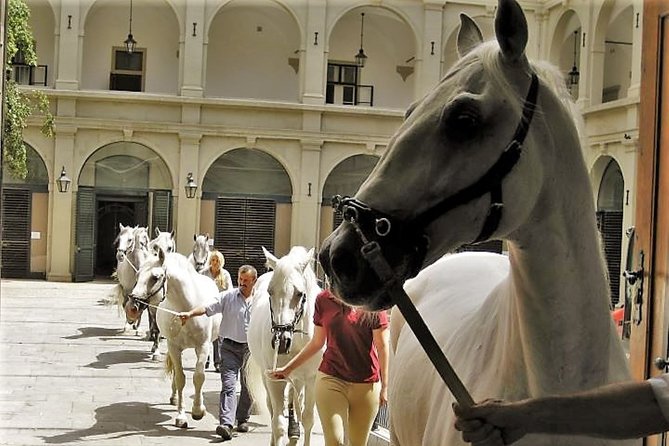
Burggarten brings you back into the imperial center. The garden once belonged to the court, and Mozart’s monument gives the setting its familiar musical face.
Close by is the Academy of Fine Arts, associated with Adolf Hitler’s unsuccessful application to study art. It is a memorable detail, but your guide should place it in proportion. The rejection is an interesting historical footnote, not a complete explanation for the rise of Nazism.
This stop lasts only about five minutes, so expect a quick explanation and perhaps time for a photograph. It works best as part of the larger story of how ordinary places in Vienna became connected to later events.
MuseumsQuartier and the concrete Flak tower
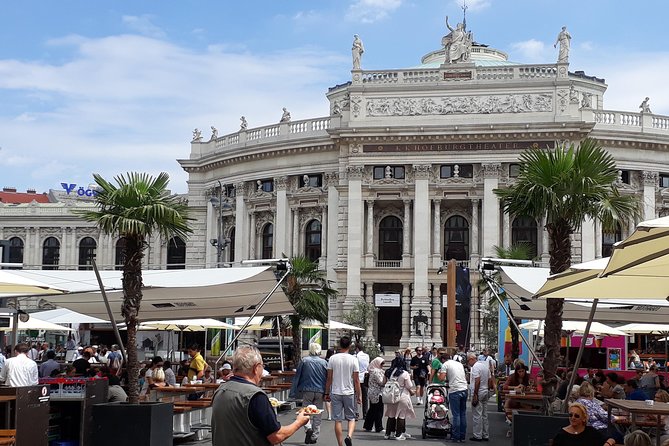
At Maria Theresa Square, the route passes between the twin museums with the empress presiding from the center. The square presents the confident public image of imperial Vienna: symmetry, ceremony, art, and state power.
Then look beyond the polished façades for one of the city’s six Flak towers. These huge concrete anti-aircraft structures were built during the final, militarized period of WWII. Their size and strength made them difficult to remove, so they remain as stark reminders of the war in a city known for palaces and museums.
This contrast is one of the walk’s best visual lessons. Vienna’s monumental architecture does not tell only one story. The same city that created grand imperial spaces also became a heavily defended target during the war.
The stop takes about 10 minutes. You will not tour the tower as part of this walk, but seeing it from the surrounding cultural district makes the wartime past difficult to ignore.
Heldenplatz and the 1938 Anschluss
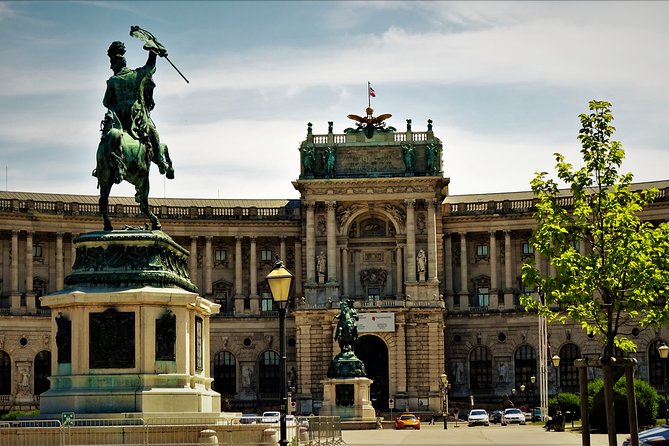
Heldenplatz is one of the most important political spaces on the route. It was designed for imperial ceremony and military display, yet it is remembered by many people for a far darker event: Hitler’s speech celebrating Austria’s Anschluss with Nazi Germany in March 1938.
The square’s scale helps explain its appeal as a political stage. The Hofburg frames one side, while the surrounding museums, parliament, city hall, and Burgtheater create a sweeping view of civic and cultural authority.
Your guide can explain how the same setting carried different messages over time. Imperial ceremony, nationalist spectacle, dictatorship, and modern democracy all meet here. The point is not simply to identify a famous balcony or speech site. It is to consider how public architecture can be used to display power, and how quickly that display can change.
You spend roughly 15 minutes at Heldenplatz. This is enough for orientation and discussion, but not enough for a detailed visit to every building around the square.
The Hofburg: seven centuries of Austrian power
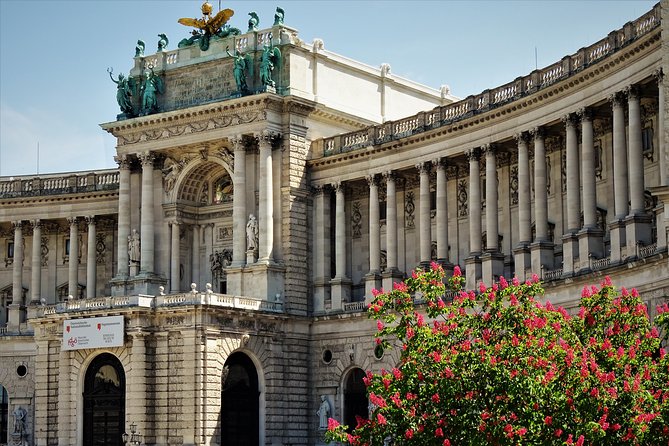
The Hofburg is less a single palace than a vast palace-city. It served as a center of power for about seven centuries, first for dukes and later for emperors. Today, it is linked with Austria’s presidency.
That long change from monarchy to republic is central to the tour. The façades can look timeless, but the institutions behind them changed dramatically. A guide can point out how the Hofburg’s buildings reflect different periods and explain how Vienna’s political center adapted after the monarchy ended.
The scheduled stop is about 15 minutes. You should expect exterior interpretation rather than a full interior tour. If you want the Imperial Apartments, museums, or the Spanish Riding School, plan separate visits.
The walk then passes through an area where imperial façades meet churches, luxury shops, and everyday commerce. That combination captures Vienna well. Ceremony, religion, shopping, and public life have long shared the same streets.
Judenplatz and the Nameless Library
Judenplatz is the quietest and most essential stop. The square occupies the site of Vienna’s medieval Jewish community, which was destroyed in 1421. The memorial known as the Nameless Library commemorates the 65,000 Austrian Jews murdered during the Holocaust.
The memorial’s closed, book-lined form suggests shelves of books that cannot be opened. It does not offer an easy narrative or a triumphant ending. The square asks you to pause and remember people whose names and lives were destroyed by systematic persecution.
You spend around 15 minutes here. That is enough time for a respectful explanation and reflection, though the subject may feel compressed if your main purpose is Holocaust education. Anyone wanting a fuller study should allow separate time for Vienna’s Jewish Museum and other memorial sites.
I value the inclusion of Judenplatz because it keeps the tour from becoming a parade of palaces and military landmarks. It places Jewish Vienna and the Holocaust at the center of the city’s modern memory, not at the edge.
The Plague Column and St. Stephen’s Cathedral
The Plague Column, or Pestsäule, shifts the subject to an earlier crisis. This Baroque monument commemorates the plague and expresses the religious confidence of the Counter-Reformation. Its crowded marble figures turn public art into a statement of devotion and recovery.
The stop is brief, about five minutes, but it helps you compare Vienna’s response to different disasters. The city used art, religion, and ceremony to reclaim public space after the plague, much as it later used rebuilding and political agreements after WWII.
At St. Stephen’s Cathedral, you reach Vienna’s Gothic center. The cathedral has shaped the city’s identity for centuries, but it too carries a WWII story. In April 1945, parts of the building burned after looters set fire to nearby shops.
The cathedral stop lasts about 10 minutes. You will have time to understand the damage and take in the exterior, but an interior visit or tower climb would require more time. The tour ends in the central city, which is convenient for continuing on your own, though hotel drop-off is not included.
The guides and the value of a private format
The strongest feature here is the guide. Walter is repeatedly praised for a lively pace, humorous stories, strong organization, and an ability to tailor the route after asking what you had already seen. He has Vienna roots and spent a decade in the United States, which may help him explain Austrian subjects to English-speaking visitors.
Brigitte is another notable choice. She is described as warm, patient, and attentive to local details. Her approach includes food suggestions, restaurant advice, and practical help beyond the formal walk. Alex is praised for making history entertaining and for taking extra care with questions. Andrea, Hannes, and Dr. Stollhof are also named as guides associated with well-received private tours.
You cannot necessarily select a particular guide unless the booking process confirms it. Still, knowing these names helps you understand the style of service offered. Expect a guide who can talk about history, art, food, public transport, and local life rather than someone who only recites dates.
The group limit is up to 10 people. For a couple or family, the $342.40 group price is a large expense. For a full group of 10, it works out to about $34.24 per person, before transport costs, which is much better value. The private format is most useful if you care about questions, flexibility, or a specific pace.
Timing, walking effort, and practical limits
The experience lasts about three hours and begins at either 9:30 a.m. or 2 p.m. Pickup is offered at hotels, vacation rentals, Vienna Hbf, Vienna West station, the Reichsbrücke pier, and the Handelskai 265 pier for A Rosa passengers. Other meeting points can be arranged.
Because the route includes walking, stairs or uneven surfaces may occur, and a moderate level of fitness is requested. Service animals are allowed, but pets are not permitted in certain places along the route.
Wear comfortable shoes and check the weather. One outing was affected by heavy rain, which made the walk less pleasant even though the guide kept it moving. A coffee break may be possible, as one three-hour route included time for coffee, but you should treat that as a flexible option rather than a guaranteed stop.
Free cancellation is available up to 24 hours before the start time. Changes or cancellations inside that window are not accepted for a refund.
Should you book this Vienna history walk?
Book it if you want a fast but serious introduction to Vienna, especially if WWII, postwar Austria, public memory, and the fall of the monarchy interest you. It is also a smart choice for a first visit, a short stay, or a day trip from Bratislava when you need a clear overview without wasting time on navigation.
The price makes the most sense for a larger private group. A couple may prefer a less expensive group walk unless personal attention and a tailored route matter more than cost. You should also book separate museum visits if you want substantial indoor time at Belvedere, the Hofburg, or the Jewish Museum.
I would choose this experience for its route and its human guide element. You get the view from Belvedere, the Soviet memorial, Heldenplatz, Judenplatz, and St. Stephen’s Cathedral in one connected story. Just remember that three hours gives you a thoughtful introduction, not a complete study of Vienna.
FAQ
How long is the private Vienna walk?
The experience lasts approximately three hours.
What time does the tour begin?
Start times are 9:30 a.m. and 2 p.m.
Is hotel pickup included?
Yes. Hotel pickup is included, and the guide can also meet you at vacation rentals, Vienna Hbf, Vienna West station, the Reichsbrücke pier, or the Handelskai 265 pier for A Rosa passengers.
Is hotel drop-off included?
No. Hotel drop-off is not included.
How many people can join the private tour?
The private group can include up to 10 people.
Is the tour offered in English?
Yes. The experience is offered in English.
Does the price include public transport?
No. Public transport to and from the attractions is not included.
Are food and drinks included?
No. Food and drinks are not included, although a coffee stop may fit into the flexible schedule.
Do you visit the inside of the museums and palaces?
The route visits the exterior areas and public spaces around Belvedere Palace, the Hofburg, MuseumsQuartier, and other landmarks. Admission tickets are not included for interior visits.
Can I cancel for a full refund?
Yes. You can cancel at least 24 hours before the local start time for a full refund. Cancellations or changes made less than 24 hours before the start time are not accepted for a refund.
Recently added around Vienna
- Vienna: Private tour Mauthausen and Linz★ 4.1 · 3 reviews
- 2-Day Prague Tour from Vienna with private Transfers and Lunches★ 5.0 · 3 reviews
- Vienna Self Guided Sherlock Holmes Murder Mystery Game★ 4.5 · 3 reviews
- Vienna Private Schönbrunn Palace Tour, Extra Rooms and Gardens★ 5.0 · 3 reviews
- Salzburg and Lake Region Private Day Trip from Vienna★ 5.0 · 3 reviews
- Small-group Vienna Wine Tour★ 5.0 · 3 reviews
- True Crime mobile puzzle rally Vienna★ 4.0 · 3 reviews
- Exploring the Gutenstein Alps★ 5.0 · 3 reviews
Walking Tours in Vienna, compared.

Guided Walking Tour of City Center Highlights
Read our review →
Guided Walking Tour of City Highlights & Hidden Gems
Read our review →
Vienna Historic Center Small Group Walking Tour
Read our review →


Ghosts and Legends Guided Nighttime Walking Tour
Read our review →

Browse the lists this tour appears in