
Reviewed · WALKING TOURS IN VIENNA
The unknown Vienna City- a guided walking tour in 3 hours
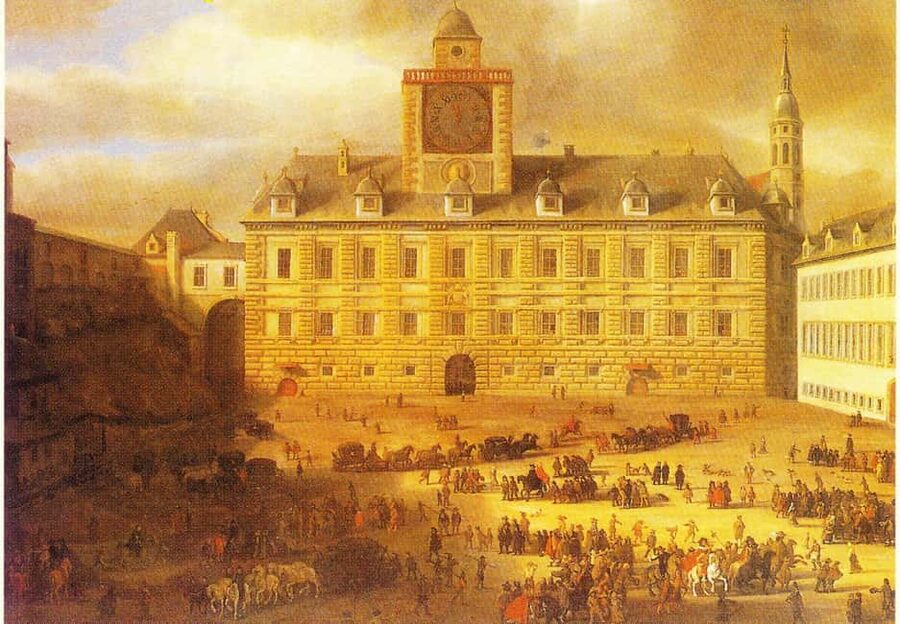
Vienna’s first district is full of famous sights, but this walk looks for the details most people miss: a winding lane, a tucked-away courtyard, the site of an old legend, or a church facade that quietly records the city’s religious past. You follow a route from Stubentor toward the Hofburg, moving from the Greek Quarter through medieval and baroque Vienna.
I like the small group of up to 10, which gives you a better chance to ask questions than on a large city walk. I also like the mix of real places and old stories, from Mozart’s concert connections to the Basilisk and Augustine legends. The main consideration is pace: three hours on foot calls for good shoes, and this tour is not suitable for wheelchair users.
Five reasons this Vienna walk is different
- The Basilisk and other city legends: Hear how monsters, local fears, and old tales became part of Vienna’s public memory.
- Less familiar central streets: Walk through lanes and courtyards that are easy to pass without noticing.
- Mozart’s Vienna: See the Deutscher Orden Haus, linked to Mozart’s concert life.
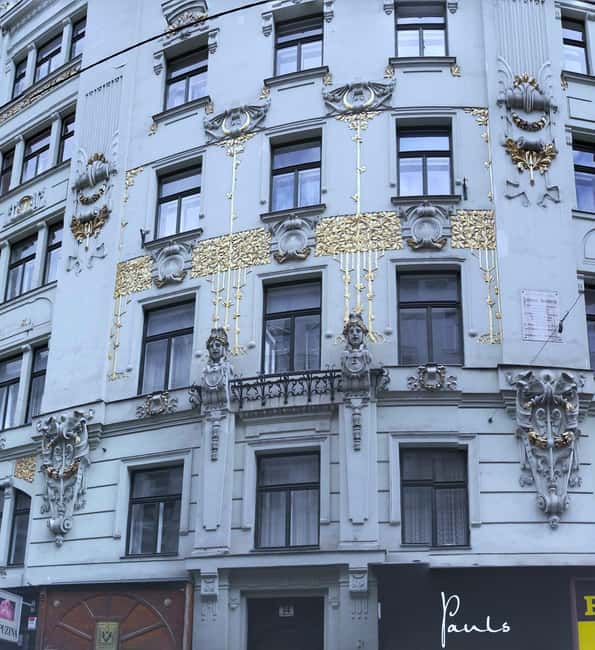
- Medieval traces beside modern buildings: Compare Gothic, Renaissance, baroque, Art Nouveau, and newer architecture in a compact area.
- A small, multilingual group: The tour is offered in English, Italian, or German, with no more than 10 participants.
Starting near Stubentor, not at the usual postcard view
The meeting point is near the Dr. Karl Lueger monument by the Stubentor subway station. That is a useful place to begin because you are already at the edge of Vienna’s old center, close to the former line of the city walls.
You do not start with a grand speech about every imperial building. Instead, the walk sets out toward the historic center and uses the streets themselves as the lesson. The route is built around what you can see at close range: building fronts, narrow passages, church details, and traces of earlier periods that are easy to miss when you are rushing toward St. Stephen’s Cathedral or the Hofburg.
I like this approach for a first or second day in Vienna. It helps you understand the shape of the old city before you spend the rest of your visit exploring it on your own. It also suits people who have already seen the major sights and want a different reading of the center.
The tour lasts three hours, so expect a steady walking session rather than a quick orientation. Eat before you arrive. There is no indication that a meal break is built into the route, and stopping for food would cut into the time available for the stories and buildings.
More City Tours in Vienna
- Vienna: Guided Walking Tour of City Center Highlights
★ 4.7 · 4,989 reviews - Vienna: City Cruise with Optional Lunch
★ 3.4 · 3,982 reviews - Vienna: City Cruise
★ 3.3 · 2,978 reviews
The Greek Quarter and Vienna’s old city layers
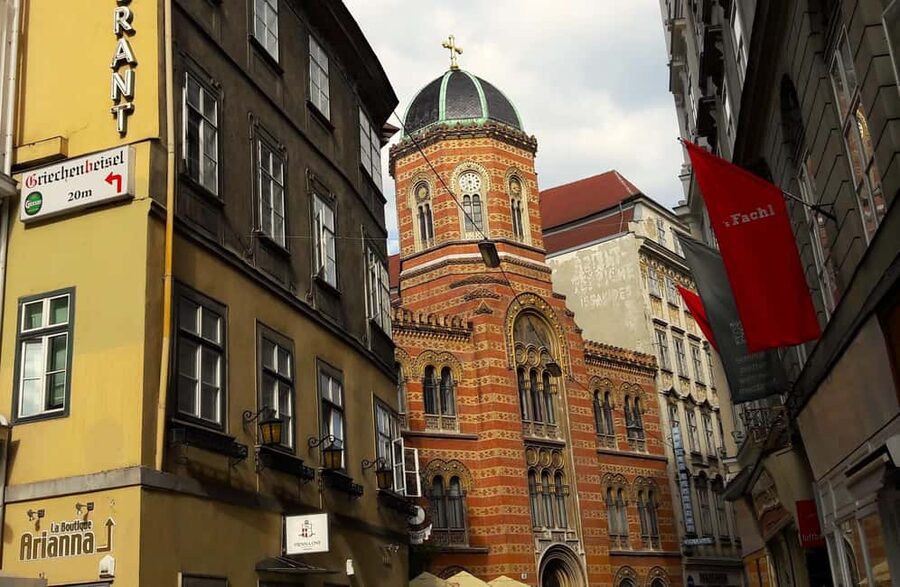
The route moves from the area around Stubentor into the first district, including the Greek Quarter. This part of Vienna is a good reminder that the center was never just an imperial stage set. Trade, religion, music, daily life, and political power all occupied the same tight streets.
You will see how close the city’s periods sit beside one another. A Gothic feature may appear near Renaissance or baroque work, while a modern building can press right against an older structure. That mixture is one of the most useful parts of the walk because Vienna is not best understood as one single style or one single age.
The guide places these details in their historical setting, covering the period from the 13th century through the 21st century. The story includes the Ottoman Wars, the Habsburg monarchy, religious change, and the city’s changing architecture. This is broad ground for three hours, so the experience is more a connected tour of key themes than a full academic history course.
Nicoleta is the guide named in the available information, and the tour is operated by Guide from Vienna, RAXI Tours. The guide’s role matters here. The route is not simply a list of buildings. You need someone to point out what is unusual, explain why it matters, and answer questions when a particular period catches your interest.
Legends of Lugeck, Augustine, and the Basilisk
The walk gives special attention to three Vienna legends: Lugeck, Augustine, and the Basilisk. These tales add humor and a little darkness to the tour, but they are not treated as random ghost stories. The point is to show what such stories reveal about the people who told them.
The Basilisk legend is especially suited to old Vienna. A monster story tied to a city street can seem odd beside elegant architecture, yet that contrast is part of the fun. You get a sense of how fear, rumor, and local identity could attach themselves to specific places.
The Legend of Augustine brings another kind of story into the walk, connected with Vienna’s difficult wartime past and the way people used music, faith, and public figures to endure hard periods. The Lugeck legend adds another piece to the city’s store of local tales.
I like that the legends give you something memorable to carry away. Dates and dynasties can blur together, but a monster in an old street or a tale tied to a particular building gives the city a human scale. If you prefer only documented political history, this section may feel less essential. If you enjoy folklore and want to know how a city explains itself, it should be a highlight.
Mozart at the Deutscher Orden Haus
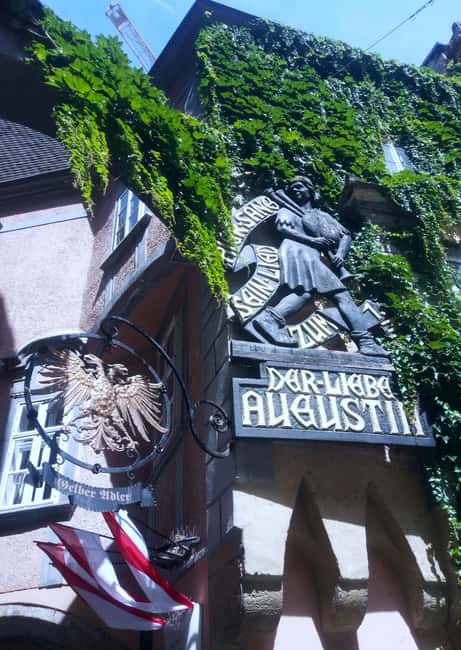
Music is another thread running through the walk. At the Deutscher Orden Haus, you hear about its connection with Mozart’s concert life. This is not presented as a separate concert or a performance, so you should book it for the historical setting rather than expecting live music.
That setting helps explain why Vienna became such an important music city. Music was tied to patrons, religious institutions, aristocratic households, and formal concert spaces. The tour looks at the people and places behind that culture rather than sending you only to the best-known Mozart addresses.
This is a good example of the tour’s wider method. It takes something many people associate with Vienna, classical music, and links it to a physical location that may not be on a standard sightseeing route. You get a more specific sense of how the city’s cultural life worked.
The guide also follows the footsteps of musicians and patrons of music and architecture. That combination is useful because Vienna’s artistic life was not separate from power or money. Buildings, churches, and concert spaces tell part of the story of who paid for culture and where it was displayed.
More Walking Tours in Vienna
- Vienna: Vienna Central Cemetery Guided Walking Tour
★ 4.8 · 3,307 reviews - Vienna: Guided Walking Tour of City Highlights & Hidden Gems
★ 4.9 · 2,180 reviews - Vienna: Viennese Underworld Guided Walking Tour
★ 4.7 · 1,865 reviews - Vienna: World War II Historical Walking Tour
★ 4.8 · 1,772 reviews
Winding lanes, courtyards, and easy-to-miss details
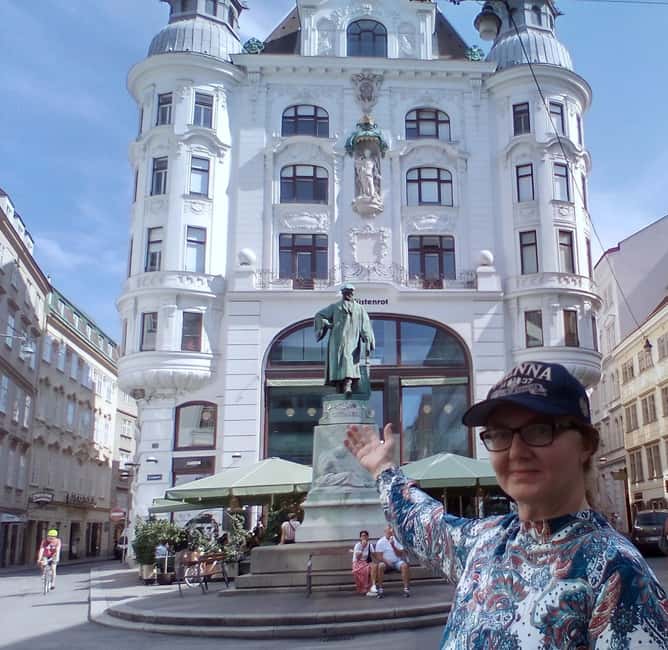
Some of the most praised parts of this walk are the passages through alleyways and courtyards. These are the places you might pass without noticing when moving between major sights. A guide can make them meaningful by explaining their age, purpose, or connection to a person or event.
The route also includes less obvious addresses, such as the former residence of Mark Twain. That kind of stop gives the walk variety. You are not looking only at emperors and churches. You are also tracing the people who lived, worked, wrote, or made music in the old center.
The winding streets are valuable because they show a more intimate Vienna. Broad ceremonial avenues tell you how the monarchy wanted to present the city. Small lanes tell you how the older city grew and how daily life once moved through it.
Do not expect every courtyard to be open or every stop to look dramatic. The pleasure comes from learning what you are seeing. Without the explanation, a narrow entrance may seem like just another doorway. With context, it becomes part of the city’s long record.
The unknown medieval Hofburg
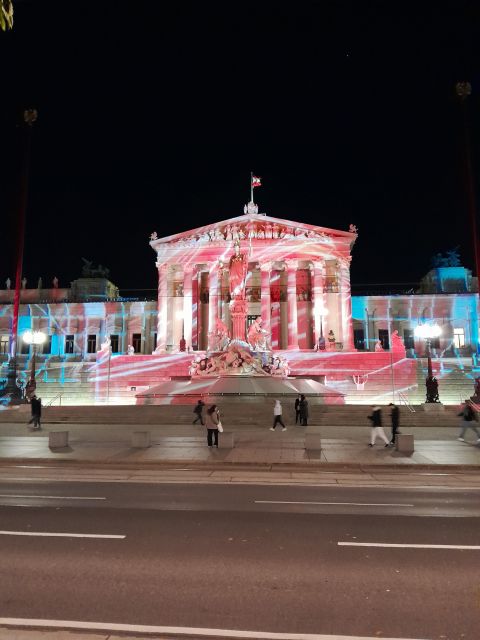
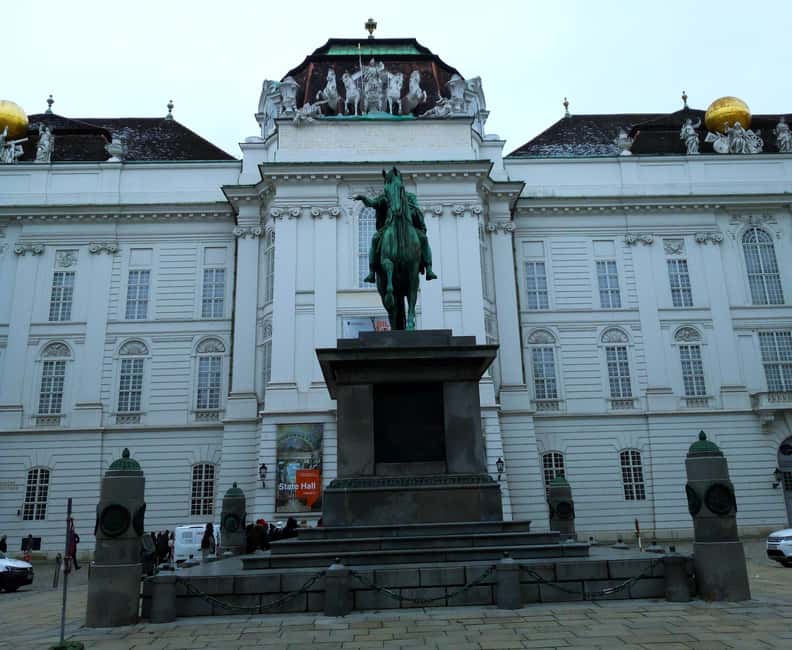
The tour finishes toward the Hofburg area, but its focus is not the grand imperial image most people know. Instead, it looks at the medieval Hofburg, a less familiar side of the complex.
The Hofburg grew over centuries, and its present form includes layers from different periods. The walk helps you notice how the older core fits into the later imperial additions. This is useful preparation if you plan to visit the Hofburg museums or simply want to make sense of the large complex from outside.
The route is described as ending at In der Burg 1. The meeting details also state that the activity ends back at the meeting point, so confirm the exact finishing arrangement when you book. Either way, the walk takes you across the central district rather than keeping you in one small square.
Ending near the Hofburg is practical. You can continue to nearby sights after the tour, or stop for a meal in the center. The walk itself does not include entry to museums or palaces, so plan separate visits if you want to see interiors.
Churches and the traces of re-Catholicization
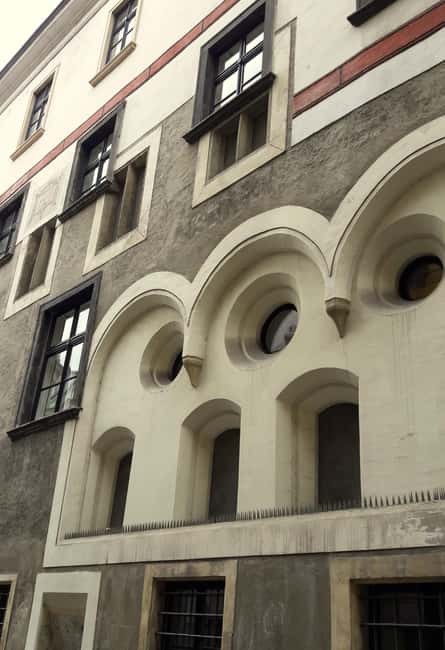
One of the more unusual themes is the architectural evidence of Vienna’s re-Catholicization. This refers to the city’s shift back toward Catholic power after the religious conflicts of the Reformation era.
You do not need a specialist background to follow the idea. The guide points out how religious change appears in architecture, decoration, and the use of public space. Vienna’s churches become more than pretty interiors. They show the political and religious choices that shaped the city.
The walk includes several beautiful churches that can be easy to overlook. This is where a local guide adds real value. You might notice a facade, a dome, or a decorative detail, but the explanation tells you why it appeared and what message it was meant to convey.
The period also connects with the wider story of the Habsburgs and the Ottoman Wars. Those events affected Vienna’s identity, defenses, religious life, and public image. In three hours, you will not examine every campaign or ruler, but you will get a useful outline of how conflict and authority changed the center.
Architecture from Gothic to modern Vienna
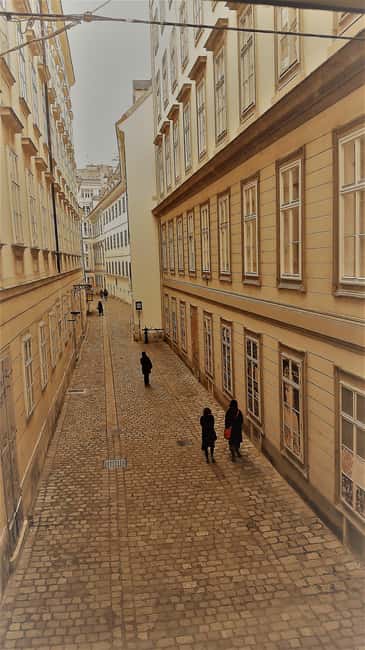
The tour’s architectural range is one of its strongest features. You move through examples and traces of Gothic, Renaissance, baroque, Art Nouveau, and modern construction.
That range works best when you look up and compare. Gothic forms can feel vertical and devotional. Renaissance ideas bring a different sense of proportion. Baroque buildings tend to make power and movement visible. Art Nouveau changes the relationship between structure and decoration, while modern buildings show how Vienna continues to add new layers.
You are not confined to a museum or one palace, so the comparison happens in real streets. Older buildings sit close to newer ones, sometimes in awkward but revealing combinations. I find that more useful than seeing styles in isolation because it shows how a living city changes without erasing everything that came before.
The guide also explains architectural traces rather than simply naming styles. That distinction matters. You do not need to memorize labels. You need to understand what each period was trying to express and why the city looks the way it does today.
What the small group changes
The maximum group size is 10. That is small enough for the guide to hear questions and adjust explanations when the group shows interest in a certain subject.
This matters particularly on a route based on details. A large crowd can make a narrow lane awkward, and it is harder to hear when the guide is standing beside a busy street. A small group gives the walk a more personal feel and makes it easier to stop without blocking a large section of the sidewalk.
The guide offers the tour in English, Italian, and German. In rare cases, a tour may be conducted in two languages, especially when booked at short notice or during especially busy holiday periods such as Easter or Christmas. The already-booked languages are not shown in advance, so email [email protected] if that point matters to you.
The tour has received a 4.7 rating from 137 ratings, with strong praise for its organization, unusual route, detailed answers, and the guide’s ability to show places people would not find alone. Some participants wanted a few more historical anecdotes, which is fair. The route covers a great deal, and the balance between architecture, legend, and political history may not satisfy someone seeking a tightly dated lecture.
Is $63 a fair price?
At $63 per person, this is not the cheapest way to walk around central Vienna. You can explore the first district without paying for a guide, and many of the major sights are easy to reach on foot.
The value comes from the interpretation. You are paying for three hours of local context, a route through less familiar streets, answers to questions, and connections between buildings that are otherwise easy to treat as isolated sights. If you are traveling alone or as a couple, the small group can make the cost reasonable, especially when the alternative is spending hours trying to identify the meaning of details yourself.
The value is weaker if you want only major landmarks, photo stops, or free time. It is also less suitable if you dislike folklore or prefer a narrow focus on palace interiors and famous composers.
Free cancellation up to 24 hours before the activity and a reserve-now, pay-later option make the booking less rigid. Those policies are useful, but the main question is still whether you want an explanation-led walk rather than independent sightseeing.
Practical advice before you go
Wear comfortable shoes. The route covers three hours on foot and includes streets, lanes, and courtyards, so comfort will affect how much attention you can give the guide.
Eat before the start. The instructions specifically recommend having something beforehand, and no meal is included. Bring water if you normally need it during a long city walk.
This activity is not suitable for wheelchair users. The route’s narrow lanes, historic surfaces, and access limitations make that an important consideration.
Do not plan to record the guide’s explanations. Recording is prohibited because the tour’s spoken material is protected by copyright. You can take personal notes if useful, but follow the guide’s directions during the walk.
Who should book this walk?
I would choose this tour if you enjoy local legends, architecture, and overlooked corners more than a checklist of famous sights. It is particularly useful on your first days in Vienna because it gives you a map of the old center and ideas for places to revisit.
It also suits a repeat visitor. You may already know the Hofburg, St. Stephen’s Cathedral, or the main shopping streets, but this route changes how you read the area.
Families with older children may enjoy the monster stories, though the three-hour length requires patience. Music lovers will appreciate the Mozart connection, while history fans will get the most from the discussion of medieval Vienna, the Habsburg period, religious change, and the Ottoman Wars.
I would skip it if you need step-free access, want a relaxed sightseeing pace, or prefer a tour devoted almost entirely to famous buildings. I would also confirm the language arrangement if you are booking close to a major holiday.
Should you book the Unknown Vienna walk?
Book it if you want Vienna to feel less like a collection of grand facades and more like a city of layered streets, local stories, religious conflict, music, and changing architecture. The route’s strongest feature is the guide’s ability to connect small details with larger events.
At $63, it asks more than a self-guided walk, but the small group and unusual route help justify the price. Eat first, wear proper shoes, and allow for a steady three hours. For a more personal look at the first district, especially with Nicoleta guiding, this is a thoughtful choice.
FAQ
Where does the tour start?
It starts near the Dr. Karl Lueger monument, close to the Stubentor subway station in Vienna.
Where does the tour finish?
The route is described as finishing at In der Burg 1 near the Hofburg. The meeting information also says the activity ends back at the meeting point, so confirm the exact ending arrangement when booking.
How long is the tour?
The guided walking tour lasts three hours.
What languages are available?
The tour is offered in English, Italian, and German.
Can the tour be conducted in two languages?
In rare cases, the guide may conduct the tour in two languages, especially for short-notice bookings or during busy holiday periods. The languages already booked are not shown in advance.
How many people are in the group?
The group is limited to 10 participants.
What should I bring?
Eat something before the walk and wear comfortable shoes. The activity takes three hours on foot.
Is the tour suitable for wheelchair users?
No. The activity is listed as not suitable for wheelchair users.
Can I cancel for a full refund?
Yes. You can cancel up to 24 hours in advance for a full refund. You can also reserve now and pay later.
More 3-Hour Experiences in Vienna
- Classic Vienna: 3-Hour Guided Bike Tour
★ 4.7 · 1,846 reviews - Vienna by Bike 3-Hour All-In-One City Bike Tour in English
★ 4.7 · 438 reviews - Highlights of Vienna in a Historical & Cultural 3h Walking Tour
★ 5.0 · 74 reviews - 3-Hour Walking Tour of Vienna Central Cemetery
★ 4.7 · 71 reviews
Recently added around Vienna
- Vienna: Private tour Mauthausen and Linz★ 4.1 · 3 reviews
- 2-Day Prague Tour from Vienna with private Transfers and Lunches★ 5.0 · 3 reviews
- Vienna Self Guided Sherlock Holmes Murder Mystery Game★ 4.5 · 3 reviews
- Vienna Private Schönbrunn Palace Tour, Extra Rooms and Gardens★ 5.0 · 3 reviews
- Salzburg and Lake Region Private Day Trip from Vienna★ 5.0 · 3 reviews
- Small-group Vienna Wine Tour★ 5.0 · 3 reviews
- True Crime mobile puzzle rally Vienna★ 4.0 · 3 reviews
- Exploring the Gutenstein Alps★ 5.0 · 3 reviews
Walking Tours in Vienna, compared.
Guided Walking Tour of City Center Highlights
Read our review →
Guided Walking Tour of City Highlights & Hidden Gems
Read our review →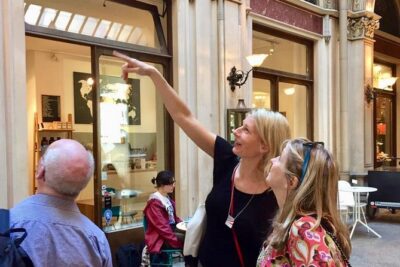
Vienna Historic Center Small Group Walking Tour
Read our review →
Ghosts and Legends Guided Nighttime Walking Tour
Read our review →

Browse the lists this tour appears in