
Reviewed · CITY TOURS IN VIENNA
Vienna by Bike 3-Hour All-In-One City Bike Tour in English
Vienna’s grand center makes more sense from a bicycle. In three hours, you can connect the Ringstrasse, imperial buildings, the Danube Canal, Hundertwasserhaus, and Prater without spending the day walking between them. I especially like the easy pace and the steady mix of riding and photo stops. Guides such as Lisa, Marco, Jan, and Horst are praised for turning architecture and politics into lively stories.
The main thing to consider is that this is a broad city overview, not a deep visit inside Vienna’s museums or old-town churches. You’ll see many sights from the street, and most of the route stays around the central boulevards rather than entering every lane of the historic center.
Key points to know before you ride
- Ringstrasse focus: See the Opera House, Rathaus, Parliament, University, Imperial Palace, and other grand buildings from a bicycle.
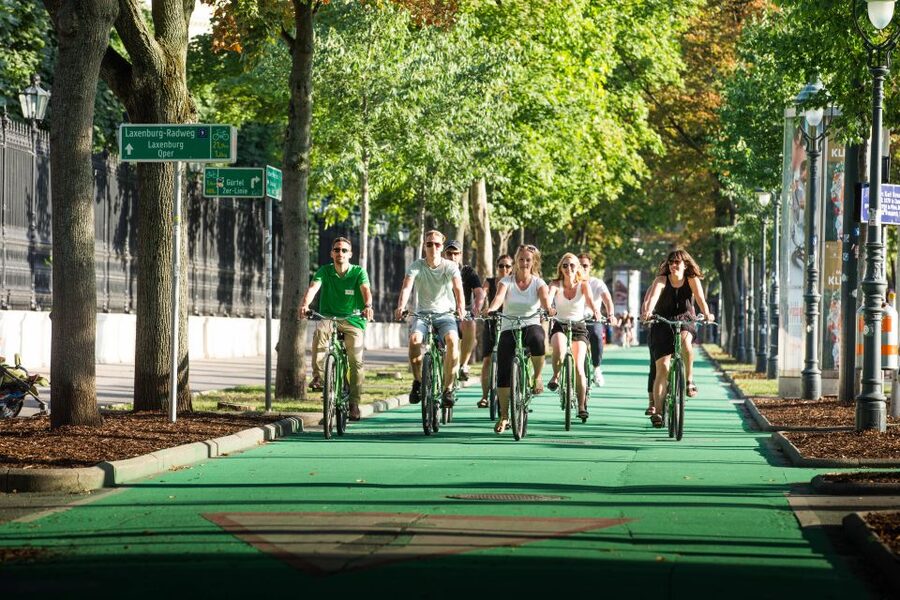
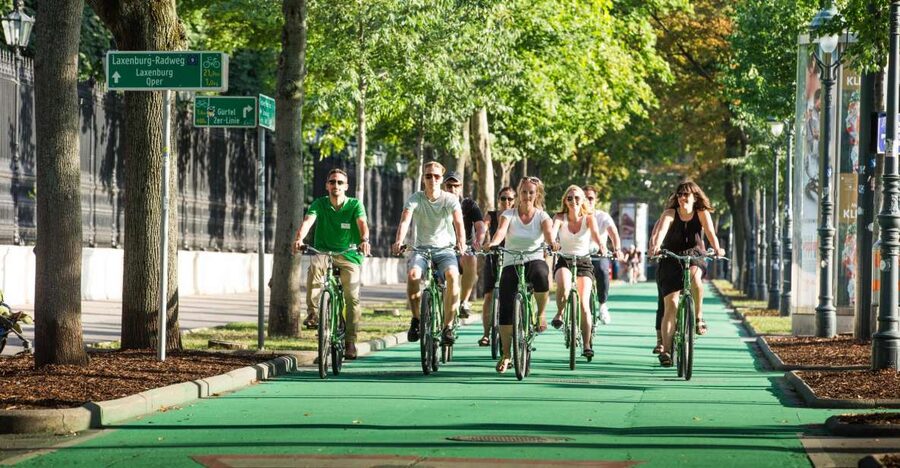
- Mostly easy cycling: The route is largely flat and uses safe, well-surfaced cycle paths, with a relaxed pace and regular stops.
- More than imperial Vienna: The ride also reaches the Danube Canal, Hundertwasserhaus, Karlskirche, and Prater Park.
- Strong local guiding: Guides including Lisa, Marco, Jan, Robert, and Horst are known for humor, clear explanations, and careful group handling.
- Good first-day choice: You cover a wide area quickly, making it easier to plan the rest of your stay.
- Weather matters: The tour runs in rain, with ponchos supplied, but wet conditions can shorten or interrupt the ride.
Why a bicycle is a smart way to see Vienna
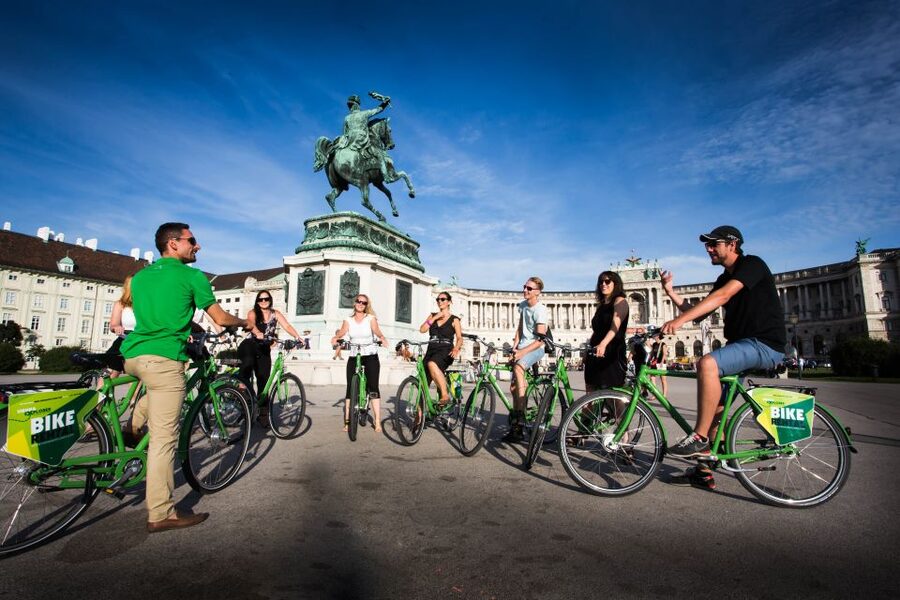
Vienna’s center is not enormous, but its sights are spread across a wide circle. Walking from the Opera House to Prater Park, then out to Hundertwasserhaus and back toward the Ringstrasse, would take time and energy. On a bicycle, you get the city’s scale without giving up the chance to stop and look.
This is not a race. The guide leads at a safe, leisurely speed and waits at intersections. Several riders specifically appreciated the care given to older and younger members of the group. That matters in a city where a calm crossing of a busy street is more important than shaving five minutes from the route.
The ride is also a good balance of motion and explanation. You pedal for a while, stop at an important building, hear the story, and have time for pictures. You will not be trapped in a constant lecture, but you will get far more context than you would from simply following a bike lane with a map.
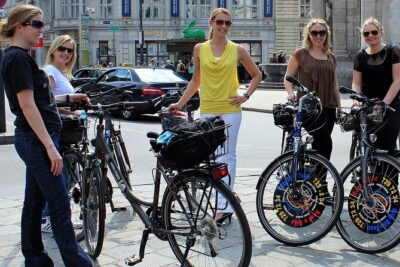
The bikes are modern city models described as comfortable and easy to handle. Helmets are available, and the route is largely flat. One rider had a small bike problem that was fixed during the outing, and another used an e-bike because of a sore foot. The standard bikes should suit most people who are comfortable riding in a city, but ask about an e-bike if you want extra help.
More City Tours in Vienna
- Vienna: Guided Walking Tour of City Center Highlights
★ 4.7 · 4,989 reviews - Vienna: City Cruise with Optional Lunch
★ 3.4 · 3,982 reviews - Vienna: City Cruise
★ 3.3 · 2,978 reviews
Starting at Franz Josefs Kai
The meeting point is at Franz Josefs Kai, 45, in Vienna’s 1010 district. The closest subway station is Schottenring, served by U2 and U4. Arrive with comfortable clothing and enough time to get fitted to your bicycle before departure.
This location places you near the Danube Canal and close to the central part of the route. The precise starting procedure and bicycle fitting are important because a good seat position can make three hours much more pleasant. The tour is offered with an English-speaking guide, and the listed language is English.
Group size can affect the feel of the ride. One account described a group of 14, which is not tiny. A larger group may mean more waiting at crossings and fewer chances to ask a personal question, though the guides are expected to keep everyone together. The strongest accounts repeatedly point to guides who watch the group carefully and keep the pace manageable.
Riding the Ringstrasse and imperial Vienna
The Ringstrasse is the tour’s main stage. This broad road traces the former line of Vienna’s city walls and is lined with the grand public buildings of the Habsburg era. You get a quick lesson in how imperial power was displayed through architecture.
The Vienna Opera House is one of the first major sights to look for. Its Neo-Renaissance design reflects the taste of the 19th century, when Vienna wanted its new boulevard to rival the great capitals of Europe. From the bike, you see the building’s full street presence, though this is an exterior stop rather than an opera performance or interior tour.
The route continues past the Imperial Palace, the former center of Habsburg rule. The palace complex is too large to absorb in a brief roadside explanation, but seeing it in sequence with the Opera House, Parliament, City Hall, and University helps you understand how the Ringstrasse was meant to work as a grand civic display.
At Heroes’ Square, the guide adds a darker chapter. This was the setting for Adolf Hitler’s 1938 Anschluss speech, when Nazi Germany announced the annexation of Austria. That stop gives the tour more weight than a simple parade of pretty buildings. Guides such as Robert have been praised for discussing Austrian politics, wartime memory, and family connections to the war with care.
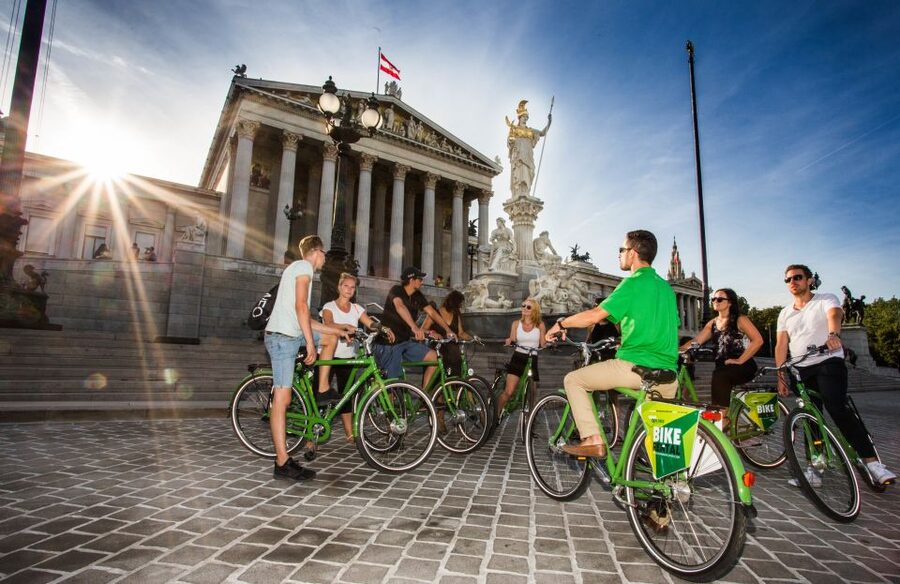
The Parliament buildings and Rathaus offer two very different architectural lessons. Parliament reflects the classical style favored by the Austro-Hungarian Empire, while City Hall has a dramatic Gothic façade with towers and decorative detail. You will also pass Vienna University and other 19th-century civic buildings, each part of the same effort to turn the former defensive edge of the city into a showcase boulevard.
I like this portion because the bicycle gives you a moving comparison. You are not looking at one building in isolation. You are watching the imperial city unfold block by block, with the guide explaining why the buildings appeared here and what they represented.
Karlsplatz and the columns of Karlskirche
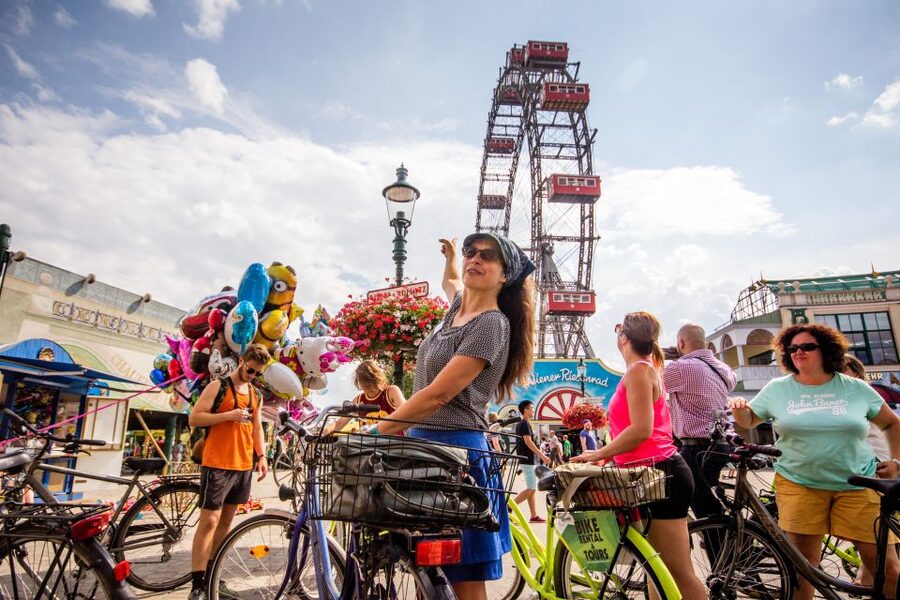
The stop at Karlskirche brings a change of mood. Its large dome and imposing columns create one of Vienna’s most memorable church façades, and the open setting at Karlsplatz gives you room to appreciate the shape of the building.
This is a good place for photographs and for a short explanation of the church’s place in Vienna. You should not expect a full interior visit as part of the standard three-hour ride. The value is in seeing Karlskirche as part of the city’s sequence of public spaces, boulevards, and monumental buildings.
The tour’s many stops help here. You are not expected to admire an elaborate façade while still trying to steer. The group can pause, listen, and take pictures before moving on.
More Bike Tours in Vienna:
- Classic Vienna: 3-Hour Guided Bike Tour
★ 4.7 · 1,846 reviews - Wachau Valley Wine Tasting Bike Tour from Vienna
★ 5.0 · 829 reviews - Vienna City Bike Tour
★ 4.5 · 599 reviews - Vienna: City Highlights Guided Bike Tour
★ 4.6 · 496 reviews
The Danube Canal and a different side of Vienna
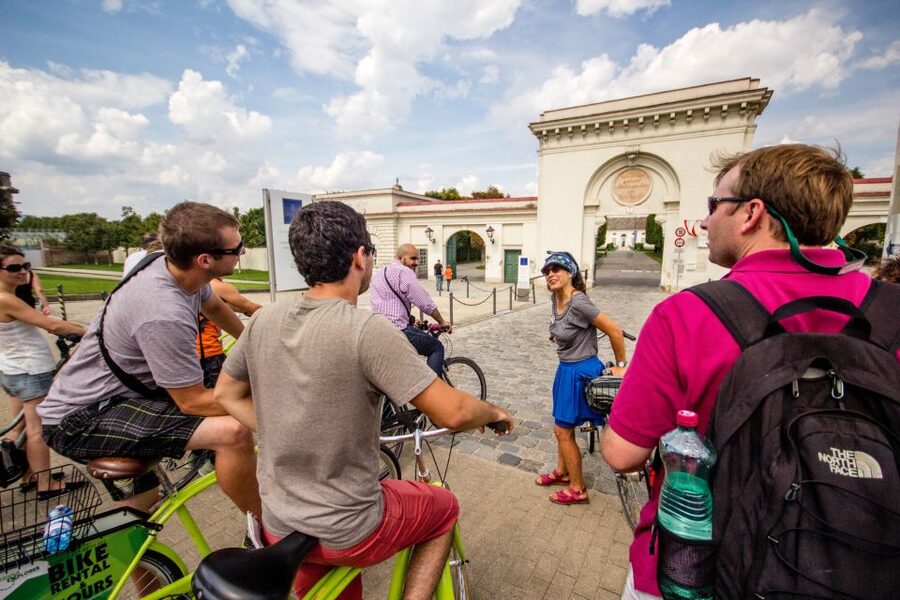
The ride along the Danube Canal breaks up the imperial architecture. The canal is a sidearm of the Danube, and its banks give the tour a more open, everyday feel. After the ceremonial Ringstrasse, this stretch shows Vienna as a working modern city rather than only a former imperial capital.
Some of the route may feel less important if your only goal is the classic old town. One rider felt that a few places outside the main center were not as significant for Vienna’s history or culture. That is a fair point. The canal portion is valuable for variety and distance, but it does not replace time inside the Hofburg, St. Stephen’s Cathedral, or Vienna’s museums.
I would see this as one reason to take the tour early in your stay. You get a sense of the city’s districts and can decide where you want to return on foot or by public transport. The ride can also be a welcome break from indoor sightseeing, especially in good weather.
Hundertwasserhaus and Vienna’s playful side
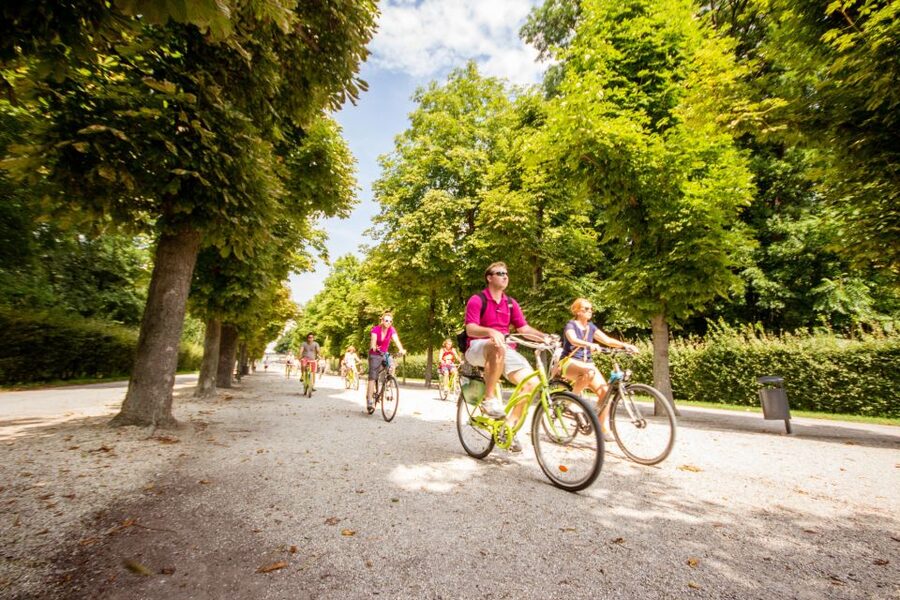
The Hundertwasserhaus is the route’s sharpest break from imperial Vienna. Designed in the style associated with Friedensreich Hundertwasser, the apartment building uses irregular lines, bright colors, uneven surfaces, and a playful relationship with plants and architecture.
You do not need to be an architecture specialist to enjoy this stop. It is instantly different from the disciplined symmetry of the Ringstrasse. The guide can help you see why it matters, rather than treating it as just a colorful building to photograph.
This is one of the tour’s best choices because it widens your idea of Vienna. The city is not only palaces, formal squares, and classical façades. It also has experimental design and a sense of humor. The stop is relatively brief, so if Hundertwasserhaus is high on your list, plan extra time to return afterward.
Prater Park and the giant Ferris wheel
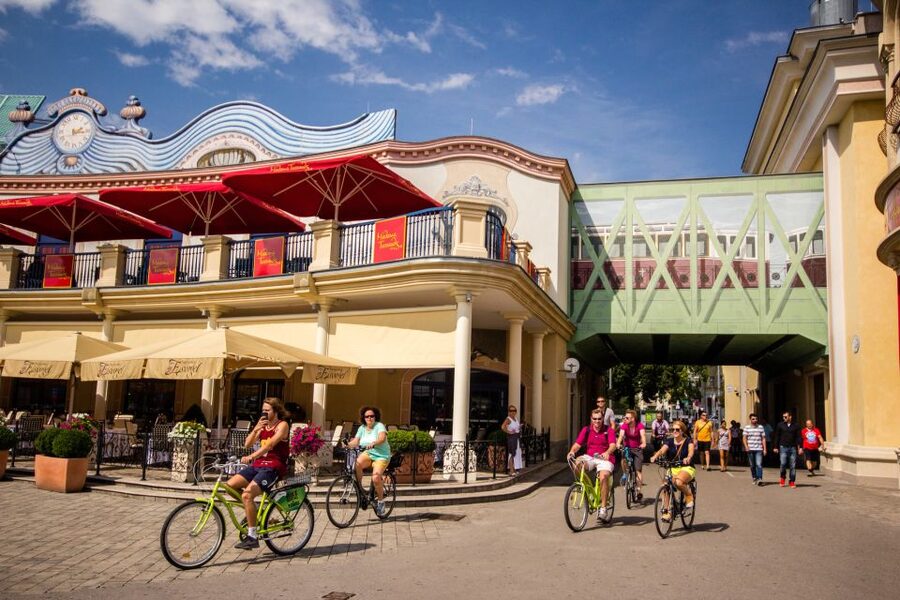
The final major sight is Prater Park, home to Vienna’s giant Ferris wheel. The wheel has become one of the city’s most recognizable symbols, and arriving by bicycle gives you a pleasant sense of movement from the formal center to a large recreation area.
The Prater stop is more than a quick landmark check. Guides have shared small local details, including the unusual fact that some parts of the park have trees but no bushes. Those small observations are exactly the sort of thing that can make a guided ride memorable. They show you how to look at a familiar public space rather than simply photograph its biggest attraction.
You will not ride the Ferris wheel as part of this activity. The tour’s purpose is to reach the park, see the wheel, hear its story, and continue cycling. If you want the view from the top, return later and buy a separate ticket.
The return route follows the banks of the canal toward the starting area. By then, you have covered a wide stretch of Vienna and seen the city from several angles: imperial, political, artistic, and recreational.
What the guides add to the ride
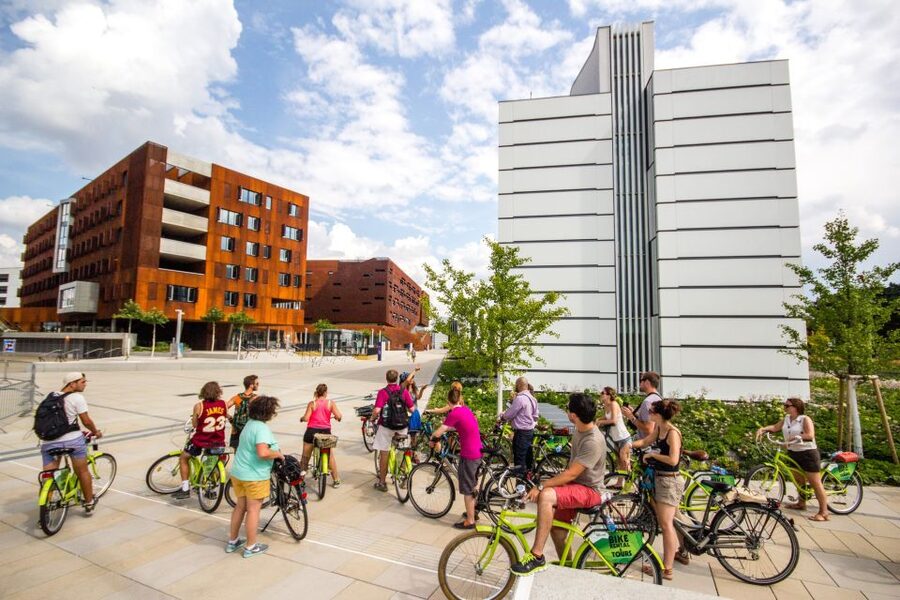
The guide can make or break a city bike tour. Here, the best-described guides share several traits: they explain clearly, use humor, answer questions, and keep an eye on the whole group.
Lisa is praised for enthusiasm, energy, and a strong sense of humor, even in rainy weather. Marco is described as entertaining, careful, and able to answer unusual questions as well as major historical ones. Jan receives credit for making history easy to follow while looking after both the oldest and youngest riders.
Horst is repeatedly associated with funny stories, local insight, and a good cycling speed. Robert is praised for giving useful political and historical context without overwhelming the group. Names and guide assignments can change, so you should not book on the assumption that one particular guide will lead your departure.
English is the operating language. If English is your second language, the speed and pronunciation of a particular guide may affect how easy the commentary is to follow. One rider found this challenging, even while rating the ride itself highly. You can help yourself by asking the guide to repeat a point when needed, especially at a roadside stop.
Pace, safety, and the practical riding experience
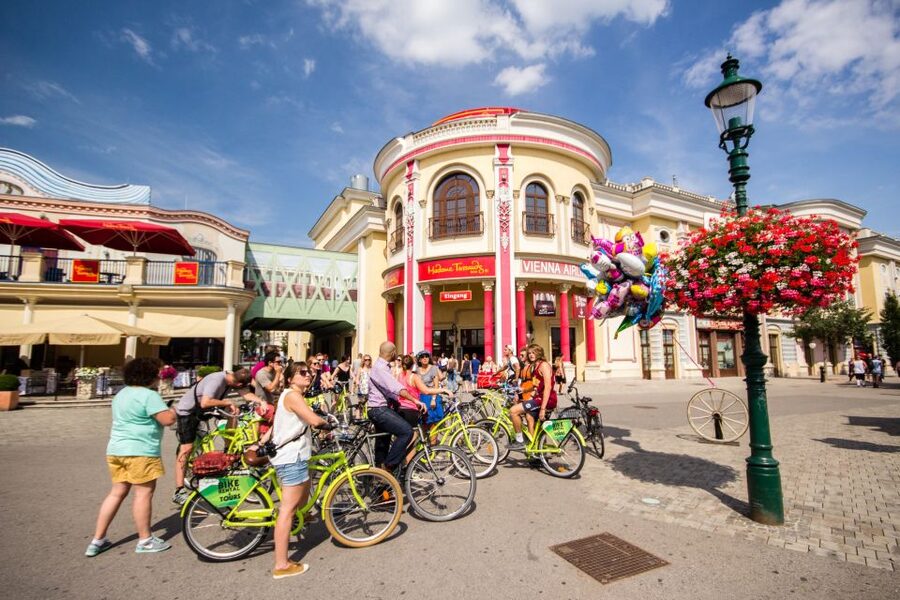
You should be comfortable riding a bicycle for three hours, but you do not need to be a strong cyclist. The route is described as mostly easy, with good cycle paths and little climbing. The guide controls the pace, and the itinerary includes multiple stops.
You will still be riding in a city. Intersections, traffic, pedestrians, and other cyclists require attention. The guides are praised for helping groups through crossings and for keeping slower riders included. That makes this a better fit for casual city cyclists than for anyone looking for a fast workout.
The tour operates in all weather. Rain ponchos are provided when conditions are wet, which is useful, but a poncho cannot make a rainy ride feel like a sunny one. A sudden downpour once forced a tour to stop partway through, with a complimentary bike rental offered for the following day as compensation. Check the forecast, wear clothing you can move in, and do not rely on the poncho as your only layer.
Comfort stops may be limited. One rider suggested another break during the three-hour ride. If you need regular restroom access, ask about the next stop before setting off rather than waiting until you are far from a facility.
Who gets the best value from $55
At $55 per person, this tour is not the cheapest way to see Vienna. Public transport and walking cost less, and you can view many Ringstrasse buildings on your own. The fee makes more sense if you value a ready-made route, a bicycle, local explanations, and the ability to cover more ground in a short visit.
I think the price is easiest to justify if you have only two or three days in Vienna. You can use the ride to get your bearings on the first day, then return to the places that interest you most. It is also useful for families with older children, couples, and people who find a full day of walking tiring.
The value is weaker if you want long interior visits, fine-art museums, or a detailed look at the medieval center. The route is built around exterior sights and movement. One account also called it overpriced despite praising the guide, so your decision should depend on how much you value convenience and interpretation.
The tour is best for you if:
- You enjoy light exercise while sightseeing.
- You want to see more than the central old town in one outing.
- You like history explained in short sections rather than through a long lecture.
- You are comfortable cycling on city paths and at intersections.
- You want local food, drink, or shopping suggestions from a guide.
Booking details worth keeping in mind
The activity lasts three hours, and starting times vary by availability. You can cancel up to 24 hours before departure for a full refund, and the reserve-now, pay-later option lets you hold a place without paying immediately.
Wear comfortable clothes rather than anything restrictive. Bring water, sun protection, or an extra layer according to the forecast. Rain ponchos are supplied in wet weather, but the tour still runs in those conditions unless circumstances force a pause.
If you are traveling with children, the ride can work well for families, provided they can manage the distance and city cycling. A 12-year-old enjoyed the tour with extra patience from the guide, and younger and older riders have been included at a safe pace. Ask about bicycle choices if anyone in your group has a physical concern.
Should you book the Vienna bike tour?
I would book this as an early-Vienna activity, especially for a first visit. In three hours, you see the Ringstrasse’s grand public buildings, hear about the Habsburg era and the Nazi period, then move beyond the postcard center to the canal, Hundertwasserhaus, and Prater.
Choose it for breadth, exercise, and lively guiding. Skip it if your priority is spending hours inside monuments or exploring the small streets of the oldest center. For most reasonably fit visitors who want a practical introduction to Vienna, $55 buys a useful overview and a pleasant way to get around.
FAQ
Where does the Vienna bike tour meet?
The meeting point is Franz Josefs Kai, 45, 1010 Vienna. The nearest subway station is Schottenring, served by lines U4 and U2.
How long does the tour last?
The bike tour lasts three hours. Starting times vary, so you need to check availability for the date you want.
What language is the tour conducted in?
The tour has a live English-speaking guide. The experience provider also lists English as the tour language.
What sights are included?
The route includes the Ringstrasse, Vienna Opera House, Rathaus, Parliament buildings, Vienna University, Imperial Palace, Heroes’ Square, Danube Canal, Hundertwasserhaus, Karlskirche, and Prater Park with its giant Ferris wheel.
What should I wear?
Wear comfortable clothes suitable for cycling. The tour operates in all weather, and rain ponchos are provided when it rains.
Can I cancel or pay later?
You can cancel up to 24 hours before the tour for a full refund. The reserve-now, pay-later option allows you to book without paying at the time of reservation.
More 3-Hour Experiences in Vienna
- The unknown Vienna City- a guided walking tour in 3 hours
★ 4.7 · 137 reviews - Highlights of Vienna in a Historical & Cultural 3h Walking Tour
★ 5.0 · 74 reviews - 3-Hour Walking Tour of Vienna Central Cemetery
★ 4.7 · 71 reviews - Vienna: Tour RAXI (electric rickshaw) 3 hours in Vienna
★ 4.9 · 42 reviews
Recently added around Vienna
- Vienna: Private tour Mauthausen and Linz★ 4.1 · 3 reviews
- 2-Day Prague Tour from Vienna with private Transfers and Lunches★ 5.0 · 3 reviews
- Vienna Self Guided Sherlock Holmes Murder Mystery Game★ 4.5 · 3 reviews
- Vienna Private Schönbrunn Palace Tour, Extra Rooms and Gardens★ 5.0 · 3 reviews
- Salzburg and Lake Region Private Day Trip from Vienna★ 5.0 · 3 reviews
- Small-group Vienna Wine Tour★ 5.0 · 3 reviews
- True Crime mobile puzzle rally Vienna★ 4.0 · 3 reviews
- Exploring the Gutenstein Alps★ 5.0 · 3 reviews
City Tours in Vienna, compared.
Guided Walking Tour of City Center Highlights
Read our review →
Guided Walking Tour of City Highlights & Hidden Gems
Read our review →
Skip-the-Line Schonbrunn Palace Guided Tour and Vienna Historical City Tour
Read our review →
Browse the lists this tour appears in