
Reviewed · WALKING TOURS IN VIENNA
Vienna: Small Group Guided Walking Tour of City Highlights
Vienna reveals itself best on foot, and this two-hour walk links its grandest sights with the stories behind them. You’ll move from the Ringstrasse and Hofburg to the Opera, Spanish Riding School, Graben, and St. Stephen’s Cathedral, with guide Maria adding local color along the way.
I like the small group of 14 or fewer, which makes it easier to ask questions and stay connected to the guide. I also like the practical advice built into the walk, especially tips for coffee, strudel, restaurants, and sights worth entering later. The main drawback is that this is an exterior tour, so you will not go inside the palace, museums, library, or cathedral.
Key points
- Maria brings the Habsburgs and Sisi to life with stories of royal marriages, power struggles, and personal drama.
- The route covers a lot in two hours, from the Maria Theresa monument and museums to St. Stephen’s Cathedral.
- Visual aids help explain the past, with pictures and maps used during the walk.
- Small-group access makes questions easy, unlike a large tour where the guide may feel far away.
- The tour ends beside St. Stephen’s Cathedral, a useful spot for continuing your own sightseeing.
- Comfortable shoes matter, since the experience covers the central city entirely on foot.
A fast introduction to Vienna’s imperial center
This is a good first-day activity because it gives you a working map of central Vienna without asking you to spend half a day on a formal palace visit. In two hours, you’ll see the outside of major landmarks, hear the basic story of the Habsburg empire, and get suggestions for what to do next.
The route is tightly packed. You should expect frequent stops, short walks, photo pauses, and plenty of storytelling rather than long time at any one monument. The pace has been described as comfortable, with time for pictures, but this is still a city walk with many locations.
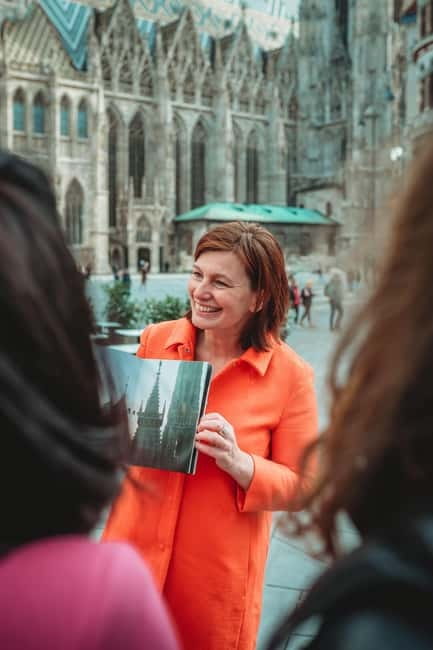
Maria is the named local guide, and her style is a major part of the appeal. She is described as friendly, lively, patient, and passionate about Vienna. She also makes room for questions, which matters when you want to ask about food, modern Vienna, or a sight that was not part of the planned talk.
More City Tours in Vienna
- Vienna: Guided Walking Tour of City Center Highlights
★ 4.7 · 4,989 reviews - Vienna: City Cruise with Optional Lunch
★ 3.4 · 3,982 reviews - Vienna: City Cruise
★ 3.3 · 2,978 reviews
Starting near the Ankeruhr or Maria Theresa monument
The meeting point can vary depending on the option you book. The two possible starting locations are the Ankeruhr, the ornate clock near the northern edge of the old town, and the Maria Theresa Memorial between the Kunsthistorisches Museum and Naturhistorisches Museum.
Check your confirmation carefully. A flexible route is useful for the operator, but it means you should not assume the start is always in the same place.
If you begin at the Maria Theresa monument, you get an immediate lesson in Vienna’s imperial style. Maria Theresa was one of the best-known Habsburg rulers, and her monument sits between two large museums facing each other across a broad square. The arrangement gives you excellent first photographs and a clear sense of the city’s grand scale.
From the Ankeruhr, the opening mood is different. You are closer to the older commercial heart of Vienna, where narrow streets and historic facades replace the formal imperial layout. Either starting point leads into the same central story.
Museums, Ringstrasse, and the Maria Theresa story
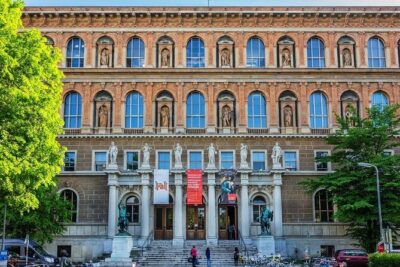
The Kunsthistorisches Museum and Naturhistorisches Museum are photo stops rather than interior visits. Their elaborate facades show Vienna at its most formal, with architecture designed to reflect imperial ambition and cultural power.
That exterior-only approach is worth keeping in mind. If you want to see paintings, the natural history collections, or the interior details of either building, you’ll need to return on your own and pay the separate entrance fee.
The walk then follows the Ringstrasse, Vienna’s grand boulevard. Here you can connect the city’s buildings to the Habsburg period and the later transformation of the old fortified city. The route does not treat Vienna as a collection of unrelated monuments. Instead, it helps you see how the museums, palace, parks, opera, and public buildings fit together.
This is where the visual aids are useful. Pictures and maps can clarify how the city changed, especially when the guide is explaining buildings that are easier to understand as part of a larger plan.
Hofburg Palace and Burggarten
The Hofburg is the tour’s main imperial stage. You’ll walk around the palace complex, hear about the Habsburg family, and follow stories of royal marriages, court politics, power struggles, and scandals.
The Habsburgs ruled across much of Europe for centuries, so the subject can quickly become a blur of names and dates. A good guide makes it more human, and Maria’s focus on personalities helps. Empress Sisi, whose public image often looks polished and romantic, had a life marked by personal strain and court pressure. Those details give the palace more meaning than a simple list of rulers.
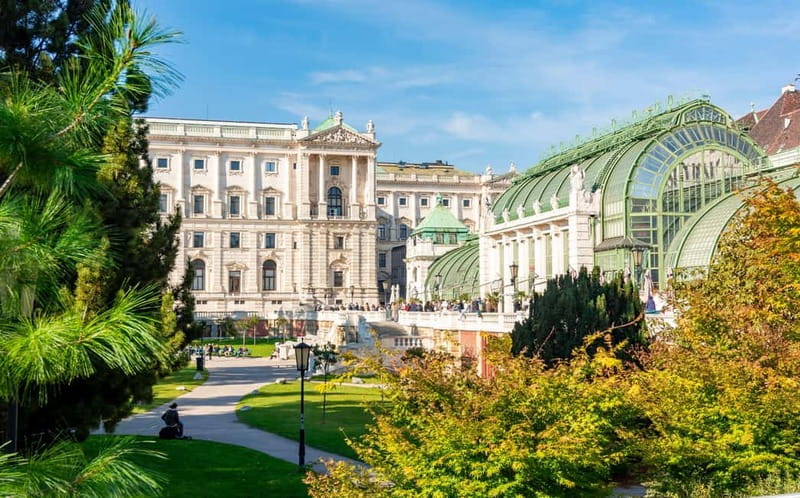
You’ll also visit Burggarten, the former imperial garden park, and pass the Schmetterlinghaus, a butterfly house. The garden offers a welcome change from stone facades and busy streets. The Palmenhaus, now home to Brasserie Palmenhaus Wien, is another attractive stop for photographs.
The garden portion also gives the walk some breathing room. You are still sightseeing, but not every minute is spent staring up at a palace wall.
More Walking Tours in Vienna
- Vienna: Vienna Central Cemetery Guided Walking Tour
★ 4.8 · 3,307 reviews - Vienna: Guided Walking Tour of City Highlights & Hidden Gems
★ 4.9 · 2,180 reviews - Vienna: Viennese Underworld Guided Walking Tour
★ 4.7 · 1,865 reviews - Vienna: World War II Historical Walking Tour
★ 4.8 · 1,772 reviews
Palmenhaus, Albertina, and Vienna’s best photo angles
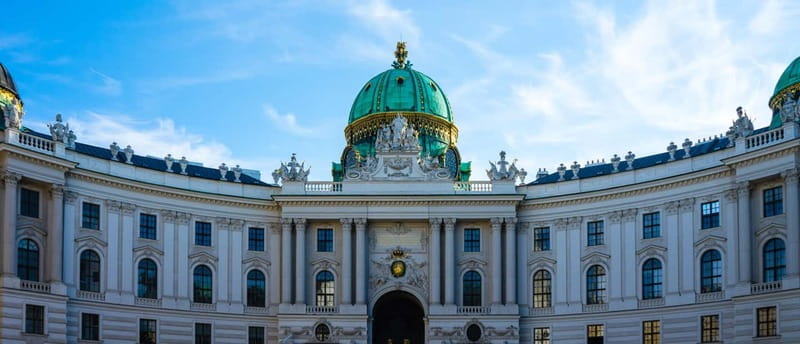
The Palmenhaus and Albertina area is one of the strongest parts of the route for pictures. You’ll see the former winter garden, the Albertina Museum, and viewpoints toward the Vienna State Opera.
The Albertina is a major art museum, but this tour only covers the exterior. That is not a criticism of the walking route. Two hours is too short for both a city overview and proper museum visits. Think of this stop as a preview that helps you decide if you want to return.
You’ll also pass Hotel Sacher, closely associated with Vienna’s famous Sacher-Torte. The tour does not include food, drinks, or tastings, so do not expect a slice of cake as part of the booking. Still, knowing where the cake tradition fits into the city’s cafe culture makes the stop more useful.
Maria’s food advice can help you plan the rest of your day. Several visitors particularly valued her suggestions for coffee, strudel, and restaurants. Take notes if you are starting your Vienna stay with this walk, since those tips are most useful before you have chosen where to eat.
Vienna State Opera and the Spanish Riding School
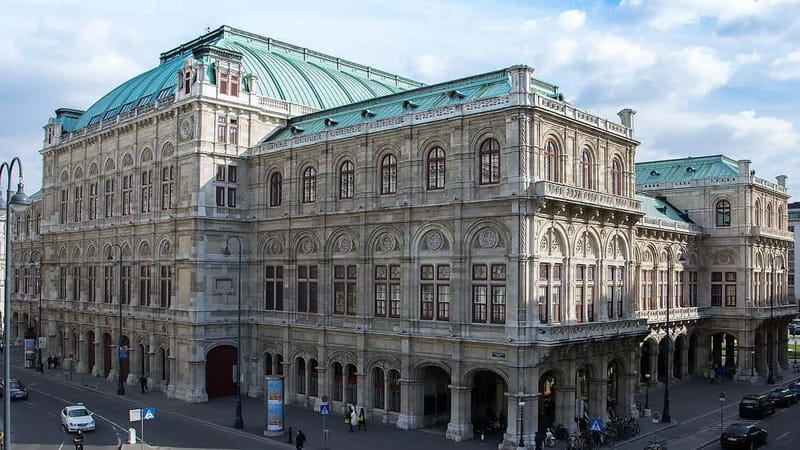
The Vienna State Opera is another photo and sightseeing stop. You’ll learn about its place in the city’s musical life while seeing the building from outside.
The route then moves toward the Austrian National Library and the Spanish Riding School. These stops connect Vienna’s cultural identity with the imperial court. The library represents the Habsburg appetite for books, learning, and ceremony. The riding school points to the court traditions surrounding the Lipizzaner horses.
You will pass by these places rather than enter them. That keeps the tour moving, but it also creates a useful list of possible follow-up visits. If the horses or library interest you, plan separate time and check opening details for your dates.
The composer stories add another layer. Mozart, Beethoven, and Johann Strauss are part of Vienna’s public identity, and the walk places those names within the streets and buildings where the city’s musical reputation developed. You will not attend a concert during this tour, but you will get context for why music is so closely tied to Vienna’s image.
Michaelerplatz, Kohlmarkt, and Demel
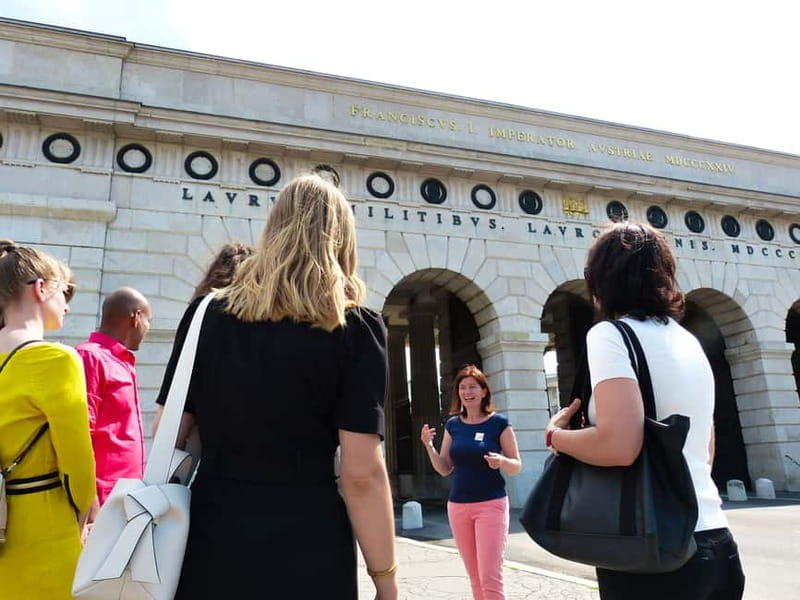
At Michaelerplatz, the route returns to the heart of the Hofburg district. This is one of the best places to see how layers of Vienna’s past sit beside one another. Imperial entrances, historic streets, and busy city life meet in a compact space.
From there, you’ll walk along Kohlmarkt toward Demel. The street is known for elegant shops and old cafe traditions. Demel is a photo stop, not an included meal, but it fits neatly into Maria’s discussion of coffeehouse customs and Viennese personalities.
Vienna’s coffeehouse culture is more than a quick caffeine break. It is part of the city’s social and creative life, linked with writers, artists, musicians, and political thinkers. The tour’s coffeehouse stories give you a better reason to slow down later rather than simply checking a famous cafe off your list.
Graben, St. Peter’s, and the Plague Column
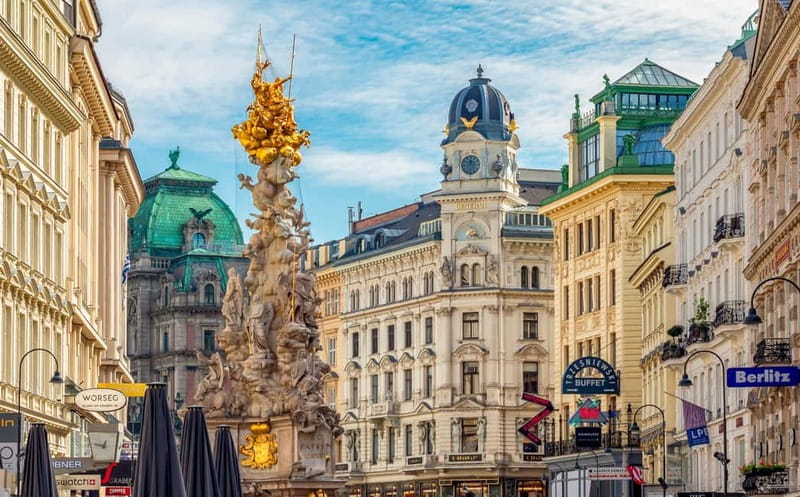
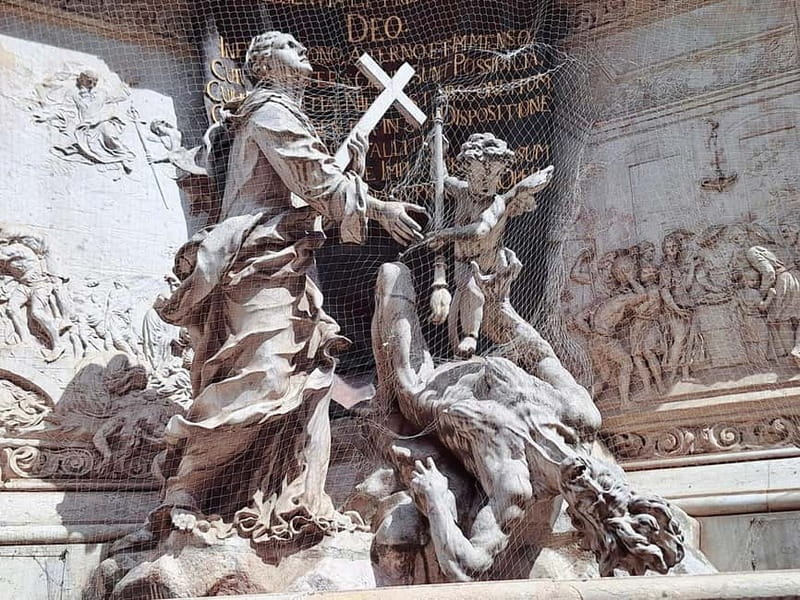
Graben brings the walk into one of the old town’s most recognizable pedestrian streets. You’ll see the Plague Column and pass St. Peter’s Church before continuing toward St. Stephen’s Cathedral.
The Plague Column is a striking reminder of how public monuments once expressed fear, faith, gratitude, and political authority. St. Peter’s Church adds another architectural pause, though the tour does not promise an interior visit.
This stretch is particularly good for first-time visitors because it changes the feel of the walk. The earlier stops focus on imperial Vienna and the Ringstrasse. Here, the streets feel older and more compact, and you begin to understand the historic center as a place built for walking.
There is also practical value in ending this way. Once the guide leaves you, you are already in the middle of Vienna’s old town, close to restaurants, cafes, shops, and further sightseeing.
St. Stephen’s Cathedral as the finish
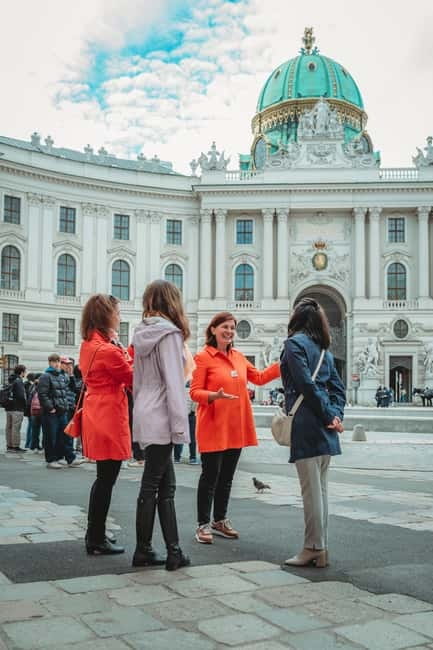
The tour concludes at or near St. Stephen’s Cathedral, with the alternate drop-off listed as the Albertina. Confirm the exact end point for your booking, especially if you have a timed activity afterward.
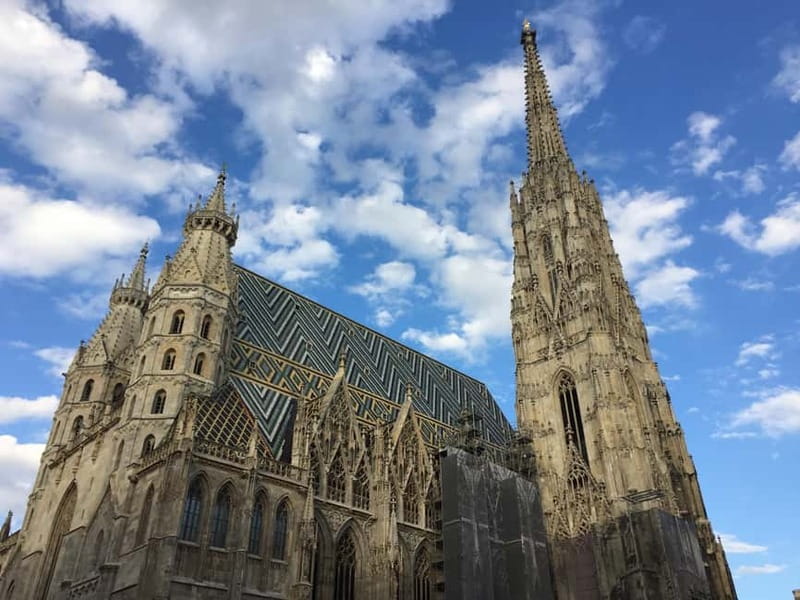
St. Stephen’s is the natural finale. You’ll see its exterior, discuss its place in Vienna, and have time to take photographs, but the cathedral interior is not included. If you want to climb, visit the interior, or explore any paid sections, plan that separately.
Ending here gives you a good next step. You can use Maria’s recommendations to choose a cafe or restaurant, continue through the old town, or return later for a closer look at the cathedral. This is one reason I prefer taking the walk early in a Vienna visit rather than on the last afternoon.
What the two-hour format really delivers
Two hours is enough for orientation, not exhaustive sightseeing. You will see a wide range of landmarks, but most stops are brief. The payoff is breadth and context: you learn what matters, where things are, and which places deserve more of your own time.
The small group improves the format. A maximum of 14 people is still a real group, but it is small enough for questions and conversation. Maria’s habit of including everyone and helping with photographs adds a personal touch without turning the walk into a private tour.
The included visual aids are also helpful for a history-heavy route. Maps and photographs can make past events easier to follow, particularly when you are standing outside buildings that have changed function over time.
The tradeoff is clear: you pay for a guided overview, not admissions. At $40 per person, the value depends on how much you want a local explanation. If you only need a map and a list of buildings, a self-guided walk costs less. If you want stories, questions answered, and restaurant advice, the price is reasonable for two hours with a small group.
Who should book this Vienna walk
I would choose this tour if you are visiting Vienna for the first time, have limited time, or want help making sense of the historic center before exploring alone. It also suits solo visitors and couples who like asking questions without paying for a private guide.
It is a good fit for people interested in the Habsburgs, Empress Sisi, architecture, music, and cafe culture. Maria’s flexible conversation style is especially useful if you want more than a memorized speech.
You should choose another activity if your main goal is to enter museums, tour the Hofburg rooms, see the National Library interior, visit the Spanish Riding School, or explore St. Stephen’s Cathedral inside. Those attractions require separate planning and entrance fees.
The tour is not suitable for wheelchair users or people with mobility impairments. You’ll need comfortable shoes, water, weather-appropriate clothing, and a camera. It operates in all weather, and large bags, luggage, baby strollers, electric wheelchairs, and audio recording are not allowed.
My booking advice
Book this walk near the start of your Vienna stay. The route gives you a strong first look at the city, while Maria’s suggestions for coffee, strudel, restaurants, and later sightseeing can shape the rest of your visit.
I would not book it as your only Vienna activity. The exterior-only format leaves plenty to see inside, but it works well as the foundation for your own museum, palace, music, and cafe plans.
You get the most for your money if you value clear storytelling and local conversation. The small group, lively guide, visual aids, and central route make this a useful introduction at a fair price. Just arrive on time, dress for the weather, and remember that the grand buildings are viewed from the outside.
FAQ
How long does the Vienna walking tour last?
The guided walking tour lasts two hours. Starting times depend on availability when you book.
Who is the guide?
The experience is led in English by Maria Tours Live, with Maria named as the local guide.
How large is the group?
The group is limited to a maximum of 14 participants or fewer.
Does the tour include entrance fees?
No. Entrance fees, meals, and drinks are not included. This is an exterior-only walking tour.
Where does the tour finish?
The tour finishes near St. Stephen’s Cathedral or at the Albertina, depending on the option booked. The exact meeting and drop-off details can vary.
What should I bring?
Bring comfortable shoes, water, a camera, and clothing suitable for the weather. The walk operates in all weather conditions.
More Small Group Tours in Vienna
- Vienna Historic Center Small Group Walking Tour
★ 5.0 · 1,746 reviews - Budapest Small-Group Day Trip from Vienna
★ 5.0 · 545 reviews - Wachau Valley Small-Group Tour and Wine Tasting from Vienna
★ 5.0 · 540 reviews - Hallstatt Small-Group Day Trip from Vienna
★ 5.0 · 516 reviews
Recently added around Vienna
- Vienna: Private tour Mauthausen and Linz★ 4.1 · 3 reviews
- 2-Day Prague Tour from Vienna with private Transfers and Lunches★ 5.0 · 3 reviews
- Vienna Self Guided Sherlock Holmes Murder Mystery Game★ 4.5 · 3 reviews
- Vienna Private Schönbrunn Palace Tour, Extra Rooms and Gardens★ 5.0 · 3 reviews
- Salzburg and Lake Region Private Day Trip from Vienna★ 5.0 · 3 reviews
- Small-group Vienna Wine Tour★ 5.0 · 3 reviews
- True Crime mobile puzzle rally Vienna★ 4.0 · 3 reviews
- Vienna: Wachau Valley Private Kayak and Wine Tour★ 5.0 · 3 reviews
Walking Tours in Vienna, compared.
Guided Walking Tour of City Center Highlights
Read our review →
Guided Walking Tour of City Highlights & Hidden Gems
Read our review →
Vienna Historic Center Small Group Walking Tour
Read our review →
Ghosts and Legends Guided Nighttime Walking Tour
Read our review →
Browse the lists this tour appears in