
Reviewed · WALKING TOURS IN VIENNA
Vienna Highlight Tour – yue walk
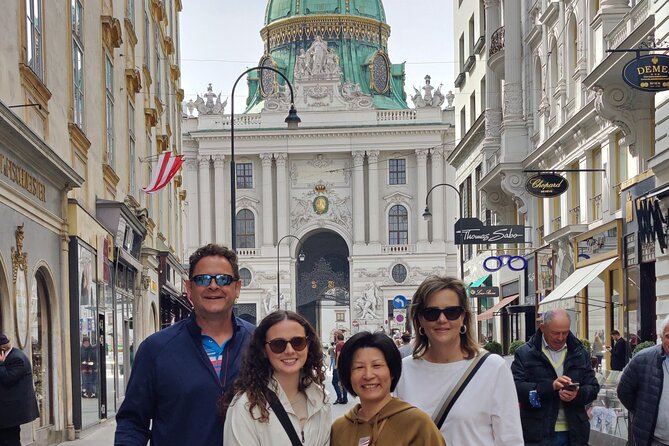
Vienna Highlight Tour packs nearly the whole historic center into about two hours, from the Opera House to St. Stephen’s Cathedral. With licensed guide Yue Mayr and no more than six people, you get a close-up introduction rather than a march behind a large flag.
I like the way the walk connects grand buildings with human stories, from Sacher Torte and Johann Strauss to Empress Maria Theresa and the Lipizzaner horses. I also like the practical payoff: you get your bearings early, then receive ideas for food, shopping, and further sightseeing.
The tradeoff is pace. Fourteen stops in two hours means most places are viewed from outside, with only a brief interior visit at Augustinian Church. Admission to several sights is not included, and the tour is offered in English only.
Key points to know before booking
- A maximum of six people keeps questions easy and makes the walk feel personal.
- Yue Mayr’s storytelling links architecture, politics, music, and Habsburg family drama.
- Fourteen central Vienna stops give first-time visitors a useful map of the old city.
- The route is fast-moving, so it works best as an overview rather than a museum tour.
- Several admissions cost extra, including the Sisi Museum, Imperial Treasury, and Lipizzaner-related sights.
- The $106.20 price reflects a private-feeling small group, but value depends on how much you want explanation versus interior access.
Why this two-hour walk works best on day one
Vienna can feel confusing at first. The historic center is compact, but its palaces, churches, museums, shopping lanes, and squares overlap in ways that are easy to miss. This walk gives you a basic mental map before you begin choosing where to spend serious time.
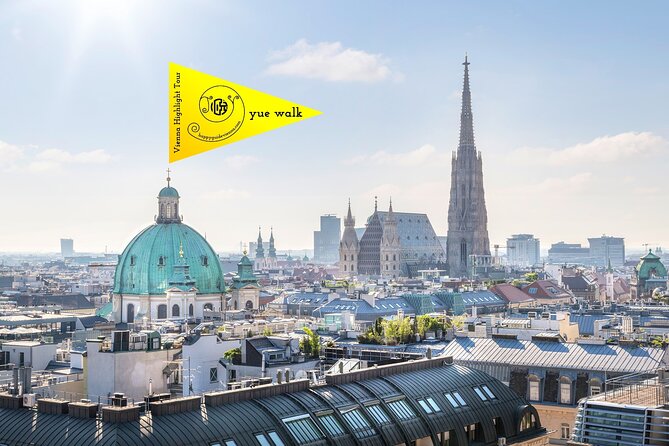
The route starts at Herbert-von-Karajan-Platz, beside the Vienna State Opera, at 10:00 a.m. It finishes near the Stephansplatz U-Bahn station, overlooking the highest south tower of St. Stephen’s Cathedral. That ending is useful. You are left in the middle of Vienna’s main pedestrian area, close to further sightseeing and public transport.
I would book this early in a Vienna visit. The walk does not replace a full palace visit or museum afternoon, but it helps you decide which of those experiences deserve your time. You also get recommendations for restaurants, shopping, and other sights, something several guests particularly valued.
The small group matters here. Vienna’s central streets can be crowded, and a group capped at six is easier to hear, easier to gather, and less likely to block a narrow pavement. You can ask Yue about a Habsburg figure, a building detail, or a practical question without waiting for a large group to move along.
More Walking Tours in Vienna
- Vienna: Guided Walking Tour of City Center Highlights
★ 4.7 · 4,989 reviews - Vienna: Vienna Central Cemetery Guided Walking Tour
★ 4.8 · 3,307 reviews - Vienna: Guided Walking Tour of City Highlights & Hidden Gems
★ 4.9 · 2,180 reviews
From the Opera to the Sacher Hotel
The Vienna State Opera is a fitting starting point. Its Neo-Renaissance building dates from 1869 and introduces Vienna as a city where music, imperial power, and public display meet. You will hear about the opera house itself, then look toward Palais Todesco, connected with Johann Strauss and the story of how he stole his first wife.
The nearby Hotel Sacher adds a lighter note. It is famous for Sacher Torte, Vienna’s best-known chocolate cake. This is not a cake-tasting stop, and admission is not part of the tour, but the reference gives you an immediate local question to investigate later.
The first stop lasts about five minutes. That tells you how this tour operates: quick orientation, a few strong stories, then onward. If the Opera or Sacher Hotel is high on your list, save time to return independently.
Facing Vienna’s difficult past
The Monument Against War and Fascism offers a sharp change in mood. The stop includes the Jewish statue, the Gate of Hell, and the Independence Declaration Stone. Instead of presenting Vienna only as imperial elegance and café culture, Yue brings in the political violence that shaped the country.
You should expect a short outdoor explanation rather than a long memorial visit. The monument is free to see, and the scheduled time is about five minutes. That is enough to understand why it matters, though visitors who want detailed background on Austria’s wartime past will need a separate museum or reading visit.
This balance is one of the better parts of the route. Vienna’s polished center can make the past look tidy. A stop like this reminds you that the city’s story includes conflict, persecution, and political change.
Lobkowitzplatz and the layers of old Vienna
At Lobkowitzplatz, the walk shifts back to architecture. You see the Albertina Palace and Museum, the tower of Augustinian Church, the Baroque Lobkowitz Palace, and an Art Deco building by Otto Wagner.
That mix makes the square useful for reading Vienna’s built environment. You are not looking at one period only. Imperial and religious buildings share space with later design, showing how the center changed without losing its older framework.
The stop is free and lasts about five minutes. The Albertina is not entered, so note it as a possible return visit if you want art rather than an exterior introduction. The tour’s purpose here is to help you recognize the building and understand its place in the city.
A different way to spend an afternoon here:
- Vienna: Vivaldi’s Four Seasons Concert in Karlskirche
★ 4.7 · 14,951 reviews - Vienna: Spanish Riding School Training
★ 3.9 · 9,281 reviews - Vienna: Skip-the-cashier-desk-line Giant Ferris Wheel Ride
★ 4.5 · 7,859 reviews - Vienna: Schönbrunn Palace & Gardens Skip-the-Line Tour
★ 4.7 · 7,739 reviews
Josefsplatz and the imperial court
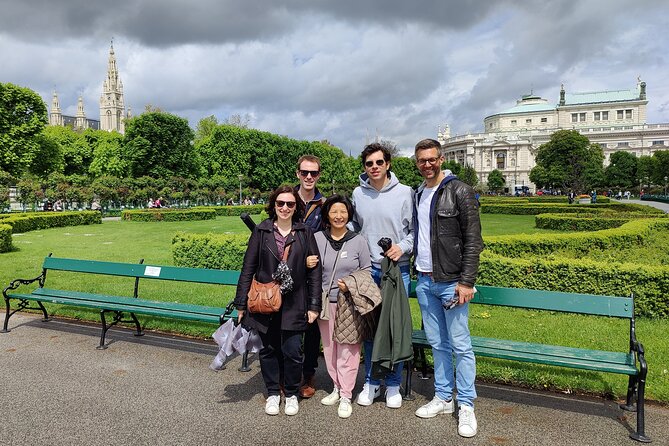
Josefsplatz is one of the most rewarding sections because several major sights gather in one compact setting. The route includes Augustinian Church, where you visit inside, along with the statue of Emperor Joseph II, the Court Library, Pallavicini Palace, and the Spanish Riding School.
The church visit gives the tour a welcome interior moment. It also breaks up the steady sequence of palace façades and open squares. You get about fifteen minutes here, the longest scheduled stop on the walk.
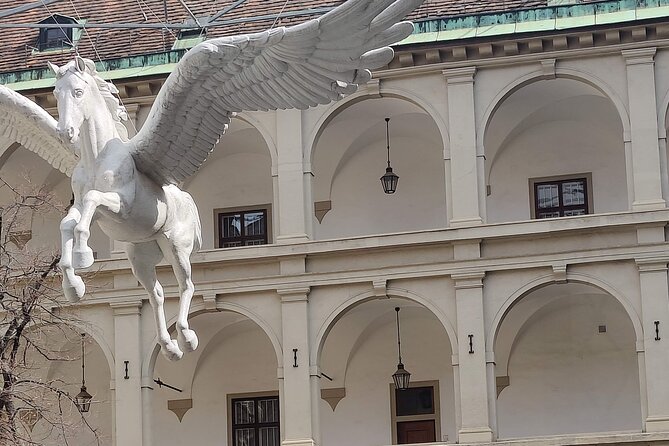
The surrounding buildings reveal how close the Habsburg court kept its religious, cultural, and ceremonial life. The Court Library points to scholarship and collecting. Pallavicini Palace brings aristocratic residence into view. The Spanish Riding School connects the imperial court with the Lipizzaner tradition.
The horses are not a guaranteed performance or full visit. The itinerary notes Lipizzaner horses at Stallburg, but admission is not included, and feedback describes seeing them at a distance. If the horses are a major reason for booking, plan a separate Spanish Riding School experience.
Stallburg, court music, and imperial collections
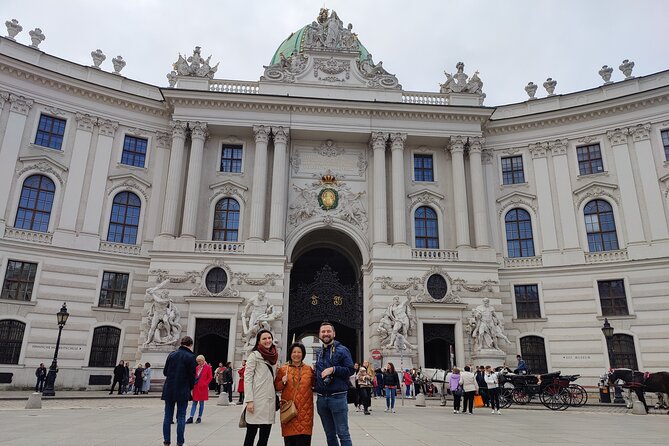
The Stallburg stop continues the horse story. The building is associated with the Lipizzaner horses, but the scheduled visit is only about five minutes. Treat it as a short exterior and context stop, not as a stable tour.
Next comes the Wiener Hofmusikkapelle, or Court Music Chapel, with the Imperial Treasury Museum and Renaissance Gate nearby. This is another place where the route points out major attractions without taking you inside. Admission is not included.
That distinction matters at a price of $106.20 per person. You are paying for Yue’s guiding and the compact route, not a package of museum tickets. If you prefer a guide who keeps you moving and helps you choose later visits, that can be good value. If you want interiors, artifacts, and long explanations on the spot, you may find the price harder to justify.
The Hofburg and its inner court
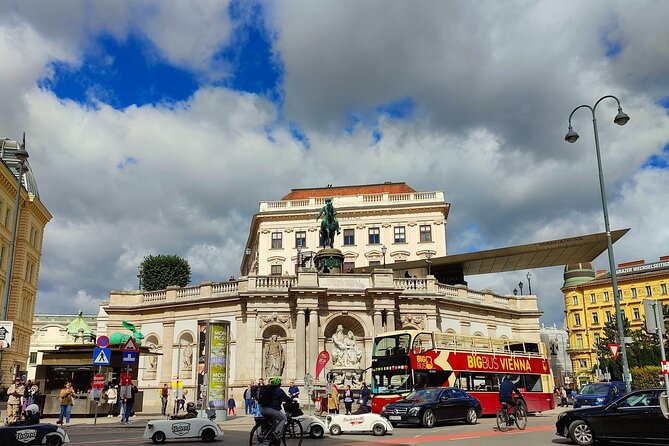
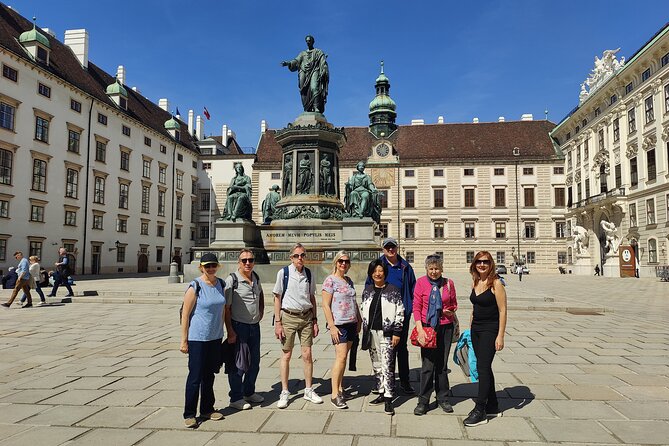
The Hofburg is the central dramatic chapter of the tour. In the Inner Court, you see the statue of Franz II and I, the Amalien Wing, the Leopoldine Wing, and the Reich Chancellery Wing.
These names can blur together when you explore alone. Yue’s role is to connect the wings to the imperial system and to the people who lived and worked here. Her broader European context is especially useful because the Habsburg story did not stop at Vienna’s city limits.
The Hofburg stop lasts about ten minutes and is free. It is enough to get a sense of scale and layout, but not enough for the Imperial Apartments, Sisi Museum, or Imperial Treasury in depth. Think of the walk as a trailer for the complex, then choose a paid interior visit if the subject catches you.
Heldenplatz and Maria Theresien Square
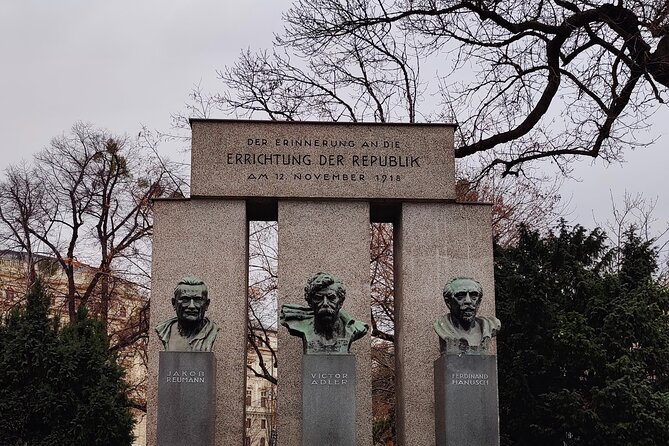
Heldenplatz opens the imperial setting into a broad ceremonial space. You see statues of Karl and Prince Eugene, the National Library, the OSCE, the Burgtor, and views toward Vienna’s City Hall and Parliament.
The stop is about ten minutes. Yue uses the buildings and statues to explain how Vienna’s public spaces reflect rulers, military victories, government, and modern international institutions. That combination helps you see the city as more than a collection of pretty façades.
Maria Theresien Square brings the focus to one of the most powerful women in Habsburg history. The large statue of Empress Maria Theresa is framed by the museums of art and natural history. The point is not just the monument’s size. It is how Maria Theresa changed the course of Habsburg rule and how later generations chose to present her.
Both squares are free to visit and easy to revisit. They also offer some of the best photo opportunities on the route, and Yue is often praised for spotting good angles and taking group pictures when asked.
Sisi, Michaelerplatz, and imperial personality
The Sisi Museum is the tour’s most personal Habsburg stop. Empress Elisabeth, known as Sisi, became an Austrian icon after her death. The guide discusses her personality, her stories, and the way her character shaped her fate.
Admission is not included, and the scheduled time is about ten minutes. That is enough to explain why Sisi remains such a strong part of Vienna’s public image, but not enough to see the museum properly. Return later if you want the objects, rooms, and fuller biography.
Michaelerplatz follows with a dense cluster of sights: Michaeler Church, the Michaeler Gate, the Loos House, and archaeological excavations. Here, the old and new city meet in one view. The excavations point to earlier layers, while the Loos House represents a more modern architectural argument.
The five-minute schedule keeps the explanation brisk. Still, this is one of the stops where a short guide talk can change how you look at the square later. Details that seem unrelated begin to form a clear picture of Vienna’s long architectural debate.
Kohlmarkt, Graben, and the plague column
Kohlmarkt is Vienna’s luxury shopping street, lined with splendid buildings and home to Café Demel. The stop lasts about five minutes and is free. Demel is a useful name to remember if you want a classic coffeehouse or pastry stop after the walk, though this tour does not include a tasting.
The route continues through the grand shopping streets toward the Colonna della Peste, also called the Pestsäule, on the Graben. The plague monument, Grabenhof, and Ankerhaus give Yue more material for explaining Vienna’s public art and urban design.
This part of the walk is especially practical. You are close to major shops, cafés, and pedestrian routes, so it is easy to return later at a slower pace. The guide can also help you decide where a quick snack ends and a full Vienna café experience begins.
St. Stephen’s Cathedral as the final landmark
The walk ends at St. Stephen’s Cathedral, a landmark built and altered from the twelfth through the sixteenth centuries. Its tallest tower dominates Vienna’s center and gives you a strong visual anchor for the rest of your stay.
The stop is listed as about five minutes, with admission free for the tour. That should not be confused with every possible tower or interior activity being included. You can admire the cathedral and understand its place in the center, then decide if you want a longer visit.
Finishing near Stephansplatz U-Bahn station is convenient. You are well placed for independent sightseeing, and the route has taken you from the city’s musical heart to its religious and civic center.
Yue Mayr’s guiding style
Yue Mayr is the named guide, and the strongest praise centers on her delivery. She is described as warm, funny, energetic, punctual, and ready to answer questions. The best fit is someone who wants facts with personality rather than a dry list of dates.
Her approach also appears useful for families. She is praised for working well with children, and her stories connect people and events instead of treating each building as an isolated stop. That makes the Habsburg material easier to follow, especially if you do not already know the difference between Maria Theresa, Sisi, Franz II and I, and the many imperial wings.
The tour is offered in English. One poor experience involved a last-minute request for German while other participants were booked for English, along with difficulty understanding parts of the explanation. If you need German or another language, this is not the safe choice based on the information available.
Price, timing, and what you actually receive
At $106.20 per person, this is not a bargain-priced group stroll. The value comes from the six-person limit, the licensed guide, the concentrated route, and the time saved figuring out Vienna’s center on your own.
The price makes more sense for first-time visitors with limited time, couples or families who value direct questions, and anyone who wants a private-feeling introduction without booking a fully private tour. It makes less sense if you plan to spend two hours inside museums or if you already know the Hofburg district well.
The tour lasts about two hours, though one account describes a walk closer to two and a half hours. Allow a little flexibility rather than scheduling an immediate train, meal, or timed admission afterward.
Wear shoes suitable for city walking and check the weather. The experience requires good weather, and poor conditions can lead to another date or a full refund. Free cancellation is available until 24 hours before the start time, while later cancellations and changes are not refunded.
Should you book the Vienna Highlight Tour?
Book it if you want a fast, well-organized first look at central Vienna, especially on your first morning in the city. Yue’s humor, historical storytelling, photo help, and restaurant suggestions add value beyond simply following a route on a map.
Skip it if your main goal is detailed museum access, a slow architectural study, or a German-language tour. The walk moves quickly, several entries cost extra, and the two-hour format favors breadth over depth.
For most first-time visitors who want the imperial center to make sense, this is a useful starting point. Treat it as an orientation walk with a lively guide, not as a complete tour of every palace and museum it passes.
FAQ
Where does the Vienna Highlight Tour begin?
It begins at Herbert-von-Karajan-Platz beside the Vienna State Opera, at 1010 Vienna.
What time does the tour start?
The scheduled start time is 10:00 a.m.
Where does the tour end?
It ends at the Stephansplatz U-Bahn station near the Wien Museum Virgilkapelle, overlooking the highest south tower of St. Stephen’s Cathedral.
How long does the tour last?
The tour lasts approximately two hours. One account describes a walk of about two and a half hours, so allow some extra time.
How many people can join?
The tour has a maximum of six participants.
Is admission to the attractions included?
Only the licensed tour guide is included. Several stops are free, but admission is not included for places such as the Vienna State Opera, Stallburg, the Court Music Chapel and Imperial Treasury area, and the Sisi Museum.
Can I cancel for a full refund?
Yes. You can cancel at least 24 hours before the local start time for a full refund. Cancellations or changes made less than 24 hours before the start are not refunded.
Recently added around Vienna
- Vienna: Private tour Mauthausen and Linz★ 4.1 · 3 reviews
- 2-Day Prague Tour from Vienna with private Transfers and Lunches★ 5.0 · 3 reviews
- Vienna Self Guided Sherlock Holmes Murder Mystery Game★ 4.5 · 3 reviews
- Vienna Private Schönbrunn Palace Tour, Extra Rooms and Gardens★ 5.0 · 3 reviews
- Salzburg and Lake Region Private Day Trip from Vienna★ 5.0 · 3 reviews
- Small-group Vienna Wine Tour★ 5.0 · 3 reviews
- True Crime mobile puzzle rally Vienna★ 4.0 · 3 reviews
- Vienna: Wachau Valley Private Kayak and Wine Tour★ 5.0 · 3 reviews
Walking Tours in Vienna, compared.

Guided Walking Tour of City Center Highlights
Read our review →
Guided Walking Tour of City Highlights & Hidden Gems
Read our review →
Vienna Historic Center Small Group Walking Tour
Read our review →


Ghosts and Legends Guided Nighttime Walking Tour
Read our review →

Browse the lists this tour appears in