
Reviewed · WALKING TOURS IN VIENNA
Vienna: Hidden Secrets and Local Stories Walking Tour
Vienna’s grand center becomes far more interesting when you leave the postcard views and follow the narrow lanes, courtyards, and odd little details most people walk past. This two-hour tour mixes verified history with amusing legends, including the truth behind Mozart’s final residence and the curious house called Where the cow plays on the board.
I like the small-group format, which makes it easier to ask questions and keep up with a guide such as Herbert or Wolfgang. I also like the route’s mix of famous sights and tucked-away corners, from St. Stephen’s Cathedral to Ballgasse and Blutgasse. The main consideration is practical: this is a walking tour in all weather, with uneven city streets and no suitability for wheelchair users or people with mobility impairments.
Key points at a glance
- Local stories beyond the postcard sights: Hear true and fictional tales tied to courtyards, lanes, churches, and old houses.
- Mozart with the myths trimmed away: Visit his final residence and learn which parts of his popular story hold up.
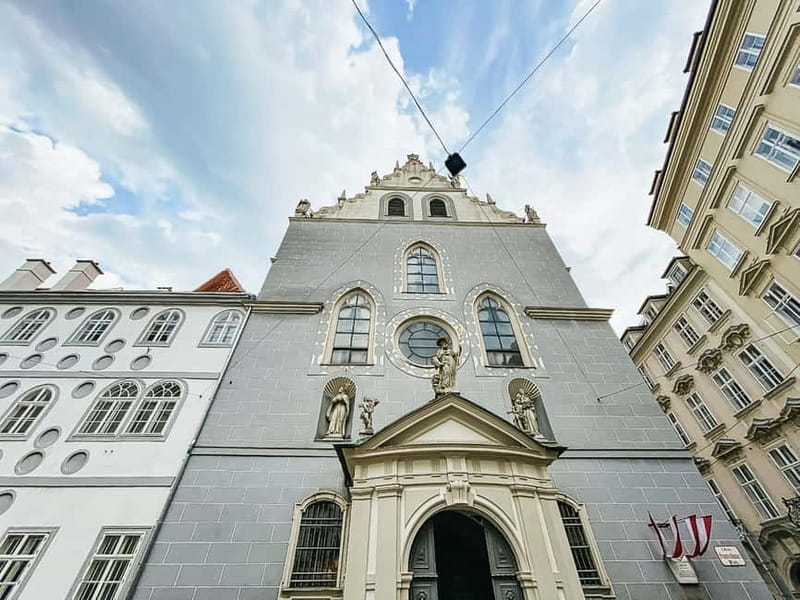
- A compact central Vienna route: See St. Stephen’s Cathedral, Ballgasse, Blutgasse, the Franciscan Church, and the old university district in two hours.
- Guides with personality: Herbert is known for humor and quizzes, while Wolfgang brings an entertaining, personal approach.
- Small groups help the tour feel conversational: Groups can be around 10 people, making it easier to hear and speak with the guide.
- Good value for a first look: At $33, you get a local English or German-speaking guide and a useful introduction to central Vienna without spending half a day.
Why this tour gets beyond Vienna’s grand facades
Vienna’s historic center is easy to admire and surprisingly easy to misunderstand. You can walk from Stephansplatz to the Hofburg, see magnificent architecture, and still miss the small passages where the city’s daily life and stranger stories are tucked away.
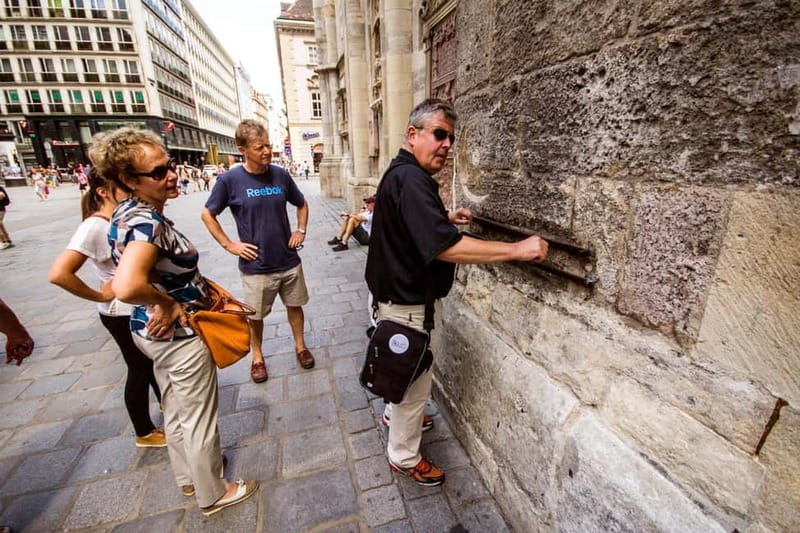
This tour focuses on those details. You still see major landmarks, but the guide uses them as reference points rather than treating them as the whole show. The route moves through narrow streets, courtyards, religious buildings, old academic quarters, and lesser-known corners of the center.
I particularly like the balance between fact and folklore. The tour openly includes amusing and fictional stories as well as real ones, so you are not left wondering whether every colorful tale is supposed to be historical fact. That approach suits Vienna, a city where elegant buildings and playful local legends sit close together.
The tour is led in English or German by a certified, native-speaking guide. Herbert and Wolfgang are the named guides associated with this experience. Herbert’s style, as reflected in the tour’s feedback, includes humor, questions, and easy conversation. Wolfgang is also praised for keeping the group engaged and making the walk feel personal.
This is not a formal lecture delivered from a distance. It is better suited to you if you like stopping often, looking up at buildings, and hearing why a side street or courtyard matters.
More Walking Tours in Vienna
- Vienna: Guided Walking Tour of City Center Highlights
★ 4.7 · 4,989 reviews - Vienna: Vienna Central Cemetery Guided Walking Tour
★ 4.8 · 3,307 reviews - Vienna: Guided Walking Tour of City Highlights & Hidden Gems
★ 4.9 · 2,180 reviews
Starting at St. Stephen’s Cathedral and Stephansplatz
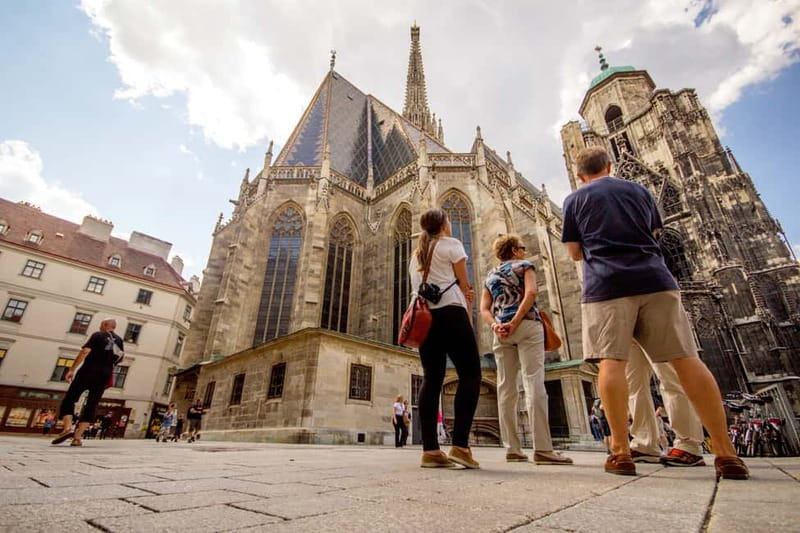
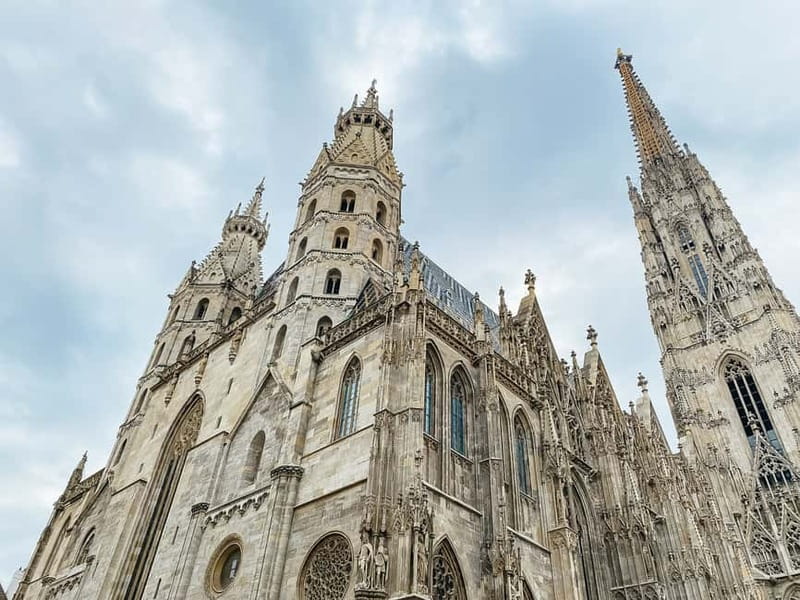
The walk begins near a Bankomat meeting point, though the exact start can vary with the option you book. From there, the route reaches St. Stephen’s Cathedral and Stephansplatz, the symbolic heart of central Vienna.
The cathedral is one of the city’s essential sights, but this tour is not designed as a lengthy interior visit. Instead, the guide helps place the cathedral within the surrounding old center and explains details you may miss when viewing it on your own.
That is useful early in a Vienna visit. Stephansplatz is a natural orientation point, and the surrounding streets lead quickly into a much more intimate part of the city. You get the grand view first, then move into lanes where the scale changes from monumental to almost domestic.
Bring comfortable shoes. Two hours sounds short, but the value comes from covering a series of connected streets on foot rather than lingering in one place. You should also arrive ready for weather. The walk operates in rain and other conditions, and there is no promise of a dry route.
Mozart’s final residence and the truth behind the story
One of the strongest stops is Mozart’s final residence. The appeal here is not simply seeing another Mozart-related address. Vienna is full of famous names and polished stories, and the guide’s role is to separate established information from the simplified version repeated in guidebooks and popular culture.
You hear about the truth of Mozart’s life rather than receiving only a romantic portrait of the composer. That makes this stop especially useful if you have already encountered Mozart stories elsewhere in Vienna and want a clearer sense of what is fact, what is legend, and what has been exaggerated over time.
The stop also shows how history works in the old center. A building can be linked to a world-famous figure, yet the surrounding street still feels like part of an ordinary neighborhood. The tour connects the person to the setting instead of treating the residence as an isolated museum label.
Do not expect a full Mozart concert or an extended museum visit as part of this walk. The focus is the building, the story, and the guide’s explanation. If you want detailed interior exhibits, you would need to plan a separate visit.
Ballgasse, Blutgasse, and Vienna’s narrow lanes
Ballgasse and Blutgasse are among the route’s more atmospheric stretches. Their narrow forms give you a better idea of how compact the old center can feel away from its open squares.
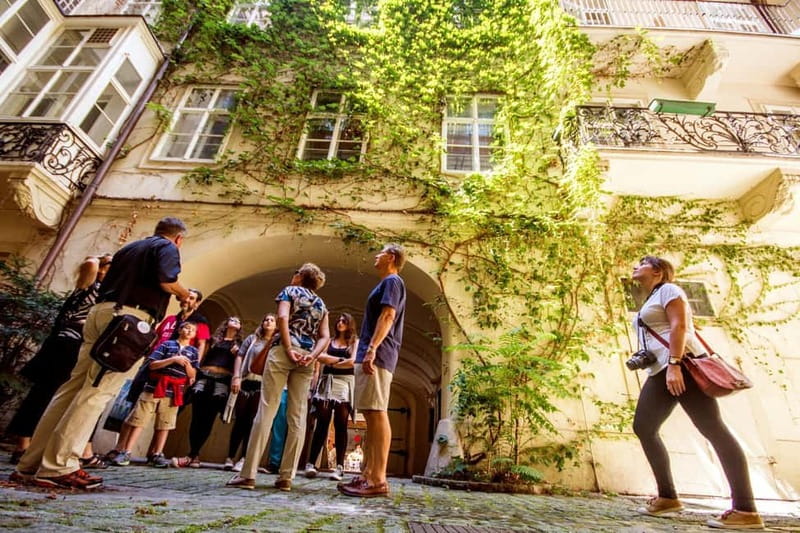
A street name can seem like a minor detail until you hear the story attached to it. Here, the guide uses the lanes to explain local legends and the way Vienna’s past survives in names, walls, entrances, and odd fragments of architecture.
Blutgasse is especially well suited to this kind of storytelling. You are not simply walking from one major monument to another. You are watching for the small clues that a hurried walk would miss.
The tour also includes Ballgasse, another street where the scale and setting make the central district feel less polished and more lived in. I like this part of the route because it gives you places to revisit later. After the tour, you can return at your own pace and look more closely at the buildings the guide pointed out.
The lanes are central, but they are not necessarily the easiest places for people with limited mobility. The tour is not suitable for wheelchair users or people with mobility impairments, and comfortable footwear remains important.
A different way to spend an afternoon here:
- Vienna: Vivaldi’s Four Seasons Concert in Karlskirche
★ 4.7 · 14,951 reviews - Vienna: Spanish Riding School Training
★ 3.9 · 9,281 reviews - Vienna: Skip-the-cashier-desk-line Giant Ferris Wheel Ride
★ 4.5 · 7,859 reviews - Vienna: Schönbrunn Palace & Gardens Skip-the-Line Tour
★ 4.7 · 7,739 reviews
Franciscan Church, monastery, and a quieter Vienna
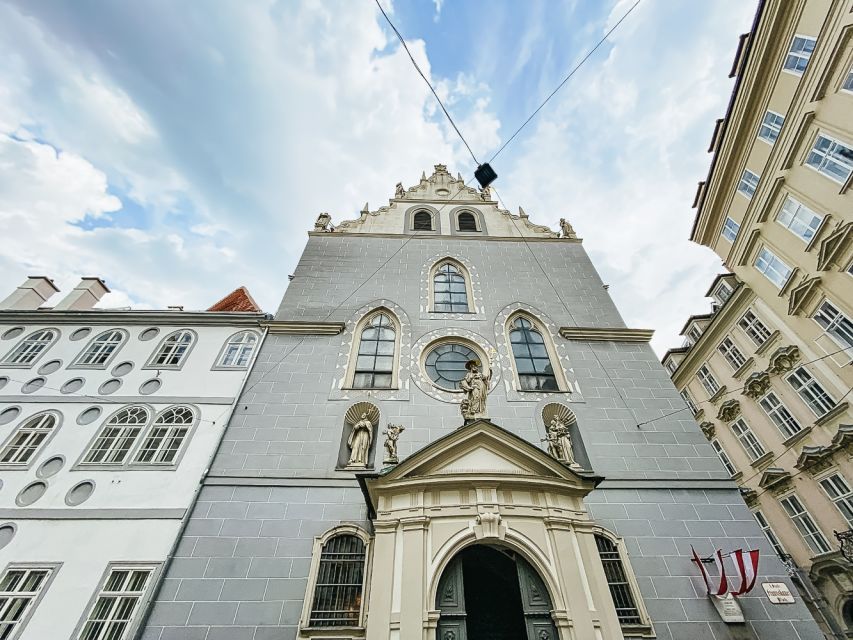
The Franciscan Church and Monastery offer a change from the city’s better-known imperial sights. This is one of the tour’s quieter religious stops, giving you a chance to see a different side of Vienna’s sacred architecture and local life.
The route does not only point out the church. It includes the surrounding setting and the monastery, helping you see how religious buildings fit into the old center’s street pattern. You also hear about the city’s traditions and everyday customs, including traditional Viennese cuisine.
That food discussion is a welcome touch. A walking tour does not need to stop for a meal to be useful to your appetite. A few well-placed explanations about local dishes can help you make better choices later, especially when menus feel heavy on unfamiliar German terms.
The church and monastery also provide a useful pause in the route. After several narrow lanes and stories, a religious building gives the walk a clear visual change. You are still in the center, but the mood becomes more reflective.
Palais Neupauer-Breuner and the Deutsches Haus
Palais Neupauer-Breuner brings the grander side of Vienna back into view. The name points to the city’s aristocratic and architectural past, but the tour’s value lies in relating the building to the streets around it.
Rather than treating every palace as a separate monument, the guide helps you read the center as a connected place. Formal facades, service lanes, churches, residences, and courtyards all occupy the same compact district.
The route also includes the Deutsches Haus. These stops help fill in the spaces between the headline attractions. If you only follow Vienna’s biggest sights, you can miss the way the old center changes from one block to the next.
I would not book this tour expecting access to every interior. The supplied details describe guided stops and views along the route, not a series of palace admissions. Think of it as an architectural and storytelling walk through the district, with the guide adding context that a self-guided stroll may lack.
The old university district and Jesuit Church
Later, the walk reaches the old university district, the Jesuit Church, and the old city wall. This section broadens the subject beyond musicians, palaces, and street legends.
The university area adds an academic layer to Vienna’s story. The Jesuit Church brings another major architectural and religious point of interest, while the old city wall helps you picture how the historic center was once protected and organized.
These are the kinds of stops that make a local guide worthwhile. You can see a church or a remnant of a wall by yourself, but you may not know how it connects to the district around it. The guide’s explanation gives you a framework for exploring independently afterward.
The inclusion of the old city wall is also a reminder that central Vienna was not always the open, elegant district you see today. The route links surviving structures and street patterns to the city’s earlier form without requiring a full day of historical study.
The odd house called Where the cow plays on the board
One of the tour’s most unusual details is the house known as Where the cow plays on the board. Even the name makes this stop memorable, and it fits the tour’s wider purpose: finding the peculiar details that do not appear on every standard sightseeing route.
This is the sort of stop you might pass without noticing. The guide gives it a story and a place in the city’s collection of legends and local references. It also adds humor to a route that includes serious subjects such as religion, urban defenses, and Mozart’s life.
The exact meaning of the name is best heard from the guide on the day. The experience is built around spoken explanation, not a script you are meant to record or reproduce. Audio recording is not allowed, so bring your attention rather than your phone’s recorder.
A two-hour pace that works best early in your stay
Two hours is a sensible length for this route. You get a focused introduction to the center without giving up an entire morning or afternoon. I would schedule it early in your Vienna stay if possible.
The tour gives you a mental map of streets and landmarks that can make later exploring easier. You may spot Ballgasse again, return to a courtyard, or understand why a church or lane matters after hearing its story.
The walk continues on from a first tour by the same operator, but you do not need to take Part 1 beforehand. This is helpful if your schedule only allows one booking. You should not feel that you have arrived in the middle of an unfinished lesson.
The listed ending is back at the meeting point, with the drop-off location given around Dr.-Karl-Lueger-Platz 3 in Vienna. Since the starting point can vary by booking option, check your confirmation carefully rather than assuming every departure uses the same corner.
Small groups make a real difference here. A group of about 10 people is small enough for the guide to keep an eye on everyone and answer questions without turning the walk into a crowd-management exercise. It also helps when the route moves through narrow streets.
Is $33 a fair price?
At $33 per person, this tour is fairly priced for a two-hour guided walk in central Vienna. You are paying for a certified local guide, English or German narration, and a route that combines famous landmarks with less obvious streets and courtyards.
The value is highest if you want interpretation rather than admission tickets. The price does not appear to include entry into museums or a meal, so compare it with what you want from the morning. If you mainly want interiors, this is not the right product. If you want a local explanation of what you are seeing outdoors, it makes better sense.
A good guide can also save you time. Instead of stopping at every building and trying to sort out conflicting information, you get a focused route with stories selected for the area. That is particularly useful in Vienna, where the center offers far more detail than you can absorb in one independent walk.
Flexible booking adds some practical value. You can reserve now and pay later, and cancellation is free up to 24 hours before the tour. The price is still modest enough that I would consider it a useful first-day orientation, especially for a short Vienna visit.
Who should book this walk?
I would choose this tour if you enjoy history told through people, street names, odd buildings, and local anecdotes. It suits first-time visitors who want to understand central Vienna, but it can also work for repeat visitors who have already seen the standard palaces and want a different route.
It is a good match for:
- Adults and children aged 12 or older who enjoy walking and stories
- Couples and small groups who prefer conversation over a large scripted tour
- Visitors who want English or German guiding
- Anyone curious about Mozart beyond the familiar legend
- People who like seeing churches, courtyards, lanes, palaces, and old urban defenses in one compact route
It is less suitable if you need step-free access, use a wheelchair, or have a mobility impairment. It is also not a good choice if you dislike outdoor activities in uncertain weather or do not want to walk through narrow city streets.
Children under 12 are not accepted. Large bags and luggage are not allowed, so leave your suitcase at your accommodation or make another storage plan before arriving.
My verdict: book it for stories, not ticketed attractions
I would book this tour if your main goal is to see Vienna with better context. Its best feature is the way it links headline sights such as St. Stephen’s Cathedral and Mozart’s final residence with smaller places such as Ballgasse, Blutgasse, the Franciscan Church, and the curious cow-and-board house.
The guides are a major part of the experience. Herbert’s humor, quizzes, and easy conversation suit people who want an active tour rather than a speech. Wolfgang brings the same kind of personal, entertaining approach. The small groups help both styles work well.
Choose something else if you want extensive interior visits, a food tasting, or a route designed for limited mobility. For a two-hour look at Vienna’s old center, with local stories and a few streets you might otherwise miss, $33 is a sensible spend.
FAQ
How long does the Vienna Hidden Secrets and Local Stories Walking Tour last?
The tour lasts two hours. Starting times vary, so check availability when you book.
What languages are available?
The live tour is available in English and German.
Who guides the tour?
The tour is led by a certified, native-speaking guide. Herbert Stojaspal is the experience provider, and guides named Herbert and Wolfgang are associated with the walks.
Where does the tour start and finish?
The meeting point may vary depending on the option you book. The listed starting point is near a Bankomat, and the activity ends back at the meeting point, with Dr.-Karl-Lueger-Platz 3 given as a drop-off location.
Is the tour suitable for children?
The tour is not suitable for children under 12.
Can I bring luggage or record the guide?
Large bags and luggage are not allowed, and audio recording is not permitted.
What happens if it rains?
The tour operates in all weather conditions. Wear suitable clothing and comfortable walking shoes.
Is the tour accessible for wheelchair users?
No. The tour is not suitable for wheelchair users or people with mobility impairments.
Recently added around Vienna
- Vienna: Private tour Mauthausen and Linz★ 4.1 · 3 reviews
- 2-Day Prague Tour from Vienna with private Transfers and Lunches★ 5.0 · 3 reviews
- Vienna Self Guided Sherlock Holmes Murder Mystery Game★ 4.5 · 3 reviews
- Vienna Private Schönbrunn Palace Tour, Extra Rooms and Gardens★ 5.0 · 3 reviews
- Salzburg and Lake Region Private Day Trip from Vienna★ 5.0 · 3 reviews
- Small-group Vienna Wine Tour★ 5.0 · 3 reviews
- True Crime mobile puzzle rally Vienna★ 4.0 · 3 reviews
- Vienna: Wachau Valley Private Kayak and Wine Tour★ 5.0 · 3 reviews
Walking Tours in Vienna, compared.
Guided Walking Tour of City Center Highlights
Read our review →
Guided Walking Tour of City Highlights & Hidden Gems
Read our review →
Vienna Historic Center Small Group Walking Tour
Read our review →
Ghosts and Legends Guided Nighttime Walking Tour
Read our review →
Browse the lists this tour appears in