
Reviewed · WALKING TOURS IN VIENNA
Vienna: Courtyards & Hidden Places Walking Tour
Vienna’s grand center is easy to admire from the main squares, but its best stories often sit behind plain doorways. This two-hour walk leads you through quiet courtyards and narrow lanes, linking famous sights with lesser-known corners and the legends attached to them.
I like the mix of major landmarks and small details, especially Mozart’s final residence, the old university district, and the house known as Where the cow plays on the board. I also like that the guide brings in traditional Viennese food and life after World War II, rather than giving you only dates and royal names.
The main thing to consider is pace and access. You cover a good amount of central Vienna in two hours, often on old streets and through courtyards, so the tour is not suitable for children under 12, wheelchair users, or people with mobility impairments. It also takes place in all weather.
Key details at a glance
- Courtyards beyond the grand avenues: Enter quieter corners of Vienna’s old center and hear the legends connected with them.
- Mozart’s last Vienna address: Visit his final residence and separate the facts of his life from the familiar myths.
- A strong old-town route: See Stephansplatz, St. Stephen’s Cathedral, Blutgasse, Domgasse, and Ballgasse.
- Architecture with context: Look at Palais Neupauer-Breuner, the Deutsches Haus, the Franciscan Church and Monastery, and the Jesuit Church.
- Food and daily life: Learn about traditional Viennese cuisine alongside the city’s buildings and famous residents.
- Small-group format: Walk with a certified guide in English or German, with a listed price of $34 per person.
Why Vienna’s side doors matter
The main sights of Vienna can feel almost too polished. St. Stephen’s Cathedral, wide Stephansplatz, and the elegant palaces make an immediate impression, but they do not always explain how ordinary people lived around them.
This tour shifts your attention from grand façades to the spaces behind them. A courtyard might reveal a quieter side of the city, while a narrow lane can preserve an old name, an old trade, or a story about the people who once lived there. You are still in Vienna’s historic center, but the experience is less about checking off monuments and more about seeing how the city fits together.
That approach suits me. I can see the cathedral on my own, but I am less likely to notice the significance of a passageway, an oddly named house, or the way several streets connect the old university quarter with the cathedral district.
The tour is also presented as a continuation of a first walk from the same operator. You do not need to have taken Part 1, though. This route is designed to work on its own, which is useful if your Vienna schedule is short or you discover the experience after arriving.
More Walking Tours in Vienna
- Vienna: Guided Walking Tour of City Center Highlights
★ 4.7 · 4,989 reviews - Vienna: Vienna Central Cemetery Guided Walking Tour
★ 4.8 · 3,307 reviews - Vienna: Guided Walking Tour of City Highlights & Hidden Gems
★ 4.9 · 2,180 reviews
Starting near St. Stephen’s Cathedral
The walk begins at one of two possible starting points listed as Bankomat locations. Check the exact meeting point attached to your booking, since it can vary by option.
From there, the route heads into the center around Stephansplatz and St. Stephen’s Cathedral. This is the natural heart of old Vienna, and the guide uses it to provide orientation before moving into less obvious places.
St. Stephen’s Cathedral is one of the city’s essential sights, but this tour does not appear to be a full cathedral visit. The guide discusses the building and its place in Vienna, then the route continues through the surrounding streets. That distinction matters if you want a long interior visit, detailed art commentary, or time to climb a tower. You will need a separate visit for that.
For a first walk in Vienna, though, the cathedral is a useful anchor. It gives you a clear sense of where you are before the route turns toward lanes and courtyards that can be harder to find alone.
Mozart’s final residence and the facts behind the legend
Mozart’s final Vienna residence is one of the strongest stops on the route. The address is connected with the last period of his life, and the guide uses it to discuss the real person behind the familiar image of the musical genius.
That promise is worth paying attention to. Vienna is full of Mozart souvenirs and simplified stories, so a guide who explains what is fact and what is later invention can add real value. The point is not simply to look at a famous address. It is to place Mozart within the city where he worked, lived, and built his public reputation.
The route also includes Domgasse and Ballgasse, streets that help connect the Mozart stop to the wider old-city setting. This gives the story a physical frame. Instead of treating Mozart as an isolated name, you see the streets and buildings around the places tied to his Vienna years.
If Mozart is your main interest, keep your expectations measured. The tour offers interpretation from outside and along the route, but the supplied details do not promise an extended museum visit or admission to the Mozarthaus interior.
Palais Neupauer-Breuner and the Deutsches Haus
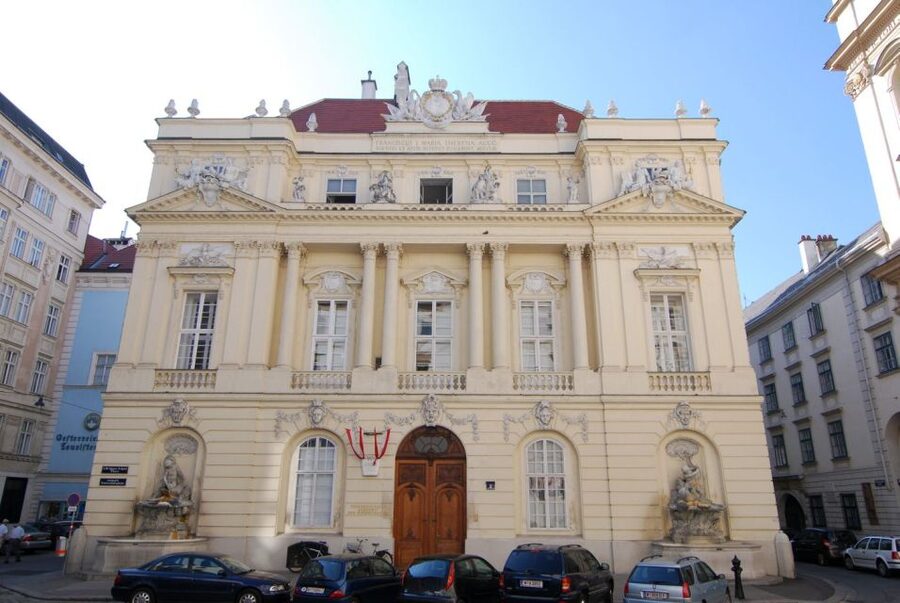
Palais Neupauer-Breuner brings the tour back to Vienna’s grand architecture. A palace façade can be easy to admire and just as easy to forget, especially after a morning of ornate buildings. The guide’s role here is to explain what you are looking at and how it fits into the old center.
The nearby Deutsches Haus adds another architectural point of interest. These stops work best for visitors who enjoy comparing building styles and hearing how central Vienna changed over time.
Do not expect a palace tour inside every building. The experience is a walking tour of the historic center, and the emphasis is on views, stories, and urban details. That keeps the group moving, but it also means you should wear comfortable shoes and be ready to spend most of the two hours outdoors.
A different way to spend an afternoon here:
- Vienna: Vivaldi’s Four Seasons Concert in Karlskirche
★ 4.7 · 14,951 reviews - Vienna: Spanish Riding School Training
★ 3.9 · 9,281 reviews - Vienna: Skip-the-cashier-desk-line Giant Ferris Wheel Ride
★ 4.5 · 7,859 reviews - Vienna: Schönbrunn Palace & Gardens Skip-the-Line Tour
★ 4.7 · 7,739 reviews
Blutgasse, courtyards, and old Vienna’s local character
Blutgasse is one of the route’s more atmospheric stretches. Its narrow form and old buildings suit the tour’s focus on legends and overlooked places. Here, the city feels less like a sequence of formal squares and more like a lived-in maze.
The courtyards are the real reason to choose this walk over a standard highlights tour. They offer a change of scale. Outside, Vienna presents grand public architecture. Inside, courtyards can feel enclosed, calm, and practical, with traces of the homes, businesses, and communities that occupied the center.
The tour includes several such inner spaces, though the exact courtyards can depend on access and the guide’s route. That is one reason the experience can feel different from a simple map-based walk. You are not only following famous addresses. You are being shown places that are easy to pass without noticing.
One useful tip: large bags and luggage are not allowed. Leave your suitcase at your accommodation or another secure location before you arrive. You will be walking through tight spaces, and traveling light makes the route easier for everyone.
Franciscan Church, monastery, and a quieter religious Vienna
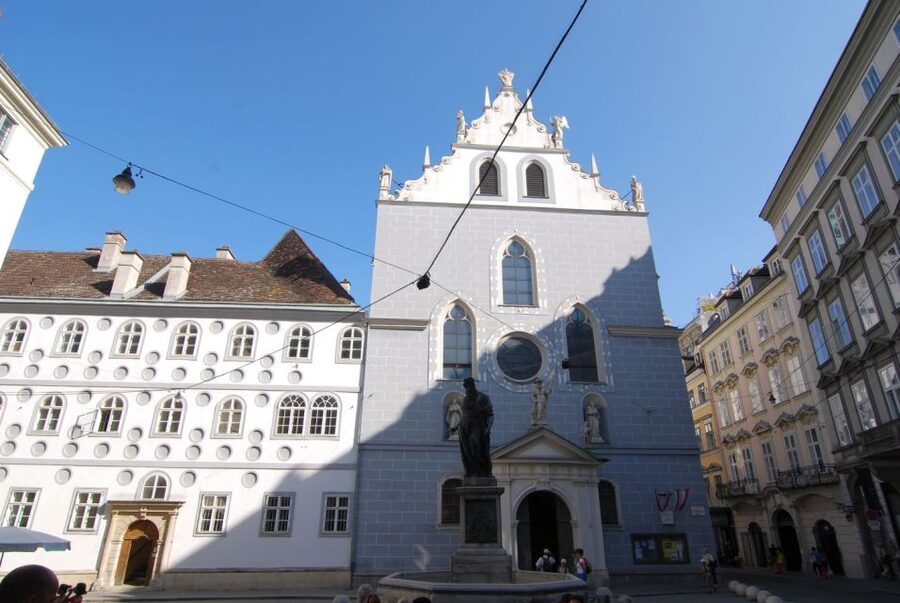
The Franciscan Church and Monastery offer a different mood from the cathedral. The church is part of the old center’s religious fabric, but the setting is more intimate and less dominated by the city’s biggest landmark.
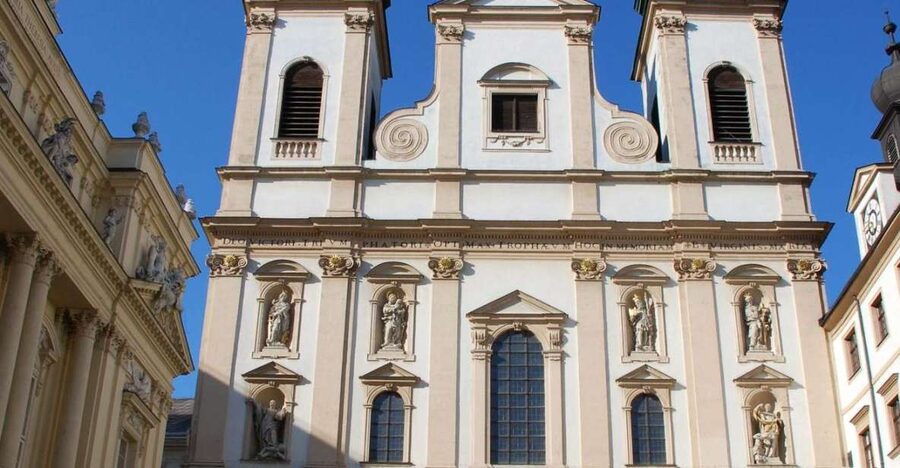
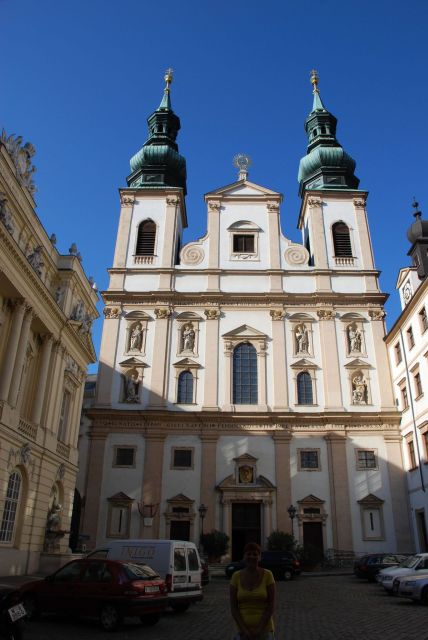
The tour also brings you to the Jesuit Church in the old university district. These religious buildings help show how much of Vienna’s civic life grew around churches, monasteries, schools, and universities. You get a fuller picture of the center when the route includes both famous attractions and institutions that shaped daily life.
The provided details do not promise extended interior time at either church. If a door is open and the group can enter, the guide may add context, but you should think of these as stops within a broader walking route rather than formal church tours.
The old university district and the city wall
The University of Vienna appears near the end of the route, along with the old university district and remnants or traces of the old city wall. This part adds useful historical structure to the walk.
The university district helps explain why this part of Vienna has long been linked with learning, religion, and public debate. The old wall, meanwhile, reminds you that the elegant center was once a protected medieval town rather than simply a ceremonial capital.
I like this kind of ending because it broadens the tour beyond Mozart and the cathedral. You finish with a sense of how Vienna developed physically, not just a list of famous people and pretty façades.
The listed drop-off point is Dr.-Karl-Lueger-Platz 3 in the first district. From there, you remain well placed for more sightseeing in central Vienna, though no hotel pick-up or transport is included.
Stories about food, war, and ordinary life
A good city walk should explain more than architecture. This one includes traditional Viennese cuisine, which gives you a practical connection to the city. You learn about food as part of local life, not simply as a restaurant recommendation.
The stop known as Where the cow plays on the board is another example of the tour’s unusual details. It is the kind of name that invites a question, and the guide uses such features to make the old center easier to remember.
The walk also brings in photographs and stories about Vienna after World War II, including wartime destruction. That adds a needed layer to the polished imperial image. Vienna has beautiful streets, but parts of the city were damaged, rebuilt, and reshaped. Seeing those changes through images can help you understand that the historic center is not frozen in one period.
The strongest feedback about the guiding style points to clear, entertaining explanations, empathy, and stories that keep the information moving. One German-speaking participant described the walk as especially informative and well presented, with material about famous people and everyday life. Another noted that the guide led a group of only two people through many interesting places and explained them in detail.
Those comments line up with what this route is built to do: give you a steady stream of useful facts without turning the walk into a lecture.
How much ground you cover in two hours
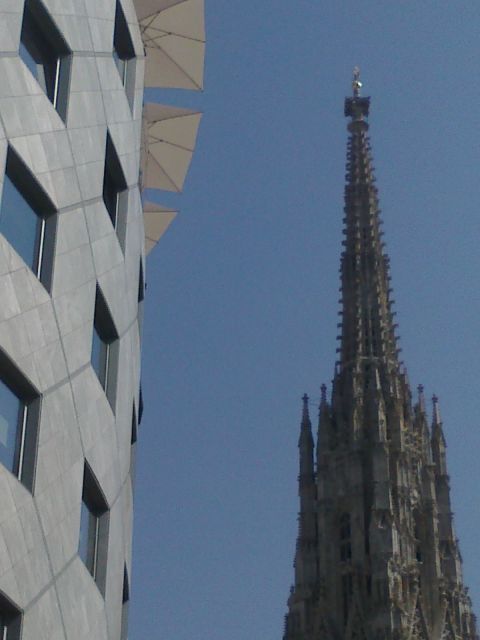
Two hours is enough time for a focused introduction to Vienna’s old center, but not enough for long visits inside every landmark. You will see many locations, hear the stories attached to them, and get a better sense of how the streets connect.
That makes the tour a good choice early in your stay. You can use it to decide which places deserve a return visit, perhaps coming back later to St. Stephen’s Cathedral, Mozart’s residence, or one of the churches.
It also works well for a second look at Vienna. If you have already seen the major squares, the courtyards and smaller lanes give you something new to notice.
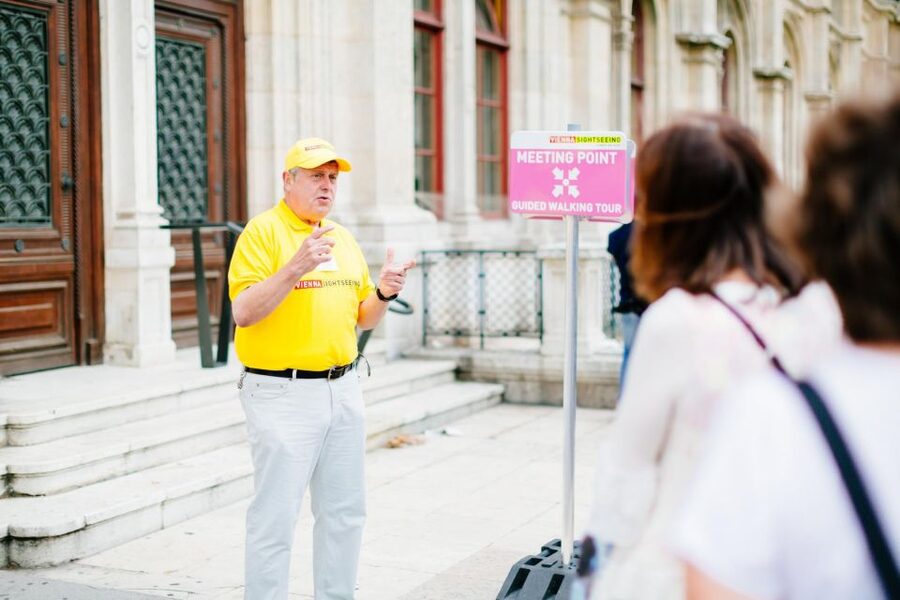
The route is conducted in a small group, which matters in narrow streets and enclosed courtyards. It also gives you a better chance to hear the guide and ask a question. The tour is offered in English and German, with a live certified guide rather than an audio recording. Audio recording is not allowed, so plan to listen and take your own notes afterward.
Is $34 a fair price?
At $34 per person, this is a reasonable price for a two-hour guided walk in central Vienna. You are paying for a certified local guide, a small-group setting, and access to a route that would be difficult to reproduce from a standard sightseeing map.
The value depends on what you want. If you only need directions to St. Stephen’s Cathedral and Mozart’s residence, you can visit those places yourself. If you want someone to connect courtyards, food, architecture, legends, the old university district, and wartime Vienna into one readable story, the fee makes more sense.
There are no transport costs bundled in, and hotel pick-up and drop-off are not included. That is not a major issue here because the route stays in the historic center, but you should arrive independently and confirm the meeting point before setting out.
Free cancellation up to 24 hours before the tour and the option to reserve without paying immediately make it easier to fit into a changing Vienna schedule. The tour runs in all weather, so bring suitable clothing rather than assuming rain will cancel it.
Who should book this Vienna walk?
I would recommend it to adults and older teenagers who enjoy architecture, local stories, Mozart, and city history in manageable portions. It is especially useful if you want to see Vienna’s famous center but prefer a route with more personality than a basic monument checklist.
It suits first-time visitors who need orientation, as well as repeat visitors who have already covered the main squares. The small-group format should appeal to you if you prefer direct contact with a guide rather than a large crowd.
It is less suitable if you want extensive indoor sightseeing, a slow photography walk, or a fully accessible route. Children under 12 cannot join, and the tour is not suitable for wheelchair users or people with mobility impairments. Narrow lanes, courtyards, and old paving can make the walk demanding.
Should you book the Courtyards and Hidden Places Walk?
Book this tour if you want Vienna explained through its side streets, inner courtyards, famous residents, churches, food, and changing city life. The best parts are the combination of Mozart’s final residence with less obvious places such as Blutgasse, the old university district, and the courtyard stops.
Skip it if your priority is a long guided visit inside St. Stephen’s Cathedral or a museum-heavy Mozart experience. For most adults looking for a compact, story-filled introduction to central Vienna, $34 is a fair spend, particularly if you take the advice to arrive light, wear good shoes, and confirm the exact starting point.
FAQ
How long does the Courtyards and Hidden Places Walking Tour last?
The tour lasts two hours. Starting times vary, so check availability for the date you want.
What language is the tour conducted in?
A live guide conducts the tour in English or German.
Is this tour suitable for children?
No. The tour is not suitable for children under 12 years old.
Is the walk suitable for wheelchair users?
No. The experience is not suitable for wheelchair users or people with mobility impairments.
Does the tour include hotel pick-up or drop-off?
No. Pick-up and drop-off are not included. The meeting point can vary depending on the option booked, and the listed drop-off point is Dr.-Karl-Lueger-Platz 3 in Vienna’s first district.
Can I cancel the tour if my plans change?
Yes. You can cancel up to 24 hours in advance for a full refund. You can also reserve now and pay later.
Recently added around Vienna
- Vienna: Private tour Mauthausen and Linz★ 4.1 · 3 reviews
- 2-Day Prague Tour from Vienna with private Transfers and Lunches★ 5.0 · 3 reviews
- Vienna Self Guided Sherlock Holmes Murder Mystery Game★ 4.5 · 3 reviews
- Vienna Private Schönbrunn Palace Tour, Extra Rooms and Gardens★ 5.0 · 3 reviews
- Salzburg and Lake Region Private Day Trip from Vienna★ 5.0 · 3 reviews
- Small-group Vienna Wine Tour★ 5.0 · 3 reviews
- True Crime mobile puzzle rally Vienna★ 4.0 · 3 reviews
- Exploring the Gutenstein Alps★ 5.0 · 3 reviews
Walking Tours in Vienna, compared.
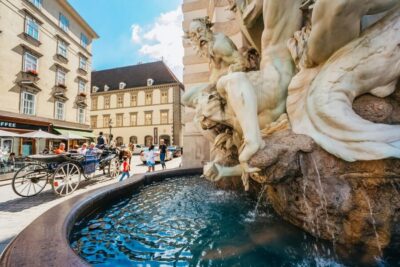
Guided Walking Tour of City Center Highlights
Read our review →
Guided Walking Tour of City Highlights & Hidden Gems
Read our review →
Vienna Historic Center Small Group Walking Tour
Read our review →
Ghosts and Legends Guided Nighttime Walking Tour
Read our review →
Browse the lists this tour appears in