
Reviewed · WALKING TOURS IN VIENNA
Vienna Art Nouveau Walking Tour
Vienna’s Art Nouveau is not confined to one museum. It runs through the city’s train stations, apartment buildings, river works, and grand public monuments. This small-group walk follows Otto Wagner’s ideas from the elegant pavilion at Karlsplatz to the imperial station beside Schönbrunn, showing you how Vienna entered the modern age around 1900.
I like the way the tour connects architecture with everyday transport, rather than treating Jugendstil as something you only view behind glass. I also like the small group limit of eight, which gives guides such as Jan, Ilse, Stefan, Suzanne, Angelina, and Wolfgang Augsten room to answer questions and adjust the pace.
The main drawback is the price: $180.04 per person is a serious outlay for about two and a half hours. You should also budget for possible admission fees at the Otto Wagner Pavilion and Secession, and remember that much of this is outdoors, so cold or rain can affect the experience.
Key points before you book
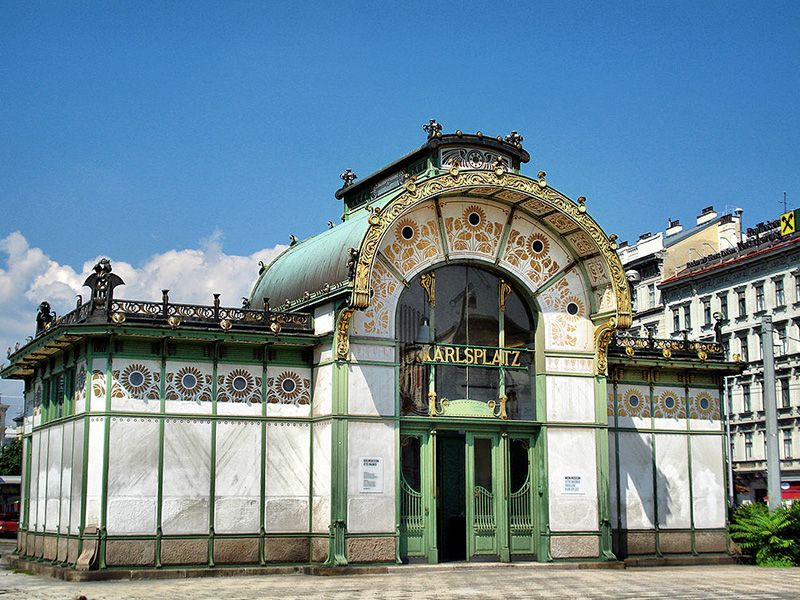
- Otto Wagner’s metro design: See how Vienna’s early city railway turned practical stations into works of art.
- Secession and Klimt: Visit Vienna’s famous Secession building, with the Beethoven Frieze available for an added fee.
- A tiny imperial station: Finish at the station built solely for Emperor Franz Joseph near Schönbrunn.
- Small-group format: Bookings are limited to eight people, making questions and personal adjustments easier.
- Useful city orientation: You learn how the U4 metro works while moving between major stops.
- Extra costs to plan for: The pavilion costs €5, or €4 for eligible reduced-admission visitors, and Secession entry costs €9.50 for adults or €6 for students and seniors.
Why Vienna’s Art Nouveau belongs underground
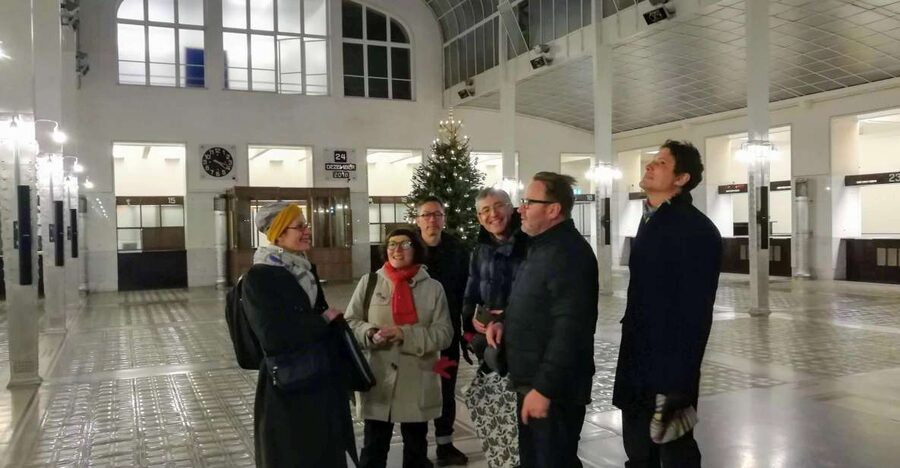
Vienna’s Jugendstil, the German-speaking form of Art Nouveau, is often associated with curving lines, floral motifs, unusual materials, and a break from older academic styles. On this walk, you see those ideas in a more surprising setting: the city’s early metro system.
Otto Wagner helped design Vienna’s Stadtbahn, or city railway, at a time when the capital was expanding fast. His work had to solve real problems. Stations needed to guide passengers, bridges had to cross waterways, and the new railway had to fit into streets already shaped by imperial Vienna.
That practical side makes this tour useful. You do not just look at pretty details and memorize names. You see how design, engineering, politics, and city growth met in one project.
The tour also shows how Art Nouveau could change character. In apartment buildings, the style could feel modern and private. At the imperial station, Wagner used similar principles but gave them a more formal and grand appearance. That contrast is one of the best reasons to take the walk.
More Walking Tours in Vienna
- Vienna: Guided Walking Tour of City Center Highlights
★ 4.7 · 4,989 reviews - Vienna: Vienna Central Cemetery Guided Walking Tour
★ 4.8 · 3,307 reviews - Vienna: Guided Walking Tour of City Highlights & Hidden Gems
★ 4.9 · 2,180 reviews
Karlsplatz: beginning with Otto Wagner’s pavilion
The meeting point is at Operngasse 7 in central Vienna. From there, the tour begins at the Otto Wagner Pavilion at Karlsplatz, one of the city’s most recognizable Art Nouveau structures.
The pavilion was designed as a station entrance, but it looks far more refined than a typical transit building. Its decorative panels, pale green finish, and formal shape make it clear that Wagner believed public transport deserved careful design.
When the museum is open from April through October, the tour can include the pavilion’s small museum. Admission is not included. General entry is €5, while seniors, students, Vienna Card holders, and people with disabilities pay €4.
That extra charge is modest compared with the tour price, but it matters when you are planning your budget. If the museum is closed, the guide can still use the pavilion as the starting point for explaining Wagner’s work and the city railway project.
I like this first stop because it gives you a visual vocabulary for the rest of the afternoon. Look for the balance between decoration and function. The pavilion is not simply ornament added to a station. Its design tells you that Vienna wanted modern infrastructure to look worthy of a major capital.
Stadtpark station and the reshaped Vienna River
From Karlsplatz, you walk toward Stadtpark station. This is one of the best-preserved original metro stations still in use, so it gives you a direct sense of Wagner’s transport architecture in an active city setting.
The station’s details are only part of the story. The nearby Vienna River adds an important engineering question. Building the railway required the waterway to be redirected, and the adjoining artificial riverbed helped integrate the changed route into the city.
This is where the tour moves beyond surface-level architecture. You see how a station affected streets, water, and public space. The design had to make room for trains while also dealing with a river that could not simply be ignored.
Your guide will point out design elements that may be easy to miss on your own. The value here is not just in recognizing Jugendstil decoration. It is in understanding why the station looks the way it does and how its surroundings were altered to support the new railway.
Because this is a walking tour, you should wear comfortable shoes. The route includes outdoor stretches between buildings and stations. The overall time is listed as about two and a half hours, though the tour is also described as a three-hour walk, so allow a little flexibility rather than scheduling a tight appointment immediately afterward.
Secession: Vienna’s artistic break with tradition
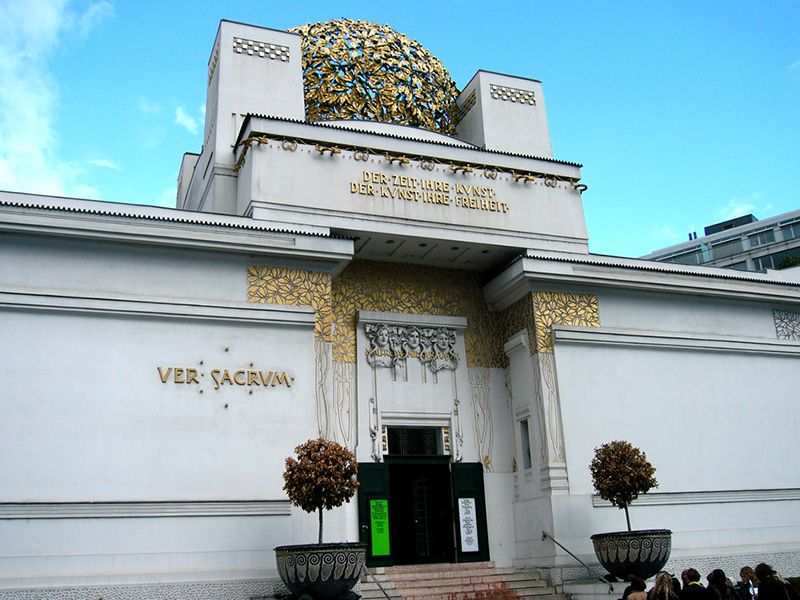
The route continues toward the Secession building, the white exhibition hall crowned by its famous golden leaf dome. For many people, this is the artistic high point of the tour.
The Secession was created by artists who wanted freedom from Vienna’s established art institutions. Its architecture expresses that break. The building is compact, bold, and highly symbolic, with the leaf-covered dome serving as a dramatic visual signature.
Your guide explains the ideas behind Viennese Jugendstil and the symbols and materials its artists favored. This part is especially useful if you know Klimt mainly from reproductions but have not placed him within Vienna’s wider artistic changes.
On Tuesday through Sunday, you can pay extra to enter Secession House and see Gustav Klimt’s Beethoven Frieze. Admission is €9.50 for adults and €6 for students and seniors. The guide helps you pay, which is handy, but the entry charge is not part of the tour price.
The Beethoven Frieze is an important reason to choose a day when the building is open if you care about art. The walking route still works without the interior visit, but seeing Klimt’s work in the building linked to Vienna’s Secession movement gives the discussion more force.
You should check the day of your booking carefully. If the Secession interior is not available, you can still examine the exterior and hear the artistic context, but you will miss one of the tour’s most memorable indoor experiences.
A different way to spend an afternoon here:
- Vienna: Vivaldi’s Four Seasons Concert in Karlskirche
★ 4.7 · 14,951 reviews - Vienna: Spanish Riding School Training
★ 3.9 · 9,281 reviews - Vienna: Skip-the-cashier-desk-line Giant Ferris Wheel Ride
★ 4.5 · 7,859 reviews - Vienna: Schönbrunn Palace & Gardens Skip-the-Line Tour
★ 4.7 · 7,739 reviews
Otto Wagner’s apartment buildings
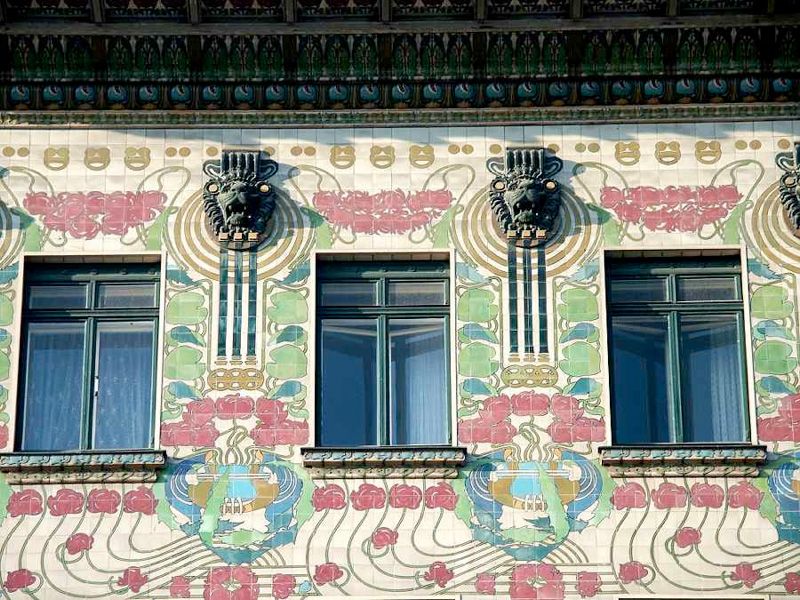
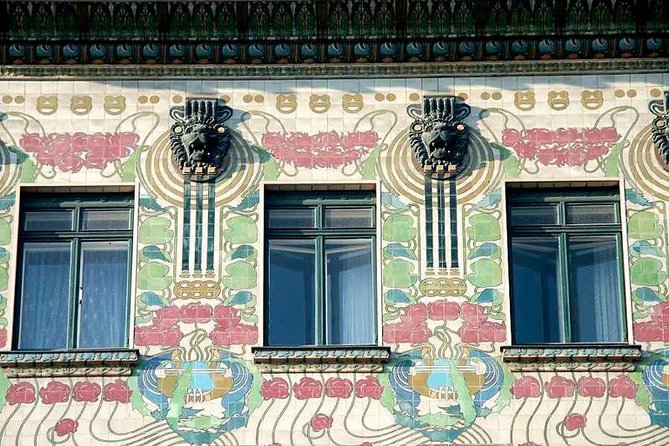
Between the Secession and Kettenbrücke station, the route includes two apartment buildings by Otto Wagner. These are valuable stops because they show that Art Nouveau was not limited to monuments or official projects.
Apartment buildings reveal how the style entered ordinary urban life. Wagner used decorative surfaces and carefully planned details, but the buildings still had to function as homes and businesses. Your guide can help you compare these structures with the metro stations and the Secession.
This is also a good point to ask questions about Vienna around 1900. The city was changing quickly, and its architecture reflected a desire to look modern without entirely discarding the dignity associated with the old imperial capital.
The tour works best when you pay attention to small details at these buildings. You might find decorative patterns, materials, or façade treatments that would pass unnoticed during an independent walk. A guide also helps separate Wagner’s work from the many later buildings that simply borrow Art Nouveau features.
Kettenbrücke and the U4 ride
At Kettenbrücke station, you board the metro for the final section. The trip uses the U4 line, and the fare is not specifically listed as included, so you should ask your guide what ticket you need.
This short ride is more than a way to save your feet. It lets you experience the railway as intended, while also showing how old design survives within Vienna’s current transport network.
A day pass can be useful if you already have one. One participant found it especially convenient for the U4 portion and also came away better prepared to use Vienna’s public transport during the rest of the stay.
The metro ride also breaks up the outdoor walking. That matters on a cold or wet day. In one case, a guide offered a car ride during poor weather, but you should not assume that this is a standard feature. Plan for a walking tour and dress accordingly.
The imperial station near Schönbrunn
The final stop is the small imperial station outside Schönbrunn Palace. Otto Wagner designed it for the Emperor’s use, making it the most politically charged building on the route.
The station was not merely a convenient platform for the imperial household. Its existence sent a message. By using the new city railway, the emperor showed support for a project that had attracted critics.
That gives the building a role beyond its decorative appearance. It represents the meeting of modern transport and imperial authority. Wagner had to take a generally bourgeois Art Nouveau style and give it enough ceremony for the emperor.
This station is described as the crown jewel of the line, and it makes a strong final stop because it brings together the ideas introduced earlier. You can look back at the motifs, materials, and planning choices seen at Karlsplatz, Stadtpark, Secession, and Kettenbrücke, then see how they were given a more formal treatment here.
The end point is listed simply as Vienna, Austria, rather than a detailed hotel return. Do not plan on hotel pickup or drop-off. You finish in the city and can continue independently.
What the guides add to the experience
The guide is the main reason this tour costs more than a standard self-guided walk. The route itself is easy enough to trace, but the links between the buildings are not always obvious.
Guides named in the tour’s feedback include Jan, Ilse, Stefan, Suzanne, Angelina, and Wolfgang Augsten. Their strengths vary, but the repeated pattern is clear: you can expect an English-speaking professional with a strong command of Vienna’s art, architecture, and cultural past.
Suzanne, for example, shaped the walk around one group’s interests and used the U4 to reduce walking and provide a warm break. Stefan helped connect architecture with public transport and offered suggestions for places to visit and eat during the rest of the stay. Other guides were praised for answering detailed questions and making personal adjustments.
You should not expect every guide to deliver the exact same route or personality. That is part of the nature of a small-group experience. The useful point is that the format allows conversation, instead of forcing you through a fixed script with a large crowd.
The maximum is eight people per booking. That is a real advantage if you like to ask about design details or want to stop for photographs without holding up a large group.
Price, timing, and overall value
At $180.04 per person, this is an expensive walking tour. The price buys about two and a half hours with a professional guide, a small group, and a route that combines outdoor architecture, public transport, and optional museum visits.
You are not paying for a long list of included admissions. Food, drinks, hotel transfers, the pavilion museum, Secession entry, and any needed transport tickets are separate. Add those costs before deciding.
The value is strongest for someone who already cares about Vienna’s architecture or wants a focused introduction to the city around 1900. A general sightseeing visitor may find the price hard to justify, especially if Art Nouveau is only a minor interest.
For an art or architecture enthusiast, the personal instruction can make the difference. A guide helps you understand why these buildings matter, points out connections across the route, and answers questions that a guidebook cannot handle in the moment.
The tour is also a useful first or second-day activity. It gives you a clear sense of central Vienna, introduces the U4 line, and provides ideas for later visits. If you have been to Vienna before, the route can still work because the guides may show you buildings and details you have missed.
Who should take this walk
I would choose this tour if you enjoy architecture, art, urban planning, or the cultural changes that shaped Vienna around 1900. It is also a good match if you prefer a focused walk to a broad city tour.
You should be comfortable walking outdoors for much of the experience. Most people can participate, and the tour is near public transport, but the exact pace and walking distance can vary with the group.
This is not the best choice if you want a palace interior tour, a food experience, or a full introduction to Vienna’s imperial sights. Schönbrunn appears only through the station built for the emperor, not as a palace visit.
Book at least a day ahead if plans may change. Free cancellation is available until 24 hours before the start time. Cancellations or changes made less than 24 hours before the tour are not accepted for a refund.
Should you book the Vienna Art Nouveau Walking Tour?
Book it if you want to understand how Vienna’s modern movement shaped train stations, apartments, exhibition halls, and imperial buildings. The Secession and Klimt’s Beethoven Frieze add strong artistic appeal, while the Stadtpark station and U4 ride show how design works in daily life.
Skip it if $180.04 feels too high for a short walk or if your main goal is Vienna’s palaces and classical music. For the right audience, though, the small group and strong guides make this more than a photo stop itinerary. You leave with a practical way to recognize Jugendstil elsewhere, including in nearby Budapest, and a better sense of how Vienna changed at the turn of the 20th century.
FAQ
How long does the Vienna Art Nouveau Walking Tour last?
The tour lasts approximately two and a half hours. It is also described as a three-hour walking tour, so allow some flexibility in your schedule.
What language is the tour offered in?
The tour is offered in English.
How many people can join the tour?
A booking can include a maximum of eight people, and the activity also has a maximum group size of eight travelers.
Where does the tour begin?
The meeting point is Operngasse 7, 1010 Wien, Austria.
Does the tour include hotel pickup and drop-off?
No. Hotel pickup and drop-off are not included.
Is admission to the Otto Wagner Pavilion included?
The guided tour includes the pavilion stop, but museum admission is separate when the museum is open from April through October. General admission is €5, and reduced admission is €4 for seniors, students, Vienna Card holders, and people with disabilities.
Can I visit the Beethoven Frieze at Secession?
From Tuesday through Sunday, the tour can include entry to Secession House to see Klimt’s Beethoven Frieze. Admission costs €9.50 for adults and €6 for students and seniors, paid separately with help from the guide.
What is the cancellation policy?
You can cancel for a full refund up to 24 hours before the experience start time. Cancellations or changes made less than 24 hours before the start time are not accepted for a refund.
Recently added around Vienna
- Vienna: Private tour Mauthausen and Linz★ 4.1 · 3 reviews
- 2-Day Prague Tour from Vienna with private Transfers and Lunches★ 5.0 · 3 reviews
- Vienna Self Guided Sherlock Holmes Murder Mystery Game★ 4.5 · 3 reviews
- Vienna Private Schönbrunn Palace Tour, Extra Rooms and Gardens★ 5.0 · 3 reviews
- Small-group Vienna Wine Tour★ 5.0 · 3 reviews
- Salzburg and Lake Region Private Day Trip from Vienna★ 5.0 · 3 reviews
- True Crime mobile puzzle rally Vienna★ 4.0 · 3 reviews
- Exploring the Gutenstein Alps★ 5.0 · 3 reviews
Walking Tours in Vienna, compared.

Guided Walking Tour of City Center Highlights
Read our review →
Guided Walking Tour of City Highlights & Hidden Gems
Read our review →
Vienna Historic Center Small Group Walking Tour
Read our review →


Ghosts and Legends Guided Nighttime Walking Tour
Read our review →

Browse the lists this tour appears in