
Reviewed · WALKING TOURS IN VIENNA
The Ringstrasse Project Walking Tour
Vienna’s Ringstrasse is best understood on foot, where grand buildings, old cafés, imperial ambition, and everyday city life all meet within a few blocks. This small-group walking tour links the key sights with the stories that explain why Vienna built such a magnificent boulevard in the 19th century.
I like the choice of morning or afternoon departure, and I like the unusually small maximum of eight people. Guides such as Susanna and Biljana have been praised for warmth, humor, and strong command of Vienna’s past. The main drawback is price: at $177.44 per person, this is a costly walking tour, especially since food, drinks, and interior admissions are not included.
Key points at a glance
- Eight-person maximum: A small group makes it easier to ask questions and hear your guide beside busy streets.
- Six carefully chosen stops: You see Vienna City Hall, the State Opera, the Kunsthistorisches Museum, Postsparkasse, Palais Todesco, and Café Schwarzenberg.
- Architecture is the main event: The route moves from Neo-Gothic civic design to Vienna Secession and aristocratic interiors viewed from outside.
- A useful historical finish: The tour ends at Café Schwarzenberg, where coffee-house culture helps explain how the Ringstrasse became a place to see and be seen.
- Family option available: A children’s version focuses on building symbols and daily life around 1900.
- No museum entry included: The tour gives you an informed exterior tour, not a substitute for visiting Vienna’s major collections inside.
Why the Ringstrasse makes a good walking tour
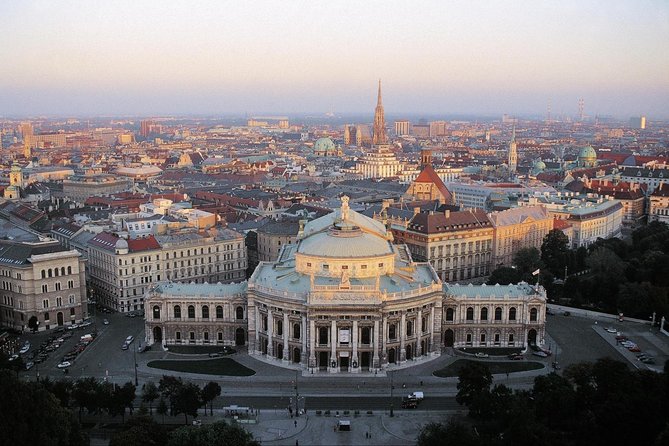
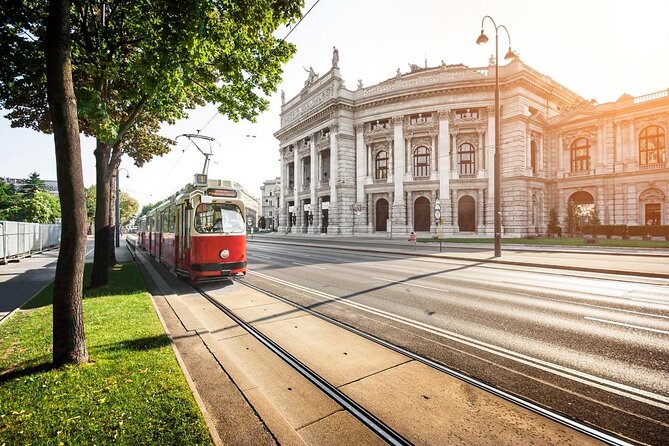
Vienna’s Ringstrasse is not just a road with handsome buildings beside it. It is a public display of 19th-century Vienna, created as the city expanded beyond its old fortifications. The buildings around it were meant to express power, culture, civic pride, money, and social rank.
That makes a guide useful. You can admire a grand façade on your own, but a good explanation helps you read its style and purpose. The route moves through Neo-Gothic government architecture, opera, imperial museum design, modernist experimentation, aristocratic society, and coffee-house life.
The two-and-a-half-hour length is sensible. It gives you enough time to connect the sights without turning the outing into an exhausting full-day walk. You should still wear comfortable shoes, since the experience is entirely on foot and includes several outdoor stops.
The small group matters here. On a broad boulevard, a large group can scatter at crossings or leave you standing at the edge of a conversation. With up to eight people, you should have a better chance to hear the guide, ask about details, and receive a more personal explanation. One booking may even continue as a private experience if no one else reserves the same departure, as happened on a previous tour.
More Walking Tours in Vienna
- Vienna: Guided Walking Tour of City Center Highlights
★ 4.7 · 4,989 reviews - Vienna: Vienna Central Cemetery Guided Walking Tour
★ 4.8 · 3,307 reviews - Vienna: Guided Walking Tour of City Highlights & Hidden Gems
★ 4.9 · 2,180 reviews
Rathaus and Vienna’s public face
The tour begins at Café Landtmann, at Universitätsring 4, and continues to Rathaus, Vienna’s City Hall. You spend about 15 minutes here, with no admission charge.
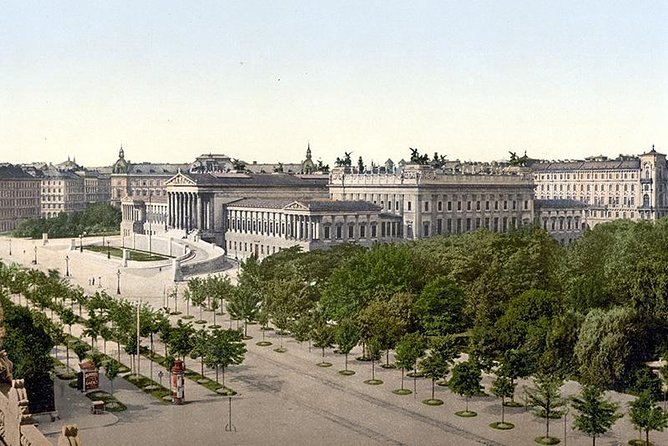
Rathaus was built from 1872 to 1883 in Neo-Gothic style. Its pointed forms and dramatic vertical lines recall the great civic buildings of medieval Europe, but its purpose was firmly modern: this is where Vienna’s mayor works, and where the city council and Vienna Landtag meet.
A guide can help you see the building as more than a grand photograph. It represents the city’s public authority and the confidence of Vienna during the Ringstrasse building boom. The setting on Rathausplatz also gives you a clear sense of how civic buildings were arranged around the new boulevard.
The limitation is simple: the listed time is short, and the visit is an exterior stop. If you want a detailed look at city government interiors, this tour is not designed for that. Its value comes from placing Rathaus in the story of Vienna’s urban growth.
The Vienna State Opera and the city’s musical identity
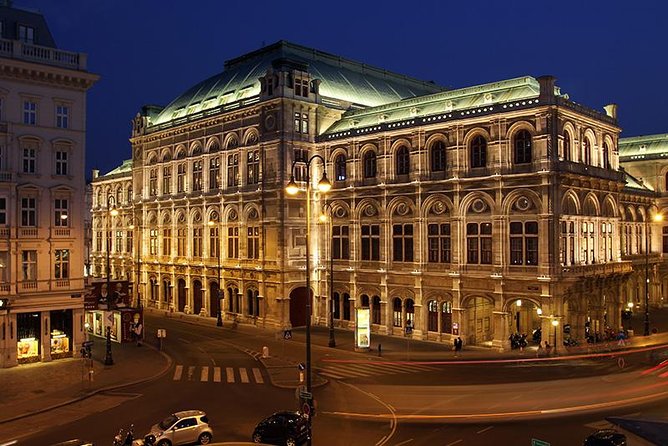
The next stop is the Wiener Staatsoper, or Vienna State Opera, with about 20 minutes for the visit. The building was constructed from 1861 to 1869 and was the first major building completed on the Ringstrasse.
That fact gives the opera house special weight. Vienna was announcing that music and opera belonged at the center of its public life. The 1,709-seat opera house was not a minor entertainment venue tucked away on a side street. It was one of the first grand statements made by the new boulevard.
You can expect the guide to connect the building with Viennese culture and the city’s long musical reputation. This is a good place to ask about the difference between seeing the opera house from outside and attending a performance, though an admission ticket is not part of the walking tour.
The 20-minute pause should be enough for an explanation and photographs, but not for a full visit inside. If the State Opera is a top priority, plan separate time for it. The walking tour gives you context and an exterior look, then keeps moving.
Kunsthistorisches Museum and imperial ambition
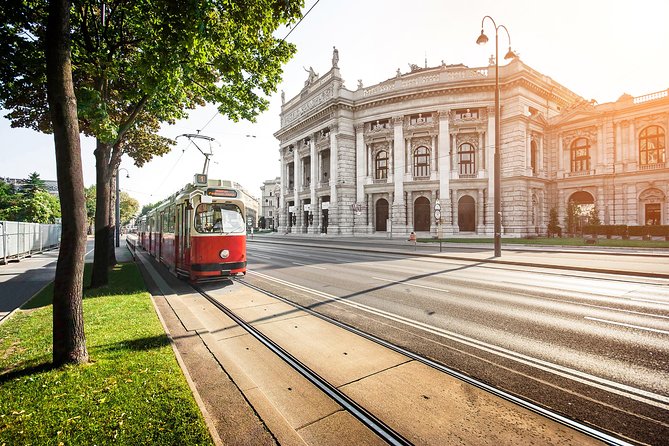
The Kunsthistorisches Museum receives another 20-minute stop. Its name refers both to the institution and to its main building, which houses the country’s largest art museum and one of the world’s major art collections.
Even without entering, the museum is important to the Ringstrasse story. Its scale and formal design show how Vienna used architecture to present itself as a leading European capital. The building belongs to a grand sequence of cultural institutions along the boulevard, where art and public prestige were placed side by side.
I like this stop because it helps you decide how to use your own museum time later. A quick explanation outside can clarify why the building matters, while your actual visit inside can then focus on the collection rather than basic orientation.
Still, do not mistake the stop for a museum tour. There is no admission included, and 20 minutes is far too short to see the galleries. If you want to explore the art, set aside a separate visit and budget for its entry cost.
A different way to spend an afternoon here:
- Vienna: Vivaldi’s Four Seasons Concert in Karlskirche
★ 4.7 · 14,951 reviews - Vienna: Spanish Riding School Training
★ 3.9 · 9,281 reviews - Vienna: Skip-the-cashier-desk-line Giant Ferris Wheel Ride
★ 4.5 · 7,859 reviews - Vienna: Schönbrunn Palace & Gardens Skip-the-Line Tour
★ 4.7 · 7,739 reviews
Postsparkasse and Otto Wagner’s cleaner break with the past
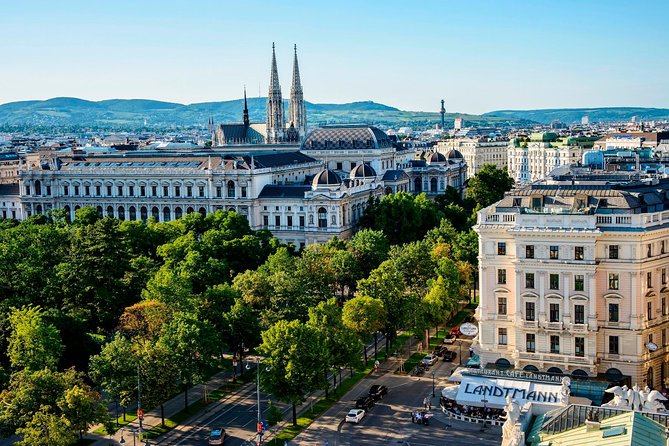
At Postsparkasse, the subject changes from imperial display to architectural change. The Austrian Postal Savings Bank was designed and built by Otto Wagner and is regarded as an important work of the Vienna Secession, the local branch of Art Nouveau.
This is one of the most interesting stops for anyone who wants more than a parade of palaces. Otto Wagner’s work points toward a newer Vienna. Instead of copying older historical styles, the building reflects a more modern way of thinking about materials, function, and decoration.
The stop lasts about 20 minutes, which gives your guide room to point out the building’s character and explain why it matters. Look closely at the details rather than only taking a wide photograph. This is architecture meant to be studied at street level.
Postsparkasse also gives the route a useful rhythm. Rathaus, the opera house, and the museum show the official face of the Ringstrasse. Otto Wagner’s building shows that Vienna’s architectural story did not end with imperial grandeur. The city was also experimenting and changing.
Palais Todesco and the social world behind the façades
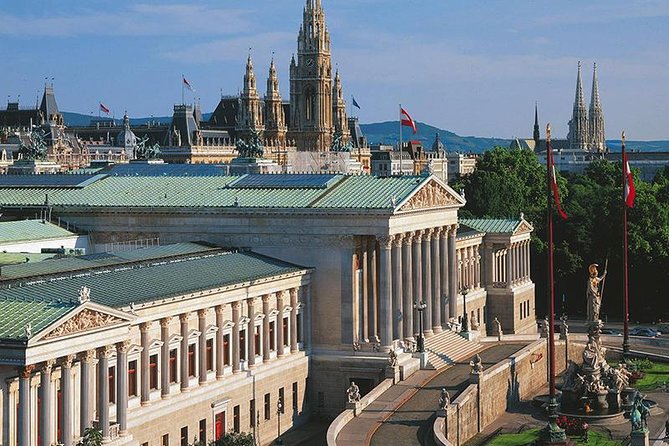
The Stadtpalais Todesco, or Palais Todesco, comes next, with about 15 minutes. It was built from 1861 to 1864 for the aristocratic Todesco family.
The palace offers a different way to understand the boulevard. The Ringstrasse was not only a place for government, art, and music. It was also a stage for wealthy families who wanted to live near the city’s most important institutions and take part in its social life.
One former resident, Baroness Sophie von Todesco, established a well-known salon for artists and intellectuals. That detail brings the building to life. Behind the formal exterior, the palace was connected to conversation, culture, status, and the exchange of ideas.
Again, this is an exterior stop with free admission. The appeal is the social story and the building’s place in the Ringstrasse world, not a long interior visit. If you prefer tours built around paintings or rooms you can enter, this part may feel brief. If you enjoy the human stories behind grand architecture, it earns its place.
Café Schwarzenberg and the Viennese coffee-house tradition
The route finishes at Café Schwarzenberg on Kärntner Ring, where you spend about 25 minutes. The café was established in 1861, and its interior has remained largely unchanged since the 19th century.
This is a smart ending. After seeing the institutions and residences that gave the Ringstrasse its public image, you finish in a place tied to daily social life. Vienna’s coffee houses were not simply places to drink coffee. They helped create a culture of reading, conversation, business, meeting, and being seen.
The café also shows how the Ringstrasse worked as a social stage from the moment it was completed. A grand boulevard needs more than monuments. It needs places where people linger, watch the street, and take part in city life.
Food and drinks are not included, so any order at Café Schwarzenberg is your own expense. That is not necessarily a weakness. You can decide if you want coffee and cake, or simply use the final stop as a setting for the guide’s explanation.
Because the tour ends here rather than returning to the starting point, you should note the route before booking. The finish at Kärntner Ring 17 is useful if you want to continue exploring central Vienna, but you will need to make your own way back to your hotel.
What the guide adds to the experience
The strongest praise for this tour centers on the guides. Susanna has been singled out for an excellent experience, while Biljana has been described as professional, friendly, funny, and deeply familiar with Vienna. Those qualities matter on a walking route packed with architecture, because the difference between a dry list of dates and a memorable city lesson often comes down to delivery.
Biljana’s tour was described as a personal highlight of a visit to Vienna, especially for its sense of the city as cultured and civilized. That description fits the route’s purpose: it is not trying to cover every attraction. It is trying to explain how Vienna’s public buildings and social customs fit together.
The guide may also be able to personalize the pace when the group is very small. A previous solo booking continued even though no one else had joined, creating a more private experience. That is a valuable possibility, though you should not book on the assumption that every departure will become private.
A family version is also available. In that format, the guide focuses on symbols on the buildings and everyday life in Vienna around 1900. That makes the route more suitable for children than a standard architecture lecture, while still keeping the main Ringstrasse sights.
Is $177.44 a fair price?
At $177.44 per person, this is expensive for a 2.5-hour walking tour. You are paying for the guide’s time, the small group, and the chance of a personal experience, not for entry to museums or a meal.
The price makes the most sense if you value interpretation and personal attention. A group capped at eight can be worth more than a cheaper outing with a crowd, especially when the subject depends on seeing architectural details and asking questions. If you are traveling alone or as a couple and want a focused introduction to Vienna, the cost may feel justified.
The value is weaker if you mainly want to check off sights quickly. You can see the exterior of these buildings without paying for a tour, and the route does not include food, drinks, hotel pickup, or drop-off. You also need to pay separately if you decide to enter the Kunsthistorisches Museum or another attraction.
I would compare this price with your wider Vienna plans. If you already have a strong grasp of the Ringstrasse and enjoy exploring independently, spend your money on a museum visit or a meal at a traditional café instead. If you want a human guide to connect architecture, politics, music, aristocratic life, and coffee-house culture, this tour offers a more focused service.
Timing, transport, and practical planning
You can choose a morning or afternoon departure, which makes the tour easier to fit around museum visits and other plans. Confirmation is provided when you book, and the starting point is near public transportation.
The walk begins at Café Landtmann and ends at Café Schwarzenberg, so this is a point-to-point experience rather than a hotel-based excursion. Hotel pickup and drop-off are not included. Allow a little extra time to reach Café Landtmann, especially if you are unfamiliar with Vienna’s central streets.
Most people can participate, but you should be comfortable walking for roughly two and a half hours. The supplied details do not specify the exact distance, stair count, or weather arrangements, so ask the provider if those points matter to you.
Free cancellation is available if you cancel at least 24 hours before the local start time. Changes or cancellations made less than 24 hours ahead are not accepted for a refund.
Who should book this Ringstrasse walk?
I would choose this tour if you are visiting Vienna for the first time and want a clear framework for the central city. It is also a good fit if you care about architecture, urban design, music, aristocratic society, or café culture, but do not want a large group.
Families should consider the dedicated children’s version, since the focus on symbols and life around 1900 may hold young attention better than a standard adult presentation. Solo visitors may also find the small group appealing, especially since a departure can apparently operate with only one booking.
I would skip it if your budget is tight, you need hotel transport, or you want extensive interior access. The tour stays at the main sights for short periods and uses them as teaching points. It is an introduction, not a full museum or opera-house visit.
Should you book it?
Book this Ringstrasse Project Walking Tour if you want Vienna explained through its buildings and social customs, and if you are willing to pay for a small, polished group. The best features are the eight-person limit, the choice of departure time, the mix of architectural styles, and the finish at Café Schwarzenberg.
The price is the key question. At $177.44, this is not a casual budget walk. But a strong guide such as Susanna or Biljana can turn familiar façades into a readable story about Vienna’s civic pride, musical life, wealth, modern architecture, and coffee-house culture. For that kind of focused introduction, the tour can be worthwhile.
FAQ
How long is the Ringstrasse Project Walking Tour?
The guided walk lasts approximately 2 hours and 30 minutes.
What language is the tour offered in?
The tour is offered in English.
How many people can join the tour?
The maximum group size is eight travelers.
Where does the tour begin?
The tour begins at Café Landtmann, Universitätsring 4, 1010 Vienna, Austria.
Where does the tour end?
The tour ends at Café Schwarzenberg, Kärntner Ring 17, 1010 Vienna, Austria.
Are food and drinks included?
No. Food and drinks are not included in the tour price. You may choose to purchase something at Café Schwarzenberg at your own cost.
Does the tour include hotel pickup and drop-off?
No. Hotel pickup and drop-off are not included.
Can I cancel for a full refund?
Yes, if you cancel at least 24 hours before the experience start time. Cancellations made less than 24 hours before the start time are not refunded.
Recently added around Vienna
- Vienna: Private tour Mauthausen and Linz★ 4.1 · 3 reviews
- 2-Day Prague Tour from Vienna with private Transfers and Lunches★ 5.0 · 3 reviews
- Vienna Self Guided Sherlock Holmes Murder Mystery Game★ 4.5 · 3 reviews
- Vienna Private Schönbrunn Palace Tour, Extra Rooms and Gardens★ 5.0 · 3 reviews
- Small-group Vienna Wine Tour★ 5.0 · 3 reviews
- Salzburg and Lake Region Private Day Trip from Vienna★ 5.0 · 3 reviews
- True Crime mobile puzzle rally Vienna★ 4.0 · 3 reviews
- Vienna: Wachau Valley Private Kayak and Wine Tour★ 5.0 · 3 reviews
Walking Tours in Vienna, compared.

Guided Walking Tour of City Center Highlights
Read our review →
Guided Walking Tour of City Highlights & Hidden Gems
Read our review →
Vienna Historic Center Small Group Walking Tour
Read our review →


Ghosts and Legends Guided Nighttime Walking Tour
Read our review →

Browse the lists this tour appears in