
Reviewed · WALKING TOURS IN VIENNA
Private Vienna Art Nouveau Walking Tour
Vienna’s Art Nouveau is easiest to understand when you see it in motion, from Otto Wagner’s elegant metro stations to Gustav Klimt’s strange, glittering Beethoven Frieze. This private walking tour connects those pieces into one clear story, beginning near the Secession Building and ending around Vienna’s famous market district.
I like the private format, since your guide can adjust the pace and answer questions from both architecture experts and complete beginners. I also like the mix of grand monuments and practical city design, especially the chance to see metro stations built for daily commuters and one tiny stop made for the Emperor.
The main consideration is cost. At $490 per group, the tour is expensive for two people, but the price becomes much more reasonable when shared by a larger group of up to 10. You should also budget separately for admission to the Secession Building and the Otto Wagner Pavilion when those visits are included.
Key points to know before booking
- Klimt’s Beethoven Frieze gives the tour its most famous interior sight, but admission is extra.
- Otto Wagner’s Karlsplatz stations show how Vienna turned public transport into serious architecture.
- A private guide lets you ask as many questions as you like and adjust the emphasis toward art, buildings, or city history.
- The tour links several districts on foot, with stops at Stadtpark, Postsparkasse, Naschmarkt, and the Secession.
- Barbara, Wolfgang, and Annelie are among the guides associated with especially strong experiences on this route.
- The $490 group price works best for families or friends traveling together, rather than solo visitors or couples.
Why Vienna’s Art Nouveau deserves three hours
Vienna’s Art Nouveau, called Jugendstil in German and closely tied to the Vienna Secession, was more than a decorative style. It was a break with old artistic rules, and the buildings on this route show that change in several forms.
You’ll see an exhibition hall designed as a manifesto, a former metro station treated like a small palace, an office building dressed in practical geometric detail, and an apartment house tradition that brought new design into ordinary city life. That range is what makes the tour useful. You are not simply looking at pretty façades. You are comparing different ideas about how modern Vienna should look.
A private guide also changes the experience. Instead of trying to read a short plaque while keeping up with a group, you can stop at a detail that catches your eye. Guides Barbara, Wolfgang, and Annelie have been praised for explaining both the Secession movement and Vienna itself in a way that suits mixed levels of interest.
The route lasts about three hours. The listed stops total less than that, so the remaining time is used for walking, transitions, and explanation. Wear comfortable shoes, and expect an urban walk rather than a museum visit with long periods indoors.
More Walking Tours in Vienna
- Vienna: Guided Walking Tour of City Center Highlights
★ 4.7 · 4,989 reviews - Vienna: Vienna Central Cemetery Guided Walking Tour
★ 4.8 · 3,307 reviews - Vienna: Guided Walking Tour of City Highlights & Hidden Gems
★ 4.9 · 2,180 reviews
The Secession Building and Klimt’s Beethoven Frieze
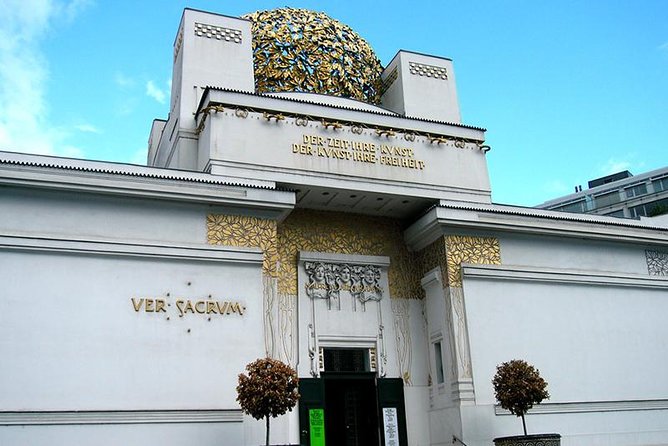
The Secession Building is the natural place to begin. Joseph Maria Olbrich completed it in 1898 as an exhibition hall for artists who had broken away from Vienna’s established fine-art institution. Its white exterior and famous dome of gilded laurel leaves announce the building’s purpose before you even step inside.
The building is especially important because it was designed as an architectural statement. It does not feel like a neutral box for paintings. The structure itself tells you that the Vienna Secession wanted a new kind of art and a new kind of public setting for that art.
Inside, the major attraction is Gustav Klimt’s Beethoven Frieze. The work was painted for one of the original Secession exhibitions and offers a dramatic introduction to Klimt’s symbolic style. It is not a quick glance at a famous painting. The frieze occupies a room and rewards time spent looking at its figures, patterns, and unusual visual details.
The tour allows about 30 minutes here. That is enough for a guided introduction, though art lovers may wish they had longer to study the work independently. Admission is not included. From Tuesday through Sunday, the listed price is €9.50 for adults and €6 for students and seniors, with your guide helping you pay.
One useful tip is to check the visit details when booking. If your schedule falls outside the stated Tuesday to Sunday admission days, ask how the stop will be handled. The tour can still provide an exterior discussion, but the Beethoven Frieze is the reason many people most want to enter.
Stadtpark offers a change of pace
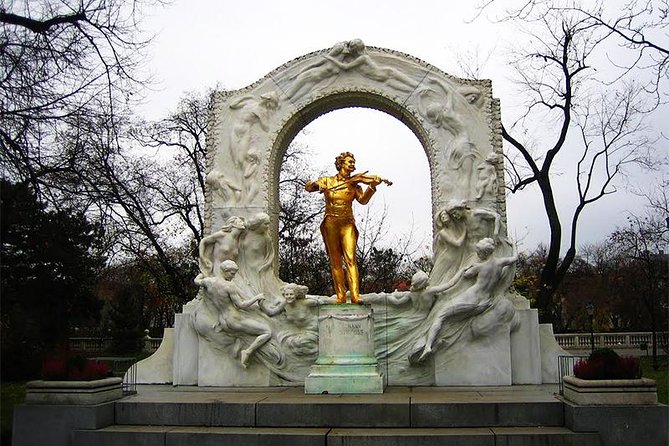
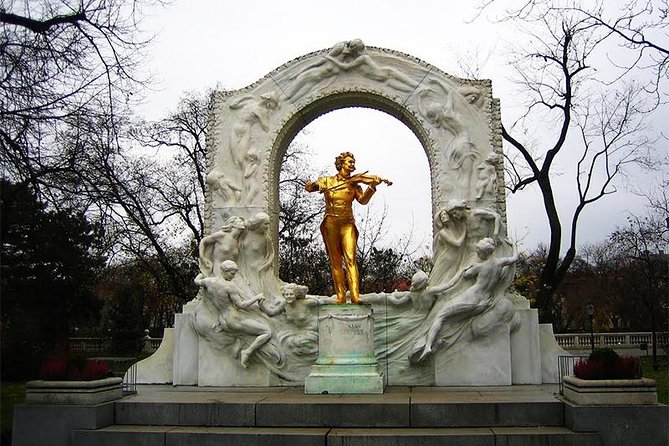
After the Secession, the route reaches Stadtpark, a large municipal park running from the Ringstraße toward Heumarkt. The stop is brief, about 15 minutes, and admission is free.
This pause helps break up the architecture. You can ask about Vienna’s city planning, public parks, and the way major streets and open spaces fit together. The park is not presented as a major Art Nouveau interior, so do not expect another museum-style stop. Its value is in giving your eyes a rest and placing the surrounding buildings in a wider urban setting.
Because this tour moves through central Vienna, the park also helps you understand that Art Nouveau was not isolated in one quarter. It appears among major roads, public spaces, transport routes, markets, and office buildings. That citywide connection is one of the route’s strengths.
Karlsplatz shows Otto Wagner’s modern transport vision
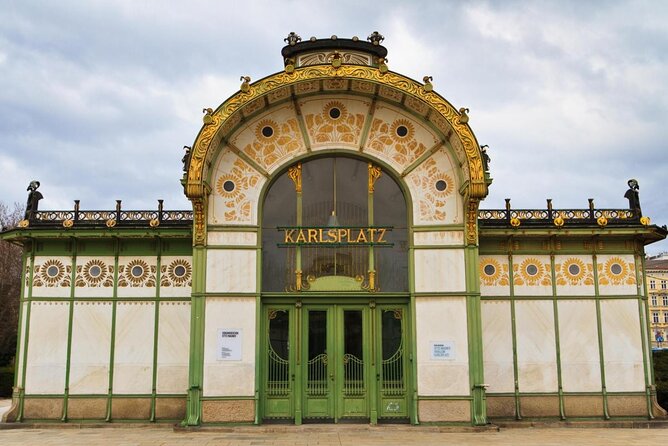
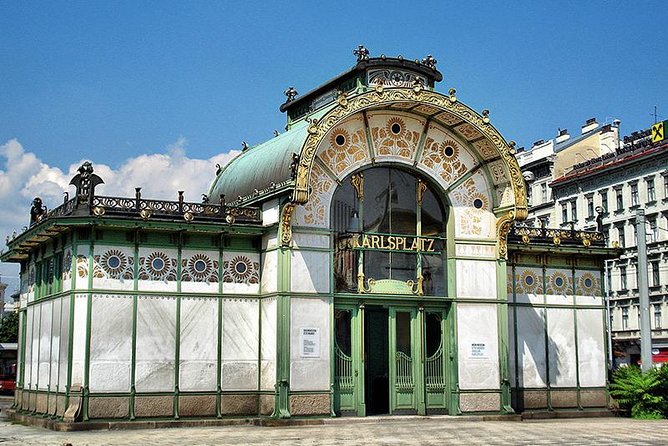
The Karlsplatz stop takes about 20 minutes and focuses on the former Viennese Stadtbahn station buildings. Otto Wagner designed the stations as an adviser to Vienna’s Transport Commission, working with Joseph Maria Olbrich on the famous Karlsplatz structures.
This is one of the tour’s best moments for anyone interested in design that serves a practical purpose. A metro station could have been treated as a plain piece of infrastructure. Wagner instead gave it a carefully composed exterior, showing that transport buildings could help shape the look of the modern city.
The Karlsplatz stations are also a good place to compare Wagner and Olbrich. You can look at how ornament, proportion, materials, and function work together, rather than treating Art Nouveau as a collection of surface patterns.
Admission to the station buildings is not included. The tour information separately lists the Otto Wagner Pavilion as a possible interior visit, so ask your guide which building you will enter and what is open on your date. The route is most useful when you pay attention to both the exterior and the original purpose of the stations.
A different way to spend an afternoon here:
- Vienna: Vivaldi’s Four Seasons Concert in Karlskirche
★ 4.7 · 14,951 reviews - Vienna: Spanish Riding School Training
★ 3.9 · 9,281 reviews - Vienna: Skip-the-cashier-desk-line Giant Ferris Wheel Ride
★ 4.5 · 7,859 reviews - Vienna: Schönbrunn Palace & Gardens Skip-the-Line Tour
★ 4.7 · 7,739 reviews
The Otto Wagner Pavilion is small but important
The Otto Wagner Pavilion at Karlsplatz occupies a former 1898 station building designed by Wagner. It now houses an exhibit about his life and work.
The pavilion is a compact stop, listed at about 15 minutes. That makes it a good supplement to the outdoor discussion rather than a full museum visit. You’ll get a closer look at Wagner’s design approach and at the way a transport structure was presented with unusual care.
The pavilion is open as a museum from April through October, with admission listed at €5 for general admission and €4 for seniors, students, Vienna Card holders, and people with disabilities. That seasonal detail matters. If you book in winter, confirm whether the visit will be replaced by an exterior explanation.
I like this part of the route because it turns an architect’s name into something more concrete. After seeing several Wagner buildings from the street, you have a chance to connect the person, the commission, and the design decisions. Still, the short time inside means you should not book this tour expecting a long museum session.
Postsparkasse reveals Wagner’s practical side
The Austrian Postal Savings Bank, or Postsparkasse, is one of Otto Wagner’s best-known buildings in Vienna. The tour allows about 25 minutes here, and admission is free.
This building is a useful counterpoint to the Secession Building. The Secession makes its artistic rebellion obvious. Postsparkasse is more controlled and tied to business, money, and everyday administration. Its design shows how new visual ideas could enter a serious public institution without turning the building into pure fantasy.
Your guide can help you read the details instead of simply admiring the façade. Look for the relationship between decoration and function, and consider how a postal savings bank needed to project trust while still presenting a modern identity.
The free admission keeps this stop easy to enjoy. It also helps the overall value of the tour, since the two paid interior visits can add to the cost. The main limitation is that the experience depends on what areas are accessible during your visit, so the guide’s exterior explanation remains important.
Naschmarkt brings Art Nouveau into daily Vienna
The route continues to Naschmarkt, Vienna’s best-known culinary market. The market has around 120 colorful stalls and restaurants, and the tour allows about 10 minutes here.
This is a short stop, not a food tour. Food and drinks are not included, so you should not expect tastings or time for a full meal. Instead, Naschmarkt gives you a lively end point and a chance to see how design, commerce, and city life meet in a working central district.
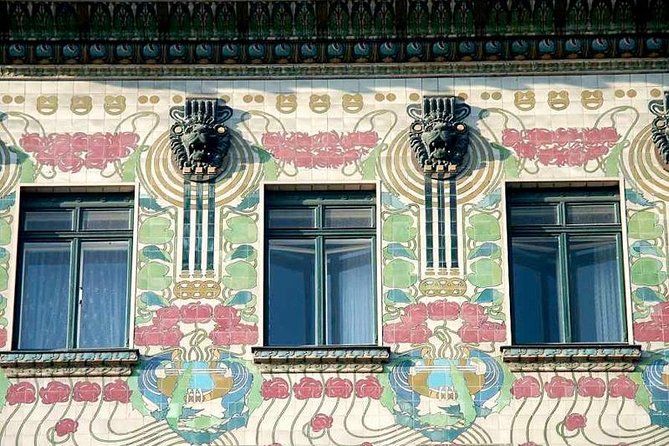
The market is also useful because it places the architecture in an ordinary setting. Art Nouveau was not only for museums and grand civic buildings. Around this area, you can connect the tour’s design themes with apartment houses and neighborhood architecture.
One review specifically praised the Beethoven Frieze, the Majolikahouses near Naschmarkt, and the Zacherl-house downtown as highlights of Vienna’s new art. The formal route information does not list every one of those buildings as a separate timed stop, so ask your guide whether they will be included on your particular outing. That question could help you shape the tour around the buildings you most want to see.
What the private format is really worth
The tour costs $490 per group of up to 10 people. For a full group, that works out to $49 per person. For two people, it is $245 each, before entrance fees, which makes the price much harder to justify unless Art Nouveau is a major reason for your Vienna visit.
The private format is the key value. You are paying for a professional guide focused only on your group, not just for access to buildings. That matters if your party includes one person who already knows the Secession movement and another who is encountering it for the first time. Wolfgang, for example, was praised for making the subject accessible to someone less familiar with the movement, while still keeping it interesting for a more informed companion.
A private tour also works well for families, friends, or small professional groups who want a specific focus. You can ask for more art, more architecture, or more Vienna background. That flexibility is harder to get on a large group walk.
The tour is booked, on average, 11 days ahead. That is a useful planning signal, especially if you want a particular day or guide. The meeting point is Operngasse 7 in Vienna’s first district. The experience is near public transportation, and the advertised end point is in Vienna rather than at a specific hotel.
Pickup is listed as offered, but hotel pickup and drop-off are also listed as not included. I would clarify this before booking, and plan to meet at Operngasse 7 unless the operator confirms another arrangement.
Who will enjoy this walk most
You should book this tour if you enjoy buildings as much as paintings, or if you want a guide to explain why Vienna’s Art Nouveau looks different from Art Nouveau in other European cities. It is especially well suited to people who want context instead of a quick list of famous façades.
It also works for a mixed group. You do not need to arrive with a background in art. The route begins with an accessible story about artists breaking away from an established institution, then shows how those ideas reached stations, banks, apartments, and public spaces.
You may want another option if you dislike walking, want a full food experience at Naschmarkt, or mainly want to spend hours inside museums. The route includes several outdoor stops and only short interior visits. It is also not the best value for a couple on a tight budget, unless the private format is important to you.
Most people can participate, and the tour is near public transportation. The supplied information does not give a detailed accessibility assessment, so if you have mobility concerns, ask about the walking distance, pavement, and interior access before booking.
Timing, tickets, and simple planning advice
Plan for three hours, with roughly 30 minutes at the Secession Building, 15 minutes in Stadtpark, 20 minutes around Karlsplatz, 15 minutes at the Otto Wagner Pavilion, 25 minutes at Postsparkasse, and 10 minutes at Naschmarkt. The short stops mean you should keep your questions focused if you want to see everything at a relaxed pace.
Bring money for the admission fees. The Secession ticket is listed at €9.50 for adults and €6 for students and seniors from Tuesday through Sunday. The Otto Wagner Pavilion costs €5, or €4 for seniors, students, Vienna Card holders, and people with disabilities, when open from April through October.
Food and drinks are not included. Naschmarkt is a good place to continue on your own after the tour, but the 10-minute scheduled stop is not enough for a proper meal.
Confirmation arrives at booking, and free cancellation is available until 24 hours before the start time. Changes or cancellations inside that 24-hour window are not accepted for a refund.
Should you book the Private Vienna Art Nouveau Walking Tour?
Book it if Vienna’s design is high on your list and you want a guide who can connect Klimt, Olbrich, and Wagner to the city’s transport, commerce, and public spaces. The strongest parts are the Secession Building, the Beethoven Frieze, Karlsplatz, and the private discussion around buildings you might otherwise pass without understanding.
For the best value, share the $490 price with a group of several people. Couples should book only if the subject matters enough to justify the premium. Confirm the seasonal Pavilion visit, the Secession admission, and exactly how pickup works before paying.
The published rating is 4.8 from four reviews, with particular praise for Barbara, Wolfgang, and Annelie’s clear explanations, thoughtful answers, and ability to make the subject work for different levels of interest. If that sounds like the kind of city walk you want, this is a focused and worthwhile way to see Vienna’s modern side.
FAQ
How long is the Private Vienna Art Nouveau Walking Tour?
The tour lasts approximately three hours.
Is the tour private?
Yes. Only your group participates, with a maximum group size of 10 people.
What is the price of the tour?
The price is $490 per group of up to 10 people.
Where does the tour begin?
The meeting point is Operngasse 7, 1010 Wien, Austria.
Is hotel pickup included?
Hotel pickup and drop-off are listed as not included. Pickup is also listed as offered, so confirm the exact arrangement with the provider before booking.
Are entrance fees included?
No. Entrance fees are not included. The Secession Building and Otto Wagner Pavilion have separate admission charges when those interiors are open and included.
How much does the Otto Wagner Pavilion cost?
From April through October, admission is listed as €5 for general admission and €4 for seniors, students, Vienna Card holders, and people with disabilities.
How much does admission to the Secession Building cost?
From Tuesday through Sunday, admission is listed as €9.50 for adults and €6 for students and seniors.
Can I cancel for a full refund?
Yes. You can cancel at least 24 hours before the experience start time for a full refund. Cancellations and changes made less than 24 hours before the start time are not accepted for a refund.
Recently added around Vienna
- Vienna: Private tour Mauthausen and Linz★ 4.1 · 3 reviews
- 2-Day Prague Tour from Vienna with private Transfers and Lunches★ 5.0 · 3 reviews
- Vienna Self Guided Sherlock Holmes Murder Mystery Game★ 4.5 · 3 reviews
- Vienna Private Schönbrunn Palace Tour, Extra Rooms and Gardens★ 5.0 · 3 reviews
- Salzburg and Lake Region Private Day Trip from Vienna★ 5.0 · 3 reviews
- Small-group Vienna Wine Tour★ 5.0 · 3 reviews
- True Crime mobile puzzle rally Vienna★ 4.0 · 3 reviews
- Vienna: Wachau Valley Private Kayak and Wine Tour★ 5.0 · 3 reviews
Walking Tours in Vienna, compared.

Guided Walking Tour of City Center Highlights
Read our review →
Guided Walking Tour of City Highlights & Hidden Gems
Read our review →
Vienna Historic Center Small Group Walking Tour
Read our review →


Ghosts and Legends Guided Nighttime Walking Tour
Read our review →

Browse the lists this tour appears in