
Reviewed · WALKING TOURS IN VIENNA
Discover 10 Things To Do in Vienna – Ultimate Walking Tour
Vienna packs a remarkable amount into a walk of about two hours. This route takes you from the State Opera through the Hofburg courtyards, past the Spanish Riding School, and into the old town before finishing at St. Stephen’s Cathedral. You get the big sights, plus stories that help you understand what you are seeing.
I like the focus on live local guiding, especially for the Sisi and Habsburg stories, which can otherwise become a blur of palace names and royal portraits. I also like the included access to St. Peter’s Church and the usual public areas of St. Stephen’s Cathedral, since the guide can point out details you could easily miss on your own.
The main consideration is pace. Five major stops in 120 minutes leaves little time for lingering, and entry to the Hofburg, State Opera, and Spanish Riding School is not included. The group can reach 25 people, so this is a brisk orientation walk rather than a long, quiet tour inside each attraction.
Key points to know before you book
- The route covers Vienna’s essential center: You see the State Opera, Albertina Palace, Hofburg, Spanish Riding School, St. Peter’s Church, Ankeruhr, and St. Stephen’s Cathedral.
- Sisi’s story gets proper attention: The guide explains Empress Elisabeth, the Austrian emperors, and the court life linked to the Hofburg.
- The cathedral visit adds real value: Most of St. Stephen’s Cathedral can be explored free of charge, while full-access areas require a separate ticket.
- Italian is a major selling point: You can choose live commentary in Italian, a useful option for Italian-speaking couples and families.
- Guides bring different strengths: Steve is praised for detailed explanations, Paul for clear answers, and Mirko for adapting the walk and spotting art and architectural details.
- It is a practical first-day walk: You finish with local suggestions for coffee houses and traditional restaurants, helping you plan the rest of your stay.
Why this two-hour walk works in Vienna
Vienna’s center is unusually easy to cover on foot. The main sights sit close together, but proximity does not mean simplicity. A palace may look like one building when it is really a group of courtyards, museums, chapels, stables, and government rooms. A guide gives those pieces a sensible order.
This tour begins at Herbert-von-Karajan-Platz on Philharmoniker Strasse, beside the Vienna State Opera. The exact starting point can vary with the option you book, so check the meeting details in your confirmation and again in the email sent the day before.
At $24 per person, the price is fair for a licensed guide, live commentary, and a concentrated walk through the old town. You are paying mainly for interpretation and direction, not for paid palace admissions. That matters in Vienna, where individual museum and palace visits can quickly add to your budget.
I would treat this as a framework for the city. It gives you the layout, the main stories, and a list of places to return to. If you want extended time inside the Hofburg or a full State Opera visit, plan those separately.
More Walking Tours in Vienna
- Vienna: Guided Walking Tour of City Center Highlights
★ 4.7 · 4,989 reviews - Vienna: Vienna Central Cemetery Guided Walking Tour
★ 4.8 · 3,307 reviews - Vienna: Guided Walking Tour of City Highlights & Hidden Gems
★ 4.9 · 2,180 reviews
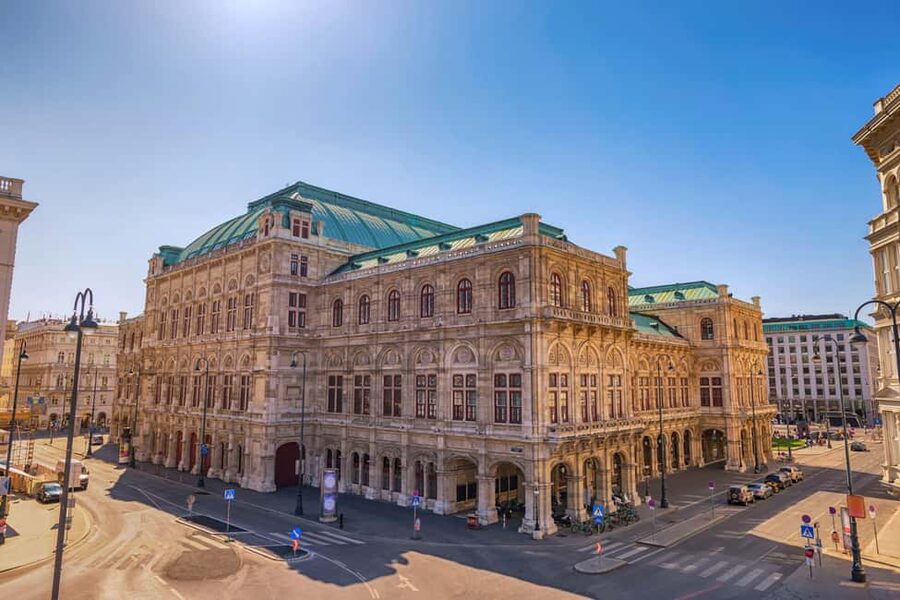
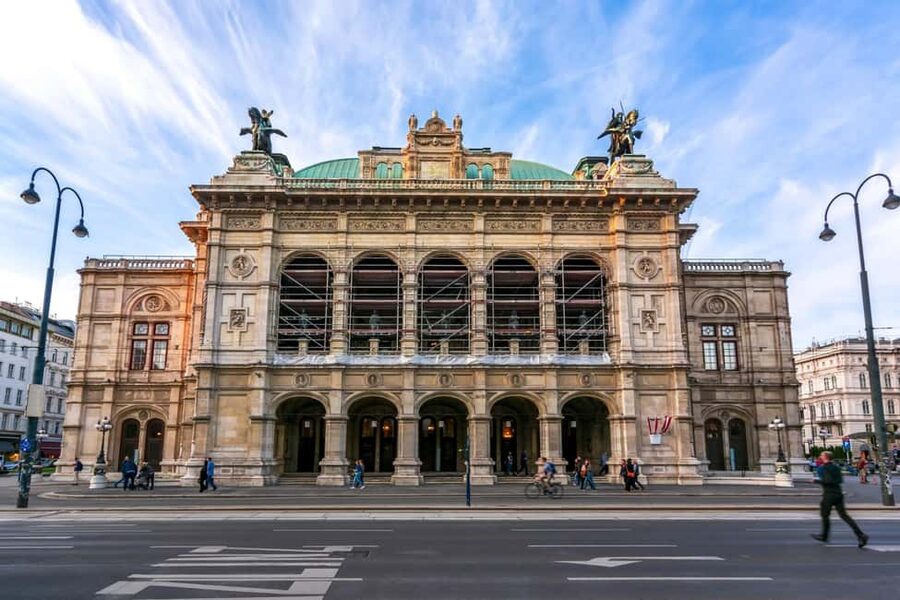
Starting at the Vienna State Opera
The Vienna State Opera is a strong place to begin because it introduces one of Vienna’s defining themes: music as part of everyday civic identity. The building connects the city with composers such as Mozart and Beethoven, and the guide sets the scene before you head into the old town.
The stop is listed as a photo and sightseeing visit lasting about 30 minutes. That is enough for an outside explanation, photographs, and a look at the building’s place along the Ringstrasse. It is not enough for an interior tour or a performance, and admission is not included.
That limitation is easy to accept if you know what you are booking. You get context and orientation, not a backstage look or a concert. The guide can also offer advice about visiting the opera later, which is useful if music is high on your Vienna list.
Bring a camera, but also look up and around. The pleasure here is not only the grand facade. The surrounding streets connect the opera to Albertina Palace and the Hofburg, so the walk quickly shifts from music to imperial power.
Albertina Palace and the road to the Hofburg
Albertina Palace appears as part of the route between the opera and the Hofburg. Even when the stop is brief, it helps show how Vienna’s center layers art, royalty, and public space within a few blocks.
You may not have time for a full museum visit, and an admission ticket is not part of this activity. If the Albertina is a priority, save it for another block of time. The value here is seeing its elegant exterior and understanding how it fits into the old city rather than trying to squeeze through its galleries.
The guide also helps you notice details in the streets and buildings. Mirko, one of the guides associated with this route, is especially praised for pointing out artwork and architectural features that can slip past an untrained eye. That sort of observation is one reason a short walk can feel more useful than simply following a map.
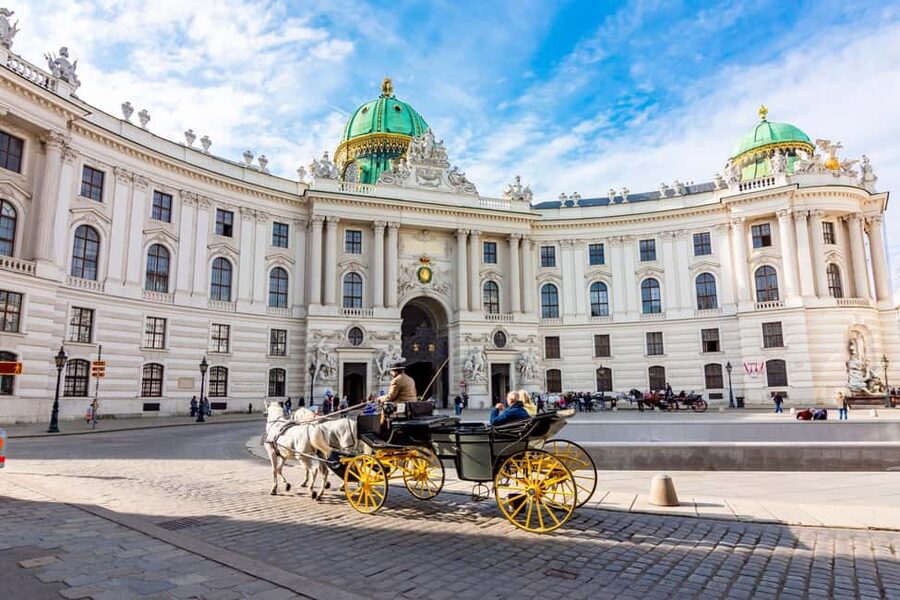
Inside the Hofburg Palace Complex
The Hofburg is the historical heart of the walk. For centuries, it served as the seat of the Habsburg dynasty, and its courtyards and facades reveal how the imperial family shaped Vienna.
The tour takes you through the palace complex and explains the people behind the formal buildings. Sisi, or Empress Elisabeth, receives special attention. Her image is often reduced to a romantic film character, but the guide presents the real story within the pressures of court life, imperial duty, and public expectation.
This is one of the strongest parts of the experience because a guide can connect the palace to the city around it. You are not just looking at a grand entrance. You are hearing why the Habsburgs mattered, how Austrian emperors used the complex, and how court traditions still influence Vienna’s identity.
The drawback is clear: admission to the Hofburg interiors is not included. You see the courtyards and exterior areas covered by the walking route, but you will need another ticket for the Imperial Apartments or other paid sections. That is not a hidden cost, but it is worth noting before you compare this walk with a palace tour.
Paul is described as particularly good at giving detailed explanations and handling questions. A guide who welcomes questions makes the Hofburg more useful, since this is the point where you may want to pause and sort out the difference between emperors, archdukes, royal residences, and palace museums.
A different way to spend an afternoon here:
- Vienna: Vivaldi’s Four Seasons Concert in Karlskirche
★ 4.7 · 14,951 reviews - Vienna: Spanish Riding School Training
★ 3.9 · 9,281 reviews - Vienna: Skip-the-cashier-desk-line Giant Ferris Wheel Ride
★ 4.5 · 7,859 reviews - Vienna: Schönbrunn Palace & Gardens Skip-the-Line Tour
★ 4.7 · 7,739 reviews
The Spanish Riding School from the outside
The Spanish Riding School is close to the Hofburg, so the route can move naturally from imperial residence to court tradition. The stop lasts about 20 minutes and focuses on sightseeing, stories, and the setting of the famous Lipizzaner horses.
You do not receive a performance ticket or a full tour of the school. Still, the location is memorable, and Mirko is credited with bringing participants unusually close to the horses during one visit. That detail is not guaranteed on every departure, but it shows why a guide can add something beyond a standard photo stop.
If you want to attend morning exercise or a performance, arrange that separately and do not assume this walking tour includes entry. The guide can explain the best way to visit, but paid access remains outside the $24 price.
I like this stop because it gives the imperial story a human scale. The Hofburg can feel immense and ceremonial. The riding school connects it to a living tradition of training, performance, and royal display.
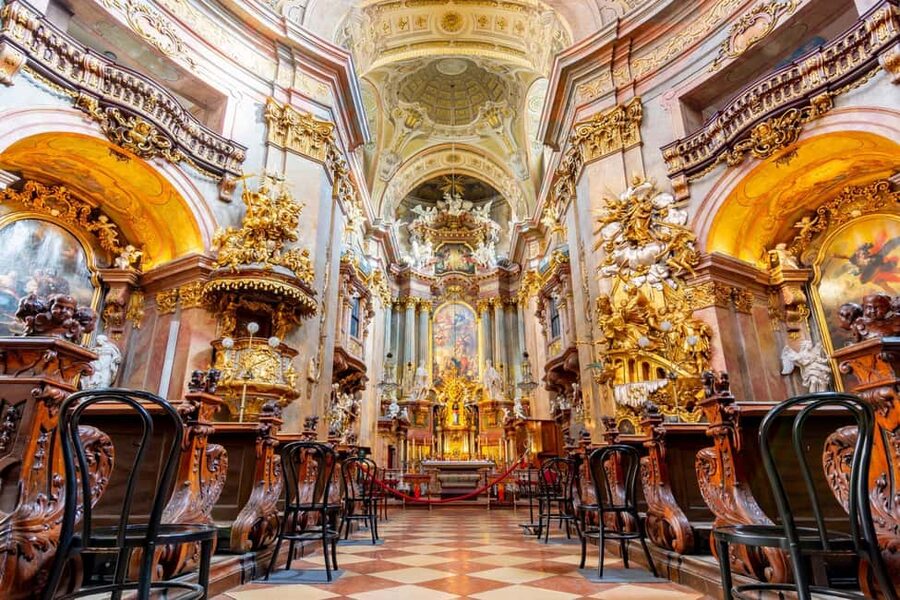
St. Peter’s Church and Vienna’s Baroque side
St. Peter’s Church brings a different mood. Its Baroque design is more intimate and decorative than the vast cathedral that comes later, and the visit helps you see that Vienna’s religious architecture is not all medieval Gothic stone.
Entry to St. Peter’s Church is included, although access can be restricted during Masses or special events. Opening times can vary, so treat this as a planned opportunity rather than a guarantee that every interior area will be available at every departure.
The guide can point out what to notice inside instead of leaving you to wander without context. That is helpful in a church filled with artwork, ornament, and architectural detail. Keep your voice low and follow any service-related restrictions.
This part also adds variety to the walk. You move from opera and imperial courtyards to a place of worship, then continue toward the clock and cathedral. The sequence gives you a better sense of Vienna as a city shaped by music, monarchy, faith, and public life.
The Ankeruhr and the old-town streets
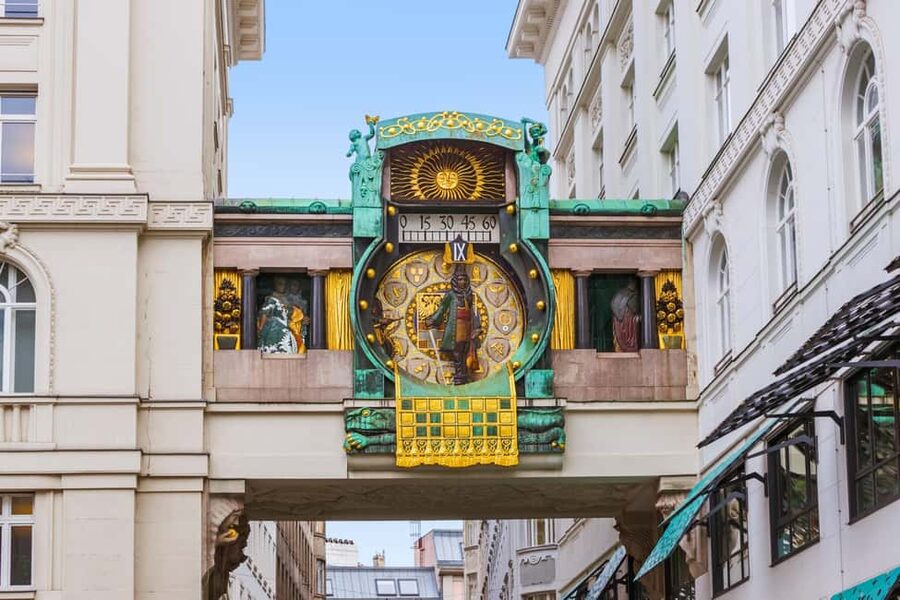
The Ankeruhr is one of the route’s more unusual sights. This historic astronomical clock is known for its moving figures, and it gives the old town a bit of mechanical theater amid the grand facades.
The timing of the figures may matter, so ask the guide when to watch for movement. The tour information does not promise a full performance at a particular departure, and you should not plan your whole schedule around seeing every figure move. Still, the clock is worth knowing about, especially because it is easy to pass without understanding what makes it special.
The final old-town section is listed as sightseeing and walking for about 20 minutes. This is where the route can feel most relaxed, with streets, buildings, musicians, and street performers adding everyday energy to the historic setting. One account of the walk describes seeing performers and musicians along the way, though that naturally depends on the day and time.
The guide also shares suggestions for coffee houses and traditional restaurants. These tips are practical because the route ends in a part of Vienna where you can continue exploring on foot. Ask for specific recommendations suited to your budget and plans.
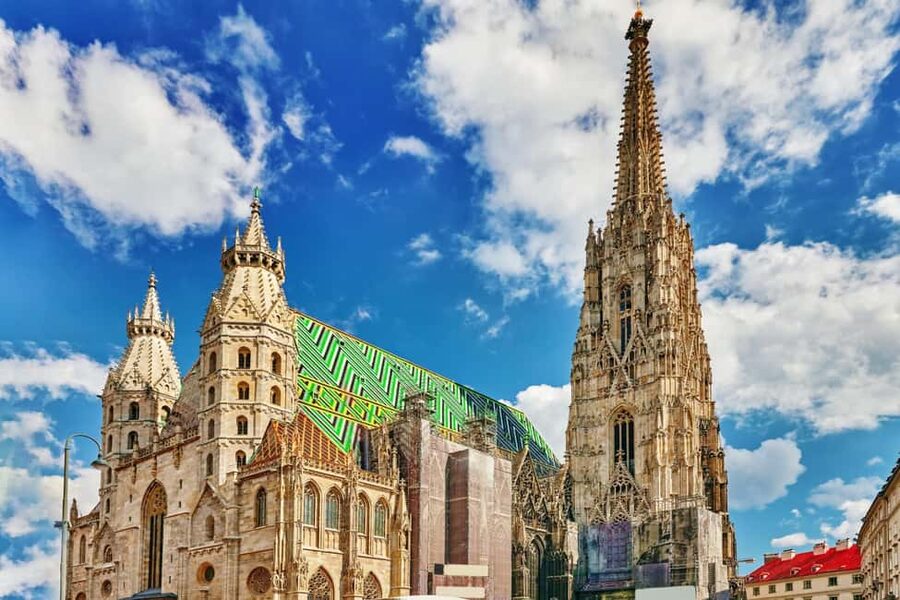
St. Stephen’s Cathedral, the grand finish
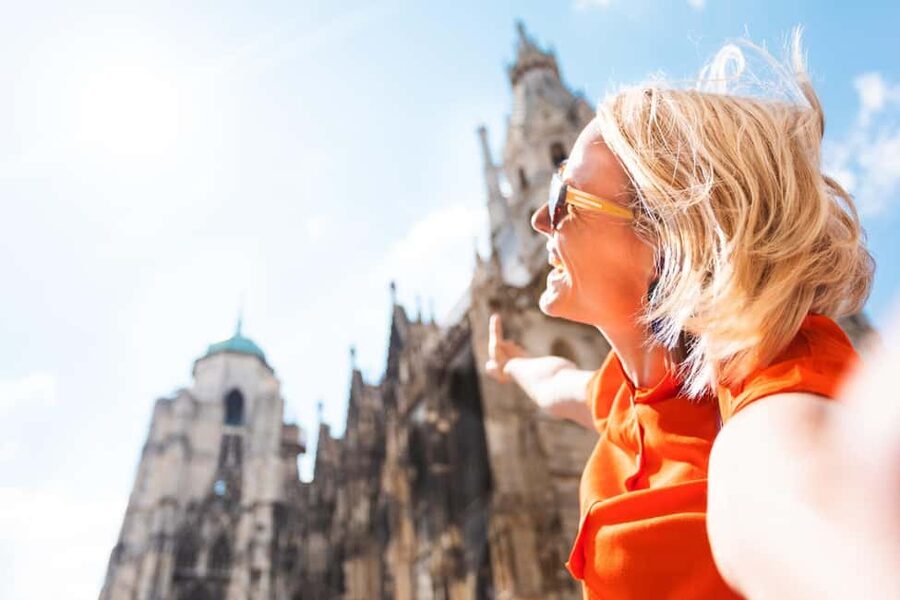
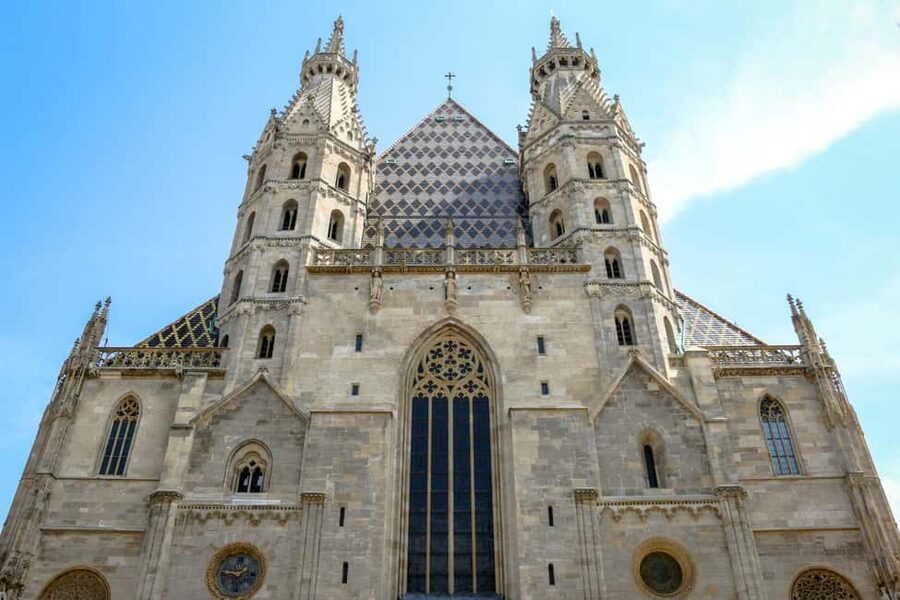
St. Stephen’s Cathedral is the final major sight and the visual payoff of the walk. Its medieval structure has witnessed royal coronations, centuries of Austrian history, and severe damage during World War II. The building is not just an attractive church. It is a record of Vienna’s survival and change.
The visit lasts about 20 minutes. Most areas of the cathedral can be explored without paying an admission fee, and the guide explains what to look for inside. Full access to paid sections, such as certain tower or catacomb areas, is not included.
That distinction matters. You get a meaningful introduction, but not every part of the cathedral. If you want a longer visit, return later with a separate ticket and give yourself time to examine the interior at your own pace.
St. Stephen’s is also a good place to understand the value of the guide’s storytelling. One guide, Steve, is praised for explaining each attraction in detail, while Paul is noted for giving strong answers to questions about the cathedral. The building can impress you immediately, but a few historical details make the experience last longer than the photograph.
The guide and group size
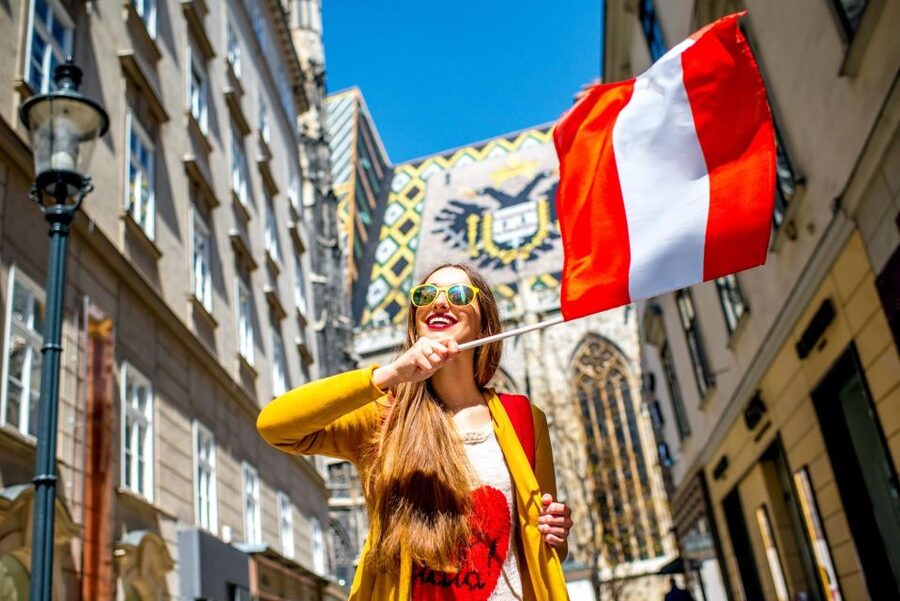
The tour uses a 5-Star licensed guide and live commentary in one selected language. English and Italian are available. The Italian option is especially useful because this group tour is offered specifically for Italian-speaking participants, rather than relying on a mixed-language explanation.
Group size can reach 25 people. That is still manageable for a city walk, but it is not a private experience. Stay close to the guide at crossings and crowded corners, and arrive 10 minutes early. Latecomers cannot join the group and do not receive a refund.
The named guides associated with strong experiences on this route include Steve, Paul, and Mirko. Steve is linked with careful explanations, Paul with friendly professionalism and clear answers, and Mirko with a flexible approach that includes extra art and architecture details. Your assigned guide may differ, so book this for the route and format rather than expecting one particular person.
The tour is not suitable for people with disabilities according to the supplied activity information. There is no luggage storage, so leave suitcases, large bags, scooters, extra clothing, and umbrellas elsewhere. Pets are not allowed.
What to wear and how to plan the day
Wear comfortable shoes. Vienna’s center is walkable, but two hours on hard streets can be tiring in poor footwear. The tour runs in rain or sunshine, so dress for the forecast and bring only what you can carry comfortably.
Plan for the activity to end back at the meeting point. Since the route begins and ends in the central area, you can use it as a first-day introduction, a mid-stay refresher, or a way to fill a short morning or afternoon.
I would avoid pairing it with too many fixed-time attractions immediately afterward. The listed sightseeing periods add up to the full two hours, and street conditions, group movement, or a church service can affect the pace. Keep a little breathing room.
Free cancellation is available up to 24 hours before the start, and you can reserve now and pay later. Those options help if your Vienna schedule is still changing.
Is this Vienna walking tour worth $24?
For $24, I think the tour offers good value if you want a guided introduction to Vienna’s core sights. The route covers landmarks that would cost nothing to see from outside, but the guide supplies the connections: Sisi and the Hofburg, music and the opera, court tradition and the Spanish Riding School, faith and the cathedral.
The value is lower if you want long interior visits. The Hofburg, State Opera, Spanish Riding School, and full-access cathedral tickets are separate. You could spend the same two hours choosing one paid attraction and exploring it in greater depth.
I would book this for a first visit, a short stay, Italian-speaking couples or families, and anyone who prefers a clear route with historical explanation. It also suits solo visitors who want company without committing to a full-day group outing.
I would skip it if you dislike group walks, need a fully accessible experience, or already know Vienna’s center well. In that case, spend the money on a specific museum, palace, or cathedral visit instead.
FAQ
How long does the Vienna walking tour last?
The tour lasts two hours. Check the available departure options for the exact starting times.
Which languages are available?
Live guiding is available in English and Italian. You select one language when booking.
Where does the tour start?
The meeting point can vary depending on the option booked. One listed starting location is Herbert-von-Karajan-Platz, Philharmoniker Strasse 4. Check your booking details for the exact point.
Where does the tour end?
The activity ends back at the meeting point.
Are tickets to the Hofburg and State Opera included?
No. Tickets for the Hofburg Palace, Vienna State Opera, and Spanish Riding School are not included. The guide provides sightseeing and advice on visiting these attractions.
Is entry to St. Stephen’s Cathedral included?
The tour includes access to the cathedral’s generally free areas, with the guide explaining what to see inside. Full-access tickets for paid sections are not included.
What should I bring to the tour?
Wear comfortable shoes and dress for the weather, since the walk operates in rain or sunshine. Do not bring suitcases, large bags, scooters, extra clothing, or other bulky items because there is no luggage storage. Pets are not allowed.
Recently added around Vienna
- Vienna: Private tour Mauthausen and Linz★ 4.1 · 3 reviews
- 2-Day Prague Tour from Vienna with private Transfers and Lunches★ 5.0 · 3 reviews
- Vienna Self Guided Sherlock Holmes Murder Mystery Game★ 4.5 · 3 reviews
- Vienna Private Schönbrunn Palace Tour, Extra Rooms and Gardens★ 5.0 · 3 reviews
- Salzburg and Lake Region Private Day Trip from Vienna★ 5.0 · 3 reviews
- Small-group Vienna Wine Tour★ 5.0 · 3 reviews
- True Crime mobile puzzle rally Vienna★ 4.0 · 3 reviews
- Vienna: Wachau Valley Private Kayak and Wine Tour★ 5.0 · 3 reviews
Walking Tours in Vienna, compared.

Guided Walking Tour of City Center Highlights
Read our review →
Guided Walking Tour of City Highlights & Hidden Gems
Read our review →
Vienna Historic Center Small Group Walking Tour
Read our review →


Ghosts and Legends Guided Nighttime Walking Tour
Read our review →

Browse the lists this tour appears in