
Reviewed · WALKING TOURS IN VIENNA
Vienna: Private Walking Tour
Vienna’s old center works beautifully on foot, and this private 150-minute tour gives you a brisk route through the city’s grandest sights without asking you to organize the story yourself. You’ll move from Roman and Celtic roots to Habsburg power, classical music, plague memorials, and coffee-house customs in one well-packed walk.
I like the hotel pickup in central Vienna, which removes an early bit of fuss, and I like the chance to shape the walk around your interests before it begins. The main consideration is the price: $530 covers up to 20 people, so it can be sensible for a family or group, but expensive for only one or two people.
Key points at a glance
- A private route through Vienna’s 1010 district: Meet at your inner-city hotel or at Helmut Zilk Platz, then finish in central Vienna.
- Major landmarks in one walk: See St. Stephen’s Cathedral, the Vienna State Opera, Hofburg Imperial Palace, Heldenplatz, the Graben, Burggarten, Volksgarten, and Jewish Square.
- Music woven into the city story: Learn about Wolfgang Amadeus Mozart, Ludwig van Beethoven, and Vienna’s long classical music tradition.
- Useful cultural context: Your guide explains coffee-house culture and the place of Sacher torte in Vienna’s food identity.
- Private and adjustable: Ask in advance to include a particular sight or subject when possible.
- Accessible format: The walk is wheelchair and stroller accessible, with English or German guiding available.
A fast introduction to Vienna’s historic center
This tour is designed as a first look at central Vienna. In two and a half hours, you’ll cover many of the places that define the city, from the Gothic bulk of St. Stephen’s Cathedral to the imperial buildings around the Hofburg and the formal squares along the Ringstrasse.
That broad coverage is the chief advantage. You are not spending the whole afternoon inside one palace or museum. Instead, you get the city’s main framework, with a guide explaining how religious power, royal rule, music, war, disease, and daily life shaped what you see.
The pace will likely feel active. A walking tour covering this many landmarks cannot give every stop the attention of a dedicated museum visit. I would treat it as a well-organized orientation, then return later to the places that catch your interest.
The private format helps here. You can ask about Mozart, the Habsburg family, Jewish Vienna, architecture, or coffee culture as you go. The provider asks you to share special interests before the tour, giving the guide a chance to work them into the route.
More Walking Tours in Vienna
- Vienna: Guided Walking Tour of City Center Highlights
★ 4.7 · 4,989 reviews - Vienna: Vienna Central Cemetery Guided Walking Tour
★ 4.8 · 3,307 reviews - Vienna: Guided Walking Tour of City Highlights & Hidden Gems
★ 4.9 · 2,180 reviews
Meeting your guide in central Vienna
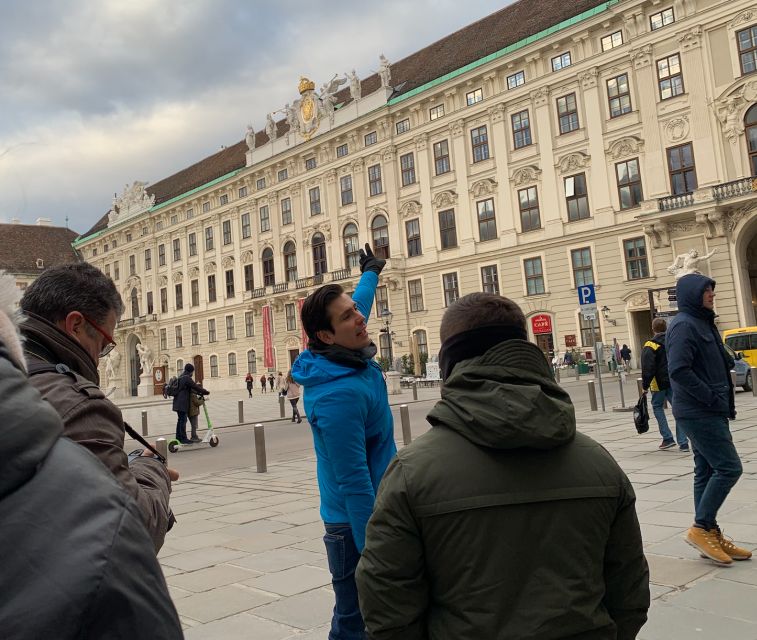
Pickup is included if your hotel is in the inner city. In that case, your guide waits in the lobby. If your accommodation is outside the pickup area, the meeting point is a prearranged location at Helmut Zilk Platz.
The tour begins and ends in 1010 Vienna, the central district. That is practical if you are staying nearby or have planned other sightseeing in the old center. It also means you do not lose time traveling out to a distant attraction before the walk begins.
Guiding is offered in English or German. Several guide names appear in the supplied feedback, including Lisa, Catherine, Long, and Marko, but you should not assume that you can select one of them when booking. The useful point is that the individual guide can make a real difference, particularly on a history-heavy walk.
Specific praise has focused on engaging explanations, clear communication, strong general culture, and good stories. One guide was described as willing to continue beyond the planned time to show a few extra places. That is a pleasant bonus, but it should not be treated as a guaranteed part of every departure.
St. Stephen’s Cathedral and Vienna’s earliest chapters
St. Stephen’s Cathedral is one of the natural anchors of the old city. Its scale and central position help you understand Vienna as more than a collection of pretty streets. This was a place where religious authority, commerce, civic life, and royal power met.
The guide starts further back, with the city’s Celtic and Roman beginnings, before moving toward the Vienna of today. That long view is useful because it prevents the tour from becoming a string of disconnected dates and buildings.
You will hear how the city changed as its population and political importance grew. The exact amount of time spent around the cathedral may depend on your group’s questions and the guide’s route, so do not expect a full interior tour unless that has been arranged separately.
For a first visit, this opening section helps you get your bearings. You begin with one of Vienna’s clearest visual markers, then move into the streets and squares where later chapters of the city’s story took shape.
The Graben, the Plague Column, and the city’s public face
From the cathedral area, the walk includes the Graben, one of Vienna’s best-known central streets, and the Plague Column. These places show how Vienna presented power and memory in public spaces.
The Plague Column is especially useful for understanding how disease affected European cities and how rulers and communities responded through religious monuments. Your guide can connect the column to broader changes in Vienna rather than leaving it as a decorative object to photograph.
The Graben also gives you a sense of the city’s ceremonial center. Here, grand architecture and everyday movement sit close together. You can look up at the facades, watch the flow of people, and see how the historic center remains part of ordinary city life.
I like this part of the tour because it joins visual sightseeing with a human story. The drawback is that central streets can be crowded and noisy, and the walk does not promise long quiet pauses at every landmark.
A different way to spend an afternoon here:
- Vienna: Vivaldi’s Four Seasons Concert in Karlskirche
★ 4.7 · 14,951 reviews - Vienna: Spanish Riding School Training
★ 3.9 · 9,281 reviews - Vienna: Skip-the-cashier-desk-line Giant Ferris Wheel Ride
★ 4.5 · 7,859 reviews - Vienna: Schönbrunn Palace & Gardens Skip-the-Line Tour
★ 4.7 · 7,739 reviews
Hofburg Imperial Palace and the Habsburg story
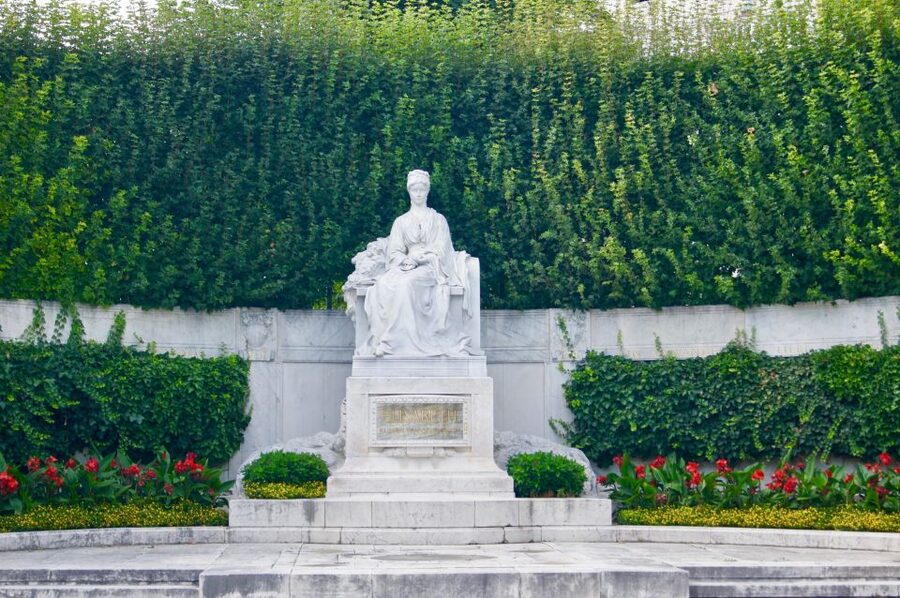
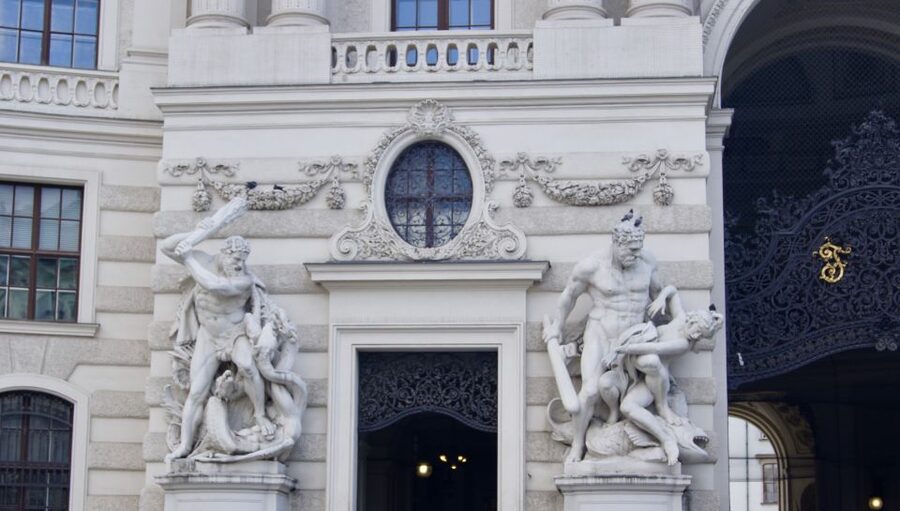
The Hofburg is the heart of Vienna’s imperial past. Rather than presenting the Habsburg family as a list of rulers, the guide explains the lives and influence of the family members who once belonged to one of Europe’s most distinguished royal houses.
This context matters. The Hofburg is a huge complex, and without a clear explanation it can be hard to understand which buildings served political, religious, domestic, or ceremonial roles. A private guide gives you someone to ask when a name or architectural detail becomes confusing.
Nearby Heldenplatz adds another large public setting to the route. It offers room to consider how Vienna’s rulers used grand spaces to project authority. The walk also reaches Burggarten and Volksgarten, two important green spaces that soften the heavy imperial architecture around them.
You should not expect admission to the palace interiors. The activity is described as a guided walking tour, and food, drinks, and other personal expenses are not included. If you want to explore a particular Hofburg collection inside, ask about it in advance and plan that visit separately.
The Ringstrasse and Vienna’s grand architecture
The Ringstrasse is one of the tour’s main visual rewards. Its grand buildings show the ambition of modern Vienna during the period when the city expanded beyond its older defensive boundaries.
Your guide points out the majestic architecture and explains how the boulevard fits into the city’s development. This is more useful than simply ticking off impressive facades because the Ringstrasse helps connect imperial Vienna with the modern capital.
The Vienna State Opera is another major stop. It gives the guide a natural way to discuss Vienna’s classical music tradition and the city’s continuing connection with performance. You will hear about Wolfgang Amadeus Mozart and Ludwig van Beethoven, two composers who helped make Vienna central to European musical culture.
The music section should appeal to you even if you are not a serious concertgoer. Mozart’s link to Vienna is a good entry point into the city’s artistic identity, while Beethoven adds another layer to the story of composers who shaped the city’s reputation.
A limitation is that seeing the opera house from outside is not the same as attending a performance or taking an interior tour. The value here lies in the setting and explanation, not in a concert ticket.
Jewish Square and the city’s more difficult stories
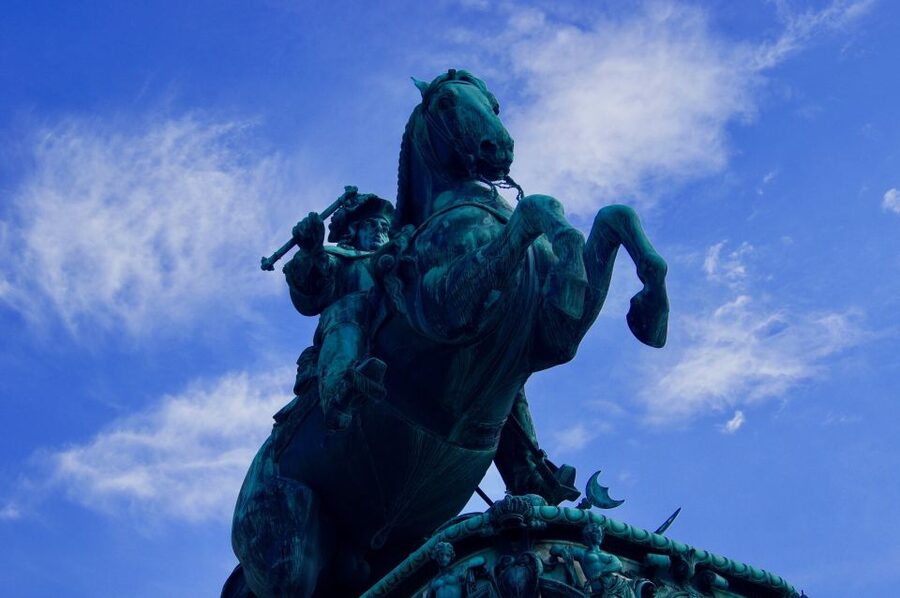
Jewish Square adds an important counterweight to Vienna’s imperial image. The tour includes the square as part of the central route, giving you a chance to consider the history of Vienna’s Jewish community and the forces that shaped its experience.
This stop matters because a tour focused only on palaces, composers, and elegant cafes would leave out a major part of the city’s past. Jewish Square helps broaden the story beyond royal success and artistic fame.
The amount of discussion will depend on the guide and your questions. If this subject is especially important to you, tell the local partner beforehand. The private setup makes that request more practical than it would be on a fixed group walk.
The tour does not promise entry to a museum or a particular memorial site. You are getting an introduction from the street, which can help you decide if you want to return for a longer visit.
Coffee houses, Sacher torte, and the taste of Vienna
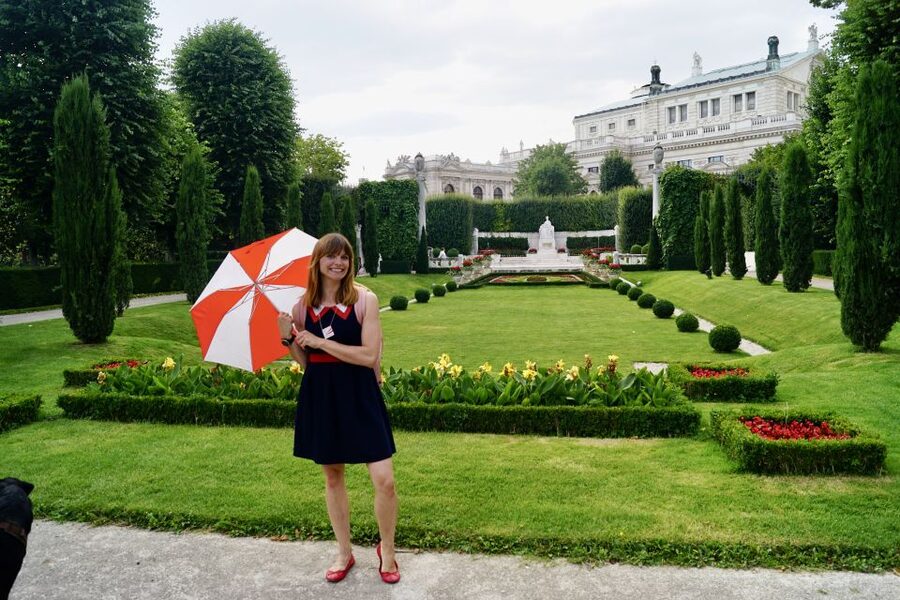
Vienna’s coffee-house culture is included among the tour highlights. This is not just a food note. Coffee houses are part of the city’s social identity, tied to conversation, reading, writing, and the habit of lingering over a drink.
The guide also explains Sacher torte, Vienna’s famous chocolate cake. You should understand the distinction between learning about local food culture and receiving a tasting. Food and drinks are not included, so budget separately if you want to stop for coffee or cake afterward.
That arrangement has an advantage. You are free to choose your own cafe and order what suits you, rather than being tied to a prepaid snack stop. It also means the tour itself remains focused on walking and interpretation.
I would save your appetite for after the walk. A cafe break can be a good way to continue the conversation, but the activity does not guarantee a cafe reservation or a serving of Sacher torte.
How the 150-minute schedule feels
Two and a half hours is enough to see a great deal, but not enough to explore every stop in depth. The route is best for building a mental map of Vienna’s center, with brief explanations at many locations rather than long visits inside a few attractions.
You will walk between the major points, listen to the city’s history, and have chances to ask questions. Since the group is private, the guide can adjust the emphasis, though the route still has to fit within 150 minutes.
I would choose this length if you are in Vienna for a short stay, arriving early in your trip, or traveling with people who want an overview before choosing independent visits. If you already know the center well, the general route may feel familiar unless you arrange a special focus.
Comfortable walking shoes make sense. The tour is wheelchair and stroller accessible, an important practical advantage, though the pace and street conditions can still affect how easy the walk feels for each person.
The value of $530 per private group
The listed price is $530 for a group of up to 20 people. That is not a per-person fare, so the arithmetic changes sharply with group size.
For a large family group, friends traveling together, or a small organized party, the cost can offer good value. You share one guide, receive hotel pickup in the inner city, and avoid splitting into several public groups. At the maximum group size, the per-person cost is modest.
For two people, however, the same price is a serious expense. You are paying for privacy, a tailored discussion, and convenience, not for entry tickets or meals. If you mainly want a cheap introduction, a public walking tour may suit your budget better.
The strongest value comes when you use the private format well. Send questions before the tour, ask for emphasis on music or Habsburg history, and make clear if Jewish Vienna or coffee culture matters to you. The more specific your interests, the more the private arrangement can justify its cost.
Hotel pickup adds convenience but only applies to hotels in the inner city. Otherwise, you meet at Helmut Zilk Platz or another agreed location. Confirm that point before setting other plans around the start time.
Who will get the most from this walk
I would recommend this tour to first-time visitors who want a broad introduction without arranging several separate stops. Families may also like the private format, especially because the route is wheelchair and stroller accessible and the guide can respond to questions as they arise.
It suits people who enjoy context more than a simple photo walk. You will hear about the city’s earliest roots, Habsburg rulers, famous composers, religious monuments, Jewish history, and food customs in one sitting.
It can also work well for a group with mixed interests. One person can ask about Mozart, another about the Hofburg, and another about cafes or architecture. A private guide can usually shift the conversation more easily than a large scheduled group.
I would hesitate if your main goal is a full palace interior visit, a concert, or a food tasting. None of those is included. You are buying a guided city walk, not a package of admissions and meals.
Booking flexibility and practical details
You can cancel up to 24 hours before the tour for a full refund, according to the supplied terms. The reserve-now, pay-later option also gives you some planning flexibility, though you should still check the available starting times before choosing a date.
The tour is offered in English and German. It is a private group activity, and pickup is included from an inner-city hotel lobby or arranged meeting point.
If you have a specific request, share it before the day of the walk. That is the clearest way to make use of the private setup and helps the local partner decide what can fit into the route.
Should you book this Vienna walking tour?
Book it if you want a strong first orientation to Vienna, have a group large enough to share the $530 cost, and value a guide who can connect buildings to people and events. The combination of cathedral, palace, opera, Ringstrasse, Jewish Square, parks, music, and coffee culture gives you a useful picture of the city in a short time.
Think twice if you are traveling alone or as a couple on a tight budget. The route is broad rather than deeply detailed, and you will need to pay separately for food, drinks, and any interior attractions.
For most suitable groups, I would schedule it near the start of a Vienna stay. Use the walk to learn where everything is, note which stories interest you, and return later for the places you want to explore at a slower pace.
FAQ
How long is the Vienna private walking tour?
The tour lasts 150 minutes, or two and a half hours.
What language is the tour offered in?
The live guide service is offered in English or German.
Is this a private tour?
Yes. The tour is for a private group, with a maximum group size of 20 people.
How much does the tour cost?
The price is $530 per group of up to 20 people.
Where does the tour begin?
Pickup is available from your hotel lobby if your hotel is in Vienna’s inner city. Otherwise, the meeting location is arranged in advance, with Helmut Zilk Platz listed as the meeting point.
Where does the tour finish?
The tour finishes in 1010 Vienna, Austria.
Is hotel pickup included?
Yes. Hotel pickup and drop-off are included for hotels in the inner city. Guests outside that area meet at a prearranged location.
Is food or coffee included?
No. Food and drinks are not included. The guide discusses Vienna coffee-house culture and Sacher torte, but the tour does not include a meal or tasting.
Is the tour wheelchair accessible?
Yes. The tour is described as wheelchair and stroller accessible.
Can I request a particular subject or sight?
Yes. You should tell the local partner before the tour if you have a specific place or interest you want included, so it can be considered in the route.
Recently added around Vienna
- Vienna: Private tour Mauthausen and Linz★ 4.1 · 3 reviews
- 2-Day Prague Tour from Vienna with private Transfers and Lunches★ 5.0 · 3 reviews
- Vienna Self Guided Sherlock Holmes Murder Mystery Game★ 4.5 · 3 reviews
- Vienna Private Schönbrunn Palace Tour, Extra Rooms and Gardens★ 5.0 · 3 reviews
- Salzburg and Lake Region Private Day Trip from Vienna★ 5.0 · 3 reviews
- Small-group Vienna Wine Tour★ 5.0 · 3 reviews
- True Crime mobile puzzle rally Vienna★ 4.0 · 3 reviews
- Exploring the Gutenstein Alps★ 5.0 · 3 reviews
Walking Tours in Vienna, compared.

Guided Walking Tour of City Center Highlights
Read our review →
Guided Walking Tour of City Highlights & Hidden Gems
Read our review →
Vienna Historic Center Small Group Walking Tour
Read our review →


Ghosts and Legends Guided Nighttime Walking Tour
Read our review →

Browse the lists this tour appears in