
Reviewed · WALKING TOURS IN VIENNA
Vienna: Jewish Life in Leopoldstadt 2-Hour Walking Tour
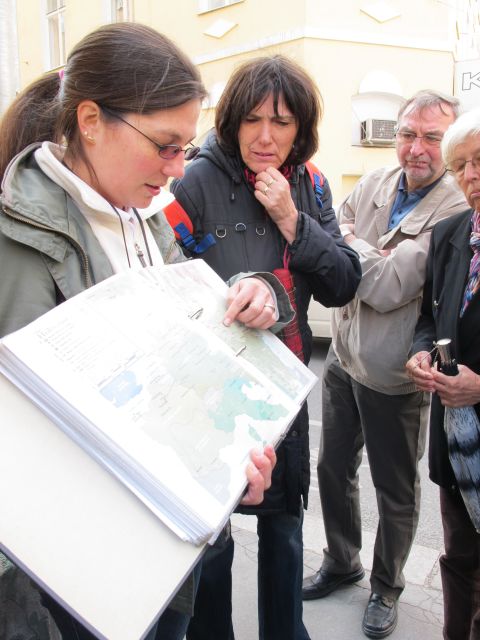
Leopoldstadt was once the heart of Jewish Vienna, and this two-hour walking tour shows you how much of that story still survives in streets, buildings, plaques, and places of worship. You move through an area between the Danube Canal and the Danube, away from Vienna’s grand central sights, while a certified German-speaking guide explains the district’s past and present.
I like the focus on ordinary neighborhood life, not just famous monuments. I also like the clear link between prewar Jewish institutions, the synagogues that once served the district, and the Jewish community in Vienna today. The main point to consider is language: the tour is offered in German, and synagogue entry is not included.
Key points at a glance
- A different side of Vienna: Walk through Leopoldstadt, a former center of Jewish life beyond the usual city-center route.
- Past and present together: Learn about Jewish life at the beginning of the 20th century and see how the community lives in Vienna today.
- Former houses of worship: Hear about the synagogues and other religious buildings that existed before the Second World War.
- The Path of Remembrance: Follow commemorative plaques that connect individual streets and buildings to the city’s Jewish past.
- Good value at $25: A certified guide leads a focused two-hour walk, with no extra charge for transport because the meeting point is by the U2.
- German-language format: The tour suits German speakers best and is wheelchair accessible.
Why Leopoldstadt matters to Jewish Vienna
If you know Vienna mainly through the Hofburg, Schönbrunn Palace, grand cafés, and Ringstrasse, Leopoldstadt gives you a very different city. The district lies across the Danube Canal from much of the historic center, and its story is tied closely to the Jewish population that shaped Vienna’s social, religious, and cultural life.
At the beginning of the 20th century, Leopoldstadt was a major center of Jewish life. The tour helps you picture the network that once held the community together: houses of worship, social institutions, community services, and residential streets. This matters because Jewish history here is not presented as a distant subject. It is connected to the places where people lived, prayed, worked, met, and raised families.
I find this kind of neighborhood walk more useful than a simple list of dates. A synagogue tells you about religious life, but a community institution can show how people organized education, welfare, culture, and daily support. The route is designed to connect those pieces.
You should expect the experience to be thoughtful rather than flashy. Leopoldstadt does not offer a parade of grand tourist attractions at every corner. Its value comes from learning how to read the city, especially when the physical evidence is partial or has been changed by war and time.
More Walking Tours in Vienna
- Vienna: Guided Walking Tour of City Center Highlights
★ 4.7 · 4,989 reviews - Vienna: Vienna Central Cemetery Guided Walking Tour
★ 4.8 · 3,307 reviews - Vienna: Guided Walking Tour of City Highlights & Hidden Gems
★ 4.9 · 2,180 reviews
Starting at Taborstraße and the U2
The meeting point is at Obere Augartenstraße 74, directly outside the U2 stop Taborstraße, at the Taborstraße exit. That is a practical choice, especially if you are staying elsewhere in Vienna and do not want to arrange a taxi or private transfer.
I recommend arriving with enough time to identify the correct exit. Vienna’s underground system is straightforward, but stations can have several exits, and the tour begins outside the Taborstraße exit rather than at a broad landmark in the old town. Transfers are not included, though the U2 makes the meeting point easy to reach by public transport.
The location also sets up the tour well. You begin in the second district, already close to the area that shaped Jewish Vienna. There is no long coach ride or opening lecture in a hotel lobby. You meet the guide and start walking through the district itself.
The tour lasts two hours. That is long enough for a connected story, but short enough to fit into a morning or afternoon alongside other Vienna plans. I would avoid placing it immediately before a timed palace visit or train departure, since walking tours can finish a little away from where you started.
Following the old center of Jewish life
The first part of the walk introduces Leopoldstadt as a former center of Jewish life. Your guide explains the area between the Danube Canal and the Danube and shows how its location relates to the wider city.
The important thing here is scale. You are not being asked to understand one isolated building. You are looking at a district where many parts of Jewish community life once existed close together. The route gives you a way to understand Leopoldstadt as a lived-in neighborhood, not simply as a stop on a memorial route.
I like that the tour leaves the usual central Vienna circuit. The city center can make it easy to focus on imperial Austria, monumental architecture, and famous composers. This walk shifts attention to residents and institutions that shaped the city in another way.
Your guide also helps explain what has changed. In some places, the most important evidence may be a commemorative plaque or the historical account attached to a building rather than a preserved monument. That can require more attention from you, but it also makes the experience more honest. You are learning to recognize absence as part of the story.
Synagogues and houses of worship before the Second World War
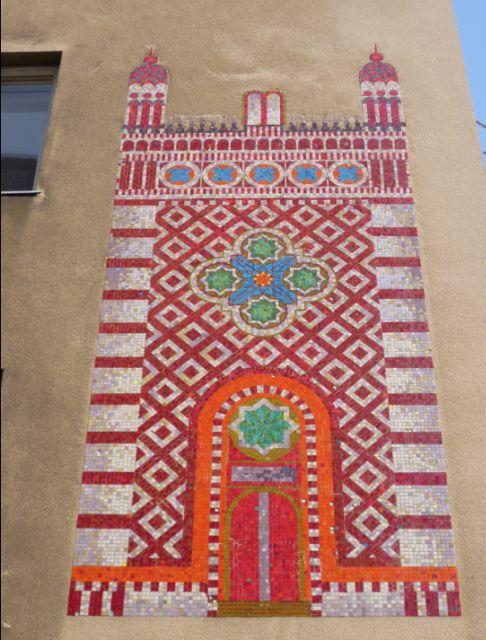
A central theme is the synagogues and other houses of worship that existed before the Second World War. These buildings were not merely religious sites. They were anchors for congregations and visible signs of a large, organized Jewish population.
The walk gives you context for the buildings that once stood in Leopoldstadt and the role they played in the district. You will hear which institutions dominated the area and how religious life fitted into the larger community.
I appreciate that this subject is handled as part of a wider social story. A tour focused only on architecture could leave you admiring façades without understanding who used them. Here, the buildings are connected to the people and organizations that gave them meaning.
One practical limit is that synagogue entry is not included. This is an outdoor walking tour, so do not book it expecting access to an interior sanctuary or a formal synagogue visit. Its strength is the street-level account of places that existed, changed, disappeared, or continue to matter.
Because the available tour language is German, you will get the most from this section if you can follow spoken German comfortably. The format may be less suitable if you need English interpretation or prefer to read information at your own pace.
A different way to spend an afternoon here:
- Vienna: Vivaldi’s Four Seasons Concert in Karlskirche
★ 4.7 · 14,951 reviews - Vienna: Spanish Riding School Training
★ 3.9 · 9,281 reviews - Vienna: Skip-the-cashier-desk-line Giant Ferris Wheel Ride
★ 4.5 · 7,859 reviews - Vienna: Schönbrunn Palace & Gardens Skip-the-Line Tour
★ 4.7 · 7,739 reviews
Community institutions beyond religious buildings
The tour also looks at the social and community institutions that shaped Leopoldstadt. This is one of the most useful parts for anyone who wants more than a basic introduction to Vienna’s Jewish past.
Religious buildings are easy to identify as important. Community institutions can be less obvious, yet they reveal how people handled education, welfare, social life, and shared responsibilities. Your guide explains which types of organizations held influence in the district and how they fitted into Jewish life at the start of the 20th century.
I find this approach especially helpful because it keeps the tour from becoming a succession of memorial stops. You get a broader picture of how a community functioned day by day.
The material may also help you look at Vienna’s streets differently after the tour. You might pass an ordinary-looking building and understand that its importance came from the people who met there, the services it provided, or the role it played in the surrounding neighborhood.
The tour does not promise a complete account of every Jewish site in Vienna. Instead, it offers a focused look at Leopoldstadt. If you have only a short time in the city, that focus is a benefit. If you want an exhaustive study of Viennese Jewish history, you will need additional museum visits or reading.
The Path of Remembrance and memorial plaques
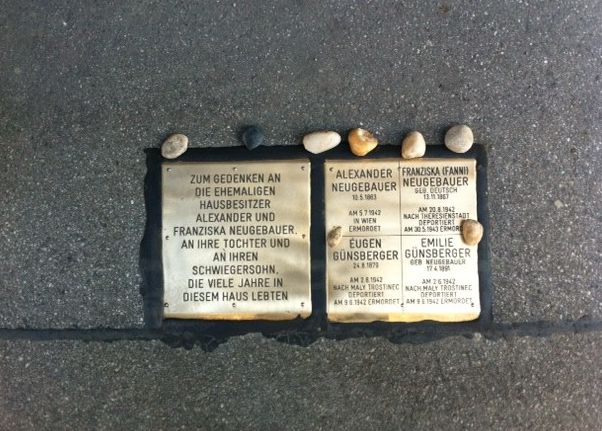
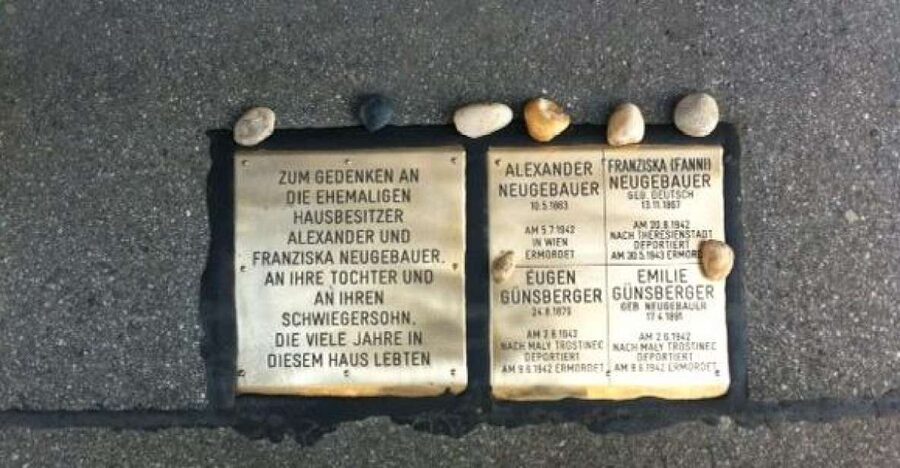
The walk follows commemorative plaques marked as the Path of Remembrance. These plaques create a physical thread through the neighborhood, linking streets and buildings with people and events from the past.
I like memorial plaques because they keep memory in the places where life actually happened. You are not only standing in a museum room and reading a summary. You are walking through the district and seeing how remembrance is placed into the urban fabric.
At the same time, plaques require concentration. They are often small, and the meaning of one becomes clearer when a guide explains its setting. The certified guide is important here because the value comes from connecting separate points into one story.
This part of the tour also gives you a chance to pause. The walk is not just about covering ground. You will likely stop at selected points to hear the background, consider what once occupied the site, and understand how Vienna marks Jewish memory today.
The wording and details on the plaques may be easier to follow in German, which is another reason to consider the language before booking. For German speakers, the route offers a direct connection between written memorials and spoken explanation.
Jewish life in Vienna today
The experience does not stop before the Second World War. It also addresses how Jewish people live in Vienna today, which gives the tour a needed present-day dimension.
That balance is important. A walk that only discusses destroyed institutions can leave you with the impression that Jewish life in Vienna belongs entirely to the past. This tour sets the earlier community alongside the current one, showing that the story continues even after enormous loss and disruption.
The supplied information does not promise entry into active community buildings or a meeting with local residents. You should expect the guide to explain present-day Jewish life as part of the walking route, not to participate in a private community visit.
Still, this modern perspective changes the tone of the experience. You are not simply visiting sites connected to tragedy. You are learning about continuity, memory, and the place of Jewish life in Vienna now.
I consider that one of the tour’s strongest features. The route acknowledges what was destroyed while also making room for the fact that Jewish Vienna is not only a historical subject.
The guide and the German-language format
The tour includes a certified guide, and the strongest praise centers on the guiding itself. The guide is described as competent, engaging, informative, and well organized. Frau Timmermann is specifically praised for her commitment and broad knowledge, so she may be your guide on some departures.
That kind of feedback matters on a subject that can become either too dry or too hurried. A good guide needs to explain difficult events clearly, keep the route moving, and give enough background without turning two hours into a lecture. The comments about a well-built and entertaining structure suggest that the experience aims for that balance.
I would book this tour if German is one of your comfortable listening languages. The listed tour language is German, and there is no stated English or multilingual option. Children or family members who do not understand German may find it hard to follow the full story, even if they are happy walking.
The pace is also worth considering. Two hours on foot means you should wear comfortable shoes and be ready to spend much of the time outdoors. The tour is wheelchair accessible, but the route remains a walking experience, so you may want to confirm any personal mobility needs when booking.
Is $25 a fair price?
At $25 per person, the tour is priced as an accessible specialist walk rather than a major half-day excursion. You pay for two hours with a certified guide and a focused subject that would be difficult to understand fully from a casual stroll.
The value is strongest if you care about context. You could walk through Leopoldstadt for free, but you would not automatically know which institutions shaped the district, where former houses of worship fit into the story, or how the Path of Remembrance connects the sites.
There are no transfers, food, or drinks included. That is not a serious drawback for a short urban walk, but you should plan your own route to Taborstraße and bring anything you want during the two hours.
You also do not pay an additional entry fee for the walk itself, since synagogue entry is not part of the program. If you want interiors, museum exhibits, or a longer program, this tour may feel limited. If you want a concise introduction to Jewish Leopoldstadt, $25 is reasonable.
The flexible booking terms add practical value. You can cancel up to 24 hours ahead for a full refund, and you can reserve now and pay later. Those terms help if your Vienna schedule is still taking shape.
Who should book this Leopoldstadt walk?
I would recommend the tour to German-speaking visitors who have already seen Vienna’s main imperial sights and want a more grounded look at the city. It also suits anyone interested in Jewish history, memorial culture, urban neighborhoods, and the way communities shape a city over time.
It is a good choice for a first visit if you want a guided introduction before exploring more on your own. The two-hour format leaves room for another museum, a meal, or a second district afterward.
You may want a different experience if you need English, want extensive time inside synagogues, or prefer a museum-based presentation. This is a street-level tour, and some of the most important places are understood through explanation and memorial markers rather than preserved interiors.
I would also consider the emotional weight of the subject. The walk deals with Jewish life before the Second World War, the loss of institutions, and remembrance in the city today. It is not a light sightseeing stroll, though the guide’s clear and engaging approach should keep it accessible.
Should you book the Jewish Life in Leopoldstadt tour?
Book it if you want to understand how a Vienna district once worked as a Jewish community, not simply see another famous building. The combination of former synagogues, community institutions, memorial plaques, and present-day Jewish life gives the two-hour route a clear purpose.
At $25, it offers good value for German speakers who want a focused guide and an off-center view of Vienna. The limits are just as clear: no synagogue entry, no food or transport, and no listed language other than German.
For the right audience, this is a thoughtful and practical way to add depth to a Vienna visit. Arrive at the Taborstraße U2 exit, wear comfortable shoes, and bring enough German to follow a serious but engaging account of Leopoldstadt.
FAQ
Where does the Jewish Life in Leopoldstadt tour meet?
The meeting point is at Obere Augartenstraße 74 in Vienna’s second district, directly outside the U2 stop Taborstraße, at the Taborstraße exit.
How long does the walking tour last?
The tour lasts two hours.
What language is the tour offered in?
The listed tour language is German, and the experience includes a live German-speaking guide.
Is the tour wheelchair accessible?
Yes, the activity is listed as wheelchair accessible.
Is synagogue entry included?
No. Entry to synagogues is not included in the tour.
Can I cancel or pay later?
You can cancel up to 24 hours in advance for a full refund. You can also reserve your place and pay later.
More 2-Hour Experiences in Vienna
- Vienna: Romantic Old Town 2-Hour Discovery Tour
★ 4.7 · 816 reviews - Vienna: 2 Hours Sightseeing Walking Tour
★ 4.8 · 332 reviews - Vienna: 2-Hour Historical Crimes Guided Walking Tour
★ 4.8 · 130 reviews - Vienna: 2-Hour Street Art Tour
★ 4.5 · 76 reviews
Recently added around Vienna
- Vienna: Private tour Mauthausen and Linz★ 4.1 · 3 reviews
- 2-Day Prague Tour from Vienna with private Transfers and Lunches★ 5.0 · 3 reviews
- Vienna Self Guided Sherlock Holmes Murder Mystery Game★ 4.5 · 3 reviews
- Vienna Private Schönbrunn Palace Tour, Extra Rooms and Gardens★ 5.0 · 3 reviews
- Salzburg and Lake Region Private Day Trip from Vienna★ 5.0 · 3 reviews
- Small-group Vienna Wine Tour★ 5.0 · 3 reviews
- True Crime mobile puzzle rally Vienna★ 4.0 · 3 reviews
- Exploring the Gutenstein Alps★ 5.0 · 3 reviews
Walking Tours in Vienna, compared.

Guided Walking Tour of City Center Highlights
Read our review →
Guided Walking Tour of City Highlights & Hidden Gems
Read our review →
Vienna Historic Center Small Group Walking Tour
Read our review →


Ghosts and Legends Guided Nighttime Walking Tour
Read our review →

Browse the lists this tour appears in