
Reviewed · WALKING TOURS IN VIENNA
Vienna: Highlights Walking Tour with a Local Guide
Vienna’s imperial center is best understood on foot, and this three-hour tour links many of the city’s grandest sights in one steady route. You’ll move from Maria-Theresien-Platz and the museums to the Hofburg, Burgtor, Ringstrasse, and St. Michael’s Church, with a local guide supplying the connections between them.
I like the strong first-day overview and the way the route mixes famous façades with stories about Vienna’s rulers, wars, music, and city planning. I also like the chance to book either a shared walk or a private group, with English, French, and Spanish listed as guide languages.
The main caution is language reliability. Several recent bookings in Spanish were canceled because no Spanish-speaking guide was available, so confirm this directly if Spanish is essential. The $38 price is fair for three hours, but this is a sightseeing walk, not a ticketed museum visit.
Key points to know before you book
- Maria-Theresien-Platz gives you two major museums at once: The Natural History Museum and Art History Museum face each other across the broad square.
- The route is packed with imperial Vienna: You’ll see the Neue Burg, Hofburg area, Burgtor, Heldenplatz, and St. Michael’s Church.
- Ringstrasse provides the city-planning lesson: Your guide explains how former medieval defenses became a grand boulevard.
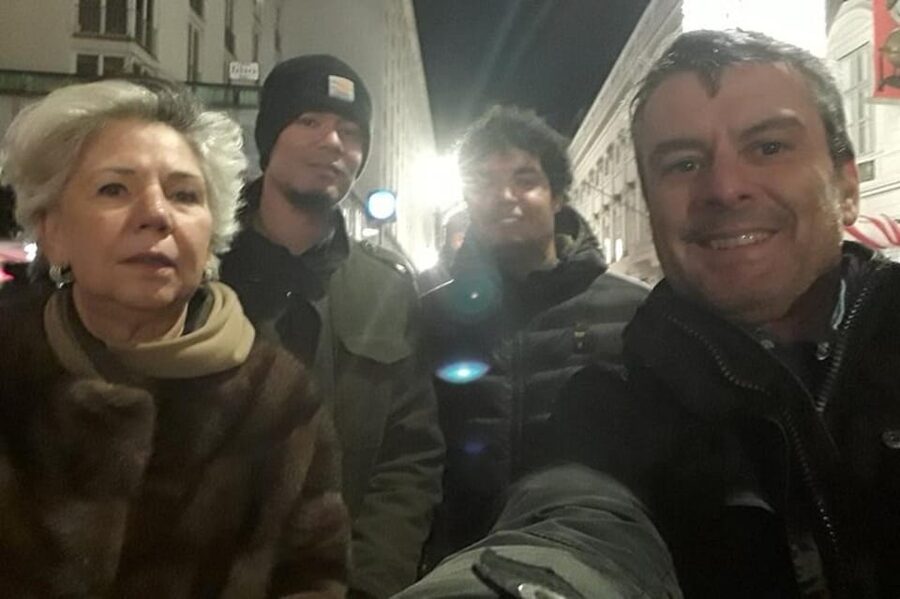
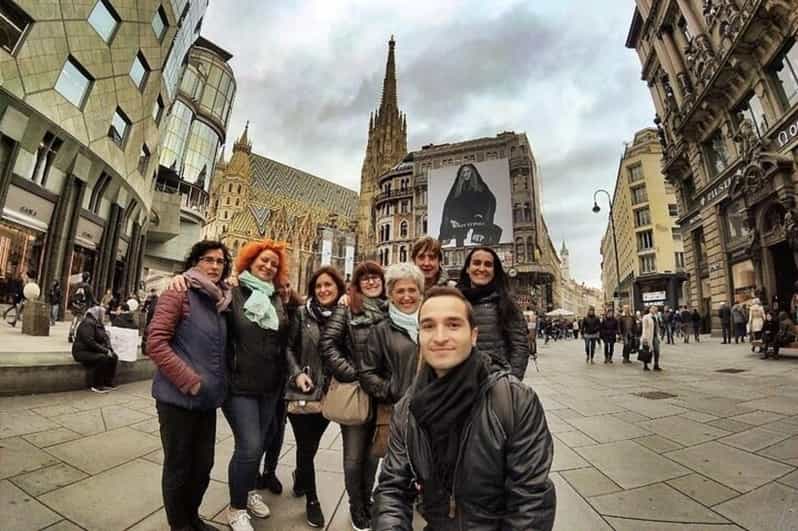
- Guides bring different personalities: Gulam is noted for humor, Nathalie for energetic cultural detail, and Hugo for helpful café and restaurant suggestions.
- It is a walking and photo-stop tour: The supplied plan allows about 30 minutes at each listed point, with no museum admission included.
- Language confirmation matters: English, French, and Spanish are offered, but Spanish bookings have recently faced cancellations.
Why this route works for a first look at Vienna
Vienna can feel grand to the point of confusion. You see domes, statues, palace wings, museums, and formal squares, but it is not always clear how they fit together. This walk gives you that basic map.
The meeting point is Babenbergerstraße 9, placing you near Vienna’s central imperial district. From there, the route gathers several major sights within a manageable walking area. You are not spending the morning on a bus or being rushed between distant neighborhoods. Instead, you get a close view of stonework, monuments, palace entrances, and the broad streets that helped reshape Vienna.
That matters because the city’s center is not just a collection of pretty buildings. It reflects several layers of power. The Habsburg court shaped the Hofburg and its surrounding spaces. Nineteenth-century city planners turned old defensive lines into Ringstrasse. Museums were built to display royal collections and project imperial confidence.
A guide can make those links clear in a way that a self-guided walk may not. The best moments on this tour are likely to come when your guide explains why a building is where it is, who used it, and how it fits into Vienna’s political and cultural story.
More Walking Tours in Vienna
- Vienna: Guided Walking Tour of City Center Highlights
★ 4.7 · 4,989 reviews - Vienna: Vienna Central Cemetery Guided Walking Tour
★ 4.8 · 3,307 reviews - Vienna: Guided Walking Tour of City Highlights & Hidden Gems
★ 4.9 · 2,180 reviews
Maria-Theresien-Platz and the museum façades
Maria-Theresien-Platz is one of the most impressive open spaces in central Vienna. The square is framed by the Natural History Museum and the Kunsthistorisches Museum, with the monument to Empress Maria Theresa at its center.
You get a useful visual lesson here. The two museum buildings were designed as matching companions, creating a formal balance across the square. Their placement reflects the ambitions of the imperial court, which wanted its collections, scholarship, and power presented on a grand scale.
The tour includes a photo stop and guided sightseeing here. That is valuable even if you do not enter either museum, since the exterior architecture is part of the experience. You can take in the full proportions of the square, then look more closely at the statues, decorative details, and massive façades.
The practical limitation is simple: museum entry is not included. If you want to see the collections inside, plan a separate visit. The Art History Museum is especially important to the route because it appears again as a stop, but this experience focuses on the building and its setting rather than its galleries.
I would pay attention to the guide’s explanation of Maria Theresa herself. Her monument is not just a decorative centerpiece. It points to the importance of one of the Habsburg monarchy’s most influential rulers and helps explain why this part of Vienna feels so carefully staged.
The Kunsthistorisches Museum from the outside
The Kunsthistorisches Museum is one of the tour’s clearest examples of imperial display. Its palatial exterior was built for royal art collections, and even a short stop outside tells you something about how the Habsburgs wanted culture presented.
You will have time for photos, a guided explanation, and a closer look at the building. The value here is context. If you later visit the museum’s interior, you will already understand why it was built in such a grand form. If you do not have time for a museum visit, the guide still gives you a useful introduction.
This stop also helps balance the tour. Vienna’s imperial center is often described through palaces and churches, but museums were another tool of power. They showed that the court was not only wealthy, but also connected to art, scholarship, and collecting.
Keep your expectations realistic. A 30-minute stop cannot cover the museum’s collection in any serious way. Think of this as an exterior visit and an orientation, not an art tour.
The Hofburg and Neue Burg
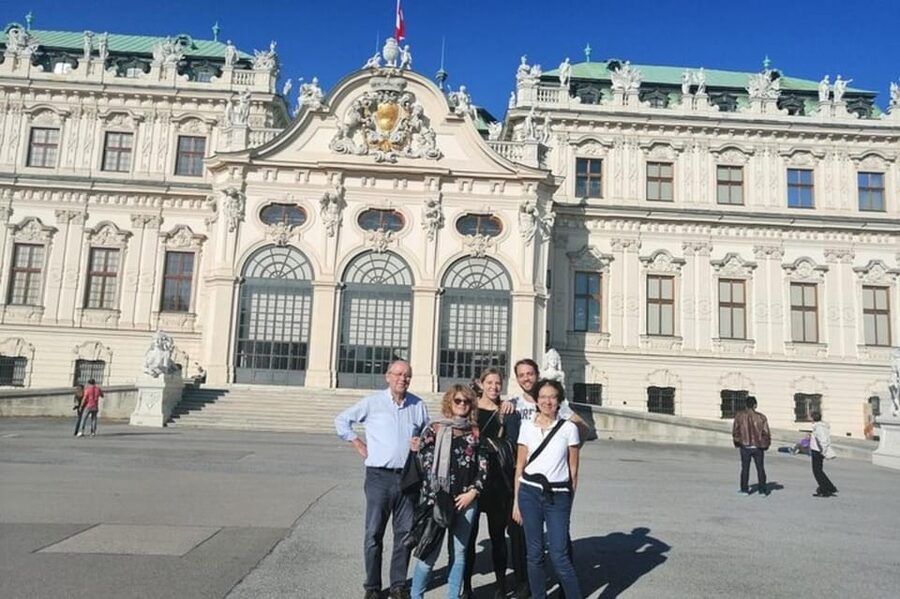
The Neue Burg forms part of the Hofburg complex, the vast former residence of Austria’s rulers. The tour includes a guided visit and sightseeing stop here, with time for photographs.
The Hofburg is easy to underestimate because it grew over centuries rather than following one clean plan. Different wings, courtyards, and public spaces reflect changing needs and tastes. The Neue Burg adds a later imperial layer to the complex, with a broad curved façade facing the open spaces near Heldenplatz.
This is a good place to listen for the human side of court life. A guide such as Gulam, praised for humor and clear explanations, can make a large palace complex easier to understand. The supplied feedback also highlights Nathalie’s energetic approach to Vienna’s heritage, culture, and food, while Hugo has been especially helpful with café and restaurant ideas. Guide assignments can change, so treat these names as examples, not a promise.
The Hofburg stop works best for people who want orientation before exploring on their own. You will see the main setting and learn how the complex relates to the city around it. You should not expect a full palace interior tour or access to every wing from this experience.
A different way to spend an afternoon here:
- Vienna: Vivaldi’s Four Seasons Concert in Karlskirche
★ 4.7 · 14,951 reviews - Vienna: Spanish Riding School Training
★ 3.9 · 9,281 reviews - Vienna: Skip-the-cashier-desk-line Giant Ferris Wheel Ride
★ 4.5 · 7,859 reviews - Vienna: Schönbrunn Palace & Gardens Skip-the-Line Tour
★ 4.7 · 7,739 reviews
Burgtor and the memory of Napoleon
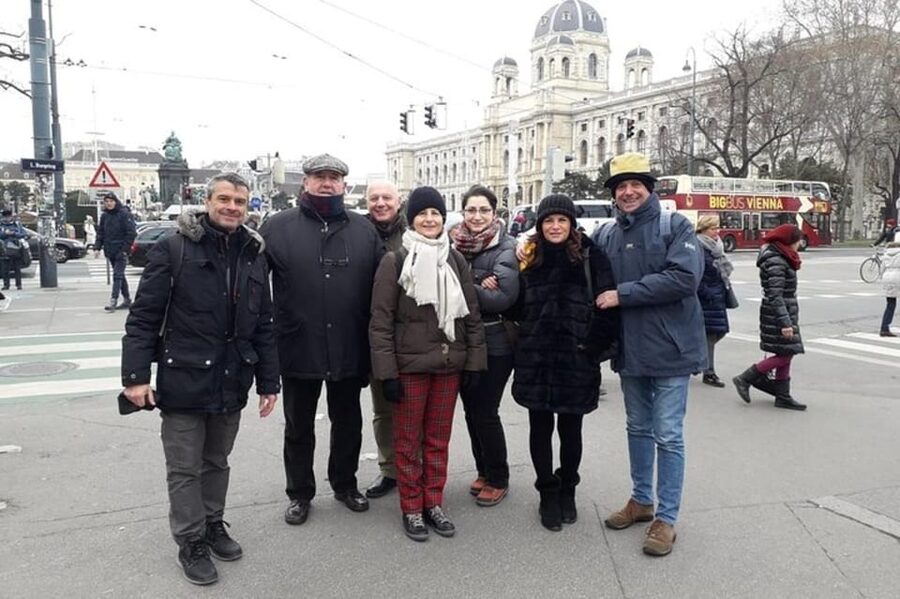
Burgtor is one of the most meaningful stops on the route. This neoclassical gate was part of Vienna’s old defensive system and is associated with the defeat of Napoleon and his allies.
The arch gives your guide a chance to move from architecture into military and political history. Vienna’s grand center was shaped by conflict as much as ceremony. Defensive walls once protected the city, but later urban planning made room for broad avenues and representative buildings.
Look at Burgtor as more than a gateway into the Hofburg district. It marks a change in the city’s function. A structure tied to defense became part of a monumental civic setting, where imperial power was displayed through ordered spaces and formal architecture.
This is also a good photo stop because the gate connects several major views. Depending on where you are standing, you can frame the Hofburg, Heldenplatz, and the surrounding imperial buildings together.
Ringstrasse and Vienna’s grand civic face
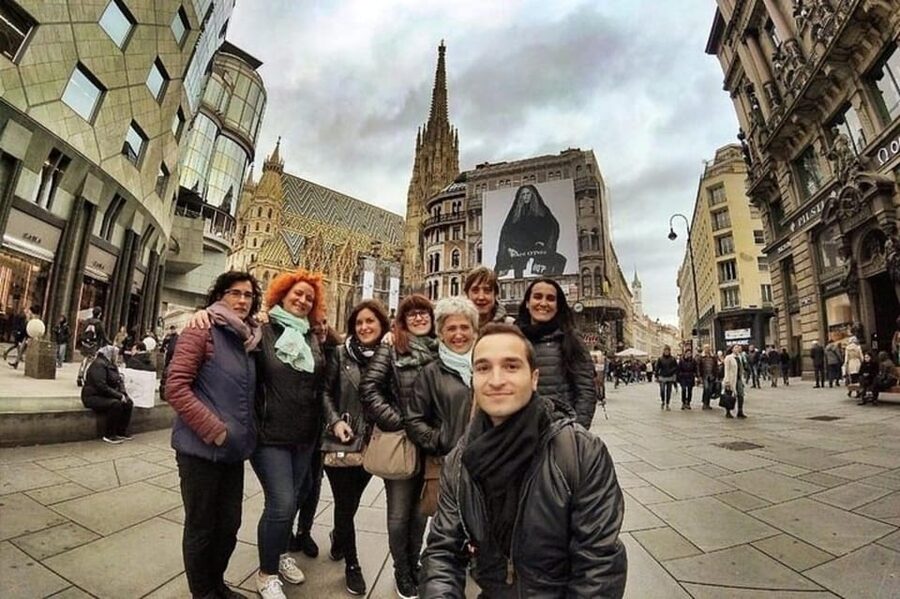
Ringstrasse is the route’s big urban-planning story. The boulevard follows the line of former medieval fortifications, but the walls were replaced by an avenue lined with major public buildings.
Your guide is scheduled to explain the architectural landmarks along this route, including City Hall, Parliament, Burgtheater, and Vienna State University. These buildings reflect Vienna’s changing civic ambitions. The city was no longer presenting itself only as a fortified medieval center. It was showing the world a modern capital with government, education, theater, and public administration arranged around a grand ring.
The architecture also gives you a quick lesson in style. Vienna’s nineteenth-century planners borrowed from earlier traditions, using forms associated with classical Greece, Rome, the Renaissance, and other periods. The result is formal and theatrical, but it also reveals how cities use buildings to express identity.
A walking tour is particularly useful here because Ringstrasse is broad and visually busy. From ground level, you can compare façades and understand their purpose. A guide can point out details you might otherwise pass without noticing.
The tradeoff is pace. There is a lot to absorb in a short time. You will get an overview rather than a detailed architectural study of each building. If City Hall or Parliament is your main interest, you may want to return later for a longer look.
The Danube stop in the published route
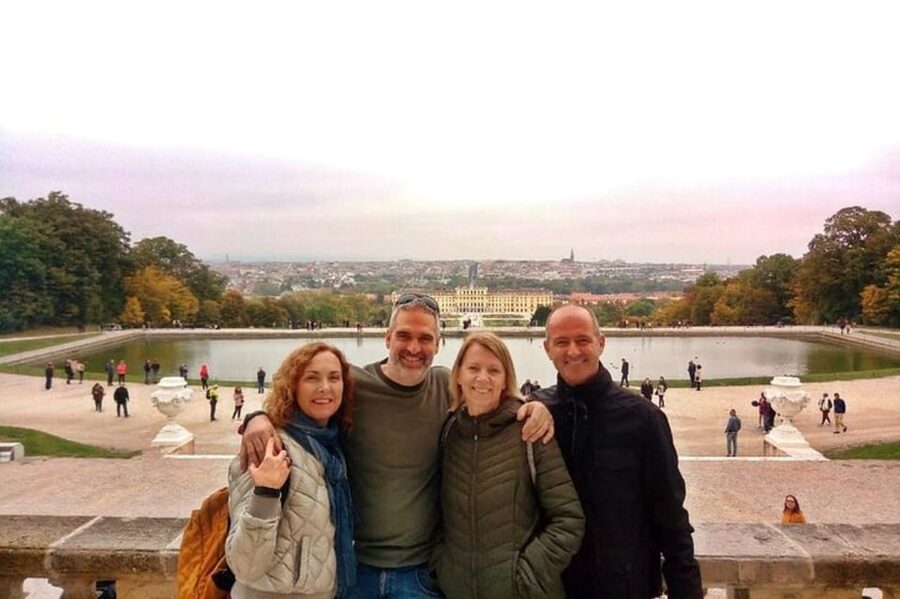
The schedule also lists the Danube in Austria as a photo and sightseeing stop. The supplied route description focuses mainly on the central imperial district, so the exact place and timing of the Danube portion should be confirmed when you book.
That is worth checking because a central Vienna walking route and a riverside stop are not the same kind of experience. The city’s famous imperial sights are concentrated around the Hofburg, Ringstrasse, Maria-Theresien-Platz, and St. Michael’s Church. A Danube visit could add a different view of Vienna, but the available details do not specify which river location is used.
I would treat this as a point to clarify, not as a reason to reject the tour. Ask where the Danube stop takes place and how it fits into the three-hour route, especially if you are planning other sightseeing afterward.
St. Michael’s Church and the final stretch
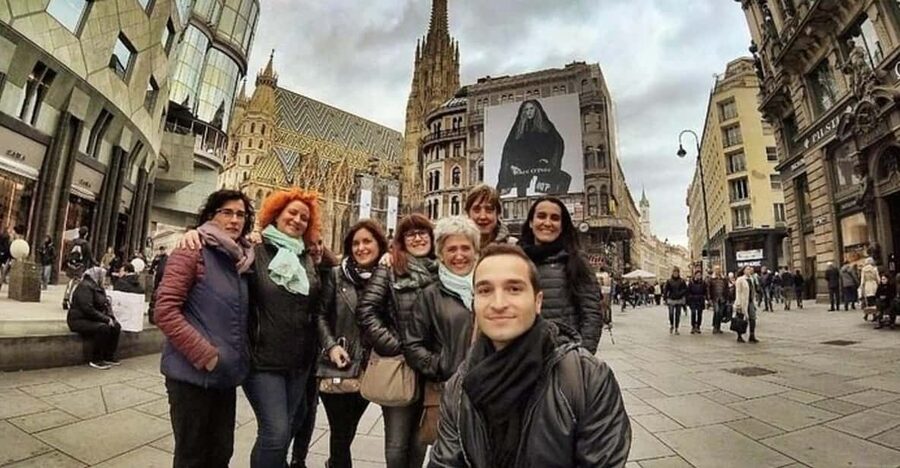
St. Michael’s Church is one of Vienna’s oldest churches and a fitting end to a walk through the imperial center. Its Romanesque origins give you a contrast with the later baroque and neoclassical buildings elsewhere on the route.
The church helps show that Vienna was built in layers. The city did not begin with the grand nineteenth-century Ringstrasse buildings or the palace façades. Older religious sites remained part of the center as rulers added new wings, squares, museums, and civic monuments around them.
The tour description places the final experience at Heldenplatz and St. Michael’s Church. Heldenplatz is an open green space tied closely to Austria’s political past, while St. Michael’s offers a more intimate architectural setting nearby. Together, they bring the walk back from imperial scale to older city life.
Do not expect a lengthy church service or specialist religious tour. The emphasis is on sightseeing, history, and the building’s place in Vienna. Still, this stop can be one of the most memorable because it breaks up the parade of palaces and monumental civic architecture.
What the guide can add to the experience
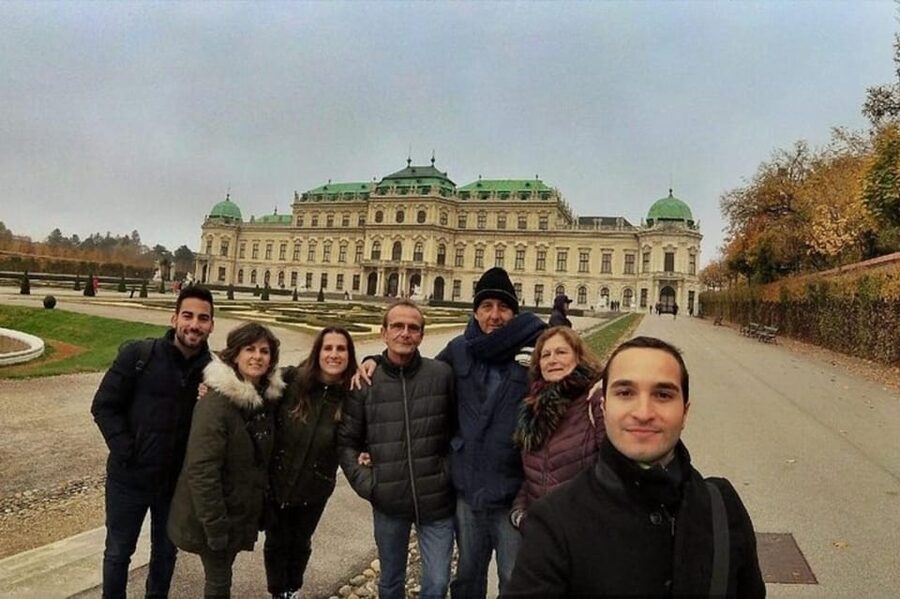
The guide is the main reason to choose this walk instead of following a map on your phone. The route itself is easy to recognize, but the meaning behind the buildings is harder to reconstruct while walking.
The strongest guide feedback points to three qualities: clear information, humor, and practical local suggestions. Gulam has been praised for combining a good sense of humor with substantial knowledge of Vienna. Nathalie has been described as energetic and generous with information about heritage, culture, and food. Hugo has helped connect the sightseeing to cafés and restaurants.
That last point is useful. A good city walk should not end when the guide says goodbye. Suggestions for where to eat or stop for coffee can help you use the rest of your day more confidently.
Guide quality can vary because different people lead the tour. The listed languages are English, French, and Spanish, but the recent Spanish cancellations are a serious warning for anyone who cannot comfortably follow an English tour. If you book in Spanish, confirm that a Spanish-speaking guide is assigned before your travel plans become difficult to change.
Price, pace, and who gets the best value
At $38 per person, the tour is reasonably priced for three hours with a live guide in central Vienna. The value is strongest if you are visiting for the first time, want a clear introduction, and prefer someone else to organize the route and explain the sights.
You are paying for structure and interpretation, not admission tickets. The tour does not appear to include entry into the Kunsthistorisches Museum, the Natural History Museum, or Hofburg interiors. If you want a full museum experience, budget separately and allow more time.
The pace should suit most people who are comfortable with a three-hour city walk. There are multiple stops, photo opportunities, and guided explanations, but the route covers several important sites. Wear comfortable shoes and expect to spend much of the time outdoors.
A private group option is available. That can make sense for families or friends who want a more personal pace, though the standard shared format is likely the better value for solo visitors and couples. The tour is listed as wheelchair accessible, which is helpful, but the exact route conditions and any access concerns should still be confirmed for your needs.
Flexible booking adds practical value. You can cancel up to 24 hours before the start for a full refund, and you can reserve now while paying later. Those terms are useful when your Vienna schedule is still shifting.
Should you book this Vienna walking tour?
Book it if you want a well-focused introduction to Vienna’s imperial center, especially on your first day. The route brings together Maria-Theresien-Platz, the Hofburg, Burgtor, Ringstrasse, the Kunsthistorisches Museum, Heldenplatz, and St. Michael’s Church without requiring public transport between each sight.
I would also recommend it if you enjoy history explained through buildings and city spaces. The strongest guides add humor, cultural context, and useful food suggestions, which makes the three hours feel broader than a simple photo walk.
Think twice if you want extensive time inside museums or a highly specialized architecture tour. You should also confirm the guide language before booking in Spanish, given the recent cancellations. For most English or French speakers seeking a practical first look at central Vienna, $38 is a sensible way to get your bearings and learn what deserves a second visit.
FAQ
How long does the Vienna Highlights Walking Tour last?
The tour lasts three hours.
Where does the tour begin?
The meeting point is Babenbergerstraße 9 in Vienna.
Which sights are included?
The route includes the Neue Burg and Hofburg area, Burgtor, the Kunsthistorisches Museum, Ringstrasse, Maria-Theresien-Platz, Heldenplatz, St. Michael’s Church, and a listed Danube stop.
Is museum admission included?
No museum admission is listed. The Kunsthistorisches Museum and other buildings are included as sightseeing and photo stops.
What languages are available?
Live guides are listed for English, French, and Spanish.
Is a private tour option available?
Yes. You can select a private group option, depending on availability.
Can I cancel the tour for a refund?
Yes. You can cancel up to 24 hours in advance for a full refund. You can also reserve now and pay later.
Recently added around Vienna
- Vienna: Private tour Mauthausen and Linz★ 4.1 · 3 reviews
- 2-Day Prague Tour from Vienna with private Transfers and Lunches★ 5.0 · 3 reviews
- Vienna Self Guided Sherlock Holmes Murder Mystery Game★ 4.5 · 3 reviews
- Vienna Private Schönbrunn Palace Tour, Extra Rooms and Gardens★ 5.0 · 3 reviews
- Salzburg and Lake Region Private Day Trip from Vienna★ 5.0 · 3 reviews
- Small-group Vienna Wine Tour★ 5.0 · 3 reviews
- True Crime mobile puzzle rally Vienna★ 4.0 · 3 reviews
- Vienna: Wachau Valley Private Kayak and Wine Tour★ 5.0 · 3 reviews
Walking Tours in Vienna, compared.

Guided Walking Tour of City Center Highlights
Read our review →
Guided Walking Tour of City Highlights & Hidden Gems
Read our review →
Vienna Historic Center Small Group Walking Tour
Read our review →


Ghosts and Legends Guided Nighttime Walking Tour
Read our review →

Browse the lists this tour appears in