
Reviewed · WALKING TOURS IN VIENNA
Vienna Art Nouveau Walking Tour
Vienna’s old metro stations are more than transport stops. They are Otto Wagner’s grand urban calling card, built when the city was growing fast and needed a modern way to link its suburbs with the Ringstrasse. This three-hour tour connects those stations with Secession House, Wagner apartment buildings, and the former imperial station at Schönbrunn.
I like the way the tour joins architecture to city planning, rather than treating Art Nouveau as a parade of pretty façades. I also like the chance to see Wagner’s work at several scales, from a small pavilion to the imposing Postsparkasse and an emperor’s private station. The main consideration is the price, $176 per person, plus admission to some sights and any metro transport costs, so this makes most sense if architecture is high on your Vienna list.
Key details at a glance
- Otto Wagner’s metro vision: Learn how Vienna’s first modern transport network helped connect expanding suburbs to the city center.
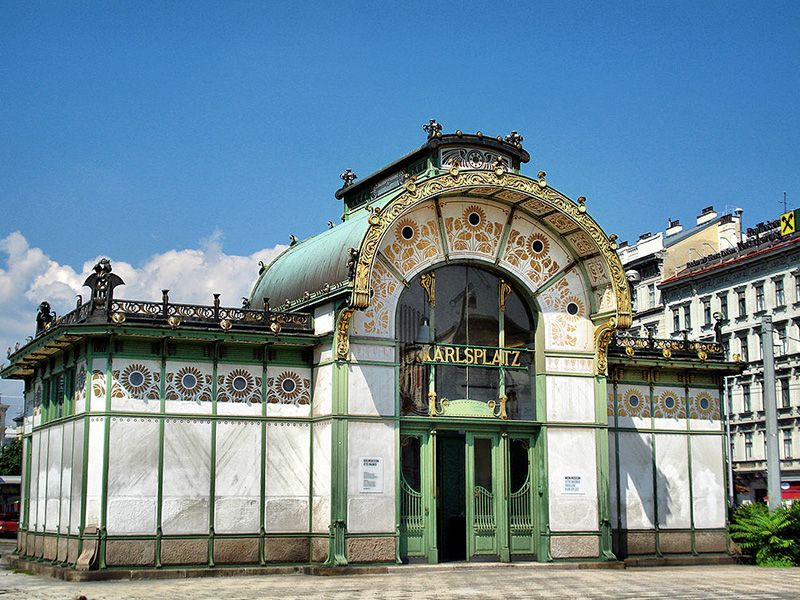
- Two surviving metro stations: See the Karlsplatz pavilion and the Stadtpark station, described as the best-preserved original station still in use.
- Secession House and Klimt: On Tuesday through Sunday, the tour includes the chance to see Gustav Klimt’s Beethoven Frieze, with separate admission.
- A private imperial stop: Visit the station built outside Schönbrunn solely for Emperor Franz Joseph.
- Small-group flexibility: Private and small-group formats allow the guide to adjust the discussion to your interests.
- A walking-heavy outing: The route covers several central sights on foot, followed by a metro ride to the imperial station.
Why Vienna’s metro belongs in an Art Nouveau tour
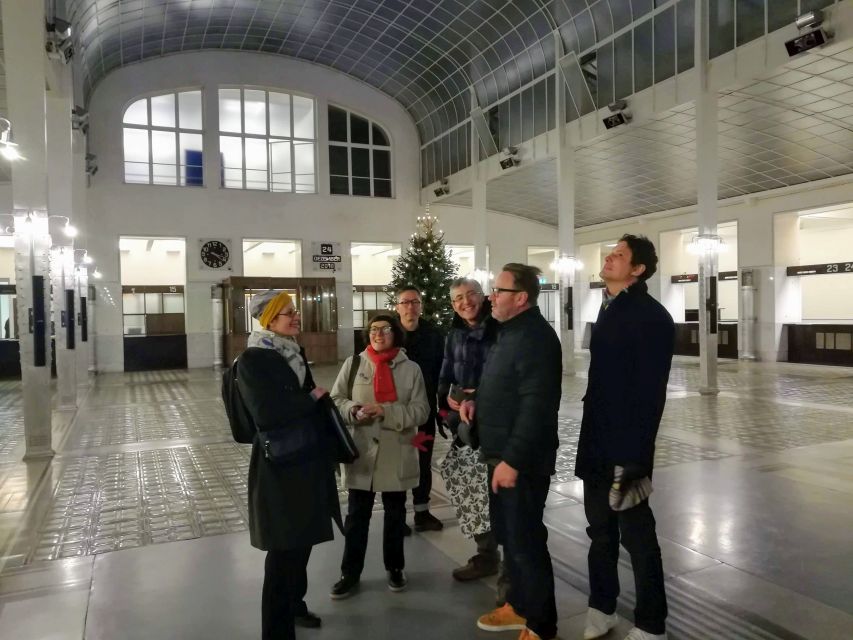
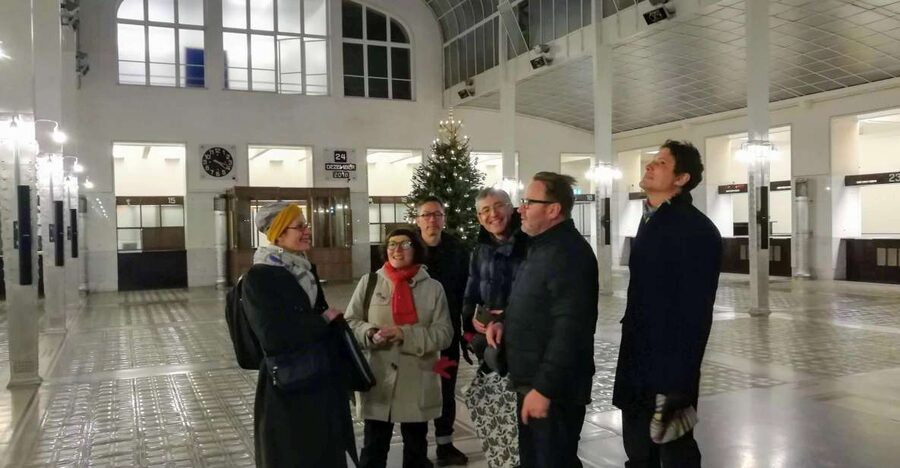
In the late 19th century, Vienna was expanding at a remarkable pace. More people were moving into the city, and the suburbs needed a reliable link to the center and the Ringstrasse. The answer was a new public transportation system, but its planners did not want a purely practical railway.
Otto Wagner was chosen to shape the metro’s design. His goal was to make the system easy to recognize while presenting Vienna as a modern, cosmopolitan capital. That is why the stations received such careful treatment. Their signs, metalwork, panels, colors, and proportions were meant to create a clear visual identity across the network.
Your guide uses the stations to explain the ideas behind Viennese Art Nouveau, also known as Jugendstil. This matters because the style was not just decoration added after the engineering work. Wagner treated the railway as a complete design problem, where buildings, platforms, materials, and public movement belonged together.
I find that approach especially useful in Vienna. The city has no shortage of grand palaces and ornate churches, but Art Nouveau tells a different story. It reflects a period when artists and architects were questioning older styles and asking how a modern city should look.
More Walking Tours in Vienna
- Vienna: Guided Walking Tour of City Center Highlights
★ 4.7 · 4,989 reviews - Vienna: Vienna Central Cemetery Guided Walking Tour
★ 4.8 · 3,307 reviews - Vienna: Guided Walking Tour of City Highlights & Hidden Gems
★ 4.9 · 2,180 reviews
Starting at Café Museum and Karlsplatz
The meeting point is Café Museum on Operngasse 7, in central Vienna. From there, the tour begins with the city’s Art Nouveau setting and moves toward the Otto Wagner pavilion at Karlsplatz.
The Wien Museum Otto Wagner Pavillon Karlsplatz is one of the most recognizable pieces of the old metro system. Its curved forms, pale exterior, and decorative details make it easy to spot beside the open space at Karlsplatz. This is where the guide begins placing Wagner’s work in context, explaining how a transport building could also serve as an architectural statement.
A small Wagner Museum is part of the visit. It gives you a closer look at the architect’s work and ideas before the walking portion gathers pace. The setting is compact, so do not expect a large museum visit. Its value is as an introduction, a chance to look carefully before seeing the stations and buildings in the city.
Admission to the Otto Wagner Pavillon is not included in the tour price. Set aside extra money for that entrance fee, and check the current amount when booking because the supplied details do not state it.
Stadtpark station and the details you might miss
The route continues to Stadtpark station, described as the best-preserved of the original metro stations that remains in use. This is an important stop because it lets you see Wagner’s design in its working setting, not only as a preserved display piece.
Your guide can point out the relationship between the station’s practical purpose and its decorative language. Art Nouveau often favored flowing lines, plant-inspired shapes, and carefully chosen materials, but Wagner’s metro designs also had to survive daily public use. The station therefore offers a useful contrast between artistic ambition and the demands of a railway.
Look closely at the small elements. On a self-guided walk, you might notice only a handsome old station. With an art historian or historian guide, you can ask why certain materials were selected, how the details helped passengers recognize the station, and how the design expressed Vienna’s confidence at the time.
The schedule describes the guided experience as both 2.5 hours and three hours. Plan for three hours, since the booking information lists a three-hour tour, but allow a little flexibility if the route or selected option differs.
Secession House and Klimt’s Beethoven Frieze
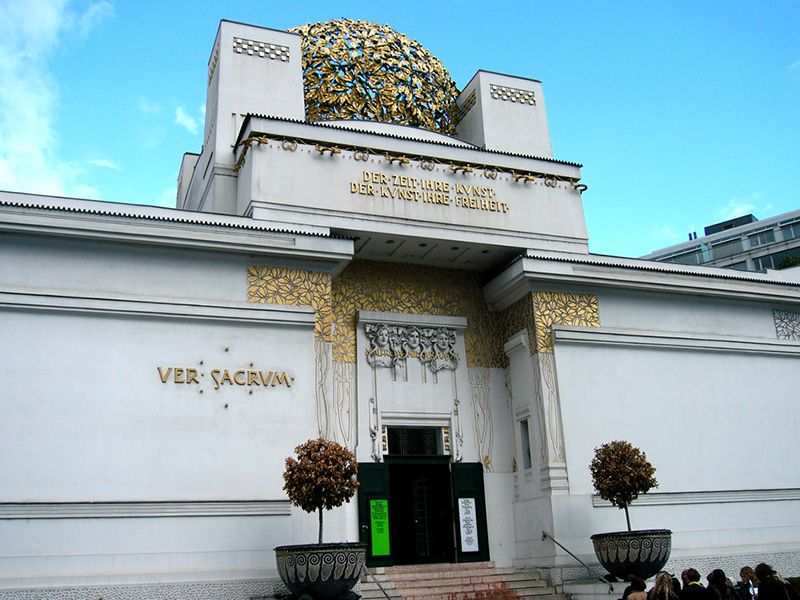
From the metro area, the tour walks toward the Secession Building, Vienna’s clearest symbol of Jugendstil. The building’s unusual white exterior and famous dome of gilded laurel leaves mark a break from the historic styles that dominated much of Vienna.
Secession House was created as a home for artists who wanted greater freedom from the established art world. Your guide explains the ideas behind that break and shows how the building’s form supports its purpose. It is not simply an attractive stop. It represents the artistic and intellectual side of the same modern movement that shaped Wagner’s stations.
From Tuesday through Sunday, the tour includes a visit inside to see Gustav Klimt’s Beethoven Frieze. Admission costs €9.50 for adults and €6 for students and seniors, and it is not included in the $176 tour price. The guide helps you pay at the entrance.
The extra fee is worth considering carefully. If Klimt is a major reason you are visiting Vienna, this makes the tour more useful because you receive context before seeing the work. If your interest is limited to exterior architecture, you may prefer to admire the building from outside and keep the added cost in mind.
Secession House is not open for this interior visit every day under the stated arrangement. If your tour falls on Monday, confirm exactly what will replace or modify this part of the route.
A different way to spend an afternoon here:
- Vienna: Vivaldi’s Four Seasons Concert in Karlskirche
★ 4.7 · 14,951 reviews - Vienna: Spanish Riding School Training
★ 3.9 · 9,281 reviews - Vienna: Skip-the-cashier-desk-line Giant Ferris Wheel Ride
★ 4.5 · 7,859 reviews - Vienna: Schönbrunn Palace & Gardens Skip-the-Line Tour
★ 4.7 · 7,739 reviews
Wagner’s apartment houses and the domestic side of Jugendstil
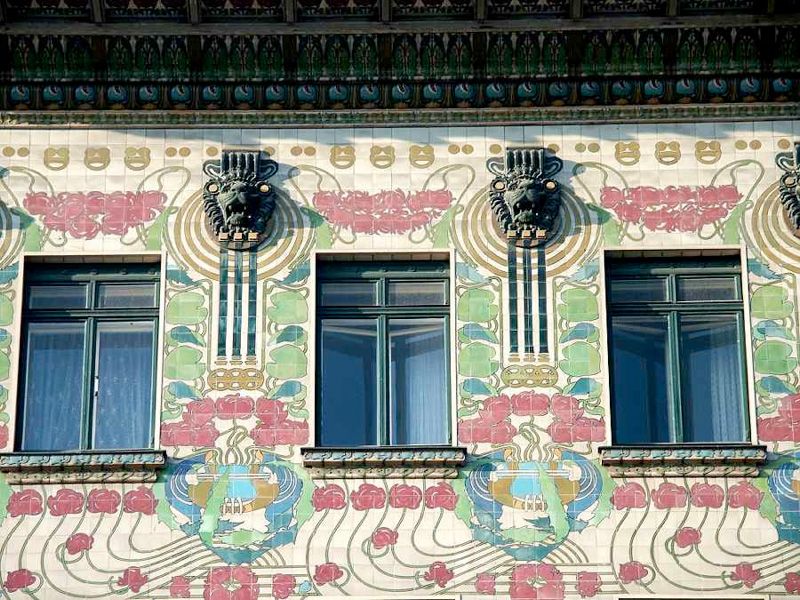
The walking route also includes two apartment houses designed by Otto Wagner. These buildings help explain how Art Nouveau reached beyond public projects and museums.
A metro station can feel like a civic monument, while an apartment house shows how the same design language entered daily life. Wagner used architecture, ornament, and materials to give ordinary urban housing a stronger identity. Your guide discusses the symbols favored by Art Nouveau artists and the reasons behind their material choices.
This part of the tour is particularly helpful if you want to understand Vienna as a lived-in city. The grand Ringstrasse buildings often draw the most attention, but apartment houses reveal how changing design ideas affected the streets where people worked and lived.
Do not expect to enter every private residential building. The useful experience is seeing the façades and learning how to read them. The guide’s explanations can turn an easy-to-miss doorway, tile pattern, or decorative panel into evidence of a wider artistic argument.
Kettenbrücke station and the move toward Schönbrunn
The route continues to Kettenbrücke station. By this point, you have seen Art Nouveau in a pavilion, a working station, a major exhibition building, and residential architecture. Kettenbrücke adds another transport example and gives the guide a chance to compare Wagner’s solutions across the system.
From Kettenbrücke, you board the metro for the final part of the experience. The ride itself matters because you are following the transportation system rather than merely looking at isolated buildings. Vienna’s metro was a tool for reshaping the city, and taking it helps connect the architectural story to its original purpose.
The itinerary also lists the Österreichische Postsparkasse, or Austrian Postal Savings Bank, among the guided stops. This is one of Wagner’s key buildings and helps widen the tour beyond the metro. Its strong geometric design and close attention to surface materials show a later, more restrained side of his work.
The exact order can depend on the selected option and starting arrangement. Ask at the beginning which stops are included in your version, especially if the Postsparkasse is a priority for you.
The imperial station at Hietzing
The final architectural highlight is the Otto Wagner Hofpavillon Hietzing, also described as the imperial station near Schönbrunn. It was built solely for the emperor, making it far more than a convenient platform.
The station had a political purpose. Critics questioned Vienna’s metro, and the emperor’s private station showed that he supported the project. It was a public sign of approval expressed through architecture.
Wagner faced an interesting challenge here. Art Nouveau was often linked to a modern, educated middle class, while an imperial station needed to communicate ceremony and rank. The building shows how he adapted the style with a more formal, grand treatment suited to the emperor.
This final stop gives the tour a strong ending because it pulls together the main themes: modern transport, artistic experimentation, civic ambition, and imperial power. You see how one architect could use related design ideas for a public railway, private housing, a bank, and a royal passenger station.
Admission arrangements for the Hofpavillon are not clearly listed in the supplied tour details, so ask your guide what is covered before you arrive. The same applies to metro fare, which is not specifically stated as included.
What the guide adds to the experience
The tour includes an English-speaking historian guide, and the guide is the main reason to choose it over a self-guided route. The supplied feedback names Wolfgang, Peter, and Guissepina as guides who led different departures.
Wolfgang is described as enthusiastic and able to tailor the walk closely to a very small group. Peter handled broad questions about Austrian history and architecture, including the presence of less obvious religious buildings and former Jewish synagogues in the city. Guissepina is described as approachable, attentive, and especially strong on Art Nouveau.
Those details suggest a useful range in the guiding style. You can ask about design, urban planning, Austria’s political past, or the religious and social clues found along the streets. The tour is not limited to memorizing dates and architect names.
A private or small-group format is a real advantage here. Art Nouveau rewards questions because many details are easy to overlook. A larger group may still work, but a small party gives you a better chance to pause, compare buildings, and steer the conversation toward your own interests.
Is $176 a fair price?
At $176 per person, this is not a budget walking tour. The price covers three hours with a historian guide, but it does not cover admission to the Otto Wagner Pavillon or Secession House. Secession admission adds €9.50 for adults or €6 for students and seniors, and you should also confirm transport costs.
The value depends on what you would otherwise do. If you already plan to visit Secession House, study Wagner’s architecture, and use Vienna’s metro independently, you could spend less by arranging your own route. The trade-off is that you would need to research the buildings, understand their links, and notice the details without a specialist beside you.
For an architecture-focused visit, the tour combines several important sites in one coherent route. You are paying for interpretation and time management, not simply entry tickets. A private or small-group option may be worthwhile for couples or families who want the discussion shaped around their interests.
The strongest value comes when you treat this as a specialist tour rather than a general city introduction. If you want palace interiors, classical art, or a broad overview of Vienna, another tour may serve you better.
Walking demands and practical planning
The experience lasts three hours and includes a substantial amount of walking. One booking account describes walking miles, so wear comfortable shoes and bring water. The route includes several central sights before the metro ride to the imperial station.
Start at Café Museum and arrive ready to walk. The tour is not simply a series of short talks beside the nearest station. You move between buildings, compare different examples, and use public transport as part of the architectural story.
The English tour is available with a live guide. Private and small-group options are offered, but the precise group size is not stated, so check the selected option before paying.
Free cancellation is available up to 24 hours before the tour for a full refund. You can also reserve now and pay later, which helps if your Vienna schedule is still taking shape.
Who will get the most from this tour?
I would choose this tour if you enjoy architecture, urban design, or the way political ideas appear in public buildings. It suits someone who has already seen Vienna’s most famous imperial sights and wants to understand the city’s modern side.
It also works well for visitors who like a focused outing. The route has a clear subject, and the guide keeps returning to Wagner, Jugendstil, materials, symbols, and the metro’s role in city growth.
You may want to skip it if you dislike walking, have no interest in Art Nouveau, or want a tour that covers Vienna’s major attractions in broad strokes. The price is difficult to justify for a casual sightseeing day, especially once admissions are added.
Should you book the Vienna Art Nouveau Walking Tour?
Book it if Otto Wagner, Gustav Klimt, and Vienna’s early metro system sound more appealing than another palace tour. The best parts are the connections: the station designs lead into city planning, the apartment houses lead into everyday life, Secession House leads into artistic rebellion, and the imperial station leads into politics.
Choose a small-group or private option if you want to ask many questions. Add Secession House admission to your budget for Tuesday through Sunday, wear shoes suited to a long walk, and confirm the exact stop order because the listed route can vary by selected option.
For the right visitor, this is a thoughtful, tightly focused way to see Vienna’s modern architectural character. It is expensive, but the specialist guidance gives the price a clear purpose.
FAQ
Where does the Vienna Art Nouveau Walking Tour meet?
The stated meeting point is Café Museum, Operngasse 7, A-1010 Vienna. The starting location can depend on the selected option.
How long does the tour last?
The booking information lists a three-hour tour. The route description also refers to a 2.5-hour guided tour, so allow three hours and confirm the timing for your chosen departure.
What language is the tour conducted in?
The live tour guide is English-speaking.
Is the tour private or shared?
Private and small-group options are available. The exact group size depends on the option selected.
Is admission to Secession House included?
No. On tours from Tuesday through Sunday, Secession House admission is €9.50 for adults and €6 for students and seniors. The guide helps with payment.
Will I see Klimt’s Beethoven Frieze?
The stated Tuesday through Sunday arrangement includes the chance to see Gustav Klimt’s Beethoven Frieze inside Secession House. Admission is separate.
Is the Otto Wagner Pavillon admission included?
No. Admission to the Otto Wagner Pavillon is not included in the tour price.
Can I cancel for a full refund?
Yes. You can cancel up to 24 hours in advance for a full refund. Reserve now and pay later is also available.
Recently added around Vienna
- Vienna: Private tour Mauthausen and Linz★ 4.1 · 3 reviews
- 2-Day Prague Tour from Vienna with private Transfers and Lunches★ 5.0 · 3 reviews
- Vienna Self Guided Sherlock Holmes Murder Mystery Game★ 4.5 · 3 reviews
- Vienna Private Schönbrunn Palace Tour, Extra Rooms and Gardens★ 5.0 · 3 reviews
- Salzburg and Lake Region Private Day Trip from Vienna★ 5.0 · 3 reviews
- Small-group Vienna Wine Tour★ 5.0 · 3 reviews
- True Crime mobile puzzle rally Vienna★ 4.0 · 3 reviews
- Vienna: Wachau Valley Private Kayak and Wine Tour★ 5.0 · 3 reviews
Walking Tours in Vienna, compared.

Guided Walking Tour of City Center Highlights
Read our review →
Guided Walking Tour of City Highlights & Hidden Gems
Read our review →
Vienna Historic Center Small Group Walking Tour
Read our review →


Ghosts and Legends Guided Nighttime Walking Tour
Read our review →

Browse the lists this tour appears in