
Reviewed · WALKING TOURS IN VIENNA
Vienna: Meet Beethoven Life Private Guided Walking Tour
Beethoven’s Vienna is best understood on foot, where grand palaces, concert halls, statues, and quiet corners connect the composer’s difficult life with the city around him. This private tour brings those threads together, ending at the Beethoven Pasqualatihaus, the former residence with his piano, notes, paintings, and personal story.
I like the private format, especially for a family with mixed interests. Guide Ingrid has adjusted the experience for a young Beethoven expert while keeping it enjoyable for a parent who knew less about the composer. I also like the choice to add a classical concert later in the evening, turning a history walk into a full music day.
The main drawback is the long list of sights. The advertised duration is 3 to 5 hours, but the full route includes many exterior stops and up to two hours at Pasqualatihaus. Ask the guide to set priorities before you start, especially if your group wants time for the museum and not just quick photo stops.
Key points to know before booking
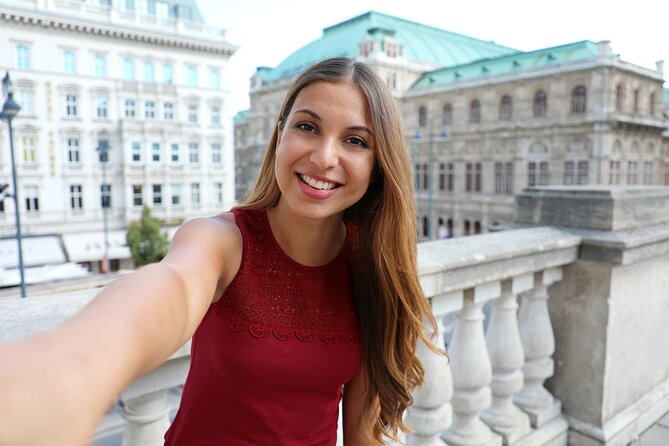
- Pasqualatihaus is the tour’s main prize: See Beethoven’s former home, including notes, a piano, photographs, and paintings.
- Private guiding keeps the tour flexible: The route can be adapted for your group, including possible stops at Stephansplatz, St. Stephen’s Cathedral, Karlsplatz, and Karlskirche.
- The story reaches beyond Beethoven: Vienna’s Opera, Ringstrasse, Hofburg, Rathaus, and Baroque architecture provide the setting for his career.
- The concert upgrade is separate from the walking tour: It usually begins between 5:30 and 8 pm at a Vienna Old Town venue, with the exact time printed on your ticket.
- English is the offered language: The tour is led by a licensed guide and is intended only for your private group.
- Budget for one optional extra: Entering the Secession Building costs about 4.50 to 9.50 euros and is not included.
Starting beneath the Secession Building’s golden dome
The tour begins at Friedrichstraße 12, near the Secession Building. Look for a holding card with your name, then meet your private guide and begin with one of Vienna’s most unusual façades.
The building’s white exterior and golden dome are easy to spot. The guide uses it to explain Beethoven’s connection to Vienna’s artistic world, giving the tour a useful opening idea: Beethoven belongs not only to concert halls and old apartments, but also to the city’s later artistic memory.
You see the Secession from outside unless you pay the optional entrance fee. That is a fair arrangement for a Beethoven walk, since the main purpose here is the building’s connection to the composer rather than its full exhibition program. If modern art interests you, the extra 4.50 to 9.50 euros may be worthwhile.
More Walking Tours in Vienna
- Vienna: Guided Walking Tour of City Center Highlights
★ 4.7 · 4,989 reviews - Vienna: Vienna Central Cemetery Guided Walking Tour
★ 4.8 · 3,307 reviews - Vienna: Guided Walking Tour of City Highlights & Hidden Gems
★ 4.9 · 2,180 reviews
Vienna’s center, told through Beethoven’s life
From the starting point, the walk moves into Vienna’s historic center. This is not a single museum visit. It is a city walk that places Beethoven among Baroque palaces, gardens, civic buildings, monuments, and the grand Ringstrasse.
That wider setting matters. Beethoven’s life in Vienna was shaped by aristocratic patrons, public performance, court culture, and changing ideas about the role of the artist. A guide can make those links easier to follow than a simple list of addresses.
The center also gives your group room to set the tone. If you already know the symphonies and sonatas, ask for more detail about Beethoven’s career and private life. If you are new to him, ask the guide to explain the major turning points without turning the walk into a music lecture.
The private setup is especially useful here. Your guide can pause for questions, adjust the walking pace, and spend more time on the places that mean something to your group. One guide, Ingrid, has been praised for handling a family with very different levels of Beethoven knowledge. That is precisely the sort of flexibility a private tour should provide.
Beethovenplatz and the city’s musical heart
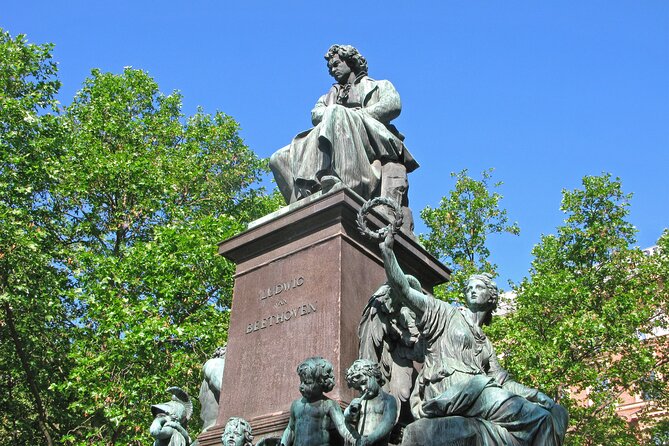
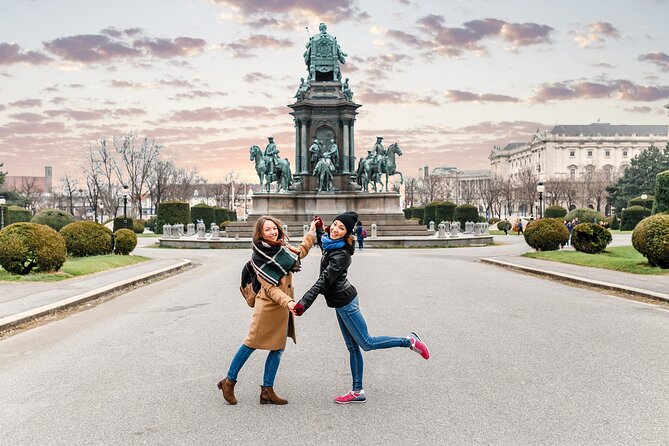
A bronze Beethoven statue occupies Beethovenplatz, giving the walk a clear visual centerpiece. You can stop for photographs and hear why this public square matters to the composer’s place in Vienna.
The statue is not a substitute for seeing an original residence or manuscript, but it helps connect the famous name to the city’s streets. The visit lasts about 25 minutes, long enough for explanation and photographs rather than a rushed glance.
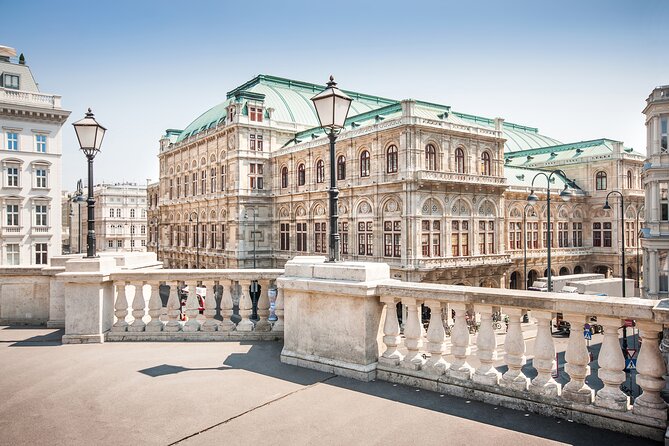
The route then continues toward the Wiener Staatsoper. Vienna’s State Opera is one of the city’s essential music landmarks, and the exterior alone gives you a sense of the importance Vienna placed on performance.
You do not enter the Opera on this tour. That keeps the focus on the street-level story, though anyone hoping for an interior visit should know that it is not part of the included plan.
Albertina, Theatermuseum, and Beethoven’s public world
The Albertina appears next, with its horse-rider statue above the building. The museum contains major works associated with artists such as Leonardo da Vinci, Raphael, Michelangelo, Dürer, and Rembrandt, but this tour only looks at the exterior.
That is useful context, not a full art visit. If you have limited time in Vienna, you can note the Albertina for another day rather than trying to squeeze its galleries into an already full walk.
The Theatermuseum adds a more direct Beethoven connection. Beethoven conducted a private Viennese premiere of his Third Symphony, Eroica, at this building. The detail gives the tour a sharper focus on performance and patronage. You see the exterior, and entrance is not included.
These short stops work best as links in the story. They are not full attractions on their own. I would not book this experience expecting long indoor visits at every location. Its strength is the guide’s explanation of how the buildings relate to Beethoven and to Vienna’s cultural life.
A different way to spend an afternoon here:
- Vienna: Vivaldi’s Four Seasons Concert in Karlskirche
★ 4.7 · 14,951 reviews - Vienna: Spanish Riding School Training
★ 3.9 · 9,281 reviews - Vienna: Skip-the-cashier-desk-line Giant Ferris Wheel Ride
★ 4.5 · 7,859 reviews - Vienna: Schönbrunn Palace & Gardens Skip-the-Line Tour
★ 4.7 · 7,739 reviews
Hofburg, Volksgarten, and the Ringstrasse
The Hofburg Palace is viewed from outside. Its size and architecture make it an impressive part of the walk, but the tour does not include the palace interiors or museums. The guide can point out the complex and its place in Vienna’s political story, while you save an interior visit for another tour or a separate afternoon.
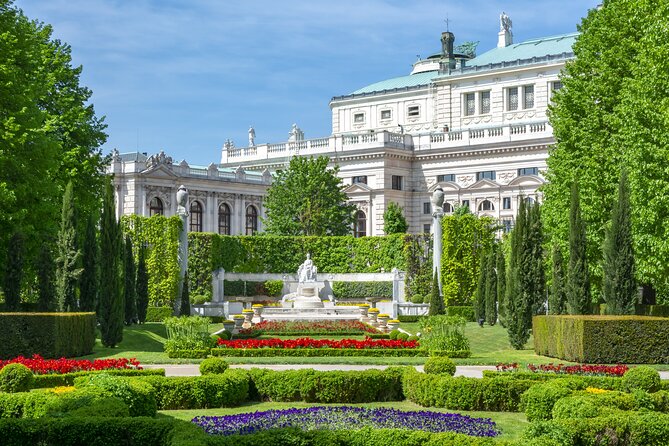
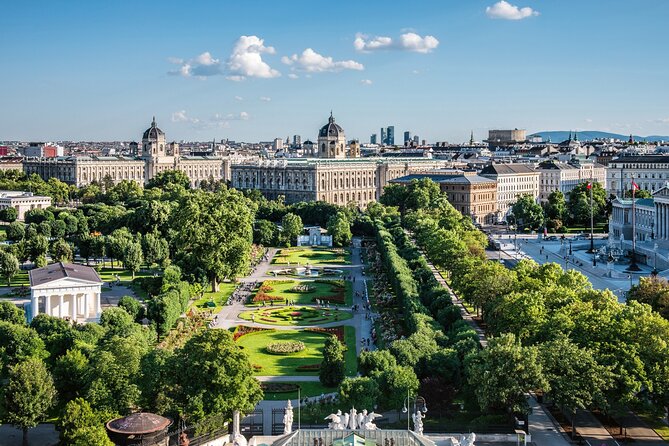
Volksgarten offers a welcome pause. This green park, known for its rose garden, breaks up the stone and traffic of the center. The stop is listed at about 25 minutes, so you may have time to slow down, take photographs, and listen without standing on a busy pavement.
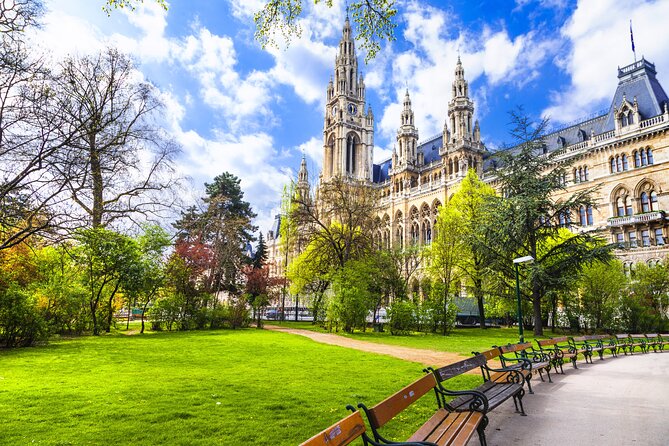
From there, the route reaches the Burgtheater and Rathaus. The Burgtheater has a highly detailed exterior and is one of the great civic buildings along the Ringstrasse. Rathaus is even more imposing, built with about 30 million bricks according to the tour description.
The square around Rathaus also puts the Austrian Parliament Building and University of Vienna nearby. This is a useful place to ask the guide how Beethoven’s Vienna compares with the later city created along the Ringstrasse. The buildings you see here reflect a grand civic vision that came after much of Beethoven’s career, yet they help explain the city’s long attachment to public culture and music.
The Ringstrasse section ties the route together. Between the Opera and Rathaus, you pass several major sights and hear facts about the buildings along this important street. Because the route is broad, the guide’s judgment matters. A good private walk should keep moving while giving you enough time to understand why each stop appears.
Inside Beethoven Pasqualatihaus
Pasqualatihaus is the most substantial visit and the only clearly included interior attraction. Beethoven lived in this residence, which forms part of the remains of Vienna’s old fortifications.
Allow up to two hours here if you want the full experience. The rooms present Beethoven through his notes, piano, photographs, and paintings. These objects give the composer a more ordinary setting than a concert hall does. You can think about the person at work, not only the celebrated figure behind the music.
The museum also connects the space with works and stories such as Für Elise and Fidelio. Ask the guide to explain the stories behind those pieces, especially if your group already knows the music. The private format lets you pause over details that might be skipped on a larger group tour.
This is where the tour earns much of its price. Without Pasqualatihaus, the experience would be mainly an exterior walking tour with Beethoven references. With the residence included, you receive a physical place tied directly to his life and time in Vienna.
The museum visit can also change the pace of the day. After several ten-minute exterior stops, two hours in one place may feel long if you want a quick overview. If your group has children or mixed interests, agree with the guide on how much time to spend here. The advertised duration varies from 3 to 5 hours, so the exact balance matters.
Optional stops at Stephansplatz and Karlskirche
The published route allows the guide to adapt the walk. Stephansplatz and St. Stephen’s Cathedral are possible additions, even though they are not central to the Beethoven theme.
Stephansplatz gives you one of Vienna’s best places to watch the city move around a striking mix of old and new architecture. St. Stephen’s Cathedral is Austria’s most prominent national symbol and one of Europe’s highest cathedrals. Both are free to view from the outside, but this experience does not promise an interior visit.
Karlsplatz and Karlskirche can also be added at the guide’s discretion or at your request. Karlsplatz is a major public square, while Karlskirche offers one of Vienna’s most recognizable church exteriors. Entrance to Karlskirche is not included.
These options are valuable if you are using the tour to get your bearings on a first visit. They are less useful if your main goal is a tightly focused Beethoven biography. Tell the guide what you want before the walk begins, since you cannot reasonably give every stop equal time within three hours.
Adding a classical concert in the evening
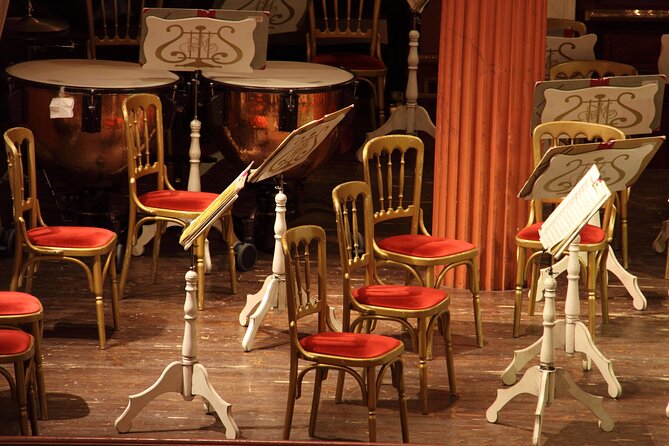
The extended option includes a ticket for a classical concert featuring Beethoven, Mozart, Strauss, or Schubert. The concert is a separate evening activity, not the final stop of the walking tour.
Concert venues vary in Vienna’s Old Town. The location depends on the group size, date, time, and availability, with the aim of matching the arrangements to your visit. The concert usually begins between 5:30 and 8 pm, and the exact time appears on the ticket sent by email.
Read that ticket carefully and plan to arrive on time. Do not assume the concert begins immediately after the walking tour, or that it takes place at the same meeting point. The separation can be convenient, since it gives you a break for dinner or rest, but it also means you must manage the evening yourself.
For a music-focused visit, this upgrade makes sense. You get the historical setting during the day and live performance later. If you already have concert plans, the basic walking tour may be the better value.
Price, timing, and practical value
At $264.50 per person, this is not a budget city walk. The price needs to be judged against the private format, the licensed English-speaking guide, the included Pasqualatihaus ticket, and the possibility of a concert in the extended version.
The value improves for a group of family or friends because the experience is private rather than shared with strangers. You can ask detailed questions, change the balance of the route, and keep the discussion at the right level. Group discounts are available, so check the final price for your party rather than assuming the per-person figure tells the whole story.
The duration needs careful attention. Three to five hours is a wide range, and the listed stops include many ten-minute exterior visits plus a possible two-hour museum visit. I would confirm whether your booking includes the shorter or longer version and decide which sights matter most.
The meeting point is near public transportation, and the activity ends back at the meeting point. Most people can participate. Confirmation arrives at booking, and you should check your email the day before for important instructions.
Free cancellation is available if you cancel at least 24 hours before the start time. Changes or cancellations made later are not accepted for a refund. Cutoff times follow Vienna local time.
Who will get the most from this Beethoven walk
I would recommend this tour to a family, couple, or small group that wants a private introduction to Beethoven and Vienna at the same time. It is also a good fit for someone who knows the music well and wants to ask specific questions rather than follow a basic city tour.
The experience works less well for you if you want long visits inside every major building. The Opera, Hofburg, Theatermuseum, Albertina, Rathaus, Karlskirche, and Secession are mainly exterior sights within this plan, with the Secession entrance optional.
It is also not ideal if you want a purely chronological Beethoven biography. The walk moves between city history, architecture, statues, and music sites. That broader approach is useful, but it means the composer’s story is told through place rather than through a room-by-room museum display.
A minor concern from one experience was a guide standing too close during conversation, with more attention desired for COVID prevention. If that remains important to you, state your preference clearly at the start. A private tour makes that request easier to manage.
Should you book it?
Book this experience if Beethoven is a major reason you are visiting Vienna, or if your group wants a private walk that mixes music, architecture, and a meaningful museum visit. The strongest parts are the adaptable guiding, the Beethoven focus, and the included Pasqualatihaus entrance. Ingrid’s ability to speak to both a serious young enthusiast and a newcomer shows why the private format can work so well.
Choose the concert upgrade if you want your day to end with live classical music and do not already have tickets. Skip it if you prefer to choose your own venue or already have an evening planned.
Before booking, ask how much time will be devoted to Pasqualatihaus and which optional stops can fit. If you want a focused Beethoven experience rather than a hurried checklist, protect the museum time and let the less important exterior stops remain brief.
FAQ
Where does the Beethoven walking tour begin?
The tour begins at Friedrichstraße 12, 1010 Vienna, Austria, near the Secession Building. Look for a holding card with your name to meet the guide.
How long does the tour last?
The approximate duration is 3 to 5 hours. The exact pace depends on the route, your group’s interests, and the time spent at Beethoven Pasqualatihaus.
Is the tour private?
Yes. Only your group participates in this private activity.
Is the tour offered in English?
Yes. The tour is offered in English and led by a licensed guide.
Is admission to Beethoven Pasqualatihaus included?
Yes. The entrance ticket to Beethoven Pasqualatihaus is included.
Is the Secession Building entrance included?
No. The tour views the Secession Building from outside. Optional admission costs about 4.50 to 9.50 euros.
What does the concert upgrade include?
The extended option includes a classical concert featuring music by Beethoven, Mozart, Strauss, or Schubert. It is a separate evening attraction, usually starting between 5:30 and 8 pm, and the exact time is printed on the concert ticket.
Recently added around Vienna
- Vienna: Private tour Mauthausen and Linz★ 4.1 · 3 reviews
- 2-Day Prague Tour from Vienna with private Transfers and Lunches★ 5.0 · 3 reviews
- Vienna Self Guided Sherlock Holmes Murder Mystery Game★ 4.5 · 3 reviews
- Vienna Private Schönbrunn Palace Tour, Extra Rooms and Gardens★ 5.0 · 3 reviews
- Salzburg and Lake Region Private Day Trip from Vienna★ 5.0 · 3 reviews
- Small-group Vienna Wine Tour★ 5.0 · 3 reviews
- True Crime mobile puzzle rally Vienna★ 4.0 · 3 reviews
- Vienna: Wachau Valley Private Kayak and Wine Tour★ 5.0 · 3 reviews
Walking Tours in Vienna, compared.

Guided Walking Tour of City Center Highlights
Read our review →
Guided Walking Tour of City Highlights & Hidden Gems
Read our review →
Vienna Historic Center Small Group Walking Tour
Read our review →


Ghosts and Legends Guided Nighttime Walking Tour
Read our review →

Browse the lists this tour appears in