
Reviewed · WALKING TOURS IN VIENNA
Vienna: City of Music Private Walking Tour
Vienna’s musical past comes alive when you hear the music near the places tied to it. This private walk links Mozart’s former home, Beethoven’s many Vienna addresses, St. Stephen’s Cathedral, the State Opera, and the Hofburg with short listening stops on headphones. It turns a city stroll into a guided lesson you can hear as well as see.
I like the private format, since your guide can adjust the conversation for a serious classical-music fan or someone who knows little beyond a few famous melodies. I also like the personal touch: guides such as Annelie use photographs and stories to put faces and human quirks behind the composers.
The main drawback is cost. At $564.72 for up to 10 people, this is a sensible buy for a full group but a steep one for one or two people. Some locations are viewed from outside, and admission to Mozarthaus and the State Opera is not included.
Key points before you book
- Music you hear while walking: The tour pauses for classical selections on headphones, connecting each place to the composers who lived or worked there.
- A true private walk: Only your party takes part, with a private English-speaking guide and a route that can suit your group’s interests.
- Seven central stops: The route covers St. Stephen’s Cathedral, Mozarthaus, Beethoven’s statue, the State Opera, Mölker Bastei, the Hofburg, and Vienna’s Inner City.
- Useful for mixed interests: The guide explains the music in plain terms, so you do not need formal training in classical music.
- Good group pricing: The flat fee covers up to 10 people, making the math much better for a family or group of friends.
- Flexible meeting options: You can arrange pickup at your hotel or holiday flat, or meet at Café Mozart near Albertinaplatz.
Why Vienna makes such a good music walk
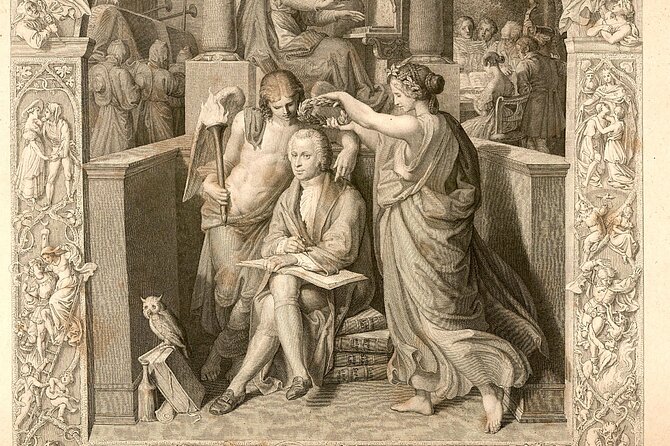
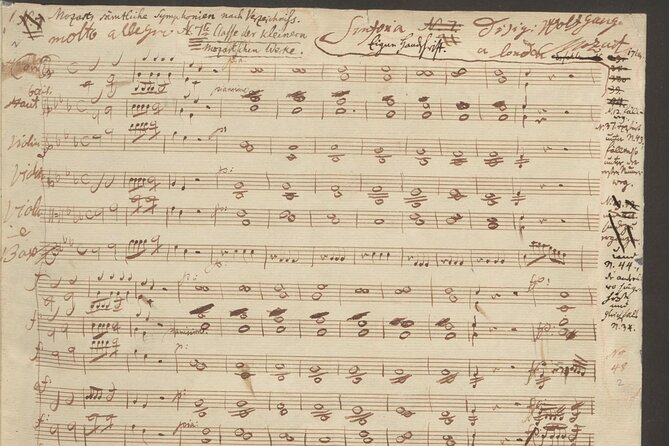
Vienna is not simply a city with a few composer statues. Its central streets connect churches, palaces, concert halls, apartments, and public spaces tied to several generations of European music. Mozart, Beethoven, Haydn, Salieri, and Vivaldi all connect to the city in different ways, and the walk shows how music operated within Vienna’s religious and imperial life.
That setting gives the tour more substance than a basic list of famous names. At St. Stephen’s Cathedral, for example, the guide discusses the building as a performance venue as well as a church. At the Hofburg, the story shifts toward aristocratic support, patronage, and Beethoven’s relationship with Archduke Rudolph.
The music played through headphones is especially useful. Instead of talking about a composition in the abstract, your guide can let you hear it during the walk. The selections give your eyes and ears something to connect with, and they make the stops feel less like ordinary sightseeing.
You do not need to read music or know the difference between Classical and Romantic style. The strongest part of this experience is the guide’s ability to explain why a composer mattered and how his personality shaped his work. Annelie, one of the guides associated with the tour, is praised for making the subject personal, using photographs and stories to bring the people behind the music into focus.
More City Tours in Vienna
- Vienna: Guided Walking Tour of City Center Highlights
★ 4.7 · 4,989 reviews - Vienna: City Cruise with Optional Lunch
★ 3.4 · 3,982 reviews - Vienna: City Cruise
★ 3.3 · 2,978 reviews
St. Stephen’s Cathedral and Vienna’s earlier sound
The walk begins at St. Stephen’s Cathedral, or Stephansdom, the large Gothic church at the heart of Vienna. You spend about 20 minutes here, learning how the cathedral served as an important performance setting in earlier centuries.
The guide connects the site with Haydn, Mozart, Salieri, and Vivaldi. That range helps place Vienna’s musical life in context. The city’s music did not live only in purpose-built concert halls. Churches, courts, and aristocratic settings all played a role.
You do not pay an admission fee for this stop as part of the tour. The itinerary describes a visit, but the main purpose is the guided explanation rather than a lengthy interior tour. If you want a detailed look at every chapel, altar, or tower, you will need separate time beyond this three-hour walk.
I like starting here because it gives you an immediate sense of scale. You are in the center of Vienna, surrounded by a site where sacred ceremony and public music once met. It is a useful first chapter before the route moves to composers’ homes and monuments.
Mozart’s Vienna at Mozarthaus
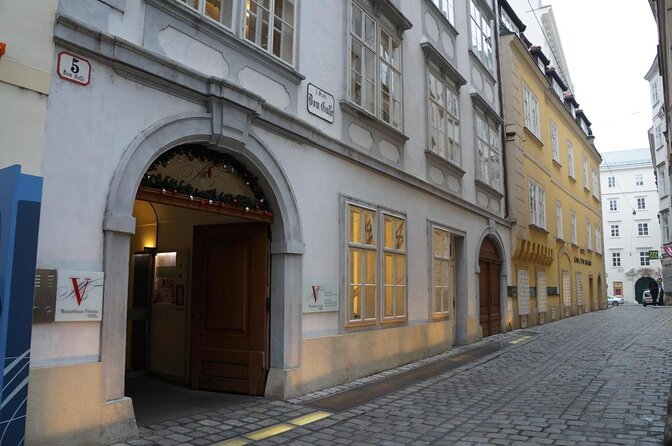
The next stop is Mozarthaus Vienna, also called Figaro House. Mozart lived here from 1784 to 1787, one of the most important periods of his Vienna career. The guide explains that he wrote several major operas and instrumental works during this period.
You spend about 20 minutes at the site. Admission is not included, so you should think of this stop in two parts: the guided exterior and historical setting included in the walk, and a separate museum visit if you want to go inside.
That distinction matters. A short stop can show you where Mozart lived and explain why the address matters, but it cannot replace a full museum visit. If Mozart is the main reason you want this tour, you may want to return to Mozarthaus on your own with more time.
The guide’s storytelling is important here. Mozart can easily become a powdered-wig caricature, reduced to child prodigy and musical genius. A private guide can spend more time on the practical side of his life in Vienna, including where he lived and how his work fit into the city around him.
Beethoven’s statue and a restless home life
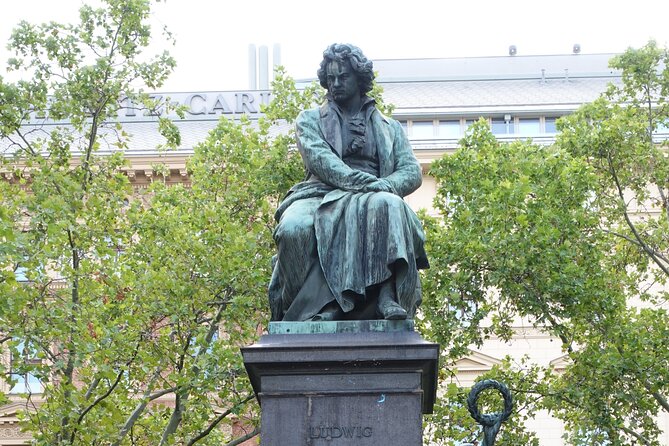
The Beethoven monument provides a different angle. Rather than focusing only on compositions, the guide discusses Beethoven’s difficult and unsettled life in Vienna. He lived in roughly 60 different apartments, a detail that makes his biography feel less tidy and more human.
You spend around 20 minutes at the statue, with no separate admission charge. The monument itself is a convenient anchor for a broader conversation about Beethoven’s career, his temperament, and his role in the change from the Classical period toward the Romantic era.
This is where a private tour can earn its keep. If your group wants to ask how Beethoven differed from Mozart, or why his music marked such a major shift, you can stop and talk instead of following a fixed lecture. If your group has little background, the guide can keep the explanation simple.
The stop is not a concert or a museum visit, so do not expect a large collection of objects. Its value comes from the story attached to the location and the music you hear during the route.
More Walking Tours in Vienna
- Vienna: Vienna Central Cemetery Guided Walking Tour
★ 4.8 · 3,307 reviews - Vienna: Guided Walking Tour of City Highlights & Hidden Gems
★ 4.9 · 2,180 reviews - Vienna: Viennese Underworld Guided Walking Tour
★ 4.7 · 1,865 reviews - Vienna: World War II Historical Walking Tour
★ 4.8 · 1,772 reviews
The State Opera and Vienna’s musical life today
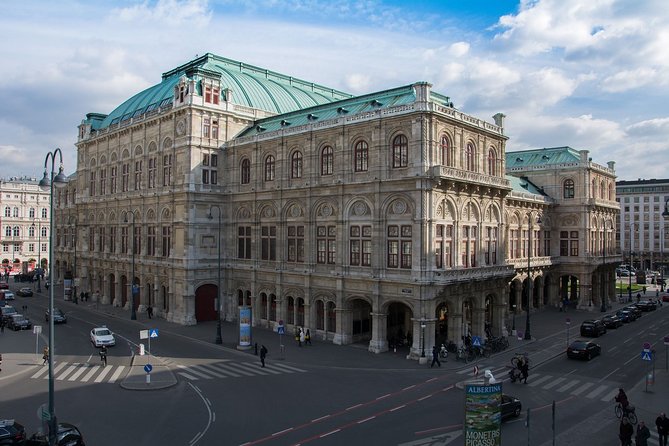
At the Wiener Staatsoper, the tour moves from the age of Mozart and Beethoven to Vienna’s continuing role as a major music center. The State Opera remains one of the city’s great opera stages, while the nearby Musikverein is home to the Vienna Philharmonic.
You spend approximately 20 minutes in this area. Admission to the State Opera is not included, and the supplied details do not promise an interior performance or backstage visit. The guide’s role is to explain the importance of these institutions and place modern Vienna in the story.
That present-day link keeps the tour from becoming a walk through a vanished past. Vienna’s musical identity is still tied to live performance, major orchestras, and opera. You see how the institutions that support music have changed, while the city’s connection to the art remains strong.
If you hope to attend an opera or concert during your stay, this stop can help you understand the names and venues before you book. It does not include a ticket, though, so plan any performance separately.
Beethoven at Mölker Bastei and Pasqualati House
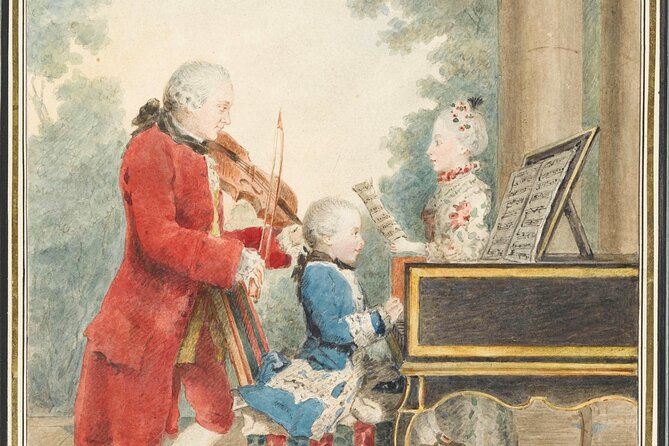
The route then reaches Mölker Bastei, where Pasqualati House sits opposite the University of Vienna. This is another Beethoven address, and the guide returns to his habit of moving from apartment to apartment almost 60 times during his life in Vienna.
The repeated moves tell you something useful. Beethoven’s connection to Vienna was not a simple story of one famous home. His life was marked by work, patrons, changing circumstances, and an often uneasy relationship with the city’s aristocratic world.
You spend around 20 minutes here, and admission is not included. As with Mozarthaus, the stop is best understood as a guided encounter with the location, not a full museum visit.
The site also gives the guide a natural place to explain Beethoven’s place in music. His work represents the height of the Classical style while pointing toward major changes associated with the Romantic era. The headphone selections make that transition easier to grasp than a string of dates would.
The Hofburg and Beethoven’s aristocratic ties
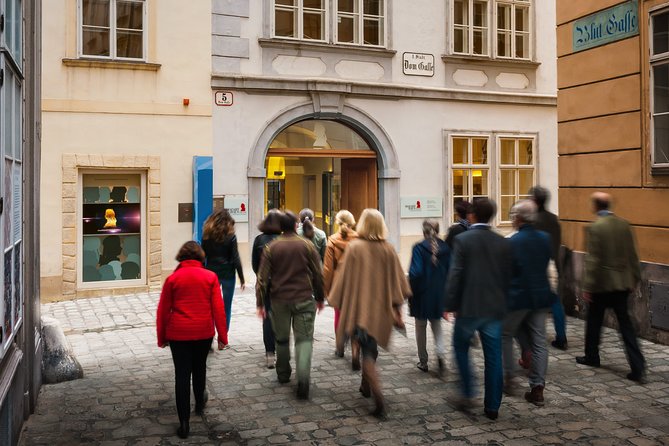
The final major stop is the Hofburg, the imperial residence in central Vienna. Here the story turns to Archduke Rudolph, the youngest son of Emperor Leopold II and one of Beethoven’s most important supporters and friends.
The guide explains that Rudolph took piano lessons with Beethoven and provided meaningful support at a time when Beethoven’s relationship with high aristocracy could be strained. Beethoven dedicated the Missa Solemnis to him, linking a major musical work to the personal and political world of the Habsburg court.
This is one of the tour’s most useful stops because it avoids treating composers as isolated geniuses. Music depended on patrons, students, churches, courts, and wealthy households. The Hofburg shows the setting in which those relationships operated.
You spend about 20 minutes here before the route finishes in Vienna’s Inner City. The stop does not include admission to the palace complex, so the focus remains on the exterior setting and the story your guide builds around it.
The Inner City soundtrack
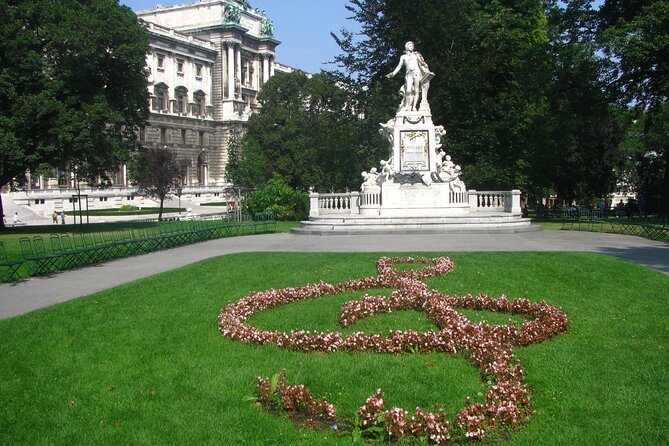
Across the three-hour walk, you pause to hear selections of Vienna’s musical masterpieces on headphones. The music is not an afterthought. It is the thread that links the cathedral, homes, statues, opera house, university district, and imperial residence.
A guide can tell you that a piece belongs to Mozart or Beethoven, but hearing it at the point where the composer’s life is being discussed adds another layer. You may find that the music helps you remember the places after the tour ends.
The final Inner City portion lasts about 45 minutes, making it the longest part of the route. That gives the guide room to connect the earlier stops and answer questions. It also means the tour is not just seven quick photo opportunities. Much of the value lies in the walking time between them.
Wear comfortable shoes. The tour lasts about three hours and covers several central locations on foot. The exact route may involve public transport if needed. Tram and metro tickets are not included, but the guide can help you buy them if you do not already have a pass.
What the private format is worth
The price is $564.72 per group of up to 10 people. That is not a low-cost walking tour, but the flat fee changes the calculation.
For one or two people, the per-person cost is high. For six to 10 people, it becomes much more reasonable, especially if you want a private guide rather than a large group moving through the center. Families, friend groups, and private cultural trips are the best match for this pricing model.
The private setup also gives you control over the conversation. You can ask for more Mozart, more Beethoven, more opera, or more discussion of the Habsburg connection. The tour is offered in English, and the guide’s photo, phone number, and biography are sent after booking, which gives you a direct contact before the meeting.
Pickup is available at your hotel or holiday flat. If you prefer a central point, Café Mozart at Albertinaplatz 2 is the stated meeting place. Pickup is convenient, but it does not remove the need for walking, and any public transport tickets are extra.
Morning and afternoon departures let you fit the experience around a concert, museum visit, or meal. Since the tour is often booked well ahead, with an average booking time of 111 days, I would reserve early if your Vienna dates are fixed.
Who will enjoy this walk most
I would choose this tour for a group that wants a human guide and a clear story rather than a self-guided audio route. It suits serious classical-music fans, but it also works well for people with little musical training.
The strongest praise centers on the guide’s enthusiasm, personal stories, photographs, and ability to make the subject approachable. That matters because a composer-focused tour can become dry if it is built only around names and dates. Here, the listening stops and personal details help keep the walk moving.
It is also a good choice for mixed groups. One person can care about opera, another about architecture, and another about Vienna’s imperial past. The route touches all three, though music remains the main subject.
I would hesitate if you want extended interior visits, a live concert, or a cheap overview of central Vienna. Several stops are exterior views or brief visits, and some admissions cost extra. You are paying for private interpretation and the musical structure, not a package of entry tickets.
Free cancellation is available if you cancel at least 24 hours before the start time. Changes or cancellations inside that window are not accepted for a refund.
Should you book the Vienna City of Music walk?
Book it if your group has up to 10 people and wants Vienna explained through Mozart, Beethoven, churches, palaces, opera, and recorded music. The headphones, personal stories, and private format give the walk more feeling than a standard city orientation.
For a small party, compare the price carefully. You may prefer to visit Mozarthaus or the State Opera separately and use a less expensive group walk for general sightseeing. For a larger party, the flat fee makes this a much stronger value.
I would make this tour an early cultural activity in Vienna. It gives you names, places, and musical references that can sharpen the rest of your stay. If you later attend a concert or pass the Hofburg again, you will have a better sense of the people and relationships behind the city’s famous sound.
FAQ
How long is the Vienna City of Music Private Walking Tour?
The tour lasts approximately three hours.
How many people can join the private tour?
The $564.72 group price covers up to 10 people. Only your group participates.
Is the tour offered in English?
Yes. The experience is offered in English.
Where can the tour begin?
Your guide can meet you at your hotel or holiday flat. You can also choose a central meeting point at Café Mozart, Albertinaplatz 2.
Are public transport tickets included?
No. If public transport is needed, tram or metro tickets are not included. Your guide can help you purchase them if you do not have a pass.
Is admission to Mozarthaus included?
No. Admission to Mozarthaus Vienna is not included in the tour price.
Is admission to the State Opera included?
No. Admission to the Wiener Staatsoper is not included.
Can I cancel for a full refund?
Yes, if you cancel at least 24 hours before the experience start time. Cancellations or changes made less than 24 hours before the start time are not refunded or accepted.
Recently added around Vienna
- Vienna: Private tour Mauthausen and Linz★ 4.1 · 3 reviews
- 2-Day Prague Tour from Vienna with private Transfers and Lunches★ 5.0 · 3 reviews
- Vienna Self Guided Sherlock Holmes Murder Mystery Game★ 4.5 · 3 reviews
- Vienna Private Schönbrunn Palace Tour, Extra Rooms and Gardens★ 5.0 · 3 reviews
- Salzburg and Lake Region Private Day Trip from Vienna★ 5.0 · 3 reviews
- Small-group Vienna Wine Tour★ 5.0 · 3 reviews
- True Crime mobile puzzle rally Vienna★ 4.0 · 3 reviews
- Vienna: Wachau Valley Private Kayak and Wine Tour★ 5.0 · 3 reviews
Walking Tours in Vienna, compared.

Guided Walking Tour of City Center Highlights
Read our review →
Guided Walking Tour of City Highlights & Hidden Gems
Read our review →
Vienna Historic Center Small Group Walking Tour
Read our review →


Ghosts and Legends Guided Nighttime Walking Tour
Read our review →

Browse the lists this tour appears in