
Reviewed · WALKING TOURS IN VIENNA
An Introduction to Vienna Walking Tour
Vienna’s center can feel like a grand museum without labels. This walking tour supplies the labels, but also the stories behind them: Klimt and Mahler at the Secession, Habsburg power at the Hofburg, plague memory on the Graben, and the city’s changing identity along the Ringstraße. I like the historical sweep, from Roman-era roots and imperial rule to modern Vienna.
I also like the small maximum of eight people, with no more than six allowed on a single booking. Guides such as Katarina, Annelie, Ilse, and Wolfgang are praised for clear storytelling, local advice, and flexibility. The main drawback is price: at $181.02 per person, this is costly for a walking tour, especially if you prefer a fast checklist of sights.
Key points at a glance
- A strong first-day orientation: The route links Vienna’s main central sights and gives you a useful map of the city’s past and present.
- Historian-led storytelling: Expect more than dates and names, with attention to architecture, music, politics, war, and ordinary life.
- Small groups matter: A maximum of eight makes it easier to ask questions and adjust the pace.
- A polished central route: You’ll see Stephansdom, the Hofburg, the Ringstraße, the Secession, Naschmarkt, and Maria-Theresien-Platz.
- Practical local advice: Guides can suggest cafés, schnitzel, sausages, Sacher torte alternatives, and places to explore later.
- A premium price: The cost makes the most sense if you value personal attention and historical depth over a budget introduction.
Why this walk works best at the start of your Vienna stay
I would schedule this tour early in your visit. It gives you a working sense of Vienna’s layout, from the Hofburg and Michaelerplatz to Stephansdom, the Ringstraße, and the museum quarter. Afterward, you can return to the places that caught your attention instead of wandering the center without a plan.
The route also helps you read Vienna’s architecture. The city is not just a collection of handsome façades. Imperial buildings, modernist experiments, grand public museums, churches, cafés, and shopping streets all reflect different periods and different ideas about power.
That broad approach is the tour’s real strength. You are not simply shown a palace and told who lived there. You are given a way to connect the Habsburg dynasty, Catholic tradition, urban planning, music, art, and the difficult events of the 20th century.
The walk lasts about two hours and 30 minutes. That is enough time for a solid introduction, but not enough for long interior visits. You should expect to see many important buildings from outside rather than spend time touring their rooms or collections.
More Walking Tours in Vienna
- Vienna: Guided Walking Tour of City Center Highlights
★ 4.7 · 4,989 reviews - Vienna: Vienna Central Cemetery Guided Walking Tour
★ 4.8 · 3,307 reviews - Vienna: Guided Walking Tour of City Highlights & Hidden Gems
★ 4.9 · 2,180 reviews
Michaelerplatz and the Habsburg center
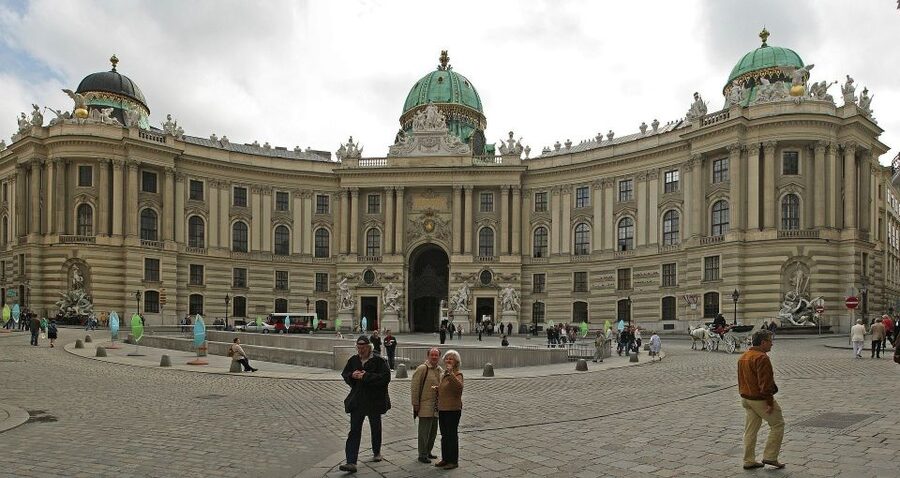
The meeting point is Café Hawelka on Dorotheergasse, a central and atmospheric place to begin. From there, the tour starts at Michaelerplatz, where the Hofburg dominates the square.
The Hofburg served as the Habsburg imperial palace and seat of power from the 13th century onward. Its importance is hard to grasp from a single room or façade. The palace grew over centuries, so the complex reflects changing rulers, tastes, and political needs.
This is where a good guide can turn a grand building into a human story. You may hear about the dynasty’s long rule, court life, succession, power struggles, and the people who worked within the imperial system. The discussion can also move beyond emperors to the effect of Habsburg rule on Austria and the wider region.
The Hofburg area is busy and visually crowded. A guide is useful here because there is so much to take in at once. You can easily focus on the most ornate doorway and miss the larger story of how Vienna was governed.
Do not expect entry to the Hofburg as part of this experience. The included service is a guided walk, and the listed stops are primarily exterior sights.
Loos House and Vienna’s architectural arguments

Moving clockwise from the Hofburg, the route passes the green and gray Loos House. Designed by Adolf Loos, it offers a sharp contrast to the decorative imperial architecture nearby.
That contrast is the point. Vienna around the turn of the 20th century was not content to repeat the past. Architects and artists were arguing about ornament, function, modern life, and what a new city should look like.
The Loos House can seem restrained beside the Hofburg, but that is precisely why it is worth seeing with context. The building helps explain how Vienna moved from imperial grandeur toward modernist design. A guide can also connect it to the wider cultural energy that produced the Secession movement.
This is one of the tour’s better features for anyone interested in architecture. You get to compare buildings in the street rather than study each one in isolation.
The Secession and Vienna’s artistic break
At the Secession building, the focus shifts from imperial power to artistic rebellion. The building is closely tied to Vienna’s turn-of-the-century avant-garde, including Gustav Klimt and the musical world of Gustav Mahler.
The Secession is memorable even if you know little about art. Its design announces a break from older artistic institutions, and its famous decorative details make the building easy to recognize. The guide places it within Vienna’s larger cultural movement, rather than treating it as a single photo stop.
This part of the tour may appeal most to you if you like the connection between art, politics, and city life. Vienna was producing new ideas in painting, architecture, music, psychology, and social thought at the same time. The walk cannot cover all of that in detail, but it gives you a clear starting point.
Some guides add personal touches. Annelie, for example, has been praised for using music by Mozart and Haydn, sharing Sisi’s favorite candies, and pointing out small details that are easy to miss in a standard guidebook. Those extras are not guaranteed, but they show the kind of flexible, story-driven approach you may receive.
A different way to spend an afternoon here:
- Vienna: Vivaldi’s Four Seasons Concert in Karlskirche
★ 4.7 · 14,951 reviews - Vienna: Spanish Riding School Training
★ 3.9 · 9,281 reviews - Vienna: Skip-the-cashier-desk-line Giant Ferris Wheel Ride
★ 4.5 · 7,859 reviews - Vienna: Schönbrunn Palace & Gardens Skip-the-Line Tour
★ 4.7 · 7,739 reviews
Ringstraße, museums, and imperial ambition
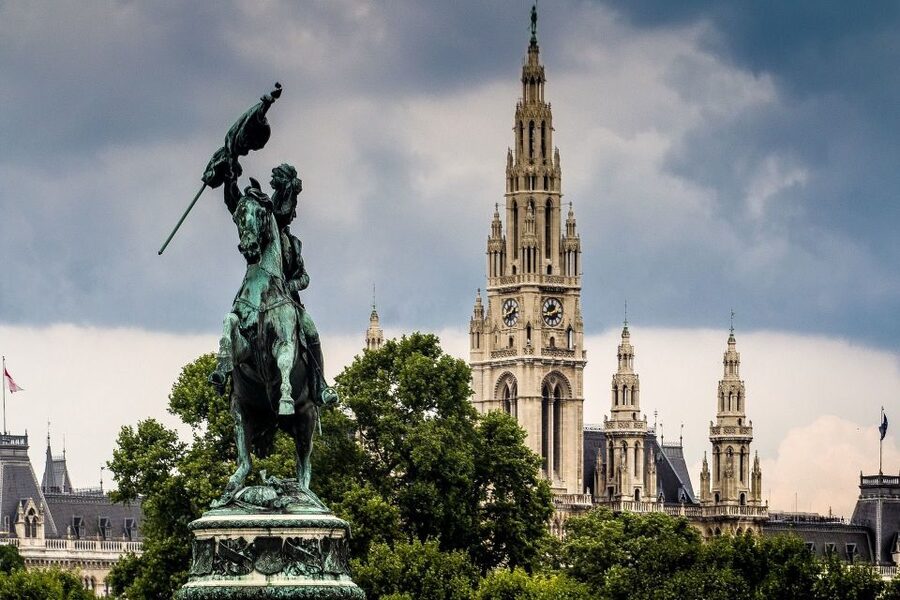
The walk continues along the Ringstraße, the grand boulevard built in the middle of the 19th century. The road replaced the old city fortifications and opened room for a new display of public power.
You will pass major buildings and luxury hotels established within former palace walls. The Ringstraße is best understood as a statement. Vienna was presenting itself as a modern capital, yet it used monumental architecture to reinforce imperial authority.
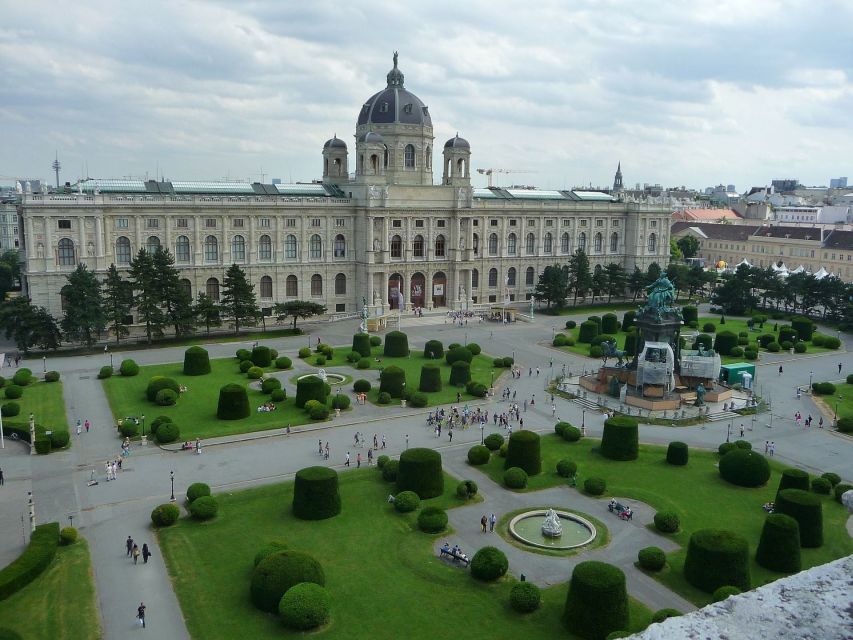
The route reaches Maria-Theresien-Platz, home to Vienna’s largest concentration of museums. The square is a useful point for understanding the city’s cultural institutions and the relationship between art, education, and the Habsburg state.
The limitation is time. You will not tour the museums during this walk. If you want the Kunsthistorisches Museum or Naturhistorisches Museum, plan a separate visit. The advantage is that you will know where they are and understand why the square matters before you return.
The Ringstraße is also a practical orientation tool. It helps you separate the historic inner center from the grand civic belt around it. After the tour, that makes it easier to plan museum visits, walks, and public transport connections.
Stephansdom and the city’s spiritual heart
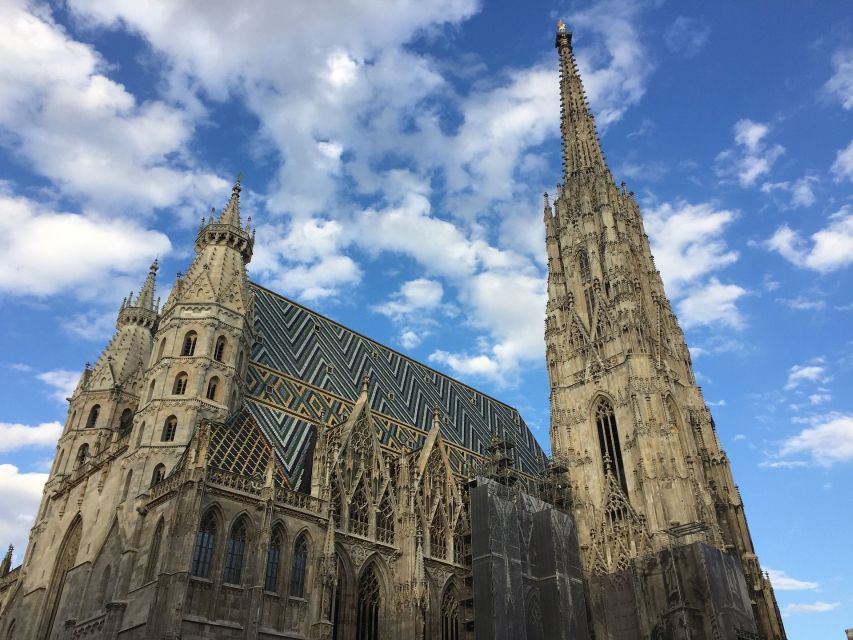
Stephansdom, or St. Stephen’s Cathedral, is Austria’s national architectural icon and one of Vienna’s essential sights. Its roof pattern and tall tower make it a natural centerpiece of the old city.
The cathedral is not simply a church to photograph. It reflects Vienna’s religious identity, civic pride, wartime damage, rebuilding, and long connection with the Habsburg world. A guide can explain how the building fits into the city’s development and why it remains such a strong symbol.
The area around Stephansdom can be crowded, especially near the main pedestrian streets. A small group helps here because you can stay close to the guide and ask questions without shouting across a large crowd.
Again, this is an exterior-focused introduction. If you want to explore the cathedral inside, inspect its chapels, or visit its towers, allow separate time. The walking tour gives you context, not a full cathedral visit.
Kohlmarkt, the Graben, and the plague column
From Stephansdom, the route moves through Kohlmarkt and the Graben, now among Vienna’s most fashionable shopping districts. These streets mix elegant storefronts with layers of older urban history.
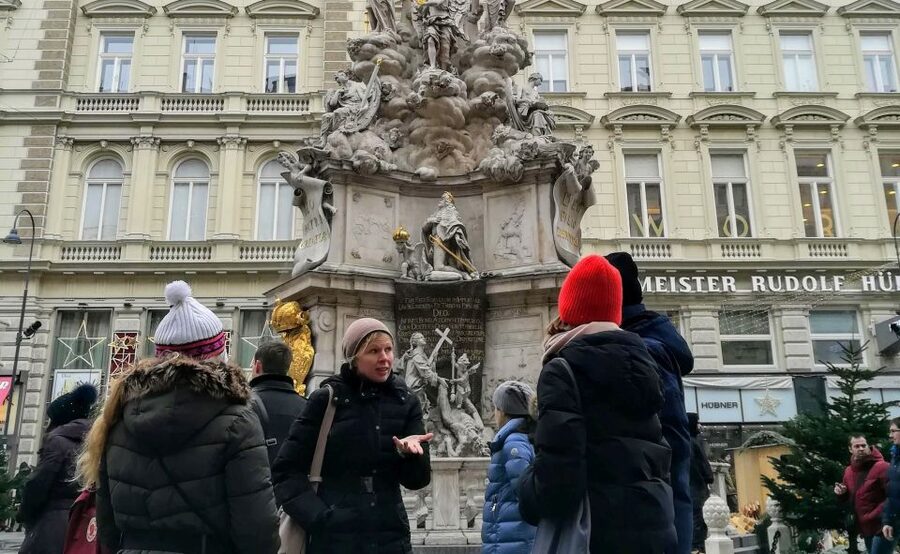
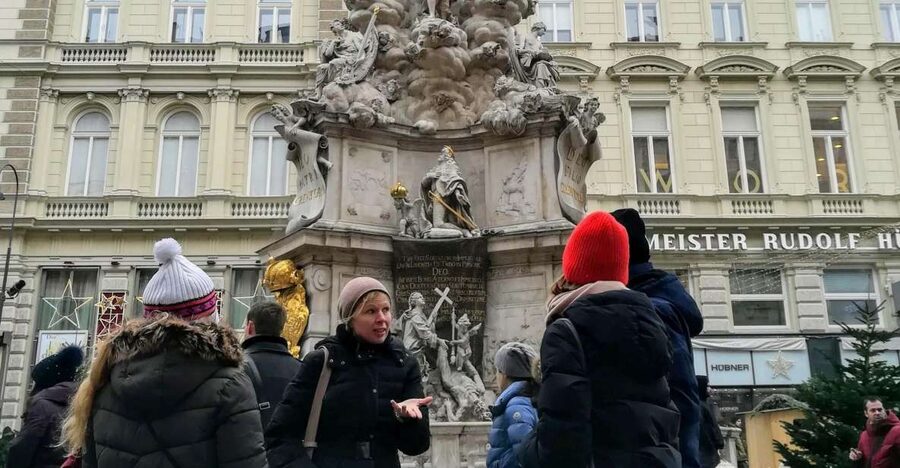
The Graben’s plague column commemorates the 17th-century outbreak of bubonic plague. It is an ornate monument, but its meaning is sobering. The stop gives the guide a chance to discuss how disease shaped city life, public faith, fear, and memory.
This is a good example of the tour’s balance. You are not shown only palaces and pretty streets. Vienna’s past includes loss, war, political pressure, and painful memories. One guide has used nearby memorials to explain civilian deaths during Allied bombing, including damage to the Opera House and an underground bomb shelter.
Those subjects may be difficult, but they add weight to the walk. You will get a more honest picture of Vienna than a tour focused only on music, pastries, and imperial elegance.
Kohlmarkt and the Graben also make useful later stops for independent exploring. You can combine them with Stephansdom, cafés, and other central sights without crossing the city repeatedly.
Naschmarkt and the flavor of everyday Vienna
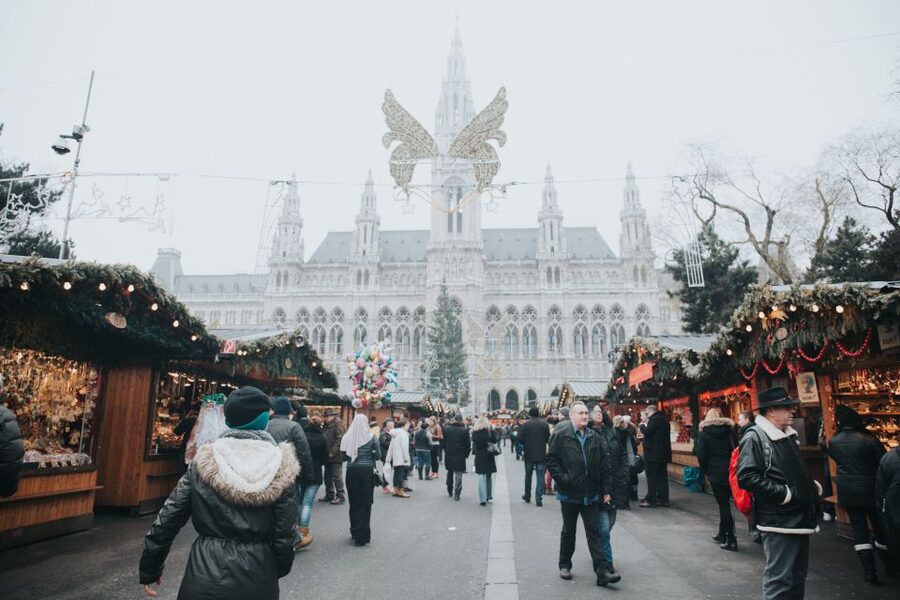
The route includes the Naschmarkt, Vienna’s traditional food market. It is a colorful place where people meet, shop, and eat, and it provides a welcome change from palaces and formal boulevards.
Food and drinks are not included, so budget separately if you want a snack. That is not necessarily a flaw. It gives you the choice to browse, ask the guide what to try, or return later when you have more time.
Several guides also give practical food suggestions. You may get advice on schnitzel, sausages, coffeehouses, or where to find Sacher torte without waiting at the famous Sacher Hotel. These recommendations can be especially useful because a short tour leaves you with several meals still to plan.
The market is not a formal tasting experience. If you are booking mainly for food, choose a dedicated food tour instead. Here, Naschmarkt is one piece of a larger city and history walk.
The guide makes the difference
The company uses historian guides, and the guide’s personality shapes the experience. Names praised in the supplied material include Katarina, Annelie, Ilse, Wolfgang, Christina, Elisabeth, Billie, Ilsa, and Angelika.
Katarina is described as an animated storyteller who explains small historical details clearly and welcomes questions. Annelie is noted for combining academic understanding with personal knowledge of living in Vienna. Ilse is praised for strong academic training, clear English, and a warm manner.
Wolfgang’s approach focuses on less touristy paths, architecture, and stories that make the people behind the buildings feel present. Christina has been described as flexible and attentive to the group’s comfort. These details suggest a team that does more than recite a fixed script.
You cannot assume you will receive a particular guide unless the booking process allows you to request one. Still, the repeated praise for individual guides is a meaningful part of the tour’s appeal.
The personal format also helps if your group has special interests. Guides have adjusted walks, slowed their speech for a participant with limited English, answered many questions, and offered directions for later visits. That flexibility is difficult to get on a large group tour.
Is $181.02 per person a fair price?
The current price is high for a 2.5-hour walking tour. You are not paying for admission tickets, transportation, food, or hotel pickup. If your goal is simply to see Vienna’s main sights, a cheaper large-group tour may be the better choice.
The value comes from the format. With a maximum of eight people, and sometimes only one or two people booked into a departure, you may receive close to private-tour attention. You can stop to ask about a building, request restaurant advice, or adjust the focus toward art, architecture, music, or political history.
I would compare this price to a private guide rather than to a standard group walk. If you want a polished overview with room for conversation, the cost can make sense. If you prefer to move quickly and hear only the basic facts, it probably will not.
The booking pattern also suggests planning ahead. This experience is booked an average of 53 days in advance, so do not wait until the last morning of your trip if the timing matters to you.
Practical details before you go
The tour is offered in English and includes a mobile ticket. Confirmation arrives at booking, and the meeting point is Café Hawelka, Dorotheergasse 6, in Vienna’s first district.
The end point is listed simply as Vienna, Austria, so ask your guide during the walk if you need a precise final location for your next activity. The tour is near public transportation, but hotel pickup and drop-off are not included.
Most people can take part, but remember that this is a walking experience lasting about two hours and 30 minutes. Wear comfortable shoes and check the forecast. A past tour continued in cold, windy rain, but poor weather will make any central-city walk less pleasant.
Food and drinks are not included unless specifically stated. Build in time afterward for a café, market snack, or meal based on your guide’s suggestions.
Free cancellation is available up to 24 hours before the local start time for a full refund. Changes or cancellations made less than 24 hours before the start are not accepted for a refund.
Who should book this Vienna walk?
I recommend it for first-time visitors who want a firm sense of place before exploring on their own. It also suits history fans, architecture lovers, and anyone who prefers questions and conversation over a loud guide speaking to a crowd.
It is a good fit for a short Vienna visit because the route covers many central landmarks in one sitting. It can also help you decide which museums, churches, markets, and cafés deserve more of your limited time.
I would hesitate if you are watching your budget or expect interior access to the Hofburg, Stephansdom, museums, or other major sights. You will see and discuss them, but this is not an admission-based tour.
Should you book it?
Book this tour if you want Vienna explained by a historian in a small group, with time for questions and useful local suggestions. The strongest parts are the connections between imperial buildings, modernist architecture, music, art, religion, war, and daily life.
Skip it if $181.02 feels too steep for an introductory walk or if you mainly want a quick list of landmarks. For the right reader, the price buys attention and depth. Schedule it near the start of your stay, listen closely, and use the rest of your Vienna trip to follow up on the places and ideas that catch you.
FAQ
How long does the Vienna walking tour last?
The guided walk lasts approximately two hours and 30 minutes.
What language is the tour offered in?
The tour is offered in English.
Where does the tour begin?
The meeting point is Café Hawelka at Dorotheergasse 6, 1010 Vienna, Austria.
What sights are included on the route?
The route includes Michaelerplatz and the Hofburg, the Ringstraße, Loos House, Maria-Theresien-Platz, the Secession building, Stephansdom, Naschmarkt, Kohlmarkt, and the Graben with its plague column.
How large is the group?
A maximum of six people can be included per booking, and the activity has a maximum of eight total participants.
Are food, drinks, and hotel transfers included?
No. Food and drinks are not included unless specified, and hotel pickup and drop-off are not provided.
Recently added around Vienna
- Vienna: Private tour Mauthausen and Linz★ 4.1 · 3 reviews
- 2-Day Prague Tour from Vienna with private Transfers and Lunches★ 5.0 · 3 reviews
- Vienna Self Guided Sherlock Holmes Murder Mystery Game★ 4.5 · 3 reviews
- Vienna Private Schönbrunn Palace Tour, Extra Rooms and Gardens★ 5.0 · 3 reviews
- Small-group Vienna Wine Tour★ 5.0 · 3 reviews
- Salzburg and Lake Region Private Day Trip from Vienna★ 5.0 · 3 reviews
- True Crime mobile puzzle rally Vienna★ 4.0 · 3 reviews
- Vienna: Wachau Valley Private Kayak and Wine Tour★ 5.0 · 3 reviews
Walking Tours in Vienna, compared.

Guided Walking Tour of City Center Highlights
Read our review →
Guided Walking Tour of City Highlights & Hidden Gems
Read our review →
Vienna Historic Center Small Group Walking Tour
Read our review →


Ghosts and Legends Guided Nighttime Walking Tour
Read our review →

Browse the lists this tour appears in