
Reviewed · WALKING TOURS IN VIENNA
Vienna Walking Tour with Audioguide on Your Smartphone
Vienna’s historic center is packed with imperial palaces, grand churches, famous cafés, and musical landmarks. This self-guided smartphone tour ties them together in one long walking route, starting at St. Stephen’s Cathedral and returning to Stephansplatz.
I like the freedom to stop for coffee at Café Demel or Café Central, take photos, and split the walk over two days. I also like the price: at $8.40 per person, you get 29 audio recordings, an offline map, and a full year of access. The catch is important: the route is closer to 7 kilometers than a quick two-hour stroll, and the app’s directions and GPS can be unreliable.
Key points to know before you book
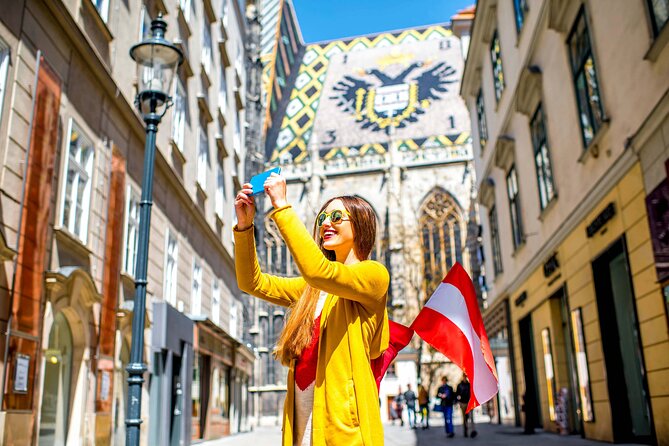
- St. Stephen’s Cathedral anchors the route: Begin with Vienna’s great Gothic church, then fan out through the old center.
- 29 recordings cover more than 16 named stops: You hear about churches, Habsburg rulers, cafés, museums, music, war memorials, and city squares.
- The route is self-guided: There is no human guide, no group to keep up with, and no transportation between stops.
- Plan for a long walk: The advertised time is about two and a half hours, but the full circuit can take longer, especially with coffee, photos, and interior visits.
- Download before you start: The app includes an offline route map, but you need your own phone and headphones. Activate the purchase in the app before setting off.
Starting beneath St. Stephen’s Cathedral
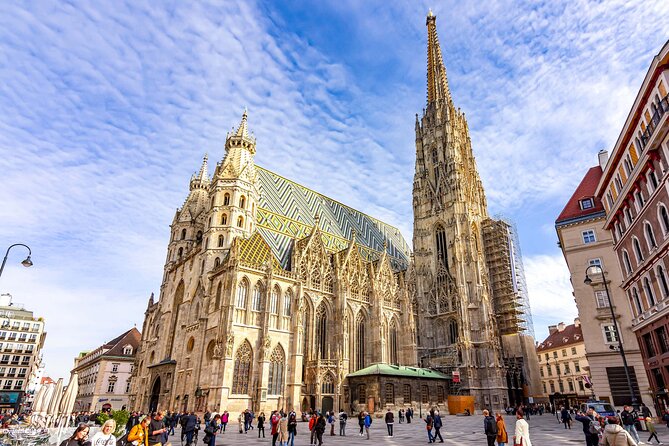
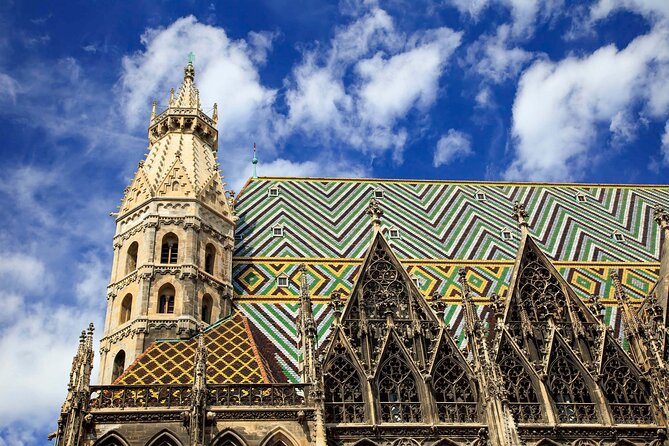
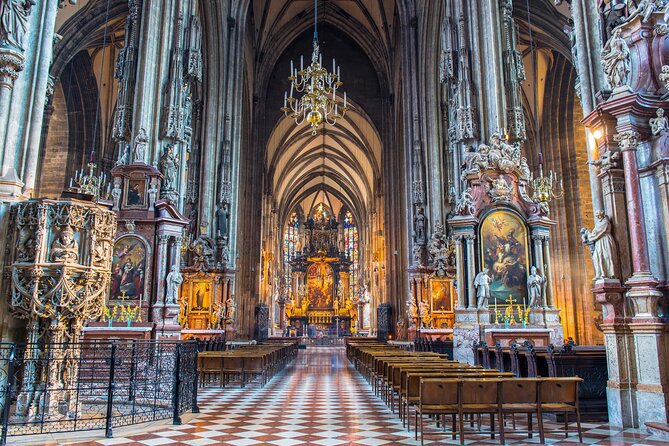
The tour begins at Stephansplatz, the natural heart of Vienna’s old center. St. Stephen’s Cathedral rises above the square with its patterned roof, Gothic stonework, and tall South Tower. The audio recording gives you a useful introduction to the building’s long story and points out features inside, including the High Altar and catacombs.
The listed stop lasts about 15 minutes, but you can easily spend much longer here. The cathedral’s interior and tower are not included as admissions in this tour. Any entrance fees, including access to the South Tower or catacombs, are your responsibility.
This opening stop works well because it gives you an immediate sense of Vienna’s scale. From here, the route moves through the compact old center, where major sights sit close together. You are not being marched behind a guide with a flag. You can listen, look up, and pause whenever you wish.
Next comes the Church of the Teutonic Order, a much smaller church with Baroque decoration and a quieter mood. The contrast with St. Stephen’s is part of the appeal. You move from Vienna’s most famous church to a less imposing place where frescoes and sculptures reward a slower look.
More Walking Tours in Vienna
- Vienna: Guided Walking Tour of City Center Highlights
★ 4.7 · 4,989 reviews - Vienna: Vienna Central Cemetery Guided Walking Tour
★ 4.8 · 3,307 reviews - Vienna: Guided Walking Tour of City Highlights & Hidden Gems
★ 4.9 · 2,180 reviews
Baroque drama around Peterskirche and the Plague Column
The Plague Column, or Pestsäule, is one of the old center’s most striking outdoor monuments. It was built in gratitude after the plague and rises in a crowded historic setting with layers of sculpture around its column. The audio explains the monument as both a work of Baroque art and a reminder of Vienna’s struggle with disease.
The nearby Peterskirche brings you into another ornate Baroque interior. Its dome, frescoes, and detailed decoration show the visual style that shaped much of central Vienna. The stop is short, about 10 minutes, but the church may deserve extra time if it is open.
The route then points you toward Café Demel, founded in 1786. This is a practical place to pause, not simply another building to photograph. You can order coffee and Viennese pastries, perhaps Sachertorte, while letting the audio tour rest in your pocket.
That pause matters. A self-guided route is only useful if you use its flexibility. The schedule is not locked to a group, so you can stop at a café, skip a crowded interior, or continue when the square clears.
Hofburg courtyards, Michaelerplatz, and Joseph II
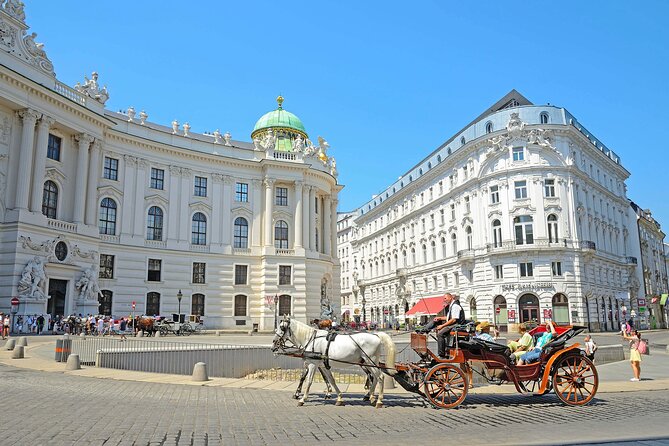
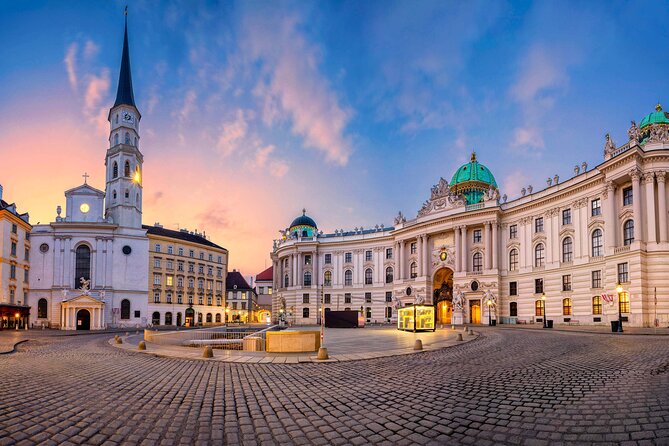
Michaelerplatz brings Vienna’s imperial past into one view. The square faces the Hofburg Palace and Michaelerkirche, while archaeological remains sit below ground level. The audio helps connect the visible palace, church, and ruins rather than treating them as separate photo stops.
At Josefsplatz, the monument to Emperor Joseph II introduces one of the Habsburg rulers associated with Enlightenment reforms. The bronze statue is surrounded by the Hofburg complex, so this is a good place to listen while looking at the wider setting.
The route also includes the Imperial Crypt, the burial place of Habsburg emperors, empresses, and other members of the royal family. This is one of the tour’s strongest historical stops, but keep your expectations clear. The entry fee is not included, and the tour price does not cover admission to the crypt or other museums and interiors.
Donnerbrunnen, the fountain in Neuer Markt, provides a lighter outdoor stop. Its mythological figures and elaborate sculpture fit the grand Baroque mood of the city. These shorter recordings are useful when you want orientation without spending 30 minutes inside every site.
War memory, Mozart, and Vienna’s opera tradition
The Memorial Against War and Fascism changes the tone. Its shattered-column design and stark message focus on victims of oppression and the damage caused by war. In a city often presented through palaces and music, this stop gives you a needed reminder that Vienna’s past was not only elegant.
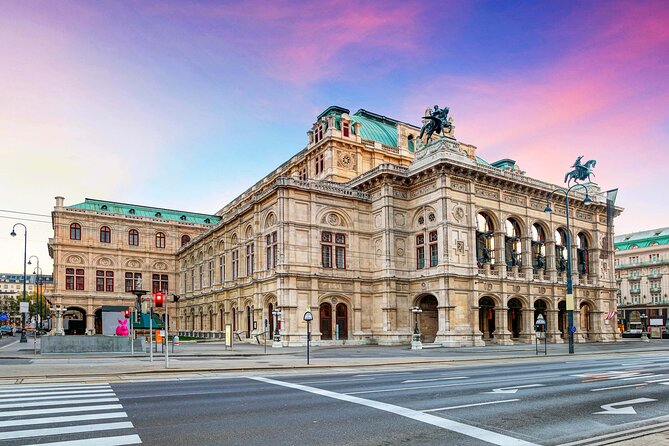
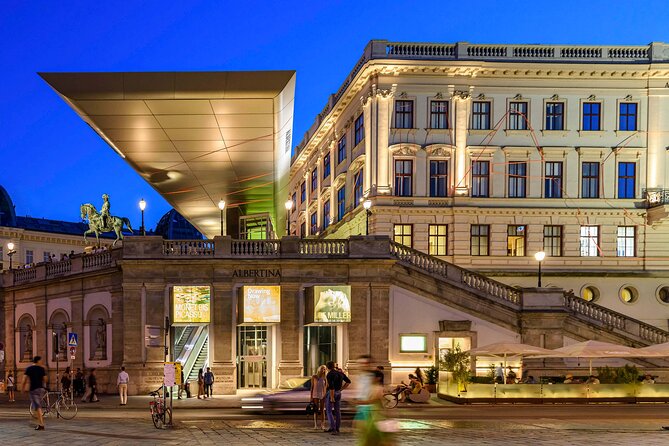
The route continues toward the Albertina Gallery and Vienna State Opera. The audio introduces both institutions, but the walking tour does not include admission or a performance. If you want to see the Albertina’s art collection or attend an opera, treat the recording as an introduction and plan a separate visit.
The Mozart Monument in Burggarten is one of the pleasant outdoor stops. The bronze statue honors the composer, and the surrounding park offers a little breathing room after dense streets and formal squares. The audio places Mozart within Vienna’s musical identity without requiring you to enter a concert hall.
Maria Theresa Square follows with its large monument to the empress. The square is framed by major cultural buildings and open garden space, giving you a strong sense of imperial Vienna’s planning and scale.
A different way to spend an afternoon here:
- Vienna: Vivaldi’s Four Seasons Concert in Karlskirche
★ 4.7 · 14,951 reviews - Vienna: Spanish Riding School Training
★ 3.9 · 9,281 reviews - Vienna: Skip-the-cashier-desk-line Giant Ferris Wheel Ride
★ 4.5 · 7,859 reviews - Vienna: Schönbrunn Palace & Gardens Skip-the-Line Tour
★ 4.7 · 7,739 reviews
Sisi, City Hall, and the University of Vienna
The Hofburg Palace receives another major recording, covering such sights as the Imperial Apartments, Sisi Museum, Spanish Riding School, and National Library. This is a useful overview, but it cannot replace visiting those rooms. The audio gives you the context to decide which part of the palace complex deserves your time and admission fee.
The Monument to Empress Elisabeth, known as Sisi, sits in the Volksgarten. It offers a quieter stop after the heavy ceremonial spaces around the Hofburg. If Sisi’s life interests you, the monument recording pairs naturally with a later visit to the Sisi Museum.
Vienna City Hall, with its Gothic Revival façade and tall spires, takes the route farther from the tightest cluster around Stephansplatz. The Rathausmann statue on top is a familiar city symbol. The University of Vienna comes next, linking the city’s imperial image with its academic tradition. Its main building and library are part of the broader story, though access inside may depend on opening arrangements not specified by the tour.
These stops show why the route can take much longer than the advertised two and a half hours. You are not just crossing a few blocks. You are walking through several sections of central Vienna, and many stops invite a closer look.
Beethoven, Café Central, and smaller corners
Beethoven’s House is another stop where the recording serves mainly as an introduction. The museum presents the composer’s life and work, including manuscripts and personal belongings. Admission is not included, so decide in advance if you want to make this a full museum visit.
Café Central is one of Vienna’s best-known coffee houses, founded in 1876 and associated with writers, artists, and intellectual life. The audio gives you the setting and cultural background, but the five-minute listing is not enough for a proper coffee stop. If you plan to eat here, allow time for a queue or a slower break.
Collalto Palace adds a smaller architectural note, with Baroque details and an aristocratic connection. It is the kind of stop that can be easy to pass without context. The audio is most useful here because it tells you why an otherwise modest-looking façade matters.
The Marriage Fountain, or Vermahlungsbrunnen, is another brief monument stop. The description connects it with harmony and love and places it in a palace setting. Since the route contains several fountains and statues, use the app’s landmark illustrations to confirm that you are looking at the correct feature.
The final named stop is the Anker Clock on Hoher Markt. This Art Nouveau clock has decorative figures that appear during its hourly display. Timing your walk for that moment could add interest, though the tour does not guarantee a scheduled viewing. The clock is close to the start area, which explains part of the route’s awkward ending.
What the app does well, and where it needs help
The audio content is narrated by a professional historian and comes with 29 recordings. The strongest part of the product is the historical storytelling. St. Stephen’s Cathedral, the Plague Column, the Habsburg burial site, Mozart, Beethoven, and the war memorial all gain useful context that a simple map cannot provide.
The app also includes illustrations for identifying each sight. These small images can help when a monument is easy to miss or signage is poor. An offline map with a route line and your position shown as a blue dot can make the walk manageable, especially after you download the content.
Still, navigation is the weak link. You may get an audio recording at a stop without clear spoken directions to the next stop. Some users have found that the GPS did not recognize their location, forcing them to restart the app or use another map. I recommend keeping a second map app available and checking the next destination before walking away.
Install and activate the tour before you reach Stephansplatz. Bring charged headphones, and remember that the audio can be played directly through your phone if your headphones run out of battery. The instructions are easy for some people and frustrating for others, so do not leave setup until you are standing in the middle of a busy square.
Is $8.40 a good value?
At $8.40, this is inexpensive for a city orientation that covers so much ground. A human-led walking tour usually gives you better navigation and the chance to ask questions, but it also fixes your pace and schedule. Here, you pay mainly for the narration and route concept.
The value is best if you want an overview before choosing which museums and interiors to visit. The tour points you toward the Albertina, Hofburg, Imperial Crypt, State Opera, Beethoven’s House, and Vienna’s major churches. You still pay entrance fees separately, but the audio can help you spend those fees more wisely.
The deal is less attractive if you want a short, polished route with exact turn-by-turn guidance. The full walk may exceed three hours, especially if you enter sights, stop for coffee, or take photographs. The final section also circles back toward the starting area, adding nearly a kilometer for some walkers.
I would not treat the stated two hours and 30 minutes as a firm appointment. Think of it as a flexible city walk that you can divide over two days. One practical plan is to cover the cathedral, old center, Hofburg, and opera area first, then continue toward City Hall, the university, Beethoven’s House, and the remaining monuments the next morning.
Who should choose this Vienna walk?
I would choose it for independent visitors who dislike large groups and want to set their own rhythm. It works well for couples, families, and photographers who need frequent pauses. You can stop for coffee, adjust for weather, or leave the route and return later.
It is also useful on a first visit when you want to get your bearings fast. The route connects the main sights of central Vienna and adds smaller stops that you might otherwise overlook.
I would hesitate if you need a guide to answer questions, manage directions, or explain changing details at each site. The tour is also a poor fit for anyone who finds 7 kilometers tiring. Several people have sensibly split it into two days, and you should feel free to do the same.
Most people can participate, and the route is near public transportation. The activity is capped at 20 participants, but because it is self-guided, you do not actually walk as one organized group. Your phone, headphones, transportation, and entrance tickets are not included.
Should you book the Vienna smartphone tour?
Book it if you want a low-cost introduction to Vienna’s central sights, enjoy audio storytelling, and are comfortable checking your own map. The one-year access period is a useful bonus, since you can return to recordings or use the tour over more than one day.
Skip it if you expect a human guide or precise spoken directions between every stop. The app can be very good for history and orientation, but you need to take responsibility for setup, GPS, and route finding.
For the right user, $8.40 buys a flexible first look at Vienna: Gothic stone, Baroque churches, Habsburg monuments, famous cafés, opera, Mozart, Beethoven, and reminders of the city’s harder past. Bring comfortable shoes, download everything early, and leave enough time for coffee.
FAQ
Is this a guided walking tour with a person?
No. This is a self-guided audio tour delivered through an iPhone or Android app. There is no human guide.
Where does the tour start and end?
It starts at Stephansplatz, 1010 Wien, Austria, near St. Stephen’s Cathedral. The activity ends back at the meeting point.
How long does the tour take?
The stated duration is approximately two hours and 30 minutes. The complete route can take longer, and the walk is nearly 7 kilometers. You can pause or split it over two days.
Are entrance fees included?
No. Entrance tickets and admission fees are not included. This applies to places such as the Imperial Crypt, museums, cathedral tower areas, and other paid attractions along the route.
What do I need to bring?
You need your own smartphone and headphones. Download the app, activate the purchase, and download the route before starting. The audio can also play directly through your phone if necessary.
Can I cancel for a full refund?
Yes. You can cancel at least 24 hours before the experience start time for a full refund. Cancellations or changes made less than 24 hours before the start time are not accepted for a refund.
More self-guided routes in Vienna
- Vienna: Tickets for Mozarthaus Vienna with Audio Guide
★ 4.2 · 2,344 reviews - Vienna: New Hofburg Palace Audio-Guided Tour & Entry Ticket
★ 4.1 · 566 reviews - Vienna: Schlumberger Wine Cellar Guided or Self-Guided Tour
★ 4.8 · 285 reviews - Vienna: Scavenger Hunt Self-Guided Tour
★ 4.7 · 83 reviews
Recently added around Vienna
- Vienna: Private tour Mauthausen and Linz★ 4.1 · 3 reviews
- 2-Day Prague Tour from Vienna with private Transfers and Lunches★ 5.0 · 3 reviews
- Vienna Self Guided Sherlock Holmes Murder Mystery Game★ 4.5 · 3 reviews
- Vienna Private Schönbrunn Palace Tour, Extra Rooms and Gardens★ 5.0 · 3 reviews
- Small-group Vienna Wine Tour★ 5.0 · 3 reviews
- Salzburg and Lake Region Private Day Trip from Vienna★ 5.0 · 3 reviews
- True Crime mobile puzzle rally Vienna★ 4.0 · 3 reviews
- Exploring the Gutenstein Alps★ 5.0 · 3 reviews
Walking Tours in Vienna, compared.

Guided Walking Tour of City Center Highlights
Read our review →
Guided Walking Tour of City Highlights & Hidden Gems
Read our review →
Vienna Historic Center Small Group Walking Tour
Read our review →


Ghosts and Legends Guided Nighttime Walking Tour
Read our review →

Browse the lists this tour appears in