
Reviewed · WALKING TOURS IN VIENNA
Introducing Vienna Walking Tour: The Capital of the Habsburgs
Vienna’s imperial center is compact, but it packs in centuries of power, ceremony, art, war, and family drama. This two-hour walk through the Habsburg heart of town takes you from Michaelerplatz past the Hofburg, Heldenplatz, Joseph’s Square, the Albertina, the opera, and finally St. Stephen’s Cathedral.
I like two things right away. First, the route gives you a useful map of central Vienna before you spend time inside the city’s museums. Second, the group is limited to 15 people, which makes it easier to hear the guide and ask questions. Herbert Stojaspal is a local guide, and Dorothea also leads the walk. Both bring a personal connection to Vienna’s past.
The main trade-off is pace. You cover many important places in about two hours, so this is an orientation walk rather than a detailed visit to each building. You may want to return afterward for photos, museum visits, or a closer look at the interiors.
Key points to know before you book
- The route covers Vienna’s imperial center: You move through the Hofburg complex, Heldenplatz, Joseph’s Square, the Albertina area, the opera district, and Stephansplatz.
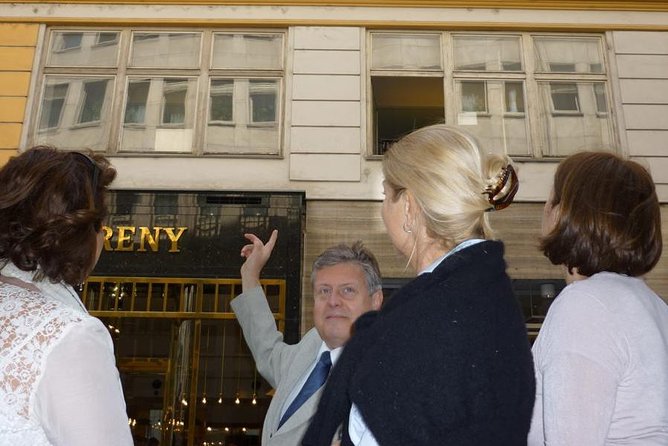
- Local guides add personal context: Herbert is Viennese and is noted for combining historical facts with stories, modern observations, restaurant suggestions, and practical advice.
- The group is capped at 15: That is a good size for a central-city walk and allows time for questions.
- It is a history-first introduction: The emphasis is on the Habsburg dynasty, imperial ceremony, religious relics, art, government, war, and Vienna’s changing identity.
- The walk ends near St. Stephen’s Cathedral: You finish at the Lindt Chocolate Boutique on Stephansplatz, a handy spot for continuing on your own.
- Check the language carefully: The experience is offered in English, but one poor experience resulted from booking a German-language departure. Confirm that your selected departure is English.
Why this walk works well as your first Vienna activity
I would place this tour near the beginning of a Vienna stay. The center can feel like a grand collection of palaces and churches until someone explains how the pieces connect. The Habsburg residence, ceremonial squares, court buildings, museums, and religious landmarks all make more sense once you know who used them and why.
The route also helps you decide how to spend the rest of your time. You may discover that the Hofburg deserves a full afternoon, that the Albertina belongs on your museum list, or that the opera and St. Stephen’s Cathedral are better suited to a later visit.
The walk is also useful on a final full day, especially if you have already visited museums. One guest found that the historical explanations made more sense after several museum visits. That is a good reminder that timing depends on your style. First-timers get orientation, while repeat visitors can add connections to what they already know.
The guide’s role matters here. Herbert is repeatedly praised for explaining difficult material in a lively way, answering questions patiently, and adding old photographs to show how certain parts of Vienna looked before. He also offers recommendations for food and further sightseeing. Dorothea has been singled out for a clear, interesting introduction to the Habsburg period.
More Walking Tours in Vienna
- Vienna: Guided Walking Tour of City Center Highlights
★ 4.7 · 4,989 reviews - Vienna: Vienna Central Cemetery Guided Walking Tour
★ 4.8 · 3,307 reviews - Vienna: Guided Walking Tour of City Highlights & Hidden Gems
★ 4.9 · 2,180 reviews
Michaelerplatz and St. Michael’s Church
The meeting point is Michaelerplatz 3, in central Vienna. You begin near St. Michael’s Church, where Roman and medieval remains help show that Vienna is not only an imperial Baroque city.
This is a smart starting point because the square brings several periods together. You can look from ancient remains toward the church and then toward the Hofburg. The guide uses that setting to establish the long sequence of Vienna’s development, from early settlement through the medieval city and into the age of the Habsburg court.
Do not expect a long archaeological visit. The value is the explanation of what you are seeing and how it fits into the city around you. If you want close-up photographs, you may need to return after the tour because the group keeps moving.
The white stallions and the Hofburg residence
The next section introduces Vienna’s famous white stallions and the traditions connected with them. The experience provides detailed information about the horses, though the walk is not presented as a performance or stable visit.
The subject fits naturally with the Hofburg. The Spanish Riding School and its horses are part of the ceremonial world that grew around the imperial court. Your guide explains the connection between the animals, court display, and Vienna’s public image.
From there, the focus turns to the Hofburg itself. The Habsburg dynasty used this large complex as its residence from the 12th century onward, and the buildings grew as the family’s power expanded. Rather than treating the palace as one simple structure, the guide helps you read it as a collection of additions from different periods.
That is one of the walk’s most useful lessons. You see that imperial Vienna was built layer by layer. The palace is not just a pretty façade. It reflects changing tastes, expanding government duties, and the long rule of one dynasty.
Heldenplatz and how Austria is governed
Heldenplatz, or Heroes’ Square, gives the tour a more political turn. You learn why the square has its name and how it relates to Austria’s government system.
The setting is important because this is where imperial ceremony, national identity, and modern politics meet. The square carries the visual weight of the old monarchy, but the institutions around it belong to present-day Austria. A good guide can show you how those layers sit beside one another rather than treating Vienna as a city trapped in the past.
This is also a useful point for questions. If you are unsure about the Habsburg Empire, the end of imperial rule, or the structure of modern Austria, ask. The walk’s strongest quality is its willingness to explain the connections instead of rushing through a list of buildings.
A different way to spend an afternoon here:
- Vienna: Vivaldi’s Four Seasons Concert in Karlskirche
★ 4.7 · 14,951 reviews - Vienna: Spanish Riding School Training
★ 3.9 · 9,281 reviews - Vienna: Skip-the-cashier-desk-line Giant Ferris Wheel Ride
★ 4.5 · 7,859 reviews - Vienna: Schönbrunn Palace & Gardens Skip-the-Line Tour
★ 4.7 · 7,739 reviews
Imperial relics and Europe’s long story
One of the more unusual stops concerns relics connected with the Holy Roman Empire. You hear about the Holy Lance, traditionally linked with the spear that pierced Jesus, and the crown associated with the Holy Roman Empire.
The important point is not that the walk asks you to accept every claim surrounding these objects. The guide presents them as powerful symbols and as pieces of European political and religious history. For centuries, rulers used sacred objects, titles, crowns, and ceremonies to support their authority.
This part gives the tour a wider frame. Vienna’s story is not only about Austria. It reaches into the politics of central Europe, the relationship between church and ruler, and the long memory of the Holy Roman Empire.
You should keep your expectations clear. The walking tour provides explanation rather than an extended museum viewing. If these objects interest you, you will want to set aside separate time for museum collections and exhibitions after the walk.
Joseph’s Square and Maria Theresa
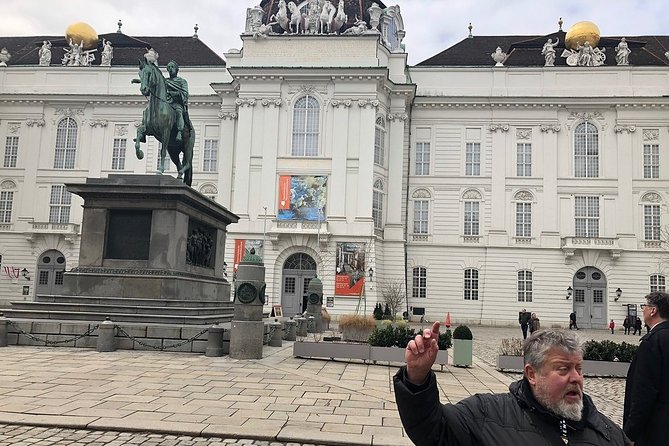
Joseph’s Square shifts attention to another chapter of Habsburg rule. Here, the guide explains the square and the reign of Maria Theresa, one of the dynasty’s most important rulers.
Maria Theresa’s era is especially useful for understanding how the Habsburg family managed an empire. Her reign involved court life, administration, family alliances, and the practical demands of ruling across many lands. The tour does not ask you to memorize a long list of dates. Instead, it uses the buildings and open spaces around you to make the dynasty’s structure easier to grasp.
This is where Herbert’s style seems particularly suited to the subject. The supplied information describes a guide who mixes facts with stories and humor, and who uses historical images to show change over time. That approach can make a ruler such as Maria Theresa feel less like a name on a plaque and more like a person connected to the streets around you.
The Albertina and an extraordinary art collection
The route continues to the former residence of Albert and Maria Christina. The building now houses the Albertina, known for one of the world’s largest drawing collections.
You may not enter the museum during the walk, and food, drinks, and admission costs are not included. Still, stopping outside gives you a reason to consider the Albertina as a separate visit. A drawing collection can be easy to overlook when Vienna’s grand paintings and palaces receive so much attention, but the museum offers a different way to explore European art.
The guide’s explanation also adds a social dimension. The building was once tied to Habsburg family life and status. Today, it serves a public cultural purpose. That change from private residence to museum is one of the recurring themes of Vienna.
The Monument Against War and Fascism
The tone becomes more serious at the monument officially called Monument Against War and Fascism. It remembers victims of war, including those affected by Nazi rule in Austria.
This stop prevents the walk from becoming a polished parade of imperial buildings. Vienna’s past includes power and art, but also violence, dictatorship, persecution, and loss. The monument gives you a place to consider the city’s responsibility to remember those victims.
For me, this is an important part of any historical walk. You get a more honest view when the tour moves beyond palace architecture and explains how the 20th century changed Vienna. The subject may be difficult, but it belongs in the center of the city and in any serious introduction to its past.
The Vienna State Opera and three-euro tickets
At the Vienna State Opera, you learn about the city’s changing daily program and the possibility of finding standing tickets for as little as three euros.
That practical detail is one reason to take the walk early in your stay. Opera tickets can seem intimidating, especially if you assume every seat costs a great deal. The guide points out that Vienna changes its program each day and that the least expensive tickets can make a performance possible on a modest budget.
You should treat the exact price as a useful guide rather than a guarantee for every performance. Availability and conditions can change. Still, the information gives you a starting point and may encourage you to check the opera schedule instead of dismissing it.
The opera stop also shows how the tour balances grand history with usable advice. You are not only learning who ruled Vienna. You are being shown how to enjoy the city now.
Finishing at St. Stephen’s Cathedral
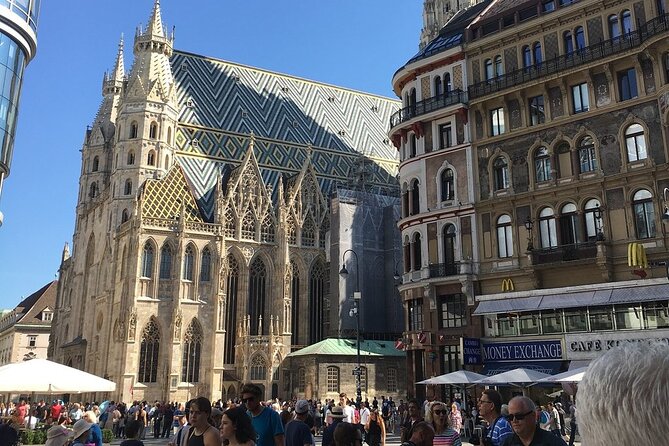
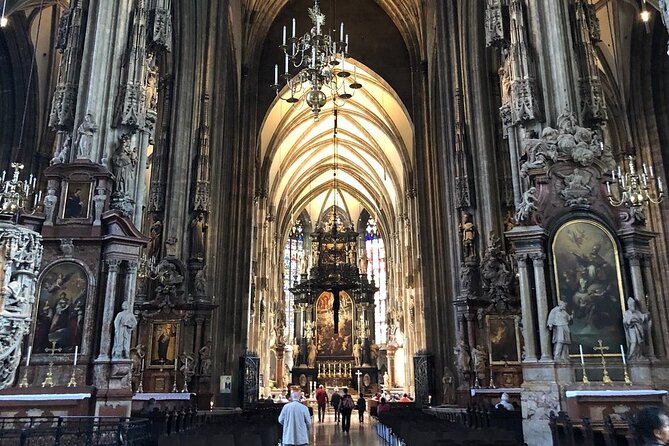
The walk ends near St. Stephen’s Cathedral, at the Lindt Chocolate Boutique, Stephansplatz 8A. This is a convenient finish in the heart of Vienna, close to the U1 and U4 subway lines at Stephansplatz.
The cathedral is not simply a final photo stop. Stephansplatz is one of the best places to continue exploring central Vienna on foot. You can look at the cathedral on your own, investigate the nearby streets, or use the guide’s suggestions to choose your next meal and museum.
The chocolate-shop ending is light and practical. You finish with a sweet option nearby, but food and drinks are not included in the price. Pairing the tour with a cathedral visit or the catacombs on your own can turn the final stop into a longer central-Vienna outing.
One useful tip is to plan extra photo time after the walk. The tour covers a lot of ground, and you may not have time to stop at every façade. Returning to favorite points afterward lets you take pictures without holding up the group.
Guide style, group size, and pace
The strongest praise centers on the guides, especially Herbert. He is described as friendly, funny, patient with questions, and strongly connected to Vienna as a local. His approach combines imperial history, modern Vienna, the world wars, architecture, restaurant advice, and stories from the streets.
That mix suits people who want more than dates and names. Herbert has also been described as willing to continue a conversation beyond the scheduled two hours when discussion is engaging. You should not count on extra time, but the detail suggests a guide who does not treat the clock as the only goal.
The group limit of 15 is a real advantage. Central Vienna has busy public spaces, and a smaller group is easier to keep together than a large crowd. You can hear the explanations more clearly and ask questions without waiting through a long line of other people.
The walk is generally easy, with flat terrain noted in the information provided. Most people can participate, but the provider does not recommend it for younger children. The subject matter and two-hour pace are better suited to adults and older children who can follow a history-focused walk.
Price, weather, and practical planning
The price is $35.07 per person. For two hours with a certified professional guide and a group capped at 15, I consider that reasonable if you value context and orientation. You are paying for the guide’s time and explanation, not museum admissions, transport, meals, or hotel pickup.
The tour operates in all weather. Vienna’s wind can feel cold in the morning and evening, especially in March, so bring a coat suited to standing outdoors. Comfortable shoes and a weatherproof layer make sense because the experience is entirely on foot.
The meeting point is easy to reach by public transport. The end point is at Stephansplatz, near the U1 and U4 station. Since the start and finish are in central Vienna, the tour fits neatly into a day of sightseeing.
Book the English departure with care. The experience is offered in English, but the provider also runs German-language tours on different days. One unhappy booking resulted from selecting a German tour while expecting English. Check the language shown for your chosen departure and on your confirmation before the day arrives.
Free cancellation is available if you cancel at least 24 hours before the start time. Changes or cancellations inside that window are not accepted for a refund.
Who should take this Vienna walk?
I would recommend it to a first-time visitor who wants a clear introduction before choosing museums and palace interiors. It also suits anyone who enjoys political and religious history, imperial stories, architecture, and practical local suggestions.
It is a good fit for solo visitors and couples who prefer a sociable small group rather than a private tour. Families with older children may manage the walk well, while the provider specifically advises against it for younger children.
You may want a different experience if you prefer long interior visits, extensive photo stops, or a relaxed pace at one landmark. This tour keeps moving and gives you the city’s broad structure. Think of it as a guided framework for your own later exploration.
Should you book Introducing Vienna?
Book this walk if you want to understand why the Hofburg, Heldenplatz, Joseph’s Square, the opera, the Albertina, and St. Stephen’s Cathedral belong in the same story. The best reasons to choose it are the local perspective, the manageable two-hour length, the small group, and the balance between imperial history and modern Vienna.
Skip it if you already know central Vienna well and want a specialist tour focused on one museum, the opera interior, or the Spanish Riding School itself. Otherwise, the $35.07 price buys a useful start, especially when taken on your first day. Just verify the English departure, dress for the weather, and leave yourself time afterward to revisit the places you want to see in detail.
FAQ
How long is the Vienna walking tour?
The tour lasts approximately two hours.
What language is the tour offered in?
The experience is offered in English. German-language departures also exist, so check the language selected at booking and on your confirmation.
How large is the group?
The maximum group size is 15 travelers.
Where does the tour start?
It starts at Michaelerplatz 3, 1010 Vienna, near St. Michael’s Church.
Where does the tour end?
It ends at the Lindt Chocolate Boutique at Stephansplatz 8A, near St. Stephen’s Cathedral and the Stephansplatz U1 and U4 subway station.
Are food, drinks, or hotel transfers included?
No. Hotel pickup and drop-off, food, and drinks are not included.
Can I cancel for a full refund?
Yes, if you cancel at least 24 hours before the scheduled start time. Cancellations or changes made less than 24 hours before the experience are not accepted for a refund.
Recently added around Vienna
- Vienna: Private tour Mauthausen and Linz★ 4.1 · 3 reviews
- 2-Day Prague Tour from Vienna with private Transfers and Lunches★ 5.0 · 3 reviews
- Vienna Self Guided Sherlock Holmes Murder Mystery Game★ 4.5 · 3 reviews
- Vienna Private Schönbrunn Palace Tour, Extra Rooms and Gardens★ 5.0 · 3 reviews
- Salzburg and Lake Region Private Day Trip from Vienna★ 5.0 · 3 reviews
- Small-group Vienna Wine Tour★ 5.0 · 3 reviews
- True Crime mobile puzzle rally Vienna★ 4.0 · 3 reviews
- Vienna: Wachau Valley Private Kayak and Wine Tour★ 5.0 · 3 reviews
Walking Tours in Vienna, compared.
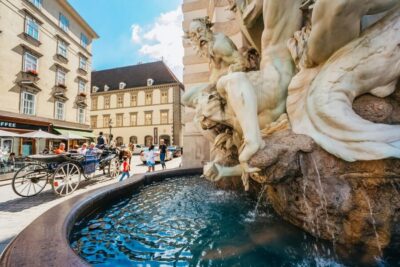
Guided Walking Tour of City Center Highlights
Read our review →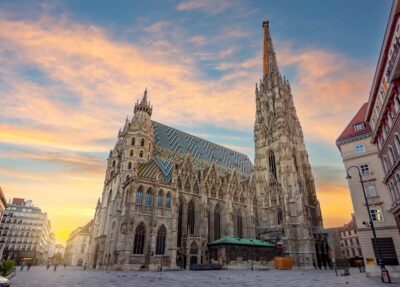
Guided Walking Tour of City Highlights & Hidden Gems
Read our review →
Vienna Historic Center Small Group Walking Tour
Read our review →
Ghosts and Legends Guided Nighttime Walking Tour
Read our review →
Browse the lists this tour appears in