
Reviewed · WALKING TOURS IN VIENNA
Walking Tour Vienna
The most unusual way to see Vienna may be on a downhill cross scooter, reaching speeds of up to 39 miles per hour on winding roads from Kahlenberg and Exelberg. You start in the center, ride by air-conditioned minivan to the hills, practice in the Prater area, then trade imperial streets for wooded slopes, vineyards, and wide views over the city.
I like the strong mix of scenery and motion. You get a look at the Prater, the colorful Vienna University of Economics and Business campus, Klosterneuburg Monastery, and the hills north of Vienna, all in about two hours. I also like the chance to begin your trip with a quick orientation near the Hofburg and Heldenplatz, where guides such as Michael and Katharina have been praised for clear stories and useful city advice.
The main consideration is that this experience needs careful clarification before you book. The detailed description centers on downhill scooters, while the listed route also mentions a walking tour from Albertinaplatz to St. Stephen’s Cathedral. If you want a traditional city walk focused on buildings, ask the operator exactly which format and route applies to your departure.
Key points at a glance
- Downhill scooter speeds can reach 39 mph: This is a real thrill ride, not a gentle sightseeing cycle.
- Kahlenberg supplies the big views: You look across Vienna after visiting the hill and the nearby Klosterneuburg Monastery.
- Practice comes before the fast runs: You ride first in the Prater and university campus area.
- The tour mixes city history with country roads: Hofburg and Heldenplatz may be part of the orientation, while the main ride runs through wooded hills and vineyards.
- A guide can shape your first day in Vienna: Michael and Katharina received especially warm praise for storytelling and recommendations.
- The price is about $22.83 per person: That is good value if the scooter portion operates as described, but less compelling if you expect a full historical city walk.
The unusual appeal of a downhill scooter in Vienna
Most first-time introductions to Vienna stay in the old center. You walk past grand façades, listen to stories about the Habsburgs, and stop at the usual squares. This experience takes a different line. After meeting in central Vienna, you ride in an air-conditioned minivan toward the Prater and then out to the wooded hills north of the city.
The vehicle transfer matters. You are not spending the whole two hours pedaling uphill or trying to reach distant suburbs on your own. The minivan handles the connecting miles, leaving your energy for the downhill sections and the views.
The scooter itself is a non-motorized two-wheeler built for descending roads. You receive a helmet and get a practice run before the serious slopes begin. That is important because the route includes sharp bends and speeds as high as 64 kilometers per hour.
You should treat this as an active outing with a sightseeing element, not as a standard walking tour with a small bike ride attached. The scenery is part of the reward, but the central attraction is the sensation of rolling quickly down the hill.
More Walking Tours in Vienna
- Vienna: Guided Walking Tour of City Center Highlights
★ 4.7 · 4,989 reviews - Vienna: Vienna Central Cemetery Guided Walking Tour
★ 4.8 · 3,307 reviews - Vienna: Guided Walking Tour of City Highlights & Hidden Gems
★ 4.9 · 2,180 reviews
Starting at the Prater and learning the scooter
The Prater is one of Vienna’s best-known recreation areas and the home of the city’s giant Ferris wheel. You begin with a short stroll through the park before collecting your scooter and helmet.
This opening section gives the experience a friendly start. The park is less intimidating than a steep public road, and it gives you time to understand the steering, balance, braking, and general feel of the machine. You also ride through the campus of the Vienna University of Economics and Business, whose colorful, modern buildings provide a sharp contrast to central Vienna’s imperial architecture.
Do not rush the practice run. The later roads coil around wooded slopes, and you need to feel comfortable slowing down before each bend. The advertised top speed is possible only under the right conditions, and the guide’s instructions should take priority over chasing speed.
This part also helps separate the activity from a motorized sightseeing ride. You are using your own balance and gravity rather than sitting passively in a vehicle. If you enjoy cycling, skating, or other activities that require control on two wheels, you may find the format appealing. If you dislike speed or feel uneasy on a bicycle, the scooter descents may be more stressful than fun.
Kahlenberg, Klosterneuburg, and Vienna from above
The first major hill section takes you toward Kahlenberg, a wooded rise north of Vienna. The hill is valued less for a single monument than for its position above the city. From here, you can pause, look across Vienna, and understand how the urban center sits within a much wider setting of hills and open ground.
You also have a chance to see Klosterneuburg Monastery. The stop is not presented as a full monastery visit, so you should think of it as a scenic and cultural viewpoint rather than a long architectural tour. Still, its presence adds more substance than a ride based only on speed.
The descent from Kahlenberg is the moment when the tour changes character. The road winds sharply down the slopes, and you need to reduce speed for bends. At the fastest points, the scooter can reach 39 miles per hour, which is enough to make the run feel serious.
I appreciate that the experience includes both a pause for views and an active descent. Without the viewpoint, the ride could feel like a quick thrill with little connection to Vienna. Without the descent, the hill visit would be closer to a regular sightseeing stop. Here, the two parts support each other.
You should also prepare for changing conditions. The experience operates in all weather, so a cold or wet day can affect your comfort. One person specifically found the cold difficult, a useful reminder that helmets and speed do not replace warm layers or weatherproof clothing.
Exelberg and the city’s vineyard hills
The route continues with two other downhill runs, including a section around Exelberg. This area is known for leafy hillsides and urban vineyards, giving you a very different impression of Vienna from the one found around the Hofburg.
The roads here are steep and winding. You cruise through green scenery, but you still need to focus on the road, the bends, and the guide’s pace. The appeal comes from the combination of motion and setting: you are close enough to Vienna to understand the city connection, yet far enough out to feel removed from the traffic and formal center.
The phrase day away from the city can sound overstated for a two-hour activity, but the change of setting is genuine. You are not simply looking at Vienna from another street corner. You leave the dense center, pass through wooded areas, and ride among hillsides where vineyards meet the city outskirts.
The tradeoff is sightseeing time. You will not stop at every scenic point for long photographs, and you cannot give your full attention to buildings while descending a twisting road. If your ideal Vienna experience is a slow walk with frequent interior visits, this is the wrong fit. If you want to add an active half-day feeling to a city break, it makes more sense.
A different way to spend an afternoon here:
- Vienna: Vivaldi’s Four Seasons Concert in Karlskirche
★ 4.7 · 14,951 reviews - Vienna: Spanish Riding School Training
★ 3.9 · 9,281 reviews - Vienna: Skip-the-cashier-desk-line Giant Ferris Wheel Ride
★ 4.5 · 7,859 reviews - Vienna: Schönbrunn Palace & Gardens Skip-the-Line Tour
★ 4.7 · 7,739 reviews
The Hofburg and Heldenplatz orientation
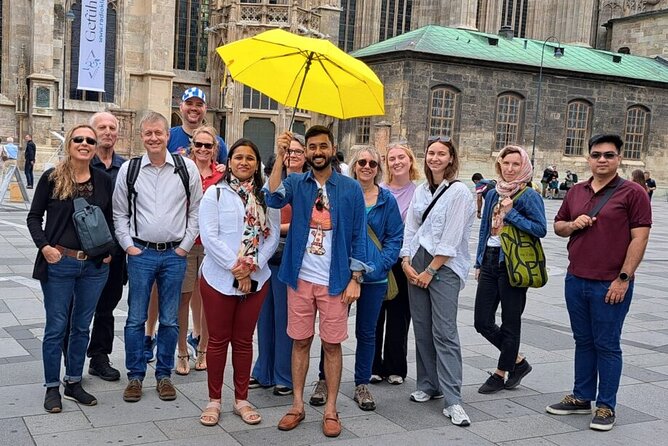
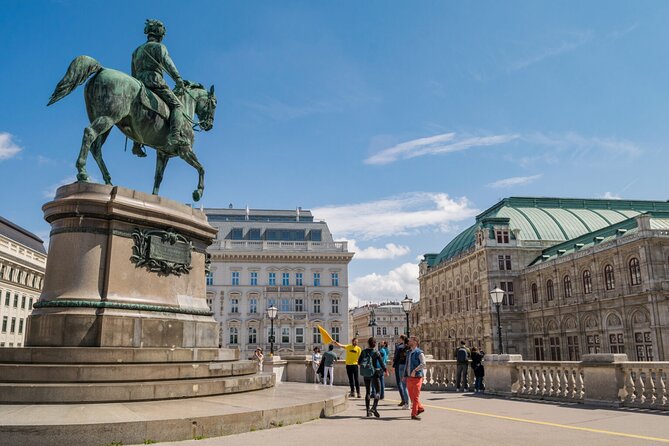
The supplied route also includes the Hofburg and Heldenplatz, with about 15 minutes at each. These stops are a more traditional part of the experience and may be especially useful if this is your first morning in Vienna.
At the Hofburg, your guide explains the setting and shares stories connected with Vienna’s imperial past. You pass by rather than receive a full palace tour, so keep your expectations in check. This is an exterior orientation, not a museum visit or a detailed examination of the palace apartments.
Heldenplatz offers impressive monuments and a chance to discuss the square’s complicated past. The open space helps you get your bearings in the old center, especially when linked with the nearby Albertinaplatz meeting point and the route toward St. Stephen’s Cathedral.
This is where the tour’s two identities can become confusing. Some of the strongest comments about the experience praise the guide’s storytelling, Habsburg background, and advice for the rest of a Vienna stay. Other feedback points out that the guide focused more on regional history than on detailed explanations of individual buildings.
I would book it as a broad introduction, not as a specialist architecture walk. If you need detailed commentary on churches, façades, and interiors, choose a tour built specifically around Vienna’s old city. If you want a quick sense of how the city developed and what to see next, the orientation can be useful.
What the guide adds to the experience
The guide has a large role here because the activity moves between several very different settings. A good guide must explain the equipment, control the pace, lead you through the hill roads, and provide a clear sense of place during the historic sections.
Michael received especially strong praise for giving a helpful first-day orientation, telling stories about the Habsburgs, and offering ideas for the rest of a Vienna visit. Katharina was also praised for making the information interesting and keeping the two-hour session moving quickly.
That kind of guide is valuable even if you already know some European history. A first-day guide can save you from treating Vienna as one long row of palaces. You get a framework for the old center, the hill country, and the places worth returning to at a slower pace.
The experience does not guarantee that every guide will emphasize the same things. You might receive more regional history than building-by-building commentary. If you have a specific interest, such as the Hofburg, churches, or Viennese architecture, ask your questions early rather than waiting for the guide to cover them automatically.
The maximum group size is 40 people. That is not truly intimate, despite the promise of personal service. A group this size may still work well during the minivan transfer and scooter instruction, but it can make questions and individual attention harder. The actual feel will depend on how many people book your departure.
Price, timing, and what you receive for $22.83
At about $22.83 per person, the cost is modest for an activity that includes a guide, minivan transportation, helmet, practice ride, and several downhill runs. If all of those elements operate together, I consider the price attractive.
The value is strongest for someone who wants more than a basic city walk. You are paying for transport to the hills, equipment, route planning, and the guide’s supervision. Organizing an equivalent outing yourself would require finding the scooter provider, reaching the hills, choosing safe roads, and working out how to return to central Vienna.
The value becomes less clear if your booking turns out to be only the historic walking portion. Some people paid around the same amount for what they understood to be a free-style orientation, while others joined free walking tours and paid only a tip. Tips are not required here, but they are welcome.
That comparison does not automatically make this experience poor value. A paid activity can be worthwhile when it includes transport and specialist equipment. It does mean you should confirm the exact route and inclusions before you commit, especially because the central walking route and the downhill scooter description do not fully match.
The activity lasts about two hours. That is long enough for an introduction but short enough to fit around museum visits, lunch, or an evening concert. It is not a full-day excursion, and you should not expect extended time at Klosterneuburg Monastery or the historic squares.
Meeting points, weather, and practical preparation
The stated starting point is Helmut-Zilk-Platz near Albertinaplatz in Vienna’s first district. The listed end point is St. Stephen’s Cathedral, with the tour finishing one or two minutes from the cathedral. Another description says you may be dropped back at the starting point or at the nearest subway station, so confirm the end arrangement on the day.
The meeting area is central and close to public transportation. That is useful because you can pair the experience with an old-city visit before or after it. The center is also the logical place to begin if you are using this as your first look at Vienna.
Dress for the forecast, not just the calendar. The activity runs in all weather, and the hill roads can feel colder than the city center. Wear secure shoes and clothing that lets you bend and control the scooter. A helmet is supplied, and children must be accompanied by an adult.
Service animals are allowed, and most people can participate. The activity still involves balance, speed, and sharp bends, so the broad participation statement should not be read as a promise that every person will find the descents comfortable.
You receive confirmation at booking, and free cancellation is available until 24 hours before the start time. Cancellation within 24 hours is not refunded. If the minimum number is not met and the operator cancels, you are offered another date or experience, or a full refund.
Who should book this Vienna experience?
I would choose this for an active first-time visitor who wants a quick sense of Vienna beyond the Ringstrasse and palace interiors. It is also a good choice if you have already seen the old center and want a change of pace, with hill views, vineyards, and a little adrenaline.
It suits confident riders who are happy to learn a new two-wheeler and control speed on a winding road. The practice run helps, but you should not book it expecting a sedate bicycle outing.
Families can consider it, but children must have an adult with them, and the speed may not suit every child. People who dislike cold, wet weather, or steep descents should think twice.
History fans may enjoy the Hofburg and Heldenplatz commentary, especially with a strong guide such as Michael or Katharina. Still, anyone seeking detailed information about Vienna’s buildings should choose a dedicated old-city architecture tour instead.
Should you book the downhill scooter tour?
Book it if you want a fast, scenic change from central Vienna, and confirm that the Kahlenberg and Exelberg scooter runs are included in your departure. The views, vineyard roads, practice session, and minivan transfer give the experience a clear identity and make the price reasonable.
Skip it if your main goal is a slow, detailed walking tour of Vienna’s churches, palaces, and façades. The historic orientation can be helpful, but the strongest reason to choose this activity is the unusual ride through the hills, not a complete lesson in the old city.
FAQ
How long does the Vienna experience last?
The experience lasts approximately two hours.
Where does the tour start?
The stated meeting point is Helmut-Zilk-Platz, at Albertinaplatz 2-3 in Vienna’s first district.
Where does the tour end?
The listed end point is St. Stephen’s Cathedral at Stephansplatz 3. The experience ends within a one to two-minute walk of the cathedral. Another stated option is a drop-off at the original meeting point or the nearest subway station.
Is the scooter motorized?
No. The downhill cross scooter is described as a high-tech, non-motorized two-wheeler.
How fast can the scooter go?
The scooter can reach speeds of up to 39 miles per hour, or 64 kilometers per hour, during the downhill sections.
What happens if I need to cancel?
You can cancel at least 24 hours before the start time for a full refund. Cancellations or changes made within 24 hours are not refunded or accepted.
Recently added around Vienna
- Vienna: Private tour Mauthausen and Linz★ 4.1 · 3 reviews
- 2-Day Prague Tour from Vienna with private Transfers and Lunches★ 5.0 · 3 reviews
- Vienna Self Guided Sherlock Holmes Murder Mystery Game★ 4.5 · 3 reviews
- Vienna Private Schönbrunn Palace Tour, Extra Rooms and Gardens★ 5.0 · 3 reviews
- Salzburg and Lake Region Private Day Trip from Vienna★ 5.0 · 3 reviews
- Small-group Vienna Wine Tour★ 5.0 · 3 reviews
- True Crime mobile puzzle rally Vienna★ 4.0 · 3 reviews
- Exploring the Gutenstein Alps★ 5.0 · 3 reviews
Walking Tours in Vienna, compared.

Guided Walking Tour of City Center Highlights
Read our review →
Guided Walking Tour of City Highlights & Hidden Gems
Read our review →
Vienna Historic Center Small Group Walking Tour
Read our review →


Ghosts and Legends Guided Nighttime Walking Tour
Read our review →

Browse the lists this tour appears in