

Reviewed · CITY TOURS IN VIENNA
Vienna Hop On Hop Off City Tour
Vienna’s hop-on hop-off bus is most useful as a moving map of the city. You can ride from the Opera to Schönbrunn, Belvedere, the Danube, and the Prater without learning Vienna’s tram system on day one. I especially like the choice of 24, 48, or 72 hours and the wide spread of stops.
I also like the 19-language audio system and the bonus music-history walk, which adds a nice Vienna-specific touch. The catch is timing: buses can be 40 to 60 minutes apart on some routes, so this works best when you plan around the schedule instead of treating the bus like an always-ready taxi.
Vienna Hop On Hop Off Tour at a Glance
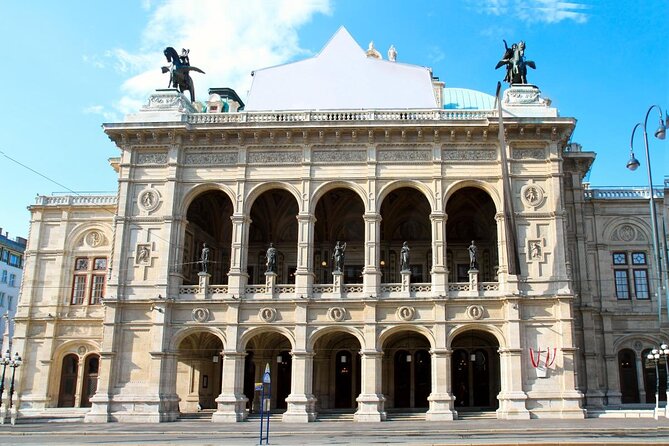
- Start at the Vienna State Opera or another listed stop: You do not have to begin at one fixed terminal.
- Pick 24, 48, or 72 hours: Your pass starts when you first board, not simply when you book it.
- Ride several distinct routes: The city center, Schönbrunn and Belvedere, the Danube and Prater, and the Vienna Woods area are all covered.
- Listen in 19 languages: English is offered, along with new Korean, Polish, and Serbian options.
- Add a music-history walk: Audio files point you toward places linked with Mozart, Beethoven, Schubert, and Strauss.
- Plan for variable waits: Some departures are reported at roughly 40 to 60-minute intervals, which can eat into a one-day visit.
What the Vienna Bus Tour Actually Gives You
At about $42.13 per person, this is not simply a two-hour sightseeing ride. The roughly two-hour figure describes a ride around a route, while the ticket itself remains valid for 24, 48, or 72 hours, depending on your selection.
That distinction matters. If you only stay on the bus for one loop, the price is fairly ordinary for a major-city sightseeing circuit. If you use the pass to connect several distant sights over two or three days, the value improves because you are also paying for transportation between major parts of Vienna.
I would think of the bus as a sightseeing shuttle with commentary. It is not a private guide, and there is no named live guide leading the group. The narration is prerecorded, and you listen through the onboard audio system.
You can board at any listed stop. The Vienna State Opera is an especially practical starting point because several routes begin or pass there, but you should check the route you need before boarding. Your pass becomes active on your first ride, so the clock does not begin simply because you bought the ticket.
More City Tours in Vienna
- Vienna: Guided Walking Tour of City Center Highlights
★ 4.7 · 4,989 reviews - Vienna: City Cruise with Optional Lunch
★ 3.4 · 3,982 reviews - Vienna: City Cruise
★ 3.3 · 2,978 reviews
The Central Vienna Route: Opera, Museums, and the Ring
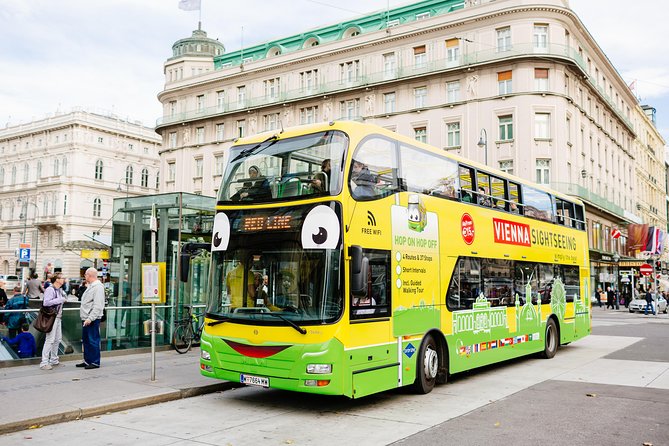
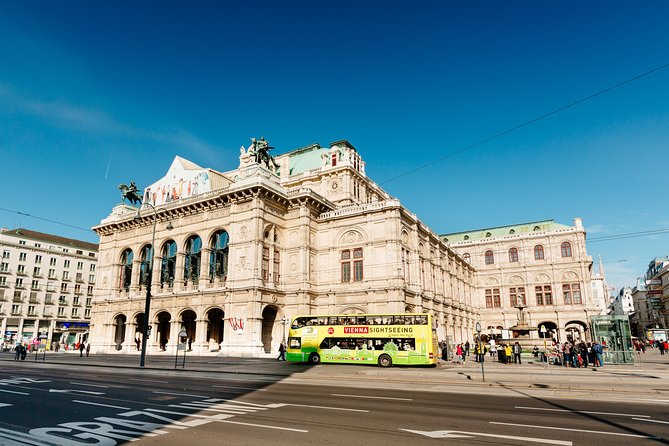
The central circuit begins and ends at the Vienna State Opera, then works around the Ringstrasse and nearby districts. This is the route I would use first because it gives you a quick orientation to Vienna’s monumental center.
From the Opera, the bus reaches the Kunsthistorisches Museum Wien, one of the city’s major art museums. Even if you do not get off, this stop places you near Vienna’s imperial museum quarter and the broad ceremonial streets around it.
Mariahilfer Straße offers a different side of the city. It is a major shopping street, so it is more useful for a break, a meal, or a bit of urban wandering than for grand architecture. The Rathaus stop brings you near City Hall, while the Liebenberg Monument and Votive Church show off the Ring’s monumental public buildings.
The Sigmund Freud Museum stop is useful if psychology, intellectual history, or Vienna’s turn-of-the-century culture interests you. Morzinplatz and Schwedenplatz bring you toward the Danube Canal and the central transport network.
The Museum of Applied Arts and Stadtpark complete the circuit. Stadtpark is especially handy for the Johann Strauss monument, and the route’s repeated Opera stop makes it easy to transfer or begin another circuit.
The main limitation is that prerecorded narration can be hard to follow if the sound is low or the timing slips slightly from the view outside. Headphone sockets have also been reported as unreliable on some buses. If your audio cuts out, try another seat rather than assuming the whole system is down.
The Palace Route: Schönbrunn and Belvedere
The second major route links the Opera with Wien Westbahnhof, Schönbrunn Palace, Vienna Central Station, Belvedere 21, Belvedere Palace, and Schwarzenbergplatz.
This is the route with the greatest practical value for a first visit because Schönbrunn and Belvedere sit away from the compact historic center. A bus ride lets you see how imperial Vienna extends beyond the Ring without arranging separate transport for every stop.
Schönbrunn Palace is the headline stop. The palace grounds are extensive, so getting off here can easily become a half-day visit rather than a quick photo break. If you want to tour the interiors and walk the gardens, leave enough time before worrying about the next bus.
Belvedere Palace offers another major palace setting, with formal grounds and art attractions. Belvedere 21 is a separate modern art venue, so do not confuse the two stops when deciding where to get off. The route also calls at Vienna Central Station, which can be convenient if your hotel or onward train is nearby.
I would not use this route casually if you have only a few hours. Buses may be infrequent, and a missed departure can leave you standing at a palace stop longer than planned. For a one-day visit, choose either Schönbrunn or Belvedere unless you are willing to spend much of the day riding and waiting.
The Danube and Prater Route: Ferris Wheel to Danube Tower
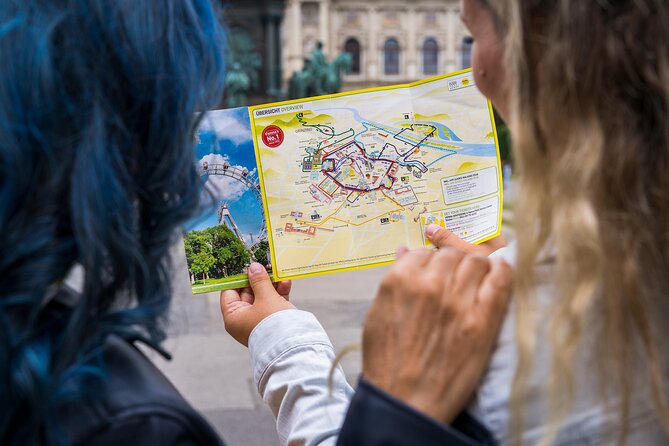
The longer route begins around the Museum of Applied Arts and Stadtpark, then passes the Johann Strauss monument, the Opera, the MuseumsQuartier, City Hall, and the central stops before heading east.
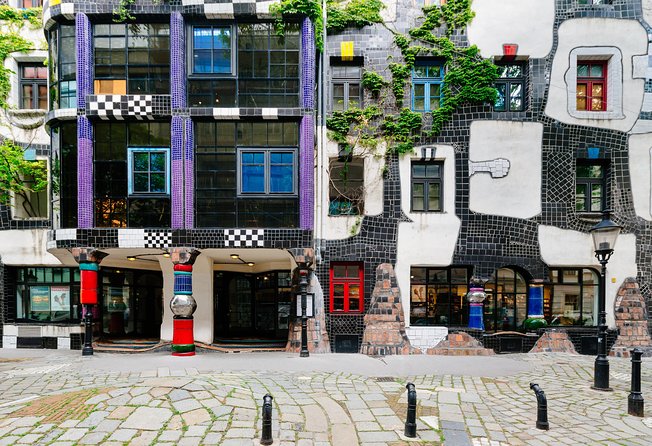
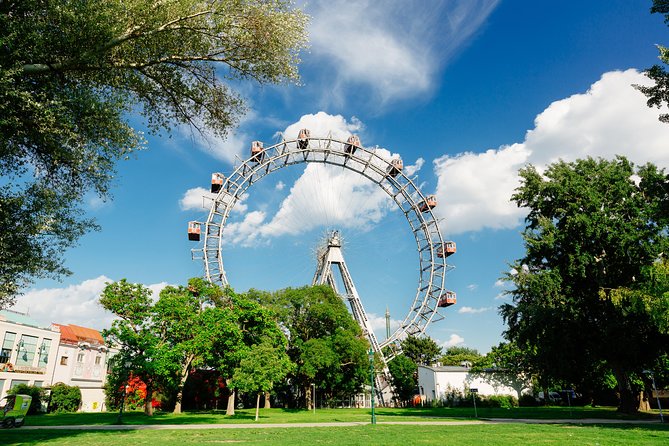
After Schwedenplatz, the scenery changes. You reach Kunst Haus Wien, the Hundertwasser museum, then the Viennese Giant Ferris Wheel and the DDSG Blue Danube boat company. From there, the bus continues toward the Danube Tower, Alte Donau, the Vienna International Centre, Reichsbrücke, Praterstern, Taborstraße, Schwedenbrücke, and back to the Museum of Applied Arts.
This route is valuable because it shows parts of Vienna you might otherwise skip. The Prater is home to the famous Ferris Wheel, while the Danube Tower gives you a high viewpoint over the city. The Vienna International Centre and Reichsbrücke show a more modern, riverside Vienna than the palace and museum routes do.
The route is also the least efficient for a tight schedule. It covers many stops, and the full ride can take a large part of your day. I would use it when you want a broad city survey, when the Danube sights are high on your list, or when you have a 48 or 72-hour pass.
The Danube Tower has been a particularly worthwhile discovery for some riders who might not have placed it on their own itinerary. That is a good example of the bus’s strength: it can reveal a worthwhile outlying sight without requiring much advance planning.
A few more Vienna half-days to weigh up
- Vienna: Vivaldi’s Four Seasons Concert in Karlskirche
★ 4.7 · 14,951 reviews - Vienna: Spanish Riding School Training
★ 3.9 · 9,281 reviews - Vienna: Skip-the-cashier-desk-line Giant Ferris Wheel Ride
★ 4.5 · 7,859 reviews - Vienna: Schönbrunn Palace & Gardens Skip-the-Line Tour
★ 4.7 · 7,739 reviews
The Vienna Woods Route: Cobenzl and the Hills
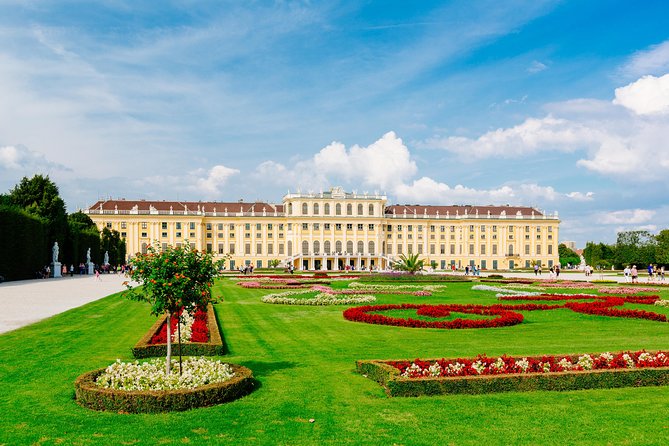
The fourth route starts at Votive Church and heads toward Gartenpalais Liechtenstein, Sandgasse, Cobenzlgasse, Cobenzl Aussicht, Himmelstraße, Spittelau, and back to Votive Church.
This is the route to choose for a change of pace from museums and imperial buildings. Cobenzl Aussicht provides a hilltop viewpoint, while Himmelstraße and the surrounding Vienna Woods area offer a quieter edge to the city.
You need to watch the timetable here. The route has fewer stops and heads away from the core sightseeing zone, so it is not a route to squeeze in between two palace visits. It makes more sense with a 48 or 72-hour ticket, when you can let the ride occupy a relaxed morning or afternoon.
The route is also described as the Green Line, and it is included with the 24, 48, and 72-hour ticket options. Check current operating times when you board, since a route that runs less often can be difficult to use spontaneously.
Audio Commentary: Useful, but Not a Live Tour
The audio commentary provides information about Vienna as you pass the main landmarks. It is available in 19 languages, including English, Korean, Polish, and Serbian. The booking information lists English as the offered tour language, but the onboard audio gives you broader language choices.
I like prerecorded commentary when I want flexibility. You can board late, leave early, and follow your own plan without trying to stay beside a guide. It also means you can ride quietly when you have had enough narration.
The tradeoff is that the experience depends on the equipment. Some riders have found the narration clear and informative, while others have found it difficult to hear, slightly out of sync, or drowned out by nearby conversations. The narration is sufficient for basic context, but it will not respond to questions or adjust its pace to what you are looking at.
The bus staff can help with basic route matters, though driver assistance has not always been consistent. I would download or keep the route map handy and use the bus mainly for transportation plus background information, not as your only source of detail about Vienna.
The Bonus Music Walk Around Vienna
The included self-guided music-history audio tour is one of the more distinctive extras. It directs you to city locations connected with famous composers, including Mozart, Beethoven, Schubert, and Strauss.
This is not a guided walk with a person meeting you at a set time. You receive audio files and follow the route independently. That makes it easy to use early in the morning, after dinner, or between bus rides.
I would pair it with the central route. The Johann Strauss monument and the Opera area fit naturally with Vienna’s musical identity, and the walk gives you a reason to explore on foot after seeing the city from above street level.
The extra is most valuable if you enjoy classical music or want more than a quick palace checklist. It also helps correct a common weakness of bus tours: you see many places but rarely feel connected to them. A self-guided walk slows you down and puts your feet on the same streets associated with Vienna’s composers.
Timing Problems You Should Plan Around
The biggest weakness is not the number of sights. It is the wait between buses.
Some departures may be 40 to 60 minutes apart, and a longer wait has been reported at a stop on the route to a specific sight. That is a serious issue if you have only one day in Vienna. A 30-minute wait is frustrating; a full hour can erase the time you hoped to spend inside a museum or palace.
I suggest three simple habits:
- Check the route before getting off: Make sure the next bus serves the stop or connection you need.
- Keep the map visible: It can be difficult to tell where you are from the bus, especially on the longer routes.
- Use the pass over more than one day when possible: The extra time turns missed buses from a crisis into a minor nuisance.
The service has also received praise for clean buses, careful driving, pleasant staff, and punctual departures. Those strengths are real, but they are not perfectly consistent across every route or shift. I would allow extra time rather than building a palace reservation around the next advertised bus.
Boarding, Ticket Exchange, and Comfort
The ticketing process can be less simple than expected. Some boarding points accept the voucher directly, while redemption may be limited to particular locations. Finding the correct exchange point has caused confusion, and barcode-reading problems have led to delays at the kiosk.
Before you set out, identify where your voucher must be exchanged. Do not assume every stop can issue the physical ticket. This small bit of preparation can save you a long walk and a frustrating start.
Onboard comfort is basic sightseeing-bus comfort. Seats have been described as slightly uncomfortable on longer rides, and air conditioning has not always been strong. One serious complaint involved cigarette smoke inside a bus, so if you have asthma or are sensitive to smoke, pay attention to the conditions before settling in for a long circuit.
Wi-Fi has also been advertised but did not always work, and some headphone ports have failed. I would not count on the bus for internet access. Bring your own city map and treat the audio as helpful when available, not as the sole way to understand your location.
Service animals are allowed, and the tour is near public transportation. Most people can participate, but the information provided does not specify vehicle-by-vehicle accessibility details, so ask the operator if you need a particular boarding arrangement.
Who Gets the Best Value at $42.13?
At $42.13, the pass makes the most sense for you if you want to cover far-flung sights without piecing together every connection. A 48 or 72-hour pass gives you the best chance to use the palace, Danube, central, and Vienna Woods routes at a relaxed pace.
The 24-hour option can still work well. Use it for one full sightseeing day, ride the central circuit for orientation, then get off at one or two carefully chosen outlying sights. It becomes poor value if you spend much of that day waiting at stops.
Families and first-time visitors may appreciate the simple route idea, especially when everyone is tired of navigating. The bus also suits anyone who wants an overview before choosing which museums and palaces deserve a proper visit.
Independent walkers may prefer Vienna’s excellent public transportation and their own route plan. If you dislike recorded narration, dislike waiting, or need a tight schedule, the bus can feel restrictive. The experience is strongest when you are flexible.
Should You Book This Vienna Bus Tour?
I would book it for a first Vienna visit lasting at least two days, especially if Schönbrunn, Belvedere, the Prater, and the Danube Tower are all on your list. The broad route network and music walk give you more than a standard central-city loop.
For one day, I would book only if you accept a slower pace and choose your stops carefully. Start early, confirm the voucher exchange point, note the next departure, and do not leave a palace without checking how long you may wait.
Book this for coverage and convenience, not for a perfectly timed guided lesson. You get clean buses much of the time, useful recorded commentary, careful drivers on many departures, and a practical way to connect Vienna’s major sights. You also get variable waits and equipment that may not always cooperate. With realistic timing, it can be a good city introduction. With a packed schedule, Vienna’s regular public transport may serve you better.
FAQ
How long is the Vienna Hop On Hop Off tour?
A ride around a route takes approximately two hours, but your ticket is valid for 24, 48, or 72 hours depending on the option selected.
Where can I start the tour?
You can board at any stop on the itinerary. The Vienna State Opera is one listed starting point and is served by several routes.
Which Vienna sights does the bus visit?
Stops include the Vienna State Opera, Kunsthistorisches Museum, Schönbrunn Palace, Belvedere Palace, Belvedere 21, City Hall, the Prater Ferris Wheel, Danube Tower, the Vienna International Centre, and several other central and outlying locations.
Is the Green Line included?
Yes. The Green Line is included with the 24-hour, 48-hour, and 72-hour ticket options.
In how many languages is the audio commentary available?
The onboard audio commentary is available in 19 languages. New listed options include Korean, Polish, and Serbian.
Is there a live tour guide?
The tour uses prerecorded audio commentary rather than a live guide.
What is the music-history tour?
It is a self-guided audio tour featuring locations associated with Mozart, Beethoven, Schubert, and Strauss.
Can I cancel the booking?
You can cancel for a full refund if you do so at least 24 hours before the experience start time. Cancellations or changes made within 24 hours are not accepted for a refund.
Recently added around Vienna
- Vienna: Private tour Mauthausen and Linz★ 4.1 · 3 reviews
- 2-Day Prague Tour from Vienna with private Transfers and Lunches★ 5.0 · 3 reviews
- Vienna Self Guided Sherlock Holmes Murder Mystery Game★ 4.5 · 3 reviews
- Vienna Private Schönbrunn Palace Tour, Extra Rooms and Gardens★ 5.0 · 3 reviews
- Small-group Vienna Wine Tour★ 5.0 · 3 reviews
- Salzburg and Lake Region Private Day Trip from Vienna★ 5.0 · 3 reviews
- True Crime mobile puzzle rally Vienna★ 4.0 · 3 reviews
- Vienna: Wachau Valley Private Kayak and Wine Tour★ 5.0 · 3 reviews
City Tours in Vienna, compared.
Guided Walking Tour of City Center Highlights
Read our review →
Guided Walking Tour of City Highlights & Hidden Gems
Read our review →

Skip-the-Line Schonbrunn Palace Guided Tour and Vienna Historical City Tour
Read our review →
Small Group Guided Walking Tour of City Highlights
Read our review →Browse the lists this tour appears in