
Reviewed · CITY TOURS IN VIENNA
Vienna City Bike Tour
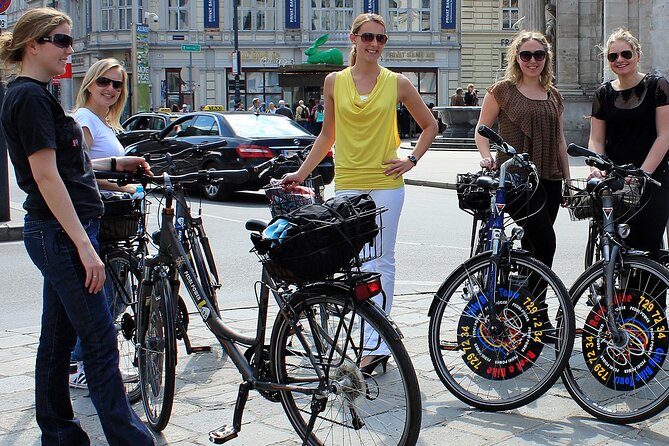
Vienna reveals itself quickly from a bicycle. In three hours, you can move from grand central avenues to parks, the Danube, and striking modern buildings without spending half your day on foot. Guides such as Horst, Lisa Maria, Ute, and Sebastian add stories about architecture, politics, daily life, and the people behind the city’s polished façades.
I like the well-planned pace, with frequent stops and enough riding to cover real ground. I also like the chance to see more than the standard palace-and-cathedral circuit, including green spaces and, on some routes, the Hundertwasser House and Village. The main consideration is group size: with up to 18 people, and no guarantee of a microphone, hearing every word can be difficult at busy crossings.
Key points to know before you book
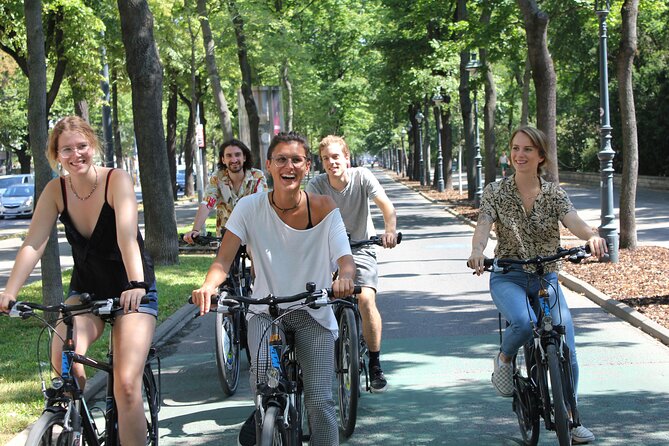
- Three hours on a mostly flat route: The ride is active but not presented as a strenuous workout, with regular stops for sightseeing and stories.
- Routes vary by departure: Morning, afternoon, and evening rides may cover different combinations of central Vienna, parks, the Danube, and other districts.
- A strong first-day activity: You get a broad look at the city and useful ideas for what to visit later.
- Guides shape the experience: Horst, Lisa Maria, Ute, Sebastian, Manuela, Petros, and others are praised for clear English, humor, local advice, and historical detail.
- City riding still requires confidence: Most of the route uses bike lanes, but you may share roads with cars, pedestrians, and other cyclists.
- Good value for active sightseers: The $59.26 price includes a bike, professional guide, and three-hour tour, but not food, drinks, or hotel transport.
Why a bicycle works so well in Vienna
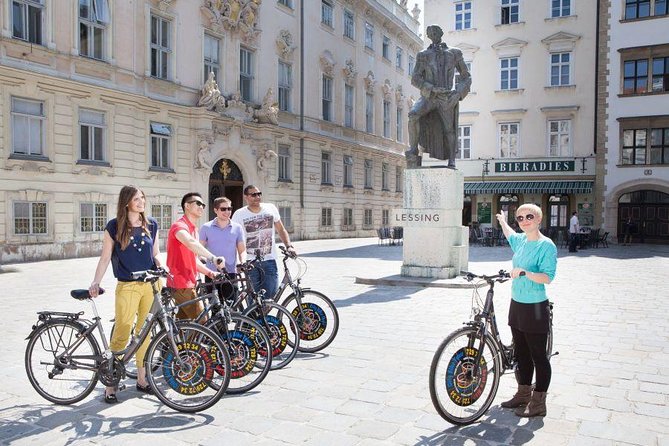
Vienna is a large capital, but its central sights are spread across several districts and open spaces. Walking between them can be pleasant, yet it takes time. Public transport is excellent, though underground trains and trams do not give you much sense of how one neighborhood connects to the next.
A bicycle fills that gap. You can cover the grand center, ride through quieter green areas, and reach farther points without the stop-and-start feeling of a bus tour. I see this as an orientation ride first and a sightseeing tour second. You leave with a mental map of Vienna, not just a collection of isolated monuments.
The route is described as relaxed, but relaxed does not mean stationary. You will cycle for much of the three hours, with stops to hear explanations and look around. The ride is generally flat and has been described as manageable for people who do not cycle often, though city traffic and shared paths require attention.
One particularly useful point is the regular stop-and-go rhythm. A rider who has not been on a bicycle for years can get a break between sections. You should still feel comfortable starting, stopping, steering, and changing direction in an urban setting.
More City Tours in Vienna
- Vienna: Guided Walking Tour of City Center Highlights
★ 4.7 · 4,989 reviews - Vienna: City Cruise with Optional Lunch
★ 3.4 · 3,982 reviews - Vienna: City Cruise
★ 3.3 · 2,978 reviews
Starting at Bösendorferstraße in central Vienna
The tour begins at Bösendorferstraße 5 in Vienna’s first district. This central location is practical for anyone already sightseeing around the Ringstrasse, the State Opera area, or the historic core. The activity ends at the same meeting point, so you do not have to arrange a separate pickup at the end.
Bring bottled water. Food and drinks are not included, and three hours of cycling can make even an easy ride feel dry, especially in warm weather. Morning, afternoon, and evening departures give you some flexibility, but the light and temperature will change the character of the ride.
Allow a few extra minutes to find the shop. The meeting point is not always obvious from the tour name alone, and the business signage may not immediately match the name used when booking. This is a small detail, but it matters when you are trying to join a group on time.
Central sights, grand buildings, and useful orientation
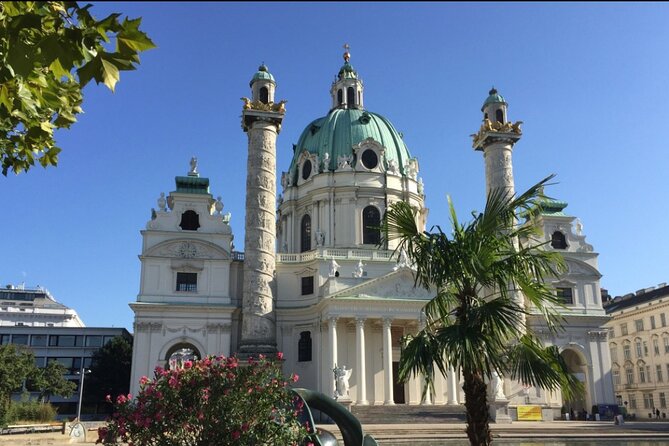
The central section is where you get the classic Vienna introduction. Expect major historic sights, impressive façades, broad streets, and the architectural detail that makes the inner city feel like an open-air history lesson.
The guides focus on the buildings themselves, but the better moments go beyond dates and names. You may hear about the personalities, political drama, architectural choices, and everyday Viennese life connected to the places you pass. Sebastian, for example, has been praised for handling questions about architecture as well as telling lighter stories about past political figures.
That mixture is important. A tour that only lists emperors and construction dates can become a blur. Personal stories and small bits of city life help you remember what you saw after the bicycles are returned.
You will not stop for a long visit inside each landmark. This is not an admission tour, and the value comes from seeing many parts of Vienna from the outside while someone explains what deserves your attention. If you want detailed interiors, museum time, or a close study of one palace, you need a separate visit.
The ride can also help you choose where to return later. You might pass several places that look interesting but would be easy to miss on foot. Guides often offer recommendations for lunch and further sightseeing, giving you a practical next step after the tour.
Parks, the Danube, and Vienna beyond the postcard center
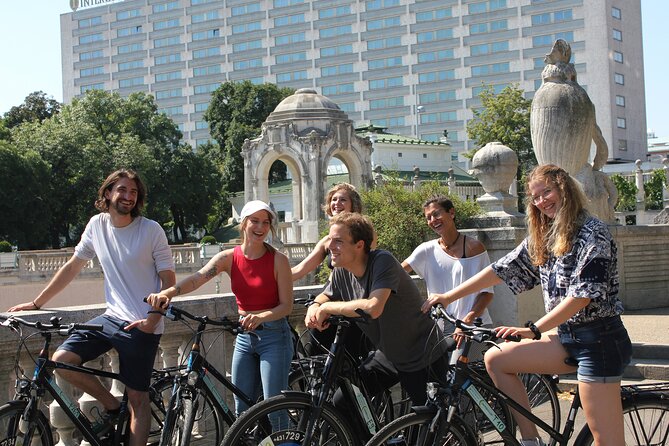
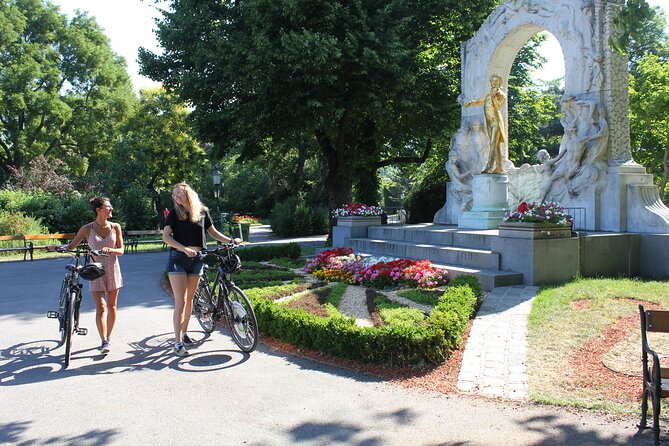
The best reason to choose a bicycle over a standard walking tour is the change of scenery. The route is not limited to the most famous streets. Depending on the departure, you may ride through city parks, green areas, along the Danube, or toward parts of Vienna that feel less formal than the historic core.
One evening route included central sights, the Danube, and a large city park. That combination sounds especially appealing after a hot day of palace interiors and crowded streets. As daylight fades, the ride can become a calmer way to see the city, though the guide may adjust the route to suit the amount of light.
Other outings have included parks and areas outside the immediate center. This gives you a better sense of Vienna as a lived-in city, rather than only the imperial stage set most first-time visitors see. You might notice how quickly the grand center gives way to open space and ordinary city life.
The route is not identical at every departure, so do not book expecting one fixed checklist. The morning, afternoon, and evening rides have varying routes. If one particular sight matters most to you, confirm the day’s plan before booking rather than assuming it will be included.
Naschmarkt is a useful example. It has not always been part of the route, and you may need to visit it separately. The same applies to any single landmark you have researched in advance. This tour covers a broad slice of Vienna, not every major attraction.
More Bike Tours in Vienna:
- Classic Vienna: 3-Hour Guided Bike Tour
★ 4.7 · 1,846 reviews - Wachau Valley Wine Tasting Bike Tour from Vienna
★ 5.0 · 829 reviews - Vienna: City Highlights Guided Bike Tour
★ 4.6 · 496 reviews - Grape Grazing: Wachau Valley Winery Biking Tour
★ 4.8 · 468 reviews
Hundertwasser House and other architectural surprises
A stop at Hundertwasser House and Village has been a favorite part of some routes. The colorful, irregular architecture offers a sharp contrast to Vienna’s orderly imperial buildings. It is the kind of stop that makes a city bike tour worthwhile because you can connect two very different sides of Vienna in one outing.
Do not count on that stop every time, since routes vary. Still, the possibility adds variety beyond the usual central sights. If you enjoy buildings, urban design, or unusual city spaces, listen closely when the guide explains how Vienna’s architectural styles sit beside one another.
The tour also works well for people who want context before visiting museums or historic interiors. You get a quick visual survey first. Later, you can return to the places that caught your eye with a better sense of their location and importance.
How difficult is the ride?
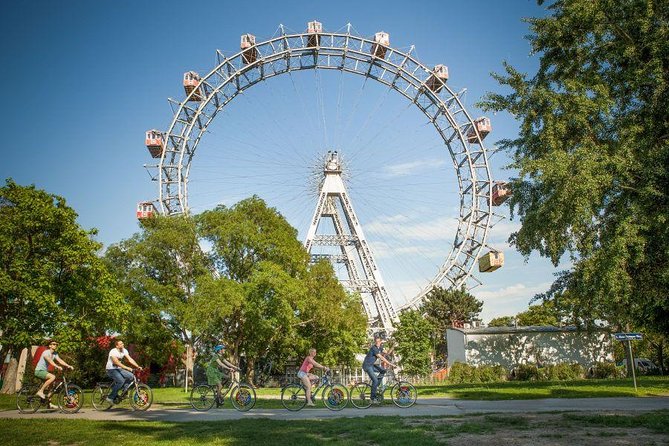
The physical level is moderate overall, but the cycling itself is usually described as easy and fairly flat. The stops keep the pace from becoming a continuous workout, and guides generally wait for the group at crossings or when someone has trouble with a gear.
That said, this is not a private ride in a park. You may use designated cycle lanes, but some sections involve roads, pedestrians, traffic, and busy intersections. A short signal at a crossing can create a problem for a large group, even when the guide gathers everyone on the far side.
You should be comfortable riding in a city. You do not need to be an athletic cyclist, but you should be able to maintain control around other bikes and vehicles. If you are timid on urban streets or have very limited recent cycling experience, the ride may feel more demanding than the word relaxed suggests.
The minimum age is 12. The tour suits families with active teenagers, couples, and adults who want a half-day activity with some exercise. One evening outing worked well for a parent and young teenage son, which gives you a useful picture of the family appeal.
Bikes are included, and the equipment has generally been described as being in good condition. Some people have upgraded to electric bikes, but the supplied information does not state whether that option is available on every departure or at what extra cost. Ask before you arrive if an e-bike matters to you.
The guides make the biggest difference
The strongest part of this experience is the human one. A good city cycling guide must do several jobs at once: lead safely, keep the group together, speak clearly at stops, answer questions, and adjust the pace for mixed abilities.
The named guides receive especially warm attention. Horst is praised for humor, historical anecdotes, and practical help when riders need assistance. Lisa Maria is noted for excellent English, friendly energy, city knowledge, and useful lunch suggestions. Ute is praised for explaining architecture and showing more than only the headline sights.
Sebastian brings a mix of historical detail, architectural answers, and stories about political figures. Manuela has been singled out for making the three-hour route feel short, while Petros is credited with keeping the group together in a calm and orderly way.
Guide quality can vary from one departure to another, as it does on any group activity. The key advantage is that you do not have to navigate Vienna while trying to read a map. Someone else leads, and you can focus on the streets and buildings around you.
The main weakness is sound. Groups may reach the advertised maximum of 18 people, and some past outings have felt closer to 20. Without a microphone, you will want to stay near the guide during stops. If you drift toward the back, you may miss parts of the commentary, especially beside traffic or at a busy intersection.
Is $59.26 a fair price?
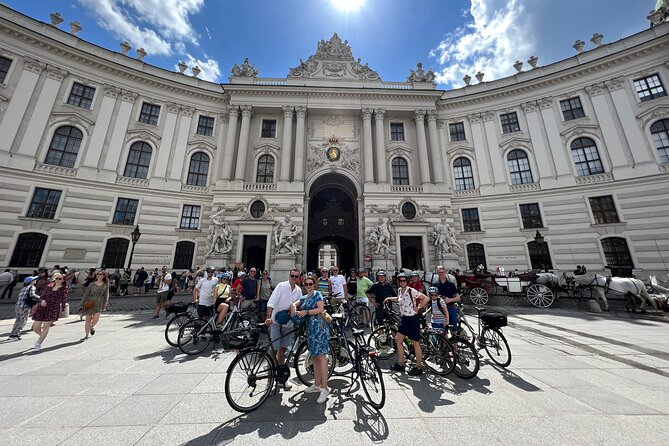
At $59.26 per person, this is not the cheapest way to see Vienna, but the price includes three useful things: the bicycle, a professional English-speaking guide, and three hours of guided riding.
The value depends on how you use the tour. If you are in Vienna for only a short stay, the ability to see central sights, parks, and farther areas in one outing can save time. If you already know the city well, some central stops may repeat places you have visited, and you may prefer a focused neighborhood ride or an independent rental.
I think the price makes the most sense on your first day or second morning. You get an overview, learn which districts connect, and collect recommendations for the rest of your stay. It is less compelling if your main goal is a slow meal at Naschmarkt, a long museum visit, or detailed time inside individual monuments.
Hotel pickup and drop-off are not included, so you need to reach Bösendorferstraße on your own. Public transport is nearby, which keeps that part simple. Food and drinks are also extra, so plan a meal before or after the ride rather than expecting a refreshment stop.
Weather, timing, and cancellation details
The experience depends on good weather. If poor conditions force cancellation, you will be offered another date or a full refund. The same choice applies if the minimum number of participants is not reached.
You can cancel for a full refund up to 24 hours before the start time. Changes or cancellations inside that 24-hour window are not accepted for a refund, and the cut-off uses Vienna local time.
Morning rides may be best if you want cooler conditions and a full day afterward. Afternoon departures fit a later start, while evening rides can offer softer light and a more comfortable temperature in summer. Since routes vary, the departure time affects more than just your schedule.
Who should book the Vienna City Bike Tour?
I would book this for a first-time visitor who wants to understand Vienna’s layout quickly. It is also a good match for anyone who prefers seeing a city from the street instead of spending the day inside vehicles or museums.
Families with teenagers, active couples, and solo visitors who like a social group activity should find the format appealing. The minimum age of 12 makes it suitable for older children who can manage city cycling.
I would think twice if you dislike riding near traffic, need a very quiet tour, or want a small private group. A group of up to 18 can be harder to hear and manage than a group of 10 or 12. You should also choose another activity if rain is likely and your schedule has no room for a weather change.
Should you book it?
Book the Vienna City Bike Tour if you want a practical first look at the capital, enjoy light exercise, and like having a local guide connect grand buildings with parks, the Danube, architecture, and everyday city life.
The $59.26 cost is reasonable for the bike, guide, and three-hour route, especially early in your stay. Just arrive ready for urban cycling, carry water, stay close enough to hear the guide, and treat the route as a broad introduction rather than a complete tour of every landmark.
FAQ
How long is the Vienna City Bike Tour?
The tour lasts approximately three hours. Some outings may run slightly longer, but three hours is the planned duration.
Where does the tour begin and end?
It begins at Bösendorferstraße 5, 1010 Vienna, Austria, and returns to the same meeting point at the end.
What is included in the price?
The price includes the three-hour bike tour, a professional guide, and bike rental.
Is the tour suitable for children?
The minimum age is 12. Participants should also have a moderate level of physical fitness and be comfortable riding a bicycle in a city.
Are the routes the same for every departure?
No. Morning, afternoon, and evening departures have varying routes. Some routes may include central sights, parks, the Danube, or Hundertwasser House and Village.
What happens if the weather is bad?
The experience requires good weather. If it is canceled because of poor conditions, you will be offered a different date or a full refund.
Recently added around Vienna
- Vienna: Private tour Mauthausen and Linz★ 4.1 · 3 reviews
- 2-Day Prague Tour from Vienna with private Transfers and Lunches★ 5.0 · 3 reviews
- Vienna Self Guided Sherlock Holmes Murder Mystery Game★ 4.5 · 3 reviews
- Vienna Private Schönbrunn Palace Tour, Extra Rooms and Gardens★ 5.0 · 3 reviews
- Small-group Vienna Wine Tour★ 5.0 · 3 reviews
- Salzburg and Lake Region Private Day Trip from Vienna★ 5.0 · 3 reviews
- True Crime mobile puzzle rally Vienna★ 4.0 · 3 reviews
- Exploring the Gutenstein Alps★ 5.0 · 3 reviews
City Tours in Vienna, compared.
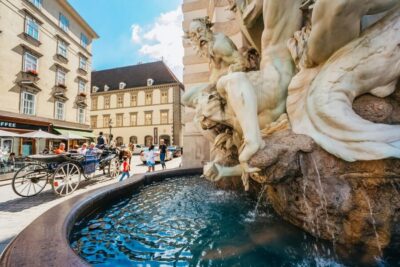
Guided Walking Tour of City Center Highlights
Read our review →
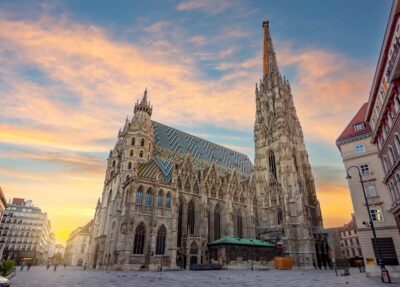
Guided Walking Tour of City Highlights & Hidden Gems
Read our review →
Skip-the-Line Schonbrunn Palace Guided Tour and Vienna Historical City Tour
Read our review →
Small Group Guided Walking Tour of City Highlights
Read our review →Browse the lists this tour appears in