
Reviewed · SMALL GROUP TOURS
Small Group Tour: Balkans & Central Europe from Athens to Vienna
The big draw here is the sheer sweep of the route. In 21 days, you move from Delphi and Meteora to Ottoman bazaars, Balkan lakes, Adriatic towns, war memorials, wine country, Budapest, Bratislava, and Vienna. It is a practical way to see a part of Europe that is rewarding but still awkward to plan independently.
I like the intimate maximum of 10 people and the use of private transport, which should make border crossings and long road days easier. I also like the food stops, including Albanian byrek, qofte, raki, and the farm visit at Mrizi i Zanave. The main drawback is the pace: many stops last only an hour, so you will see a lot but rarely have time to explore deeply.
Key points to know before booking
- Nine clearly named countries on the route: Greece, Albania, North Macedonia, Kosovo, Montenegro, Bosnia and Herzegovina, Serbia, Hungary, Slovakia, and Austria are named across the itinerary, though the tour is marketed as covering 10 countries. Confirm the final country count before paying.
- A maximum of 10 people: The small group makes a long, road-based trip more personal and easier to manage.
- Private transport from Athens to Vienna: You do not need to arrange buses, trains, border transfers, or fuel costs yourself.
- Breakfast and three-star hotels included: Lunches, dinners, drinks, snacks, and single-room supplements cost extra.
- Many UNESCO sites: Delphi, Meteora, Gjirokaster, Berat, Ohrid, Decan, Mostar, Kotor, and Buda Castle add real cultural weight.
- A fast itinerary: Expect regular early starts, several border crossings, and sightseeing blocks of 30 minutes to three hours.
Athens to Meteora: a strong Greek opening
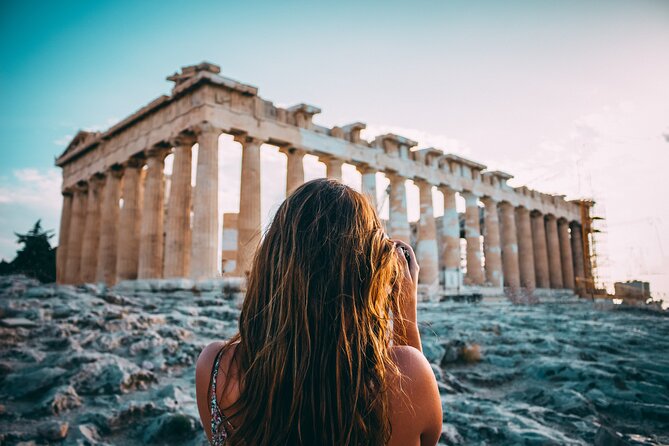
The tour begins with pickup at your Athens hotel at 9:00 a.m. Athens itself is not part of the guided sightseeing, so plan to spend time there before the tour starts. This arrangement works well if you want to combine the trip with several independent days in the Greek capital.
From Athens, the first major stop is Delphi. You get about an hour at this UNESCO site, enough to see the Temple of Apollo, the Treasury of the Athenians, the theater, stadium, museum, and the famous Charioteer of Delphi. The setting is as important as the ruins. Delphi sits in a dramatic mountain area, and the ancient Greeks treated it as the center of the world.
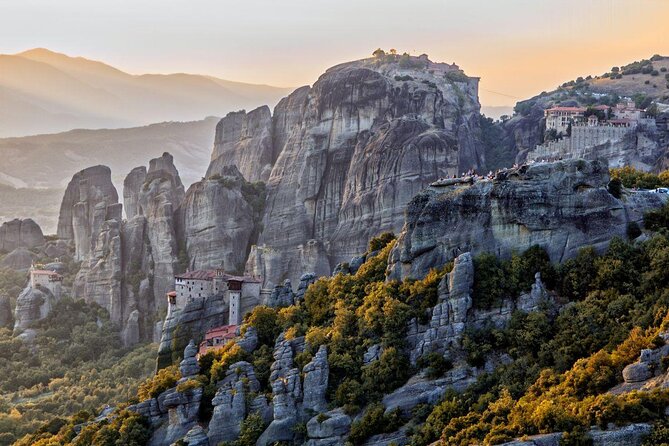
The day continues to Meteora, where monasteries perch on tall rock pillars. Two hours are scheduled here, with special attention to the sunset. That timing is a fine choice, but keep expectations realistic. Delphi, Meteora, and the road between them make Day 1 a full travel day, not a gentle introduction.
More Small Group Tours in Austria:
- Vienna Historic Center Small Group Walking Tour
★ 5.0 · 1,746 reviews - Budapest Small-Group Day Trip from Vienna
★ 5.0 · 545 reviews - Wachau Valley Small-Group Tour and Wine Tasting from Vienna
★ 5.0 · 540 reviews
Ioannina and Gjirokaster reveal the Ottoman side of the region
Day 2 takes you to Ioannina, a pleasant old city with Byzantine and Ottoman traces. The castle is the main visit, with narrow streets and old buildings inside its walls. You also get free time around the old town, which is useful because the schedule allows you to pause at a cafe rather than race from sight to sight.
Later, the route crosses into Albania and reaches Gjirokaster. The Stone City is one of the trip’s best stops. Its houses climb the hillside in pale stone, and the old bazaar gives you a chance to browse handmade goods. The schedule places the main visit on Day 3, including the bazaar and Skenduli House.
Skenduli House is especially worthwhile because the interior remains original. This kind of visit gives you more than a photo stop. You see how a wealthy traditional home functioned, rather than simply walking past another attractive facade.
The Gjirokaster castle is also central to the visit, although the supplied schedule does not list a separate admission for it. Ask your tour leader what is included on the day. The hilltop setting means uneven streets and slopes, so comfortable shoes are sensible.
Berat and Albanian food bring the route to life
Berat, known as the town of 1001 windows, follows on Day 4. The old houses rise across the hills, and residents still live within the castle area. The castle visit includes old churches and mosques, while the Onufri Museum adds a strong art component through its religious icons and distinctive red pigment.
You also visit the Gorica neighborhood and its stone bridge. Berat is a good example of why this route is more than a checklist of capitals. The town lets you see ordinary life continuing inside a historic setting.
Tirana offers a different experience. Instead of only walking through central squares, you meet a local companion and focus on food. You try byrek for breakfast, qofte with bread for lunch, gjize for a vegetarian option, and Albanian raki.
That food-focused day is one of the tour’s most useful ideas. Food gives you an easy entry into local life, and the small-market stops at Tregu Çam and Pazari i Ri add a more everyday feel. Bunk’Art 2 then provides context on Albania’s communist period inside a former nuclear bunker.
Kruja continues the historical thread with its old bazaar and castle. The bazaar is a good place for handmade souvenirs, including carpets and jewelry. The castle sits on a rocky hill, and the tour includes local paths once used to leave the fortress discreetly. The climb may be short, but the stone streets require steady footing.
Ohrid gives you time beside the lake
Before entering North Macedonia, you stop at Drilon National Park and Tushemisht. The spring-fed water, willows, and greenery create a calm break after several busy sightseeing days. These are short visits, but they help vary the trip.
At St. Naum Monastery, you see the source of the Crni Drim River and the clear water flowing into Lake Ohrid. The monastery is in Galicica National Park, and the mountain-and-water setting makes it one of the prettiest stops on the route.
Day 6 is devoted to Ohrid, with about three hours for the city. That is more generous than many of the later city visits. You see churches, a viewpoint, the Saint Nicolas church, and Halveti Hayati Tekke. Ohrid’s long Orthodox tradition and its position on the lake give it a different mood from the inland towns.
I would use the free time carefully here. The itinerary has enough structure to orient you, but Ohrid deserves a slow walk by the water if the schedule allows. The tour description refers to 365 Orthodox churches, a traditional way of expressing the city’s religious importance. Do not treat that figure as a promise that you will visit anything close to that number.
A different way to spend an afternoon here:
- Vienna: Vivaldi’s Four Seasons Concert in Karlskirche
★ 4.7 · 14,951 reviews - Vienna: Spanish Riding School Training
★ 3.9 · 9,281 reviews - Vienna: Skip-the-cashier-desk-line Giant Ferris Wheel Ride
★ 4.5 · 7,859 reviews - Vienna: Schönbrunn Palace & Gardens Skip-the-Line Tour
★ 4.7 · 7,739 reviews
Kosovo combines bazaars, faith, and recent memory
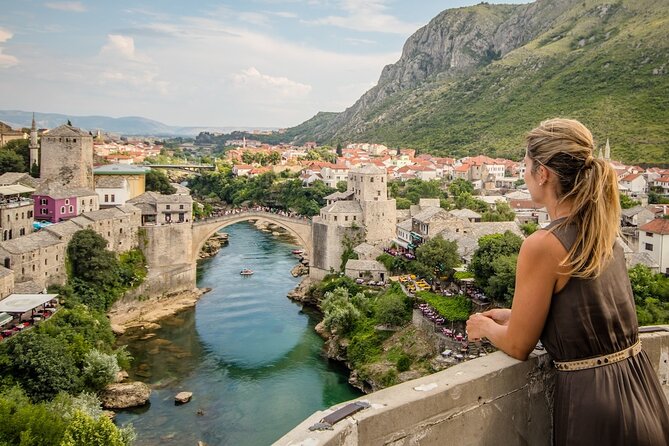
Prizren is one of the most appealing urban stops in the itinerary. The river, stone bridges, old houses, and mosque create a compact center that is easy to explore on foot. The Sinan Pasha Mosque is included, along with Kalaja Fortress, where you get a broad view over the town.
You also have a free afternoon in Prizren. That matters because the earlier sightseeing is fairly brief. Use the time for a meal, a walk through the old streets, or a look at the city’s metal-filagree craft tradition.
The next day brings Gjakova, with its rebuilt bazaar, and Decan Monastery. The monastery remains an active Orthodox religious site, and its frescoes are the main reason for its UNESCO status. Because this is a functioning monastery, dress and behavior should be respectful.
Rahovec adds wine country to the route. Grapes have been grown in the valley since ancient times, and the region holds an annual wine festival in September. The schedule gives you an hour, so this is an introduction rather than a full tasting tour.
Montenegro and Bosnia deliver the most dramatic scenery
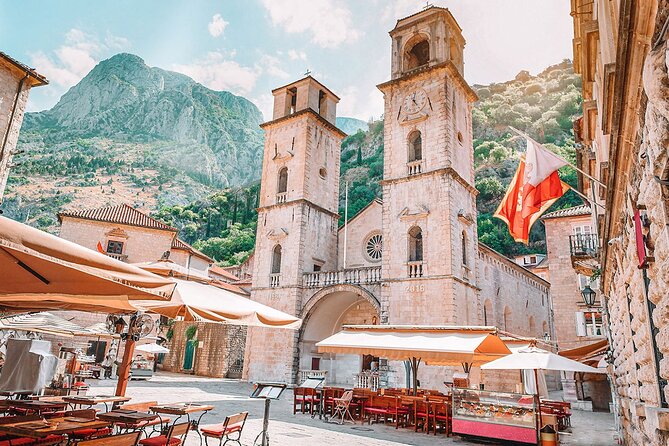
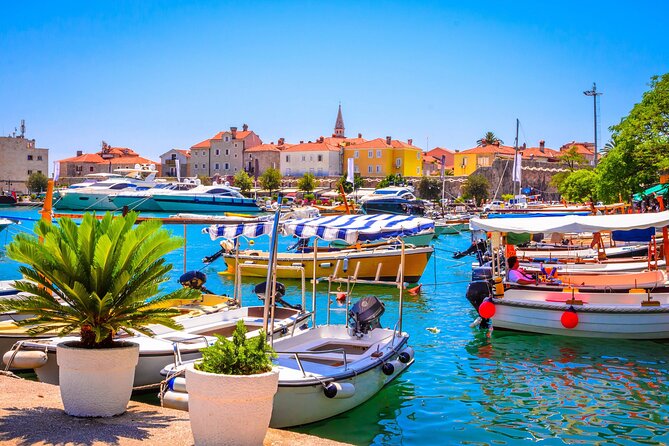
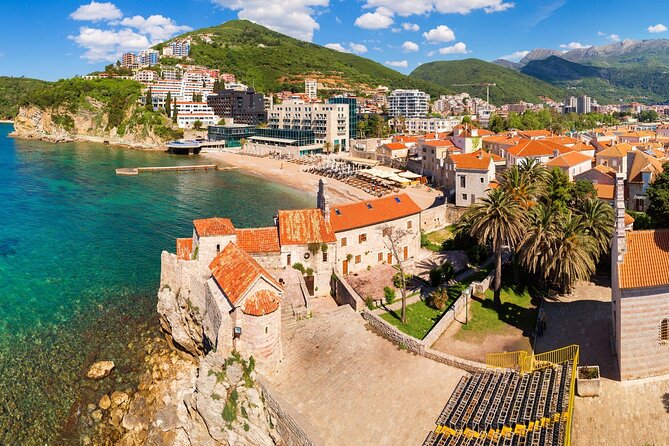
The coastal section begins with a viewpoint over Sveti Stefan. The island is now an exclusive resort and cannot be visited, but the view from the shore is still worth the stop. Budva follows, with its old town, churches, stone streets, beaches, and newer commercial areas.
Kotor is another UNESCO highlight. The old town is compact and enclosed by narrow lanes designed to confuse attackers. You visit Saint Luke’s Church, but the one-hour schedule gives limited time for the wider old town. If you have imagined climbing the fortress walls above Kotor, note that this itinerary does not list that climb.
Mostar is another major highlight. The Old Bridge, Stari Most, is the visual centerpiece, but the bazaar and surrounding lanes make the visit more rewarding. The many Don’t Forget stones around town point to the destruction and rebuilding that shaped modern Mostar.
Blagaj Tekija, outside Mostar, adds a quieter stop beside blue water and a cliff. It is included in the entry program, though only 30 minutes are scheduled. You will see the setting, but you should not expect a long visit.
Sarajevo receives a full day after Mostar. The route covers Ottoman and Austro-Hungarian quarters, religious buildings, markets, and the Latin Bridge, where the 1914 assassination of Archduke Franz Ferdinand helped trigger World War I. Bullet holes and cannon marks still appear around the city, so the walking tour also addresses the 1990s war.
The schedule warns of uneven ground. Take that seriously. Sarajevo is best approached with shoes that handle rough streets, and the hour of free time is useful for trying local meat dishes and desserts.
Serbia slows the pace with river towns and wine
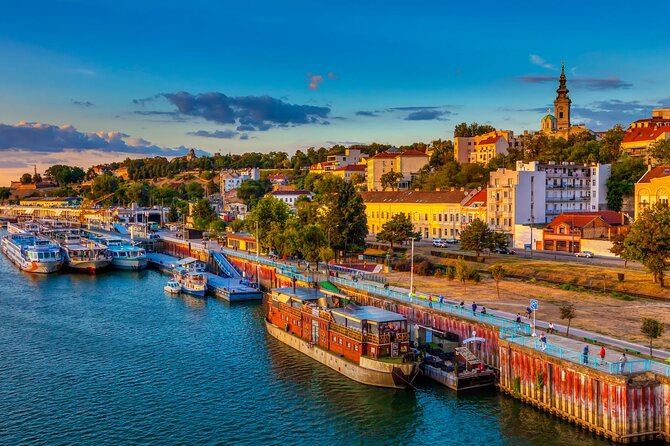
On the road to Belgrade, Zvornik offers a lunch break by the Drina River. Belgrade then gives you two hours for the fortress, Kalemegdan Park, Knez Mihailova Street, and Republic Square. The fortress sits above the meeting point of the Sava and Danube, making this one of the route’s best city views.
Sremski Karlovci is a pleasant change from large cities. This Baroque town is tied to Serbian culture, church life, and wine production. You get time to see the center and sample regional wine if you choose. The Four Lions Fountain comes with a local marriage-and-return legend, a small detail that makes the stop memorable.
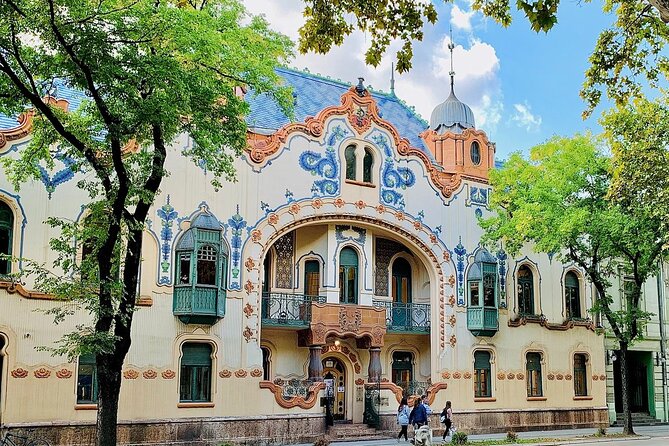
Novi Sad follows with Petrovaradin Fortress and the pedestrian streets of Zmaj Jovina and Dunavska. You have about two hours and some time to explore independently. Subotica, the final Serbian stop, is known for colorful Austro-Hungarian architecture, its City Hall, cafes, food, and wine.
These Serbian days help break up the long sequence of border crossings. Still, the route continues to move quickly. You will see each town, but you will not have the spare time of a dedicated city break.
Budapest, Győr, and Bratislava lead into Vienna
Budapest gets a proper sightseeing day. You pass Saint Stephen’s Basilica, the Opera, Parliament, Heroes’ Square, and Fisherman’s Bastion, then visit Buda Castle. The route explains the difference between Buda and Pest and leaves you a free evening to see the city after dark.
Győr is a shorter stop on the way west. You visit the Town Hall, Cathedral of the Virgin Mary, synagogue, and Baross Gabor pedestrian street. There is free time for Hungarian food and the locally noted blueberry beer, although drinks are not included.
Bratislava comes next, with the Old Town Hall, Michael’s Gate, Old Town, and Bratislava Castle. The castle hill provides a good view over the Danube and city. You also get cafe time, which gives the final full sightseeing day a relaxed finish.
The tour ends with hotel drop-off in Vienna. Vienna sightseeing is not included, so arrange extra nights if you want to explore the Austrian capital.
What the $7,734.19 price really buys
At $7,734.19 per person, this is a costly tour. The price is easier to judge when you account for 20 breakfasts, 20 nights in three-star hotels, private transportation, fuel, road taxes, international vehicle insurance, tourist taxes, entry tickets, hotel pickup in Athens, hotel drop-off in Vienna, and a professional tour leader.
You are paying for convenience across a difficult route. Independent planning would require multiple buses, border connections, hotel bookings, and separate guides. The value is strongest if you want the route itself and do not want to spend months organizing it.
The price is less attractive if you prefer luxury hotels, long free periods, or independent travel. Lunches, dinners, drinks, snacks, souvenirs, and personal spending are extra. Single occupancy adds 45 euros per night, while the base price uses double, twin, triple, or quadruple room occupancy.
Who should book this Athens to Vienna route?
I would recommend it to someone who wants broad Balkan coverage in one trip, enjoys road travel, and values having the practical details handled. It suits couples, friends, and curious first-time visitors who want local food, historic towns, UNESCO sites, and a small group rather than a large coach.
It is less suited to you if you want beach time, long museum visits, slow mornings, or a deep stay in each capital. You should also be comfortable with frequent hotel changes, uneven old-town streets, border crossings, and full travel days.
The tour has a maximum of 10 people, and that is one of its best features. Good service is not compulsory to tip in Albania or the Balkans, but a tip for the tour leader or driver is recommended when service is strong. The provider is Choose Balkans, and no specific guide name is supplied, so ask who will lead your departure.
Should you book it?
Book this trip if your priority is seeing a large slice of southeastern and central Europe without handling the transport yourself. The strongest parts are the small group, private vehicle, food experiences in Albania, UNESCO sites, and the rare chance to connect Athens with Vienna overland.
Think twice if the non-refundable terms feel risky, since cancellation or amendments do not receive a refund. Also confirm the exact country count, hotel list, room arrangement, and what entry tickets cover before booking. For an ambitious first look at the Balkans, this route offers excellent geographic reach, but you trade slow travel for constant movement.
FAQ
How long is the tour from Athens to Vienna?
The tour lasts approximately 21 days. It begins with hotel pickup in Athens and ends with hotel drop-off in Vienna.
How many people can join the small group?
The activity has a maximum of 10 travelers. A private tour option is also available when booking.
What accommodation is included?
Accommodation and breakfast are included in three-star hotels for all overnights. The listed price is calculated using double, twin, triple, or quadruple room occupancy.
Is single-room accommodation available?
Yes. Single occupancy is possible for an extra charge of 45 euros per night per person in three-star accommodation.
Are meals included besides breakfast?
The package includes 20 breakfasts. Lunches, dinners, drinks, snacks, souvenirs, and personal spending are not included.
Is transportation included?
Yes. Private transportation is included, along with petrol, road taxes, and international car insurance.
What time does the tour start?
The stated start time is 9:00 a.m. Pickup is offered from your hotel in Athens.
Is the tour refundable if I cancel?
No. The experience is non-refundable and cannot be changed for any reason. If you cancel or request an amendment, the amount paid will not be refunded.
Recently added around Austria
- From Vienna: Austrian Lakes and Salzburg Private Tour★ 5.0 · 3 reviews
- Vienna: Private tour Mauthausen and Linz★ 4.1 · 3 reviews
- Salzburg On the Traces of Mozart Private Tour★ 4.5 · 3 reviews
- 2-Day Prague Tour from Vienna with private Transfers and Lunches★ 5.0 · 3 reviews
- Private Transfer from Munich to Salzburg, English-speaking driver★ 3.5 · 3 reviews
- Scenic Adventure Private Day Tour to The Konigssee Salzburg★ 4.5 · 3 reviews
- Vienna Self Guided Sherlock Holmes Murder Mystery Game★ 4.5 · 3 reviews
- In-depth private tour through every corner of Klagenfurt★ 5.0 · 3 reviews
Small Group Tours, compared.

Vienna Historic Center Small Group Walking Tour
Read our review →
Wachau Valley Small-Group Tour and Wine Tasting from Vienna
Read our review →
Small Group Guided Walking Tour of City Highlights
Read our review →
Salzburg and Lake Region Small-Group Day Trip from Vienna
Read our review →
Hallstatt and Salt Mines Small-Group Tour from Salzburg
Read our review →
Browse the lists this tour appears in