Reviewed · TICKETS
Eisenstadt: Esterhazy Palace Admission Ticket
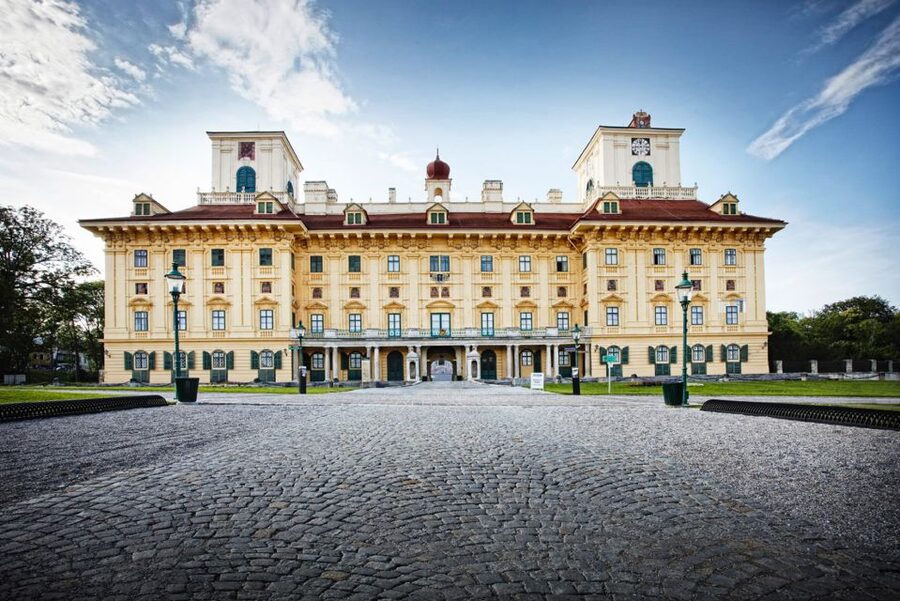
Esterházy Palace gives you several very different experiences under one roof: grand Baroque rooms, Joseph Haydn’s musical career, a princess’s dramatic life, and a wine museum in old cellars. The palace was once home to one of Austria’s most powerful families, and its rooms still make that status plain.
I like the Neoclassical silver collection, one of the largest surviving sets of its kind, and the wine museum, with more than 700 objects. The main drawback is that the €22 ticket covers admission only, so you pay another €2 for the optional audio guide. If you prefer a guided visit, check your booking option carefully, since the meeting point and format can vary.
Key points to know before you go
- The palace covers four distinct subjects: state rooms, Esterházy family treasures, Melinda Esterházy, and Joseph Haydn.
- The silver collection is a major highlight: the family’s Neoclassical silverware survives as one complete ensemble.
- Haydn’s story is presented on the ground floor: multimedia displays connect his early Eisenstadt years with his later work at Eszterháza.
- Melinda Esterházy gets her own exhibition: you learn about her career as a ballerina and her difficult personal life.
- The wine museum occupies the old cellars: more than 700 objects include historic barrels and Burgenland’s oldest Baumpresse.
- The ticket is valid for one day: you can take your time instead of rushing through every room.
Why Esterházy Palace is worth your time
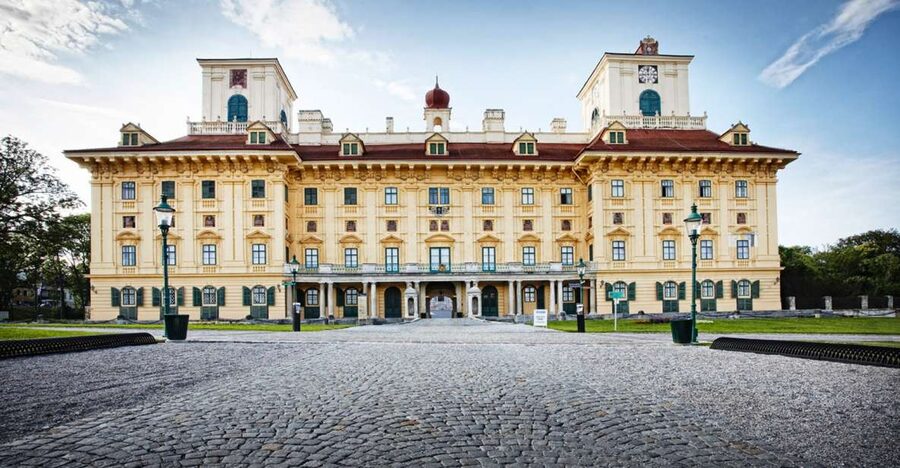
Eisenstadt is the capital of Burgenland, and Esterházy Palace sits at the heart of the city. This is not a remote country house that requires a special trip from the surrounding region. You can build a palace visit into a day in Eisenstadt, and the ticket gives you enough material for a serious look rather than a quick stroll through two or three rooms.
I particularly like the way the visit moves beyond furniture and fancy ceilings. The palace tells the story of a ruling family through its possessions, its employees, its music, its marriages, and its wine production. You are not simply looking at rooms. You are seeing how the Esterházy princes displayed wealth and managed daily life over several centuries.
The ticket costs $22 per person. That is fair value if you plan to see all four parts of the exhibition, especially the cellars and the Haydn displays. It is less compelling if you only want a brief look at the palace interior, since the admission ticket is not a guided tour and the audio guide costs an additional €2.
The experience is valid for one day. That matters because the palace has several sections with different moods and subject matter. You can give the state rooms proper attention, stop to read the Haydn material, and still have time for the lower-level wine collection without treating the visit like a race.
A few more Austria half-days to weigh up
- Vienna: Classic Ensemble Vienna in St. Peter’s Church Ticket
★ 4.7 · 4,819 reviews - Vienna Kunsthistorisches Museum Day Admission Ticket
★ 4.6 · 3,690 reviews - Vienna: Tickets for Mozarthaus Vienna with Audio Guide
★ 4.2 · 2,344 reviews
The bel étage and the Esterházy family treasures
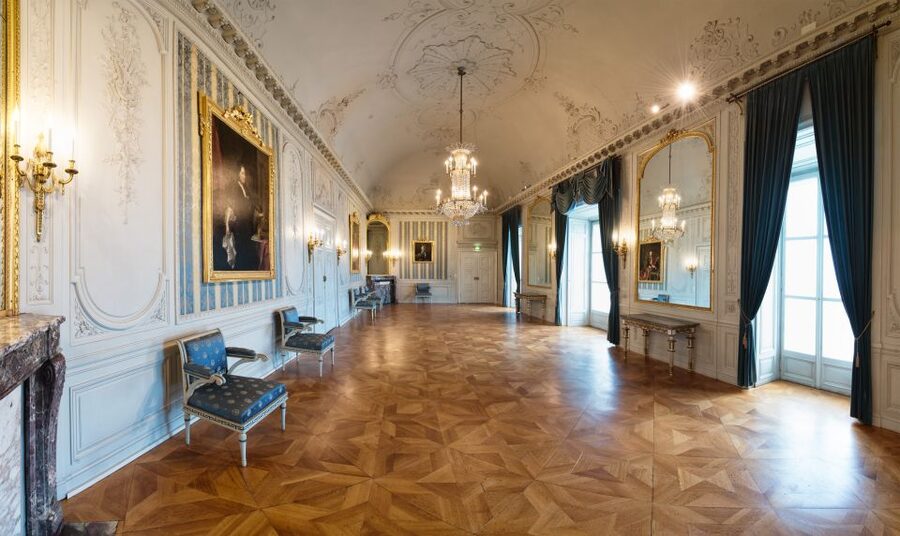
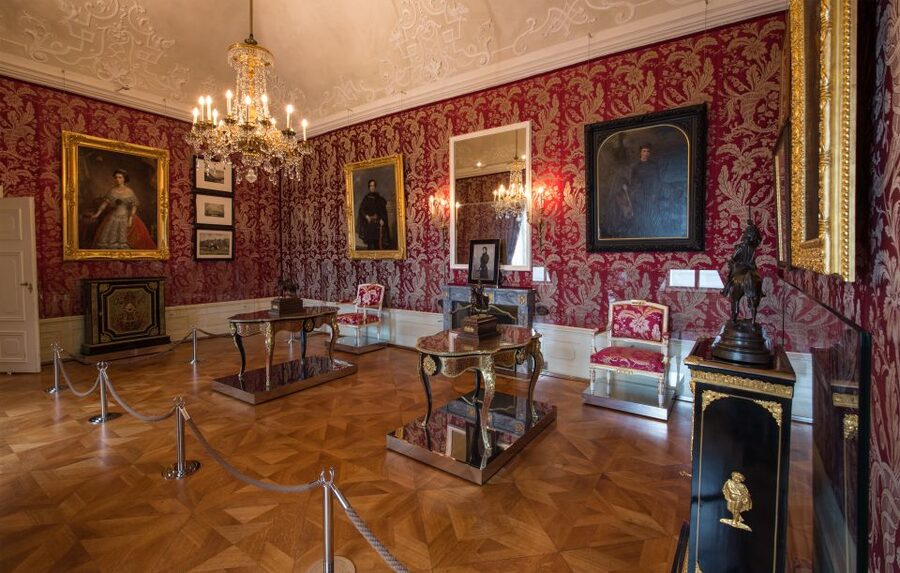
Your palace visit includes the magnificent rooms on the bel étage, the main ceremonial floor where the family presented its status. These rooms are the clearest reminder that the Esterházy princes were not minor local nobles. They were great magnates with the money and influence to maintain a major residence.
Look closely at the decorative details, but also pay attention to how the rooms work together. The architecture gives you a sense of ceremony, rank, and controlled movement through the palace. Even without a guide, the sequence of rooms helps explain how the family received guests and displayed its position.
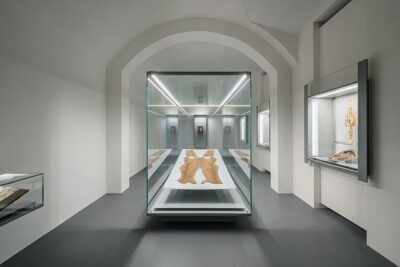
The art-historical collection adds substance to the rooms. Among the most interesting objects is the Esterházy family silver, described as the world’s largest surviving ensemble of Neoclassical silverware kept together as a set. That is far more useful than seeing one isolated silver dish in a glass case. A complete collection lets you think about how the objects were used at court and how much labor and money went into formal entertaining.
I would allow enough time here to look past the obvious shine. Silver can become a blur of polished surfaces when you hurry, but the scale of the collection rewards patience. The pieces help connect the palace rooms to the practical business of court life, where meals, ceremonies, and official visits all required carefully managed display.
The palace itself is also part of the story. You get a look at how the building developed and how a residence of this size functioned over time. The exact route can vary with the option booked, so check the details before you arrive, but the main visit is designed to give you both the architecture and the objects inside it.
Joseph Haydn’s years with the Esterházy princes
On the ground floor, the focus shifts from dynastic display to music. Joseph Haydn served as director of music and composer for the Esterházy princes, and this part of the palace explains that relationship rather than presenting him as a famous name floating free of its setting.
Haydn’s connection to Eisenstadt is one of the strongest reasons to visit the palace. You can trace his work from his beginnings in Eisenstadt and Eszterháza through his later compositions. The displays use multimedia stations, project installations, and other exhibits to show how his career developed while he worked in Esterházy service.
This context matters. Haydn was not simply a composer who happened to pass through town. His position connected him to the court, its musical demands, and the family’s cultural ambitions. The exhibition helps you understand how a composer’s working life depended on powerful patrons before modern concert careers and recording income existed.
I like that this section uses more than static labels. Multimedia displays can make a composer’s work easier to follow, particularly if you do not already know the chronology of his career. The installations also offer a change of pace after the formal rooms and silver collection.
There is one practical point to keep in mind. Multimedia exhibits reward reading and listening, so the time needed here depends on how closely you engage with them. If you are traveling with someone who only wants a quick palace visit, this could be the section that takes the longest. If you care about music, it may be the most satisfying part of the visit.
An optional audio guide is available in English, German, and Hungarian for an extra €2. That small cost may be worthwhile if you want more explanation while moving between the rooms and exhibits. The included admission ticket does not automatically mean a personal guide is present.
Melinda Esterházy, ballerina and princess
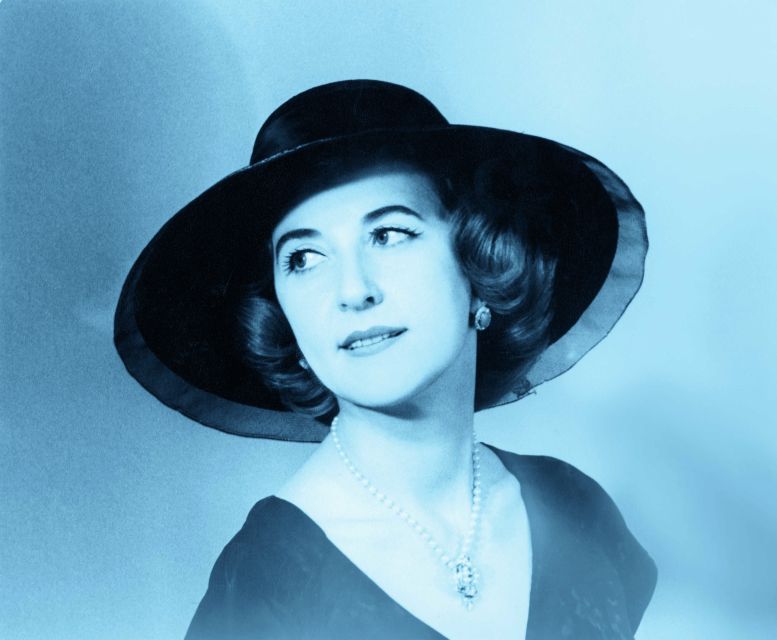
The first-floor exhibition turns to Melinda Esterházy, a figure who gives the palace story a more personal and modern edge. You learn about her not only as a ballerina but also as a person whose life included professional ambition, private difficulty, and major changes in status.
Her career is an important part of the exhibition. The palace was shaped by princes and court officials, but Melinda’s story shows how an individual woman pursued a demanding artistic life within a powerful family setting. Her work as a ballerina provides a different way into Esterházy history, one based on talent and performance rather than inherited rank.
The displays also address her turbulent personal life. That balance is valuable. A polished palace can encourage a very tidy picture of aristocratic life, but Melinda’s story brings in pressure, disappointment, and emotional complexity. You are given a person to think about, not just another family name on a wall.
I would not treat this as a minor add-on. It is one of the sections that gives the visit its human scale. After seeing ceremonial rooms and inherited treasures, you encounter the life of someone whose identity was shaped by both her own career and her marriage into the Esterházy family.
The information provided does not specify the exact length of this exhibition or the number of rooms involved. Plan to move at your own pace, and use the audio guide if you want help connecting the displays. If your admission option includes a live guide, check the meeting instructions in advance. A recent guided visit was led by Rebeca, whose clear background explanations and affection for the palace were especially praised.
A different way to spend an afternoon here:
- Vienna: Vivaldi’s Four Seasons Concert in Karlskirche
★ 4.7 · 14,951 reviews - Vienna: Spanish Riding School Training
★ 3.9 · 9,281 reviews - Vienna: Skip-the-cashier-desk-line Giant Ferris Wheel Ride
★ 4.5 · 7,859 reviews - Vienna: Schönbrunn Palace & Gardens Skip-the-Line Tour
★ 4.7 · 7,739 reviews
Down into the 300-year-old palace cellars
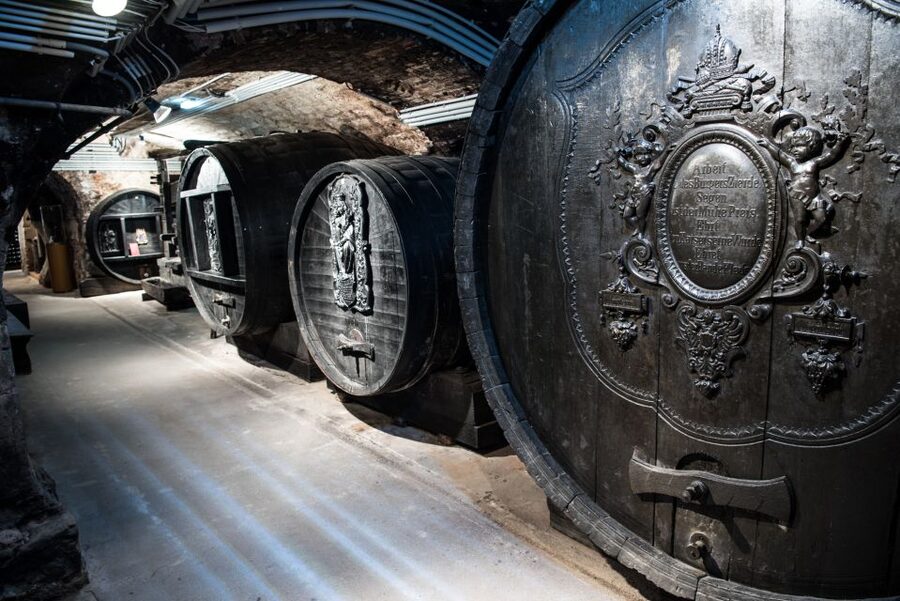
The Wine Museum takes you below the palace into more than 300-year-old cellars. This is a useful change from the grand floors above. Instead of looking at how the family presented itself, you see part of the work and production that supported its household and reputation.
The museum covers winemaking under the Esterházy princes and contains more than 700 rare objects connected with wine and viticulture. Historic barrels help show the scale and methods of storage, while older tools connect the collection to the physical work of making wine.
One standout object is Burgenland’s oldest Baumpresse, a type of basket press. It is the sort of practical artifact that can tell you more about traditional production than a general paragraph in a palace room. You can see the equipment used to press grapes and picture the labor behind the wine served at aristocratic tables.
The cellars also add a little humor to the family portrait. The Esterházy story had a well-known bacchanalian side, and the wine collection gives that side a proper setting. Beneath the formal rooms, the museum shows that court life depended not only on art and music but also on food, drink, storage, and supply.
The lower level may be especially appealing if you want an experience rooted in Burgenland rather than only in aristocratic architecture. Wine is part of the region’s identity, and the museum links local production to the family that ruled here. You do not need to be a wine specialist to appreciate the tools and barrels, though anyone interested in historic farming or foodways will likely want extra time.
How to use the one-day ticket well
Because the ticket remains valid for one day, you have room to set your own pace. I would begin with the palace rooms and family collection, when your attention is fresh. Then give the Haydn and Melinda Esterházy exhibitions the time they deserve before heading into the wine museum.
You do not need to treat the admission as a fixed, fast-moving tour. It is a museum visit with several linked sections, and the best order can depend on your interests. Music lovers may want to make the ground-floor Haydn exhibition the main event. Wine enthusiasts may prefer to save energy for the cellars and spend longer with the viticulture objects.
The optional audio guide costs €2 and is offered in English, German, and Hungarian. That is a modest price for added context, especially if you want to understand the rooms and exhibitions without reading every label. A live guide is not part of the basic ticket, so do not assume that admission includes personal commentary.
Meeting arrangements may vary according to the option you book. Check your confirmation for the correct starting point and any instructions tied to your selected format. The experience offers free cancellation up to 24 hours before the booked time, and you can reserve now and pay later, which helps if your Eisenstadt plans are still changing.
The supplied information does not give a standard group size, exact opening times, or a fixed guided route. Check availability for current starting times, and allow a generous part of your day if you want to read the exhibits rather than simply pass through them.
Who will get the most from Esterházy Palace
I would recommend this experience to anyone interested in Central European courts, historic music, decorative arts, or Burgenland wine. It works particularly well for visitors who like museums with several layers, since you can move from architecture to objects, biography, music, and production in one place.
Families and mixed-interest groups may also find the range helpful. One person can focus on Haydn, another on the state rooms, and another on the wine tools. The variety keeps the visit from depending on one narrow subject.
Music fans should pay special attention to the Haydn section. The displays explain his service to the Esterházy princes and place his career in Eisenstadt and Eszterháza. That local connection gives the composer’s story more shape than a general biography would.
The visit may be less suitable if you want a short, fully guided tour with every detail explained aloud. The standard product is an admission ticket, and the audio guide is extra. You need to be comfortable exploring independently, unless you book an option that specifically includes a guide.
It is also not the best choice for someone interested only in wine tasting. The Wine Museum is about the history and tools of viticulture, with more than 700 objects, but the supplied details do not include a tasting. Book it for the museum and the wider palace experience, not for a guaranteed glass of wine.
Should you book the $22 palace admission?
Yes, if you can give Esterházy Palace a substantial part of your day. At $22, the ticket offers good value because it covers four distinct subjects and includes access to the historic palace rooms, the family silver, the Melinda Esterházy exhibition, the Haydn displays, and the Wine Museum.
I would book it with the €2 audio guide if you want historical context in English, or if you do not have a guide option. I would also check the selected booking format carefully, especially the meeting point and start time.
Skip it if you only have a few spare minutes in Eisenstadt or expect a personal guided tour as part of the basic admission. But if you want to understand how a powerful Burgenland family lived, entertained, sponsored music, and managed wine production, this is one of the more useful ways to spend a day in the city.
FAQ
Where is Esterházy Palace?
Esterházy Palace is in Eisenstadt, the capital of Burgenland, Austria.
How much does admission cost?
The admission ticket costs $22 per person.
How long is the ticket valid?
The ticket is valid for one day.
Is the audio guide included?
No. The optional audio guide costs an additional €2.
Which languages are available for the audio guide?
The audio guide is available in German, Hungarian, and English.
What does the palace admission include?
It includes admission to Esterházy Palace and its exhibitions, including the palace rooms, the Esterházy collection, the Melinda Esterházy exhibition, the Joseph Haydn displays, and the Wine Museum.
Does the visit include a live guide?
The basic admission is an entry ticket, and a live guide is not listed as included. Some booking options may differ, so check the option details before booking.
Can I cancel the booking?
You can cancel up to 24 hours in advance for a full refund. You can also reserve now and pay later.
Recently added around Austria
- From Vienna: Austrian Lakes and Salzburg Private Tour★ 5.0 · 3 reviews
- Vienna: Private tour Mauthausen and Linz★ 4.1 · 3 reviews
- Salzburg On the Traces of Mozart Private Tour★ 4.5 · 3 reviews
- 2-Day Prague Tour from Vienna with private Transfers and Lunches★ 5.0 · 3 reviews
- Private Transfer from Munich to Salzburg, English-speaking driver★ 3.5 · 3 reviews
- Scenic Adventure Private Day Tour to The Konigssee Salzburg★ 4.5 · 3 reviews
- Vienna Self Guided Sherlock Holmes Murder Mystery Game★ 4.5 · 3 reviews
- In-depth private tour through every corner of Klagenfurt★ 5.0 · 3 reviews
Tickets, compared.
Classic Ensemble Vienna in St. Peter’s Church Ticket
Read our review →
Vienna Kunsthistorisches Museum Day Admission Ticket
Read our review →
Tickets for Mozarthaus Vienna with Audio Guide
Read our review →
Skip-the-Line Entrance Ticket to the Danube Tower
Read our review →