
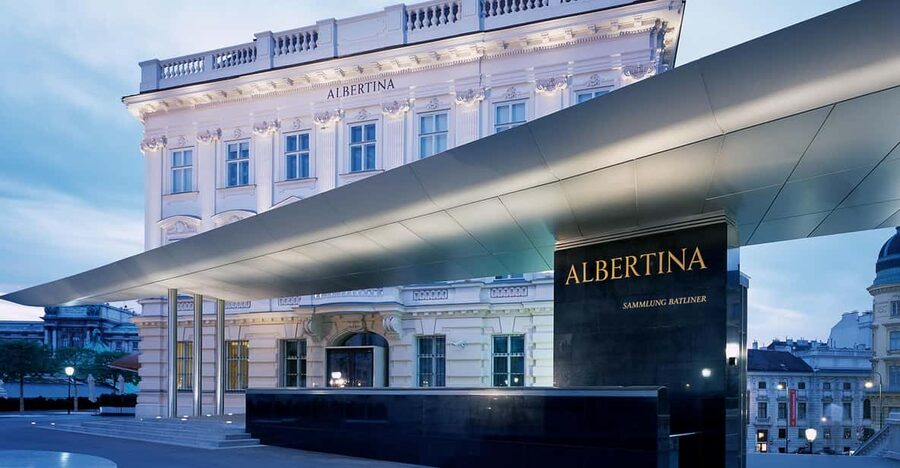
Reviewed · VIENNA TOURS
Tickets for the Albertina Exhibitions
The Albertina gives you two Viennas in one visit: the bold, familiar names of modern art and the polished imperial rooms once used by Habsburg archdukes and archduchesses. I especially like the Monet-Picasso presentation, which follows the development of modern painting through Impressionism, Expressionism, the Russian avant-garde, and Austrian art. I also like the chance to see Klimt, Monet, Picasso, Van Gogh, and Dürer under one roof.
The main consideration is scale. The collection is large enough to reward two hours or more, yet some visitors find the layout confusing and the advertised masters less plentiful than expected. A ticket here is best for someone who wants several exhibitions and historic interiors, not just one famous painting.
Key points to know before you go
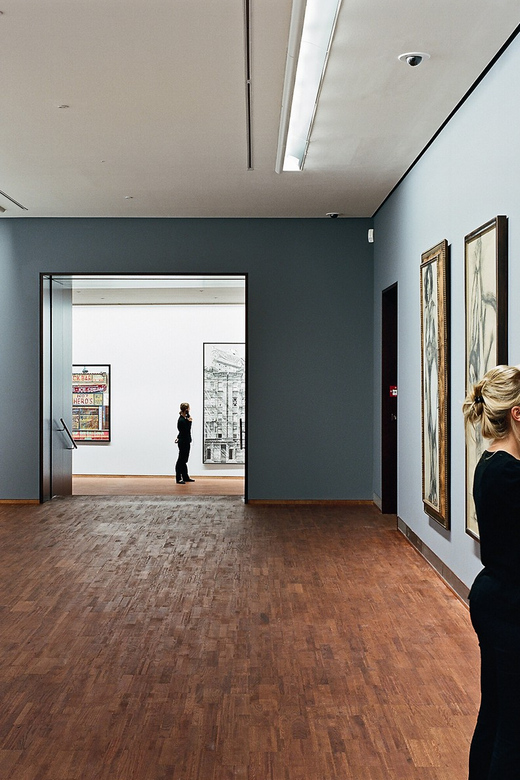
- Monet-Picasso connects major movements: Follow art from French Impressionism through German Expressionism, Russian avant-garde works, and later Picasso.
- Twenty Habsburg State Rooms are included: See restored interiors with chandeliers, fireplaces, marquetry, wall coverings, and Louis-seize furniture.
- Changing exhibitions add variety: Up to five temporary exhibitions may run alongside the permanent displays, with themes changing throughout 2026.
- The museum sits in central Vienna: Reach Albertinaplatz by U-Bahn, tram, or city bus, close to the Hofburg and Vienna State Opera.
- Plan at least two hours: Art lovers can spend most of a day here, especially if you read the labels and visit every temporary show.
- Pack carefully: Backpacks and umbrellas are not allowed, and locker or cloakroom arrangements may require cash.
Why the Albertina is more than a Monet and Picasso stop
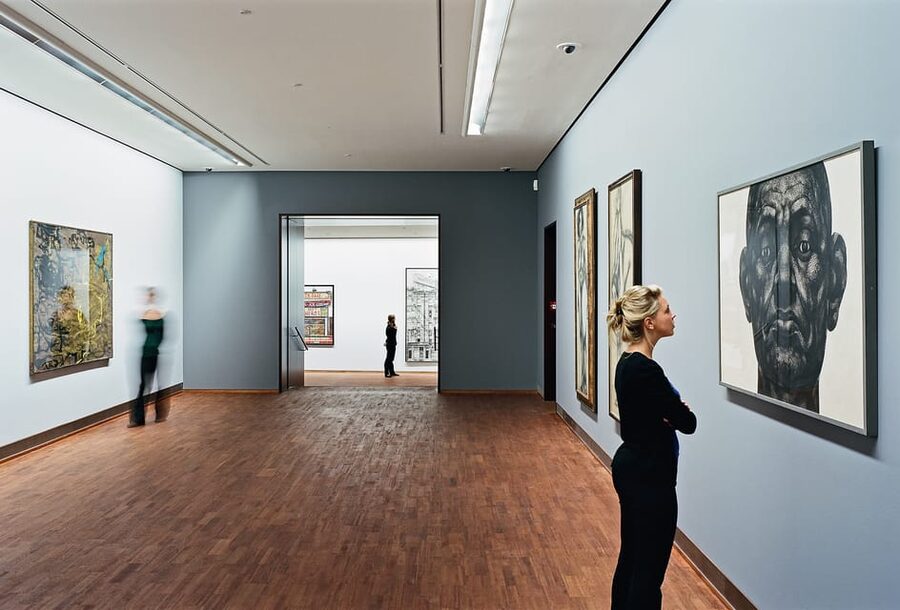
The Albertina occupies an unusual place in Vienna’s museum lineup. It is not only a gallery for major paintings and drawings. It is also a former Habsburg residence, with a grand ceremonial side that changes the feel of the visit.
The museum was named one of the Seven Urban Wonders of the World in 2018, a lofty title, but the setting does help explain its appeal. You enter from Albertinaplatz, in the heart of the historic center, and move from public Vienna into a building tied to the imperial court.
I would not treat this as a quick stop between coffee and shopping. The museum can work as a two-hour visit if you focus on the major rooms, but you can also spend much of the day here. One careful visitor arrived around 11:00 or 11:30 and stayed until about 4:00, reading the labels and seeing the complete collection.
The good news is that the Albertina is not a vast, exhausting museum in the style of some national collections. Its displays are arranged in numbered areas, which helps you follow the intended route. The less good news is that the signage is not always clear, particularly when you are trying to find the exit or work out where to continue.
More Museums in Vienna:
- Vienna: Skip-the-Line Sisi Museum, Hofburg and Gardens Tour
★ 4.8 · 5,918 reviews - Vienna Kunsthistorisches Museum Day Admission Ticket
★ 4.6 · 3,690 reviews - Vienna: Chocolate Workshop in Chocolate Museum w/ Tasting
★ 4.5 · 1,802 reviews
Monet-Picasso, the main artistic journey
The permanent presentation, titled Monet-Picasso, is the museum’s central attraction. It surveys the movement toward modern art rather than presenting one artist in isolation.
You begin with the development of modern painting before Monet, then move through French Impressionism and related changes in the handling of light and color. From there, the collection broadens into German Expressionism, Russian avant-garde art, and Austrian works. The final emphasis on Picasso follows his career from early Cubist pictures to experimental paintings from his later period.
That broad range is the chief value. I like being able to compare artists and movements in one continuous visit. You may recognize Monet, Degas, Chagall, Goncharova, Kokoschka, Van Gogh, Klimt, and Picasso, but the display also introduces less familiar names. Sedlacek and Reyl-Hanisch, for example, can reward visitors who look beyond the largest names on the wall.
Picasso receives a particularly strong finish. His works range from Cubism to his late experiments, so you see more than a token example. Still, keep your expectations measured. The Albertina has important works by celebrated artists, but it does not present the same number of Monets or Picassos you might find in Paris or at a museum devoted to one painter.
A few Klimt works are especially satisfying. The collection includes five examples, enough to give you a useful sense of his style without pretending to be a full Klimt museum. One of the pleasures here is seeing paintings by artists you have previously known only from books or reproductions.
The presentation works for art specialists, but it also suits people who visit a gallery only occasionally. Familiar names provide an easy entry point. Clear explanations beside the works help you understand the artistic changes without requiring a degree in art history.
The Habsburg State Rooms and imperial Vienna
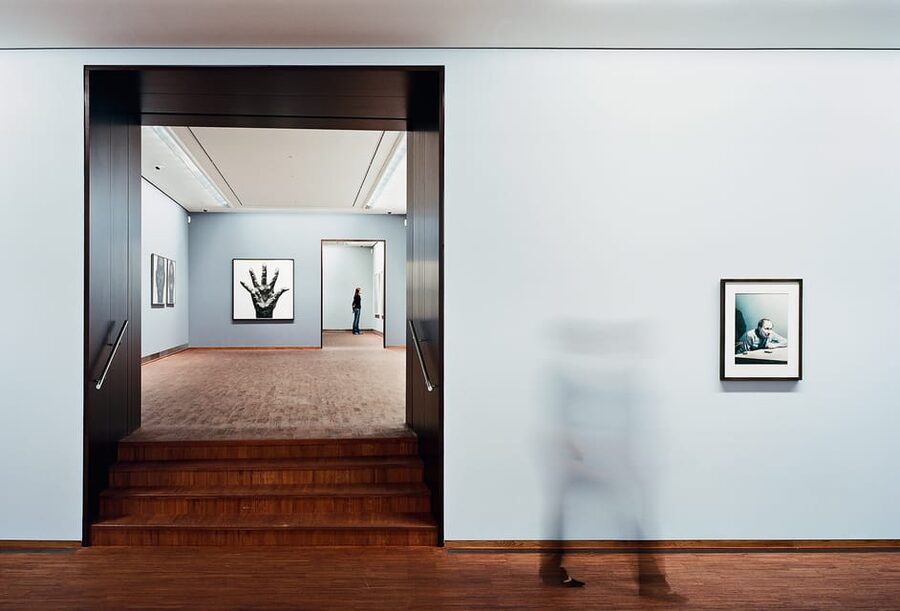
Set aside time for the 20 Habsburg State Rooms. They were once part of the residence used by archdukes and archduchesses for around a century, and they offer a very different experience from the galleries.
The interiors are restored in a classical style, with precious wall coverings, chandeliers, fireplaces and stoves, distinctive marquetry, and furniture made in the Louis-seize style associated with French royal workshops in Paris and Versailles. The rooms are not simply decorative corridors. They explain the social setting in which the Habsburg court lived and received visitors.
I find these rooms particularly useful if you are already exploring Vienna’s palaces. If you have visited Schönbrunn, the Albertina provides another look at court life, but in a more compact central-city setting. The contrast between the formal interiors and the experimental art galleries gives the museum its character.
The rooms also make the Albertina a good choice for mixed-interest groups. One person can focus on Impressionism and Picasso while another spends more time on architecture, furniture, and imperial decoration. The State Rooms are included with the main admission, so you do not need to choose between art and palace history.
Do not rush through them on your way to Monet. Some visitors find the palace interiors among the most memorable parts of the visit. You will see colored rooms, court furnishings, and carefully restored details that are easy to miss if you treat the State Rooms as a short add-on.
Temporary exhibitions in 2026
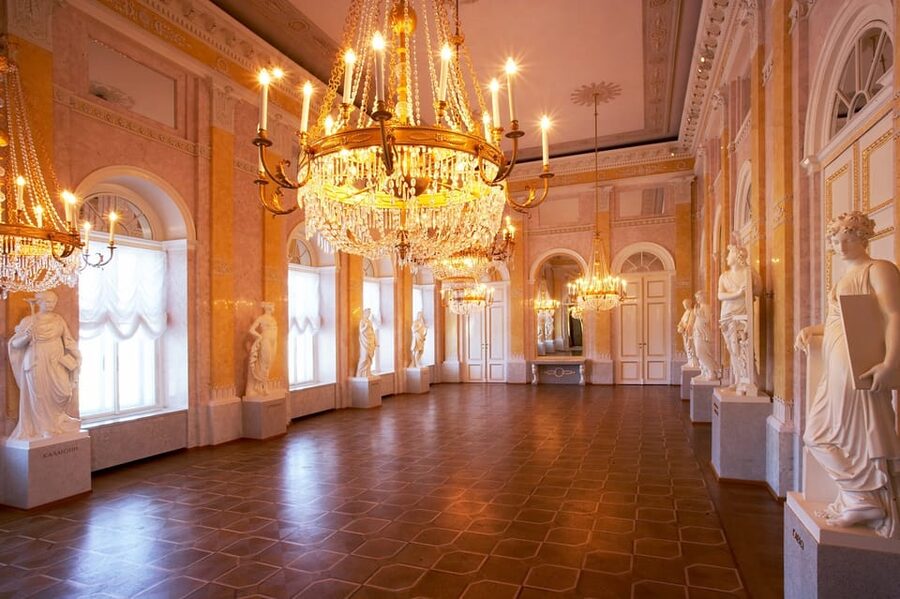
The Albertina runs special exhibitions alongside Monet-Picasso, with up to five temporary shows available at the same time. This means the exact character of your visit depends heavily on your date.
The 2026 program includes:
- Lisette Model: Retrospective, until February 22
- Fascination Paper: Rembrandt to Kiefer, until March 22
- Leiko Ikemura: Motherscape, until April 6
- Honoré Daumier: Mirror of Society, February 6 to May 25
- Care Matters: An Exhibition of the VERBUND COLLECTION, March 12 to June 28
- Richard Prince: Retrospective, April 17 to August 16
- Helga Philipp: Spaces of Motion, May 1 to September 20
- Collecting for the Future: 250 Years of the ALBERTINA Museum, June 16 to October 11
- Travel Photography, July 15 to October 26
- Picasso and Bacon: What It Means to Be Human, September 18 to January 31, 2027
- Shara Hughes, October 9 to February 28, 2027
- Women Artists of the Albertina, October 30 to January 17, 2027
Check the dates carefully before booking. If you visit early in the year, you may catch photography, paper, or historic retrospectives. Later dates bring shows devoted to Richard Prince, Picasso and Bacon, Shara Hughes, and women artists in the Albertina collection.
Temporary displays can also change your timing. A small permanent collection visit may take two hours, but a major retrospective can add a substantial amount of time. I would allow at least half a day if you want to read the labels and see the temporary rooms without hurrying.
The museum can occasionally close an exhibition for an event, and opening hours may change on public holidays. Check the official Albertina website shortly before your visit.
A few more Vienna half-days to weigh up
- Vienna: Vivaldi’s Four Seasons Concert in Karlskirche
★ 4.7 · 14,951 reviews - Vienna: Spanish Riding School Training
★ 3.9 · 9,281 reviews - Vienna: Skip-the-cashier-desk-line Giant Ferris Wheel Ride
★ 4.5 · 7,859 reviews - Vienna: Schönbrunn Palace & Gardens Skip-the-Line Tour
★ 4.7 · 7,739 reviews
How long to stay and when to arrive
For a quick but worthwhile visit, allow two hours. That gives you time for the major Monet-Picasso rooms and the Habsburg State Rooms, though you will need to move at a steady pace.
If you enjoy reading every label, looking closely at drawings, or visiting temporary exhibitions, plan three to five hours. The museum’s broad collection rewards slow looking, and its galleries are spacious enough for close viewing when the building is not crowded.
Morning is a sensible choice. The museum may fill as the day progresses, especially during popular exhibitions and holiday periods. An early visit also leaves you time to see the Hofburg, Vienna State Opera, or nearby cafés afterward.
The Albertina is a dependable rainy-day plan. It offers enough indoor variety to fill a large part of the day, and the central location makes it easy to reach from other sights.
Getting there and handling the entrance
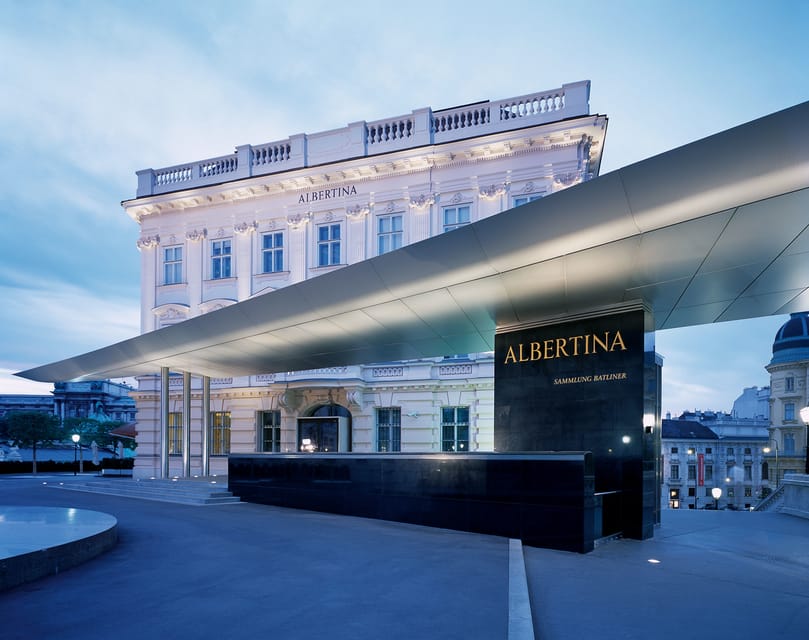
The museum address is Albertinaplatz 1, A-1010 Vienna. It is in the historic center, so you can combine it with a walk through the Hofburg area, Kärntner Straße, or the Opera district.
The nearest public transport options include U1, U2, and U4 to Karlsplatz or Oper, and U3 to Stephansplatz. Trams 1, 2, D, 62, 65, and Badner Bahn stop near Staatsoper or Kärntner Ring. Citybus line 3A stops at Albertina.
The ticket includes admission to the Albertina and the temporary exhibition program. Some ticket holders have found the entrance process easy, while others have needed to visit the counter rather than walking straight through with a scannable ticket. Build in a little time for that possibility.
Backpacks and umbrellas are not allowed inside. You may need to use a locker or cloakroom, and cash may be required for those services. A small day bag is the safer choice, but check the current rules before setting out.
Audio guides, labels, and finding your way
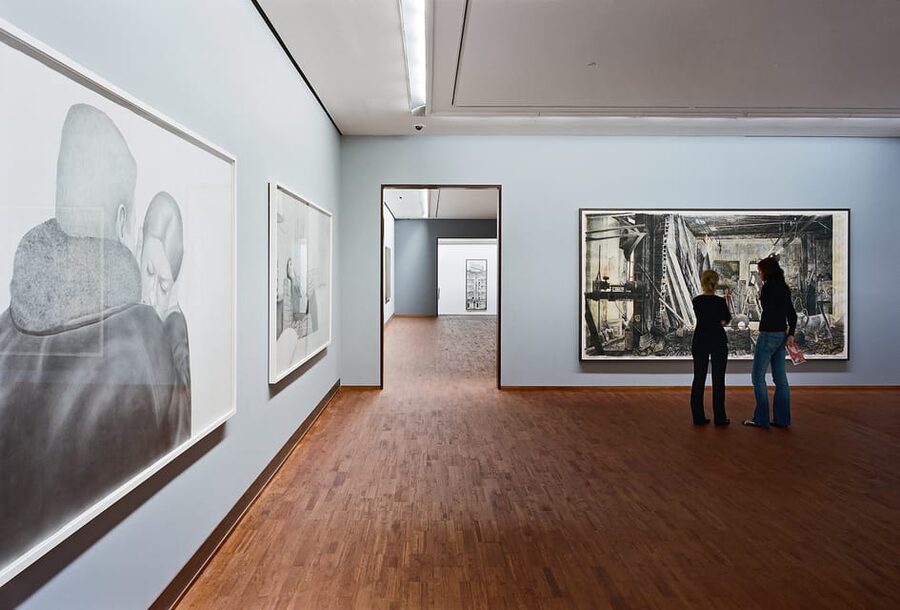
An audio guide can be booked separately in German, English, French, Italian, Czech, Russian, Japanese, and Spanish. The available languages vary by season and time, so a particular language is not guaranteed.
The written explanations are useful, especially if you are not a regular museum visitor. Several displays provide background on the artists and the development of each style. That helps you get more from Monet-Picasso without relying entirely on an audio guide.
The audio guide does not cover every painting. If you want information on individual works throughout the museum, read the wall text and labels as you go. The numbered rooms offer some direction, but the overall route can still feel unclear.
I would take a photo of the floor plan or ask at the entrance which way to begin. That small step can save time later, especially when you are trying to locate the State Rooms or the exit.
The $23 ticket and what it delivers
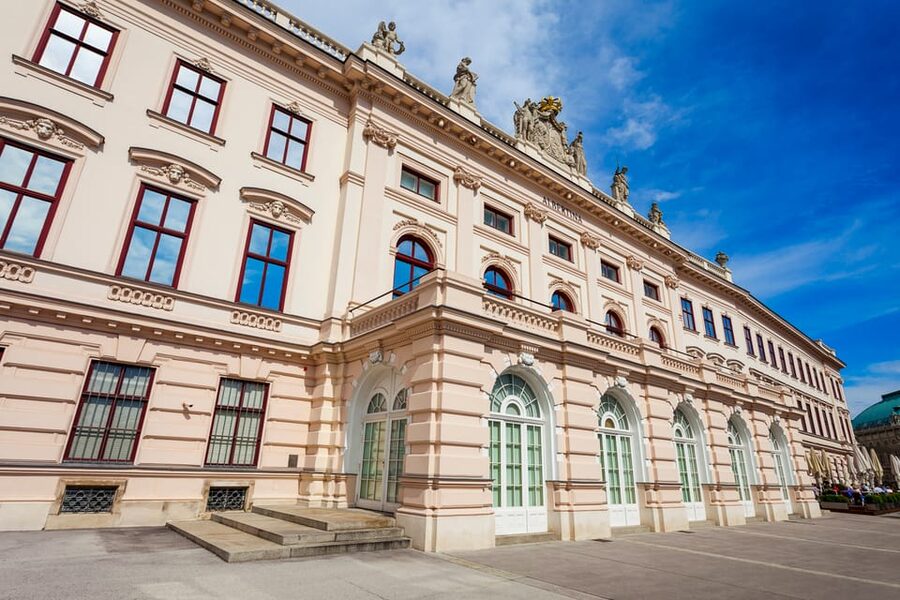
At $23 per person, this is not the cheapest museum admission in Vienna, but the price is reasonable if you use the whole ticket. You receive the permanent collection, the Habsburg State Rooms, and the temporary exhibitions rather than access to a single gallery.
The value improves when a major special exhibition is running. You can see internationally known artists, historic interiors, and a changing program in one central location. A museum visit of two to four hours also compares well with the cost of many shorter Vienna attractions.
A combo ticket may be available if you want to add another Albertina venue, such as Albertina Modern. One visitor found visiting both locations worth the extra money, but the two sites have different programs, so check what is on display before paying more.
The on-site Demel Café is a tempting finish, particularly after several hours of galleries. It is part of Vienna’s famous café tradition, but prices can be high. A coffee and bottled water were reported at nearly €8, so I would treat it as a historic-café stop rather than a budget refreshment break.
Flexible booking is useful if your schedule is uncertain. You can cancel up to 24 hours in advance for a full refund, and the reserve-now, pay-later option lets you hold a place without paying immediately. The ticket can be valid for a period from one to 365 days, depending on the selected availability.
Who will enjoy the Albertina most
I would recommend this museum to:
- First-time Vienna visitors who want major art and imperial interiors in one stop
- Casual art lovers who recognize the names Monet, Picasso, Klimt, and Van Gogh
- Dedicated museum visitors interested in modern European painting and drawing
- Anyone looking for a strong indoor plan on a wet day
- Families or mixed groups with different interests
- Visitors already exploring the Hofburg and central Vienna
It may be less satisfying if you want a single-artist museum or expect room after room of famous masterpieces. The Albertina’s strength is its range. You get a survey of movements, several major artists, special exhibitions, and palace rooms, but not necessarily a huge number of works by each advertised name.
Should you book the Albertina ticket?
Book it if you want a flexible, central Vienna museum with both modern art and Habsburg interiors. The Monet-Picasso route gives you a clear artistic storyline, while the State Rooms add a sense of place that a standard gallery cannot provide.
I would book on a morning when you can spare at least two hours, and longer if a temporary exhibition interests you. Check the 2026 program, pack light, and do not count on a specific audio-guide language.
Skip it only if your Vienna schedule is already packed with museums or if your main goal is a large, single-period collection. For most visitors, the combination of recognizable artists, less familiar discoveries, beautiful rooms, and a central location makes the $23 admission a sound choice.
FAQ
Where is the Albertina Museum?
The Albertina is at Albertinaplatz 1, A-1010 Vienna, in the city’s historic center.
What does the Albertina ticket include?
The ticket includes admission to the Albertina Museum, the permanent Monet-Picasso presentation, the Habsburg State Rooms, and temporary exhibitions.
How much does admission cost?
The listed price is $23 per person.
How long is the ticket valid?
The activity is listed with validity options from one to 365 days. Check availability for the exact option and starting time.
How long should I allow for the visit?
Allow at least two hours for a typical visit. If you read the labels or see several temporary exhibitions, you may want three to five hours.
Is an audio guide included?
No. An audio guide must be booked separately. Languages may include German, English, French, Italian, Czech, Russian, Japanese, and Spanish, but a specific language is not guaranteed.
What public transport reaches the museum?
You can take U1, U2, or U4 to Karlsplatz or Oper, U3 to Stephansplatz, several trams to Staatsoper or Kärntner Ring, or citybus line 3A to Albertina.
Can I bring a backpack or umbrella?
Backpacks and umbrellas are not allowed. Lockers and cloakroom services may be available, and cash may be required.
Can I cancel the booking?
You can cancel up to 24 hours in advance for a full refund. The reserve-now, pay-later option is also available.
Recently added around Vienna
- Vienna: Private tour Mauthausen and Linz★ 4.1 · 3 reviews
- 2-Day Prague Tour from Vienna with private Transfers and Lunches★ 5.0 · 3 reviews
- Vienna Self Guided Sherlock Holmes Murder Mystery Game★ 4.5 · 3 reviews
- Vienna Private Schönbrunn Palace Tour, Extra Rooms and Gardens★ 5.0 · 3 reviews
- Salzburg and Lake Region Private Day Trip from Vienna★ 5.0 · 3 reviews
- Small-group Vienna Wine Tour★ 5.0 · 3 reviews
- True Crime mobile puzzle rally Vienna★ 4.0 · 3 reviews
- Exploring the Gutenstein Alps★ 5.0 · 3 reviews
Vienna Tours, compared.
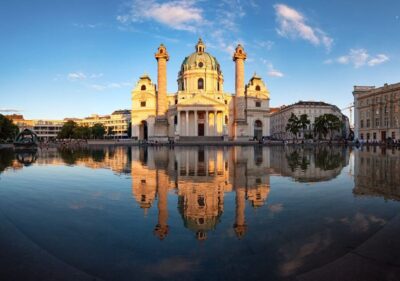
Vivaldi’s Four Seasons Concert in Karlskirche
Read our review →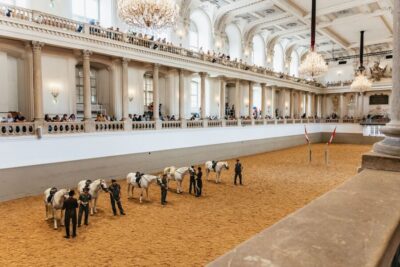
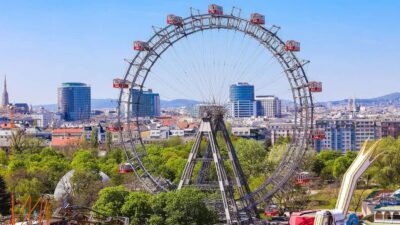
Skip-the-cashier-desk-line Giant Ferris Wheel Ride
Read our review →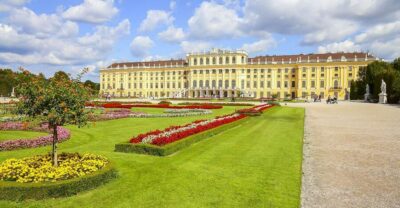
Schönbrunn Palace & Gardens Skip-the-Line Tour
Read our review →
Light of Creation Votive Church Immersive Light Show
Read our review →
Skip-the-Line Sisi Museum, Hofburg and Gardens Tour
Read our review →
Hallstatt & Alpine Peaks Day Trip with Skywalk Lift
Read our review →Browse the lists this tour appears in