
Reviewed · VIENNA TOURS
Small Group Tour; Europe &The Balkans – Vienna to Dubrovnik/Split
Vienna is only the opening note on this ambitious 10-day Central Europe and Balkans journey. From wine country beside Lake Neusiedl, you move through Slovakia, Hungary, Serbia, Bosnia and Herzegovina, and finally into Croatia. The reward is variety: grand capitals, small Baroque towns, Ottoman bazaars, river views, and the famous Old Bridge in Mostar.
I like the maximum group size of 10, which should make border crossings, city walks, and questions for the tour leader easier than on a large coach. I also like the route itself. Bratislava, Subotica, Novi Sad, and Sremski Karlovci are less obvious stops than Budapest or Sarajevo, yet they give you a better sense of how Central European and Balkan cultures meet.
The main concern is the tour information itself. The overview describes a two-day Lake Koman and Shala River trip from Tirana, while the day-by-day plan clearly describes Vienna to Dubrovnik or Split. Those are different experiences in different countries. Confirm the exact route, pickup city, final destination, and included sites with Choose Balkans before paying, especially because the booking is non-refundable.
Key points to know before you book
- Vienna to the Adriatic in 10 days: The route crosses Austria, Slovakia, Hungary, Serbia, Bosnia and Herzegovina, and Croatia.
- A small group of no more than 10: This suits people who prefer a personal tour leader and a minibus-style journey to a large coach.
- Several nights in 3-star hotels: Accommodation and nine breakfasts are included, with rooms priced on double, twin, triple, or quadruple occupancy.
- The best cultural mix comes later: Sarajevo and Mostar bring Ottoman, Austro-Hungarian, religious, and wartime stories into one powerful stretch.
- Lunches and dinners are on you: Budget extra for nine days of meals, drinks, snacks, souvenirs, and any attraction not specifically included.
- The route is active and road-heavy: Expect walking on uneven ground in Sarajevo and long drives between cities and national borders.
The route begins with Lake Neusiedl and Rust
Pickup is scheduled from your Vienna hotel at 11:00 a.m. That late morning start gives you time to see Vienna independently before joining the group, but it also means the first day is not a full day of sightseeing. Your tour leader takes over in Vienna and drives east toward Burgenland.
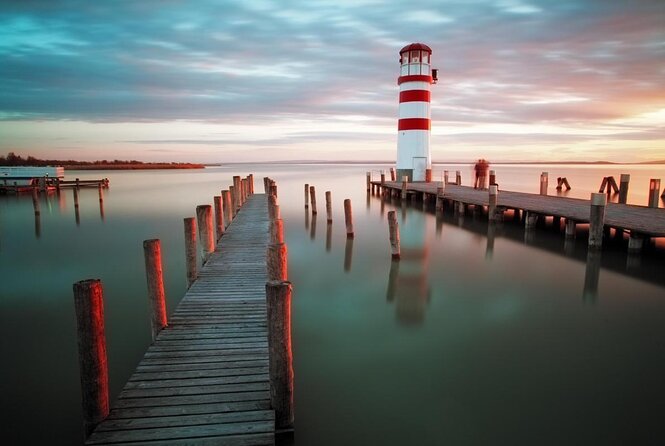
The first pause is at Lake Neusiedl, a UNESCO World Heritage site surrounded by vineyards and low, rolling country. The planned stop lasts about an hour, with no admission fee. This is a scenic introduction rather than a full lake excursion. You should expect views from the route and a short chance to appreciate the setting, not a boat ride or extended nature program.
Rust is a pleasant choice for the first town. Its historic center has colorful houses, flower boxes, traditional Austrian architecture, and small shops selling decorations made from natural materials, including wood from wine barrels. You get about two hours here, enough for a walk and some free time.
Rust also gives you your first chance to spend money locally. You can eat near the vineyards overlooking the lake and sample Burgenland wine, but meals and drinks are not included. I would treat this as a good place to enjoy a relaxed lunch rather than expect a formal tasting arranged as part of the tour.
The drive then continues toward Bratislava. The listed timing for this transfer is only about 30 minutes after Rust, but border and road conditions can affect any Central European itinerary. Keep your passport easy to reach and avoid planning a tight evening commitment in Bratislava.
More Small Group Tours in Vienna:
- Vienna Historic Center Small Group Walking Tour
★ 5.0 · 1,746 reviews - Budapest Small-Group Day Trip from Vienna
★ 5.0 · 545 reviews - Vienna: Small Group Guided Walking Tour of City Highlights
★ 5.0 · 540 reviews
Bratislava packs a lot into one morning
Day two centers on Bratislava’s Old Town, a compact area with medieval streets, churches, cultural institutions, embassies, and Slovak government buildings. The guided visit is planned for about an hour, followed by Michael’s Gate and Bratislava Castle.
Michael’s Gate is especially worthwhile because it is the only surviving gate from the city’s medieval fortifications. The half-hour stop is short, but the gate helps you picture the old defensive city better than a general walk alone.
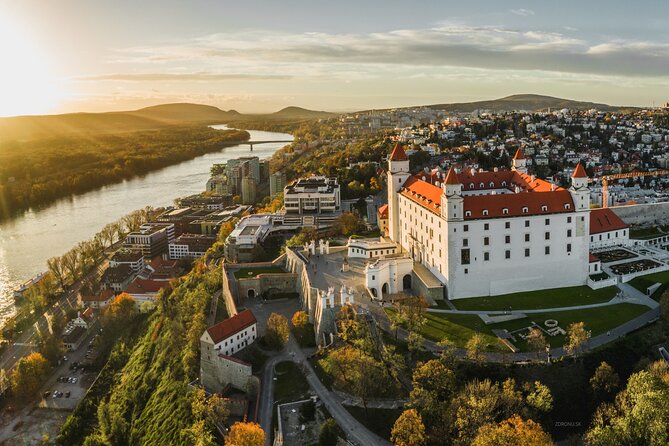
Bratislava Castle sits above the Danube and dates back to the ninth century. The one-hour visit includes admission, and the hilltop location gives you a strong city view. You should expect some uphill walking, though the itinerary does not describe a difficult hike.
The afternoon leaves about an hour for coffee in the city center. That small block of free time matters. Bratislava works well when you slow down for a café, browse a shop, or simply watch the pedestrian streets instead of rushing from monument to monument.
The limitation is pace. Bratislava receives a short introduction, not a full city stay. If you want museums, the castle interiors, or a longer look at local neighborhoods, you may need to return independently before or after the organized route.
Győr adds a quieter Hungarian stop
On day three, the group heads into Hungary for Győr, known as the City of Rivers. This is a smaller, calmer stop than Budapest, with Baroque buildings, multicolored houses, churches, and pedestrian streets.
The route includes Győr Town Hall, whose 59-meter tower has a green top, and the Cathedral of the Virgin Mary, which was built in Roman style in the 11th century. You also pass the Győr Synagogue, recognizable by its large gray dome. These stops give the town more substance than a simple coffee break.
Baross Gábor Way is the main pedestrian street included in the walk. Cafés, shops, bars, and restaurants line the route, with about an hour for your own meal or drink. The itinerary specifically mentions Hungarian food and blueberry beer, so this is a useful chance to try something local rather than rely on hotel dining.
Győr is a good example of the tour’s value. It is not the headline city, but it breaks up the capital-heavy route and shows how much Central European character survives outside the main tourist circuit. At the same time, an hour or two cannot reveal every church, square, or museum, so keep your expectations realistic.
Budapest gets the grandest sightseeing day
Day four brings the biggest city on the early part of the route. Budapest is split by the Danube into Buda and Pest, and the itinerary uses that divide well. You pass Saint Stephen’s Basilica, the Opera, Parliament, Heroes’ Square, the boulevards, and Fisherman’s Bastion.
The sightseeing drive and walk last about two hours. That is enough for the major sights and orientation, but not enough for detailed visits inside them. The focus is on views, architecture, and the way the city is arranged around the river.
Buda Castle receives a separate one-hour visit with admission included. As a UNESCO World Heritage site and a key symbol of Budapest, it adds the historical center that a simple boulevard tour would miss. Fisherman’s Bastion is also important for its sweeping view across the Danube toward Pest.
The evening is free. This is one of the tour’s strongest scheduling choices because Budapest rewards nighttime wandering, and you can choose your own meal, café, or riverfront walk. The itinerary mentions bridges and a Baroque-style street, but it does not include a scheduled evening cruise or dinner.
I would budget carefully here. Budapest is one of the places where you may want to pay for an extra attraction or a better meal, yet the tour package covers only the listed inclusions. The group’s hotel location is not specified, so ask before assuming that the evening sights are close to where you sleep.
A few more Vienna half-days to weigh up
- Vienna: Vivaldi’s Four Seasons Concert in Karlskirche
★ 4.7 · 14,951 reviews - Vienna: Spanish Riding School Training
★ 3.9 · 9,281 reviews - Vienna: Skip-the-cashier-desk-line Giant Ferris Wheel Ride
★ 4.5 · 7,859 reviews - Vienna: Schönbrunn Palace & Gardens Skip-the-Line Tour
★ 4.7 · 7,739 reviews
Subotica shows the Austro-Hungarian borderlands
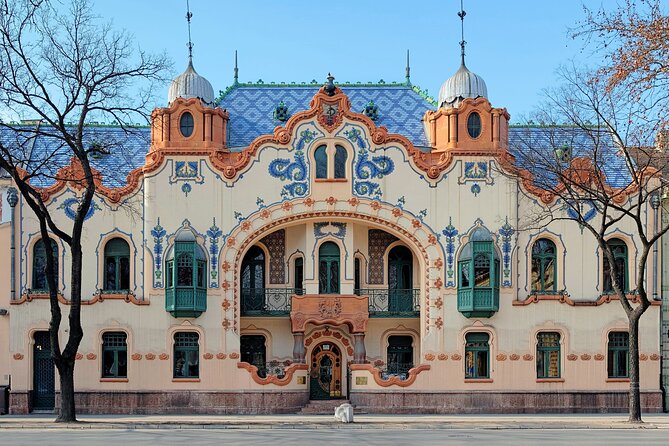
Day five crosses into Serbia and stops in Subotica. The town is known for decorated buildings, a mixture of cultures, and architecture shaped by its place in the former Austro-Hungarian Empire. The city center is colorful and easy to explore on foot.
The City Hall anchors the visit. It faces a park, fountains, and a large square, giving Subotica a more open and relaxed feel than a dense capital. You have time to look around, eat, and try local food and wine.
The plan also includes Saint Teresa of Avila Cathedral and the Subotica Synagogue. The synagogue admission is not included, which is a small but important detail. Bring some local currency or a payment method that works in Serbia if you want to enter.
Subotica gets roughly three hours in total, including independent time. That is a sensible amount for a town of this size. I like that the schedule does not treat it as a passing photo stop. You can sit with a coffee, examine the façades, and notice the city’s Central European character before the route moves farther south.
Novi Sad and Sremski Karlovci slow the pace
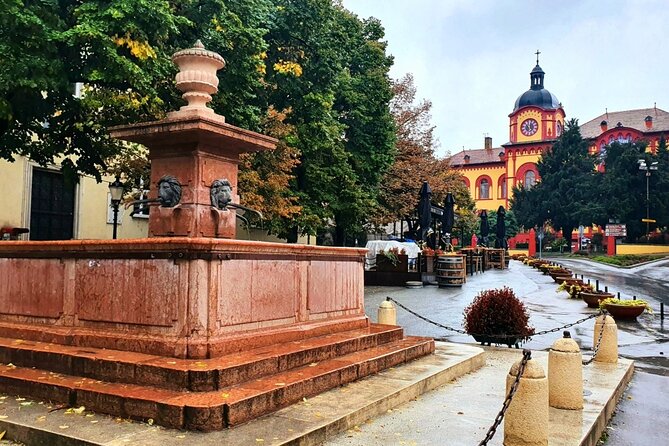
Novi Sad is the main stop on day six and the overnight location. The city sits near the meeting point of former Austro-Hungarian and Ottoman spheres, and the itinerary draws attention to both influences. The old town includes the pedestrian streets Zmaj Jovina and Dunavska, with Baroque buildings and time to explore independently.
Petrovaradin Fortress is the major sight. Its position above the Danube gives the stop a broad view and explains its nickname, the Gibraltar on the Danube. The three-hour visit is one of the more generous city stops on the route.
Because you spend the night in Novi Sad, the city should feel less rushed than Bratislava or Budapest. You can use the free time to eat, walk, or return to a street you only saw with the group. Breakfast is included the next morning, but dinner is not, so ask the tour leader for practical suggestions.
The following day is devoted to Sremski Karlovci, a small town tied to Serbian culture, spirituality, and wine production. Its Baroque center feels more like a historic town than a modern city. The Four Lions fountain carries a local legend: drink from it and you will return to Karlovci and marry there.
The wine focus is useful, but the information does not promise a prepaid tasting. You should plan to pay for wine samples and food yourself. The three-hour stop allows time for cellars, streets, and vineyard views, but the exact tasting arrangements should be confirmed.
Belgrade brings scale, rivers, and public memory
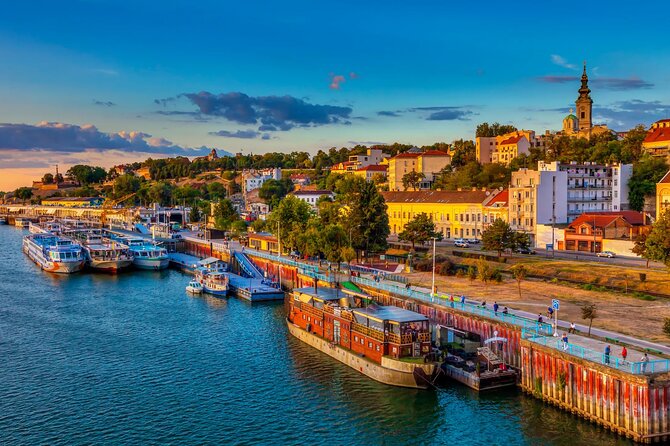
Day eight turns to Belgrade, Serbia’s capital. The visit starts at Belgrade Fortress and Kalemegdan Park, located where the Sava and Danube meet. The fortress viewpoint is one of the route’s most memorable city panoramas, while the park provides a quieter walk among trees and paths.
The Pobednik monument in the Upper Town dates to 1913. From there, the tour continues along Knez Mihailova, a central pedestrian street, to Republic Square. The planned Belgrade visit is about an hour, so this is an orientation rather than a complete city tour.
That short visit is the main weakness of the Belgrade section. The city has more to offer than the fortress and central street, but the route must keep moving toward Bosnia and Herzegovina. If Belgrade is important to you, consider adding extra nights before or after the organized trip.
The day continues to Zvornik, a town on the Drina River. You have about an hour for lunch and a short walk. It is a practical stop between capitals, with a chance to try local dishes and see a smaller riverside town.
Sarajevo and Mostar carry the strongest stories
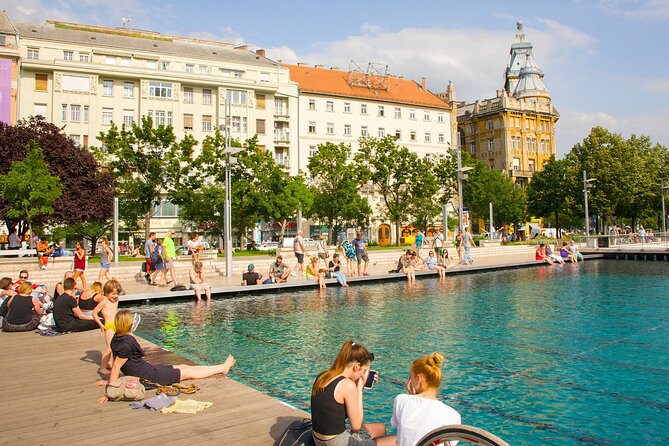
Day nine is the emotional center of the journey. Sarajevo combines Ottoman and Austro-Hungarian quarters, markets, mosques, churches, and synagogues. The city is often described as a European Jerusalem, and the route makes that idea concrete by moving through several religious and architectural traditions.
You will also see reminders of the Yugoslav War, including bullet holes and cannon marks. The tour discusses Sarajevo’s origins and the medieval Bosnian Kingdom, then visits the Latin Bridge, where the assassination of Archduke Franz Ferdinand helped trigger World War I. The bridge itself is modest, but the event tied to it changed Europe.
The Sarajevo walk includes uneven ground and ruins. You need a moderate level of fitness, comfortable shoes, and a willingness to move at walking pace over rough surfaces. This is not the day for flimsy footwear or a heavy suitcase.
Mostar follows, with the Old Bridge, or Stari Most, as the main sight. The 16th-century bridge is part of a UNESCO World Heritage site and uses Islamic architectural forms. The surrounding Old Bazaar has cobbled lanes, mosques, Turkish-style shops, and stones marked with Don’t Forget, a reminder that Mostar’s beauty and painful past remain closely connected.
Mostar receives about three hours in total. That gives you time for the bridge, the old city, photographs, and a meal, though the city can feel crowded around the main lanes at busy times. The route’s strength here is not just the famous view. It is the contrast between Ottoman-era streets, rebuilt landmarks, and visible memories of conflict.
Crossing into Croatia completes the long journey
On day ten, your tour leader takes you to the Croatian border. A local representative then transfers you to your hotel in either Dubrovnik or Split. This split ending is practical, but it creates a major planning question: you need to know which final city is assigned to your booking.
Dubrovnik and Split are not interchangeable bases. Your onward flights, hotel reservations, and plans for the Croatian coast depend on the exact drop-off. Ask for the final transfer details, including the expected arrival time and whether the local driver takes you directly to your hotel.
The end transfer also shows how the tour is organized across several countries. A tour leader handles the main route, and a local driver completes the Croatian leg. That arrangement may work well, but it is another reason to keep your schedule flexible on the last day.
What the $3,450.94 price really covers
At $3,450.94 per person, the trip costs about $345 per day. That is not a bargain independent journey, but it includes services that are time-consuming to arrange across six countries.
Your package includes:
- Nine nights with breakfast in 3-star hotels
- Nine breakfasts
- A professional tour leader
- Hotel pickup in Vienna
- Hotel drop-off in Dubrovnik or Split
- Listed entry tickets
- Tourist and road taxes
- Petrol and international car insurance
The price is based on double, twin, triple, or quadruple occupancy. Solo guests should ask about the room supplement, since the advertised rate is not clearly a single-room price.
You still need to pay for lunches, dinners, drinks, snacks, souvenirs, personal spending, and anything not listed. Meals can add a meaningful amount over nine days, especially in Budapest, Belgrade, Sarajevo, and Mostar. I would also keep a small reserve for optional admissions such as the Subotica Synagogue.
The value is strongest if you want one booking to handle hotels, transport, border routes, and a guide across several countries. It is weaker if you prefer to choose your own hotels, spend several days in each capital, or travel at a slow pace.
Group size, comfort, and practical limits
A group capped at 10 is a real advantage on a route with frequent border crossings and city walks. You can ask questions, hear the tour leader, and avoid the stop-and-start feel of a large coach.
The vehicle is described as comfortable, and the route includes roads that can be difficult. Still, this is a driving tour. You will change countries often, and some days combine sightseeing with a long transfer. Pack light enough to manage your own luggage and keep essentials close during border stops.
The activity calls for moderate physical fitness. Most visits are walking tours rather than strenuous hikes, but Sarajevo includes uneven terrain, and castle or fortress stops may involve slopes. Comfortable walking shoes are essential.
The tour can be affected by weather, strikes, bank holidays, temporary closures, renovation, or other forces beyond the company’s control. The cancellation policy is strict: the booking is non-refundable and cannot be amended for any reason. If poor weather or failure to reach the minimum group size causes the company to cancel, you are offered another date or a full refund.
There is also a serious description problem to resolve. The opening information refers to pickup and drop-off from a Tirana hotel, Lake Koman, Shala River kayaking, and a local bed-and-breakfast. None of those activities appears in the 10-day Vienna to Croatia itinerary. The provided route has a Vienna pickup at 11:00 a.m., 3-star hotel nights, and a Dubrovnik or Split ending. Get written confirmation of the correct product before booking.
Who should choose this journey
I would recommend it to you if you want a broad first look at Central Europe and the western Balkans and do not want to arrange several cross-border transfers yourself. It suits curious, reasonably active visitors who value a guide, small groups, local food stops, and a changing mix of cities.
It is also a good fit if you enjoy smaller places such as Rust, Győr, Subotica, and Sremski Karlovci, not just famous capitals. Those stops give the route character and help explain the region’s overlapping Austrian, Hungarian, Serbian, Ottoman, and Bosnian pasts.
I would hesitate if you want long museum visits, nightlife in each city, or several free days. The schedule is tight, and Budapest, Belgrade, Sarajevo, and Mostar each deserve more time than this route can provide.
Should you book it?
Book this tour if convenience, variety, and a small group matter more to you than a slow pace. The best parts are the carefully connected route, the unusual Serbian stops, the views from castles and fortresses, and the powerful final stretch through Sarajevo and Mostar.
Before paying, confirm four things in writing: that your tour begins in Vienna, that the Lake Koman and Shala River material does not apply to your booking, whether your final destination is Dubrovnik or Split, and what entry tickets are included. If those details match your plans, the price can be fair for a guided, multi-country trip with transport and hotels already arranged.
FAQ
Where does the tour start?
The scheduled starting point is Vienna, Austria, with hotel pickup at 11:00 a.m.
Where does the tour end?
The tour ends with hotel drop-off in either Dubrovnik or Split, Croatia. Confirm which destination applies to your booking.
How many people can join the group?
The maximum group size is 10 people.
Are hotels and breakfast included?
Yes. The package includes 3-star hotel accommodation and nine breakfasts. Pricing is based on double, twin, triple, or quadruple occupancy.
Are lunch and dinner included?
No. Lunches, dinners, drinks, snacks, souvenirs, and personal spending are not included.
Can I cancel for a refund?
The experience is non-refundable and cannot be changed for any reason. If the company cancels because of poor weather or because the minimum number of participants is not reached, you are offered a different date or a full refund.
Recently added around Vienna
- Vienna: Private tour Mauthausen and Linz★ 4.1 · 3 reviews
- 2-Day Prague Tour from Vienna with private Transfers and Lunches★ 5.0 · 3 reviews
- Vienna Self Guided Sherlock Holmes Murder Mystery Game★ 4.5 · 3 reviews
- Vienna Private Schönbrunn Palace Tour, Extra Rooms and Gardens★ 5.0 · 3 reviews
- Salzburg and Lake Region Private Day Trip from Vienna★ 5.0 · 3 reviews
- Small-group Vienna Wine Tour★ 5.0 · 3 reviews
- True Crime mobile puzzle rally Vienna★ 4.0 · 3 reviews
- Vienna: Wachau Valley Private Kayak and Wine Tour★ 5.0 · 3 reviews
Vienna Tours, compared.

Vivaldi’s Four Seasons Concert in Karlskirche
Read our review →

Skip-the-cashier-desk-line Giant Ferris Wheel Ride
Read our review →
Schönbrunn Palace & Gardens Skip-the-Line Tour
Read our review →
Light of Creation Votive Church Immersive Light Show
Read our review →

Skip-the-Line Sisi Museum, Hofburg and Gardens Tour
Read our review →
Hallstatt & Alpine Peaks Day Trip with Skywalk Lift
Read our review →Browse the lists this tour appears in