
Reviewed · SMALL GROUP TOURS
Small Group Tour; The Balkans & Central Europe – Tirana to Vienna
The striking thing here is the range: in two weeks, you move from Ottoman bazaars and Balkan fortresses to Austro-Hungarian squares, Danube capitals, and Vienna. I like the route’s strong mix of cities and smaller places, especially Kruja, Rahovec, Sremski Karlovci, and Subotica, which give the trip more character than a simple capital-city dash.
I also like the practical setup: private transportation for a maximum of 10 people, breakfast each morning, and hotel pickup in Tirana with drop-off in Vienna. The tradeoff is clear. This is a fast-moving road trip with many border crossings and several one-hour sightseeing stops, so you will trade slow, independent exploration for broad regional coverage.
Key points to know before booking
- Eight countries in 14 days: Albania, Kosovo, Montenegro, Bosnia and Herzegovina, Serbia, Hungary, Slovakia, and Austria.
- A small group of up to 10 people: A more personal format than a large coach tour, with a tour leader throughout.
- Strong UNESCO and landmark coverage: Kruja Castle, Dečani Monastery, Kotor, Mostar, Blagaj, Buda Castle, and Bratislava Castle are among the principal stops.
- Private transport and one-way routing: You start in Tirana and finish in Vienna, useful if you are building a larger European trip.
- Food and wine are part of the route: Mrizi i Zanave, Rahovec, Sremski Karlovci, Sarajevo, Győr, and Subotica add local flavor.
- The pace is brisk: Expect regular early starts, border formalities, walking on cobblestones, and some long drives between cities.
Why this Tirana to Vienna route works
This is not a single-country holiday. It is a broad introduction to a part of Europe that is often treated as several separate trips. The route links Albania’s Ottoman and medieval sites with Kosovo’s religious and cultural landmarks, Montenegro’s Adriatic coast, Bosnia’s layered past, Serbia’s river cities, Hungary’s grand architecture, Slovakia’s compact capital, and Austria’s final flourish in Vienna.
That geographic sweep is the tour’s main value. You do not need to arrange separate cars, hotels, border crossings, road taxes, or fuel. The tour handles the movement while you concentrate on the places outside the window and the towns reached along the way.
The small-group limit matters, too. With no more than 10 people, stops should be easier to manage than they would be on a full-size bus. Your tour leader can also keep the group together through old towns and border crossings without the drawn-out feel of a large organized group.
The price is $4,876.33 per person. That is a serious amount for a 14-day trip, but it includes private transport, a professional tour leader, 3-star accommodation, breakfast, entry fees for the listed included sites, tourist taxes, road taxes, and petrol. Lunch, dinner, drinks, snacks, and personal purchases are extra.
The value depends on how you like to travel. If you want independent control, long café stops, and time to change plans, the price may feel high. If you want a single organized route through eight countries without handling the logistics yourself, the cost covers a lot of practical work.
More Small Group Tours in Austria:
- Vienna Historic Center Small Group Walking Tour
★ 5.0 · 1,746 reviews - Budapest Small-Group Day Trip from Vienna
★ 5.0 · 545 reviews - Wachau Valley Small-Group Tour and Wine Tasting from Vienna
★ 5.0 · 540 reviews
Day 1: Kruja’s bazaar, castle, and Prizren
The opening day gives you two very different introductions. In Kruja, the old bazaar is the main pleasure. Its narrow lanes and wooden shops sell carpets, jewelry, and handmade Albanian goods. You can shop here, but the setting itself is the attraction. The bazaar gives you a quick sense of how trade and daily life worked before modern shopping streets took over.
Kruja Castle sits above the town on rocky ground. The site connects directly with Albania’s resistance to Ottoman expansion in the 15th century, and your tour leader points out lesser-used paths associated with the castle’s defenders. The scheduled visit is about an hour, so expect an overview rather than a long archaeological study.
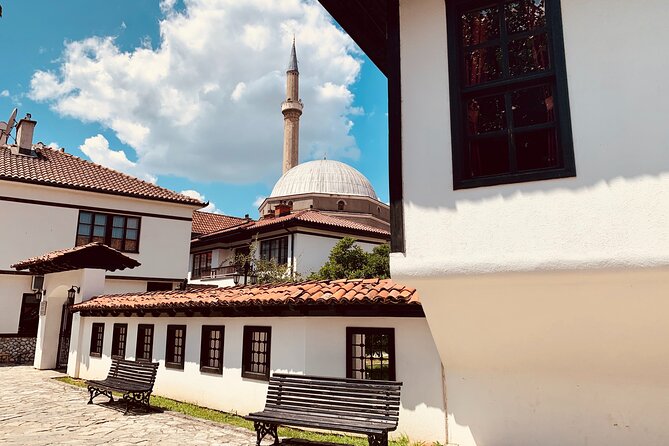
After the border crossing into Kosovo, Prizren brings a different mood. The old town follows the river, with stone bridges, medieval houses, mosques, and craft shops. The Sinan Pasha Mosque is the principal religious visit, with colorful arabesque decoration, while Prizren Fortress provides a hilltop view over the town.
You receive free time in Prizren, which is welcome after the day’s driving. If you care about crafts, look for the city’s filigree work in precious metals. If your dates coincide with August, Dokufest adds a major short-film festival to the city, though the tour does not promise festival access or special programming.
Day 2: Gjakova, Dečani, and Kosovo wine country
Gjakova’s bazaar was damaged and rebuilt several times, including during the Kosovo War. Today, its restored shops offer a place to see local crafts and stop for a meal. The one-hour visit is short, but it breaks up the drive and gives you a look at a commercial center outside Prizren.
Dečani Monastery is one of the day’s most important stops. Orthodox monks still live there, and the monastery is known for its white exterior and 14th-century frescoes. Its UNESCO status reflects the importance of those paintings, which show both religious scenes and details of medieval life.
The monastery visit also adds a human element. You may see or hear about food made there, including cheese and other organic products. Keep in mind that religious sites can have their own rules and access limits, and the schedule may change if a site temporarily closes.
Rahovec Valley shifts the focus to wine. Grape growing here reaches back to Illyrian times, and vineyards cover the low hills around the town. The annual wine festival takes place in September, but outside festival dates you can still appreciate the agricultural side of the region and the role wine plays in local identity.
Day 3: Farm cooking and Shkodra’s hilltop view
Mrizi i Zanave is one of the more distinctive stops because it shows a working food business rather than another fortress or church. You tour the farm, hear how the family adapted old communist-era buildings for storage, and see how regional produce is collected and preserved.
This is a useful pause in a route otherwise heavy on built heritage. You can eat a traditional lunch or buy fresh products, though meals and purchases are not included in the tour price. The farm is also presented as a local employer, creating work for people in surrounding communities.
In Shkodra, the main visit is Rozafa Castle. From its high position, you look over Lake Shkodra and the rivers that flow toward the Adriatic. The city has ancient roots and later Venetian influence, which shows in parts of its architecture.
Shkodra is also known for handmade carnival masks. February visitors might encounter the city’s carnival season, but this is a possibility rather than a scheduled part of the experience. The day’s sightseeing is not long, so you will get a taste of Shkodra rather than a full exploration of its museums and streets.
A different way to spend an afternoon here:
- Vienna: Vivaldi’s Four Seasons Concert in Karlskirche
★ 4.7 · 14,951 reviews - Vienna: Spanish Riding School Training
★ 3.9 · 9,281 reviews - Vienna: Skip-the-cashier-desk-line Giant Ferris Wheel Ride
★ 4.5 · 7,859 reviews - Vienna: Schönbrunn Palace & Gardens Skip-the-Line Tour
★ 4.7 · 7,739 reviews
Day 4: Montenegro’s coast, from Sveti Stefan to Kotor
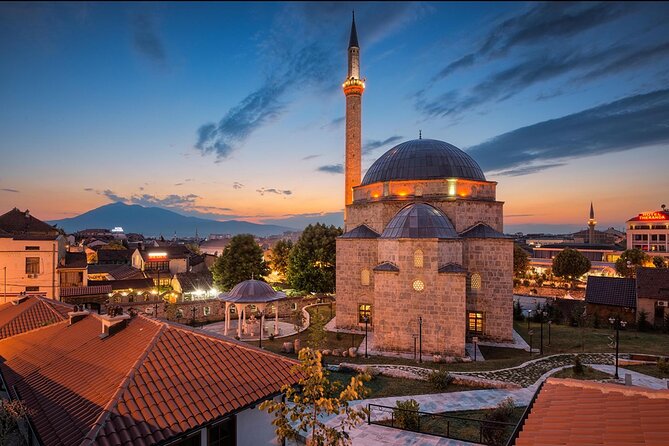
The viewpoint near Sveti Stefan is a brief but photogenic stop. The former fishing settlement occupies a tiny island connected to the shore, but it is now an exclusive residential resort and cannot be visited as part of this tour. You see it from the coast, so treat this as a scenic pause, not an island excursion.
Budva provides a walk through its old town, with medieval churches and stone lanes, while the newer part of the city has modern buildings, shops, restaurants, and bars. The contrast is useful: Budva is both a historic settlement and a major coastal resort.
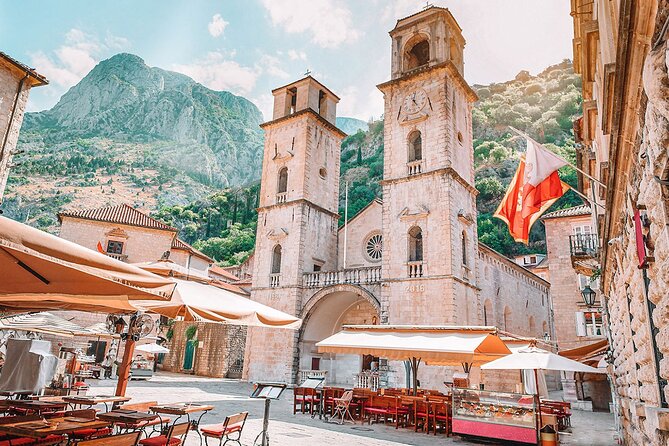
Kotor is the day’s heavyweight. Its UNESCO-listed old town is built as a maze of narrow cobbled lanes, originally useful for confusing attackers. Saint Luke’s Church is included, and your leader can explain why it symbolizes unity for local people.
The limitation is time. One hour in Kotor is enough to orient yourself, but not enough to climb the surrounding fortifications, linger over lunch, and inspect every church. Comfortable shoes are important, especially since old-town paving can be uneven.
Day 5: Mostar and the blue spring at Blagaj
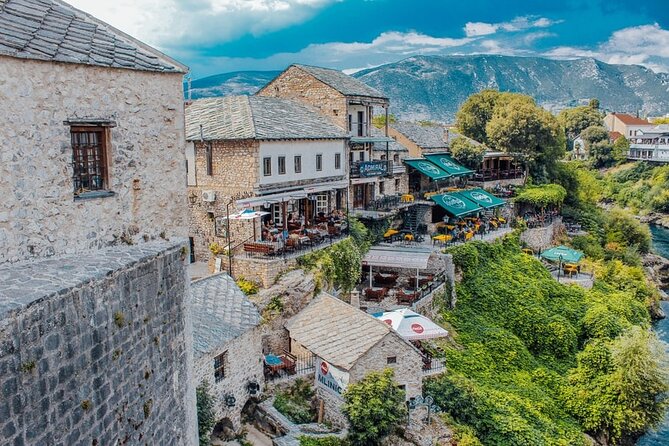
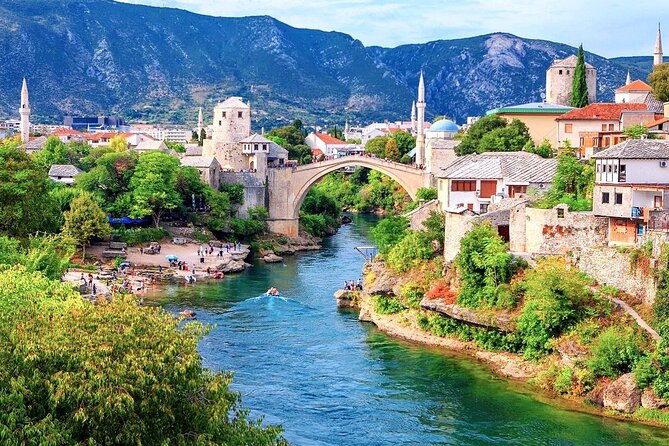
Crossing into Bosnia and Herzegovina, you reach Mostar and its famous Old Bridge, Stari Most. The 16th-century bridge is the city’s central image, but it is better understood as part of a larger old town shaped by Ottoman architecture, bazaars, mosques, and cobbled lanes.
The words Don’t Forget appear around Mostar as reminders of the city’s wartime destruction. That history is not hidden behind a polished postcard view. As you walk, you see how old buildings and newer repairs occupy the same streets.
The Old Bazaar area is included, giving you time to browse and wander. Mostar can become crowded, particularly in its narrow center, so a guided introduction helps you find your bearings quickly. You still receive free time afterward, which lets you return to a favorite street or find a local meal.
Blagaj Tekija sits outside Mostar beside the Buna River spring, below a cliff. Its Ottoman setting and clear blue water create a sharp change from the stone streets of Mostar. The stop is especially worthwhile for the setting, though one hour leaves little room for a slow meal or extended walk.
Day 6: Sarajevo’s Ottoman, Austro-Hungarian, and wartime layers
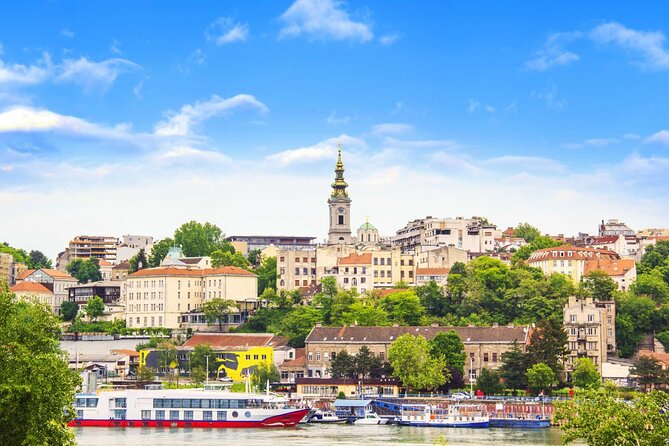
Sarajevo asks for more attention than the one-hour guided visit can provide. The city brings Ottoman markets, mosques, churches, synagogues, and Austro-Hungarian buildings into a compact center. That mix explains why Sarajevo is often called the European Jerusalem.
You also encounter visible reminders of the Yugoslav War, including bullet holes and cannon marks. The walk includes uneven ground and ruins, so this is one of the days when sturdy shoes matter most.
At the Latin Bridge, your leader explains the 1914 assassination of Archduke Franz Ferdinand and how the event helped trigger World War I. The location gives a major event in European history a precise street-level setting.
The free time afterward is short but useful. Sarajevo is a fine place to try local meat dishes and desserts, and you should plan to spend your independent hour eating rather than attempting a second full sightseeing circuit.
Days 7 and 8: Zvornik, Belgrade, and Serbian wine towns
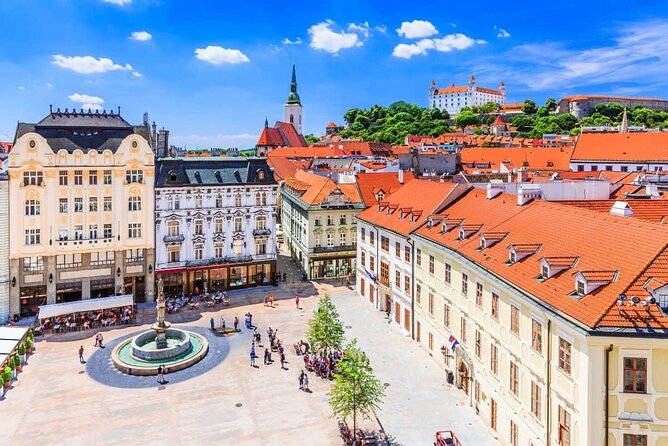
Zvornik, on the Drina River, is a calmer stop before Belgrade. You have time for lunch or a walk through its streets, making it a welcome break from major-city touring.
In Belgrade, the route focuses on the fortress and Kalemegdan Park, set above the meeting point of the Sava and Danube. The Pobednik monument, green park paths, and broad river views give you a strong first look at the Serbian capital.
The walk continues along Knez Mihailova toward Republic Square, a central social and shopping street. One hour is enough for the principal sights, but Belgrade deserves more time than this schedule allows. If the city interests you, use the evening or any free period wisely.
Sremski Karlovci then slows the pace. This Baroque town was a center of Serbian culture in the 18th century and remains linked to wine production. You can see the Four Lions Fountain, visit the compact center, and taste regional wine specialties during free time.
The town’s small scale makes it an excellent contrast to Belgrade. It is also one of the clearest examples of how this trip mixes major capitals with places you might not reach on your own.
Days 9 and 10: Novi Sad, Subotica, and the road to Budapest
Novi Sad is the cultural center of northern Serbia. Its position between former Ottoman and Austro-Hungarian spheres gives the city a noticeable mix of influences, especially around the Baroque old town.
The three-hour visit includes the pedestrian streets of Zmaj Jovina and Dunavska, plus Petrovaradin Fortress, known as the Gibraltar on the Danube. Free time lets you choose between cafés, shops, and a slower walk through the center. You spend the night in Novi Sad, which avoids making the city only a rushed daytime stop.
Subotica is another architectural highlight. The City Hall dominates the central square, surrounded by a park, fountains, and open space rather than a single cathedral. The city’s colorful buildings reflect its former importance within the Austro-Hungarian Empire.
You have three hours here, giving you more room to sample local food and wine. That matters because Subotica’s appeal is less about one famous monument and more about looking carefully at its decorated facades and relaxed streets.
Later, you cross into Hungary and continue to Budapest. The short scheduled stop in Budapest on this day is only an arrival point. The fuller city visit comes the next day.
Days 11 to 14: Budapest, Győr, Bratislava, and Vienna
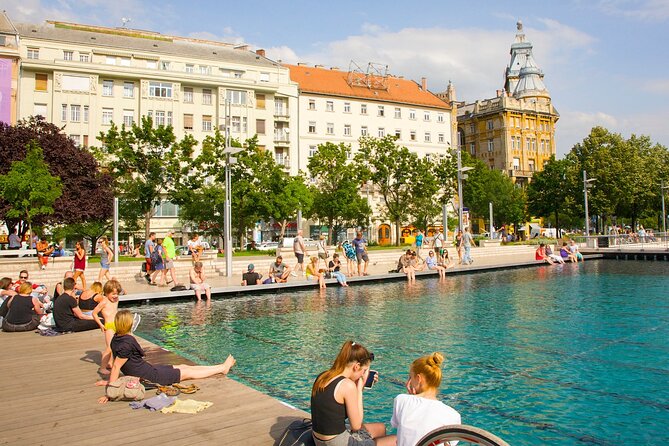
Budapest receives the time it deserves, though still in a compact format. You see Saint Stephen’s Basilica, the Opera, Parliament, Heroes’ Square, and Fisherman’s Bastion, then visit Buda Castle, a UNESCO World Heritage Site.
The city’s split personality is part of the fun. Buda rises on one side of the Danube, while Pest spreads across the other with grand boulevards and public buildings. A free evening is particularly useful because Budapest changes character after dark, and you can choose your own dinner or walk.
Győr is a smaller, easiergoing stop. Its Baroque center, multicolored houses, churches, Town Hall tower, Cathedral of the Virgin Mary, and former synagogue fit well into a walking visit. Baross Gábor Way supplies cafés, shops, bars, and restaurants, with time to try Hungarian food and the locally noted blueberry beer.
In Bratislava, the old town includes the Old Town Hall and Michael’s Gate, the only surviving gate from the medieval fortifications. The walk up to Bratislava Castle requires some effort, but the hilltop view over the Danube and city makes it worthwhile.
A free hour for coffee gives you a little breathing room before the final transfer. On Day 14, your tour leader drops you at your Vienna hotel. Vienna itself is not toured, so plan extra nights if you want to see the Austrian capital rather than simply use it as your onward destination.
Transport, hotels, meals, and group size
Private transportation is the backbone of the trip. It removes the need to rent a car across eight countries, navigate border crossings, and keep track of road charges and fuel. The downside is that road days can feel long, particularly when a one-hour visit follows several hours in the vehicle.
Accommodation is in 3-star hotels with breakfast included. Room pricing is based on double, twin, triple, or quadruple occupancy, so solo pricing and room arrangements should be confirmed before you pay. Fourteen breakfasts are included, while all lunches, dinners, drinks, and snacks are yours to arrange.
The group maximum is 10 people. That is small enough for a more direct relationship with the tour leader, and past departures have been led by guides including Sokol and Mandi. Names and staffing can vary, but the experience clearly depends on the leader’s ability to explain sensitive history and keep border days moving.
Most people can participate, but Sarajevo includes uneven terrain and many old-town areas use cobblestones. Travel and health insurance are your responsibility. The route can also change because of weather, strikes, holidays, temporary closures, or other events outside the operator’s control.
The price is nonrefundable and cannot be changed after cancellation, so this is a booking that calls for firm plans and suitable insurance.
Who should book this Balkan road trip
I would choose this trip if you want breadth without driving yourself. It is especially useful for first-time visitors to the region who want a structured introduction and do not want to solve transport between Albania, Kosovo, Montenegro, Bosnia, Serbia, Hungary, Slovakia, and Austria.
It suits people who enjoy history, architecture, food, and changing scenery more than resort downtime. The route includes religious sites, war memorial context, wine areas, old bazaars, river cities, and imperial architecture.
I would hesitate if you need long visits at each museum, a slow beach holiday, or several unplanned days. You will see a great deal, but many major stops are guided in roughly an hour. Pack light, wear firm walking shoes, and keep some energy for the road.
Should you book it?
Book this tour if the idea of moving from Kruja’s handmade goods to Mostar’s bridge, Sarajevo’s Latin Bridge, Budapest’s Danube views, and Bratislava’s castle sounds more exciting than staying in one country. The route is unusually broad, and the private transport, breakfast, included entries, and small group help justify the high price.
Skip it if you would rather linger in Sarajevo, Budapest, or Kotor, or if you dislike fixed schedules and frequent border crossings. For the right person, this is an efficient first look at a fascinating corner of Europe, with enough local food, wine, and smaller towns to keep it from becoming just a checklist of capitals.
FAQ
How long is the tour?
The experience lasts approximately 14 days, beginning in Tirana and ending with hotel drop-off in Vienna.
Which countries does the tour visit?
The route passes through Albania, Kosovo, Montenegro, Bosnia and Herzegovina, Serbia, Hungary, Slovakia, and Austria.
What is included in the price?
The price includes 3-star hotel accommodation, breakfast, private transportation, a professional tour leader, listed entry tickets, hotel pickup in Tirana, hotel drop-off in Vienna, tourist taxes, road taxes, and petrol.
Are meals included?
Breakfast is included for the overnights. Lunches, dinners, drinks, snacks, and personal purchases are not included.
How large is the group?
The maximum group size is 10 people.
Is the tour suitable for most people?
Most people can participate, but some walking takes place on uneven terrain and cobblestones, especially in Sarajevo and historic old towns. Health and travel insurance are the responsibility of each participant.
Recently added around Austria
- From Vienna: Austrian Lakes and Salzburg Private Tour★ 5.0 · 3 reviews
- Vienna: Private tour Mauthausen and Linz★ 4.1 · 3 reviews
- Salzburg On the Traces of Mozart Private Tour★ 4.5 · 3 reviews
- 2-Day Prague Tour from Vienna with private Transfers and Lunches★ 5.0 · 3 reviews
- Private Transfer from Munich to Salzburg, English-speaking driver★ 3.5 · 3 reviews
- Scenic Adventure Private Day Tour to The Konigssee Salzburg★ 4.5 · 3 reviews
- Vienna Self Guided Sherlock Holmes Murder Mystery Game★ 4.5 · 3 reviews
- In-depth private tour through every corner of Klagenfurt★ 5.0 · 3 reviews
Small Group Tours, compared.

Vienna Historic Center Small Group Walking Tour
Read our review →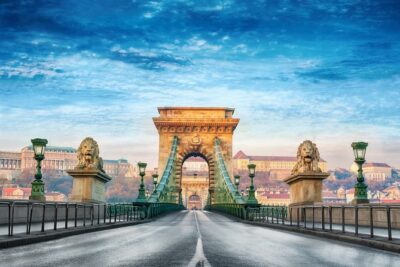
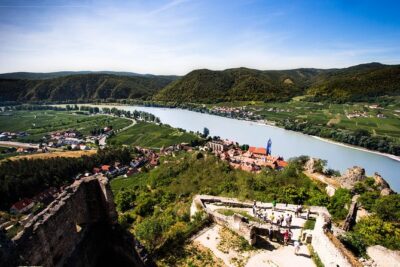
Wachau Valley Small-Group Tour and Wine Tasting from Vienna
Read our review →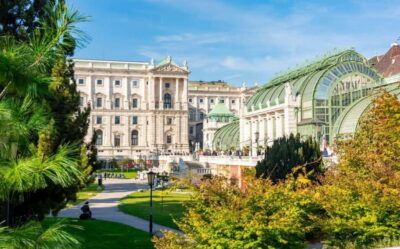
Small Group Guided Walking Tour of City Highlights
Read our review →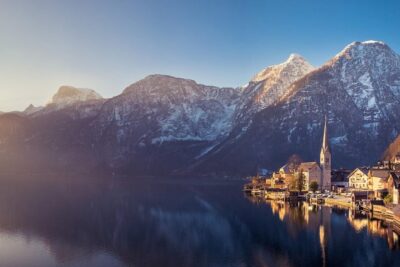
Salzburg and Lake Region Small-Group Day Trip from Vienna
Read our review →
Hallstatt and Salt Mines Small-Group Tour from Salzburg
Read our review →
Browse the lists this tour appears in