Reviewed · TICKETS
Forchtenstein Castle Admission Ticket & Optional Guided Tour
Forchtenstein Castle’s greatest surprise is how much of its past survives inside its walls. In one short visit, you can see the largest display of secco wall paintings north of the Alps, a vast armory, a 400-year-old Ottoman tent, and the only known full-length portrait of Vlad the Impaler.
I like the castle for two clear reasons: its treasures are original objects rather than modern reconstructions, and the route brings together military history, royal ceremony, family portraits, and strange collector’s pieces. The main caution is practical: the castle is not suitable for people with mobility impairments, and access to some areas may vary.
Key points
- The inner courtyard features the largest group of secco murals north of the Alps.
- The armory contains one of Europe’s largest private collections of weapons.
- The Gallery of Ancestors includes portraits of Attila the Hun and Vlad the Impaler.
- Three 17th-century coronation flags represent Hungary, Croatia, and Serbia.
- The silver furniture collection is described as Europe’s largest and earliest of its kind.
- A German audio guide is available for €2, while guided-tour options may also be offered.
Entering Forchtenstein Castle and Its Painted Courtyard
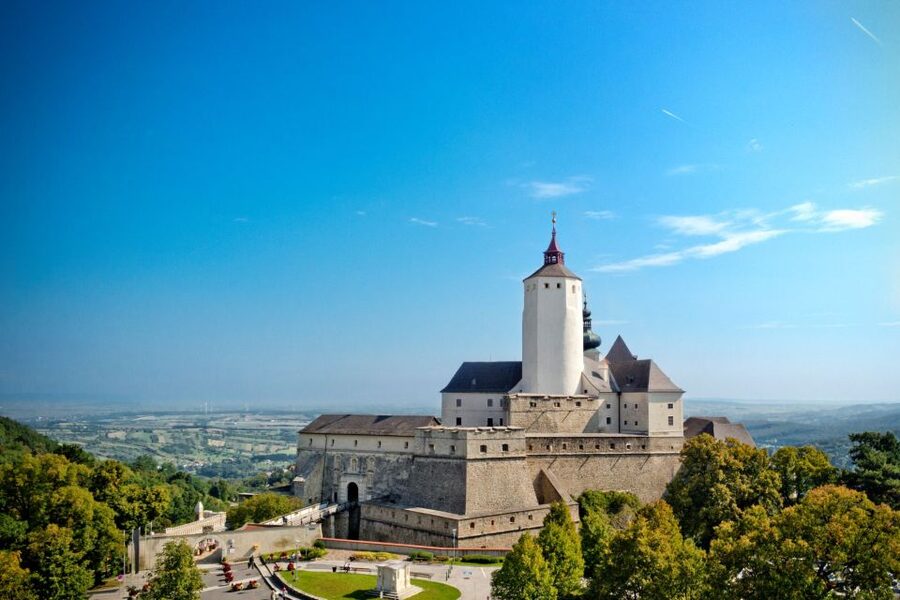
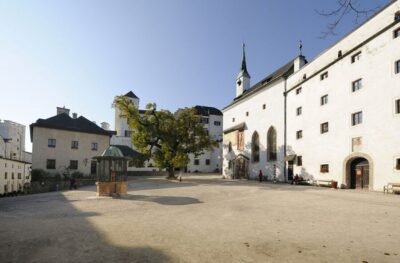
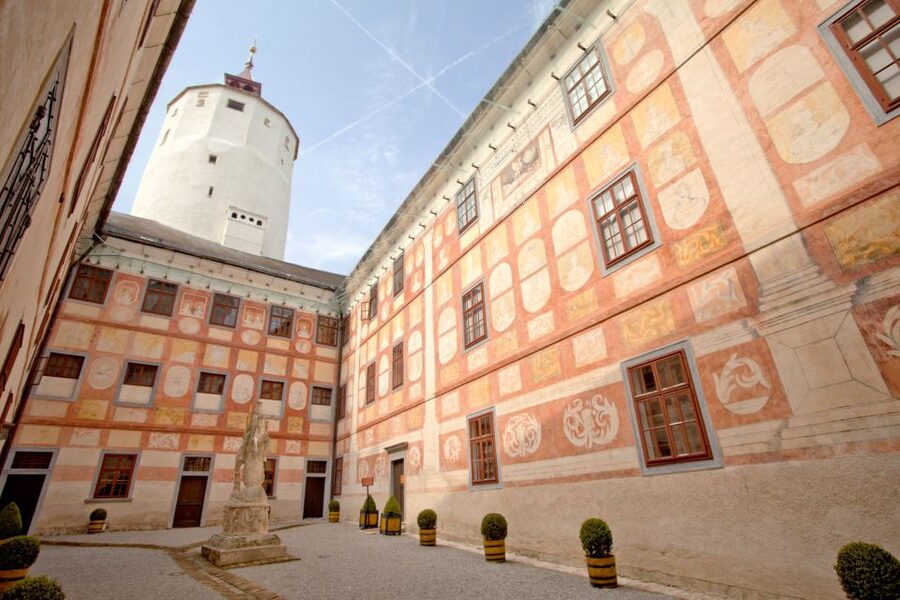
Your visit begins in the inner courtyard, where the castle makes its first strong impression before you even reach the main displays. The walls carry secco paintings, a technique in which pigments are applied to dry plaster. Here, the scale matters: this is described as the largest display of secco wall paintings north of the Alps.
I would spend a few minutes looking upward and across the courtyard before rushing indoors. The paintings are not just decoration. They set the tone for a castle built to project status, power, and family identity. Since your total visit lasts about an hour, the courtyard is also a useful place to get your bearings.
The castle’s location in Burgenland gives the visit a strong regional character. This is not a bare ruin with a few signs and a view. The building itself, its original interiors, weapons, portraits, and ceremonial objects all form part of the experience.
A few more Austria half-days to weigh up
- Vienna: Classic Ensemble Vienna in St. Peter’s Church Ticket
★ 4.7 · 4,819 reviews - Vienna Kunsthistorisches Museum Day Admission Ticket
★ 4.6 · 3,690 reviews - Vienna: Tickets for Mozarthaus Vienna with Audio Guide
★ 4.2 · 2,344 reviews
The First Floor: Chapel, Oratory, and a Serious Armory
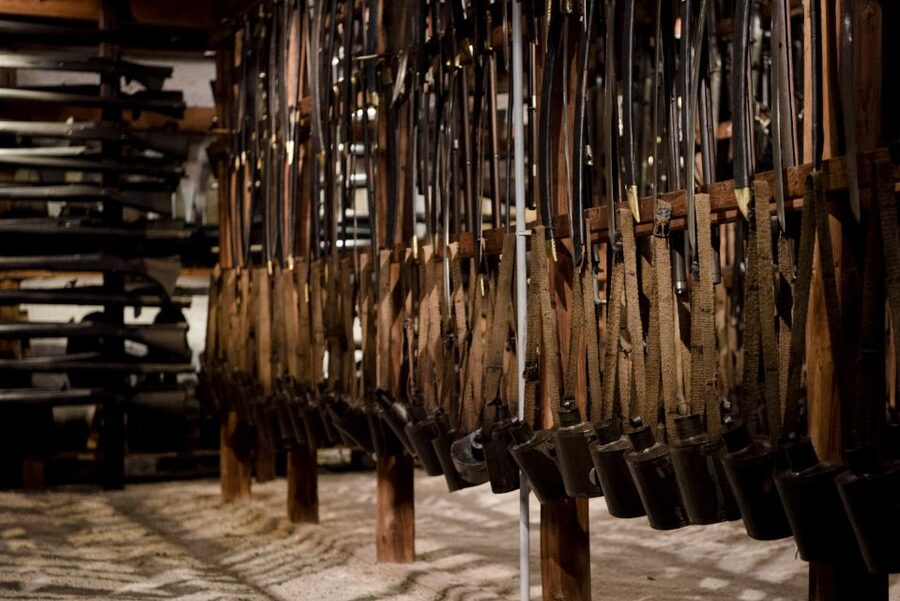
The route continues to the first floor, where you can see the oratory and chapel. These rooms connect the family’s religious life with the public image of wealth and authority that appears throughout the castle.
The most imposing stop here is the armory. Forchtenstein holds one of Europe’s largest private collections of weapons, so this section deserves more than a quick glance. You will find the kind of equipment that makes military history concrete: objects designed for use, display, protection, and ceremony.
I like armories because they make a castle feel less abstract. A portrait can tell you how a family wanted to be remembered. A weapon shows what protection and warfare looked like in physical terms. At Forchtenstein, the armory also helps explain why a fortified home could function as both residence and storehouse.
The one-hour duration is enough for a focused visit, but it does require some discipline. If weapons are your main interest, you may want to give the armory extra time and move more quickly through smaller portrait displays. If you prefer art and family history, the upper-floor collections may deserve priority.
Upper-Floor Treasures: Silver, Silk, and Ottoman Ceremony
The second floor contains the largest concentration of special objects. One major highlight is the collection of silver furniture, described as Europe’s largest and earliest collection of its type.
Silver furniture is an unusual sight. It shows wealth in a very direct way, since the material itself carried great value and the furniture also required skilled work. You are not simply looking at decorative objects. You are seeing how status could be built into everyday furnishings and displayed for important visitors.
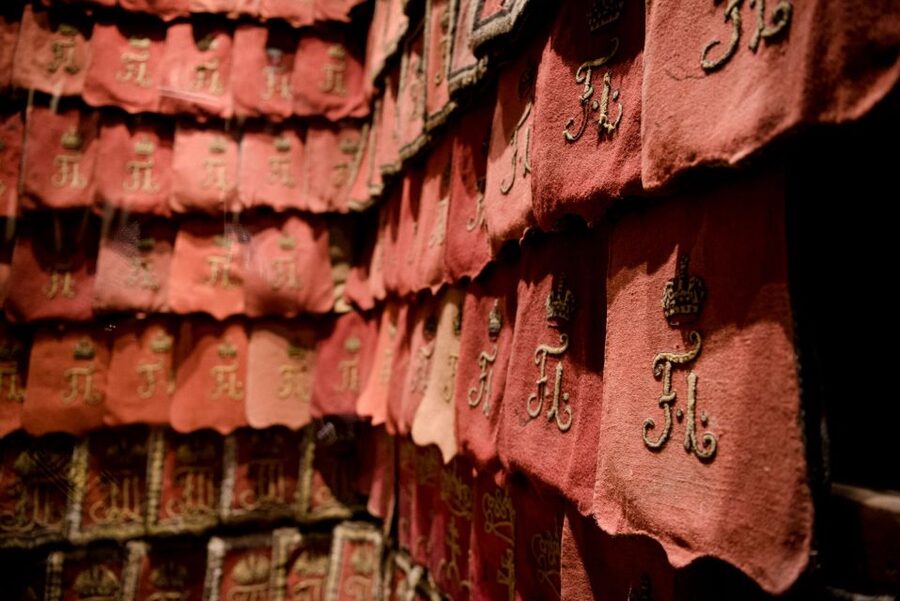
Another memorable object is an ornate Ottoman tent dating from about 400 years ago. It adds a different cultural and political note to the visit. The tent points toward contact, conflict, diplomacy, and ceremony across the region. It also breaks up the parade of European portraits and weapons with something visually distinct.
The three coronation flags are among the most important objects in the castle. Dating from the 17th century, they are associated with Hungary, Croatia, and Serbia. The description identifies them as the oldest known coronation flags from those countries, which gives them value far beyond their fabric and color.
For me, these flags are the kind of display that rewards a little context. A coronation flag is not just a banner. It represents a public ceremony and the political order surrounding it. Even if you know little about Central European dynasties, the objects make the connection between royal ritual and state power easy to grasp.
The Gallery of Ancestors and Vlad the Impaler
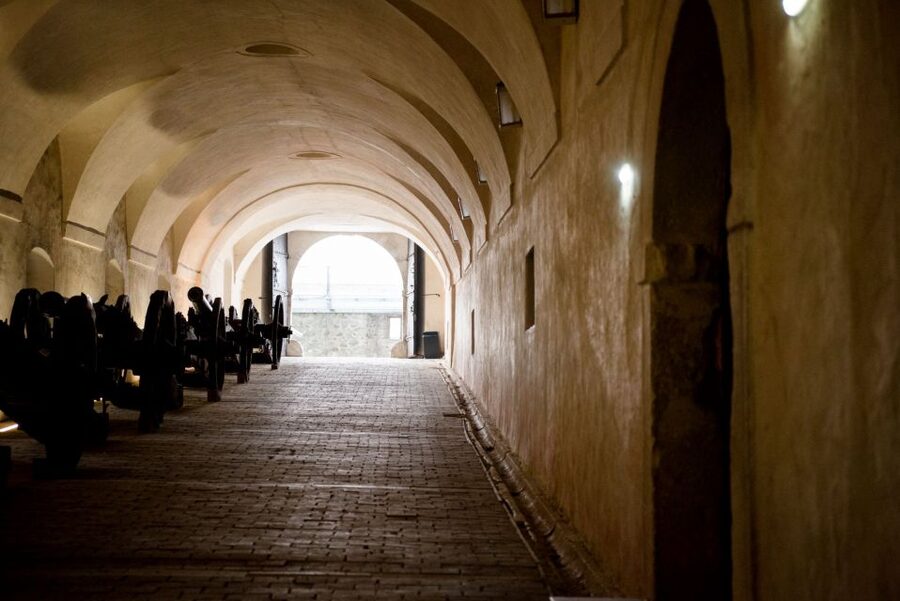
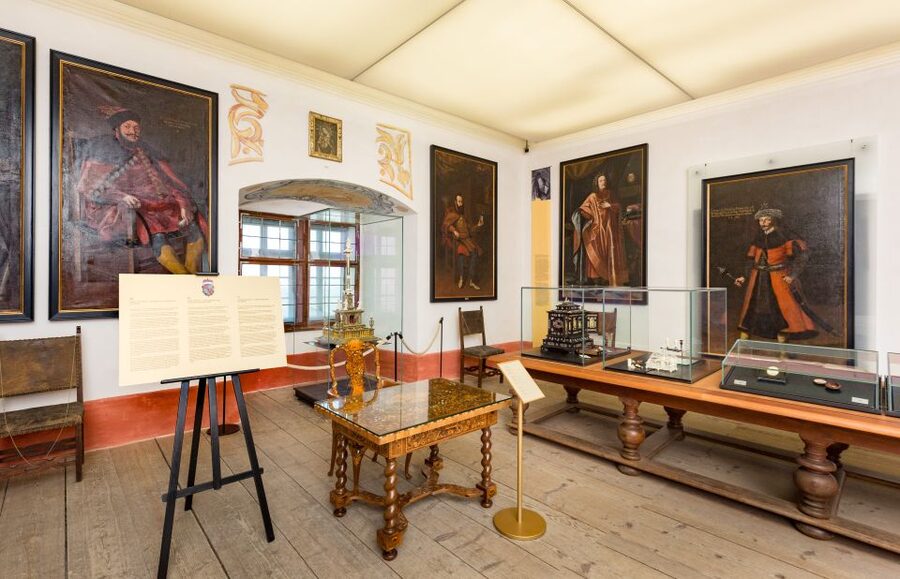
The Gallery of Ancestors is one of the castle’s most unusual rooms. It contains numerous Esterházy family portraits, but not every figure shown was a real family member. Some portraits depict fictional ancestors, including Attila the Hun and Vlad the Impaler.
The only known full-length portrait of Vlad the Impaler is the detail that will draw many history-minded visitors. Vlad is widely linked with the Dracula legend, but this display is better understood as an example of how noble families shaped their own image. Claiming symbolic ties to famous, feared, or heroic figures could make a family seem older and more powerful.
That is what makes the gallery more interesting than a normal row of portraits. You are seeing genealogy used as storytelling. The paintings show who the Esterházy family wanted to place within its imagined past, not only who could be confirmed through ordinary family records.
I recommend taking the portraits as a mix of history, symbolism, and theater. You do not need to accept every image as literal fact to appreciate what the collection reveals about aristocratic ambition.
A different way to spend an afternoon here:
- Vienna: Vivaldi’s Four Seasons Concert in Karlskirche
★ 4.7 · 14,951 reviews - Vienna: Spanish Riding School Training
★ 3.9 · 9,281 reviews - Vienna: Skip-the-cashier-desk-line Giant Ferris Wheel Ride
★ 4.5 · 7,859 reviews - Vienna: Schönbrunn Palace & Gardens Skip-the-Line Tour
★ 4.7 · 7,739 reviews
The Kunstkammer and Prince Paul Esterházy’s Curiosity
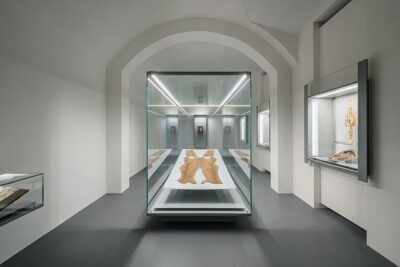
The castle also preserves a Kunstkammer, or cabinet of curiosities, dating from the late 16th to the early 18th century. This collection offers a window into Prince Paul Esterházy’s passion for collecting.
Cabinets of curiosities brought together objects that might now be divided among art museums, natural history displays, royal collections, and historical archives. The appeal was variety: rare, unusual, beautiful, foreign, or difficult-to-explain objects could all belong in the same room.
At Forchtenstein, the Kunstkammer helps you understand the personality behind the collection. The castle is not only a military stronghold or family residence. It is also the record of a collector deciding what deserved to be saved, displayed, and passed down.
This section may appeal most to you if you enjoy objects with a story rather than a single clear purpose. It is also a good counterpoint to the formal portraits and the armory. Together, the different rooms show how a powerful family collected weapons, symbols, furniture, art, and curiosities as part of its identity.
What the One-Hour Visit Feels Like
The advertised duration is one hour, which makes this a compact cultural stop rather than an all-day outing. That can work well in Burgenland, especially if you are fitting the castle between other activities.
You can expect a steady sequence of major rooms and displays: courtyard murals, the oratory and chapel, the armory, the Gallery of Ancestors, ceremonial objects, silver furniture, the Ottoman tent, and the Kunstkammer. There is enough variety to keep the visit moving, but plenty of material for you to study more closely if you have a strong interest in one subject.
A guided option can add value because the objects are connected by family history and political symbolism. A guide can explain why fictional ancestors appear beside real family members, or why coronation flags matter. The available audio guide is in German and costs €2, so it is most useful if you understand German and want additional background while moving through the rooms.
The supplied activity information does not identify individual guides, so you should not book this expecting a named guide. If a live guided tour matters to you, check the available start time and language before paying.
Arrive 15 minutes before the activity begins. That small buffer matters when your visit is scheduled for only an hour. You will want the full time inside rather than starting late and cutting short the upper-floor collections.
Is the $22 Admission Good Value?
At $22 per person, Forchtenstein Castle is not a bargain basement attraction, but the price can make sense if you care about original historic objects and concentrated museum visits. You are paying for access to an intact castle setting plus several collections with unusual highlights.
The value is strongest if you plan to look closely at the displays. The silver furniture, Ottoman tent, coronation flags, Vlad the Impaler portrait, and Kunstkammer are not interchangeable museum pieces. They give the visit a clear identity.
The value is weaker if you want a long, relaxed castle day with broad access to every room. The visit lasts about one hour, and some areas may not be open during your visit. One booking from August 2025 specifically noted that the first level was not accessible at that time, so it is wise to check current access if a particular room is essential to your plans.
The optional German audio guide costs €2, a small extra charge compared with admission. Since the included activity information lists German as the available language, English-speaking visitors should confirm language arrangements before booking.
Free cancellation up to 24 hours before the activity and the option to reserve now and pay later make this easier to fit into a changing schedule. Those policies do not change the castle experience itself, but they reduce the risk of committing too early.
Who Will Enjoy Forchtenstein Most?
I would recommend this visit to you if you enjoy:
- Aristocratic collections and family portraits
- Historic weapons and military objects
- Strange or rare museum pieces
- Central European royal and political history
- Authentic interiors rather than modern replicas
- Short cultural visits with several distinct themes
It works especially well for people who like to connect objects with the people who collected them. Prince Paul Esterházy’s interests give the castle a human thread, while the armory and flags provide a wider political setting.
Families with older children may also find the castle engaging because the displays offer easy entry points. Weapons, an Ottoman tent, Vlad the Impaler, and fictional ancestors are more immediately memorable than a long sequence of dates. Younger children may find the portrait galleries slower, so your own timing will matter.
I would be more cautious if stairs, uneven surfaces, or limited mobility are a concern. The activity is specifically listed as unsuitable for people with mobility impairments. Also think about language. A German audio guide is available for €2, but no other audio language is specified.
Should You Book This Castle Visit?
Book it if you want a compact but serious look at Esterházy collecting, military power, and ceremonial history. The strongest reasons are the original armory, the unusual Gallery of Ancestors, the silver furniture, the coronation flags, and the painted courtyard.
Skip it if you need step-free access, a guaranteed English-language explanation, or a full-day castle program. If you do book, arrive early, check whether a live guided tour is available in a language you understand, and save enough time for the second-floor collections. That is where many of the most distinctive objects are found.
FAQ
How long does the Forchtenstein Castle visit last?
The activity lasts about one hour. Check availability for the specific starting time.
How much does admission cost?
The listed admission price is $22 per person.
Is an audio guide included?
A German audio guide is available for €2. The admission ticket itself is included, but the audio guide is listed as an extra cost.
What languages are available?
German is the language specified for the activity. The information does not confirm other audio or guided-tour languages.
Is the castle suitable for people with mobility impairments?
No. The activity is listed as unsuitable for people with mobility impairments.
Can I cancel the booking?
Yes. You can cancel up to 24 hours in advance for a full refund. You can also reserve now and pay later, according to the booking conditions.
Recently added around Austria
- From Vienna: Austrian Lakes and Salzburg Private Tour★ 5.0 · 3 reviews
- Vienna: Private tour Mauthausen and Linz★ 4.1 · 3 reviews
- Salzburg On the Traces of Mozart Private Tour★ 4.5 · 3 reviews
- 2-Day Prague Tour from Vienna with private Transfers and Lunches★ 5.0 · 3 reviews
- Vienna Self Guided Sherlock Holmes Murder Mystery Game★ 4.5 · 3 reviews
- Private Transfer from Munich to Salzburg, English-speaking driver★ 3.5 · 3 reviews
- Scenic Adventure Private Day Tour to The Konigssee Salzburg★ 4.5 · 3 reviews
- In-depth private tour through every corner of Klagenfurt★ 5.0 · 3 reviews
Tickets, compared.
Classic Ensemble Vienna in St. Peter’s Church Ticket
Read our review →
Vienna Kunsthistorisches Museum Day Admission Ticket
Read our review →
Tickets for Mozarthaus Vienna with Audio Guide
Read our review →
Skip-the-Line Entrance Ticket to the Danube Tower
Read our review →