
Reviewed · VIENNA STATE OPERA TOURS
Vienna Private Walking Tour including State Opera
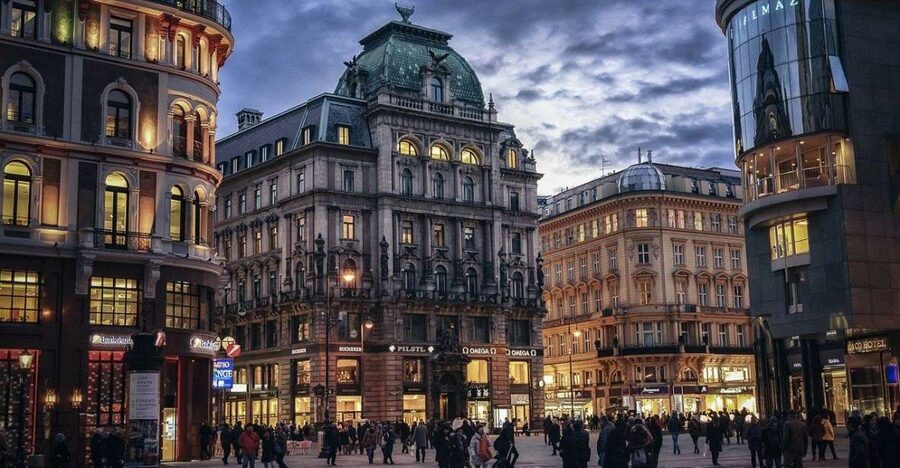
The most surprising part of this tour is how much Vienna fits into three central hours. You begin near Stephansplatz and connect Roman ruins, imperial courtyards, cathedral towers, opera history, and the old Habsburg court without leaving the city center.
I like the private format, which gives your group a guide rather than a fixed crowd, and I like the broad story line, from Vindobona and the Holy Roman Empire to the Second Republic. The route also brings together Vienna’s best-known composers and buildings in one walk.
The main caution is the State Opera visit. The title suggests a full Opera experience, but access may be limited to the lobby, or require a separate ticket and fee. Confirm this point before paying, especially if the Opera is your main reason for booking.
Key points at a glance
- State Opera access needs checking: The Opera portion has been described as a lobby visit, while another booking required a separate Opera tour and payment.
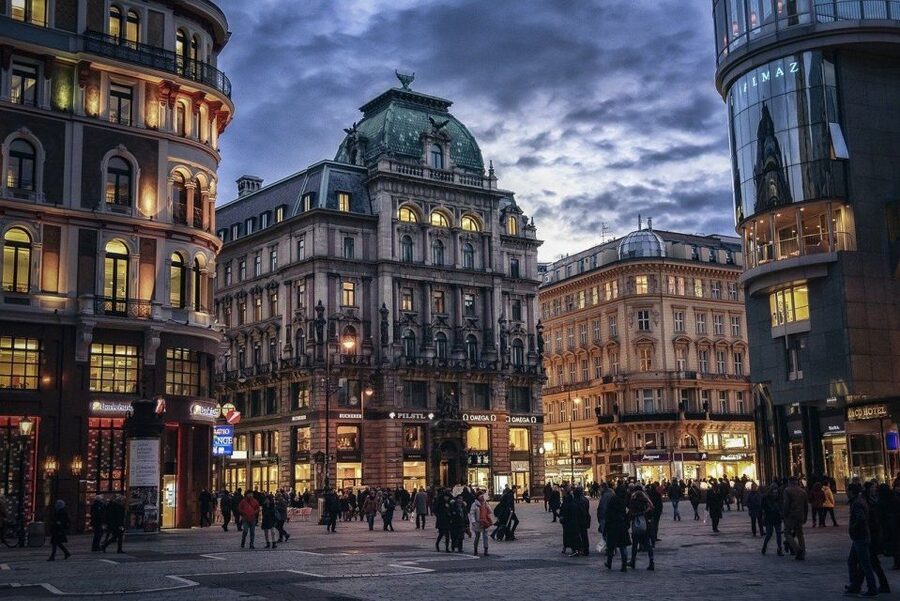
- The route links Vienna’s biggest sights: You pass the Hofburg, Michaelerkirche, Graben, Peterskirche, Mozart Monument, and Stephansdom.
- The story covers many centuries: Expect Roman Vindobona, medieval defenses, Habsburg rule, the Holy Roman Empire, the Austro-Hungarian Empire, the World Wars, and the Second Republic.
- Music is central to the walk: Mozart, Haydn, Beethoven, Schubert, the Strauss family, Brahms, and Mahler all help explain Vienna’s cultural importance.
- Private means flexible attention: The group can include up to 15 people, with English or German guiding.
- Allow for a lot of walking: Comfortable shoes are essential, and the activity is not suitable for people with mobility impairments.
Starting at Stephansplatz and the heart of Vienna
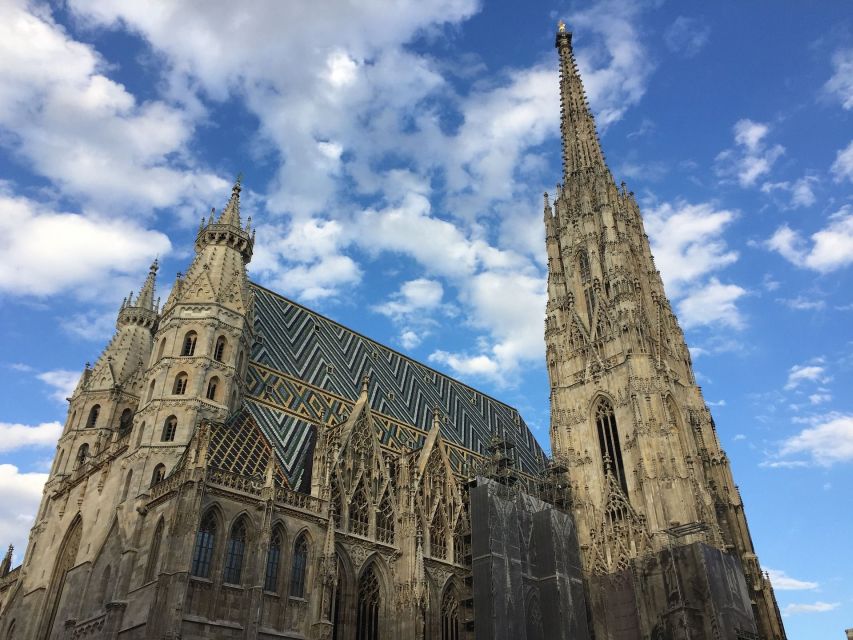
The meeting point is Stephansplatz 8A in central Vienna. This is a sensible place to begin because the square puts you beside Stephansdom, the city’s great cathedral, and within easy reach of the old imperial center.
Stephansdom is one of Vienna’s most powerful sights. Its Romanesque and Gothic elements reflect the city’s long development, and its height gives the square a strong vertical focus. You do not need a separate cathedral tour to appreciate the setting, but the guide can help explain why this church became such an important religious and civic symbol.
From here, the walk moves through streets that reveal Vienna in layers. Roman Vindobona came first. The Roman settlement helped establish the city’s position on the Danube frontier, and traces of that era still appear in the central area.
You then move into medieval Vienna, including old walls and remains of the former Burg Theatre. These fragments are easy to miss when you are walking alone. A guide gives them a place in the larger story, showing how the modern center grew around earlier defensive and political structures.
More Walking Tours in Vienna
- Vienna: Guided Walking Tour of City Center Highlights
★ 4.7 · 4,989 reviews - Vienna: Vienna Central Cemetery Guided Walking Tour
★ 4.8 · 3,307 reviews - Vienna: Guided Walking Tour of City Highlights & Hidden Gems
★ 4.9 · 2,180 reviews
From Roman Vindobona to Habsburg Vienna
The tour’s main strength is its timeline. Instead of treating Vienna as a collection of pretty buildings, it explains how the city became the center of a major European dynasty.
The Habsburgs ruled for centuries, first within the Holy Roman Empire and later through the Austro-Hungarian Empire. Their power shaped Vienna’s palaces, churches, court rituals, music, and art collections. The route introduces that story through places you can actually see, rather than through a lecture removed from the city.
The Hofburg is the clearest example. Its grand facades and gates reflect the long reach of the imperial court. For centuries, this was the working and ceremonial center of Habsburg rule. You pass the Michaelertrakt and the Michaelerkirche, also called St. Michael’s Church, which served as the official church of the emperors for many years.
The Michaelerkirche area is especially useful for understanding Vienna’s mix of power and religion. The church is not simply a decorative stop. Its position beside the Hofburg shows how closely court life and religious authority were tied together.
As you pass through the Michaeler Gate, notice how quickly the mood changes. The Hofburg’s formal scale gives way to streets and courtyards with a more human feel. This is where a private guide can be helpful, since your group can pause for questions instead of keeping pace with a large procession.
The Hofburg, Art History Museum, and imperial display
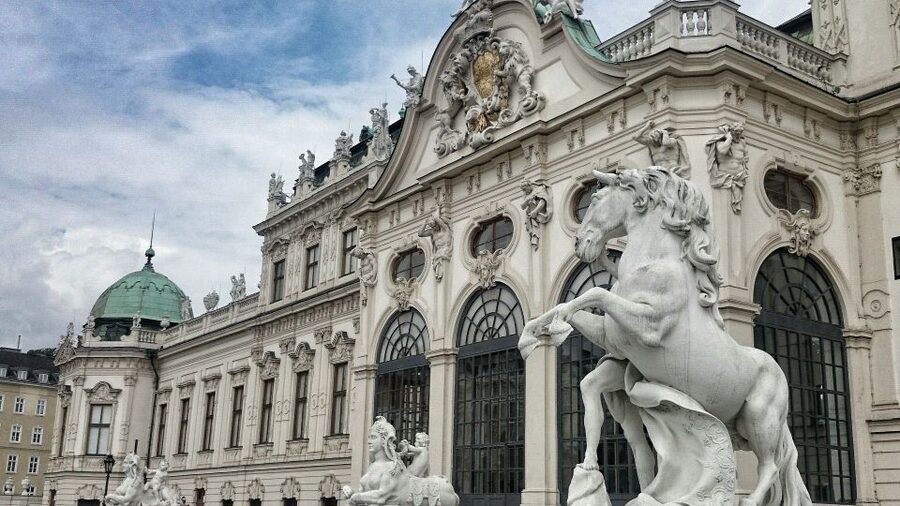
The facades of the Hofburg and the Kunsthistorisches Museum, or Art History Museum, provide two different views of imperial Vienna.
The Hofburg tells you about administration, ceremony, and royal residence. The Art History Museum points to the collecting habits of the Habsburg rulers and their interest in painting, sculpture, decorative arts, and objects from across Europe.
The tour does not include entrance fees, so you should think of these buildings mainly as exterior sights unless your guide tells you otherwise. That is not necessarily a weakness. In three hours, seeing the grand facades keeps the walking route moving and gives you a useful introduction before deciding which museum deserves your own time.
I would treat this section as orientation. If you already plan to visit the Art History Museum, the outside explanation can make your later visit more meaningful. If museums are not a priority, you still get a clear sense of how the court used architecture to express status.
Graben Street and the city’s older layers
The walk continues along Graben, one of central Vienna’s best-known streets. Its past reaches back to the Roman period, when the area was connected to the city’s early defenses and settlement.
The street also carries a medieval association with Richard the Lionheart, who entered Vienna through this part of the city after his capture during the Crusades. Details like this help turn a familiar shopping street into a place with a long political memory.
Graben is a good example of why a walking tour works well here. You may pass through on your way to another sight and see only shops, monuments, and polished facades. With context, the street becomes part of a much older pattern of trade, power, movement, and public life.
You also reach Peterskirche, or St. Peter’s Church. The church is linked to Vienna’s early Christian past, with a presence in the area dating back to the fourth century. Its interior is not listed as a separate included visit, so ask your guide what you will see inside and how much time is available.
More Vienna State Opera visits:
- Vienna: Mozart Concert at the Vienna State Opera
★ 4.6 · 461 reviews - Vienna State Opera House Mozart Concert in Historical Costumes
★ 4.0 · 120 reviews - STATE OPERA – PRIVATE guided tour (tickets included)
★ 5.0 · 14 reviews
The Mozart Monument and Vienna’s musical identity
Music is not a side topic on this tour. It is one of the main ways Vienna explains itself.
The route includes the Mozart Monument and connects the city with Mozart, Joseph Haydn, Ludwig van Beethoven, Franz Schubert, Johann Strauss the Elder and Younger, Johannes Brahms, and Gustav Mahler. That list covers several generations and different musical styles, from Classical composition to the grand orchestral works of the late nineteenth and early twentieth centuries.
The value here is not simply hearing famous names. You get a sense of why Vienna became such a strong center for music. Court support, wealthy patrons, churches, theaters, and an active public audience all helped create the setting in which composers could work.
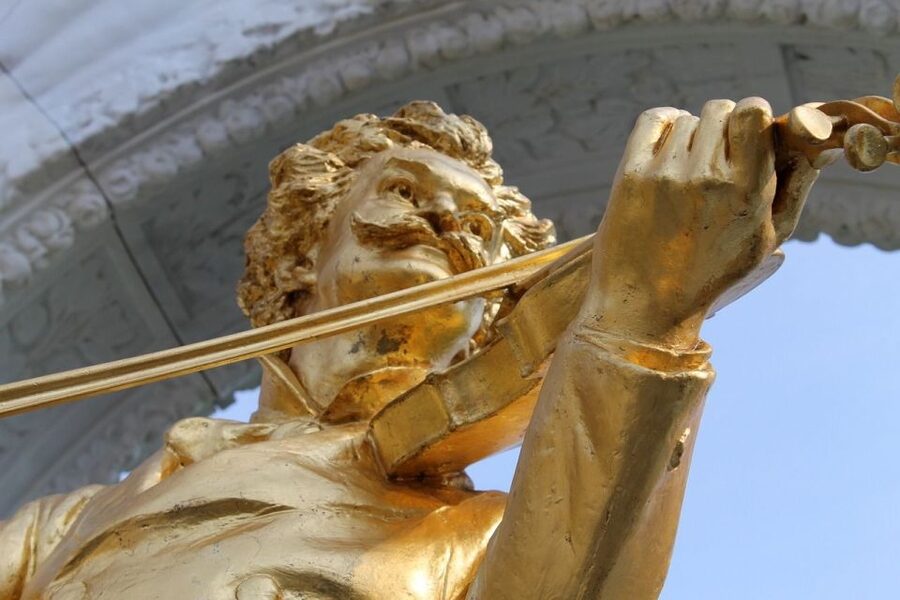
The Mozart Monument is also a useful pause in the route. It gives the guide a natural place to discuss the city’s association with Mozart without separating music from the surrounding imperial buildings and public gardens.
You should keep your expectations realistic. This is a history and city walk, not a concert, opera performance, or specialist music lecture. If you want detailed musical analysis, you may need a dedicated music tour. If you want a clear introduction to Vienna’s composers while seeing the center, this format makes good sense.
What the State Opera visit really means
The Vienna State Opera is the headline attraction, but it is also the point that needs the most careful checking.
The building opened in the 1860s as the Vienna Court Opera. Its name changed in 1920, during the formation of the early Austrian Republic. That change reflects Vienna’s shift from imperial court center to republic, and it gives the building more political meaning than its ornate exterior alone suggests.
The Opera has been associated with works including La Traviata, La Clemenza di Tito, and Verdi’s Don Carlo. It has also had famous directors such as Gustav Mahler, Herbert von Karajan, and Claudio Abbado. Even a short stop outside or in the public entrance area can help explain why the Opera remains central to Vienna’s identity.
But do not assume that the included Opera visit means a full backstage or auditorium tour. One description of the experience identifies the visit as a lobby stop. Another booking required a separate Opera tour and an extra payment. A separate account also records that an expected Opera visit did not take place after the start time was changed.
That makes the practical advice simple: ask before booking what is included on your date. Confirm whether you will enter only the lobby, whether an official Opera tour is available, and whether its entrance fee is extra. The general activity information says entrance fees are not included, so budget for an additional payment if a formal tour is offered.
If you are mainly interested in the building’s story, a lobby visit may still be worthwhile. If your priority is seeing the auditorium, stage areas, or a full guided interior tour, book only after receiving a clear answer.
War, memory, and the Second Republic
The historical scope extends beyond emperors and composers. The guide is expected to discuss the World Wars and the birth of Austria’s Second Republic.
That broader section matters because Vienna can look like a city frozen in imperial elegance. Its twentieth-century story is far more difficult. The end of the Habsburg era, the First World War, political conflict, National Socialism, the Holocaust, the Second World War, and the creation of the Second Republic all changed the city.
You may also pass through the Jewish quarter, where the subject of murdered Jewish people and the concentration camp system requires precise and respectful language. This part of the walk is not light sightseeing. It asks the guide to handle mass murder, persecution, and public memory with care.
The quality of this section depends heavily on the individual guide. One guide identified in the supplied information was Franziska Pfisker, and a serious concern was raised about insensitive political and historical comments during a tour. I would not ignore that warning. If your group wants a careful treatment of wartime Vienna, ask in advance who will guide you and how the route approaches the Jewish quarter and the Second World War.
A private tour can help here because you can ask direct questions and signal when you want more or less detail. It can also expose you more directly to a guide’s personal opinions, so the guide’s tone matters.
How the three-hour format works
Three hours is enough for a strong overview, but not enough for every interior or every historical period in detail.
The route appears to be a continuous central walk, with stops at major sights rather than long museum visits. That keeps the pace practical. You see the Opera, Hofburg area, churches, Graben, Mozart Monument, and cathedral within one compact circuit.
You should wear comfortable shoes. The activity is not suitable for people with mobility impairments, and the walking route includes streets, squares, and historic areas where surfaces and access may not be perfectly even.
The private group can include up to 15 people. For a couple or small family, that usually means more room for questions and a guide who can adjust the explanation. For a full group of 15, the price becomes more attractive, but the experience will naturally feel less personal than it would with two or four people.
English and German are available. Confirm your preferred language when booking, especially if the historical discussion is important to your group.
Is $323 good value for your group?
The listed price is $323 for the group, not per person, with up to 15 people allowed. That makes the arithmetic very different depending on your party size.
For 15 people, the price works out to about $21.55 per person before any extra Opera entrance fee. For six people, it is about $53.83 each. For two people, it is $161.50 each, which is a steep price for a three-hour walking overview.
I see the best value for families, multigenerational groups, or friends who want a private guide and can share the fixed cost. The price is harder to justify for a solo visitor or a couple unless personal attention and a private schedule matter more than cost.
Remember that entrance fees are not included. This is especially important because the State Opera wording may lead you to expect more than a lobby visit. Ask for the full cost before committing.
Free cancellation up to 24 hours before the activity and the option to reserve now and pay later make planning less risky. Those policies do not solve the Opera access question, but they give you some flexibility if the details do not match what you need.
Who will get the most from this walk?
I would recommend this tour to a first-time visitor who wants a big-picture introduction to central Vienna. It is also a good fit if your group wants imperial buildings, music stories, churches, and city history in one sitting.
It suits people who prefer asking questions to a guide rather than reading plaques. The private structure also works well when different members of your group have different interests. One person can ask about the Habsburgs, another about Beethoven, and another about the Opera.
I would be more cautious if you want extensive interior access. The Art History Museum, Hofburg, churches, and State Opera are mainly presented as route stops, and entrance fees are not included.
I would also think twice if you need step-free access or find three hours of walking difficult. The activity specifically excludes people with mobility impairments.
My practical verdict
Book this tour if you want a private orientation to Vienna and you are willing to treat the State Opera as a possible short visit rather than a guaranteed full tour. Its best features are the central route, the private guide, and the wide sweep from Roman Vindobona through Habsburg power, music, war, and the Second Republic.
Before booking, get three answers in writing: who your guide will be, exactly what State Opera access includes, and whether an Opera ticket costs extra. If those answers are clear and your group is large enough to share the $323 fee, this can be a useful first-day introduction.
If the Opera interior is your main goal, book a dedicated official Opera tour instead. If your group values context and conversation more than extensive sightseeing inside each building, this private walk offers a sensible way to get oriented fast.
FAQ
Where does the Vienna private walking tour meet?
The meeting point is Stephansplatz 8A, 1010 Vienna, Austria.
How long is the tour?
The walking tour lasts three hours.
Is the tour private?
Yes. It is offered as a private group experience for up to 15 people.
Which languages are available?
The tour is available with a live guide in English or German.
Is entrance to the State Opera included?
The activity includes a State Opera visit, but the exact level of access needs confirmation. The available information describes at least one visit as a lobby stop, and entrance fees are not included. A separate Opera tour may require an additional fee.
Is the tour suitable for people with mobility impairments?
No. The activity is listed as unsuitable for people with mobility impairments. Comfortable shoes are recommended.
Recently added around Vienna
- Vienna: Private tour Mauthausen and Linz★ 4.1 · 3 reviews
- 2-Day Prague Tour from Vienna with private Transfers and Lunches★ 5.0 · 3 reviews
- Vienna Self Guided Sherlock Holmes Murder Mystery Game★ 4.5 · 3 reviews
- Vienna Private Schönbrunn Palace Tour, Extra Rooms and Gardens★ 5.0 · 3 reviews
- Salzburg and Lake Region Private Day Trip from Vienna★ 5.0 · 3 reviews
- Small-group Vienna Wine Tour★ 5.0 · 3 reviews
- True Crime mobile puzzle rally Vienna★ 4.0 · 3 reviews
- Exploring the Gutenstein Alps★ 5.0 · 3 reviews
Vienna State Opera Tours, compared.
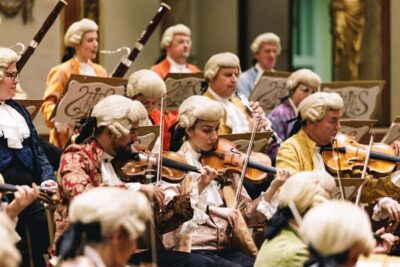
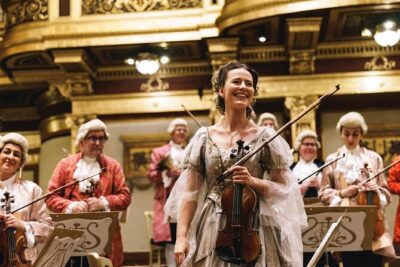
Vienna State Opera House Mozart Concert in Historical Costumes
Read our review →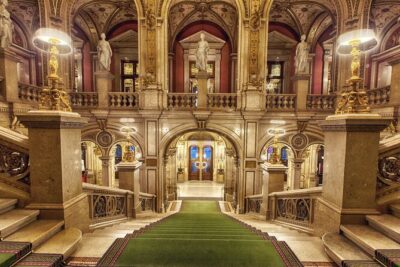
STATE OPERA – PRIVATE guided tour (tickets included)
Read our review →Browse the lists this tour appears in