Reviewed · VIENNA STATE OPERA TOURS
STATE OPERA – PRIVATE guided tour (tickets included)
Vienna’s State Opera is more than a handsome concert hall. It is a working theater with grand old rooms, postwar rebuilding, daily set changes, famous artists, and an annual ball that turns the building into a society stage. This private visit with Giselle Tours Vienna brings those pieces together in 90 minutes.
I like the private format, since Giselle can adjust the talk to your interests, whether you care most about music, architecture, or Vienna’s social life. I also like the backstage angle: learning how scenery is changed and stored gives you a better sense of the huge operation behind an evening performance. The main consideration is price: at $267, this makes the most sense for a group that values personal attention, rather than for a solo visitor seeking the cheapest introduction.
Key points to know before booking
- A private 90-minute visit: Only your group takes part, with the tour beginning and ending at the Vienna State Opera.
- A guide who adapts to you: Giselle is praised for her warm manner, clear communication, and ability to shift the focus around your interests.
- Architecture from two eras: You see the grand original areas and the modern sections rebuilt after the Second World War.
- Opera beyond the stage: Expect stories about performers, the Opera Ball, stage sets, storage, and the staff needed to run the institution.
- Tickets are included: You receive admission as part of the experience, with a mobile ticket available.
- A convenient central meeting point: The address is Opernring 2, 1010 Vienna, near public transportation.
Why the Vienna State Opera deserves a closer look
The Wiener Staatsoper sits at the center of Vienna’s musical identity. Even if you do not know your Verdi from your Wagner, the building gives you plenty to consider: imperial ceremony, modern reconstruction, famous careers, and the practical mechanics of putting on opera night after night.
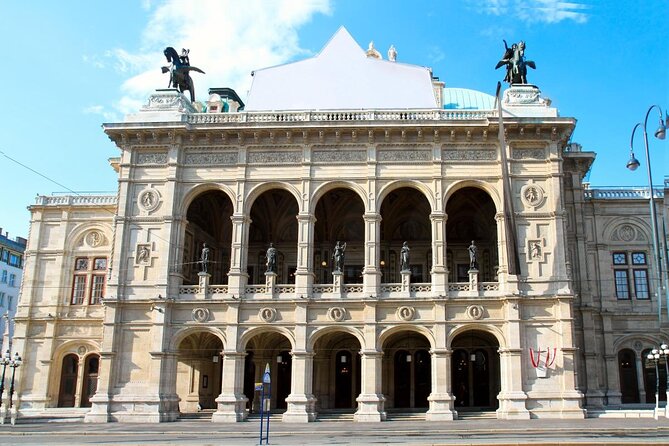
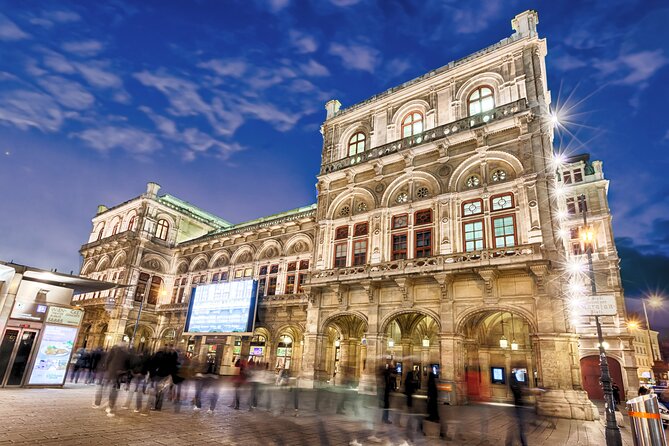
The building is about 150 years old, but its story is not a smooth one. Its original construction caused a major scandal, and the controversy was so severe that it contributed to the deaths of one of the architects. That detail gives the opening architectural discussion a sharper edge. This was not simply a grand project that everyone admired from the start.
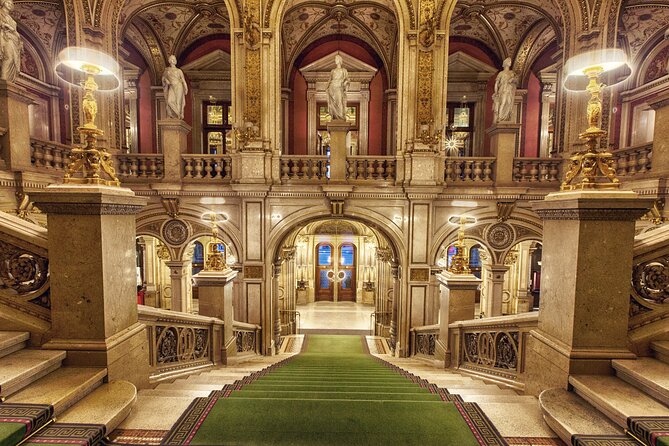
Inside, the contrast between the old and newer sections helps you read Vienna’s past in physical form. You see the pompous 19th-century rooms, designed to impress with ceremony and status. You also see areas rebuilt after the Second World War, where practical needs and modern construction had to meet the demands of an old institution.
That combination is valuable because you are not looking at a preserved museum shell. The State Opera continues to function as a major theater. Its spaces need to serve performers, technicians, musicians, administrators, and audiences. A good explanation connects the decorative rooms with that daily work.
More Vienna State Opera visits:
- Vienna: Mozart Concert at the Vienna State Opera
★ 4.6 · 461 reviews - Vienna State Opera House Mozart Concert in Historical Costumes
★ 4.0 · 120 reviews - Vienna Private Walking Tour including State Opera
★ 3.2 · 7 reviews
A private visit shaped around your interests
The private format is the clearest reason to choose this experience over a standard group visit. Only your party participates, so you are not sharing the guide’s time with a large crowd or waiting for other people to catch up.
Giselle is the guide named for the experience, and her style appears especially suited to visitors who enjoy conversation rather than a fixed speech. She has a background in Vienna tours and presents the opera through music, history, personalities, and local customs. You can steer the conversation toward the topics that matter most to you.
For a musician, that might mean more attention to composers and conductors. One previous appointment led to a discussion of Beethoven with a musician in the group. For another party, the focus might be the architecture, opera stars, or the social theater of the Opera Ball.
The personal approach can also help families and mixed-interest groups. One person may want to know how the stage machinery works, while another is more interested in Placido Domingo or Montserrat Caballé. With a private guide, those interests do not have to compete with a fixed group schedule.
Giselle is also described as friendly, funny, professional, and easy to communicate with before the meeting. Those qualities matter in a short tour. A 90-minute visit moves quickly, so a guide who answers questions directly and adjusts the pace can make the time feel useful rather than rushed.
Still, private does not automatically mean exhaustive. The tour covers public areas, and the supplied information does not promise access to every backstage room, rehearsal space, or performance area. You should think of it as an informed visit through the parts open to the public, with backstage operations explained where possible.
The grand old rooms and the postwar rebuilding
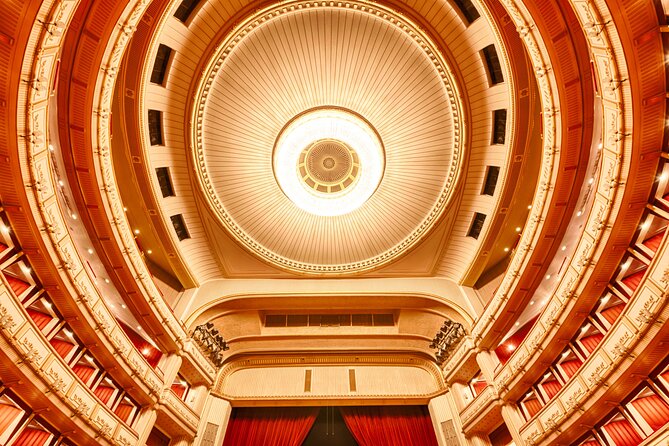
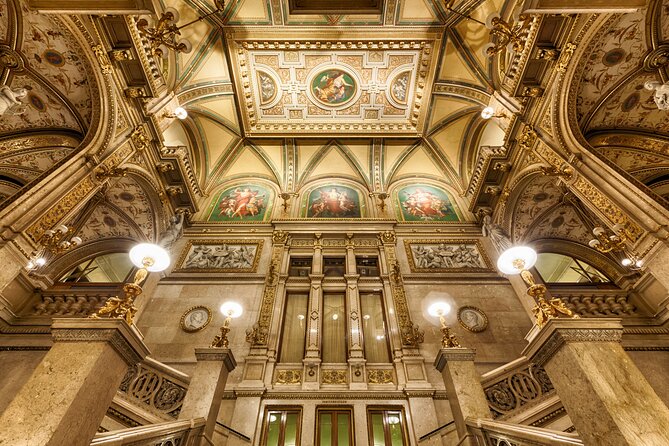
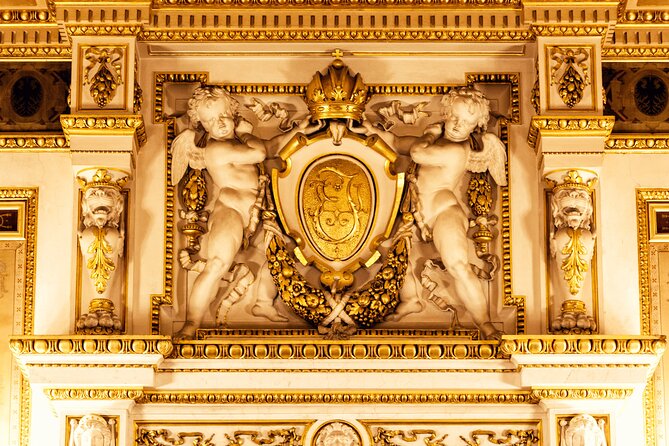
The first visual payoff is the contrast between the State Opera’s original decorative style and its later reconstruction. The older rooms are described as very grand, and you can expect the architecture to communicate the confidence of imperial Vienna.
This is the part that will appeal to anyone who enjoys interiors. The opera’s public spaces are tied to ceremony and status, with a scale meant to make an evening at the theater feel like a major social event. Giselle’s explanation adds the human side: who used these spaces, how the institution gained fame, and why the building mattered to Vienna.
The postwar sections tell a different story. Rebuilding after the Second World War meant restoring a beloved institution while dealing with modern requirements. The newer areas provide a useful counterpoint to the ornate old ones. You can see how a theater carries its past forward without operating exactly as it did 150 years ago.
I would pay attention to this architectural split rather than rushing from one room to the next. The value is not only in taking attractive photographs. It is in understanding why the opera can feel both ceremonial and practical, historic and still in use.
The tour does not provide a detailed list of every room visited, so you should not book it expecting a guaranteed checklist of named salons or restricted areas. The promise is broader: all areas open to the public, presented through the building’s design and working life.
Famous names, from Mahler to Nureyev
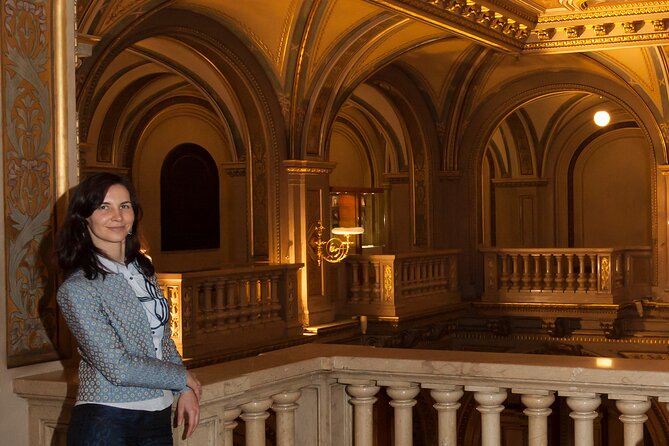
The State Opera’s story is also a story of performers and musical directors. Giselle discusses artists connected with the stage, including Placido Domingo, Montserrat Caballé, José Carreras, Gustav Mahler, Herbert von Karajan, Rudolf Nureyev, and Margot Fonteyn.
That list covers several kinds of fame. Domingo, Caballé, and Carreras represent major vocal careers. Mahler and von Karajan connect the opera with the tradition of powerful musical leadership. Nureyev and Fonteyn bring ballet into the story, reminding you that the building’s artistic life reaches beyond opera singers.
The benefit of hearing these names inside the theater is context. A short biography in a book can tell you what someone achieved, but a guide can place that career within the building, the city, and the changing repertoire. If you already follow opera or ballet, you can ask for more detail about the people you care about. If you are new to the subject, the names provide a useful map.
The tour also covers the changing repertoire. This is an important point. The State Opera is not presented as a single fixed tradition, but as an institution that changes its productions and performers over time. You learn how the program shapes what happens on stage and how the building supports a rotating schedule.
If you want a technical lecture on every composer or a full musicology class, 90 minutes will not provide that. The strength is the blend of personal stories, institutional facts, and visible spaces. You get enough structure to make the opera less intimidating without turning the visit into a specialist seminar.
A few more Vienna half-days to weigh up
- Vienna: Vivaldi’s Four Seasons Concert in Karlskirche
★ 4.7 · 14,951 reviews - Vienna: Spanish Riding School Training
★ 3.9 · 9,281 reviews - Vienna: Skip-the-cashier-desk-line Giant Ferris Wheel Ride
★ 4.5 · 7,859 reviews - Vienna: Schönbrunn Palace & Gardens Skip-the-Line Tour
★ 4.7 · 7,739 reviews
How the stage changes from one day to the next
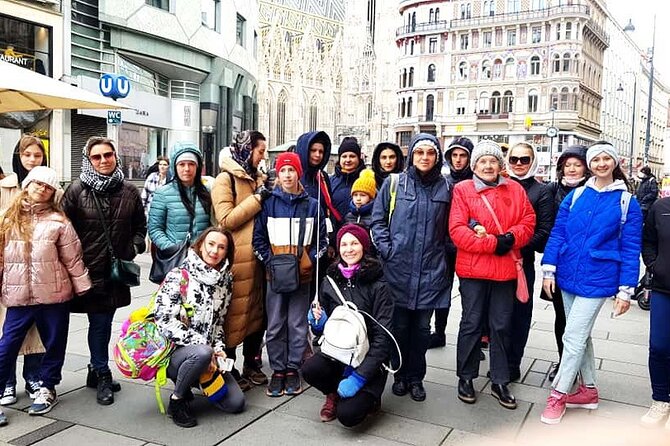
The most practical part of the visit may be the explanation of stage sets. The scenery can change daily, and the tour addresses how that happens and where the sets are stored.
That subject helps you picture the State Opera as a complex workplace rather than just an elegant auditorium. An opera production requires more than singers and musicians. Sets must be moved, stored, prepared, and replaced. Different productions need different scenic elements, and the schedule has to make room for those changes.
You may find this especially interesting if you have attended a performance and wondered how a theater can present different works in close succession. The answer is not simply a matter of rolling one backdrop away. It involves storage and coordination behind the scenes, along with a large staff working out of public view.
The information supplied for this experience does not give an exact staff count, and it does not promise access to the storage areas themselves. Instead, Giselle explains how the system works and how many kinds of people contribute to the institution. That distinction is important. You are buying insight into the operation, not a guaranteed tour of every working department.
I like this part because it adds something you cannot get from admiring the facade. Architecture shows you the theater’s public face. The stage-set discussion shows you the machinery and labor that keep the public face running.
The Opera Ball and Vienna’s social theater
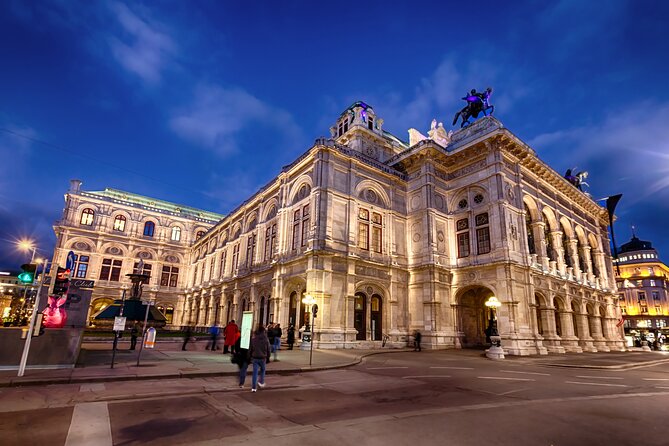
The annual Opera Ball offers another angle on the building. Giselle explains how the event is celebrated and how wealthy business figures and local politicians take part.
The Opera Ball is not simply a performance. It is a major social occasion, and the State Opera becomes a setting for ceremony, dress, status, and public attention. Learning about it gives you a glimpse of Vienna’s relationship with tradition. The city preserves old rituals while allowing them to function as current events.
This section should suit you if you are curious about local customs and public life, not only music. It also adds a little humor to the visit, since the ball brings together opera, politics, money, and pageantry under one roof.
The topic is best understood as cultural context rather than a promise of ball access. The tour is a daytime visit through public areas, and the information does not include attendance at the Opera Ball or a rehearsal for it. You learn how the event works and why it matters.
For many people, this social history will be more memorable than another list of architectural dates. It gives the building a living role in Vienna, rather than treating it as an old monument sealed off from modern life.
What the 90-minute schedule feels like
Ninety minutes is a sensible length for this subject. It gives you enough time to see the public spaces and discuss music, architecture, personalities, stage work, and the Opera Ball without turning the visit into a half-day commitment.
The schedule is also easy to fit around other plans. The meeting point is the Vienna State Opera at Opernring 2, in the 1010 district, and the activity ends back at that same location. Since it is near public transportation, you can build it into a day around central Vienna.
Arrive ready to begin at the stated meeting time. A private appointment is more flexible in conversation, but it still has a fixed start and end. If you spend too long on one favorite subject, you may have less time for the remaining areas.
The mobile ticket is useful for keeping admission details on your phone. Confirmation is normally provided when you book. If you reserve within one hour of the start time, confirmation comes as soon as possible and depends on availability, so a last-minute booking requires extra care.
Most people can take part, according to the available information. No special fitness requirement is stated. The tour is near public transportation, but detailed information about every interior access feature is not provided. If your party has specific mobility needs, contact the provider before booking rather than relying on a general participation statement.
Is $267 a fair price?
The price is $267, and the key value comes from the private format, not just the admission ticket. You are paying for a guide devoted to your group, the ability to ask questions, and a more personal explanation of a major cultural institution.
The price looks easier to justify when shared among several people. A family or group of friends can divide the cost, while a solo visitor pays much more for the same 90-minute appointment. The supplied details do not clarify whether the displayed price is charged per person or for the whole group, so check the final booking total carefully.
Tickets are included, which removes one separate cost and one more decision from your planning. But admission alone is not the reason to book. If you only want to see the interior quickly, a standard public visit may offer better value if available. This experience earns its price through personal attention and explanation.
I would book it for a group with real interest in Vienna’s music, architecture, or performing arts. I would hesitate if your main goal is simply to enter the building at the lowest possible price.
Who will get the most from this opera tour?
This experience fits several kinds of visitors:
- Music lovers can ask about famous singers, conductors, composers, and the changing repertoire.
- Architecture fans get a clear contrast between the original 19th-century design and postwar rebuilding.
- First-time opera visitors receive practical context that can make a performance feel easier to follow.
- Families and friends benefit from a private pace and the chance to ask different kinds of questions.
- Visitors interested in Vienna society get background on the Opera Ball and its connection to wealth and politics.
- Repeat visitors to Vienna can see an important institution from a working and cultural angle, rather than only as a sightseeing stop.
It is less suitable if you want a full performance, a long technical backstage visit, or access to areas not open to the public. It is also not the strongest value for one person on a tight budget.
The guide’s tone appears welcoming across different interests. Giselle has handled conversations with musicians and has also guided people who wanted a broad introduction to Vienna. She can be warm and lighthearted without losing the factual side of the visit, which is useful in a building that could otherwise feel formal or forbidding.
Booking and cancellation details to keep in mind
You receive a mobile ticket, and admission is included. The meeting and return point is the State Opera, Opernring 2, 1010 Vienna, Austria.
Free cancellation is available up to 24 hours before the experience begins, based on local Vienna time. Cancel at least 24 hours ahead for a full refund. Within 24 hours, you receive no refund, and changes made during that period are not accepted.
That rule matters if your Vienna schedule is still shifting. The tour may be easy to fit into a central sightseeing day, but you should avoid booking it before your plans are reasonably firm.
Should you book the Vienna State Opera private tour?
Book this experience if you want the State Opera explained as a living institution, not just photographed as a grand building. Giselle’s personal approach, the private group setting, and the mix of architecture, artists, Opera Ball customs, stage sets, and daily operations give you more than a quick look around.
At $267, it is a special-occasion purchase rather than a bargain attraction. It makes the best sense when two or more people can share the cost and when someone in the group has genuine interest in music, theater, or Vienna’s social traditions.
Skip it if you want a performance, unrestricted backstage access, or the cheapest possible entry. Choose it if you value questions, personal attention, and the chance to understand why this particular building still matters.
FAQ
Where does the private State Opera tour begin?
It begins at the Vienna State Opera, Opernring 2, 1010 Wien, Austria.
Where does the tour end?
The activity ends back at the Vienna State Opera, the same place where it begins.
How long does the experience last?
The tour lasts approximately 1 hour and 30 minutes.
Are admission tickets included?
Yes. Admission tickets are included in the experience price.
Is this a private tour?
Yes. Only your group participates in the private tour or activity.
What will the tour cover?
The visit covers public areas of the Vienna State Opera, its original grand rooms, postwar sections, famous artists, the changing repertoire, the Opera Ball, stage-set changes, set storage, and the people who work for the institution.
Is the tour near public transportation?
Yes. The meeting point is near public transportation.
What is the cancellation policy?
You can cancel at least 24 hours before the start time for a full refund. Cancellations or changes made less than 24 hours before the start time are not accepted and are not refunded.
Recently added around Vienna
- Vienna: Private tour Mauthausen and Linz★ 4.1 · 3 reviews
- 2-Day Prague Tour from Vienna with private Transfers and Lunches★ 5.0 · 3 reviews
- Vienna Self Guided Sherlock Holmes Murder Mystery Game★ 4.5 · 3 reviews
- Vienna Private Schönbrunn Palace Tour, Extra Rooms and Gardens★ 5.0 · 3 reviews
- Salzburg and Lake Region Private Day Trip from Vienna★ 5.0 · 3 reviews
- Small-group Vienna Wine Tour★ 5.0 · 3 reviews
- True Crime mobile puzzle rally Vienna★ 4.0 · 3 reviews
- Exploring the Gutenstein Alps★ 5.0 · 3 reviews
Vienna State Opera Tours, compared.
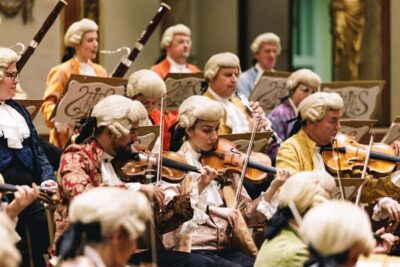
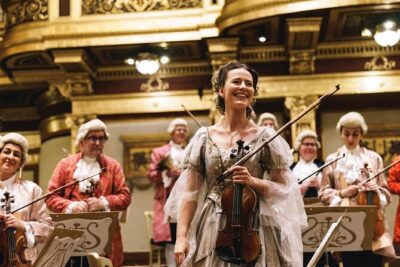
Vienna State Opera House Mozart Concert in Historical Costumes
Read our review →