
Reviewed · VIENNA TOURS
Vienna: Kunsthistorisches Museum Guided Tour incl. admission
Vienna’s Kunsthistorisches Museum is not just a place to tick off famous paintings. Its grand halls hold the old Habsburg collections, while the Kunstkammer serves up stranger treasures, including a golden salt cellar and a mysterious wooden Madonna. The guided route gives you a clear path through a museum that can otherwise feel enormous.
I like the small group, capped at 15, and I like the way the tour pairs famous paintings with odd, rare objects. Guides such as Dieter, Cornelia, Tolga, Achim, and Brenda have been praised for lively explanations, art knowledge, and good choices about what to see.
The main consideration is time. Two hours and 15 minutes is enough for key works, not every gallery. You also need to leave backpacks, umbrellas, and raincoats in the cloakroom, and the tour is not suitable for wheelchair users or people with mobility impairments.
Key points to know before you book
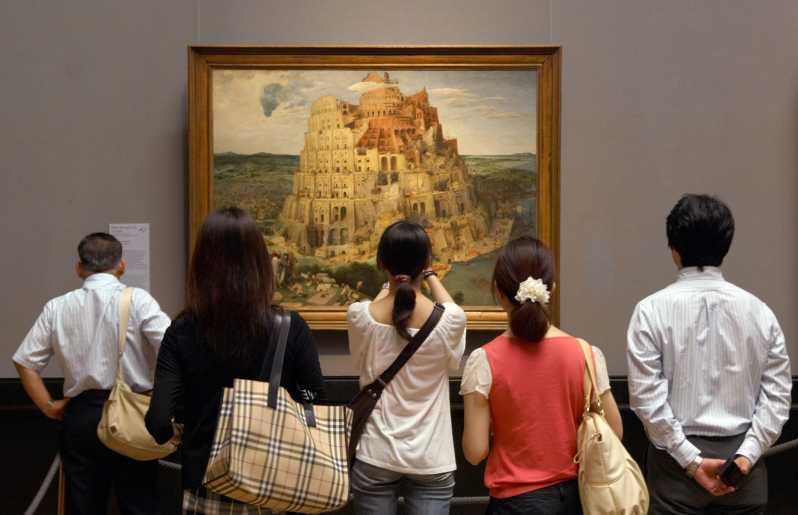
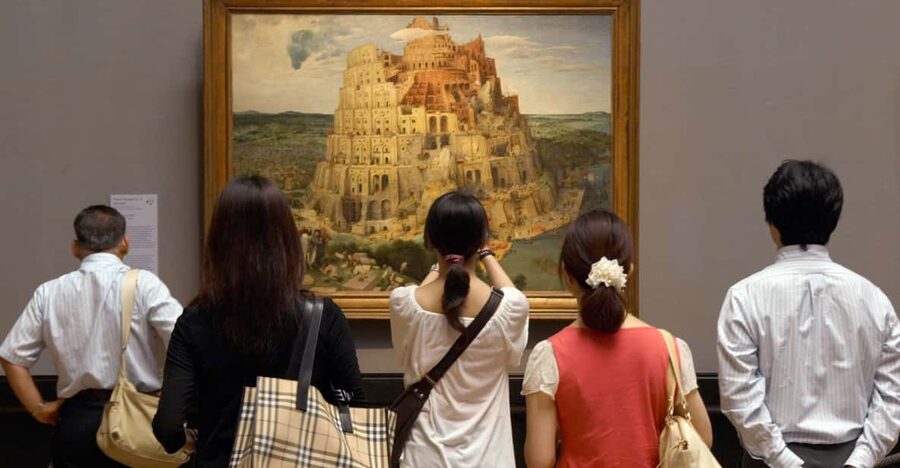
- Bruegel and Vermeer share the spotlight: See The Tower of Babel and The Art of Painting, along with major works by Rubens, Caravaggio, Raphael, Dürer, and Rembrandt.
- The Kunstkammer adds the surprise factor: Expect rare decorative objects such as Cellini’s golden Saliera and the Madonna of Krumau.
- The group stays small: No more than 15 people makes it easier to hear the guide and ask questions.
- The tour lasts 135 minutes: You get a focused visit to two major sections, then may continue through the rest of the museum alone.
- English is the tour language: Your guide wears a red-white-red Austria Guide badge and meets you by Container 2.
- The price buys structure, not just admission: At $116 per person, the value depends on how much you want expert context and help choosing the best works.
Why this museum deserves a place in your Vienna plans
The Kunsthistorisches Museum grew from the collections of the Habsburg rulers, and that origin shapes the visit. This is not a single-artist museum or a tidy chronological story. It is a grand collection built by a powerful dynasty, with paintings, sculpture, decorative art, coins, armor, and ancient objects gathered under one roof.
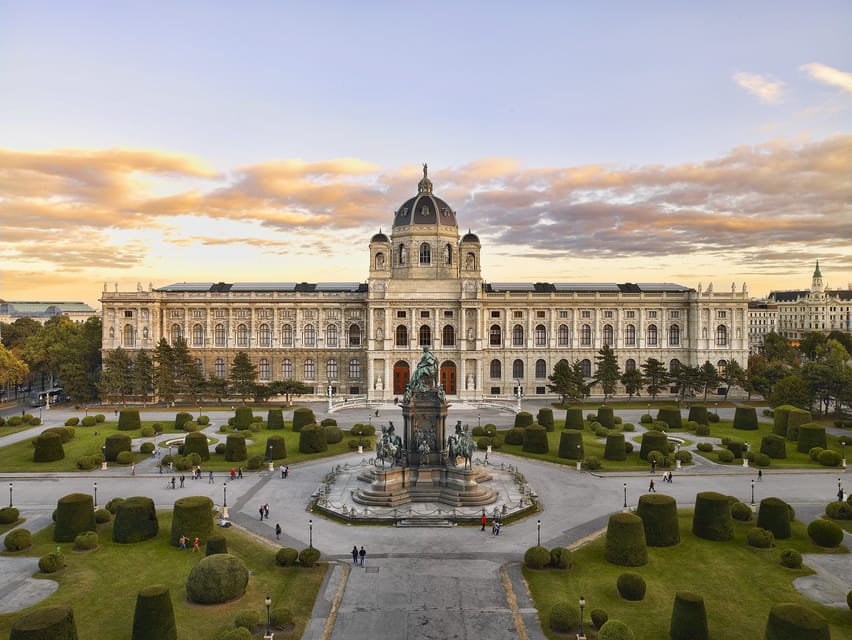
Even before you reach the galleries, the building makes an impression. It is an architectural marvel on Maria-Theresien-Platz, opposite the Natural History Museum. The setting feels imperial, but the art becomes more approachable once a guide gives you a route through it.
I especially like this tour for first-time visitors. You do not need to study European art in advance. The guide can point out what matters, explain why a painting was commissioned, and show you details that are easy to miss when you walk past on your own.
The museum can also reward repeat visits. A single tour cannot cover everything, and the chance to remain inside afterward makes the experience more useful than a simple guided walk out the door.
More Museums in Vienna:
- Vienna: Skip-the-Line Sisi Museum, Hofburg and Gardens Tour
★ 4.8 · 5,918 reviews - Vienna Kunsthistorisches Museum Day Admission Ticket
★ 4.6 · 3,690 reviews - Tickets for the Albertina Exhibitions
★ 4.7 · 2,126 reviews
Meeting your guide at Maria-Theresien-Platz
The meeting point is outside the Kunsthistorisches Museum at Maria-Theresien-Platz, 1010 Vienna. Stand at the right end of the stairs leading to the entrance, beside the group ticket counter marked Container 2.
Arrive at least 15 minutes early. This matters because the meeting area is outside, and you will need to identify the guide before the group goes in. Look for the red-white-red badge marked Austria Guide.
There is no hotel pickup or drop-off, so plan your route to the museum yourself. The instructions are specific, but you still want a little spare time for Vienna traffic, finding the plaza, or locating the correct side of the stairs.
At security, visitors aged 0 to 18 must carry valid photo identification to prove their age. The museum permits photography without flash, but umbrellas, backpacks, and raincoats must go into the cloakroom. Travel light if you can. A small personal bag may still need to be checked, so avoid bringing anything you will need during the tour.
The Picture Gallery: Bruegel, Vermeer, and the old masters
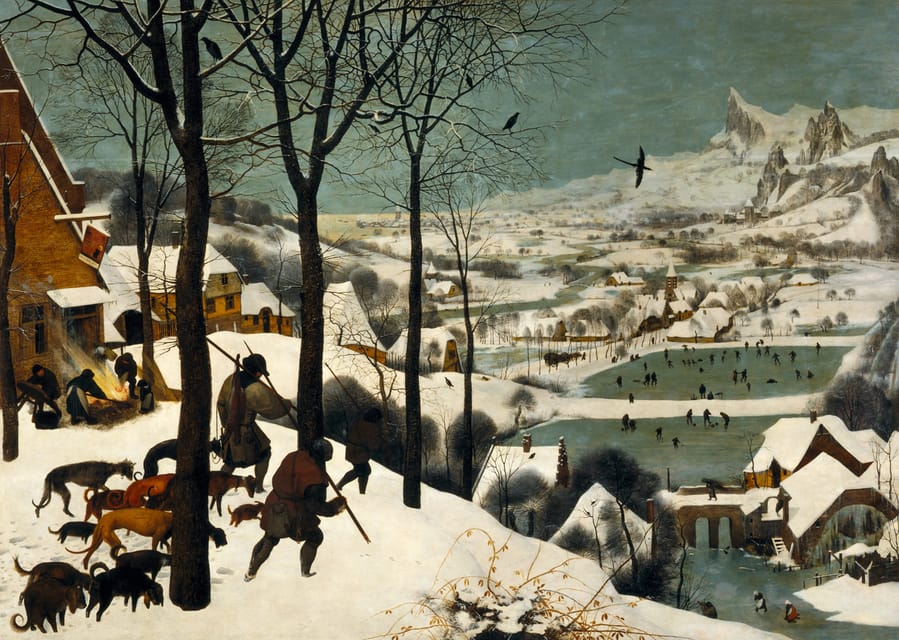
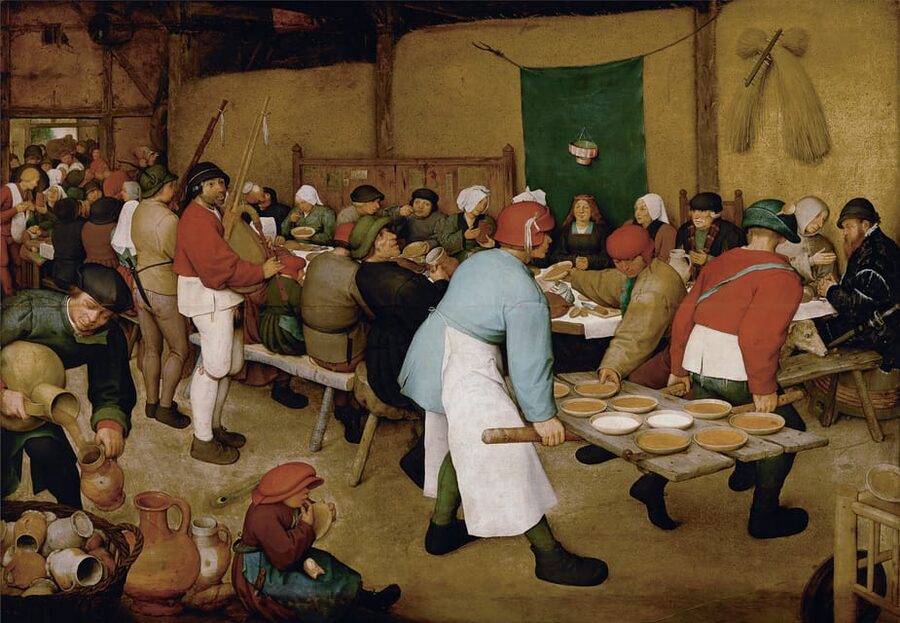
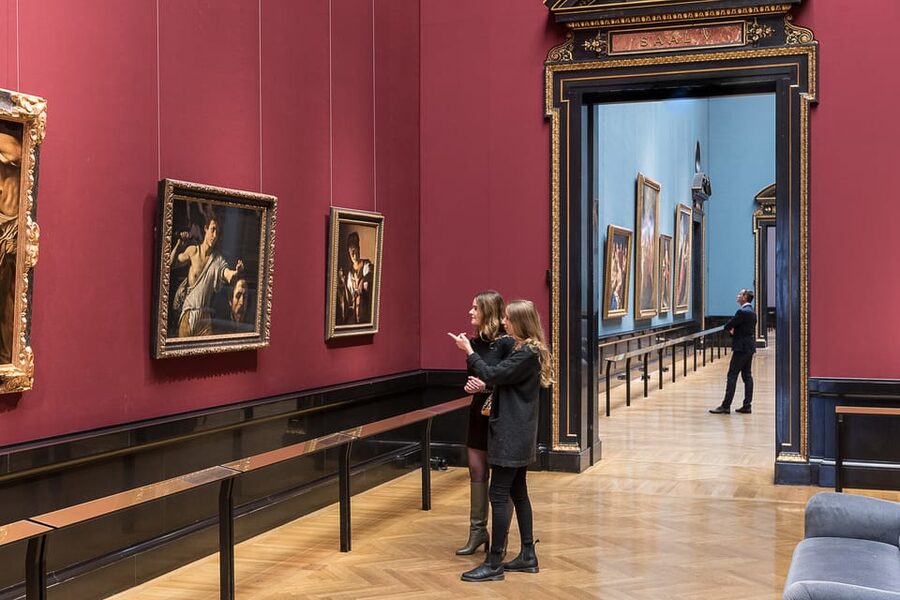
The first major part of the tour is the Picture Gallery, where you meet the museum’s best-known painters. The guide’s job here is not simply to point at famous canvases. It is to help you read them.
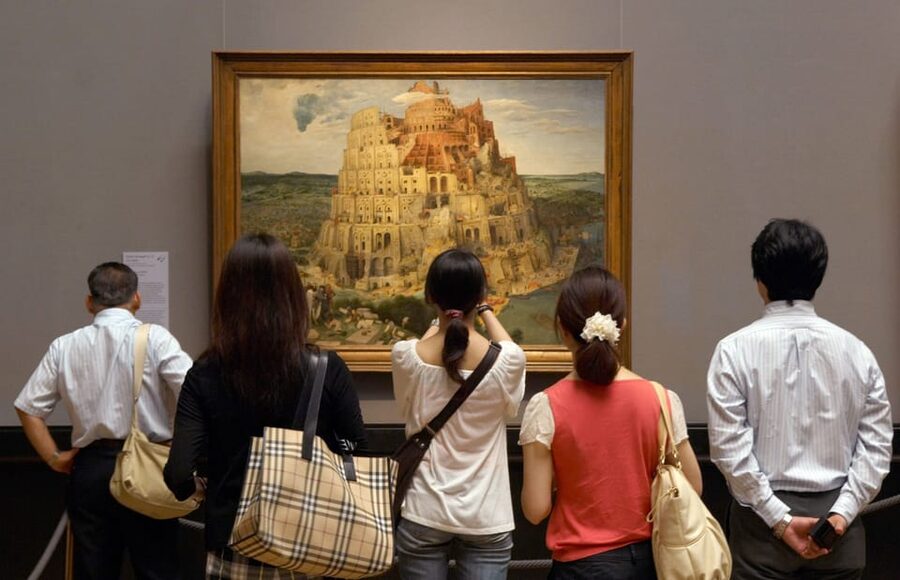
Peter Bruegel the Elder’s The Tower of Babel is one of the key stops. The painting rewards time because its crowded scene contains far more than a quick glance reveals. A guide can help you understand the building, the people around it, and the larger story behind the image.
Vermeer’s The Art of Painting offers a different kind of experience. It is quieter and more controlled, with attention directed toward space, light, and the act of painting itself. You may find that the guide spends less time on plot and more time helping you notice how Vermeer constructs the room and its atmosphere.
The route generally includes Rubens’ Assumption, Caravaggio’s Crowning with the Thorns, Albrecht Dürer’s Avarice, Raphael’s Madonna of the Meadow, and a Rembrandt Self Portrait. These works represent different approaches to religious subjects, portraiture, drama, color, and human expression.
That range is one of the tour’s strengths. You are not looking at a room full of similar paintings. Instead, you move between grand Baroque theater, careful Northern European detail, Italian realism, and Renaissance balance.
Caravaggio’s Crowning with the Thorns is likely to be a high point if you enjoy paintings with strong emotion and light. Rubens gives you movement and scale, while Raphael brings a more composed and graceful mood. Dürer and Rembrandt add the close study of character that makes a portrait stay with you.
The exact works available can change. Paintings may be on loan, under restoration, or temporarily unavailable, so treat the list as a guide to the collection rather than a promise that every canvas will be on the wall.
The Kunstkammer and the museum’s stranger treasures
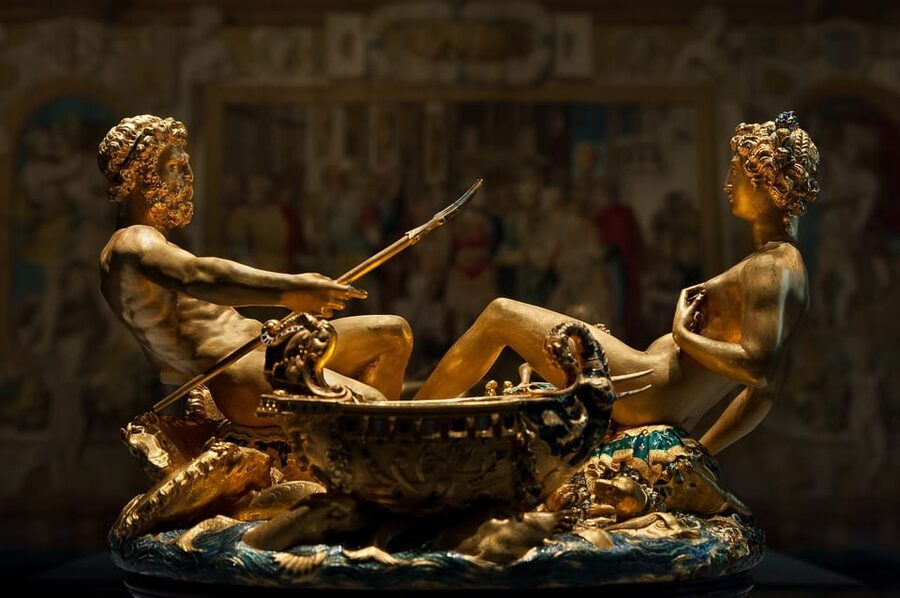
The second exhibition is the Kunstkammer, often translated as an art chamber or cabinet of curiosities. This is where the visit shifts from major paintings to objects made to display wealth, skill, rarity, and imagination.
The golden Saliera by Benvenuto Cellini is the headline object. It is not simply valuable because it is made of gold. Its design, craftsmanship, and history make it a fine example of the way European courts collected objects that were both useful and spectacular.
The Madonna of Krumau offers another change of mood. Its presence in the Kunstkammer reminds you that the museum is not only about paintings from the Renaissance and Baroque periods. Sculptures, decorative objects, and religious works help show how art once filled courtly and sacred spaces.
I like this part of the visit because it prevents the tour from becoming a parade of famous names. You may arrive expecting Bruegel and Rembrandt, then find yourself spending real time with an object whose purpose and design are less familiar.
The Kunstkammer also gives your guide room to tell the kind of stories that do not fit neatly into a painting lecture. The collection includes rare and unusual items, and the contrast with the Picture Gallery keeps the 135-minute route moving.
A few more Vienna half-days to weigh up
- Vienna: Vivaldi’s Four Seasons Concert in Karlskirche
★ 4.7 · 14,951 reviews - Vienna: Spanish Riding School Training
★ 3.9 · 9,281 reviews - Vienna: Skip-the-cashier-desk-line Giant Ferris Wheel Ride
★ 4.5 · 7,859 reviews - Vienna: Schönbrunn Palace & Gardens Skip-the-Line Tour
★ 4.7 · 7,739 reviews
What the small group changes
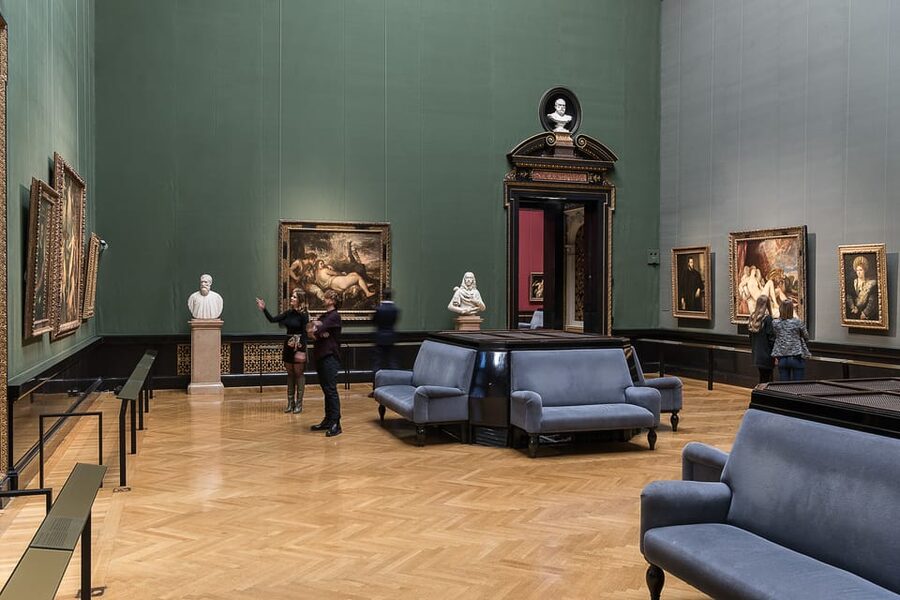
The tour accepts no more than 15 participants. That is a useful limit in a museum where the guide may need to explain details in front of a popular painting.
A small group also makes questions practical. You are less likely to feel that you are interrupting a large crowd, and the guide can adjust the pace when something catches your attention. Some scheduled departures have been as small as two people or even one person, creating an unusually personal visit.
Do not book expecting a private tour, however. The stated maximum is 15, not a guarantee of a tiny group. The minimum is four participants, and if that number is not reached, you will be offered another date or a full refund.
The guides are a major part of the experience. Dieter has been praised for explaining both art history and painting technique, while Cornelia has a lively, energetic approach. Tolga has been noted for making careful choices that balance education with entertainment. Achim, an artist himself, has offered a distinct working-artist perspective.
Brenda has been praised for humor, stories, and patient answers. These details matter because a museum tour succeeds or fails on the guide’s ability to keep you looking rather than simply moving.
Is 135 minutes the right amount of time?
The official duration is 135 minutes, or two hours and 15 minutes. The description also presents the experience as a two to two-and-a-half-hour visit, so allow roughly that amount of time.
That is a sensible length for a focused introduction. You can see the major highlights without trying to absorb the entire museum in one sitting. A guide can spend enough time on important works while keeping the route moving.
Still, you should not expect a complete tour of every collection. The guided visit concentrates on the Picture Gallery and Kunstkammer. Ancient Greek, Roman, and Egyptian art are among the sections you can explore afterward, but they are not the main guided route.
This arrangement suits me better than a rushed attempt to cover the entire building with commentary. You get interpretation when it is most useful, then freedom to continue at your own pace.
If you plan to stay, leave energy in reserve. After two hours of looking and listening, you may want a short pause before tackling more galleries. The freedom to remain in the museum is a valuable part of the admission, especially for anyone who wants to add ancient art without paying for another entry.
What the $116 price really buys
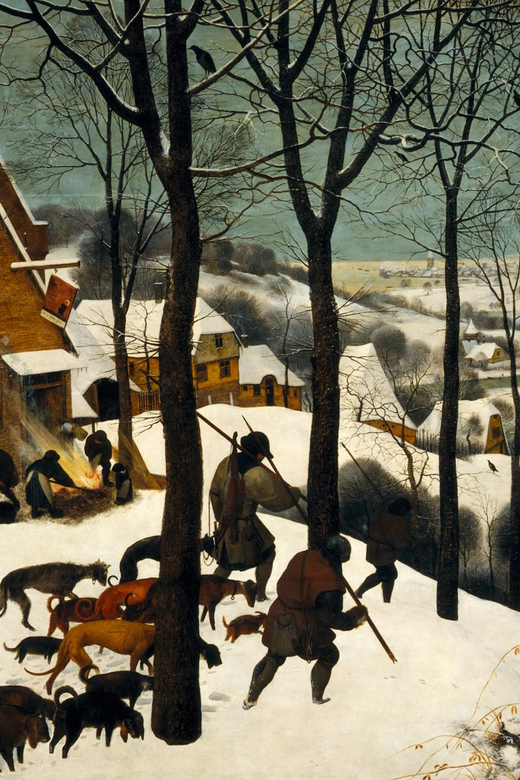
At $116 per person, this is not a budget museum visit. The fee includes admission, a professional English-speaking guide, and the small-group tour. Temporary exhibitions are not included, and you arrange your own transport to and from the museum.
The value comes from the guide and the time saved. A regular museum ticket may cost less, but it will not choose the essential rooms for you or explain why The Tower of Babel, The Art of Painting, and Crowning with the Thorns matter.
I would consider the price reasonable for an art lover who wants context and has limited time in Vienna. It is harder to justify if you enjoy wandering alone, already know the collection well, or plan to spend a full day reading every label at your own pace.
The option to stay after the tour improves the calculation. You are not paying for a guided experience that ends at the exit. You can continue into the Greek, Roman, and Egyptian collections, or return to a painting that moved you.
Flexible booking also lowers the risk. You can reserve now and pay later, and cancellation is free up to 24 hours before the start time. The minimum of four participants is worth noting before you make fixed plans.
Who should book this museum tour
I would choose this experience if you fit one of these profiles:
- You are visiting Vienna for the first time and want a strong introduction to the museum.
- You know a few famous painters but want help understanding what you are seeing.
- You have about half a day and prefer selected highlights to an exhausting gallery marathon.
- You enjoy both major paintings and unusual historical objects.
- You value the chance to ask questions in a small group.
- You want to continue independently after the guided portion.
It may not suit you if you need step-free mobility support, use a wheelchair, or want a tour in a language other than English. It is also a poor match if temporary exhibitions are your main reason for visiting, since they are not included.
Families should remember the identification rule for anyone aged 0 to 18. Bring valid photo ID for the security check, even if the child is clearly within that age range.
Simple ways to get more from the visit
Read the highlight list before you arrive, then choose two or three works you most want to see. You will enjoy the guide’s route more if you have a few personal questions ready.
Wear comfortable shoes. The tour lasts more than two hours, and the museum is large. Keep your belongings to a minimum because umbrellas, backpacks, and raincoats must be checked.
Do not use flash photography. The museum permits photos without flash, so you can record details discreetly while following the rules.
Pay attention to the guide’s choices, not only the famous titles. A rare object in the Kunstkammer may give you a better sense of Habsburg collecting than another celebrated painting would.
Finally, leave time after the tour. The ancient Greek, Roman, and Egyptian displays are included in the museum experience even though they are not the focus of the guided route. You may find that the best plan is to see the paintings with the guide, take a break, then explore the ancient collections alone.
Should you book it?
Book this tour if you want the Kunsthistorisches Museum to make sense quickly, rather than simply walking through its grand rooms and hoping the important works reveal themselves. The mix of Bruegel, Vermeer, Caravaggio, Rubens, Raphael, Dürer, Rembrandt, and the Kunstkammer’s unusual objects gives you a strong sample of the collection.
The $116 cost is steep, but the small group, admission, focused route, and freedom to stay afterward add real value. I would especially recommend it for first-time visitors, art lovers with limited time, and anyone who enjoys a guide who can connect technique, history, and human stories.
Skip it if you prefer complete independence, need accessibility support, or mainly want a temporary exhibition. For most people seeking an informed first look at Vienna’s grand art museum, it is a well-planned and worthwhile choice.
FAQ
How long does the Kunsthistorisches Museum tour last?
The activity lasts 135 minutes, or about two hours and 15 minutes. The tour description also gives a general range of two to two and a half hours.
What language is the tour conducted in?
The live guided tour is conducted in English.
How many people can join the tour?
The group never has more than 15 participants. The tour requires at least four participants to operate.
What artworks might I see?
The usual highlights include Rubens’ Assumption, Caravaggio’s Crowning with the Thorns, Bruegel’s The Tower of Babel, Vermeer’s The Art of Painting, Dürer’s Avarice, Raphael’s Madonna of the Meadow, and a Rembrandt Self Portrait. Availability can change if a work is on loan or being restored.
Can I stay in the museum after the guided tour?
Yes. After the guided portion, you are free to continue exploring the remaining museum collections, including ancient Greek, Roman, and Egyptian art.
Where do I meet the guide?
Meet outside the Kunsthistorisches Museum Wien at Maria-Theresien-Platz, at the right end of the stairs leading to the entrance, next to the group ticket counter at Container 2. Look for the guide wearing a red-white-red Austria Guide badge.
What should I know about bags and photography?
Umbrellas, backpacks, and raincoats must be left in the cloakroom. Photography without flash is permitted. Participants aged 0 to 18 must bring valid photo identification for the security check.
Recently added around Vienna
- Vienna: Private tour Mauthausen and Linz★ 4.1 · 3 reviews
- 2-Day Prague Tour from Vienna with private Transfers and Lunches★ 5.0 · 3 reviews
- Vienna Self Guided Sherlock Holmes Murder Mystery Game★ 4.5 · 3 reviews
- Vienna Private Schönbrunn Palace Tour, Extra Rooms and Gardens★ 5.0 · 3 reviews
- Salzburg and Lake Region Private Day Trip from Vienna★ 5.0 · 3 reviews
- Small-group Vienna Wine Tour★ 5.0 · 3 reviews
- True Crime mobile puzzle rally Vienna★ 4.0 · 3 reviews
- Vienna: Wachau Valley Private Kayak and Wine Tour★ 5.0 · 3 reviews
Vienna Tours, compared.

Vivaldi’s Four Seasons Concert in Karlskirche
Read our review →

Skip-the-cashier-desk-line Giant Ferris Wheel Ride
Read our review →
Schönbrunn Palace & Gardens Skip-the-Line Tour
Read our review →
Light of Creation Votive Church Immersive Light Show
Read our review →

Skip-the-Line Sisi Museum, Hofburg and Gardens Tour
Read our review →
Hallstatt & Alpine Peaks Day Trip with Skywalk Lift
Read our review →Browse the lists this tour appears in