
Reviewed · VIENNA TOURS
Vienna: House of Strauss Museum Ticket & Experience
The most moving part of the House of Strauss is the original concert hall, where Johann I, Johann II, Josef, and Eduard Strauss all performed. You walk through the same elegant setting that once welcomed Vienna’s high society, then finish with a music-and-projection show devoted to Johann Strauss Jr.
I like the way the museum combines rare archival material with music you can hear as you go. I also like the freedom of a self-guided visit, since you can spend more time with the displays that catch your eye. The main consideration is that this is not a live, guide-led tour, and the advertised visit is valid for one day rather than built around a fixed tour length.
Key points to know before you go
- All four Strauss composers performed here: The hall links Johann I, Johann II, Josef, and Eduard Strauss to one historic setting.
- A 2,000-square-meter exhibition: Expect salons, interactive displays, archival material, and music from Strauss, Lanner, and Ziehrer.
- The finale uses light, projection, and sound: The multimedia concert show centers on Johann Strauss Jr., the Waltz King.
- Your audio guide is included: English and German commentary is available through the official audio guide app.
- The museum is unique in Vienna: This is the city’s only museum devoted to the Strauss dynasty.
- The $22 price covers the main experience: Admission includes the exhibition, historic concert hall, audio guide, and multimedia show.
Entering Gartenpalais Zögernitz and the Strauss world
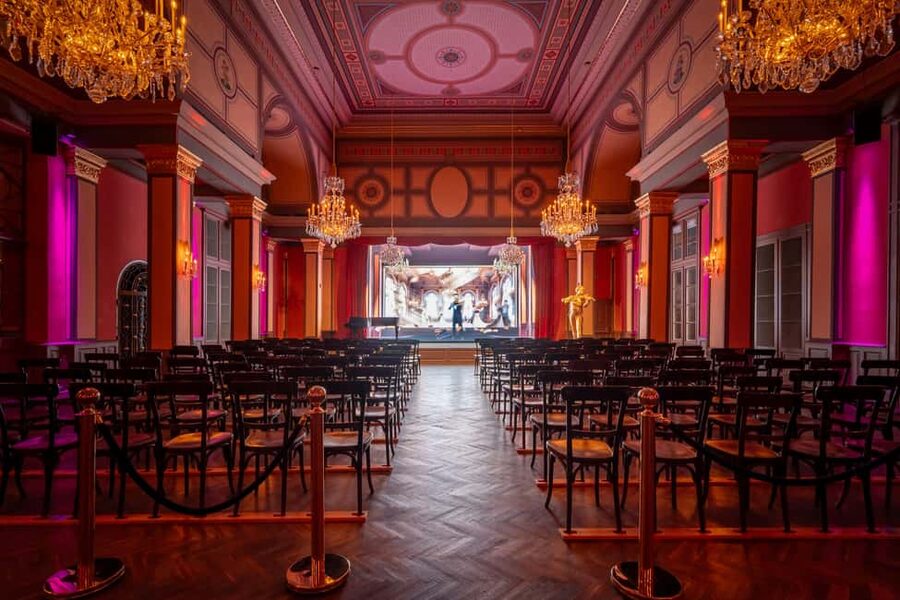
The House of Strauss occupies the restored Gartenpalais Zögernitz, a setting that gives the visit more weight than a standard music museum. You are not simply looking at portraits and reading dates in a modern gallery. The building itself is part of the story, especially the concert hall where the Strauss family played.
The four family names matter here. Johann Strauss I helped shape the Viennese dance-music tradition, while his son Johann Strauss II became the best-known member of the family. Josef and Eduard also carried the family’s musical work forward. Seeing all four connected to one hall gives the museum a clear focus.
The opening section sets up Vienna’s golden musical era and the social world around it. Music was not just something heard in a formal concert setting. Waltzes, polkas, and orchestral pieces were tied to balls, fashionable gatherings, public celebrations, and the city’s appetite for entertainment.
That context helps explain why the House of Strauss is more than a shrine to one famous waltz. It presents a musical family, a performance venue, and a period when Vienna’s public identity was closely tied to dance music.
More Museums in Vienna:
- Vienna: Skip-the-Line Sisi Museum, Hofburg and Gardens Tour
★ 4.8 · 5,918 reviews - Vienna Kunsthistorisches Museum Day Admission Ticket
★ 4.6 · 3,690 reviews - Tickets for the Albertina Exhibitions
★ 4.7 · 2,126 reviews
Walking through 2,000 square meters of exhibits
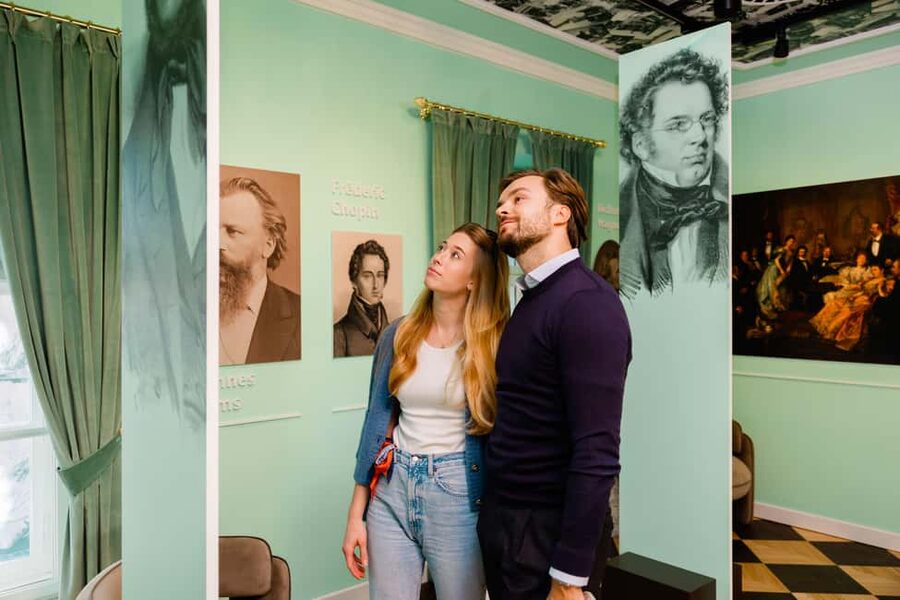
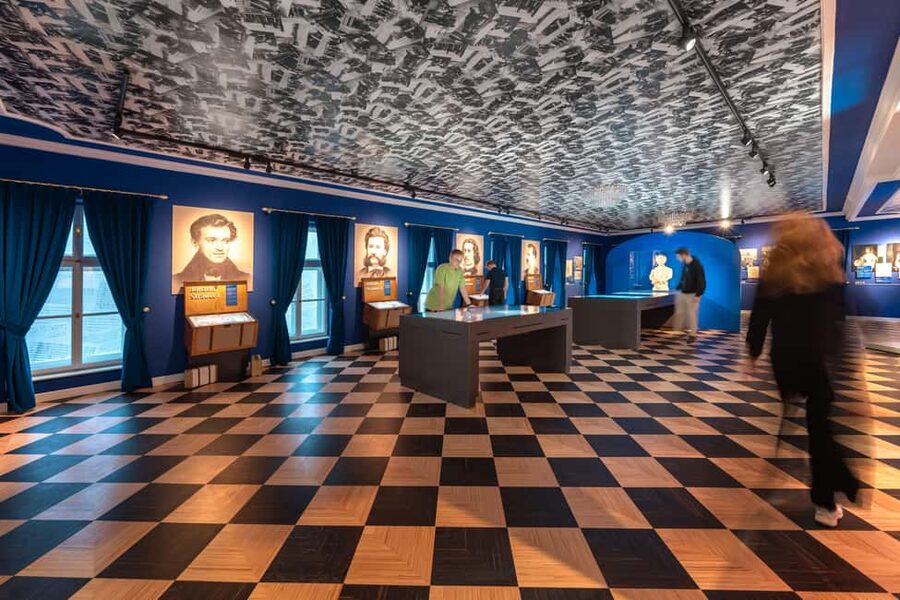
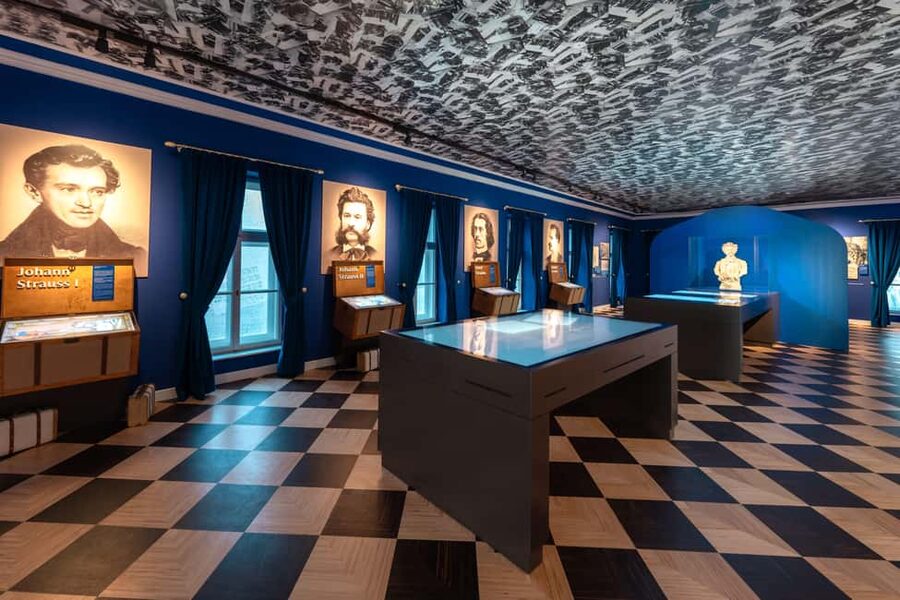
The museum covers about 2,000 square meters, so this is a substantial visit rather than a quick display squeezed into a few rooms. The route takes you through preserved salons and interactive stations, with archival material adding a more personal feel.
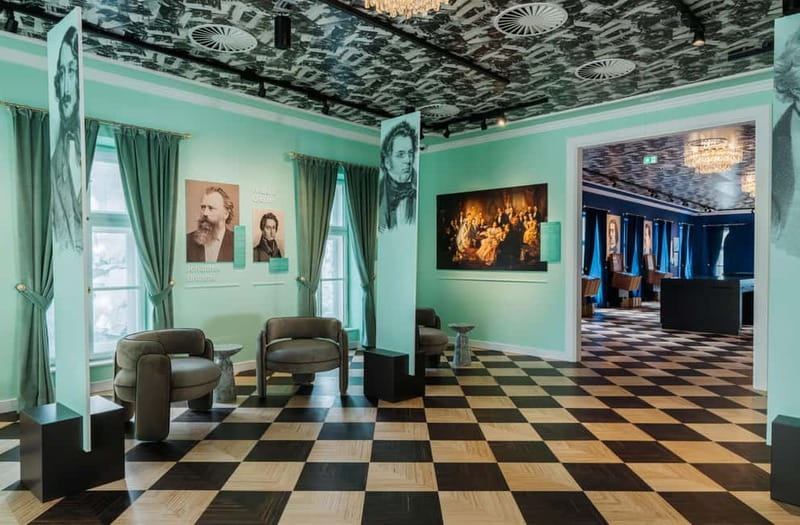
The salons are important because they give the museum a sense of place. A portrait on a bare wall can tell you who someone was. A portrait in an elegant room, paired with period objects and music, gives you a better idea of the world in which the Strauss family worked.
The exhibition includes material from what is described as the world’s largest private Strauss collection. You can expect rare documents and other archival pieces that help fill out the family story. The exact mix of objects can vary in how much it appeals to you, but the collection gives serious music fans plenty to examine.
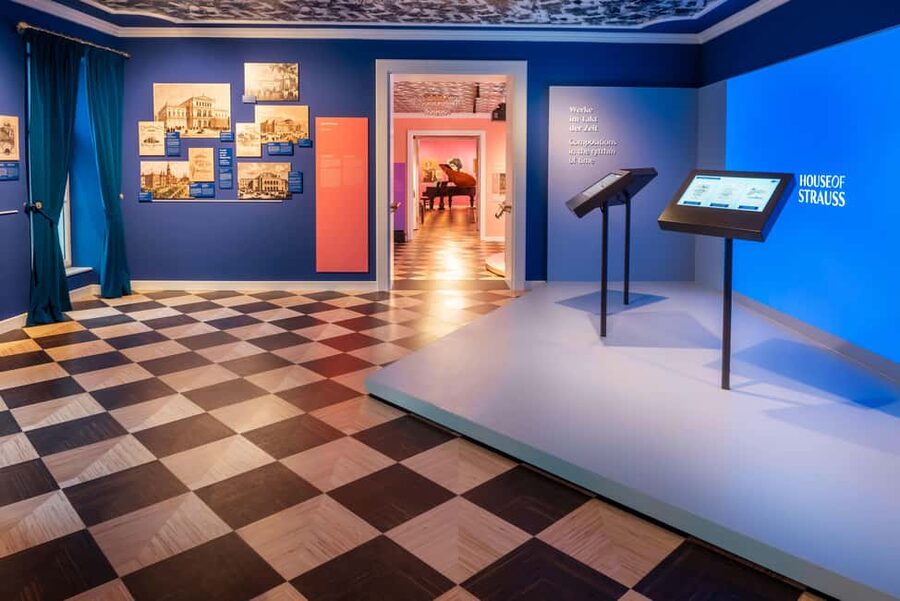
The interactive displays keep the visit from becoming a long reading exercise. You can listen, watch, and move at your own pace. If a particular member of the family interests you, the self-guided format lets you linger instead of being hurried along by a group.
I would allow enough time to read the material and use the audio guide properly. The ticket is valid for one day, but that does not mean the attraction provides a full-day program. It means you have flexibility within the operating schedule rather than a narrowly timed excursion.
Using the English or German audio guide
The included audio guide is available in English and German. It is delivered through an audio guide app, which suits the museum’s self-guided design.
This matters because a museum about four composers can become confusing quickly. Names repeat across generations, and the relationships between Johann I, Johann II, Josef, and Eduard are central to the visit. The audio commentary helps you keep the family tree and musical careers straight.
You can use the guide as a main tour or as background while exploring the rooms. I prefer the second approach. Start with the explanations, then pause when a display catches your attention. The music by Strauss, Joseph Lanner, and Carl Michael Ziehrer gives the route a steady connection to the period.
The available host or greeter languages are English and German, but the audio guide is the main tool for learning about the exhibits. If you want a personal conversation with a music specialist, this may feel less satisfying than a live guided tour. If you value independence and a quiet pace, it is a good fit.
There are no pickup or drop-off services. You make your own way to the museum, so you should treat this as a city attraction rather than a transport-inclusive excursion.
The original concert hall and four Strauss connections
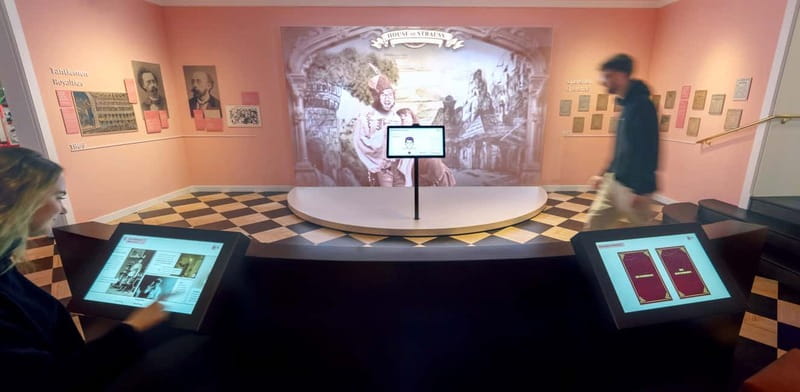
The historic hall is the heart of the visit. All four Strauss family members performed there, which gives the building a direct link to the dynasty rather than a loose association with it.
The room also helps you understand the difference between seeing a composer’s name in a museum and seeing the place where the music was actually presented. The House of Strauss connects the objects and biographies to performance. You can imagine the hall as a social room as well as a musical one, a place where Vienna’s elite came to hear familiar works and be seen.
The museum’s story is strongest when it brings the family together. Johann Strauss II often receives most of the attention because of his lasting fame, but the visit gives space to Johann I, Josef, and Eduard as well. That broader view is useful if your knowledge begins and ends with The Blue Danube.
The room is also where the experience shifts from traditional exhibition to staged presentation. Even if you are not a classical-music expert, the setting gives the final show a sense of occasion.
A few more Vienna half-days to weigh up
- Vienna: Vivaldi’s Four Seasons Concert in Karlskirche
★ 4.7 · 14,951 reviews - Vienna: Spanish Riding School Training
★ 3.9 · 9,281 reviews - Vienna: Skip-the-cashier-desk-line Giant Ferris Wheel Ride
★ 4.5 · 7,859 reviews - Vienna: Schönbrunn Palace & Gardens Skip-the-Line Tour
★ 4.7 · 7,739 reviews
The multimedia finale for Johann Strauss Jr.
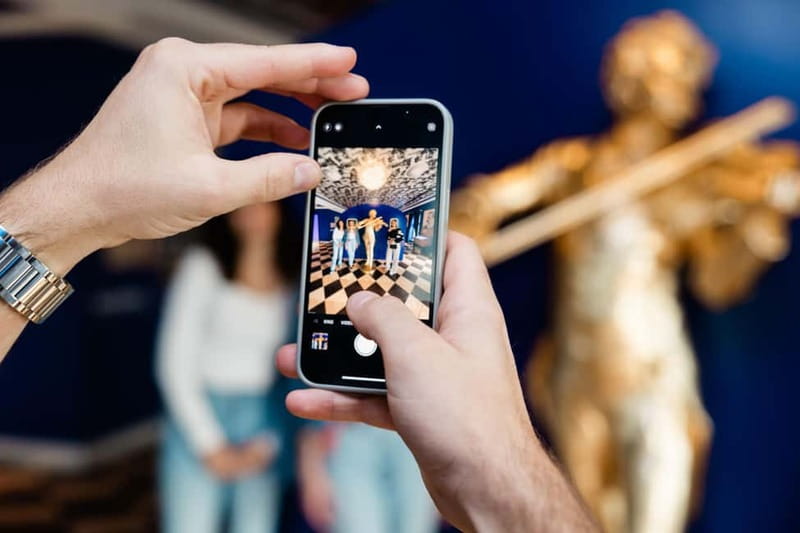
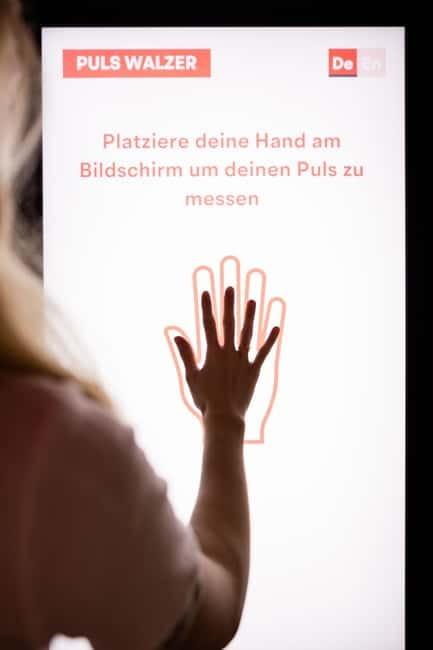
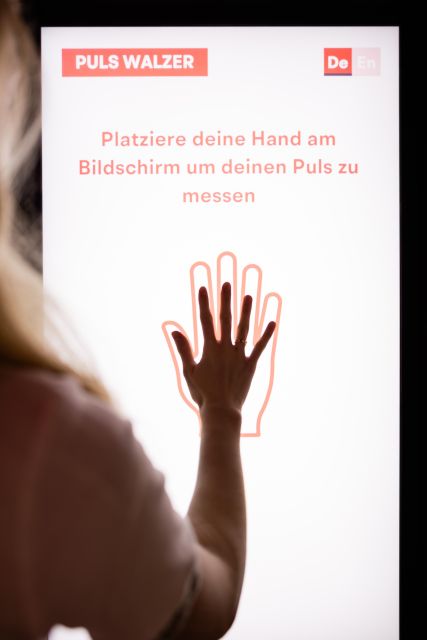
The visit culminates in a multimedia concert show celebrating Johann Strauss Jr. Music, lighting, and projection work together in the original hall. Think of it as a theatrical ending rather than another display case.
This finale is a smart choice for a museum devoted to music. You have already encountered names, documents, salons, and historical explanations. The presentation then lets you hear and see the material in a more emotional form.
The focus is Johann Strauss Jr., known as the Waltz King, but the wider musical setting includes the era’s popular orchestral tradition. Familiar Strauss pieces are part of the appeal, especially if you already associate Vienna with waltzes and grand concert halls.
You should keep your expectations clear. This is described as a multimedia show, not a conventional full-length live concert. The combination of recorded or presented music, light, and projection gives you spectacle, but it does not replace attending a live Vienna orchestra performance.
That distinction affects the value. If you want a memorable introduction to Strauss, the finale adds a lot. If your main goal is a serious concert with live musicians, you will need a separate ticket for that.
Is the $22 ticket good value?
At $22 per person, the House of Strauss sits in the reasonable range for a major cultural attraction, provided you use the full experience. Your ticket includes admission to the exhibition, the Strauss Concert Hall, the multimedia concert show, and the audio guide.
The value comes from the combination. You are not paying only to enter a historic room, and you are not paying only for an audiovisual presentation. You get a museum route, period interiors, a large private collection, audio commentary, and a staged finale in the hall itself.
I would especially recommend the ticket to anyone already planning to visit Vienna’s traditional music venues or museums. It gives you useful background before a classical concert, even though it does not include a live performance.
The value is less clear if you have little interest in music, composers, or Vienna’s cultural story. The interactive elements and visual finale help, but the entire experience remains centered on the Strauss family. You should not book it simply because you have a spare hour and expect a broad survey of Austrian art.
The 4.6 rating reflects a strong overall response, and the most praised feature is the charm of the museum paired with its musical presentation. One especially favorable French-language account highlights the pleasure of hearing familiar Strauss works in a concert setting and describes the experience as sublime. The practical lesson is simple: plan to stay through the finale. Leaving after the exhibits would mean missing the part that gives the visit its emotional finish.
Who will enjoy the House of Strauss most?
I would put this near the top of the list for:
- Classical-music fans who want more context around the Strauss dynasty
- First-time Vienna visitors seeking a focused cultural attraction
- History-minded visitors who prefer rooms and objects over a standard concert alone
- Families with older children who may respond well to the interactive displays
- Anyone attending another concert and wanting a short introduction to Vienna’s musical identity
The museum can also work for casual visitors. You do not need to know every Strauss composition before arriving. The audio guide supplies the structure, and the multimedia finale gives you an accessible way into the music.
It may not suit you if you want a large live orchestra, a personal guide, or a broad museum covering many periods of Austrian culture. The House of Strauss has a narrow subject, and its strength comes from staying with that subject.
The site is wheelchair accessible, which makes the 2,000-square-meter route easier to consider for visitors who need step-free access. English and German support covers the main visitor needs, though no other language options are listed.
Practical planning for a flexible visit
The ticket is valid for one day, and you should check availability for the current starting times before booking. Since the attraction uses a self-guided format, you have more freedom than you would on a fixed group tour, but you still need to arrive during the available admission period.
Skip-the-ticket-line access is included. That can save time during a busy Vienna sightseeing day, although the actual pace inside remains up to you.
There is no hotel pickup or return transport. Plan the House of Strauss as one stop in your Vienna itinerary, not as a packaged half-day tour.
The booking terms are also friendly to changing plans. You can cancel up to 24 hours in advance for a full refund, and the reserve-now, pay-later option lets you hold a place without paying at once. Those terms are useful if your Vienna schedule depends on weather, concert plans, or changing arrival times.
Should you book the House of Strauss?
Book it if you want a focused, well-presented look at Vienna’s Strauss dynasty, especially if the original concert hall and multimedia finale appeal to you. The $22 ticket is fair because it combines a historic setting, a large exhibition, an audio guide, and a polished musical presentation.
I would not choose it instead of a live concert if hearing musicians perform is your main goal. Choose it as a companion to Vienna’s concert life, not a substitute for it.
For the best visit, use the audio guide, take time with the salons and archival pieces, and stay for the final show. That combination gives you the clearest sense of why the Strauss family still matters to Vienna.
FAQ
Where is the House of Strauss located?
The House of Strauss is located inside the restored Gartenpalais Zögernitz in Vienna, Austria.
What does the ticket include?
The ticket includes admission to the House of Strauss Exhibition, entry to the Strauss Concert Hall, the multimedia concert show, and the audio guide.
Which Strauss family members performed at the concert hall?
Johann I, Johann II, Josef, and Eduard Strauss all performed in the historic concert hall.
Is an audio guide included?
Yes. An audio guide app is included, with English and German options.
Is the experience available in English?
Yes. The host or greeter and audio guide are available in English and German.
Is the House of Strauss wheelchair accessible?
Yes. The activity is listed as wheelchair accessible.
Can I cancel the booking?
Yes. You can cancel up to 24 hours in advance for a full refund. The reserve-now, pay-later option is also available.
Recently added around Vienna
- Vienna: Private tour Mauthausen and Linz★ 4.1 · 3 reviews
- 2-Day Prague Tour from Vienna with private Transfers and Lunches★ 5.0 · 3 reviews
- Vienna Self Guided Sherlock Holmes Murder Mystery Game★ 4.5 · 3 reviews
- Vienna Private Schönbrunn Palace Tour, Extra Rooms and Gardens★ 5.0 · 3 reviews
- Salzburg and Lake Region Private Day Trip from Vienna★ 5.0 · 3 reviews
- Small-group Vienna Wine Tour★ 5.0 · 3 reviews
- True Crime mobile puzzle rally Vienna★ 4.0 · 3 reviews
- Vienna: Wachau Valley Private Kayak and Wine Tour★ 5.0 · 3 reviews
Vienna Tours, compared.

Vivaldi’s Four Seasons Concert in Karlskirche
Read our review →

Skip-the-cashier-desk-line Giant Ferris Wheel Ride
Read our review →
Schönbrunn Palace & Gardens Skip-the-Line Tour
Read our review →
Light of Creation Votive Church Immersive Light Show
Read our review →

Skip-the-Line Sisi Museum, Hofburg and Gardens Tour
Read our review →
Hallstatt & Alpine Peaks Day Trip with Skywalk Lift
Read our review →Browse the lists this tour appears in