
Reviewed · VIENNA TOURS
Leopold Museum Vienna Entrance Ticket
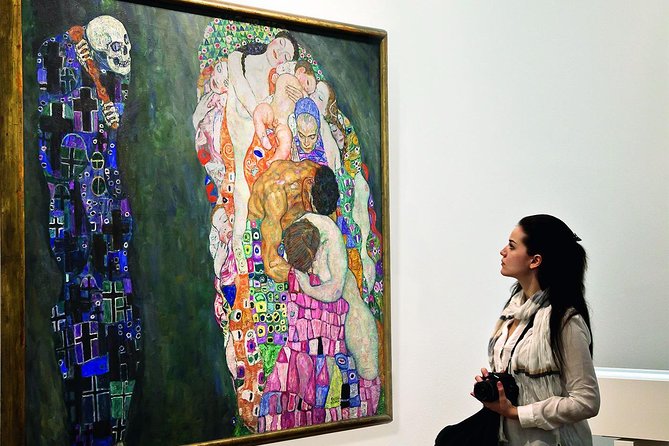
The Leopold Museum holds the world’s largest Egon Schiele collection, along with major works by Gustav Klimt and the artists who shaped Vienna’s modern age. You can wander through its bright galleries without a group schedule, then pause for views of Maria Theresa Square and the Hofburg Palace.
I like the freedom to arrive when it suits you and spend your time where your interest leads. I also like the museum’s range: this is not just a Schiele stop, but a look at Jugendstil, the Wiener Werkstätte, Expressionism, design, and Austrian art before and after the First World War. The main caution is scale. You can see the museum in about two hours, and anyone expecting a large Klimt collection may find the selection smaller than hoped.
Key points to know before you go
- Schiele is the main event: The Leopold Museum has the most substantial collection of Egon Schiele’s work in the world, including paintings and drawings.
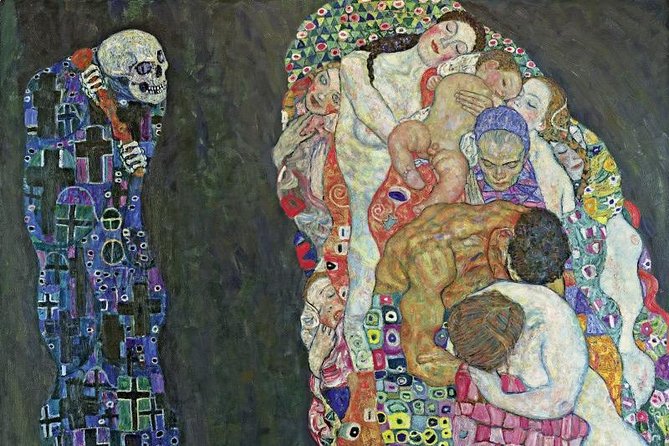
- Klimt appears in strength, not quantity: The major highlight is Death and Life, but this is not a museum packed with Klimt paintings.
- You explore independently: Admission includes the museum ticket, not a guide or audio commentary.
- Allow two to three hours: The art galleries deserve most of that time, with room for the museum shop, café, and city views.
- Prebooking helps with entry: You exchange your voucher at the cashier desk for the current ticket, so read the ticket instructions carefully.
- The view is part of the visit: Museum windows look across Maria Theresa Square toward the Hofburg Palace.
Why the Leopold Museum matters in Vienna
Vienna’s modern art story can feel scattered if you see it only through famous names. The Leopold Museum brings many of those names together and shows how quickly Austrian art changed around 1900.
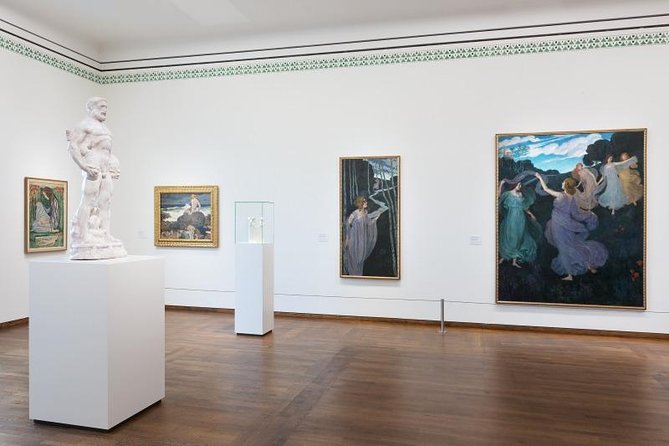
The collection begins with older Austrian works and the formal world of Historicism. It then moves toward mood-based painting, decorative design, Jugendstil, and the bold new art associated with Vienna around the turn of the century. That shift is the real subject of the museum.
I find this useful because Schiele and Klimt did not appear out of nowhere. Their work makes more sense when you see it beside the artists, designers, and movements that came before them. The museum gives you that setting without requiring a long lecture or a guided group.
The collection was assembled over five decades by Rudolf and Elisabeth Leopold. It now contains more than 5,000 objects, although not every work is on view at once. The displays include paintings, drawings, furniture, decorative objects, and examples of the design culture linked with Vienna’s coffee houses and workshops.
More Museums in Vienna:
- Vienna: Skip-the-Line Sisi Museum, Hofburg and Gardens Tour
★ 4.8 · 5,918 reviews - Vienna Kunsthistorisches Museum Day Admission Ticket
★ 4.6 · 3,690 reviews - Tickets for the Albertina Exhibitions
★ 4.7 · 2,126 reviews
Entering the bright building in MuseumsQuartier
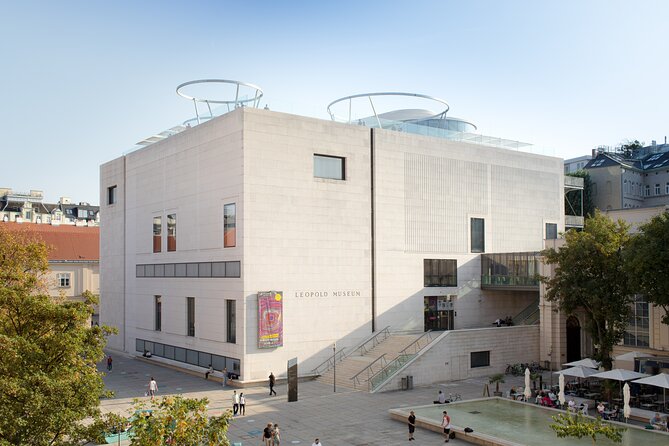
The Leopold Museum sits in Vienna’s MuseumsQuartier, a central cultural district filled with major museums and public spaces. The building’s pale, modern exterior is easy to recognize, though it may strike you as cool or even slightly severe rather than traditionally Viennese.
Inside, the mood changes. The museum is known for its light-filled interior, and the open, modern design gives the art room to breathe. I like this contrast. The outside does not try to imitate a palace, while the inside provides a calm setting for works that can be emotionally intense.
Your prepaid admission lets you explore on your own. There is no fixed route and no guide setting the pace. You can move quickly through rooms that interest you less, then stop longer in front of a Schiele drawing, a Klimt painting, or a piece of Wiener Werkstätte design.
The ticket is listed at about $22.98 per person. That is a reasonable price if you care about Austrian modernism and plan to spend two or three hours inside. It is less convincing if you want only a quick look at Klimt, since the museum contains fewer Klimt paintings than some first-time visitors expect.
Following the road to Viennese modernism
Start by paying attention to the changes in style rather than rushing toward the famous names. The early Austrian works help explain the strict academic traditions that modern artists began to challenge.
You will encounter artists such as Ferdinand Georg Waldmüller, Friedrich Gauermann, August von Pettenkofen, Anton Romako, Emil Jakob Schindler, and Carl Schuch. These works provide a useful lead-in to the later galleries, where brushwork, subject matter, and decorative pattern become less bound by old rules.
The central story is the Wiener Moderne, Vienna’s distinctive modern movement. Gustav Klimt, Egon Schiele, Oskar Kokoschka, Richard Gerstl, Koloman Moser, and Otto Wagner each approached modern life differently, but they belonged to the same period of artistic change.
Klimt brought ornament, gold, sensuality, and symbolic subject matter into painting. Schiele stripped the human figure down to tense lines and unusual poses. Kokoschka used a rougher, more restless style, while Moser and Wagner helped show how the modern movement reached beyond painting into furniture, architecture, and everyday objects.
That wider view is one of the museum’s best features. You are not simply checking famous paintings off a list. You are seeing how art, architecture, design, and social life in Vienna were connected.
Spending time with Egon Schiele
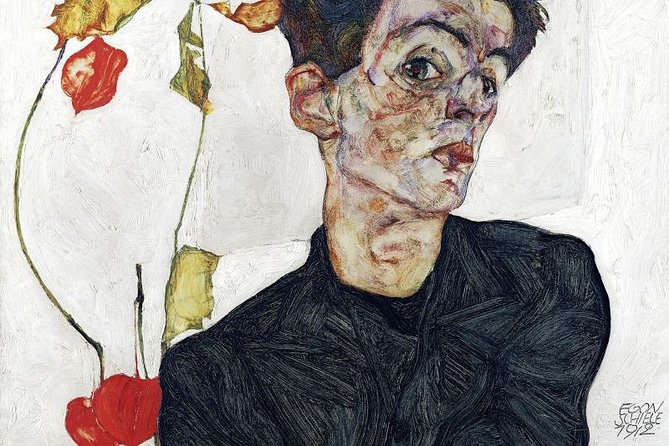
If Schiele is the reason you are booking, the Leopold Museum deserves a place near the top of your Vienna list. Its collection is the largest of its kind in the world, with a broad selection of paintings and drawings.
Schiele’s work can be difficult viewing. The figures are often angular, exposed, and emotionally raw. Bodies appear twisted, faces look strained, and the lines can feel nervous rather than polished. Give yourself time here. The drawings may look simple at first, but their force comes from how much feeling Schiele puts into a few sharp marks.
I suggest seeing the Schiele rooms before you get tired. You may want to look closely at the hands, faces, and outlines, then step back to consider the whole image. The museum gives you enough material to see recurring ideas and changes in his work rather than relying on a single famous piece.
This is also where the museum’s quiet setting helps. Schiele’s art rewards slow looking, but it does not need a guide to make an impression. If you want more background, an audio guide is available in German, English, French, or Italian for an extra EUR 4.
The Schiele collection can also be a drawback for some people. If you prefer cheerful or decorative art, several galleries may feel austere or heavy. The museum presents the work honestly, without softening its unsettling side.
A few more Vienna half-days to weigh up
- Vienna: Vivaldi’s Four Seasons Concert in Karlskirche
★ 4.7 · 14,951 reviews - Vienna: Spanish Riding School Training
★ 3.9 · 9,281 reviews - Vienna: Skip-the-cashier-desk-line Giant Ferris Wheel Ride
★ 4.5 · 7,859 reviews - Vienna: Schönbrunn Palace & Gardens Skip-the-Line Tour
★ 4.7 · 7,739 reviews
Finding Klimt’s Death and Life
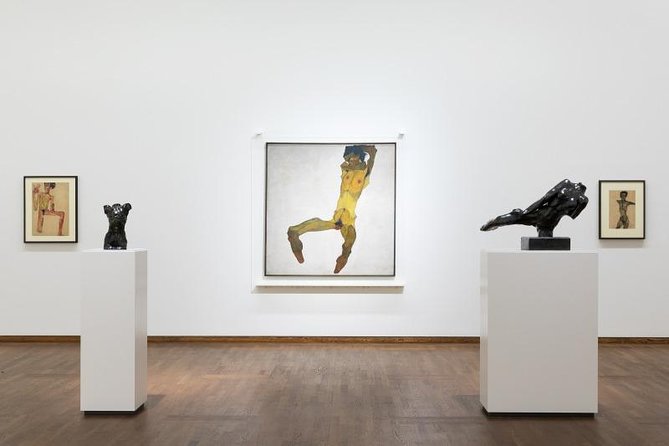
Gustav Klimt is represented by major works, but not by a huge number of paintings. The key piece is Death and Life, one of his most important figurative paintings and a clear reason to visit.
The painting brings together Klimt’s decorative surface and his interest in the cycle of human existence. Look for the contrast between the patterned, colorful group of living figures and the darker presence of death. It gives you a chance to see Klimt as more than the painter of glittering portraits and ornamental romance.
If your main goal is a large Klimt display, set your expectations carefully. The Leopold Museum is better for understanding Klimt within Vienna’s modern movement than for seeing a room after room of his work. You may want to combine this visit with another Vienna museum if Klimt is your central interest, though no additional admission is included here.
The museum’s placement of Klimt beside Schiele is valuable. You can compare Klimt’s rich decoration with Schiele’s stripped-down intensity and see how the younger artist moved in a different direction.
Looking beyond paintings: design and the Wiener Werkstätte
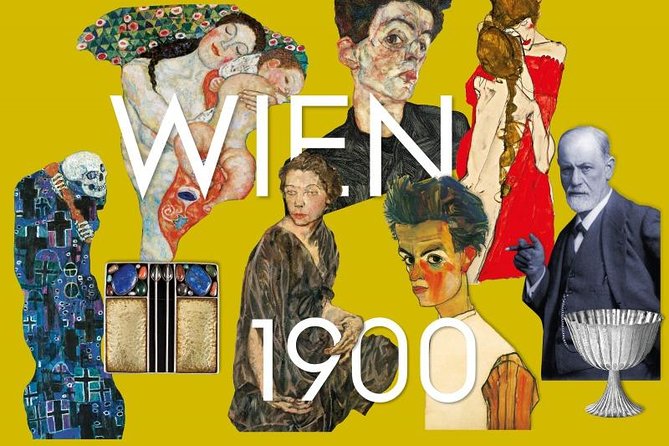
Do not skip the objects connected with Vienna’s design culture. The collection includes work associated with Otto Wagner, Adolf Loos, Dagobert Peche, Josef Hoffmann, and Koloman Moser.
The Wiener Werkstätte aimed to bring good design into daily life. Furniture, household objects, and decorative pieces were treated as part of a total artistic environment rather than as separate items with little connection to painting.
This section gives the visit practical context. Vienna’s modern movement was not confined to galleries. It appeared in buildings, interiors, furniture, printed materials, and the design of ordinary objects.
If you are more interested in architecture or decorative arts than in portraits, these displays may be among your favorite parts. Otto Wagner and Adolf Loos also help connect the museum with Vienna’s wider streetscape. Afterward, you will notice the city’s early modern buildings with a more informed eye.
The Austrian art between the wars
The collection does not stop around 1900. Another focus is Austrian art from the years between the two world wars, including artists such as Albin Egger-Lienz, Anton Kolig, and Herbert Boeckl.
These galleries extend the story into a more unsettled period. They show that Austrian art continued to change after the high point of the Wiener Moderne, with some work pointing toward the second half of the twentieth century.
This part of the museum may not be the reason you first buy the ticket, but it makes the collection feel more complete. You see that Vienna’s modern art story was not frozen in the age of Klimt and Schiele.
The balance of older, modern, interwar, and postwar material also helps if you are visiting with someone whose taste differs from yours. One person can focus on Schiele while another spends time with design or later Austrian painting.
Planning two or three hours inside
Two hours is enough for a focused visit. In that time, you can see the principal Schiele galleries, spend time with Death and Life, look at the modern design objects, and pause for the city view.
Give yourself closer to three hours if you read labels carefully, use the optional audio guide, or want to explore the Austrian art from the nineteenth century through the postwar period. You do not need to hurry, since the ticket is designed for independent viewing and lets you choose where to pause.
Some of the building is used for photography, exhibitions, and the museum shop, so not every floor is devoted to paintings. Keep that in mind if your idea of a museum visit is wall-to-wall art. The collection is strong, but the building is not enormous.
The windows overlooking Maria Theresa Square and the Hofburg Palace provide a welcome change of pace. I would save them for the middle or end of your visit. They give you a visual reminder that you are looking at art in the city where much of this modern movement developed.
Café Leopold and the pause that helps
Café Leopold is inside the museum and gives you a place to sit after the galleries. Food and drinks cost extra, but a café break can make the visit more comfortable, especially if you are combining the museum with other stops in MuseumsQuartier.
You do not need to make the café part of your plan, but it is useful to know it is there. A short pause can help after the more intense Schiele rooms, and it gives you time to look back over what you have seen.
The café has also earned praise for its food, though the experience is separate from the admission ticket. If you are watching your budget, you can simply enjoy the museum and continue on.
Practical ticket advice and possible snags
The experience is sold as a mobile ticket, but the instructions also say to present your Viator voucher at the cashier desk and recommend printing it. That is an important detail. Have the voucher ready, and if possible carry a printed copy as well as the phone version.
There has been at least one reported ticket problem in which the museum did not accept the supplied voucher and a second ticket had to be purchased. I cannot promise that this will happen, but the mismatch between mobile-ticket wording and the instruction to exchange a voucher is worth taking seriously. Check the exact voucher directions before you leave your hotel.
The ticket includes admission only. A guide is not included, and neither is the audio guide. Children must be accompanied by an adult, and a reduced child ticket requires relevant identification.
The stated opening information lists Monday hours from 10 a.m. to 6 p.m. The supplied details cover the period from February 1, 2024, through February 14, 2027, but do not provide a full weekly schedule. Check the current hours for your intended date before setting your day around the visit.
Free cancellation is available up to 24 hours before the experience start time. Cancellations or changes made inside that period are not refunded or accepted.
Who should buy this Leopold Museum ticket?
I would choose this ticket if you like modern art, want serious time with Schiele, or are curious about the Vienna of Klimt, Jugendstil, and the Wiener Werkstätte. It is also a good fit if you dislike being hurried through galleries.
The ticket works well for independent visitors who already know what they want to see. You can arrive without joining a group, skip rooms that do not hold your attention, and return to a favorite work.
I would think twice if you want a guided explanation of every movement. The audio guide costs extra, and no personal guide is provided. I would also reconsider if your only goal is to see many Klimt paintings, since Death and Life is the main Klimt highlight.
The museum has a strong 4.6 rating from 440 reviews, with 92 percent recommending it. That matches my view of its value: it is a focused, high-quality art museum rather than a massive collection designed to fill an entire day.
Should you book it?
Book the Leopold Museum if Schiele interests you, or if you want to understand Vienna’s modern art as a connected story of painting, architecture, and design. The flexible entry, bright interior, excellent Austrian collection, and views across the Hofburg make it an easy two to three hour stop.
Skip it if you want only Klimt, dislike emotionally difficult art, or expect a huge museum with endless galleries. For most art-focused visits to Vienna, though, the ticket is a sensible buy. Print or save the voucher carefully, allow time for the cashier exchange, and arrive ready to spend your time with Schiele rather than rushing through the doors.
FAQ
How much does the Leopold Museum Vienna ticket cost?
The listed price is $22.98 per person.
How long does a visit to the Leopold Museum take?
The visit takes approximately two to three hours. A focused visit can be completed in about two hours.
Is the ticket guided?
No. The ticket provides admission only, and no personal guide is included.
Is an audio guide available?
Yes. An audio guide is available for an additional EUR 4 in German, English, French, or Italian.
What is included in the admission?
Admission to the Leopold Museum is included, with access to the permanent collection and exhibitions.
Is food included?
No. Food and drinks are not included. Café Leopold is available inside the museum at your own expense.
Can I see Egon Schiele’s work there?
Yes. The museum holds the largest collection of Egon Schiele’s work in the world, including paintings and drawings.
Does the museum have Gustav Klimt paintings?
Yes. A major highlight is Gustav Klimt’s Death and Life. The museum does not have a large number of Klimt paintings.
What should I bring for entry?
Present your Viator voucher at the cashier desk to exchange it for the current ticket. The instructions recommend printing the voucher, even though the experience is also described as a mobile ticket.
Can I cancel for a refund?
Yes. You can cancel up to 24 hours before the experience start time for a full refund. Changes or cancellations made less than 24 hours beforehand are not accepted or refunded.
Recently added around Vienna
- Vienna: Private tour Mauthausen and Linz★ 4.1 · 3 reviews
- 2-Day Prague Tour from Vienna with private Transfers and Lunches★ 5.0 · 3 reviews
- Vienna Self Guided Sherlock Holmes Murder Mystery Game★ 4.5 · 3 reviews
- Vienna Private Schönbrunn Palace Tour, Extra Rooms and Gardens★ 5.0 · 3 reviews
- Salzburg and Lake Region Private Day Trip from Vienna★ 5.0 · 3 reviews
- Small-group Vienna Wine Tour★ 5.0 · 3 reviews
- True Crime mobile puzzle rally Vienna★ 4.0 · 3 reviews
- Exploring the Gutenstein Alps★ 5.0 · 3 reviews
Vienna Tours, compared.
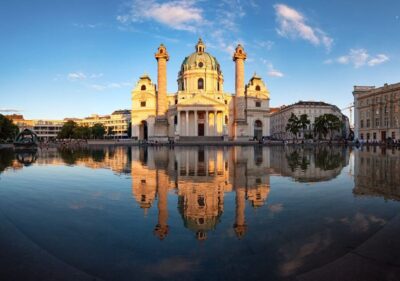
Vivaldi’s Four Seasons Concert in Karlskirche
Read our review →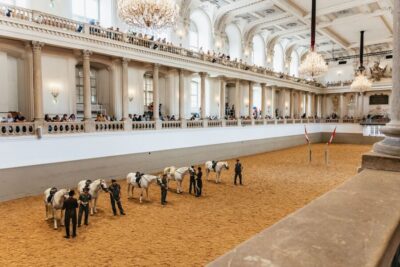
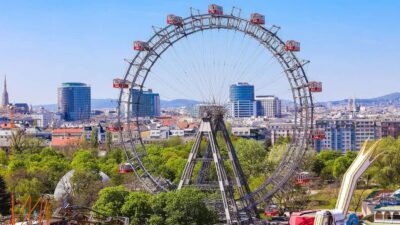
Skip-the-cashier-desk-line Giant Ferris Wheel Ride
Read our review →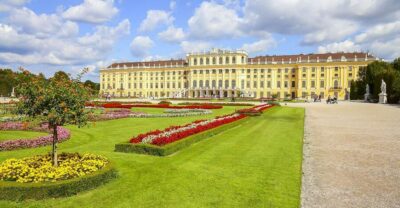
Schönbrunn Palace & Gardens Skip-the-Line Tour
Read our review →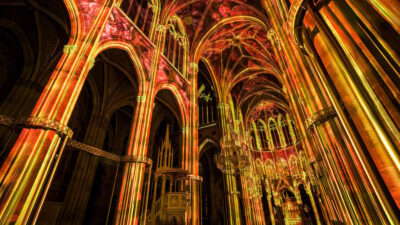
Light of Creation Votive Church Immersive Light Show
Read our review →
Skip-the-Line Sisi Museum, Hofburg and Gardens Tour
Read our review →
Hallstatt & Alpine Peaks Day Trip with Skywalk Lift
Read our review →Browse the lists this tour appears in