
Reviewed · CONCERTS IN VIENNA
Concerts at the Mozarthaus Vienna
Mozart’s former Vienna apartment gives this concert something a standard recital hall cannot: before the music begins, you can walk through the rooms where the composer lived during the last year of his life. Then, below the museum, the Wiener Ensemble presents a compact program of Mozart, Haydn, Beethoven, Strauss, and other familiar composers.
I like the useful pairing of museum admission and live music in one ticket. I also like the small scale, usually around 50 to 75 people, which puts the piano, violin, and cello close enough for you to watch every gesture. The main caution is the basement concert room. Some people find it cozy; others may feel cramped or claustrophobic.
Key points to know before booking
- Mozart’s last Vienna home: Visit the Domgasse apartment where Mozart lived during his final year.
- A small piano trio setting: The concert uses an intimate room rather than a large, formal concert hall.
- Short introductions add context: The presenter explains the composers and pieces in a clear, often humorous way.
- A broad program: Expect famous music by Mozart, Haydn, Beethoven, Strauss, and sometimes Schubert or other composers.
- About 70 minutes at 6:30 pm: The evening concert fits neatly into a night of sightseeing and dinner in central Vienna.
- Museum entry is included: No separate museum ticket is needed for the included visit.
Why this pairing works so well in Vienna
Vienna has no shortage of classical concerts. You can choose grand halls, churches, palace rooms, and tourist-oriented orchestra shows. This experience takes a more focused approach: first connect Mozart with a real address, then hear chamber music in the same building.
That link matters. Mozarthaus Vienna is not simply a room with a famous name attached. It is a museum devoted to Mozart’s life and work, with original manuscripts, letters, personal belongings, and displays about his time in Vienna. The setting gives the music a sense of place before the first note is played.
I like that the evening does not demand a serious background in classical music. The program includes well-known pieces, and the presenter gives short explanations before each work. You get enough context to understand what you are hearing without sitting through a long lecture.
The tone is generally welcoming rather than formal. One program has included Eine kleine Nachtmusik, the Blue Danube, and the Radetzky March as an encore, while other programs have included Mozart, Schubert, Beethoven, and selections by later composers. Exact pieces can vary, so you should book this for the setting and format rather than one guaranteed work.
More Concerts in Vienna
- Vienna: Vivaldi’s Four Seasons Concert in Karlskirche
★ 4.7 · 14,951 reviews - Vienna: Classical Concert in the World-Famous Musikverein
★ 4.6 · 6,673 reviews - Vienna: Classical Concert at St. Stephen’s Cathedral
★ 4.1 · 4,177 reviews
Starting at Mozarthaus Vienna on Domgasse
The meeting point is Mozarthaus Vienna at Domgasse 5, in central Vienna’s 1010 district. The activity begins at 6:30 pm, and you return to the same location when the concert ends.
The first part is the museum visit. You can see the rooms connected with Mozart’s final year and explore exhibits covering his personal and professional life. Original papers and belongings help turn the composer from a textbook figure into a person who lived, worked, and made music in this very building.
The museum also uses audio-guide material. A practical way to handle the visit is to exchange your voucher for the museum admission, follow the audio-guide instructions, and take your time with the exhibits before preparing for the performance. You may find the museum easier to appreciate before the concert, while your mind is still alert and you are not watching the clock.
One useful detail from the operating setup is that the concert ticket is redeemed at the museum. The museum and concert are part of the same address, but they are not necessarily the same room or experience. Allow enough time to enter, collect your admission, and look around before the concert gathering begins.
The museum admission is included in the $71.38 price. For anyone already planning to visit Mozarthaus, that improves the value considerably. If you only want a concert and have little interest in Mozart’s rooms or documents, the price feels less competitive because the museum visit is part of what you are paying for.
From museum rooms to a basement recital room
The concert takes place below the museum, in a renovated basement room. That setting is one of the experience’s biggest strengths and one of its few real limitations.
The benefit is closeness. With an audience often numbering around 50 to 75 people, you are not watching tiny figures from the back of a grand auditorium. You can see the musicians’ hands and follow the exchanges between instruments. Chamber music gains something from this scale because the balance between piano, violin, and cello is easier to notice.
The room also has a good acoustic, according to the performance details provided. Music in a small space can feel direct and immediate, especially during quieter movements or solo passages. One program has included solo works for each musician as well as ensemble pieces, giving each instrument a chance to come forward.
The drawback is physical comfort. One person found the room claustrophobic, and that is worth taking seriously if you dislike underground spaces or close seating. The room is described as intimate, not spacious. I would choose a large concert hall instead if you want sweeping architecture, distance from other people, or the sense of a major orchestral event.
The concert environment is also simpler than a full evening at the Vienna State Opera or Musikverein. You are paying for chamber music and historical atmosphere, not a lavish production. That simplicity is part of the charm, but it sets the right expectation.
The music: familiar works in a friendly format
The strongest part of the program is its accessibility. You are likely to recognize at least some of the selections, and the brief introductions make it easier to understand how each piece fits the evening.
The repertoire centers on Mozart, Haydn, Beethoven, and Strauss. Programs may also include Schubert and other composers. That gives the recital a pleasant range: elegant Classical-period works, more dramatic Beethoven passages, and familiar Viennese melodies associated with Strauss.
The piano trio format gives the music variety. Piano, violin, and cello can play together as a unit, then separate into contrasting lines. You may hear a violin melody float above the group, a cello add warmth and weight, or the piano carry a quick, bright passage. The arrangement is more varied than a concert made up only of one instrument.
A good example of the evening’s mood is the mixture of graceful and energetic pieces. The music can move from gentle and lyrical to forceful and passionate, then finish with a cheerful Viennese encore. The Radetzky March has been used as an encore, creating a festive ending with a touch of New Year’s Concert spirit.
The presenter is important here. Introductions have been praised for being entertaining, easy to understand, and sprinkled with humor. I find that especially helpful if you are new to classical music or unsure how to listen to a chamber recital. You are given a little history about the composer and the work, then the music gets the room to itself.
This is not a concert for someone seeking an exhaustive scholarly discussion. The explanations are brief. That is a plus for most people because the performance remains the main event.
A different way to spend an afternoon here:
- Vienna: Spanish Riding School Training
★ 3.9 · 9,281 reviews - Vienna: Skip-the-cashier-desk-line Giant Ferris Wheel Ride
★ 4.5 · 7,859 reviews - Vienna: Schönbrunn Palace & Gardens Skip-the-Line Tour
★ 4.7 · 7,739 reviews - Vienna: Light of Creation Votive Church Immersive Light Show
★ 4.8 · 6,779 reviews
The musicians and the human scale of the evening
The Wiener Ensemble uses talented small groups, commonly a piano trio with piano, violin, and cello. Some published accounts identify performers such as Rodrigo, Manon, and Eunju, while another program named Julian Yoh Hedenbork on piano, Gergely Kolozsvari on cello, and Jovana Raljic on violin. The lineup can change, so do not book expecting one particular musician unless your confirmation specifically names them.
That changing lineup is normal for an ensemble, but it also means the sound may differ from one date to another. The consistent idea is the small-group format and the direct connection between musicians and audience.
The close setting allows you to notice the performers as people, not distant figures behind a large orchestra. The introductions, smiles, gestures, and visible coordination between instruments all help make the recital feel personal.
There has been one documented evening when the cellist could not appear and the start was delayed by 20 minutes. The piano and violin still performed, and the audience was offered a full refund before the concert began. This appears to have been an unusual problem, not the normal format, but it is a useful reminder that live music can change at short notice.
If you are attending for one exact arrangement, ask at the venue about the evening’s lineup. If you simply want a good chamber concert in Mozart’s former home, the flexible program should not trouble you.
How the timing fits a Vienna evening
The concert begins at 6:30 pm and lasts about 1 hour and 10 minutes. That makes it easy to build around a day in central Vienna. You can visit the museum first, attend the performance, then walk to dinner or continue exploring the surrounding center.
The central address is a practical advantage. The area has many other activities close by, so you are not committing to a long ride across town after the music. The venue is near public transportation, and most people can participate.
I would not plan a tightly timed dinner reservation immediately after the concert. Museum entry, the pre-concert arrangement, and the occasional delay with live performances can affect your finish time. Give yourself a little breathing room, especially if you are dining somewhere that requires a formal arrival time.
The concert ends back at the Mozarthaus meeting point. Catering is not included, so plan to eat before or after. Since the activity is short, it works well as the cultural center of an evening rather than an all-night event.
Is the $71.38 price good value?
At $71.38 per person, this is not Vienna’s cheapest classical music ticket. Its value depends on how you use the included museum admission.
For someone who wants both a Mozart museum and a live recital, the combination is sensible. You receive entry to Mozarthaus Vienna, a roughly 70-minute concert, a central location, and a small audience setting. Buying those as separate activities could cost more, and combining them saves time as well as money.
For a classical music beginner, the explanatory introductions add value. You are not left to identify every composer or understand every musical form on your own. The program gives you recognizable works and enough background to make the listening easier.
For an experienced concertgoer, the price may feel high if you compare it with an ordinary chamber recital. You are paying partly for the address, the museum, and the Vienna connection. The basement room is intimate rather than grand, and there is no catering included.
I would call the ticket a fair splurge for a first Vienna concert or a special evening. It is less appealing if you have already booked several high-priced classical performances and only want the music. Since the experience is booked about 32 days ahead on average, popular dates may deserve early planning, especially around Christmas and other busy periods.
Who will enjoy this most
I would recommend this concert to you if you fit one or more of these groups:
- You want a first classical concert with familiar pieces and plain-spoken introductions.
- You enjoy linking music to the rooms and places where composers lived.
- You prefer a small recital to a huge formal hall.
- You are spending Christmas in Vienna and want a seasonal cultural evening.
- You have limited time and want a museum and concert in one central stop.
- You enjoy piano, violin, and cello more than a full orchestra.
Families can also consider it. Most people can participate, service animals are allowed, and the room keeps the musicians close. Still, the basement setting and concert etiquette may be a poor match for anyone who needs lots of space or cannot sit quietly for about 70 minutes.
I would choose another event if your top priority is opera, a full symphony orchestra, grand architecture, or a specific artist. This is a chamber recital with a museum connection, not a substitute for every kind of Vienna music experience.
Practical details that make the evening easier
Your booking confirmation arrives at the time of booking. The ticket redemption point is the Mozarthaus at Domgasse 5, the same place where the activity starts and ends.
A sensible plan is to arrive with time for the museum rather than treating it as a last-minute add-on. Follow the museum’s audio-guide instructions, see the exhibits, and then proceed according to the venue staff’s directions for the concert room.
Coat handling has caused frustration on at least one occasion. Because the concert room is small, follow the staff’s instructions about where to leave coats and belongings, even if the arrangement seems unclear. Asking politely before the room fills may prevent a needless problem.
Free cancellation is available up to 24 hours before the 6:30 pm start time. Changes or cancellations inside that window are not accepted for a refund, and the local Vienna cut-off applies.
Should you book Concerts at the Mozarthaus Vienna?
Book it if you want an intimate, approachable classical concert tied to Mozart’s actual Vienna home. The included museum, short running time, central location, and helpful introductions make this a strong choice for first-time concertgoers and for anyone who wants more meaning behind the music.
Think twice if you dislike basement rooms, need generous personal space, or want a grand hall and a full orchestra. At $71.38, this works best as a combined museum-and-music evening. For that purpose, it offers a thoughtful slice of Vienna’s musical life without taking over your entire night.
FAQ
Where does Concerts at the Mozarthaus Vienna take place?
The experience begins at Mozarthaus Vienna, Domgasse 5, 1010 Vienna, Austria. The concert also takes place at the Mozarthaus, in a room below the museum.
What time does the concert start?
The scheduled start time is 6:30 pm.
How long does the experience last?
The concert and activity last approximately 1 hour and 10 minutes.
Is museum admission included?
Yes. The ticket includes free admission to Mozarthaus Vienna.
What can I see at Mozarthaus Vienna?
The museum covers Mozart’s life and work and includes original manuscripts, letters, personal belongings, and rooms connected with the final year he lived there.
Which composers are performed?
The program features famous works by Mozart, Strauss, Haydn, and Beethoven. Programs may also include Schubert and other composers.
What kind of musical group performs?
The concert is presented by the Wiener Ensemble, commonly in a small piano trio format with piano, violin, and cello.
Is catering included?
No. Catering is not included in the ticket.
How large is the concert group?
The activity has a maximum of 70 people. Concert audiences have also been described as small, often around 50 to 75 people.
Can I cancel for a refund?
Yes. You can cancel up to 24 hours before the experience start time for a full refund. Cancellations or changes made less than 24 hours before the start are not accepted for a refund.
Recently added around Vienna
- Vienna: Private tour Mauthausen and Linz★ 4.1 · 3 reviews
- 2-Day Prague Tour from Vienna with private Transfers and Lunches★ 5.0 · 3 reviews
- Vienna Self Guided Sherlock Holmes Murder Mystery Game★ 4.5 · 3 reviews
- Vienna Private Schönbrunn Palace Tour, Extra Rooms and Gardens★ 5.0 · 3 reviews
- Salzburg and Lake Region Private Day Trip from Vienna★ 5.0 · 3 reviews
- Small-group Vienna Wine Tour★ 5.0 · 3 reviews
- True Crime mobile puzzle rally Vienna★ 4.0 · 3 reviews
- Vienna: Wachau Valley Private Kayak and Wine Tour★ 5.0 · 3 reviews
Concerts in Vienna, compared.
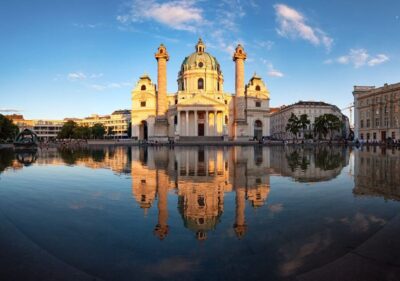
Vivaldi’s Four Seasons Concert in Karlskirche
Read our review →
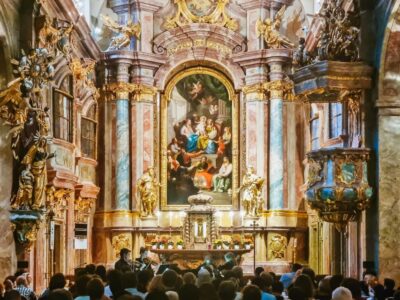
Classical Concert in St. Anne’s Church (Annakirche)
Read our review →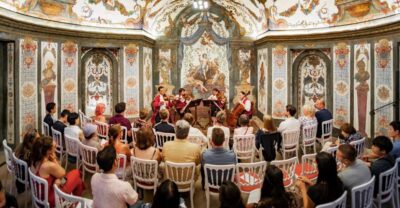
Vienna Classical Concert at St. Peter’s Church
Read our review →Classical Concert in St. Anne’s Church (Annakirche)
Read our review →Browse the lists this tour appears in