Reviewed · TOURS
21-Day Extensive European Highlights tour from Frankfurt: Germany, Czech Republic, Slovakia, Hungary, Austria, Switzerland, Italy, France, Netherlands, Belgium and Luxembourg
This is a grand European sampler: 21 days, 11 countries, one coach, and a route that runs from Prague and Budapest to Rome, Paris, Amsterdam, and Luxembourg. You will see famous sights at a brisk pace, with a tour manager handling the broad plan and hotels along the way.
I like the sheer range, especially the contrast between Swiss mountain views and Italy’s great art cities. I also like that transportation, hotels, and breakfast are bundled into one price, making a complicated trip easier to arrange. The trade-off is clear: this is an overview, not a slow cultural journey. Long drives, quick visits, and daily group movements can eat into your free time.
Key points to know before booking
- 11 countries in 21 days: Germany, the Czech Republic, Slovakia, Hungary, Austria, Switzerland, Italy, France, the Netherlands, Belgium, and Luxembourg.
- Major sights come quickly: Prague Castle, Schönbrunn Palace, Mount Titlis, the Louvre, Venice, Vatican City, the Colosseum, and Versailles are all part of the route.
- The tour uses two linked sections: the first circuit returns to Frankfurt, then the route continues on a Red Line and Green Line through Western Europe.
- Many headline attractions cost extra: tickets, optional cruises, gondola rides, museum entries, and some city charges are not included.
- Hotels are minimum three-star: twin rooms with private facilities are included, but the final night is not.
- Expect a busy coach schedule: one published account praised the broad European coverage but warned that pickups and drop-offs can add at least an hour to some days.
What this Frankfurt departure really gives you
The price is listed at $2,798.05 per person, which works out to about $133 per day before optional tickets, meals, tips, and city charges. That is reasonable for a 21-day escorted coach trip covering so much ground, especially since it includes accommodation, daily continental breakfast, transport, a professional driver, and a tour manager.
But the low headline price needs context. You must budget for a mandatory tip of €10 per person per day, collected in cash. You also pay for lunch and dinner, most entrance tickets, optional activities, visas, insurance, and city entrance fees and taxes in places such as Paris, the Czech Republic, Vienna, Venice, and Rome. The listed maximum for those city charges is €100 for the full tour.
You should think of this as a framework for seeing Europe, not an all-inclusive holiday. It removes the hard work of linking eleven countries and arranging twenty hotel nights, but it leaves many of the most important choices, and costs, to you.
The trip begins at Frankfurt Central Station at 8:30 in the morning. The first week finishes back in Frankfurt, after which you continue with the Red Line and Green Line sections. That arrangement is useful if you want a broad route, but it also means the tour is not one simple loop. There are breaks, group changes, and additional coach movements.
Other Austria half-days people book on the same trip:
- Vienna: Vivaldi’s Four Seasons Concert in Karlskirche
★ 4.7 · 14,951 reviews - Vienna: Spanish Riding School Training
★ 3.9 · 9,281 reviews - Vienna: Skip-the-cashier-desk-line Giant Ferris Wheel Ride
★ 4.5 · 7,859 reviews
Prague Castle and the road to Bratislava
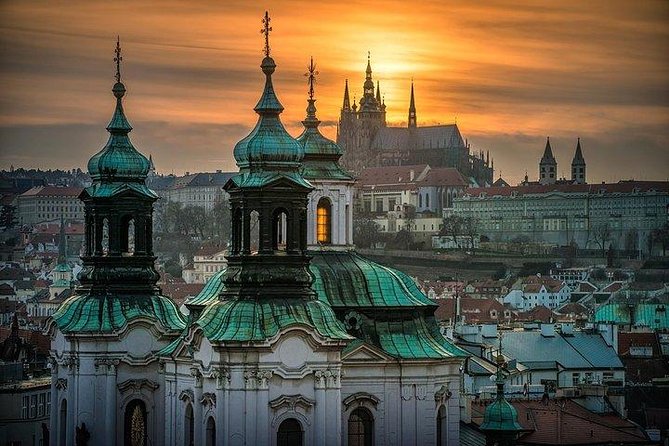
Your first major day begins in Prague, after an evening arrival. The route starts high on Castle Hill in Hradčany, following part of the old Royal Route used by Bohemian monarchs. Prague Castle gives you a strong opening view over the red roofs of the old city.
You then move through St. Vitus Cathedral, the Old Royal Palace, St. George’s Basilica, and Golden Lane. These sights are grouped sensibly, but the listed hour for each stop should not be read as four separate, relaxed visits. The schedule is designed to keep a large route moving.
After crossing Charles Bridge, you reach Old Town Square and the Astronomical Clock. This is the moment to pause for lunch and enjoy Prague at street level. Admission tickets are not included, so check what your tour manager plans to arrange and keep cash or a card available.
The coach then continues toward Bratislava. You do not get a full Bratislava sightseeing program here. The Slovak capital functions mainly as an overnight point before Hungary, so do not book this trip expecting extended time in Slovakia.
Budapest and Vienna in two busy days
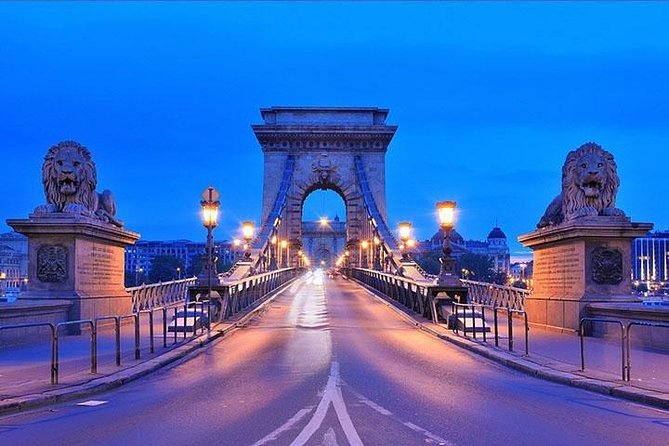
Budapest brings a useful change of mood. The Danube divides Buda from Pest, and the day gives you views on both sides. On the Buda side, you visit Fisherman’s Bastion, Matthias Church, Buda Palace, and Gellért Hill. The high points are the city views, particularly from the hill and the terrace.
You may also have time for the Budapest History Museum, the Hungarian National Gallery, or souvenir shopping. A river cruise is optional, not included, but it can help you understand how the two halves of the city fit together.
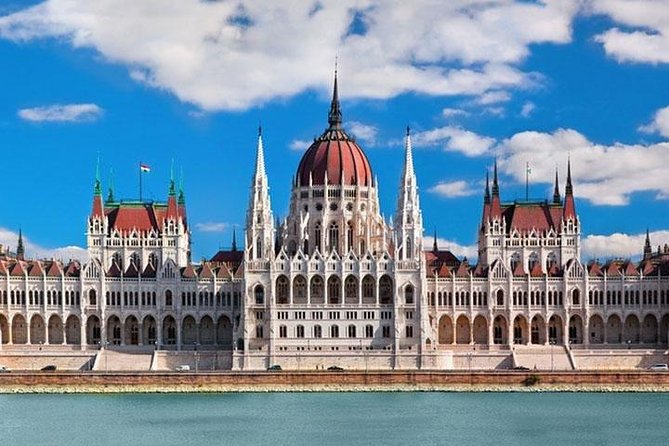
Across the river, Heroes’ Square and the Parliament Building provide the main Pest highlights. An optional evening dinner includes Hungarian dishes such as goulash, goose liver, and duck leg, along with folk music and dance. It is a convenient way to sample local food, though you can also use the free evening to find your own restaurant.
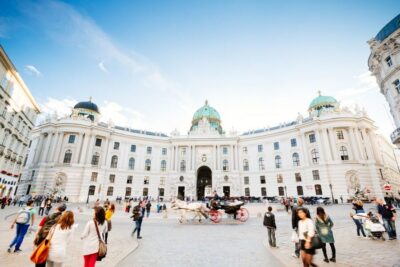
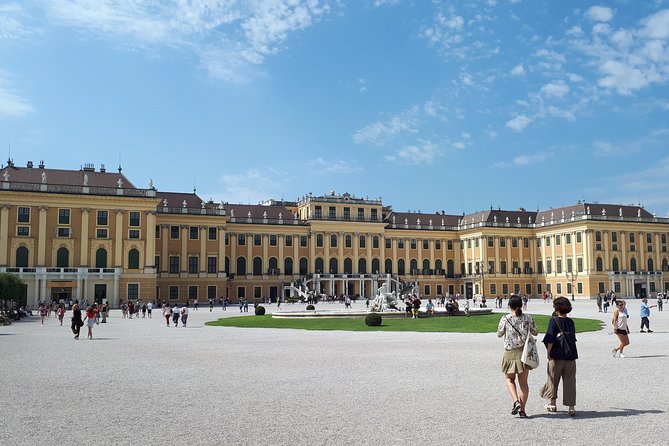
Vienna follows quickly. Schönbrunn Palace is the major visit, with its Rococo rooms and Habsburg connections. The city tour then passes the Hofburg, Parliament, City Hall, Heroes’ Square, and the State Opera. You have time for shopping, St. Stephen’s Cathedral, and Stadtpark, where the gilded Johann Strauss monument makes an easy photo stop.
An optional Mozart and Strauss concert fits the setting, but it is another added expense. Vienna is one of the places where the schedule may leave you wishing for another day. You will see the grand center, but you will not have much time for smaller museums, coffeehouses, or unplanned wandering.
Mondsee, Munich, and the Swiss Alps
Mondsee is a brief but appealing stop. The town sits beside Lake Mondsee, and St. Michael’s Basilica is known as the church used for the wedding scene in The Sound of Music. This is a pleasant pause between Vienna and Munich, though the visit is short.
In Munich, the focus is Marienplatz and the New Town Hall. You can use the free time for a German beer in a beer garden or stay near the square before heading to the hotel. This is a taste of Munich rather than a full city visit.
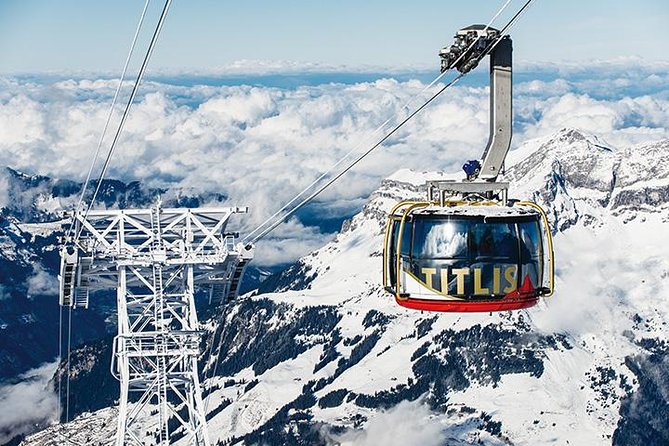
The next morning changes the pace completely. At Engelberg, you can pay extra for the cable car to Mount Titlis. The ascent uses three stages of gondolas, ending with the revolving Titlis Rotair. At the top, you may find snow, glacier views, an ice cavern, and wide views across lakes, forests, valleys, and mountains.
Weather matters here. If clouds cover the summit, the expensive cable-car ticket may feel less worthwhile. Still, this is one of the trip’s most memorable optional additions, since it gives you a clear Alpine experience without arranging a separate mountain excursion.
Lucerne follows with the Lion Monument, Chapel Bridge, Water Tower, and time for shopping. The city is compact and easy to explore on foot during a short stop. You might look for Swiss watches and chocolate, though prices in this part of Switzerland can be high.
A possible photo stop in Liechtenstein depends on weather and traffic. It is not guaranteed, and it should be treated as a bonus rather than a scheduled country visit.
A different way to spend an afternoon here:
- Vienna: Schönbrunn Palace & Gardens Skip-the-Line Tour
★ 4.7 · 7,739 reviews - Vienna: Light of Creation Votive Church Immersive Light Show
★ 4.8 · 6,779 reviews - Vienna Spanish Riding School Guided Tour
★ 4.7 · 6,765 reviews - Vienna: Classical Concert in the World-Famous Musikverein
★ 4.6 · 6,673 reviews
Zurich, the Black Forest, and the first Frankfurt finish
The route continues with a photo stop at Lake Zurich and a visit to Rhine Falls, described as Europe’s biggest waterfall. Like many stops on this itinerary, the value is visual: you get a strong sense of place and a chance for photographs without spending a full day in the city.
Crossing back into Germany, you reach Lake Titisee in the Black Forest. This is a good regional stop, with lakeside cafés, Black Forest cherry cake, cuckoo-clock shops, and a clock demonstration. It offers more local flavor than a simple city-square photo stop.
You return to Frankfurt at the end of this section. Some people leave the tour here, while others stay overnight and continue on the Red Line the next morning. This split is important. The advertised 21-day route is made of connected sections, so confirm exactly which hotel nights and transfers apply to your booking.
Bonn, Cologne, and Dutch windmills
The Red Line heads northwest to Bonn, the former capital of West Germany. An orientation walk passes the Rococo town hall and Beethoven-Haus. You should not expect an extended museum visit unless admission and time are arranged separately.
Cologne offers a stronger architectural stop. The cathedral is a UNESCO World Heritage Site and the visit takes you inside its immense Gothic interior. After lunch and some free time, the coach crosses into the Netherlands.
Zaanse Schans provides a classic Dutch picture: windmills, clogs, and cheese. It is highly arranged and tourist-oriented, but it gives you a quick introduction to traditional Dutch crafts and countryside.
Amsterdam then shifts the day toward canals and commerce. You visit a diamond factory, followed by an optional canal cruise. The cruise is a smart use of limited time because it lets you see Amsterdam from the water, where the city’s narrow buildings and canal streets make better sense.
Dam Square and the Royal Palace complete the day. If you travel from mid-March to mid-May, Keukenhof is also included, with more than seven million spring bulbs. That seasonal addition can change the feel of the Dutch portion, but it does not apply outside that period.
Brussels and two contrasting days in Paris
Brussels begins with the Atomium, built for the 1958 World’s Fair. In the center, you see the Grand Place and Manneken Pis, then have time for Belgian food and shopping before the coach continues to Paris.
Paris receives two main touring days, but the program remains packed. The first includes the Champs-Élysées, Place de la Concorde, Arc de Triomphe, Les Invalides, Napoleon’s tomb, and a stop at the Eiffel Tower. The tower stop does not include climbing, although you may have time to buy a separate ticket or simply enjoy the view from ground level.
Versailles follows. The palace is a major sight, but the suburban coach ride and large grounds mean you should watch the clock. An evening show is optional.
The second Paris day centers on the Louvre, with the Venus de Milo, Winged Victory, and Mona Lisa among the famous works. A guided gallery option may help you see major rooms efficiently, but admission and guided visits are extra. The Seine cruise is also optional, as is the French dinner and show.
You finish around the Palais Garnier and Galeries Lafayette. If shopping is not your priority, use the time for a café or a short walk. Accommodation on the final Paris night of the Green Line is not included, so plan that night carefully.
Lucerne, Milan, Venice, and Rome
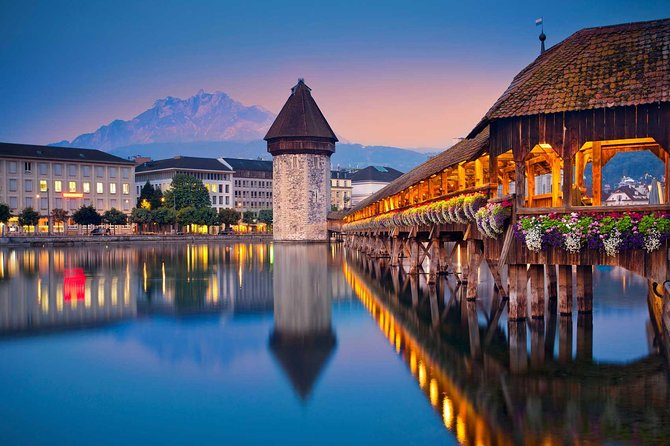
The Green Line begins with another crossing into Switzerland and a return to Lucerne. This gives you Chapel Bridge, the Water Tower, Baroque and Gothic buildings, and free time for photographs and shopping.
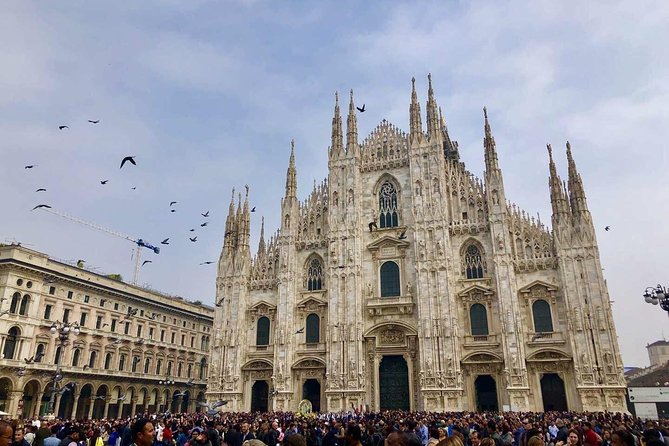
Milan follows. The Duomo and Galleria Vittorio Emanuele II are the main sights. The cathedral is worth seeing from the outside even if you do not buy an interior ticket, while the Galleria gives you a quick look at Milan’s polished shopping culture.
Venice receives a guided morning. A water bus carries you across the lagoon to San Marco, which is a fine way to approach the city. The route includes St. Mark’s Basilica, the Doge’s Palace, and the Bridge of Sighs, followed by a Murano glass demonstration.
A gondola ride is optional. It is expensive, but this is one of the few places where the extra activity directly matches the character of the city. Venice itself is a place where the schedule feels especially tight, since moving through the crowds and waterways takes time.
Rome brings Vatican City, St. Peter’s Basilica, the Colosseum, and the Arch of Constantine. The Sistine Chapel is an optional addition, so confirm whether your chosen package includes it. St. Peter’s alone can absorb a great deal of time, and the same day also includes ancient Rome and free time for gelato and wandering.
Florence, Pisa, Monaco, and the French Riviera
Florence starts at Piazzale Michelangelo, where you get the best broad view of the city, the Arno, and its red roofs. A leather-working demonstration follows, with the chance to buy local leather goods. Treat the shopping portion as optional in spirit, even if it forms part of the organized visit.
The walking route covers Ponte Vecchio, Piazza del Duomo, and Giotto’s Campanile. The Uffizi is pointed out, but entry is not included. If Renaissance art is a priority, you should check in advance how much time you have and whether an optional visit is available.
Pisa is a brief stop for the Leaning Tower, cathedral, and baptistery in the Square of Miracles. The overnight stay is near Genoa, but the route does not visit Genoa itself.
The next day follows the Mediterranean coast to Monaco. You see the Prince’s Palace, courthouse, Oceanographic Museum, cathedral, and Grace Kelly’s burial place. The itinerary refers to the Monaco Grand Prix area, but no race admission is included.
After a Fragonard perfume-factory visit, you stop in Nice for lunch and continue to Cannes. The Palais des Festivals is the key photo stop. Overnight accommodation is near Avignon, but Avignon is not visited, so do not build extra plans around either Genoa or Avignon.
Champagne, Luxembourg, Trier, and Frankfurt
The return north is mostly a coach day through the French countryside. The Green Line finishes in Paris, and the last night there is not included.
The Red Line then heads through Champagne to Reims, where you see the cathedral associated with French royal coronations. Luxembourg City follows with Place de la Constitution and Pont Adolphe, plus time to explore independently.
The final day crosses into Germany and reaches Trier. You see Karl Marx’s birthplace from outside, Trier Cathedral, and Porta Nigra, the best-preserved Roman city gate north of the Alps. These stops give the ending real historical weight.
Koblenz adds the meeting point of the Rhine and Mosel rivers, with an optional boat cruise. The coach then passes through Rüdesheim before returning to Frankfurt, ending at Römerberg. No hotel is provided on this final night.
Hotels, transport, and the daily rhythm
Hotels are at least three-star, with private facilities and twin rooms. A double bed can be requested, but it is not guaranteed. One twin room can hold two adults and one child aged 2 to 11 without a separate bed. Groups of three do not receive a triple room, and an odd-numbered group needs the single-traveler option with a €50-per-night single supplement.
Hotel details arrive 24 to 48 hours before check-in. That is normal for a moving coach tour, but it makes independent planning harder. Pack one piece of luggage up to 30 kilograms and one small carry-on.
The coach is air-conditioned, and the maximum group size is 30. That is more manageable than a huge tour, but daily pickups and drop-offs can still add at least an hour. You should be comfortable sitting for long stretches and starting early.
The tour can combine English and Chinese speakers, or English and Vietnamese speakers, if numbers are low. Tour leaders are assigned to support the relevant languages. Confirm your preferred language before departure.
Who should book this European sampler?
I would choose this trip if you want to see a great many famous places without arranging trains, hotels, border crossings, and transfers yourself. It suits a first European visit, especially if your priority is recognition and range: Prague, Vienna, Switzerland, Venice, Rome, Paris, Amsterdam, and more.
I would not choose it if you want long museum visits, slow meals, local neighborhoods, or several unplanned afternoons. The strongest praise centers on the memorable range, good hotels, and the feeling of seeing much of Europe in one organized trip. The main caution is just as important: it is a fast overview that can feel like a hop-on, hop-off route with less lingering than the headline destination list suggests.
FAQ
Where does the tour start and finish?
It starts at Frankfurt Main Central Station at 8:30 am and ends back at the Frankfurt meeting point after the final day.
How many countries does the tour visit?
The route covers Germany, the Czech Republic, Slovakia, Hungary, Austria, Switzerland, Italy, France, the Netherlands, Belgium, and Luxembourg.
What accommodation is included?
A minimum three-star hotel is included for the tour, in a twin room with private facilities. Accommodation on the final night is not included.
Are meals included?
Twenty continental breakfasts are included. Lunches, dinners, drinks, and meal tips are not included.
Is transportation included?
Yes. Daily transportation is provided in a modern air-conditioned coach, with an experienced professional driver and tour manager.
Are attraction tickets included?
Many are not included. This applies to major attractions and optional activities such as Mount Titlis, river cruises, museum entries, gondola rides, the Sistine Chapel, and other listed sites.
Is the mandatory tour tip included in the price?
No. A mandatory €10 per person per day tip is collected in cash by the tour manager during the trip.
Is accommodation provided in Genoa or Avignon?
No. The route stays in a nearby city after the Pisa and French Riviera sections. It does not visit Genoa or Avignon.
Can children join the tour?
Children under 18 must be accompanied by an adult. A twin room can hold two adults and one child aged 2 to 11 without a separate bed, under the stated room rules.
How much luggage can I bring?
Each person may bring one piece of luggage weighing up to 30 kilograms and one small hand-carry item such as a purse, backpack, or camera bag.
How large is the tour group?
The maximum is 30 people.
What is the cancellation deadline?
You can receive a full refund if you cancel at least three full days before the experience start time. Cancellations or changes made later are not accepted for a refund.
Should you book it?
Book this tour if coverage matters more than depth. For about $2,798.05, you get a tightly organized route through Europe’s headline cities, along with hotels, breakfasts, transport, and a tour manager. Add the daily tip, meals, entry fees, optional activities, and final-night hotels to your real budget.
Skip it if the thought of repeated long drives and short visits makes you uneasy. If you accept the pace, pack lightly, budget for extras, and choose only the optional sights that matter most to you, this can be a practical first look at Europe rather than a restful holiday.
Recently added around Austria
- From Vienna: Austrian Lakes and Salzburg Private Tour★ 5.0 · 3 reviews
- Vienna: Private tour Mauthausen and Linz★ 4.1 · 3 reviews
- Salzburg On the Traces of Mozart Private Tour★ 4.5 · 3 reviews
- 2-Day Prague Tour from Vienna with private Transfers and Lunches★ 5.0 · 3 reviews
- Private Transfer from Munich to Salzburg, English-speaking driver★ 3.5 · 3 reviews
- Scenic Adventure Private Day Tour to The Konigssee Salzburg★ 4.5 · 3 reviews
- Vienna Self Guided Sherlock Holmes Murder Mystery Game★ 4.5 · 3 reviews
- Vienna Private Schönbrunn Palace Tour, Extra Rooms and Gardens★ 5.0 · 3 reviews
Tours, compared.

Schönbrunn Palace & Gardens Skip-the-Line Tour
Read our review →

Skip-the-Line Sisi Museum, Hofburg and Gardens Tour
Read our review →
Skip-the-Line Schönbrunn Palace & Gardens Tour
Read our review →

Guided Walking Tour of City Center Highlights
Read our review →