
Reviewed · CONCERTS IN VIENNA
Vienna: Romantic Classics Piano, Violin, and Cello Concert
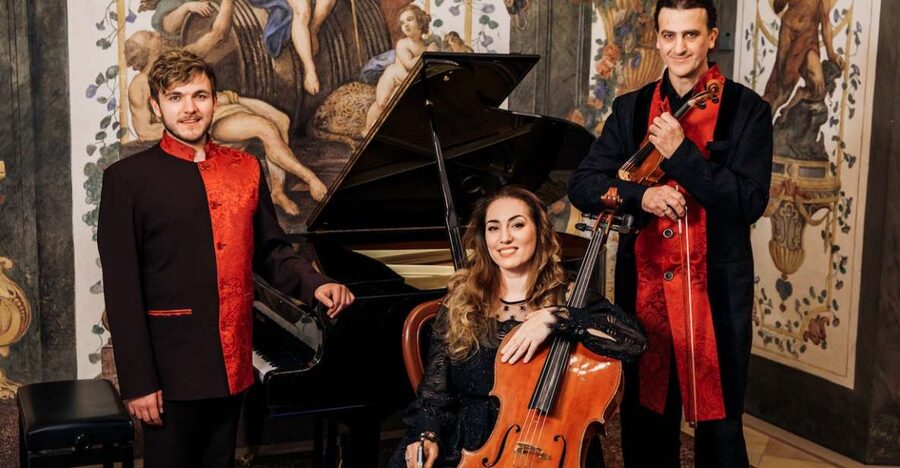
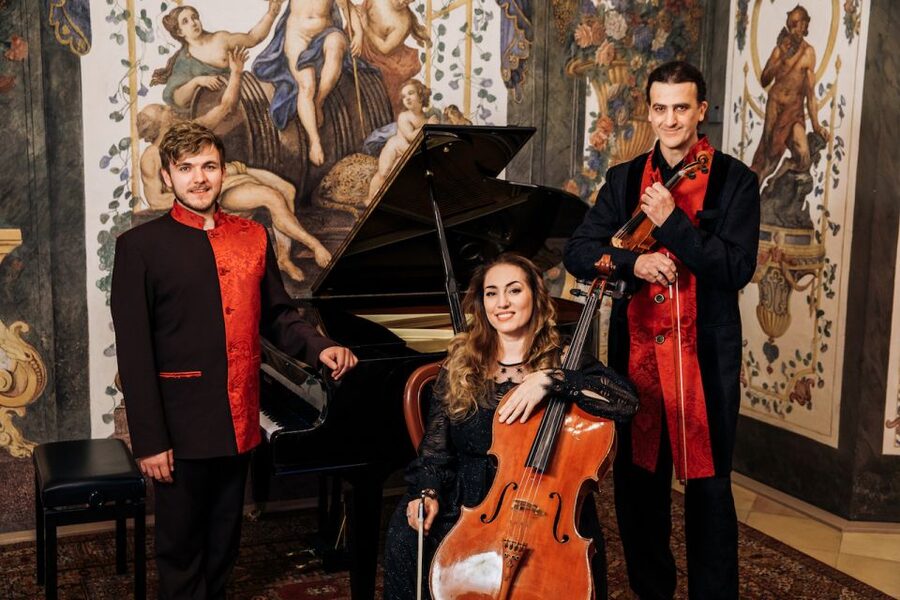
Vienna’s Sala Terrena gives this concert a setting as memorable as its music. Just 150 meters from St. Stephen’s Cathedral, the small, frescoed room puts you close to the performers, with clear acoustics that suit everything from a soft Schubert passage to a forceful Beethoven sonata.
I like the short 90-minute format, which fits neatly into an evening of sightseeing. I also like the range of ticket choices, from student and back-row seats to places close to the musicians. The main consideration is that refreshments are not included, and any drinks sold during the break may require cash.
Key points to know before booking
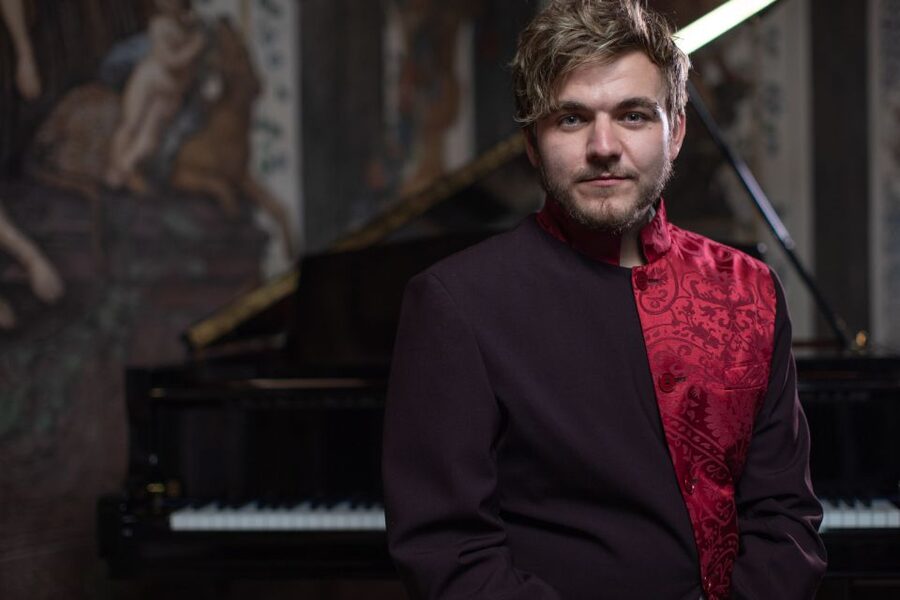
- Frescoes and close seating: The Sala Terrena offers an intimate room with expressive frescoes and a clear view of the performers.
- A broad Viennese program: You hear Beethoven, Chopin, Mozart, Liszt, Schubert, Brahms, Haydn, Bach, Paganini, Saint-Saëns, and Massenet.
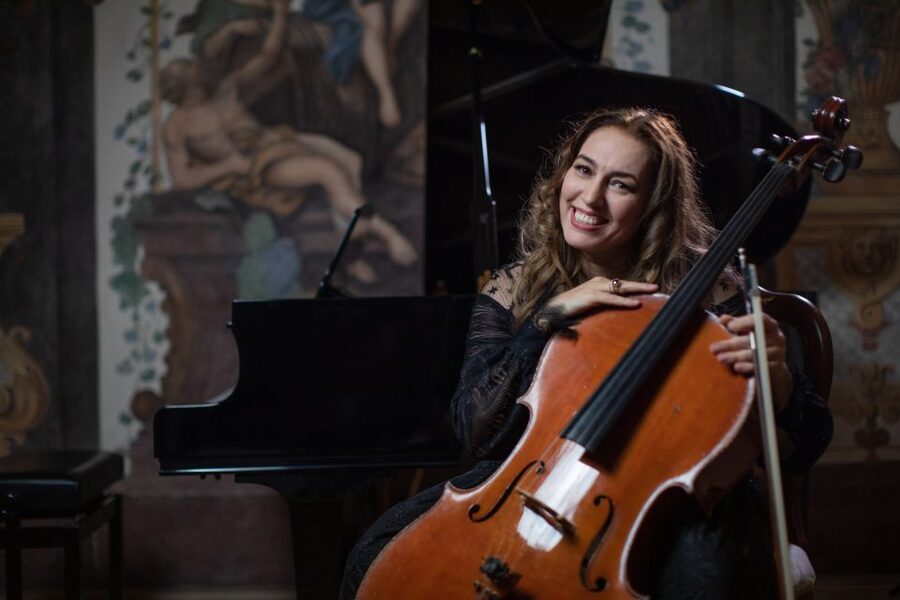
- Recognized performers: Violinist Claudio Bentes appears alongside pianist Dushan Sretovic and soloist Teodora Miteva.
- Easy central location: Enter through the Deutschordenskirche gate, near a concert poster stand and St. Stephen’s Cathedral.
- Several seating prices: Choose a student ticket, a back-row seat, or a closer position near the performers.
- Good practical flexibility: The concert is wheelchair accessible, and cancellation is free up to 24 hours before the start time.
A 90-minute concert in Vienna’s Sala Terrena
This performance is built around piano, violin, and cello, though the program gives each instrument room to speak on its own. It is called Romantic Classics, but the music reaches well beyond the Romantic era, moving from Haydn and Bach through Mozart and Beethoven to Chopin, Liszt, Schubert, Brahms, and later composers.
That mix matters. If you want only sweeping Romantic melodies, a few pieces may feel more formal or restrained than expected. If you want a compact tour through several centuries of European classical music, the variety keeps the hour and a half moving.
The concert is presented by Concerts in the Mozarthaus, with violinist Claudio Bentes named as a featured performer. Dushan Sretovic is the pianist, known for his Chopin interpretations on international stages, and Teodora Miteva is presented as an award-winning soloist with competition experience.
You should expect a polished concert rather than a guided lecture about the composers. The focus is on the playing, the room, and the music itself. English and German are available from the host or greeter, but the performance does not depend on language.
More Concerts in Vienna
- Vienna: Vivaldi’s Four Seasons Concert in Karlskirche
★ 4.7 · 14,951 reviews - Vienna: Classical Concert in the World-Famous Musikverein
★ 4.6 · 6,673 reviews - Vienna: Classical Concert at St. Stephen’s Cathedral
★ 4.1 · 4,177 reviews
Finding the entrance near St. Stephen’s Cathedral
The location is one of the easiest parts of the evening. The venue is about 150 meters from St. Stephen’s Cathedral, so you can pair the concert with dinner, an evening walk, or a look at the cathedral square without arranging transport across town.
Enter through the Deutschordenskirche gate. A poster stand for concerts at Mozarthaus helps identify the entrance, which is useful in a busy central area where several historic buildings can look alike.
Arrive 15 minutes before the start. That gives you time to find the gate, check your ticket, use the cloakroom, and settle before the first notes. Do not cut it close simply because the venue is central. Central Vienna is easy to reach, but the final entrance can still take a few minutes to identify.
The cloakroom is included. That is a small but useful detail in winter, when coats can make a compact concert seat feel even tighter.
What the frescoed room adds to the music
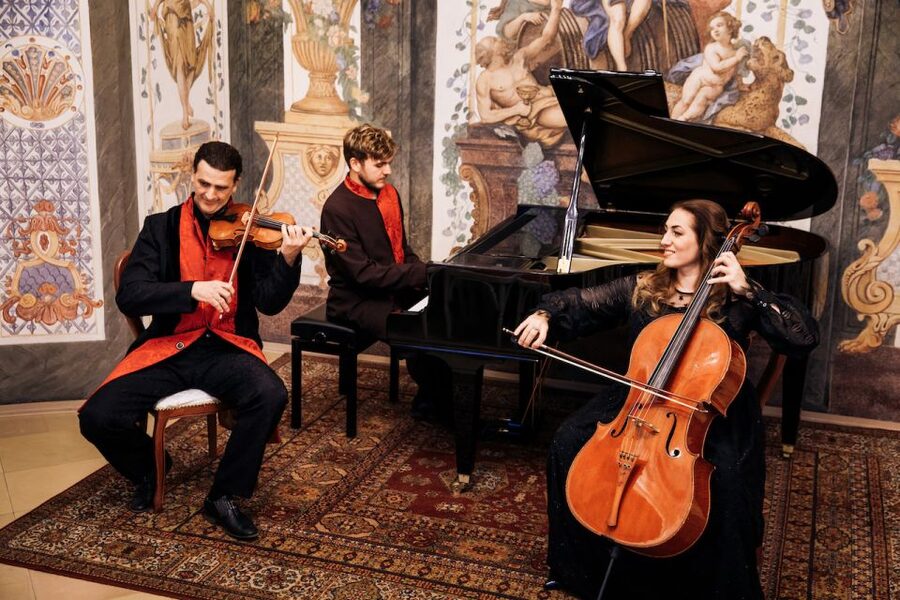
The Sala Terrena is not a large concert hall. Its smaller scale is part of the appeal. You are closer to the players, and the sound does not have to cross a vast auditorium before reaching you.
That intimacy is especially helpful with solo works. You can listen for the shape of a violin phrase, the weight of a pianist’s touch, or the changes in cello tone. The room’s frescoes add visual interest without turning the event into a sightseeing tour.
The trade-off is that a compact historic room may feel less spacious than a modern concert hall. Seating position can matter more, which makes the ticket categories worth considering. If seeing the musicians’ hands and expressions matters to you, pay extra for a closer seat. If you mainly want the music and the room, a back-row ticket may be enough.
The acoustic character has earned strong praise, with the small room allowing individual notes to remain clear. That is important for a program that shifts quickly between delicate solo pieces and fuller trio writing.
From Haydn’s Hungarian flavor to Beethoven’s power
The program opens with Joseph Haydn’s Trio all’ungarese, Hob XV:25. Its structure moves through an Andante, a Poco Adagio, and a Rondo finale, giving the concert an energetic beginning and a clear sense of movement.
Haydn’s trio is a good opener because it introduces the combined sound of the instruments before the program breaks into solo works. The finale brings a lighter, more rhythmic character, a useful contrast to the solemn Beethoven that follows.
Beethoven’s Moonlight Sonata appears in its famous Adagio movement. This is one of the best-known works on the program, but its familiarity does not make it simple. The slow pulse and repeated patterns require control, and the room’s quiet acoustic can bring out the piece’s reflective side.
You then hear Mozart’s La tartine de beurre, also known as Das Butterbrot. It is a brief, playful miniature, and its light character offers relief after the Moonlight Sonata. This is a reminder that Mozart’s music is not all grand opera and formal elegance. A small joke can fit comfortably into a serious concert.
The first major piano showpiece is Beethoven’s Sonata Op. 2, performed with an Allegro con brio character. This is much more forceful than the preceding Adagio. You can expect sharper contrasts, stronger rhythmic drive, and a more demanding display of piano technique.
A different way to spend an afternoon here:
- Vienna: Spanish Riding School Training
★ 3.9 · 9,281 reviews - Vienna: Skip-the-cashier-desk-line Giant Ferris Wheel Ride
★ 4.5 · 7,859 reviews - Vienna: Schönbrunn Palace & Gardens Skip-the-Line Tour
★ 4.7 · 7,739 reviews - Vienna: Light of Creation Votive Church Immersive Light Show
★ 4.8 · 6,779 reviews
Liszt, Chopin, and the heart of the program
Franz Liszt’s Un sospiro follows. The title suggests a sigh, and the work is known for its flowing, lyrical writing and demanding piano technique. It is a fitting bridge between Beethoven’s dramatic energy and Chopin’s more inward style.
Chopin receives two important selections. The Nocturne in C minor, Op. 48, No. 1, offers a broad emotional range, beginning with a singing quality before reaching more intense passages. It is one of those pieces where the pianist has to balance elegance with power.
The Étude Op. 10, No. 1 in C Major shifts the focus to virtuosity. Its wide-spanning arpeggios can sound effortless when played well, but the technical challenge is substantial. Hearing this piece in a smaller room lets you pay attention to precision, speed, and the control behind the apparent sweep.
Dushan Sretovic is specifically associated with Chopin interpretations, so these selections are a central reason to choose this concert. If Chopin is the composer you most want to hear, check the exact program at booking and consider a closer seat.
The word Romantic in the title makes the Chopin and Liszt works especially important, but the overall program remains varied. You get tenderness, humor, drama, and formal structure rather than one long stretch of similarly emotional music.
Bach, Paganini, Saint-Saëns, and Massenet
Johann Sebastian Bach’s Cello Suite in G Major, BWV 1007, appears with its Allegro movement. Bach’s cello suites are often valued for the way one instrument suggests harmony, rhythm, and melody at the same time. This selection changes the sound of the evening by placing the cello alone at the center.
Niccolò Paganini’s Caprice No. 13 brings the violin into the spotlight. Paganini is closely linked with violin virtuosity, and a caprice is designed to test both technique and musical control. The result should provide one of the evening’s brisker changes of pace.
Camille Saint-Saëns’ The Swan is gentler. Its smooth melodic line is immediately accessible, making it a calming pause after Paganini’s technical demands. Jules Massenet’s Thaïs Meditation continues in a lyrical direction and is likely to appeal to anyone who enjoys expressive violin melody.
These shorter works help prevent the program from becoming too heavy. You do not need to know the composers in advance to follow the changes in mood, and the familiar melodies give first-time concertgoers an easy way into the evening.
Schubert brings the concert home
The program closes with Schubert’s Trio in E-flat Major, Op. 100, Andante con moto. This is the largest closing statement in the listed program and gives the piano, violin, and cello a chance to work together again after the solo selections.
Schubert’s music can feel spacious and searching without relying on showy effects. The Andante con moto has a steady movement and a serious emotional pull, making it a thoughtful way to finish.
Ending with a trio also brings the evening back to its opening shape. You hear the three instruments together at the start and again at the end, while the middle of the concert gives each performer individual space.
Seating, sound, and the best place to sit
Three ticket types are available: student tickets, back-row tickets, and seats closer to the performers. The right choice depends less on prestige than on how you listen.
A close seat is worthwhile if you want to watch the technique, especially during Chopin, Liszt, Paganini, and the Beethoven sonata. It can also help you feel more connected to a small ensemble, where the physical interaction between players is part of the performance.
A back-row seat should work well if you mainly want the music and the decorated room. The acoustic has been praised for clarity, so you are not automatically giving up sound quality by sitting farther back.
Students should check the requirements for the student fare before booking. The ticket range makes the concert more accessible than an event with only one fixed premium price, and the $69 starting price is reasonable for a central Vienna performance with professional musicians and a 90-minute program.
Still, value depends on your priorities. You are paying for live music in a historic setting, not a full evening with dinner, drinks, or a long introduction to Vienna’s musical past. If you compare it with a major opera or symphony performance, the price may feel modest. If you compare it with a free church concert, it may feel less essential.
Breaks, drinks, and small practical matters
The supplied details include a break, though the exact timing is not specified. During that pause, refreshments may be available for cash purchase outside, but drinks are not included in the ticket.
Bring cash if you want to buy something during the break. This is one of the few clear weak points in the evening, since card-only visitors may find the arrangement inconvenient. Toilet signs can also be easy to miss, so ask the staff before the break rather than waiting until the last moment.
These are minor issues, but they matter in a 90-minute concert. A little preparation lets you focus on the music instead of searching for facilities or payment options.
Wheelchair access is available. Since the event takes place in a historic building, anyone needing detailed seating or entrance information should confirm arrangements when booking rather than rely only on the general accessibility label.
Who will enjoy this concert most
I would recommend this performance to you if you want classical music in a small, characterful room rather than a large formal hall. It suits first-time concertgoers because the program includes familiar works such as Moonlight Sonata, The Swan, Thaïs Meditation, and the Chopin Nocturne.
It also suits experienced listeners who want a compact program with several solo spotlights. The mix of Haydn, Bach, Mozart, Beethoven, Chopin, Liszt, Schubert, Brahms, Paganini, Saint-Saëns, and Massenet offers plenty of contrast.
The concert may be less suitable if you want a full-length symphony, a spoken explanation of every piece, or an evening centered only on Mozart. Despite the Mozarthaus connection, Mozart is just one part of a much wider program.
Families and mixed-age groups may appreciate the 90-minute length, though the music includes serious, quiet passages that require attention. Students get a dedicated ticket option, and the central location makes it easy to fit the concert into a day in Vienna.
Should you book the Romantic Classics concert?
I would book this if you value excellent acoustics, close seating, and a historic room more than a grand concert-hall production. The performance offers strong names, a wide program, and an easy central location for $69 per person.
Choose a closer seat if Chopin, Liszt, or instrumental technique is your main reason for going. Pick the back row if you want a sensible price and a good view of the room, and arrive early enough to handle the entrance and cloakroom without rushing.
The lack of included refreshments and the cash-only drink option are worth noting, but they do not change the main value. For a compact evening of major classical works near St. Stephen’s Cathedral, this is a practical and appealing choice.
FAQ
How long does the concert last?
The concert lasts 90 minutes.
Where is the concert held?
The concert takes place in the Sala Terrena, near the Deutschordenskirche in central Vienna.
How far is the venue from St. Stephen’s Cathedral?
The venue is 150 meters from St. Stephen’s Cathedral.
Where should I enter?
Enter through the gate at Deutschordenskirche. A poster stand for concerts at Mozarthaus is located there.
What music is performed?
The program includes works by Haydn, Beethoven, Mozart, Liszt, Chopin, Bach, Paganini, Saint-Saëns, Massenet, and Schubert. Brahms is also included among the featured composers.
Which performers are involved?
The named performers are violinist Claudio Bentes, pianist Dushan Sretovic, and soloist Teodora Miteva.
Are different ticket types available?
Yes. You can choose from student tickets, back-row tickets, and tickets closer to the performers.
Is the venue wheelchair accessible?
Yes, the activity is listed as wheelchair accessible.
Can I cancel the booking?
Yes. You can cancel up to 24 hours before the concert for a full refund. You can also reserve now and pay later.
Recently added around Vienna
- Vienna: Private tour Mauthausen and Linz★ 4.1 · 3 reviews
- 2-Day Prague Tour from Vienna with private Transfers and Lunches★ 5.0 · 3 reviews
- Vienna Self Guided Sherlock Holmes Murder Mystery Game★ 4.5 · 3 reviews
- Vienna Private Schönbrunn Palace Tour, Extra Rooms and Gardens★ 5.0 · 3 reviews
- Salzburg and Lake Region Private Day Trip from Vienna★ 5.0 · 3 reviews
- Small-group Vienna Wine Tour★ 5.0 · 3 reviews
- True Crime mobile puzzle rally Vienna★ 4.0 · 3 reviews
- Exploring the Gutenstein Alps★ 5.0 · 3 reviews
Concerts in Vienna, compared.

Vivaldi’s Four Seasons Concert in Karlskirche
Read our review →
Classical Concert in St. Anne’s Church (Annakirche)
Read our review →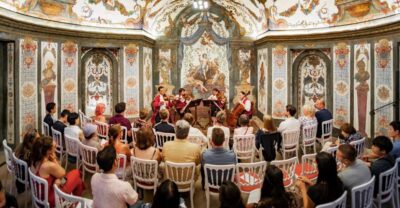
Vienna Classical Concert at St. Peter’s Church
Read our review →Classical Concert in St. Anne’s Church (Annakirche)
Read our review →Browse the lists this tour appears in