
Reviewed · CONCERTS IN VIENNA
Vienna: Vivaldi’s Four Seasons Concert in Karlskirche
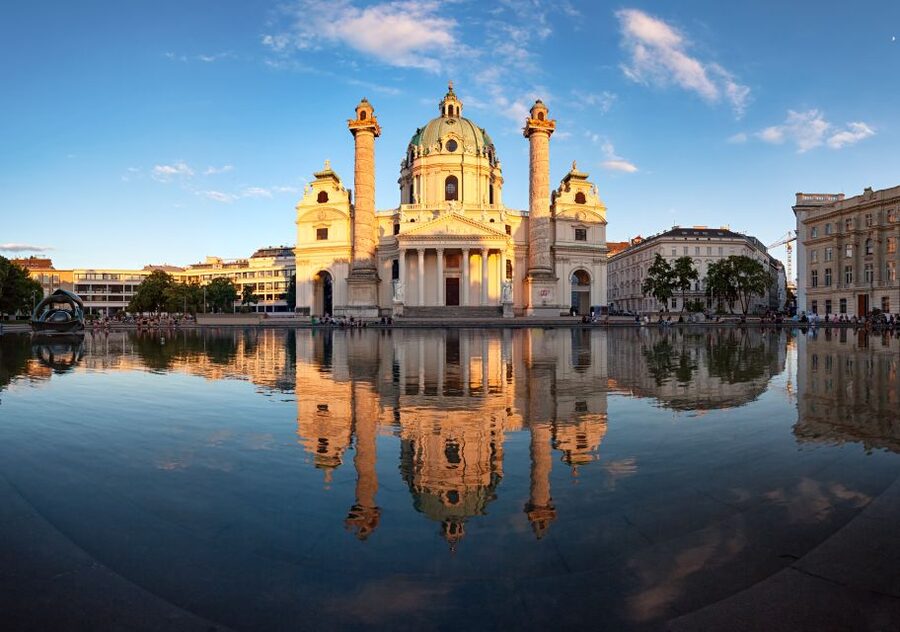
Vivaldi’s Four Seasons takes on extra force inside Karlskirche, where live strings, old-style instruments, and the church’s grand interior create a memorable evening in Vienna. I like the 75-minute length, which gives you a full concert without making hard pews or chilly air too much of a test. I also like the chance to hear Orchestra 1756 play in a period-instrument style.
The main thing to plan for is comfort. The church can be cold in winter and hot in summer, with no air conditioning. Blankets are provided, and some front seats may have heat beneath them, but you should still dress for the season. Seating can also affect how much you see and hear.
Key points to know before booking
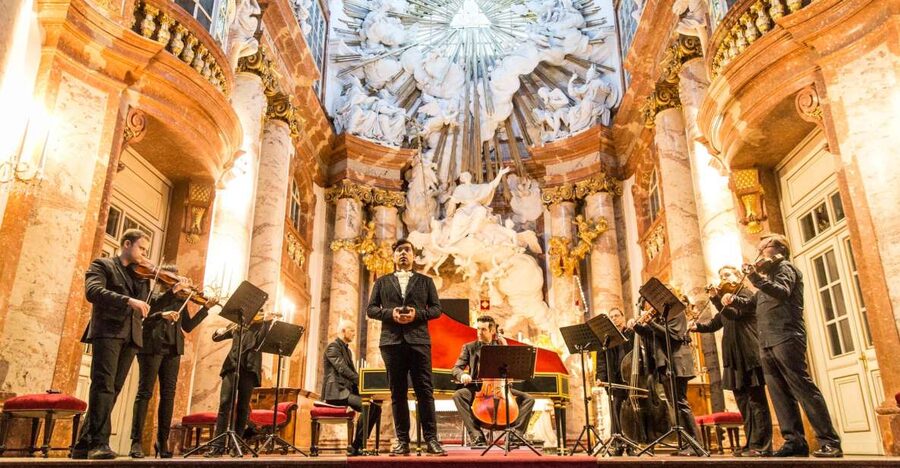
- Hear all four concertos: The program includes Spring, Summer, Autumn, and Winter from Vivaldi’s Four Seasons.
- Listen to period instruments: Orchestra 1756 brings a historical sound to the performance, with a string quartet and basso continuo at the heart of the program.
- Enjoy an exceptional setting: Karlskirche gives the concert a dramatic visual backdrop, with the music performed inside the church.
- Choose your seats carefully: Front and middle sections offer a better view, while far-back and balcony seats can feel distant.
- Dress for the temperature: Winter performances can be very cold, while summer concerts may feel hot.
- Arrive early: Doors open 30 minutes before the concert, and late entry is not permitted once the music starts.
Why Vivaldi sounds right at Karlskirche
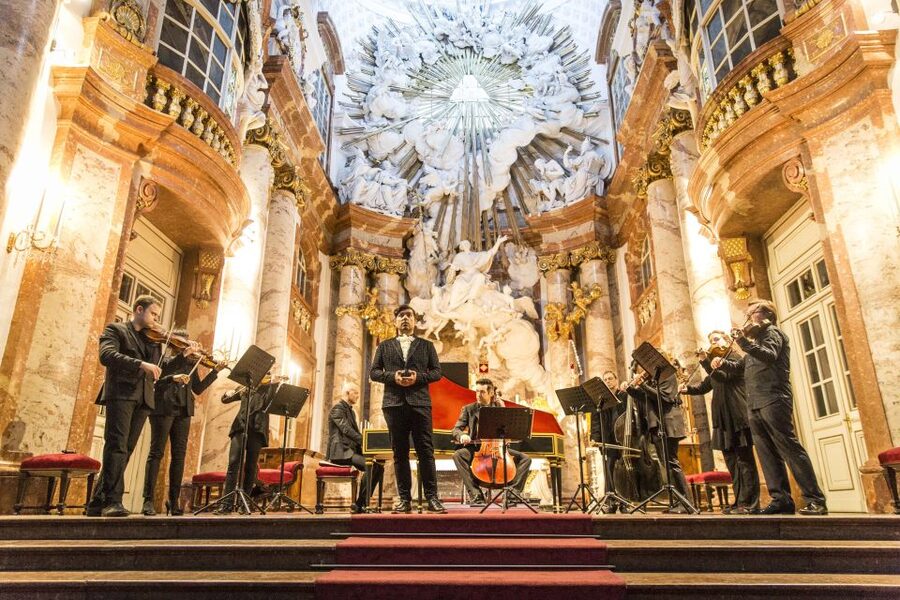
I can think of few easier ways to add classical music to a Vienna visit than this concert. You do not need to commit to a full evening at an opera house or a long symphony program. You enter one of the city’s notable churches, take your seat, and hear one of the best-known works in the classical repertory.
The centerpiece is Vivaldi’s Le quattro stagioni, or The Four Seasons. The four concertos use music to suggest scenes from nature and daily life: birdsong in spring, thunder and lightning in summer, hunting in autumn, and cracking ice in winter. These details are not just program notes. The solo violin and strings give the music its motion, tension, and flashes of color.
That makes the concert friendly to newcomers. If you know the music, you can listen for familiar passages and fresh details. If you are not a regular classical-music listener, the clear pictures in the score give you something to follow. You can hear storms gather, animals move, and seasons change without needing a lecture before the performance.
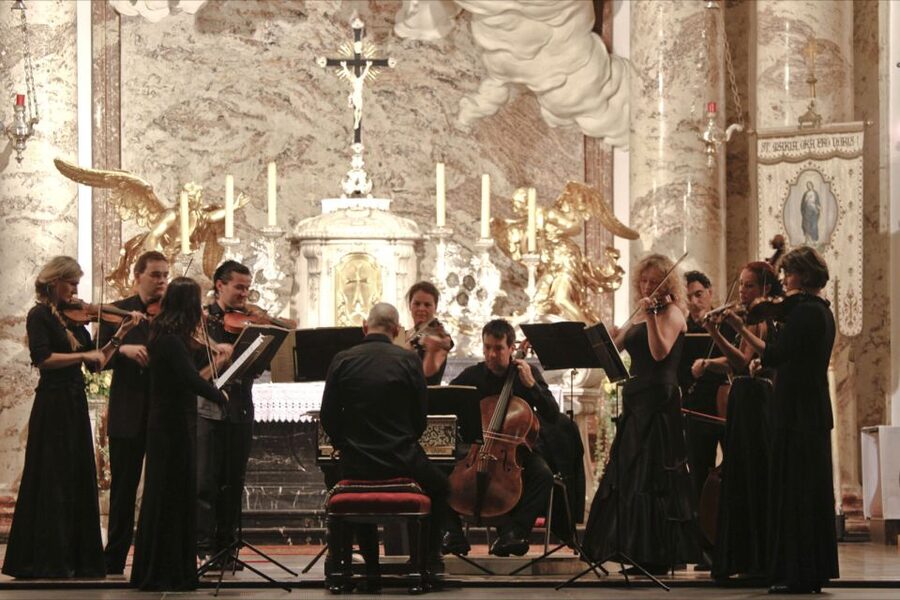
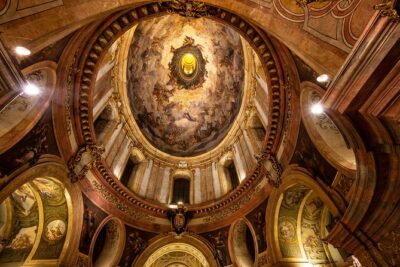
Karlskirche adds another layer. The musicians perform before the church interior and its decorative artwork, so you are watching a concert and taking in the building at the same time. It is a formal setting, but the small ensemble keeps the performance close enough to feel human, especially from the better seating areas.
More Concerts in Vienna
- Vienna: Classical Concert in the World-Famous Musikverein
★ 4.6 · 6,673 reviews - Vienna: Classical Concert at St. Stephen’s Cathedral
★ 4.1 · 4,177 reviews - Vienna: Mozart Concert at the Golden Hall
★ 4.6 · 3,986 reviews
The 75-minute concert, from arrival to final notes
The evening begins at the church, but check your booking carefully because the exact meeting point can vary by the option you select. Doors open 30 minutes before the scheduled start. I would use that time. It gives you a chance to find the entrance, pass through seating, and settle in before the room grows quiet.
There is no casual late arrival here. Once the concert starts, no entry is permitted. You also cannot leave and return during the performance, so use the restroom beforehand and keep your phone, coat, and other necessities with you.
After you are seated, the program centers on the four Vivaldi concertos:
- Spring, Op. 8 No. 1
- Summer, Op. 8 No. 2
- Autumn, Op. 8 No. 3
- Winter, Op. 8 No. 4
The exact running order of any extra music can change. One or two additional pieces may be included, with works by W. A. Mozart, J. S. Bach, H. I. F. Biber, or other major composers. That small changing element is useful if you attend more than once, but it also means you should not expect a complete fixed program beyond The Four Seasons.
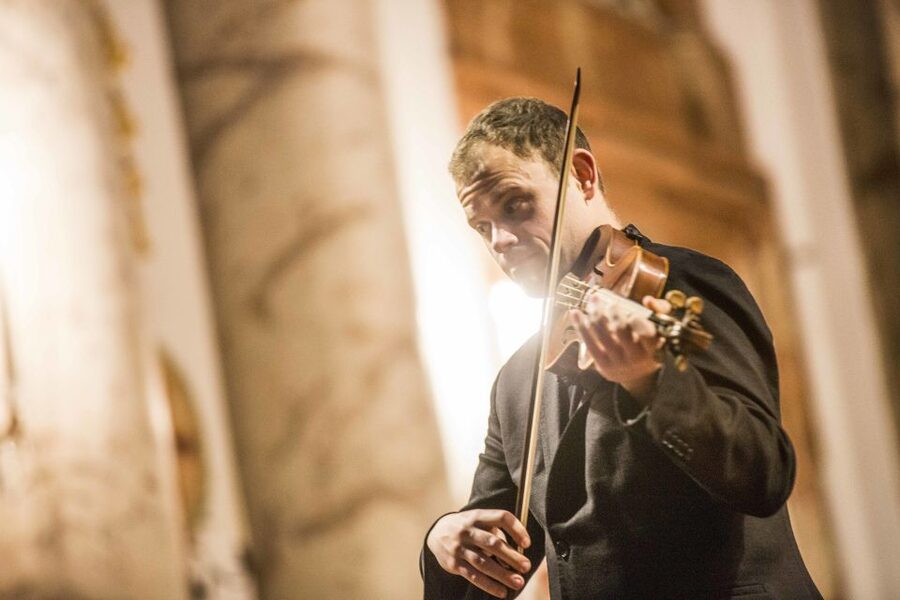
The performance is built around a small period-instrument ensemble rather than a large modern orchestra. The supplied description identifies a string quartet and basso continuo, while recent performances have also featured a nine-piece ensemble. The scale lets you watch the musicians work together. The lead violinist is especially important, taking the solo lines that give each season its voice.
At 75 minutes, the format is well judged. It is long enough to feel like a serious concert, yet short enough to fit around dinner or a late afternoon in central Vienna. The church pews can be hard, and cold air can wear you down, so a much longer program might not be an advantage here.
Orchestra 1756 and the period-instrument sound
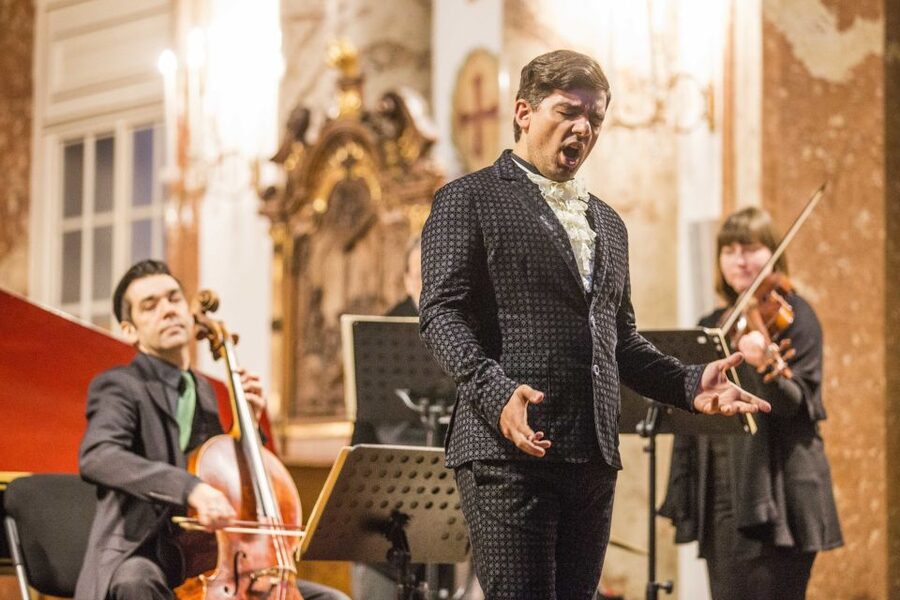
Orchestra 1756 is a classical period-instrument ensemble. That matters because the instruments and playing approach aim for a sound connected to the era in which this music was written.
You should not expect the thick, polished wall of sound produced by a large modern symphony orchestra. The period approach can feel lighter, more pointed, and more direct. The violin lines are easier to follow, and the contrasts between soft passages and sudden bursts of energy come through clearly.
The lead violinist carries much of the drama. The solo part moves between delicate phrases and fast, demanding runs, and the ensemble responds around it. From a front section, you can watch the musicians’ expressions and their visual connection with one another. That adds real value to a live performance. You are not only hearing the notes; you are seeing how the group shapes them.
Sound changes with your position. In the middle sections, you should have a good balance between the musicians and the church’s natural echo. At the far back, the music can feel more muted, and the reverberation may soften the detail. Balcony seating may offer a different acoustic experience, and it is not always open.
The lack of amplification is part of the appeal, but it also creates a tradeoff. Natural sound in a large church can be beautiful close to the ensemble and less clear from distant seats. If hearing every detail is a priority, spend more for a front or middle category if your booking option allows it.
Karlskirche is half the experience
The church is not a neutral concert hall. It is a major part of what you are paying for. The music is set against the interior architecture and the artwork around the altar, creating a backdrop that a plain performance room cannot match.
I would allow a few minutes before the concert to look around quietly. Photography is not allowed during the performance, but you can take pictures before and after. That rule may disappoint you if you want a dramatic concert image, yet it keeps the room dark and free from glowing screens once the music begins.
The setting works especially well for Vivaldi. The concert’s nature scenes feel connected to the open scale of the church, while the small ensemble keeps the sound from becoming anonymous. You get both visual grandeur and close musical contact.
The building’s conditions are also very real. In winter, the interior can be extremely cold. Blankets are placed on the chairs, and some front seats have under-seat heating, but a thin blanket will not replace a warm coat. Bring gloves or hand warmers if you are visiting in November, December, January, or February. In summer, the problem reverses: there is no air conditioning, so the church can feel hot.
Seating surfaces are another practical point. Some areas use church pews, while other sections may have chairs. Pews can become uncomfortable over 75 minutes. If you have back or mobility concerns, consider the seating information carefully before booking.
A different way to spend an afternoon here:
- Vienna: Spanish Riding School Training
★ 3.9 · 9,281 reviews - Vienna: Skip-the-cashier-desk-line Giant Ferris Wheel Ride
★ 4.5 · 7,859 reviews - Vienna: Schönbrunn Palace & Gardens Skip-the-Line Tour
★ 4.7 · 7,739 reviews - Vienna: Light of Creation Votive Church Immersive Light Show
★ 4.8 · 6,779 reviews
Seat categories can shape the evening
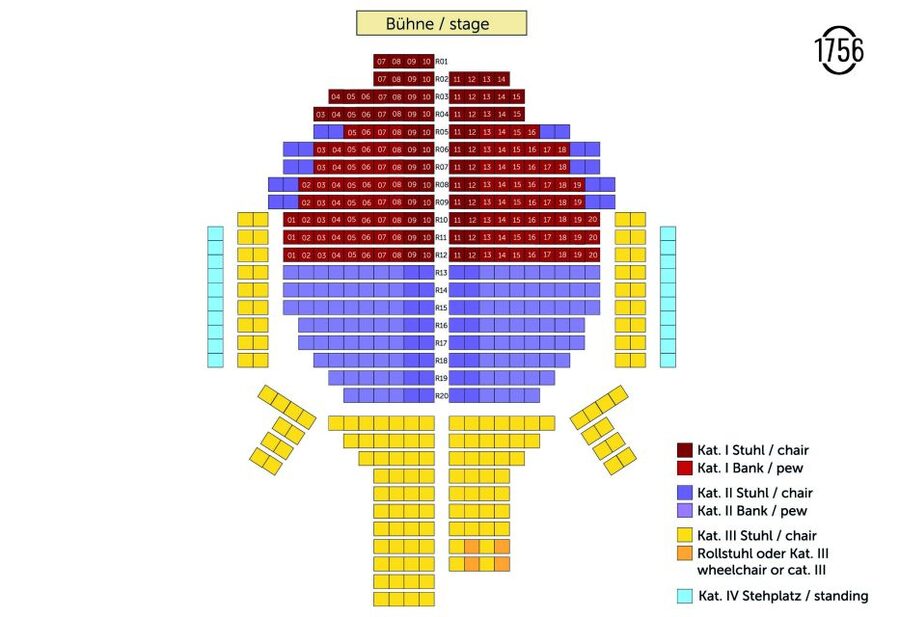
The strongest practical lesson is simple: your ticket category matters.
Front seats put you close to the lead violinist and the rest of the group. You will see the musicians’ interaction, hand movements, and facial expressions, and you are more likely to hear detail in the fast passages. Several bookings described first-row or second-row seats as especially rewarding, and early arrival can help within a selected seating area.
Middle seating is a sensible compromise. You remain close enough to see the ensemble and often get a balanced sound. It may be the best value if the price difference between categories is significant.
Category 2 or Category 3 does not necessarily mean a poor concert, but the distance can be substantial. The seating area is flat, so a tall person in front of you may block part of the view. From the rear, some listeners may find the sound less direct, with more echo and less definition.
Balcony seating is not always available, and its sound may not suit you if you want close musical detail. The balcony can still work if your priority is the atmosphere of the church rather than watching every bow stroke.
Check exactly what your selected option includes. The meeting point may vary, and seating arrangements can differ. The entrance ticket is included, but transfers, food, drinks, and cloakroom service are not.
Is $40 a fair price?
At about $40 per person, this is a reasonable splurge for a Vienna evening. You are paying for a live performance, the Karlskirche setting, and the period-instrument approach. The price compares well with the cost of many large cultural attractions, especially if you already planned to spend an evening in the city center.
The value depends heavily on your expectations. If you want a full-scale orchestra, a formal concert hall, or a long program of several composers, this is not that experience. The core program is focused, the seating can be basic, and the acoustics are not identical from one part of the church to another.
If you mainly want to hear The Four Seasons in a memorable setting, the price makes good sense. It is also a strong choice for a couple or family group with mixed musical interests because the program is familiar and the performance lasts less than 90 minutes.
I would spend extra on a better seating category if the budget allows. A small price increase can make a large difference in visibility, especially since the seats are on a flat floor and the musicians are not amplified. If you care mostly about hearing rather than seeing, middle seats may give you the best balance.
What to wear and what to leave behind
Dress as if you will spend 75 minutes in a church with uncertain temperature. In winter, wear a proper coat and consider gloves or warm hand coverings. Blankets are provided, and some seats may have heat beneath them, but do not count on the blanket alone.
In summer, choose light clothing. The church has no air conditioning, so the room may feel warm. You cannot bring food or drinks into the concert, and alcohol, drugs, smoking, and vaping are prohibited.
Large bags and luggage are not allowed. Baby strollers, pets, and cameras are also prohibited. The camera restriction applies during the performance, although pictures are allowed before and after. Bare feet are not permitted, and unaccompanied minors cannot attend.
Children under six are not admitted. The experience is also not suitable for wheelchair users, so check this point before purchasing rather than discovering it at the door.
Who will enjoy this most?
I would recommend the concert first to people who want a classic Vienna cultural evening without spending several hours at an opera or symphony. It suits first-time classical listeners because the music is recognizable and strongly visual in character.
It is also a good match for dedicated Vivaldi fans. The period instruments give you a reason to hear a familiar work in a different way, and a front seat lets you study the solo violin performance.
Art and architecture lovers will get plenty from the setting even if classical music is not their main interest. The church, altar area, and decorative interior give the evening a sense of occasion.
You should think twice if you dislike cold rooms, hard seating, strict entry rules, or natural church acoustics. You should also pay close attention to the seating map if seeing the musicians is important. The music may still reach you from the back, but the visual connection is weaker.
The experience is not suited to children under six, wheelchair users, or anyone who needs to leave and re-enter during a performance. It is also not a good pick if you want dinner and drinks as part of the event, since those are not included and are not allowed inside.
Booking advice for a smoother evening
I would book early if you want the front rows. The strongest seats can add a great deal to the experience, and early arrival helps you settle into the correct area before the performance begins.
Plan your meal before or after the concert, not inside the church. Leave large bags at your accommodation, and keep your ticket details easy to access because the meeting point may depend on the option you book.
The activity offers free cancellation up to 24 hours in advance, and you can reserve now and pay later. That is useful if your Vienna plans are still changing, but you should still check the exact conditions attached to your chosen option.
This is an evening event with a firm start time. Arrive at least 30 minutes early, especially if you need to find the entrance or want time to take pictures before the music. Once the doors close for the performance, you cannot enter late.
Should you book the Karlskirche concert?
I would book it if you want a compact, atmospheric Vienna concert built around Vivaldi’s most famous work. The combination of Karlskirche, Orchestra 1756, and period instruments gives you more than a background music recital. It feels like a proper cultural outing, yet the 75-minute format is easy to fit into a busy itinerary.
Choose front or middle seating if you want to see the musicians and hear more detail. Dress warmly in winter, accept that the pews and acoustics are not perfect, and do not expect a fixed selection of extra works each night.
For about $40, it is a solid choice for music lovers, first-time concertgoers, and anyone seeking a memorable final evening in Vienna. I would skip it only if temperature, accessibility, flat seating, or strict concert rules are likely to spoil your night.
FAQ
How long does the Karlskirche concert last?
The concert lasts 75 minutes.
Which music is performed?
The program includes Vivaldi’s The Four Seasons: Spring, Summer, Autumn, and Winter. One or two additional pieces may also be performed.
Which composers might be included in the additional program?
Additional works can come from composers such as W. A. Mozart, J. S. Bach, and H. I. F. Biber, along with other major composers. The extra selections change from week to week.
Who performs the concert?
Orchestra 1756 performs the concert. It is a classical period-instrument ensemble.
Are children allowed to attend?
Children under six years old are not admitted. Unaccompanied minors are also not permitted.
Can I take pictures during the performance?
No. Photography is not allowed while the concert is taking place. You may take pictures before and after the performance.
How early should I arrive?
Doors open 30 minutes before the concert starts. Late entry is not permitted after the performance has begun, so arriving early is important.
Is the church warm in winter?
Karlskirche can be cold in winter and hot in summer because it does not have air conditioning. Blankets are provided, and some seats may have heat beneath them, but warm clothing is still recommended in cold weather.
Recently added around Vienna
- Vienna: Private tour Mauthausen and Linz★ 4.1 · 3 reviews
- 2-Day Prague Tour from Vienna with private Transfers and Lunches★ 5.0 · 3 reviews
- Vienna Self Guided Sherlock Holmes Murder Mystery Game★ 4.5 · 3 reviews
- Vienna Private Schönbrunn Palace Tour, Extra Rooms and Gardens★ 5.0 · 3 reviews
- Salzburg and Lake Region Private Day Trip from Vienna★ 5.0 · 3 reviews
- Small-group Vienna Wine Tour★ 5.0 · 3 reviews
- True Crime mobile puzzle rally Vienna★ 4.0 · 3 reviews
- Vienna: Wachau Valley Private Kayak and Wine Tour★ 5.0 · 3 reviews
Concerts in Vienna, compared.
Classical Concert in St. Anne’s Church (Annakirche)
Read our review →
Vienna Classical Concert at St. Peter’s Church
Read our review →Classical Concert in St. Anne’s Church (Annakirche)
Read our review →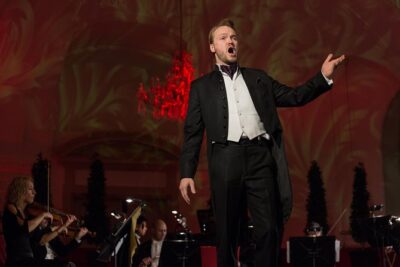
Exclusive Evening at Schönbrunn Palace: After-Hours Audiotour, Dinner, Concert
Read our review →Browse the lists this tour appears in