Reviewed · VIENNA TOURS
Vienna: Time Traveling Virtual Reality Sightseeing Tour
Vienna’s past comes alive in six short virtual reality scenes during this walking tour through the old town. You might watch an Ottoman attack, see Empress Sisi pass near the Hofburg, or witness St. Stephen’s Cathedral burning near the end of World War II. The headset gives you a 360-degree view, while the guide connects each scene to the street beneath your feet.
I like the way this tour combines a 3.2-kilometer flat walk with a clear historical storyline. I also like the multilingual audio, especially if your group needs English, Spanish, French, Italian, Dutch, or Russian. The main drawback is that the VR scenes can look rough or slightly blurry, and much of the time is spent walking and listening rather than wearing the headset.
Key points
- Six time-travel scenes: See Vienna during the 1483 White Sunday procession, the 1683 Ottoman siege, the plague years, the age of Sisi and Franz Joseph, the 1920s, and World War II.
- A walking tour with pauses: The route covers about 3.2 kilometers from Neuer Markt to the Albertina on flat ground.
- Strong guide support: Guides such as Julian and Dr. Reiner have been praised for clear explanations and fluent English and German.
- VR is memorable but not cutting-edge: The 360-degree effect is striking, though faces and details may look indistinct.
- Good first-day orientation: You hear stories, facts, and local anecdotes while visiting several central Vienna landmarks.
- Plan for weather: Heavy rain or storms can lead to a last-minute cancellation.
Starting at Neuer Markt with Vienna beneath the headset
You meet at Neuer Markt 6, where you should look for the turquoise entrance and arrive 15 minutes before departure. That early arrival matters because the guide needs to explain the VR glasses and earphones before the group sets out.
The route finishes at the Albertina, making this useful as an early introduction to central Vienna. You do not simply sit in a room watching a film. You walk through the city, pause at places tied to major events, and then use the headset to see those locations in another period.
The tour lasts about 100 minutes, though the route is also described as taking about 105 minutes. I would allow roughly two hours in your schedule, especially if you want a relaxed start or need extra time getting the equipment ready.
The live guide speaks English or German. The included audio guide adds Spanish, Dutch, French, Italian, and Russian. This setup gives you flexibility, though a bilingual group may hear explanations in two languages and move at a slower pace. If you prefer a single-language tour, check the departure language when booking.
A few more Vienna half-days to weigh up
- Vienna: Vivaldi’s Four Seasons Concert in Karlskirche
★ 4.7 · 14,951 reviews - Vienna: Spanish Riding School Training
★ 3.9 · 9,281 reviews - Vienna: Skip-the-cashier-desk-line Giant Ferris Wheel Ride
★ 4.5 · 7,859 reviews
White Sunday in 1483 at St. Stephen’s Square
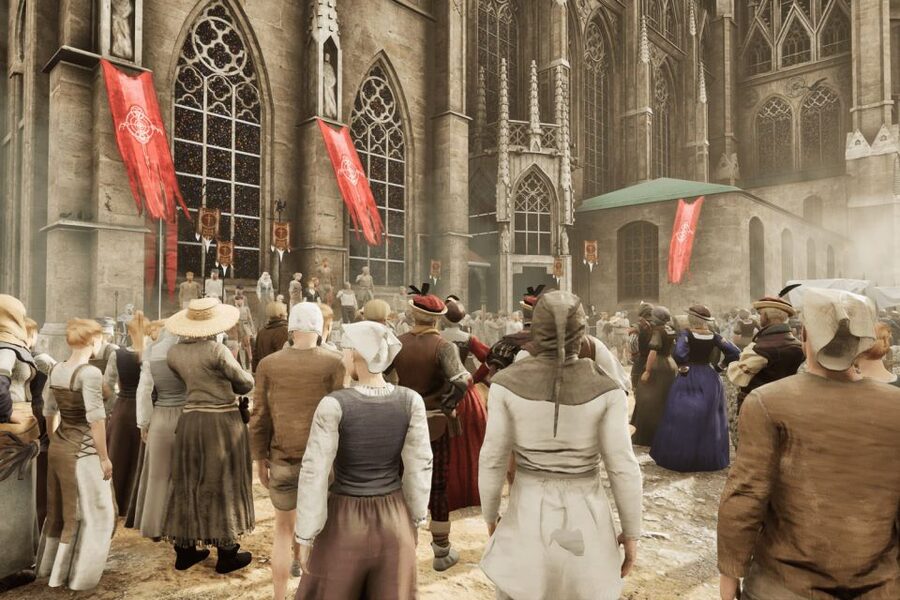
One of the first historical scenes recreates a procession on White Sunday in 1483. This was one of the rare occasions when religious ornaments were brought out for public display.
That detail helps explain why the scene matters. You are not simply looking at an old church through a headset. You are seeing a public religious event and the way medieval Vienna used ceremony, display, and shared belief to shape civic life.
The VR view is designed to give you an all-round look, so you can turn your head rather than stare at one framed image. That makes the scene feel more like an event unfolding around you. It also means you should listen carefully for the guide’s cue about where to look.
The effect works best when you connect the digital scene with the real cathedral and square around you. The technology is useful here because the old town can show you stone, streets, and façades, but it cannot show a procession from six centuries ago.
The 1683 Ottoman siege and Vienna under attack
The next major scene takes you into the second Ottoman siege of Vienna in 1683. You see the city under bombardment and get a sense of the fear and confusion that accompanied the attack.
This is a strong use of VR because warfare is difficult to explain from a quiet modern street. The headset can place you among the action, giving you a clearer idea of how the city’s defenses and residents were affected.
The scene also gives the tour a wider purpose. Vienna’s position at the meeting point of Central Europe and the Ottoman world shaped its politics, architecture, and identity. A short visual reconstruction can help you grasp that pressure faster than a list of dates.
Do not expect a modern action game. The visual quality has been described as somewhat basic, with slightly blurry images and indistinct faces. I would treat the scene as a historical aid rather than a cinema-quality production. The guide’s explanation remains important.
The plague years and the story of Augustin
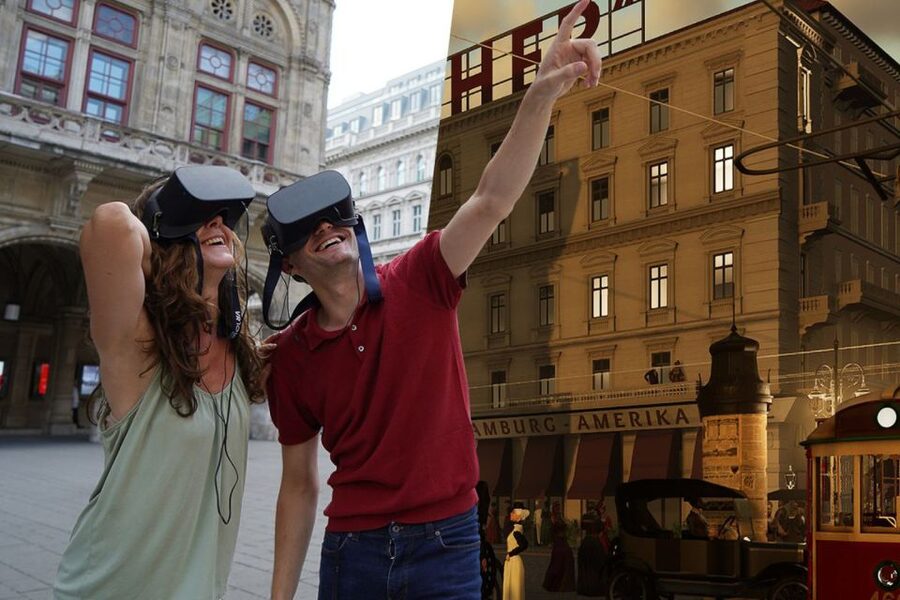
The plague scene changes the mood. You experience the darkness of an epidemic that killed a large part of Europe and hear about Augustin, a singer associated with Vienna’s ability to survive terrible times with humor and music.
This part adds a human voice to the tour. Sieges and emperors can feel distant, but a singer using music and humor during a crisis gives you a more personal way into the city’s past.
The scene is likely to appeal to anyone who prefers social history to battles and palaces. It shows how people coped, not just who ruled. The dark tone may not suit very young children, which is one reason the tour is not suitable for children under eight.
The route does not remain inside the headset for long stretches. You stop, view the scene, then continue through the old town with the audio guide. If you want a nonstop VR attraction, this is not that. If you want a walking tour with occasional visual reconstructions, the format makes sense.
A different way to spend an afternoon here:
- Vienna: Schönbrunn Palace & Gardens Skip-the-Line Tour
★ 4.7 · 7,739 reviews - Vienna: Light of Creation Votive Church Immersive Light Show
★ 4.8 · 6,779 reviews - Vienna Spanish Riding School Guided Tour
★ 4.7 · 6,765 reviews - Vienna: Classical Concert in the World-Famous Musikverein
★ 4.6 · 6,673 reviews
The Hofburg, Sisi, and Emperor Franz Joseph
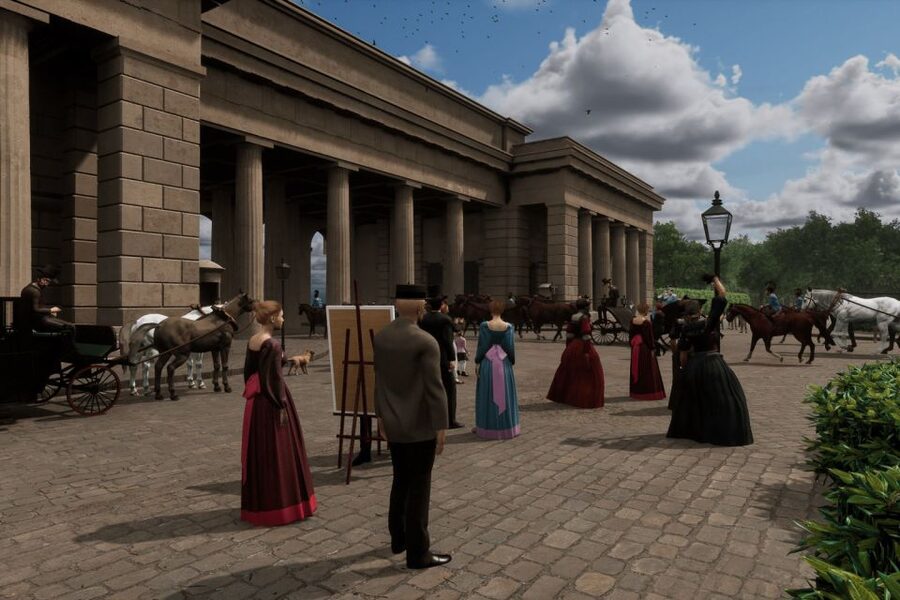
At the Hofburg, the tour shifts to a sunny day and a hunting trip involving Empress Sisi and Emperor Franz Joseph. You see them near the road, close enough for a wink.
This lighter scene gives the tour some humor after the siege and plague. It also helps you picture the imperial court as people moving through the city, rather than as portraits locked inside a palace.
The Hofburg stop is valuable because you are standing in the real center of Habsburg power while seeing a recreated moment from the imperial period. That contrast is the point: modern Vienna surrounds you, but the headset supplies the missing people, clothing, and movement.
The scene may be less powerful if you already know the Hofburg well and want a detailed account of imperial politics. The tour aims at a broad city story, not a specialist study of Sisi. Still, it gives first-time visitors a useful bridge between the palace complex and the people connected with it.
Vienna’s Opera in the golden 1920s
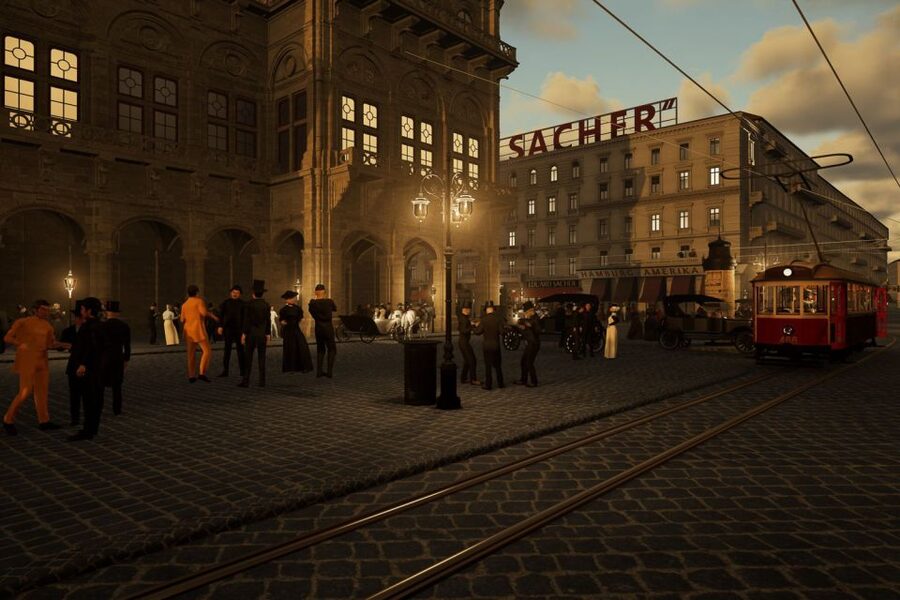
Near the Opera, you enter Vienna in the 1920s and see how people prepare for an opera performance. The scene focuses on the social world around the Opera, not just the building itself.
That choice is useful. Vienna’s musical identity is often reduced to grand halls and famous composers, but an evening at the Opera also involved dressing, meeting, and taking part in city life. The VR scene gives you a look at that social setting.
This is also where expectations matter most. One assessment found the 1920s scene less engaging because it did not show enough dancing or period evening clothing. I would not book this tour expecting every VR scene to have dense action in every direction. Some scenes offer atmosphere and context more than a detailed recreation.
The live guide helps fill in the gaps. English and German explanations give the scene a place in Vienna’s wider story, while the audio guide lets you follow along in another language.
St. Stephen’s Cathedral during World War II
The final scene takes you to St. Stephen’s Square during the last month of World War II. You see the cathedral burning and the Soviet army driving the final German soldiers from the city.
It is a stark ending, and it connects the tour’s earliest religious procession with one of the city’s most painful modern moments. The same central square appears across different centuries, allowing you to compare how war, faith, government, and daily life changed around it.
The scene is also a reminder that Vienna’s story is not only imperial glamour. The city suffered destruction and political upheaval before becoming the polished capital you see today.
This stop can have the greatest emotional weight, but the basic visual quality may limit it. If faces and details appear indistinct, concentrate on the broad movement and listen closely to the narration. The guide’s historical framing is as important as the headset image.
How the VR equipment works on a walking route
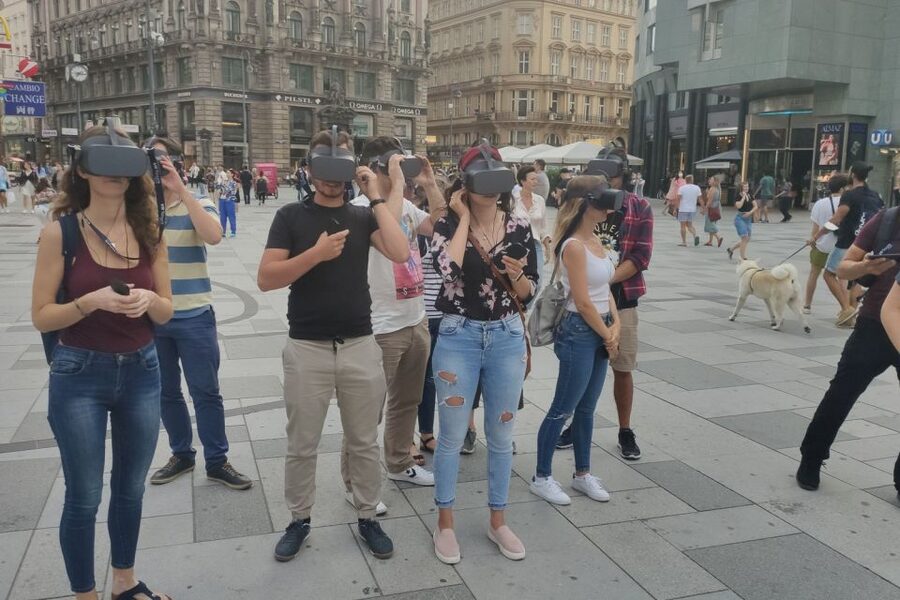
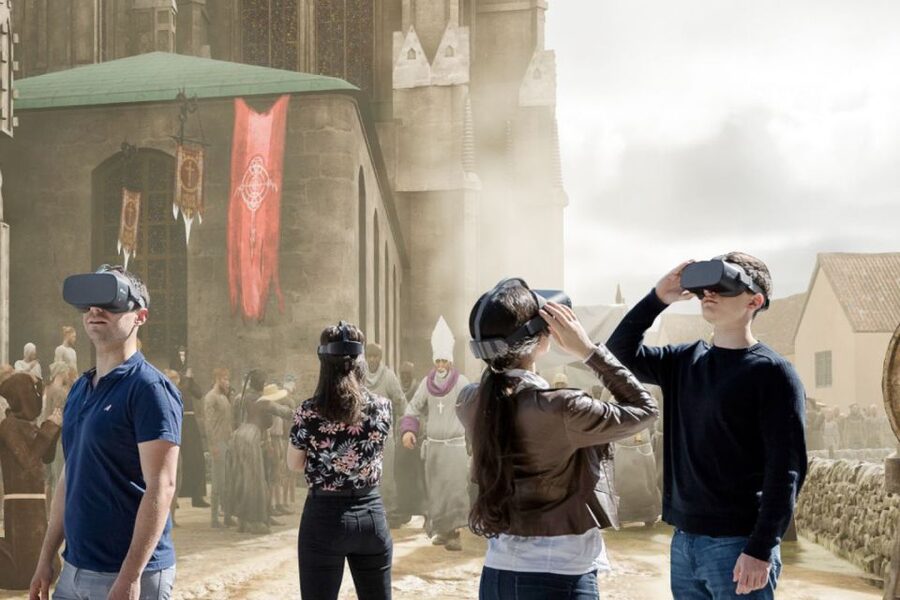
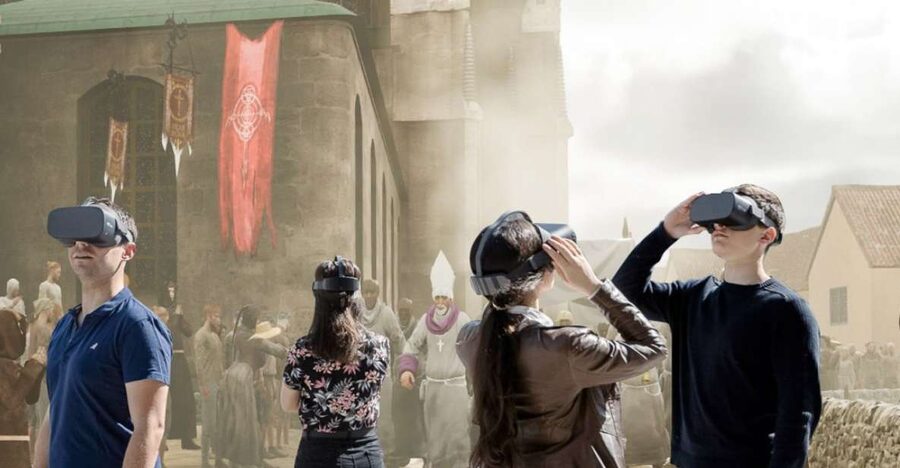
You receive virtual reality glasses and earphones for the audio guide. The guide explains how to use them before the walk begins, and the equipment is used at selected stops rather than for the entire route.
That arrangement has practical advantages. You can walk normally between locations, look at the actual streets, and then pause for a historical scene. You are less likely to become tired from wearing the headset continuously, and you still get the orientation benefits of a conventional walking tour.
The tradeoff is that the technology is not the whole experience. One portion of the tour may involve ordinary city walking while you listen to an audio presentation. I see this as a plus if you want to learn your way around Vienna, but a minus if you want a nonstop VR attraction.
The 360-degree view is the main strength. You can look around the scene rather than wait for a camera to point in the right direction. The weakness is image quality. Expect an older-generation presentation, with rougher graphics than a new gaming or museum installation.
People with epilepsy should not take this tour. The activity is wheelchair accessible, and the route is flat, but the total walking distance is still about 3.2 kilometers. Consider your own comfort with that distance before booking.
What the guides add to the experience
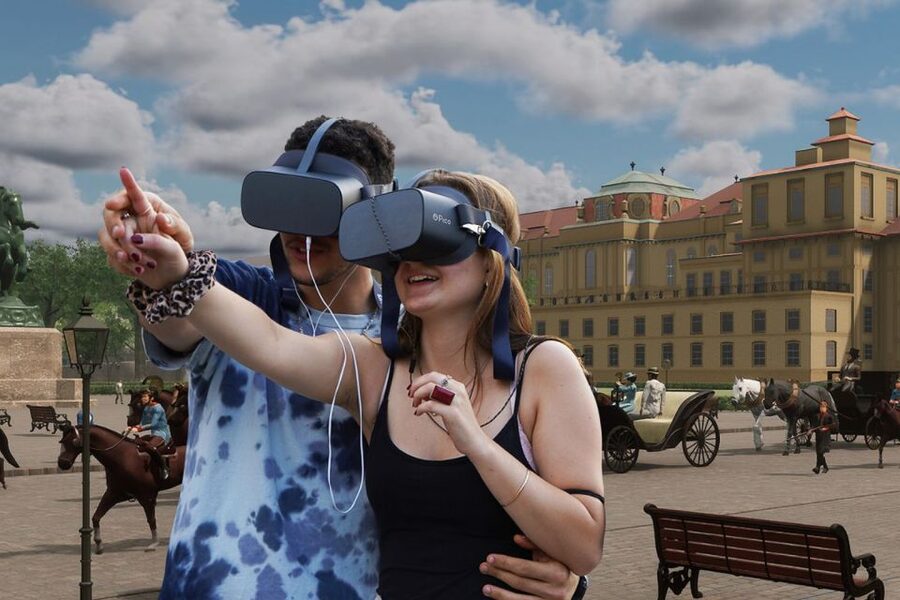
The best version of this tour depends heavily on the live guide. Julian has been singled out for fluent English and German and for helping explain both the headset and the history. Dr. Reiner has also been praised for being helpful and well informed.
That guide role is important because the VR scenes are short. Someone needs to explain what you are seeing, why the location matters, and how the event fits into Vienna’s larger story.
A bilingual departure can bring a practical issue. If English and German are mixed in one group, the guide may need to repeat information, which can make the tour feel slower. If language clarity is a priority, choose a departure that matches your preferred live-tour language when possible.
The audio guide gives you another layer of choice. You can listen in English, Spanish, Dutch, French, Italian, or Russian, while the live tour itself is offered in English or German. Bring your attention to both the narration and the street around you. The real setting is half the lesson.
Is $45 a fair price for 100 minutes?
At $45 per person, this is more expensive than a basic self-guided walk and likely more than a simple orientation stroll. You are paying for the VR equipment, the live guide, the audio system, and the historical production behind six scenes.
I think the price is reasonable if you value a structured first look at Vienna and want something beyond standard sightseeing commentary. You cover several central locations, hear a broad story of the city, and get a visual way to see events that no longer exist.
The value is weaker if you mainly want detailed history at each stop or polished, high-end VR graphics. The tour gives an overview rather than a long lecture, and some of the visual scenes may seem dated.
I would compare it with the cost of a conventional city tour, then ask what you want from the experience. For a first day in Vienna, the combination of walking, landmarks, and time travel can help you get your bearings fast. For a second or third visit, it is best suited to people who enjoy new ways of presenting familiar history.
Practical details that can shape your day
The meeting point is at Neuer Markt 6. Look for the turquoise entrance and arrive 15 minutes early. The route ends at the Albertina, so you can plan another central sight afterward without returning to the starting point.
Food and drinks are not included. Since the tour lasts about 100 to 105 minutes, you can eat before or after, but you should not expect a refreshment stop during the walk.
Rain is the main scheduling concern. Heavy rain or a storm can cause cancellation, and the decision may be made close to departure because conditions can change quickly. Keep some flexibility in your Vienna plans, especially during unsettled weather.
Free cancellation is available up to 24 hours before the start for a full refund. You can also reserve now and pay later, which helps if you are still arranging your city schedule.
Who should book this Vienna VR tour?
I would recommend it most strongly to first-time visitors, families with older children, history fans, and anyone who wants a city walk with a twist. The minimum age is eight, and people with epilepsy should not participate.
It is also a good choice if your group speaks different languages. The live guide covers English and German, while the audio guide supports six additional languages.
You should think twice if you dislike headsets, need a very quiet museum-style visit, or expect state-of-the-art graphics. The walking portion is substantial, and the VR scenes are brief. You will get the most from it if you treat the technology as a window into the past, not as the entire attraction.
Should you book it?
Book this tour if you want a lively first introduction to Vienna and like the idea of seeing old events at the exact places where they unfolded. The siege, plague, imperial, Opera, and World War II scenes give the city a clear timeline, while the walk keeps you connected to the real streets.
Skip it if your main goal is deep specialist detail or flawless modern VR. At $45, the value depends on enjoying the blend of guide, audio, walking, and headset scenes.
For many visitors, I would place it early in a Vienna stay. It gives you a useful map of the old town, introduces major turning points, and leaves you at the Albertina ready for more traditional art and history.
FAQ
Where does the Vienna VR tour start?
The tour starts at Neuer Markt 6 in Vienna. Look for the turquoise entrance.
Where does the tour finish?
The tour finishes at the Albertina.
How long does the activity last?
The stated duration is 100 minutes. The route information also gives a duration of about 105 minutes, so allow roughly 100 to 105 minutes.
How far do you walk?
The route covers about 3.2 kilometers over flat terrain.
What languages are available?
The live tour is offered in English and German. The included audio guide is available in English, Spanish, Dutch, French, Italian, and Russian.
Are the VR glasses included?
Yes. Virtual reality glasses and earphones for the audio guide are included.
What historical periods does the tour cover?
The six scenes cover Vienna in 1483, the Ottoman siege of 1683, the plague years, the period of Empress Sisi and Emperor Franz Joseph, the 1920s, and the final month of World War II.
Is the tour wheelchair accessible?
Yes, the activity is wheelchair accessible, and the route is over flat terrain.
Is the tour suitable for children?
Children under eight cannot take part.
Can bad weather cancel the tour?
Yes. Heavy rain or a storm may cause cancellation, and the decision can be made at short notice if weather conditions worsen.
Recently added around Vienna
- Vienna: Private tour Mauthausen and Linz★ 4.1 · 3 reviews
- 2-Day Prague Tour from Vienna with private Transfers and Lunches★ 5.0 · 3 reviews
- Vienna Self Guided Sherlock Holmes Murder Mystery Game★ 4.5 · 3 reviews
- Vienna Private Schönbrunn Palace Tour, Extra Rooms and Gardens★ 5.0 · 3 reviews
- Salzburg and Lake Region Private Day Trip from Vienna★ 5.0 · 3 reviews
- Small-group Vienna Wine Tour★ 5.0 · 3 reviews
- True Crime mobile puzzle rally Vienna★ 4.0 · 3 reviews
- Vienna: Wachau Valley Private Kayak and Wine Tour★ 5.0 · 3 reviews
Vienna Tours, compared.
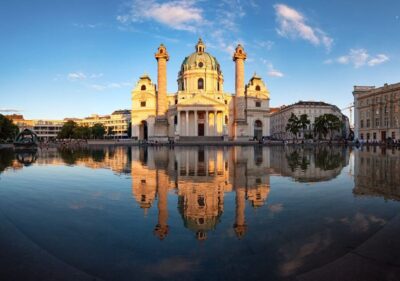
Vivaldi’s Four Seasons Concert in Karlskirche
Read our review →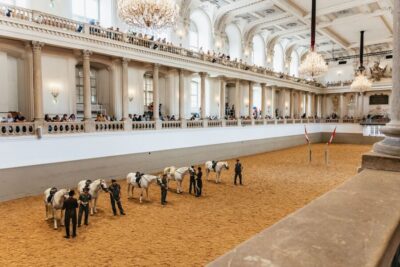
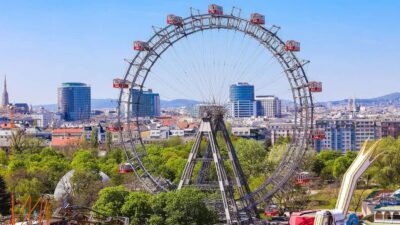
Skip-the-cashier-desk-line Giant Ferris Wheel Ride
Read our review →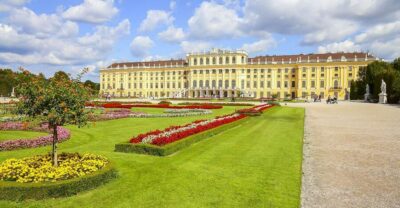
Schönbrunn Palace & Gardens Skip-the-Line Tour
Read our review →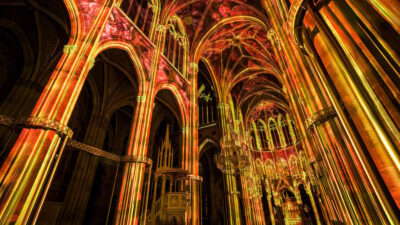
Light of Creation Votive Church Immersive Light Show
Read our review →
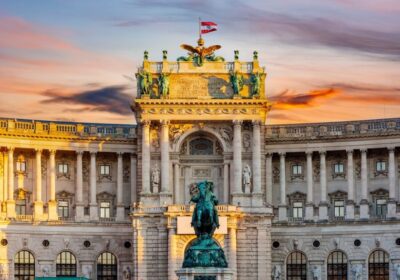
Skip-the-Line Sisi Museum, Hofburg and Gardens Tour
Read our review →