Reviewed · VIENNA TOURS
Vienna – the making of a Weltstadt – guided Citytour
Vienna becomes easier to understand when you connect its buildings to the people and events behind them. This two-hour walk moves from Roman beginnings through the Hofburg, the city’s musical heritage, and St. Stephen’s Cathedral, with guide Christian Grausam linking each stop into one clear story.
I like the route for two reasons: it covers Vienna’s major central sights without trying to enter every museum, and it explains why places such as the Hofburg and St. Stephen’s Cathedral matter. I also like the practical advice built into the walk, including suggestions for what to do next.
The main consideration is language. The tour is conducted in German, and its walking route includes busy streets, uneven city-center surfaces, and plenty of standing. It is not suitable for people with mobility impairments, and large bags or luggage are not allowed.
Key points at a glance
- Two thousand years in two hours: Follow Vienna from a small Roman fort to a major Central European capital.
- The Hofburg explained: Learn why Vienna developed as a residential city of rulers, courts, and ceremony.
- St. Stephen’s Cathedral at the finish: Reach the city’s geographical and emotional center.
- Music woven into the route: Connect Mozart, Beethoven, and Haydn to Vienna’s cultural identity.
- Major sights and quieter corners: See the Hofburg, Heldenplatz, Albertina, Capuchin Crypt, Franziskanerplatz, and Domgasse.
- A German-language local guide: Christian Grausam leads the walk, with background stories and suggestions for later activities.
A city walk built around connections
Many city tours give you a chain of dates and names, then leave you to work out why they matter. This experience takes a more useful approach. It asks you to look at Vienna as a city shaped by layers: Roman military beginnings, medieval growth, imperial power, music, art, and the modern capital you see today.
That makes the tour a good first activity in Vienna. You get a broad map of the center, but you also learn how the main sights fit together. Afterward, you can decide which palace, church, museum, or neighborhood deserves more of your time.
The two-hour length is sensible. You will not see the inside of every important building, but you will cover a lot of ground without giving up half a day. Expect a steady walking tour rather than a relaxed café stop or a museum visit.
The guide is a certified local tourist guide, and the experience is conducted in German. Christian Grausam’s approach, based on the available tour information and recent feedback, focuses on linking historical periods to the buildings around you. That is important in Vienna, where a grand façade can hide several centuries of change.
A few more Vienna half-days to weigh up
- Vienna: Vivaldi’s Four Seasons Concert in Karlskirche
★ 4.7 · 14,951 reviews - Vienna: Spanish Riding School Training
★ 3.9 · 9,281 reviews - Vienna: Skip-the-cashier-desk-line Giant Ferris Wheel Ride
★ 4.5 · 7,859 reviews
Starting near Schottenkirche and Freyung
Depending on the option booked, the meeting point may be Freyung. From there, the route includes Schottenkirche, Freyung, and Am Hof, three useful places for getting a feel for central Vienna beyond the postcard views.
Freyung is one of the city’s notable squares, and Schottenkirche brings the story into a religious and architectural setting. Am Hof adds another layer of central Vienna, where public life, faith, and government have shared the same compact area.
This beginning helps set the tone. You are not simply being led toward the Hofburg by the shortest route. You are being shown how Vienna’s old center grew around institutions and open spaces.
Check the precise meeting point on your booking confirmation. Since the starting place can vary by option, arriving 10 minutes early is a wise move. The tour runs in rain or sunshine, so wear shoes that can handle a full two hours outdoors and bring weather protection when needed.
Kohlmarkt, Michaelerplatz, and the imperial approach
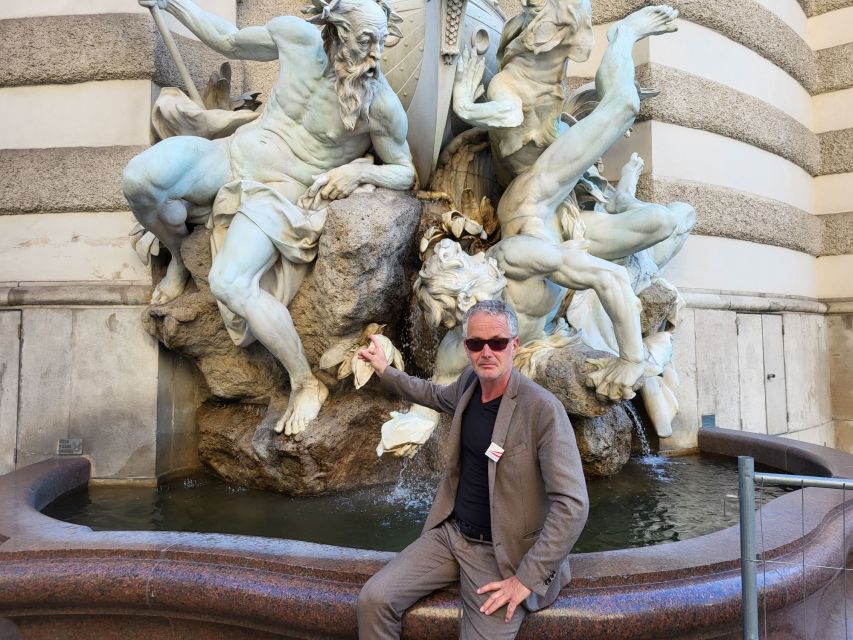
The route continues through Kohlmarkt and Michaelerplatz toward the Hofburg. This is where Vienna’s polished imperial image becomes hard to miss, but the value of the tour is in understanding what that image represents.
The walk treats the Hofburg not as a single palace, but as evidence of Vienna’s long role as a residential city. Rulers, court officials, servants, artists, and political institutions all helped shape the center. The buildings are easier to read once you understand that Vienna was not only a place where emperors visited. It was where the Habsburg court lived and worked.
Michaelerplatz is a useful place to pause because several periods meet around one public space. You might find yourself looking from historic façades toward the imperial complex, while the guide explains how Vienna expanded and changed over time.
Kohlmarkt also shows how the center functions today. It is a busy shopping street, but on this tour it becomes part of the city’s historical route rather than just a passage between attractions. That mix of daily life and imperial architecture is one of Vienna’s most interesting features.
The Hofburg and Heldenplatz
The Hofburg is the tour’s central lesson in power. You will hear about the importance of Vienna as a residence city and follow the footsteps of rulers from Charles V to Emperor Franz Joseph and Elisabeth.
That human element matters. A palace can feel distant when you only see its grand entrances. Stories about the people who lived within this world give the courtyards, wings, and ceremonial spaces a clearer purpose. You begin to understand why Vienna has such a strong connection to court life, protocol, and public display.
From the Hofburg, the route reaches Heldenplatz. The square gives you a broad view of imperial ambition and the scale of the city’s political center. It is also a good place to consider how Vienna presented itself to the world during the 19th century, when it became one of Central Europe’s leading metropolises.
The walk does not appear to include interior admission to the Hofburg. That keeps the price low and the pace moving, but you should know what you are buying: an outdoor historical explanation, not a palace museum visit. If you want the imperial apartments or collections afterward, this tour helps you choose them with more context.
A different way to spend an afternoon here:
- Vienna: Schönbrunn Palace & Gardens Skip-the-Line Tour
★ 4.7 · 7,739 reviews - Vienna: Light of Creation Votive Church Immersive Light Show
★ 4.8 · 6,779 reviews - Vienna Spanish Riding School Guided Tour
★ 4.7 · 6,765 reviews - Vienna: Classical Concert in the World-Famous Musikverein
★ 4.6 · 6,673 reviews
Burggarten, Josefsplatz, and the city’s cultural side
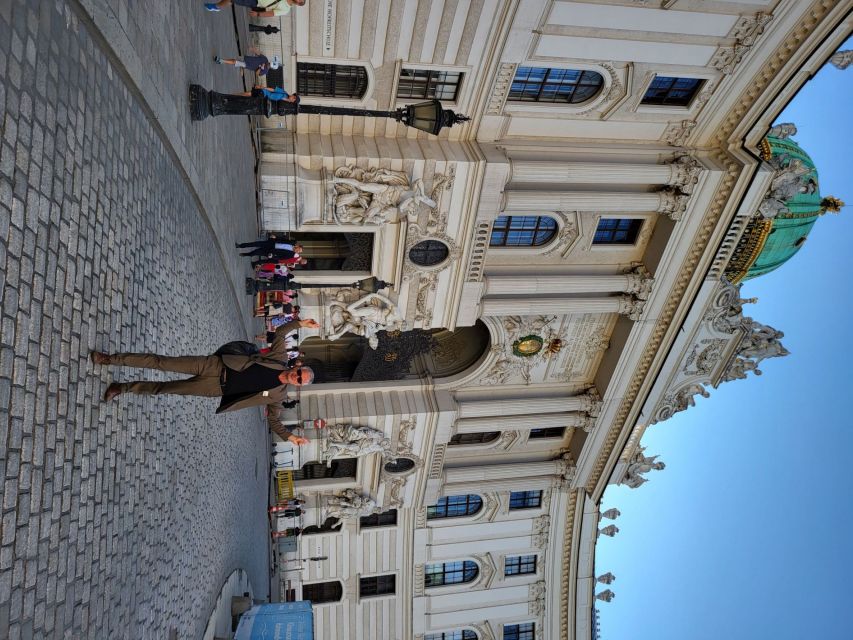
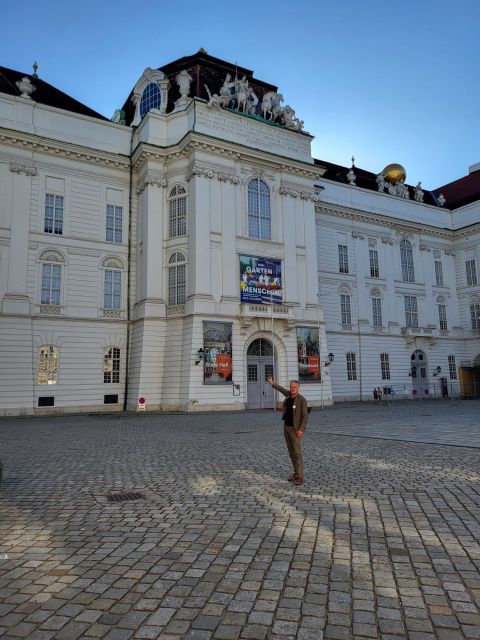
The route then passes Burggarten, Josefsplatz, and the Albertina. These stops shift the focus from government and monarchy toward art, public culture, and Vienna’s modern identity.
Vienna is often sold through its imperial buildings, but music and art are just as central to the city’s character. The tour places Mozart and Beethoven within Vienna’s story, showing how the city attracted and supported major creative figures.
Josefsplatz adds another formal imperial setting, while the Albertina points toward Vienna’s art collections. Again, the tour is not a substitute for spending hours inside a museum. Its value is that you learn how these places fit into the larger city before deciding where to return.
This part of the route should appeal to anyone who wants more than a list of palace names. The guide connects architecture with the city’s cultural life, including the role of music in Vienna’s reputation. You also hear about Josef Haydn and a melody he composed that is important in Germany today, a small but memorable link between Vienna’s musical past and the wider German-speaking world.
The Capuchin Crypt and the human side of empire
The Capuchin Crypt adds a quieter, more personal note to the walk. It is associated with the burial place of members of the Habsburg family, including the rulers whose power shaped Vienna for centuries.
Even if the tour does not include entry, the stop helps you see the imperial story in human terms. Rulers are not only names on monuments. They were members of families, and their memory remains part of the city’s public identity.
The Capuchin Crypt can be an especially useful stop for deciding how to spend the rest of your day. If the history of the Habsburgs catches your attention, you may want to return for a separate visit. If not, you will still have gained a clear sense of how closely monarchy and Vienna’s center remain linked.
Since the walk includes many outdoor stops and explanations, listen for the guide’s recommendations about later activities. Recent feedback specifically highlights the useful suggestions for what to do next, which can save you from choosing attractions at random.
Franziskanerplatz, Domgasse, and Mozart’s Vienna
The route turns toward Franziskanerplatz and Domgasse before reaching St. Stephen’s Cathedral. This section gives the tour a more intimate feel after the grand scale of the Hofburg and Heldenplatz.
Domgasse is tied to Mozart’s time in Vienna. The tour uses places such as this to show that the city’s music story was lived in ordinary streets, not only in concert halls and monuments. Mozart and Beethoven worked in Vienna, and their presence remains part of how the city explains itself.
Franziskanerplatz offers another change of mood. Smaller squares and side streets can show you a version of the center that is easier to miss when you stay on the main ceremonial route. The experience promises both busy places and less obvious ones, and this part of the walk is where that contrast becomes most useful.
Do not expect a full music-history lecture or a concert. The strength here is the connection between location and biography. You hear enough to understand why Vienna became known as a center of art and music, then you can explore the subject further on your own.
St. Stephen’s Cathedral, the natural finish
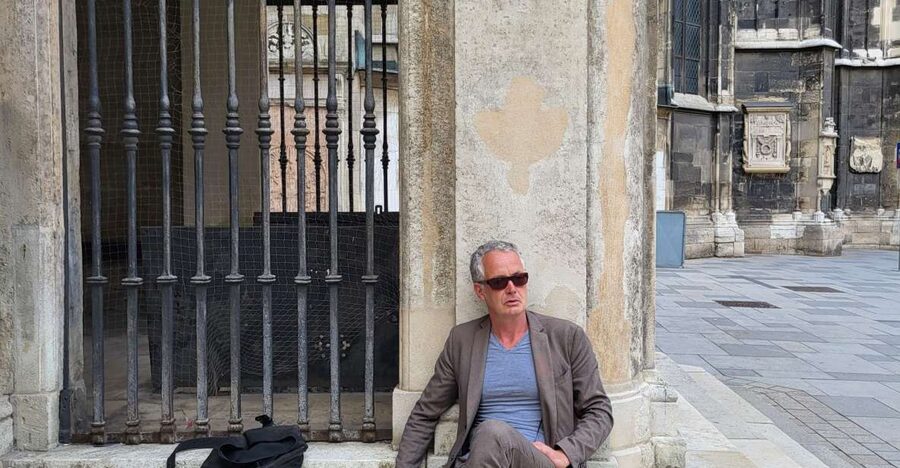
The walk ends at St. Stephen’s Cathedral, the geographical and emotional center of Vienna. It is a fitting finish because the cathedral brings together the city’s religious, civic, and visual identity.
After the earlier stops, you can look at St. Stephen’s with a better sense of the city around it. Vienna’s story is not only about palaces on the edge of the old center. The cathedral anchors the historic core, and the streets around it show how the city functions as both a historic capital and a living urban center.
The itinerary does not promise interior admission, so plan on seeing the cathedral from the outside unless your booking details say otherwise. That is not necessarily a weakness. A guided walk can give you the context you need, while a separate visit lets you take your time inside.
Finishing here also makes the tour practical. You are left near one of Vienna’s main central reference points, with a better idea of where you are and what you want to see next.
What the $35 price buys you
At $35 per person, the tour is priced as a reasonably accessible orientation walk. You are paying for two hours with a certified local guide, not for transportation, museum tickets, or a meal.
I see the value in the storytelling. Vienna’s center contains so many grand buildings that it is easy to spend a day admiring façades without understanding the forces behind them. A guide who connects Roman beginnings, imperial residence, music, art, and modern Vienna can save you time and make later sightseeing more rewarding.
The price is strongest for first-time visitors who want a framework. It is also useful if you have only a short stay and need to see several major places in one outing.
The value is less clear if you want interior visits, a small specialist group, or a tour in English. The supplied information confirms German as the tour language, and no museum or palace entry is included. Read the option details carefully so you know where to meet and what is covered.
Who should book this walk?
I would recommend it to you if you want a historical overview before visiting Vienna’s museums and palaces. It suits adults and older children who can keep walking for two hours and follow a German-language explanation outdoors.
It is especially helpful for anyone who feels overwhelmed by Vienna’s imperial scale. The tour gives you a sequence: Roman fort, medieval city, Habsburg residence, 19th-century metropolis, music center, and present-day capital.
You may prefer another experience if you need step-free access, cannot walk steadily for two hours, or want an English-language guide. Large luggage and bags are not allowed, so this is not a good activity to schedule while moving between hotels or stations.
The tour takes place rain or shine. Arrive 10 minutes early, leave large bags behind, and dress for the forecast. Those small preparations matter more here than they would on an indoor museum visit.
Should you book the Vienna city tour?
Book it if you want Vienna to make sense, not just look impressive. The route covers the Hofburg, Heldenplatz, Albertina, Capuchin Crypt, Domgasse, and St. Stephen’s Cathedral, while giving equal attention to Roman beginnings, rulers, music, architecture, and daily city life.
At $35, it is a fair buy for a German-speaking visitor who wants a strong first orientation and useful ideas for the rest of the day. Christian Grausam’s clear, lively style is particularly suited to connecting historical periods with the buildings around you.
Skip it if you need English, interior access, or an accessible route. For the right audience, though, this is a focused way to meet Vienna through its streets and understand why the city became one of Central Europe’s great capitals.
FAQ
How long does the Vienna city tour last?
The tour lasts two hours.
What language is the tour conducted in?
The live guided tour is conducted in German.
Who guides the tour?
The experience is led by a local certified tourist guide. Christian Grausam is identified as the experience provider and guide.
Where does the tour meet?
The meeting point can vary depending on the option booked. Freyung is listed as a meeting point for one option, so check your booking details before setting out.
Is the tour suitable for people with mobility impairments?
No. The tour is not suitable for people with mobility impairments.
Can I bring luggage or a large bag?
No. Luggage and large bags are not allowed on the tour.
Recently added around Vienna
- Vienna: Private tour Mauthausen and Linz★ 4.1 · 3 reviews
- 2-Day Prague Tour from Vienna with private Transfers and Lunches★ 5.0 · 3 reviews
- Vienna Self Guided Sherlock Holmes Murder Mystery Game★ 4.5 · 3 reviews
- Vienna Private Schönbrunn Palace Tour, Extra Rooms and Gardens★ 5.0 · 3 reviews
- Salzburg and Lake Region Private Day Trip from Vienna★ 5.0 · 3 reviews
- Small-group Vienna Wine Tour★ 5.0 · 3 reviews
- True Crime mobile puzzle rally Vienna★ 4.0 · 3 reviews
- Exploring the Gutenstein Alps★ 5.0 · 3 reviews
Vienna Tours, compared.
Vivaldi’s Four Seasons Concert in Karlskirche
Read our review →
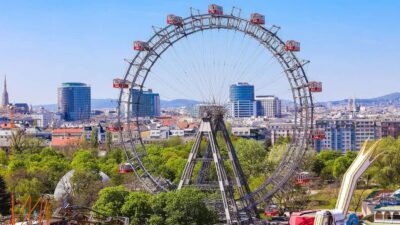
Skip-the-cashier-desk-line Giant Ferris Wheel Ride
Read our review →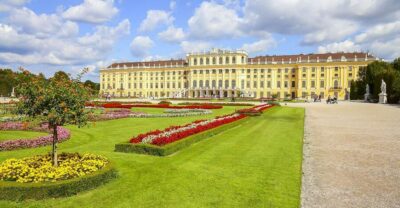
Schönbrunn Palace & Gardens Skip-the-Line Tour
Read our review →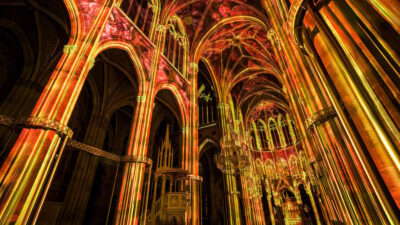
Light of Creation Votive Church Immersive Light Show
Read our review →
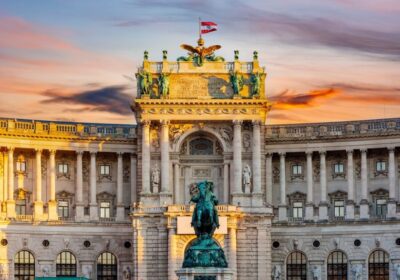
Skip-the-Line Sisi Museum, Hofburg and Gardens Tour
Read our review →