
Reviewed · VIENNA TOURS
Vienna: Sightseeing Tour in a 1920s Classic Style Car
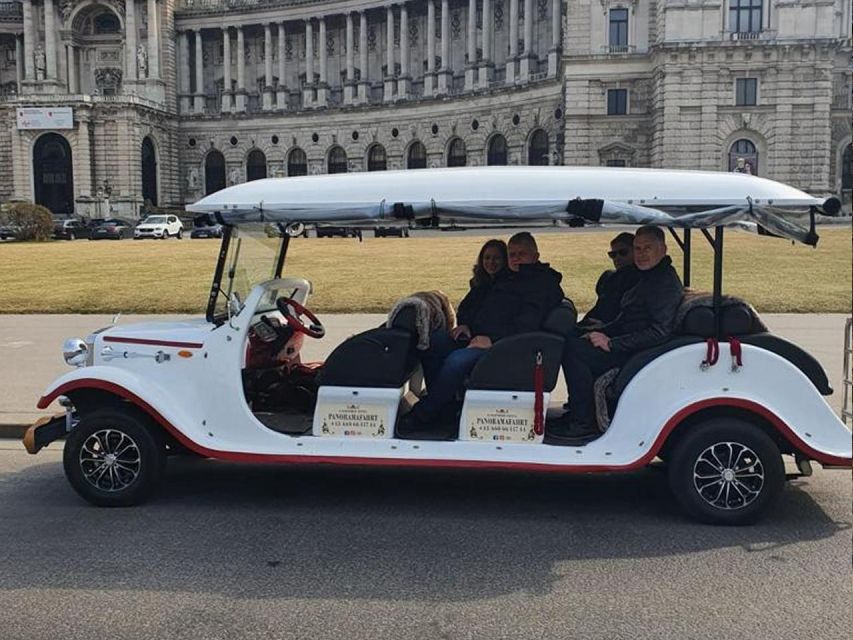
Vienna’s grand center is made for a slow look, and this electric 1920s-style classic car gives you one without asking your feet to do all the work. In an hour, you circle the Ringstrasse, Hofburg, St. Stephen’s Cathedral, Stadtpark, and a long list of palaces, monuments, cafés, and hotels.
I like two things right away: your group gets the whole car, with room for up to 10 people, and the driver supplies live commentary in English or German. The route also works in any weather, a useful advantage in Vienna, where a sunny morning can turn damp by lunch.
The main limitation is time. Sixty minutes lets you see a great deal, but mostly from the car. This is a city overview, not a stop-and-explore tour, and the departure information gives two different meeting points, so confirm the exact address before setting out.
Key points to know before booking
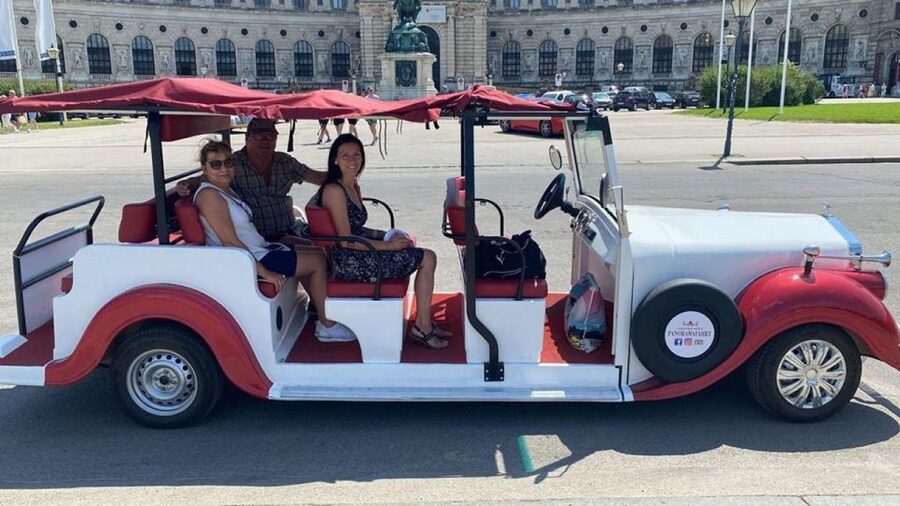
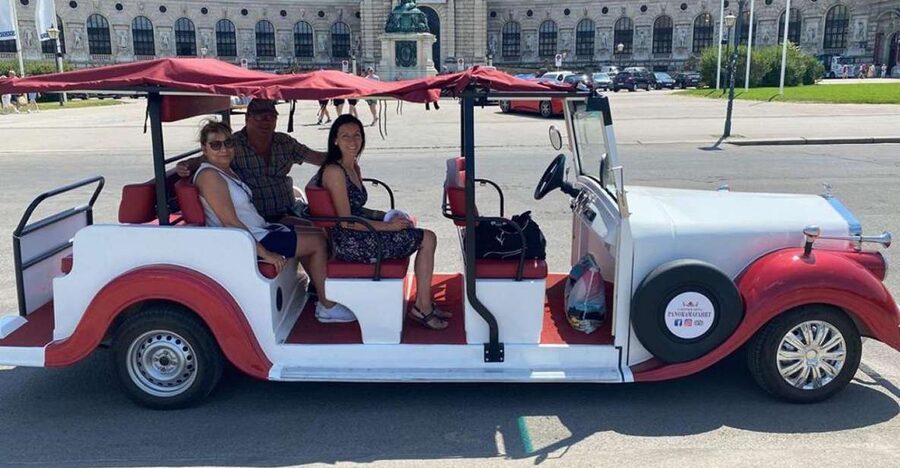
- A private electric old-timer for up to 10 people: The $282 rate covers the group, not each passenger, making the cost far more sensible when shared.
- A full central Vienna circuit in 60 minutes: You pass the Ringstrasse, Hofburg, Stephansdom, museums, monuments, and grand hotels.
- Live commentary from the driver: English and German are offered, with the style depending on the person at the wheel. Manuel has been singled out for his cheerful, entertaining approach.
- Good for mixed-age groups: You can see major sights without a long walking route, while keeping the outing together.
- Sightseeing in any weather: The car provides a relaxed way to tour when rain or cold makes a long walk less appealing.
- Drive-by sightseeing, not admission-based sightseeing: Entry fees are not included, and the hour is built around viewing places from the road.
Why this classic car works for a first look at Vienna
Vienna can feel like several cities packed into one center. Imperial palaces, nineteenth-century museums, composers’ memorials, coffeehouses, and modern traffic all share the same few central streets. A walking tour gives you more detail, but it also demands more time and energy.
This ride gives you the broad picture quickly. The old-timer style adds a little ceremony to the outing, while the electric motor keeps the trip quiet and emission-free. You are not being hauled around in an ordinary sightseeing bus. You are in a small private vehicle that fits the character of the old city better.
The private format matters most for families and groups of friends. Up to 10 people can stay together, rather than splitting into several taxis or trying to keep a large group moving down crowded pavements. You can also hear the driver more easily than you might on a large open vehicle, although the quality of the commentary naturally depends on the guide.
The strongest praise has focused on the drivers. Manuel is specifically remembered for mixing historical background with humor and good energy. Another birthday outing became especially personal when the driver learned about the birthday, played Happy Birthday near the end, and encouraged everyone to sing along. That sort of small gesture is not a scheduled feature, but it shows how the private format can feel less stiff than a standard route with a script.
A few more Vienna half-days to weigh up
- Vienna: Vivaldi’s Four Seasons Concert in Karlskirche
★ 4.7 · 14,951 reviews - Vienna: Spanish Riding School Training
★ 3.9 · 9,281 reviews - Vienna: Skip-the-cashier-desk-line Giant Ferris Wheel Ride
★ 4.5 · 7,859 reviews
From Albertina to the Ringstrasse
The route is listed as beginning and ending near the Albertina, with the first sights including the Albertina and remnants of Vienna’s old city wall. The information also gives Hotel Radisson Blu at Herrengasse 12 as the meeting point, so you should check your confirmation carefully before arriving. The two addresses do not match.
The Albertina sits above the former city fortifications and is one of central Vienna’s most useful orientation points. From here, the car moves toward the Staatsoper, or Vienna State Opera, and the Ringstrasse. This broad boulevard traces the former line of the city walls and forms the grand frame for many of Vienna’s best-known public buildings.
The Ringstrasse is not one single sight. It is a long procession of architecture, monuments, gardens, and civic buildings. In an hour, you will not stop at every one, but the drive helps you understand how the imperial city was arranged.
You will pass Palais Schy, the Goethe and Schiller monuments, the Academy of Fine Arts, and the green spaces around Burggarten. These early sections are particularly good for first-time visitors who want to connect names with places. Goethe and Schiller represent the German literary tradition, while the academy and nearby palaces show how art and aristocratic life shaped this part of town.
Burggarten, Mozart, and the Hofburg
The car continues by the Palmenhaus and Butterfly House in Burggarten, followed by the Mozart monument. Burggarten is one of the central district’s more pleasant pockets of greenery, and the glass Palmenhaus gives the area a lighter, more relaxed feel than the formal imperial buildings nearby.
The Mozart monument is one of several reminders that Vienna’s musical identity is not confined to concert halls. The city uses statues, plaques, historic venues, and named streets to keep composers present in everyday public life. You will see more musical references later in the route.
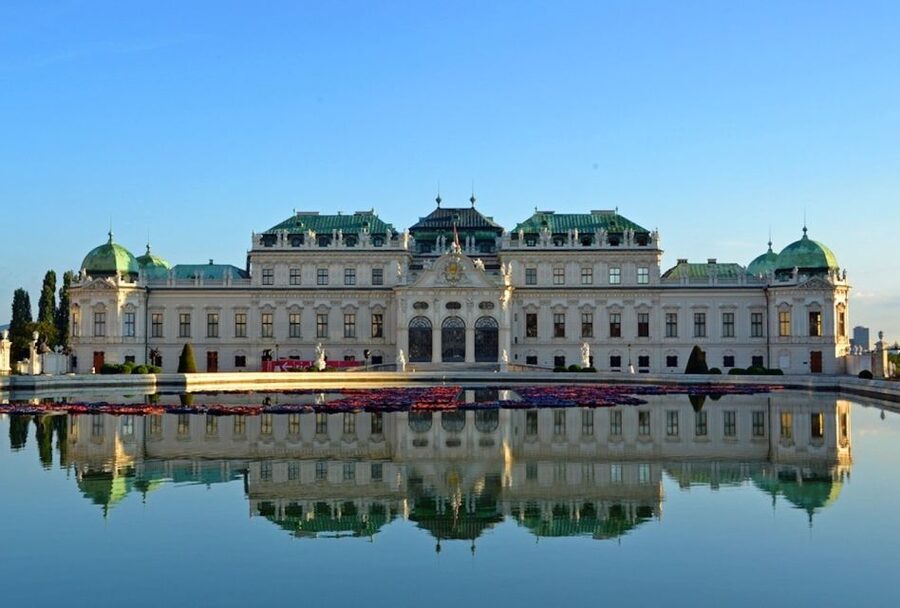
The Neues Burgtor opens onto Heldenplatz, where the Hofburg complex spreads across the city center. The Hofburg was the Habsburg imperial residence, but it is best understood as a collection of wings and institutions rather than a single palace building. The route passes the palace, the Austrian National Library, the Weltmuseum, the presidential palace, and statues of Prince Eugene, Archduke Charles, and Maria Theresa.
This is one of the most impressive parts of the drive, but it can also feel dense. There are many names and buildings in a short stretch. The driver’s commentary is valuable here because it can give you a basic map of who occupied which building and why the area matters.
The car does not include admission to museums or palace interiors. That is not a major drawback for this particular hour, since the itinerary is designed as a moving overview. Still, if you want to visit the National Library, Weltmuseum, or other indoor sights, plan those separately.
Museums, Parliament, and Vienna’s civic center
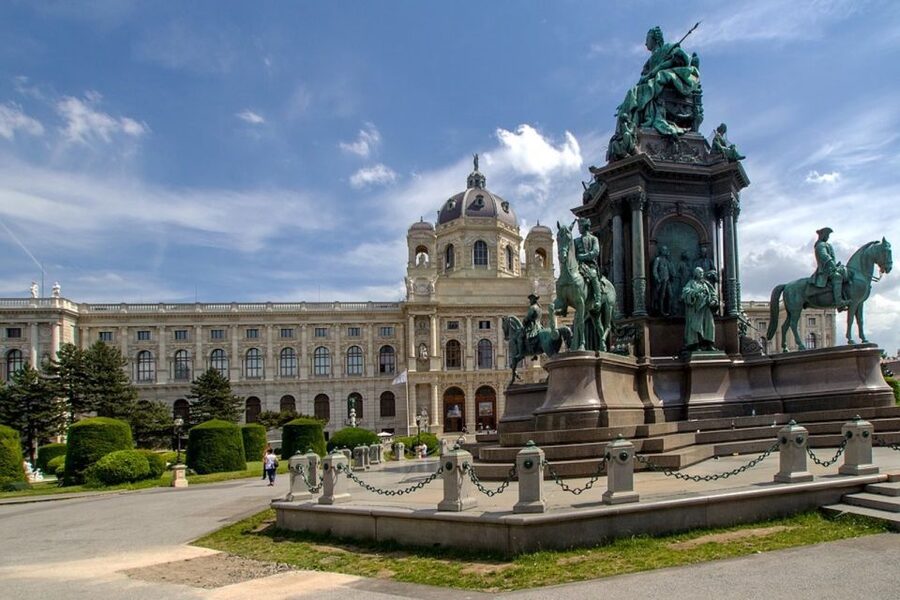
The Ringstrasse continues past the Natural History Museum and the Kunsthistorisches Museum. These matching buildings face one another across Maria-Theresien-Platz and are among Vienna’s most memorable architectural pairs.
From the car, you can appreciate their scale and position even without going inside. The two museums reflect the nineteenth-century imperial ambition to gather art, science, and collections in grand public institutions. For many people, this quick pass is enough to identify the buildings and decide which one deserves a longer visit later.
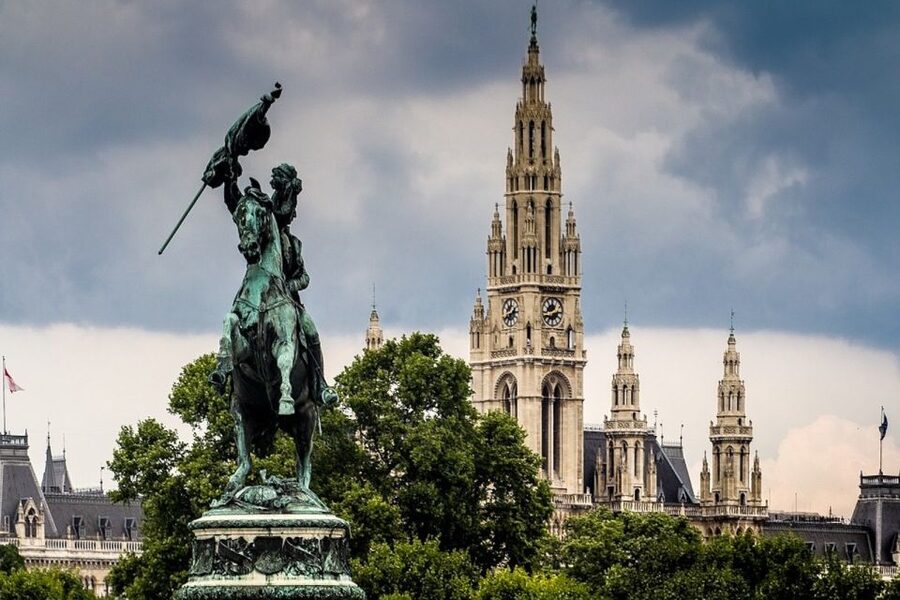
Next come Palais Eppstein, Parliament, the Burgtheater, Rathaus, and the University of Vienna. This section shifts from imperial display to the city’s public and intellectual life. Parliament represents national government, the Burgtheater Vienna’s theatrical tradition, Rathaus municipal power, and the university the city’s long academic role.
The Liebenberg monument and other landmarks add more detail to the route. You may find the sequence hard to absorb if you try to memorize every name. I would use this part as a preview: note the buildings that catch your eye, then return on foot or by public transport when you have time to look closely.
A different way to spend an afternoon here:
- Vienna: Schönbrunn Palace & Gardens Skip-the-Line Tour
★ 4.7 · 7,739 reviews - Vienna: Light of Creation Votive Church Immersive Light Show
★ 4.8 · 6,779 reviews - Vienna Spanish Riding School Guided Tour
★ 4.7 · 6,765 reviews - Vienna: Classical Concert in the World-Famous Musikverein
★ 4.6 · 6,673 reviews
Medieval lanes around Am Hof and Hoher Markt
After the Ringstrasse and imperial district, the car turns into the older center, passing the Drei Mädel Haus, one of the Beethoven houses, Palais Daum Kinsky, Palais Harrach, and Palais Ferstel with Café Central. These buildings show Vienna’s mixture of aristocratic residences, cultural memory, and café life.
Café Central is especially important to the city’s café tradition, but the tour does not include a stop or a meal. You see the setting from the car, which is useful for orientation but not a substitute for sitting down over coffee. If the café is on your list, return at another time and allow for the possibility of a wait.
The route then moves through Am Hof, Hohe Brücke, Salzgries, Marc-Aurel-Strasse, and Hoher Markt. This is where Vienna’s medieval street plan feels more apparent. The lanes are tighter and the sights come in quicker succession than along the Ringstrasse.
At Hoher Markt, look for the Wedding Fountain and the Anker Clock. The Anker Clock is one of the city’s distinctive public timepieces, while the square itself gives you a sense of how the old center differs from the formal imperial boulevard. From a moving car, you may get only a brief view, so listen closely and keep your camera ready.
Stephansdom and the final run through the city
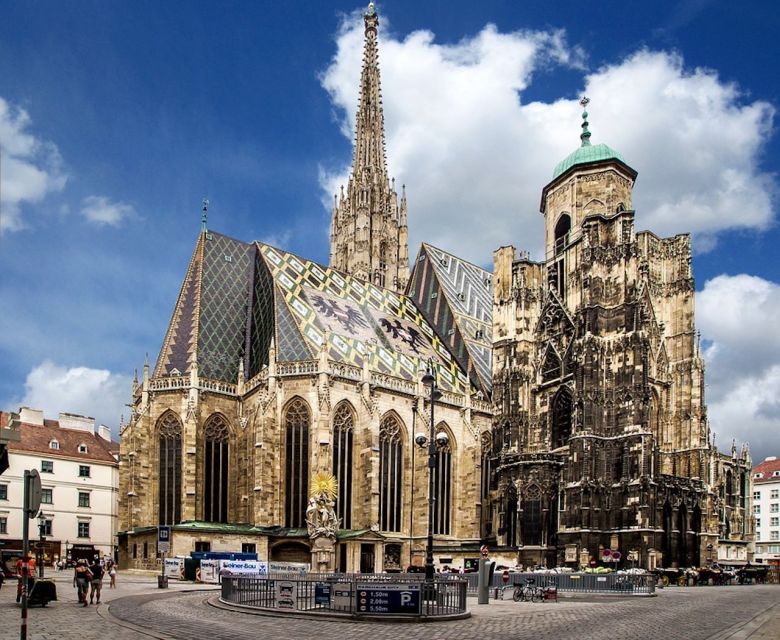
St. Stephen’s Cathedral, or Stephansdom, is the route’s major medieval landmark. Its patterned roof and tall tower make it easy to spot, but a drive-by view cannot show you the full interior, side chapels, or detailed stonework.
I like having Stephansdom near the end of the central-city section because it brings the route back to Vienna’s oldest core after the broad imperial avenues. The surrounding Wollzeile leads toward another change of mood, with shops, historic streets, and links to the city’s famous food and café culture.
The car then passes Stadtpark and the Johann Strauss monument. Stadtpark is closely tied to Vienna’s musical image, and the Strauss statue is one of the city’s most photographed composer memorials. You will also pass Kursalon Hübner, Café Schwarzenberg, Schwarzenbergplatz, the Musikverein, Hotel Imperial, Grand Hotel, Hotel Bristol, the Staatsoper again, Hotel Sacher, and finally the Albertina area.
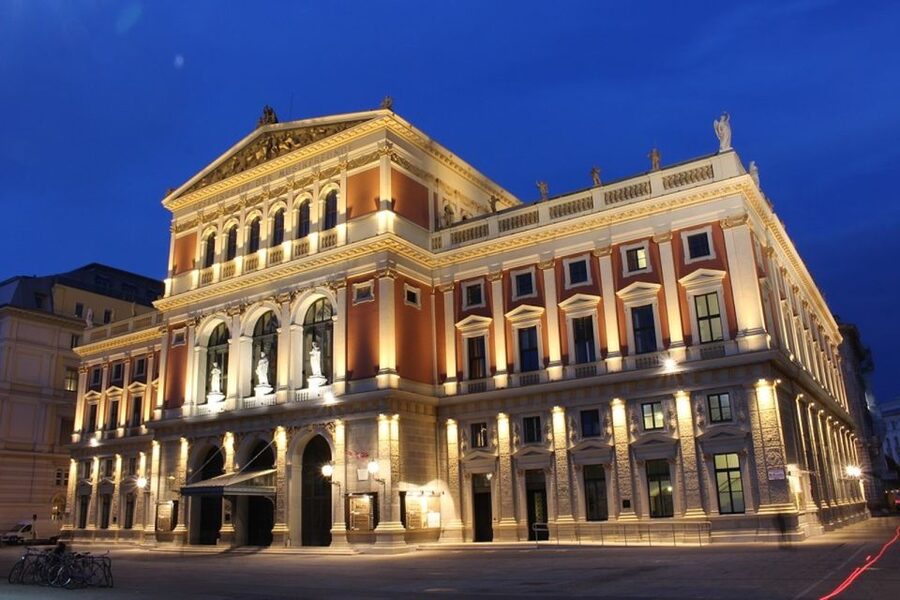
This closing stretch is a compact tour of Vienna’s concert and grand-hotel district. The Musikverein is one of the city’s most important concert halls, while the surrounding hotels and cafés recall the polished public face of the Ringstrasse era. Hotel Sacher brings the route back to a famous Viennese name associated with the city’s café culture.
The repeated appearance of the Staatsoper is a reminder that this is a loop, not a point-to-point transfer. That is useful because you finish where you began, but it also means the hour is devoted to sightseeing rather than transportation to your next destination.
What the one-hour timing really means
A 60-minute tour is long enough to get your bearings, not long enough to study each sight. The itinerary includes dozens of names, so I would not expect every building to receive a full explanation. The best result comes when you treat the ride as a moving introduction to central Vienna.
The short duration is also a strength. If you have only a day in the city, an hour in the car can show you where the Hofburg, museums, Stephansdom, Stadtpark, and major concert venues fit together. You can then choose where to spend the rest of your time.
If you already live in Vienna, the experience can still reveal details you normally pass without noticing. One local birthday guest found that the commentary produced several new moments of recognition, despite already knowing the city. That is a good sign for residents planning a family outing or a special occasion.
The tradeoff is simple: breadth replaces depth. You will see more than you could comfortably walk in an hour, but you will not have time to enter attractions, linger for photographs, or wander side streets.
Price, group size, and practical value
The listed price is $282 for a private group of up to 10 people. At full capacity, that works out to $28.20 per person. For two people, the effective price is $141 each, which makes the tour much harder to justify on cost alone.
This is a group experience, not an inexpensive individual city ride. It makes the most financial sense for a family, reunion, birthday group, or party of friends who would otherwise book several vehicles. The private setting also gives you one shared hour instead of trying to coordinate people across a large tour.
The electric motor is another part of the value. You get the look and feel of a classic car without the exhaust associated with an old petrol vehicle. The car is also marketed for sightseeing in all weather, so you have a practical option when a long outdoor walk is unpleasant.
Admission fees are not included, but that is reasonable because the route does not depend on entering the museums or palaces. You are paying for the vehicle, private arrangement, driver, and commentary.
Free cancellation is available up to 24 hours before the tour for a full refund, and you can reserve now while paying later. Starting times depend on availability, so check the schedule when choosing your date.
Who will get the most from this Vienna tour
I would choose this for a first visit, a family with children, a group with older relatives, or anyone who wants a city overview without a long walk. It is also a pleasant choice for a birthday or other small celebration, especially because a private driver can respond to the group rather than simply delivering a fixed presentation.
The tour suits people who like architecture, city history, music, and famous public buildings. It also works for visitors with limited time who need a quick sense of central Vienna before deciding where to return.
I would not book it as your only cultural activity. You will not get enough time for the Hofburg museums, National Library, Kunsthistorisches Museum, Natural History Museum, or Stephansdom interior. Pair it with one or two focused visits on foot.
English and German commentary are available. The strongest experiences appear to come from drivers who add warmth and humor to the facts, so expect the tone to vary by guide. The supplied information names Manuel as one driver who brings particular energy to the outing.
My verdict on the electric old-timer ride
Book this tour if you are sharing the $282 price among a reasonably large group and want a comfortable, weather-proof introduction to Vienna’s central sights. The private car, broad route, and human touch from the driver are the real advantages.
Think twice if you are traveling alone or as a couple and want detailed history, interior visits, or lots of time on foot. In that case, a walking tour or public sightseeing route may give you more for your money.
For the right group, this is a smart first-hour activity. You see the old city walls, imperial center, Ringstrasse, museums, palaces, concert halls, cafés, and Stephansdom in one tidy circuit. Just verify the meeting address, arrive ready for a drive-by view rather than a series of stops, and use the hour to mark the places you want to explore properly later.
FAQ
How long is the Vienna old-timer car tour?
The tour lasts 60 minutes.
How many people can join the private car?
The private group can include up to 10 people.
What languages are available?
Live commentary is available in English and German.
Is the car electric?
Yes. The tour uses an emission-free electric old-timer car styled after a 1920s classic vehicle.
What sights are included on the route?
The route passes sights including the Albertina, Vienna State Opera, Ringstrasse, Hofburg, Heldenplatz, National Library, Weltmuseum, Parliament, Burgtheater, Rathaus, Stephansdom, Stadtpark, Musikverein, Hotel Sacher, and many monuments, palaces, cafés, and historic hotels.
Does the tour include admission to museums or palaces?
No. Admission fees are not included.
Where does the tour start and finish?
The information gives Cafe Mozart at Albertinaplatz 2 as the start and finish, and also lists 1010 Vienna Herrengasse 12 at the Hotel Radisson Blu as the meeting point. Confirm the exact location when booking.
Can I cancel the booking?
You can cancel up to 24 hours in advance for a full refund. Reserve now and pay later is also available.
Recently added around Vienna
- Vienna: Private tour Mauthausen and Linz★ 4.1 · 3 reviews
- 2-Day Prague Tour from Vienna with private Transfers and Lunches★ 5.0 · 3 reviews
- Vienna Self Guided Sherlock Holmes Murder Mystery Game★ 4.5 · 3 reviews
- Vienna Private Schönbrunn Palace Tour, Extra Rooms and Gardens★ 5.0 · 3 reviews
- Salzburg and Lake Region Private Day Trip from Vienna★ 5.0 · 3 reviews
- Small-group Vienna Wine Tour★ 5.0 · 3 reviews
- True Crime mobile puzzle rally Vienna★ 4.0 · 3 reviews
- Exploring the Gutenstein Alps★ 5.0 · 3 reviews
Vienna Tours, compared.

Vivaldi’s Four Seasons Concert in Karlskirche
Read our review →

Skip-the-cashier-desk-line Giant Ferris Wheel Ride
Read our review →
Schönbrunn Palace & Gardens Skip-the-Line Tour
Read our review →
Light of Creation Votive Church Immersive Light Show
Read our review →

Skip-the-Line Sisi Museum, Hofburg and Gardens Tour
Read our review →