Reviewed · VIENNA TOURS
Vienna: Old Town Sightseeing Tour in a Vintage-Style E-Car
Vienna’s grand center is a lot to cover on foot, especially when you have only a day or two. This one-hour vintage electric-car ride gives you a quick sweep of more than 40 sights, from Stephansdom and the Hofburg to Belvedere Palace and the Votivkirche.
I like the quiet, open-sided car, which lets you look up at the buildings and take photos without sitting behind a coach window. I also like the small group size, capped at 10 people, and the guides, including Angelo, Karl, Kurt, and Anthony, who add local tips and humor. The main drawback is that this is a moving tour, not a stop-and-explore tour, so photo chances are brief and the roof can block views of upper floors.
Key points to know
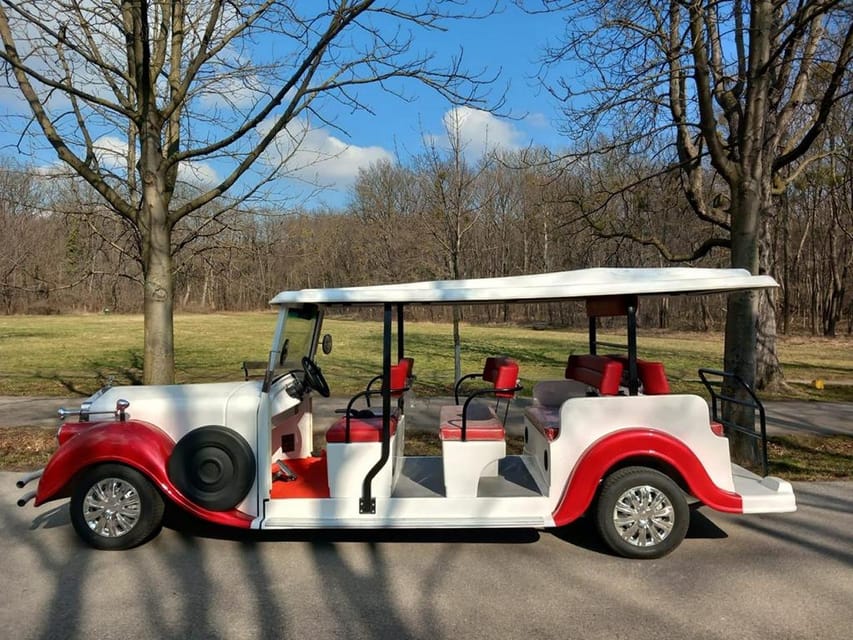
- A 1920s-style electric car: The old-time design fits Vienna’s grand streets, while the electric motor keeps the ride quiet.
- More than 40 sights in one hour: You get a useful first look at the city center and several sights beyond the tight Old Town.
- Open sides for photos: You can point your camera toward the street, though the roof may limit views above you.
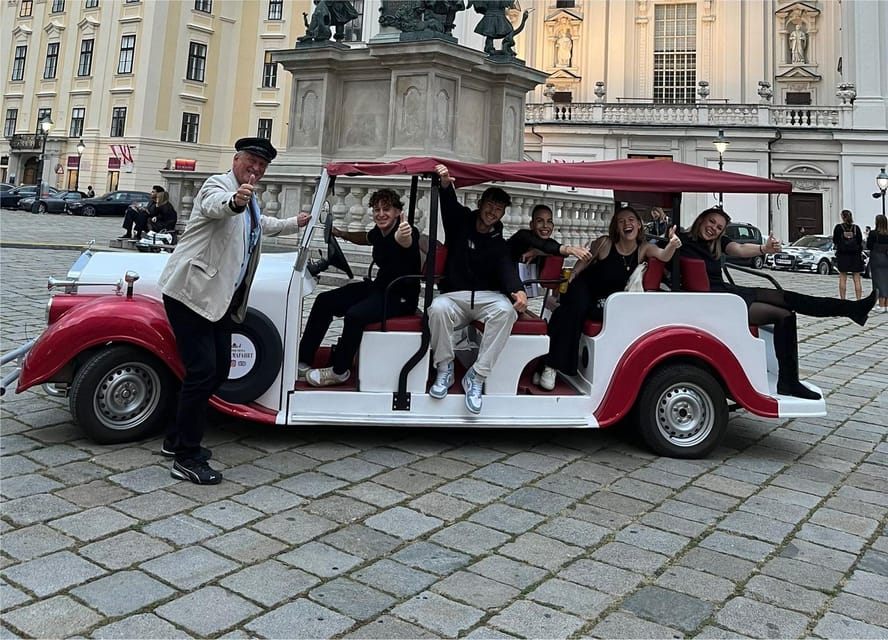
- Small groups of up to 10: The setting feels more personal than a large sightseeing bus.
- English and German commentary: A live guide and audio guide are available in both languages.
- Blankets in chilly weather: Several rides included blankets and warm fur-style seats, but dress for an open vehicle.
Why this little electric car works in Vienna
The car is part transport, part sightseeing prop. Its vintage shape feels at home beside imperial palaces, Baroque churches, and old-fashioned shopfronts. You are not simply being driven from point A to point B. The vehicle itself becomes part of the experience.
The electric motor is a real plus in a city where you want to hear your guide and take in the surroundings. It is quieter than a standard bus, and its compact size lets it move through central streets that would feel cumbersome in a large coach.
I would use this ride as an introduction, not as your main visit to Vienna. In one hour, you can learn what deserves a closer look later. Then you can return on foot to Stephansdom, the Hofburg, the Albertina, or whichever sight catches your eye.
The tour begins outside the Radisson Blu Style Hotel at Herrengasse 12. Look for the vintage-style electric car rather than expecting a conventional bus or a large sign. You need to arrange your own way to the meeting point.
A few more Vienna half-days to weigh up
- Vienna: Vivaldi’s Four Seasons Concert in Karlskirche
★ 4.7 · 14,951 reviews - Vienna: Spanish Riding School Training
★ 3.9 · 9,281 reviews - Vienna: Skip-the-cashier-desk-line Giant Ferris Wheel Ride
★ 4.5 · 7,859 reviews
Freyung, Am Hof, and Vienna’s medieval core
The route starts among some of the oldest and most characterful squares in central Vienna. Freyung has an unusual triangular shape, and its grand buildings give you an early taste of the city’s mix of aristocratic residences, churches, and public spaces.
From there, the car passes Am Hof, a broad square with an imposing architectural frame. The pace lets you see the setting, but not study every facade. Keep your camera ready, since the car may continue before you have found the perfect angle.
Maria am Gestade provides one of the clearest Gothic moments on the route. Its tall, narrow form contrasts with Vienna’s many Baroque buildings, and that contrast is one of the pleasures of this ride. You are not seeing one uniform style. You are moving through centuries of construction in a very small area.
At Hoher Markt, you pass through what is described as Vienna’s oldest square. The square is also home to the Anchor Clock, with its moving figures and copper details. This is the sort of sight that is easy to miss when walking quickly, so listen closely as the car approaches.
Stephansplatz and the city’s central landmark
Stephansplatz is the visual heart of Vienna’s center, dominated by Stephansdom. Even from a moving car, the cathedral is hard to miss. Its Gothic form and tall tiled roof make it one of the strongest photo subjects on the route.
The car continues along Wollzeile, a major central street, before heading toward Stadtpark. This change of setting is useful. You move from the dense medieval center into a more open urban area, seeing how Vienna’s core shifts from narrow streets to formal avenues and green public spaces.
Stadtpark is a place I would save for a separate walk if you have time. From the car, you get an overview rather than a close look. The same is true of the Hochstrahlbrunnen fountain and the monument honoring Soviet Army soldiers. The tour points out these places, but you will not have time to linger beside them.
That is the basic tradeoff throughout the ride. You cover a great deal of ground, but you must treat the commentary as a guide to your next walks rather than a full visit.
Belvedere, Musikverein, and Karlsplatz
The route then reaches some of Vienna’s most recognizable grand buildings. You pass Baroque Belvedere Palace, whose formal style gives you a clear contrast with the Gothic cathedral seen earlier.
The ride does not replace a visit to the palace grounds or galleries. It does, however, help you place Belvedere within the wider city. If you are planning to visit later, the passing view gives you a useful first impression and helps you recognize the building when you return.
The Musikverein follows, an important concert hall associated with the Vienna Philharmonic. Even if you are not attending a concert, it is worth seeing how this celebrated music institution fits into the city’s central fabric.
You also pass St. Charles’s Church, or Karlskirche, beside the waterside area around Karlsplatz. The church is one of the route’s strongest Baroque sights, with a very different profile from Maria am Gestade and Stephansdom.
Karlsplatz adds an Art Nouveau, or Jugendstil, note through its famous metro station. This is a good example of why the route works as an architecture sampler. In a single hour, you see Gothic, Baroque, imperial, and Jugendstil design without needing to cross the city by public transport.
A different way to spend an afternoon here:
- Vienna: Schönbrunn Palace & Gardens Skip-the-Line Tour
★ 4.7 · 7,739 reviews - Vienna: Light of Creation Votive Church Immersive Light Show
★ 4.8 · 6,779 reviews - Vienna Spanish Riding School Guided Tour
★ 4.7 · 6,765 reviews - Vienna: Classical Concert in the World-Famous Musikverein
★ 4.6 · 6,673 reviews
Secession, Kärntnerstrasse, and the Sacher
The car passes the Secession art house, one of Vienna’s best-known Jugendstil buildings. Its unusual dome and clean decorative lines show the city moving into a newer artistic age.
Then the route goes down Kärntnerstrasse, one of the central shopping streets. This is a useful orientation point for first-time visitors. You see the relationship between the formal historic center, shops, hotels, and pedestrian areas.
The Sacher hotel is another quick landmark. You should not expect time for a leisurely stop or a slice of cake during the tour. Instead, think of this section as a moving introduction to the streets you may want to revisit later for coffee, shopping, or a closer look at the architecture.
The car also passes Neuer Markt, where charming shops and central city buildings create a more intimate feel than the large palace squares. The changing scale keeps the ride from becoming a long sequence of identical monuments.
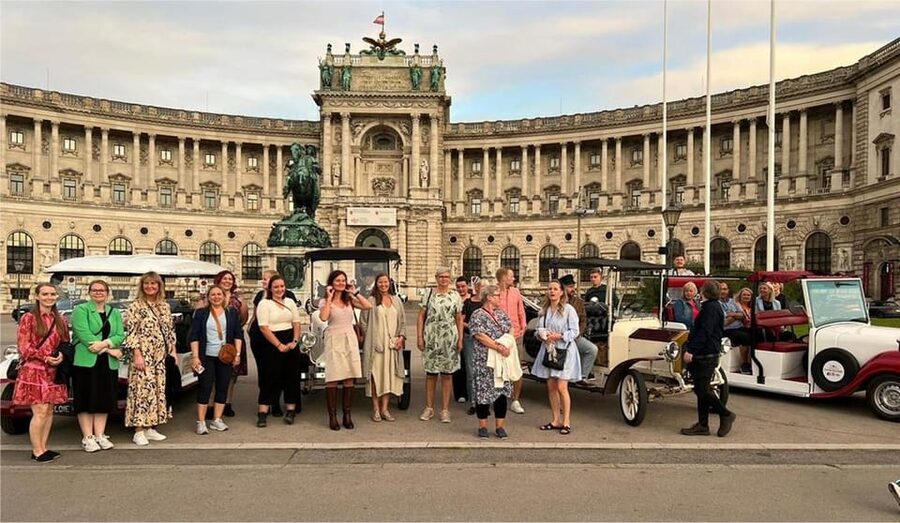
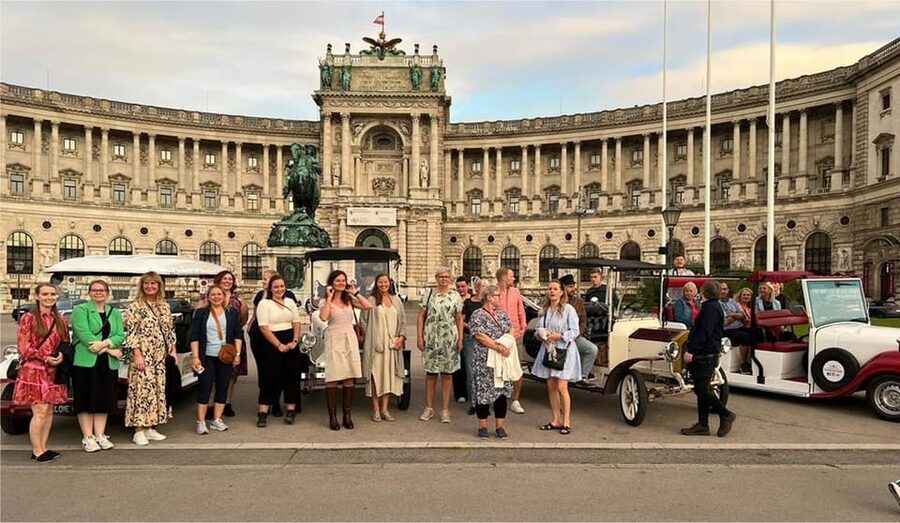
Michaelerplatz and the Hofburg complex
Michaelerplatz is one of the route’s most satisfying urban spaces. Its star-like shape opens toward several major sights, including the Spanish Riding School and the Hofburg complex.
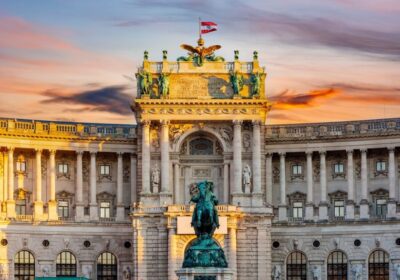
This is where Vienna’s imperial character comes through most strongly. The Hofburg is not one isolated palace but a broad group of buildings and courtyards that grew over time. From the car, you get the sweep of the complex and its position within the center.
Heldenplatz offers one of the grandest views on the trip. The Hofburg rises around the square, and the open space gives you a better sense of the scale of the former imperial center than a narrow street would.
You also pass the Donnerbrunnen fountain and the monument to Friedrich Schiller. These smaller landmarks reward attention because they can be overlooked when your eyes are fixed on the major palace buildings.
The tour continues past the Albertina, the Art History Museum, and the Outer Castle Gate. Each is worth more time than the car can provide, but the sequence gives you a clear map of Vienna’s museum and palace district.
Museums, monuments, and the Ringstrasse
The Art History Museum and Albertina represent two different parts of Vienna’s cultural offer. The Art History Museum occupies a grand historic building, while the Albertina is tied closely to the Hofburg area and is especially easy to combine with a walk through the center.
You also pass the Prinz Eugen Hotel and the National Library. The library is another major imperial-era building, and it helps complete the picture of Vienna as a city shaped by court life, scholarship, music, and art.
The French Gothic Minoritenkirche adds another architectural contrast. Its style is different from the Baroque churches elsewhere on the route, and the fast succession of forms is one reason I recommend paying attention to the guide’s commentary rather than trying to photograph every building.
A Kaiser Karl monument appears along the way, followed by the People’s Garden and Eppstein Palace. These sights are easy to connect later if you plan a walking loop around the Hofburg.
The final stretch includes Parliament, the Burgtheater, Vienna’s university, City Hall, and the neo-Gothic Votivkirche. This part of the ride shows off the Ringstrasse era, when Vienna created monumental public buildings around the historic center.
The Votivkirche is particularly striking from a distance, with its tall neo-Gothic towers. City Hall and the Burgtheater also make strong photographs, though the car’s motion and roof can make it difficult to frame tall buildings. Sit where you have the clearest side view, and do not wait until the last second to raise your camera.
What the one-hour format really gives you
The tour covers a surprisingly broad area for 60 minutes. You see the Old Town, the Hofburg, the museum quarter, Karlsplatz, Belvedere, Stadtpark, and parts of the Ringstrasse without spending the day walking between them.
That speed is useful if you are visiting Vienna for a short stay, traveling with older family members, or trying to decide how to organize your sightseeing. It also gives you a break from pavement without forcing you into a large vehicle.
The ride is less useful if you want detailed art or architectural instruction at every stop. There are no listed walking visits, and the itinerary is built around passing sights. You will hear information and see the exteriors, but you should plan separate visits for the interiors of the Hofburg, museums, churches, and Belvedere.
Several guides have been praised for giving practical food and café suggestions as well as historical details. Kurt, Karl, Angelo, Anthony, and others have been singled out for being funny, helpful, and willing to answer questions. The experience will depend partly on who leads your departure, but the live commentary is central to the tour.
Comfort, seating, and the open-sided design
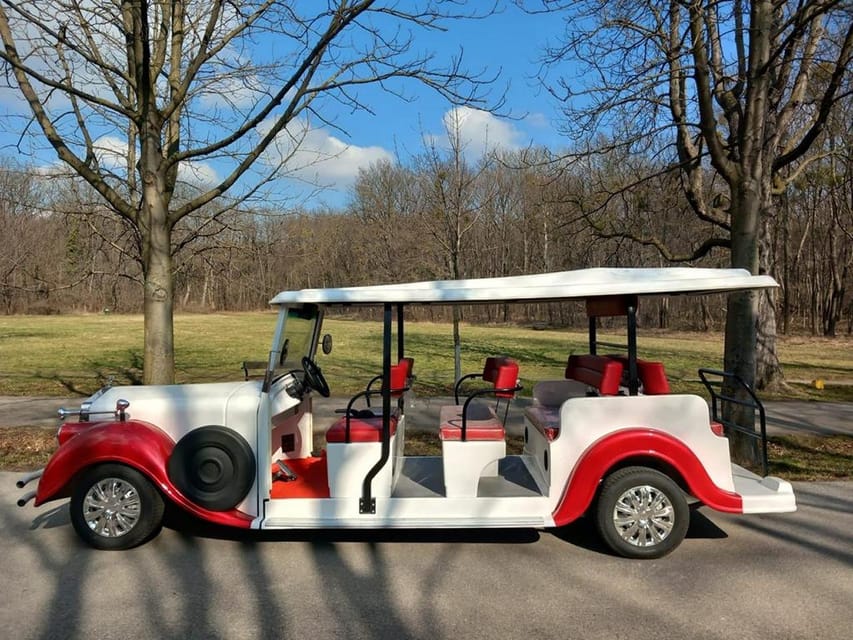
The open sides are excellent for seeing street-level details and taking photos. They also mean that weather matters more than it would on a standard sightseeing bus.
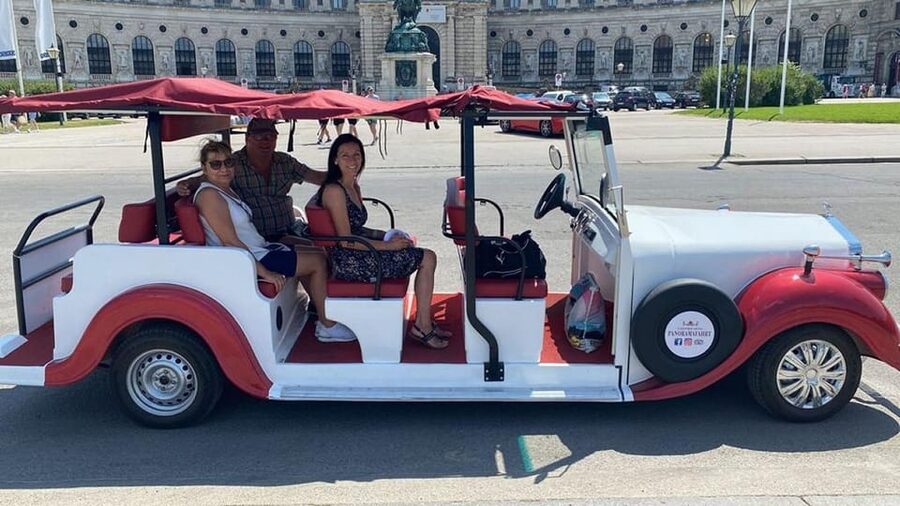
Cold-weather departures can be chilly. Blankets and warm, fur-style seats have been provided on some rides, which makes a real difference, but I would still wear a warm layer in autumn, winter, and early spring. One practical note from the seating arrangement: the rear-facing seat can give you a better view of buildings behind the car, but it may feel less natural if you want to follow the guide’s pointing.
The roof is another small compromise. It offers some shelter, but it can make tall buildings harder to see when the guide indicates something above you. You may need to lean or turn to follow the commentary.
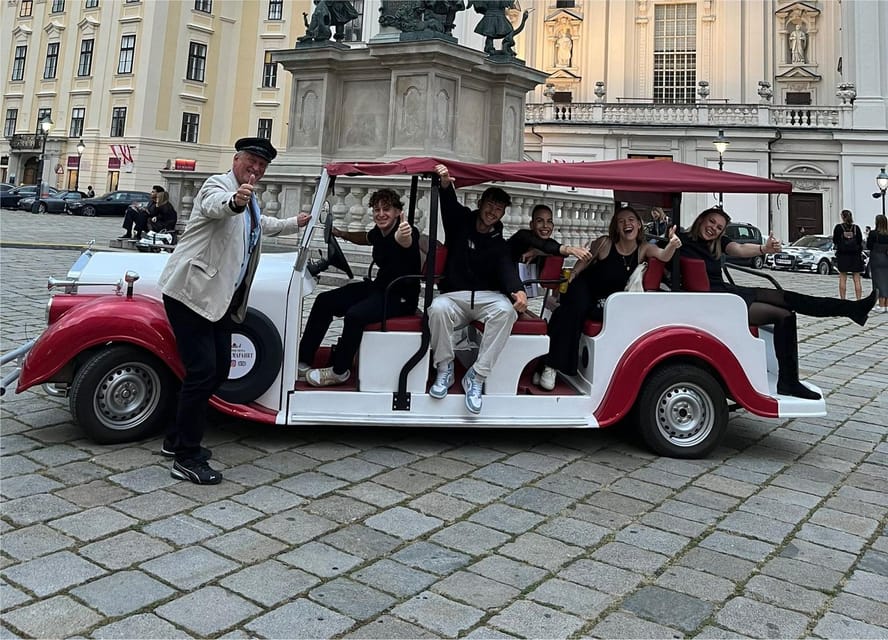
The compact car keeps the group personal. With no more than 10 participants, it is easier to ask a question or request help with a photo than it would be on a large coach. One guide was even praised for taking pictures, though you should not treat that as a guaranteed part of every departure.
The guide makes the difference
The car gets attention, but the guide determines how much you take away. A good guide turns a fast parade of facades into a useful city lesson, pointing out why one church is Gothic, another Baroque, and a metro station Jugendstil.
English and German are available, both through the live guide and the included audio guide. If the group includes both languages, the commentary may take longer as it is given in each language. That can reduce the amount of detail in the hour, but it also makes the tour workable for mixed-language groups.
Names that appear repeatedly in the tour experience include Angelo, Karl, Kurt, Anthony, and Lubow. Their strengths include humor, local recommendations, clear explanations, and friendly help. A guide may also answer questions about where to eat or what to visit next, making this a useful first activity rather than just a sightseeing loop.
I would take notes on places you want to revisit. The best use of the tour is to mark two or three targets, then walk back to them while the route is still fresh in your mind.
Price, timing, and who gets the best value
At $28 per person, the ride is reasonably priced for a one-hour guided orientation, especially when you consider the small group and the number of sights covered. You are paying for convenience, commentary, and a distinctive vehicle, not for entry to any museum or palace.
The value is strongest for a first visit, a short stay, or a day when you want to conserve your energy. It can also suit families and couples who prefer a seated overview, though the open sides deserve attention if the forecast is cold.
The value is weaker if you already know central Vienna well or want long photo stops. A walking tour may give you more time at individual buildings, while public transport can take you to specific sights for less money. This ride earns its price by connecting many places quickly and with less effort.
You can cancel up to 24 hours before departure for a full refund, and the reserve-now, pay-later option keeps your plans flexible. Check the available starting times when booking, since the activity lasts exactly one hour and the schedule matters if you are fitting in museum visits or a concert.
Should you book the vintage electric-car tour?
I would book this as an opening activity, especially if you have limited time in Vienna. It gives you a broad mental map, introduces the city’s major architectural styles, and helps you decide where to spend your next few hours.
Book it if you like local commentary, want to cover a lot without a big bus, or appreciate a little character in your sightseeing vehicle. It is also a good choice for a small group that wants a relaxed introduction with the chance to ask questions.
Skip it if your priority is entering sights, stopping for careful photographs, or hearing a long lecture at each monument. The car keeps moving, and the one-hour schedule is intentionally brisk.
For most first-time visitors, the best plan is simple: take the ride early, note the places that catch your eye, then explore Stephansdom, the Hofburg, Belvedere, or the museums on foot afterward. At 4.5 out of 5 from 1,107 ratings, the experience has a strong record, and its biggest strengths are clear: an engaging guide, a comfortable small vehicle, and a lot of Vienna in very little time.
FAQ
Where does the Vienna vintage electric-car tour begin?
The meeting point is outside the Radisson Blu Style Hotel at Herrengasse 12, 1010 Vienna. Look for the vintage-style electric car.
How long does the tour last?
The sightseeing ride lasts one hour.
How much does the tour cost?
The listed price is $28 per person.
How many people can join the tour?
It is a small-group activity limited to 10 participants.
Which languages are available?
The live guide and audio guide are available in English and German.
Is a guide included?
Yes. The tour includes a live guide, as well as an audio guide in English and German.
Does the tour stop at the sights?
The route passes more than 40 attractions, including Stephansdom, the Hofburg, Belvedere Palace, the Albertina, and City Hall. The activity is a moving sightseeing tour, so no separate attraction visits are included.
Is transportation to the meeting point included?
No. You need to arrange your own transportation to the Radisson Blu Style Hotel.
Can I cancel the booking?
Yes. You can cancel up to 24 hours in advance for a full refund. You can also reserve now and pay later.
Recently added around Vienna
- Vienna: Private tour Mauthausen and Linz★ 4.1 · 3 reviews
- 2-Day Prague Tour from Vienna with private Transfers and Lunches★ 5.0 · 3 reviews
- Vienna Self Guided Sherlock Holmes Murder Mystery Game★ 4.5 · 3 reviews
- Vienna Private Schönbrunn Palace Tour, Extra Rooms and Gardens★ 5.0 · 3 reviews
- Salzburg and Lake Region Private Day Trip from Vienna★ 5.0 · 3 reviews
- Small-group Vienna Wine Tour★ 5.0 · 3 reviews
- True Crime mobile puzzle rally Vienna★ 4.0 · 3 reviews
- Exploring the Gutenstein Alps★ 5.0 · 3 reviews
Vienna Tours, compared.
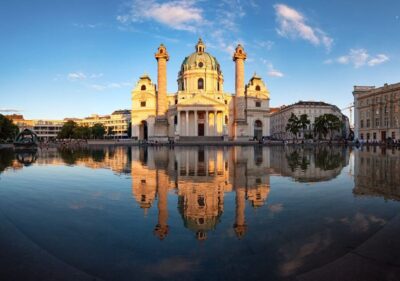
Vivaldi’s Four Seasons Concert in Karlskirche
Read our review →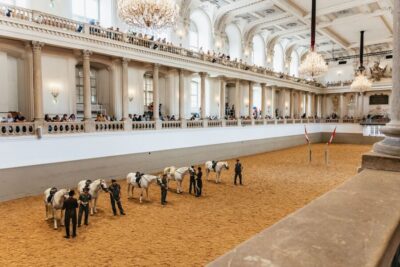
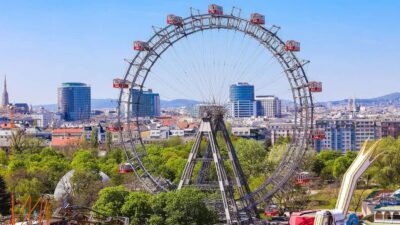
Skip-the-cashier-desk-line Giant Ferris Wheel Ride
Read our review →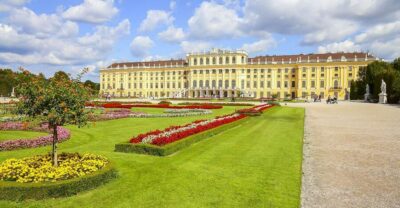
Schönbrunn Palace & Gardens Skip-the-Line Tour
Read our review →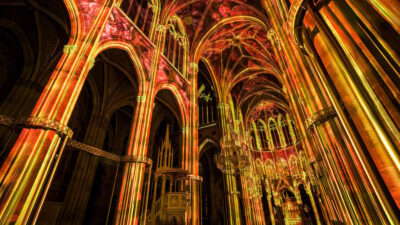
Light of Creation Votive Church Immersive Light Show
Read our review →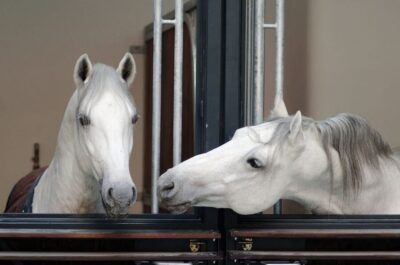
Skip-the-Line Sisi Museum, Hofburg and Gardens Tour
Read our review →