
Reviewed · HOFBURG AND SISI MUSEUM TOURS
Vienna: Imperial Treasury in the Hofburg Palace
The most striking part of Vienna’s Imperial Treasury is the sheer variety. In one compact museum, you move from the Austrian Imperial Crown and Holy Roman Empire regalia to Habsburg wedding jewels, religious relics, ceremonial clothing, and objects once treated as proof of legendary events. It is less a single display of royal jewelry than a record of how rulers used religion, ceremony, and precious materials to project power.
I like the compact size, since you can see the main rooms in about an hour, or spend closer to 90 minutes if you read carefully. I also like the unusual objects: the Holy Lance, the huge agate bowl known as the Holy Grail, the horn of a unicorn, and an emerald described among the largest in the world. The main drawback is the ticket exchange. A printed voucher is required, and several visitors found they still had to wait at the counter, so this is not always a true skip-the-line visit.
Key points to know before you go
- The Austrian Imperial Crown is the star: See one of Europe’s most recognizable royal crowns, along with the regalia of the Holy Roman Empire.
- The collection goes well beyond jewels: Religious relics, Burgundy treasures, Golden Fleece objects, ceremonial tabards, and chamberlains’ keys add welcome variety.
- Plan on one to one and a half hours: You can move quickly, but the labels and optional audio material reward a slower visit.
- The museum is in the Swiss Wing: You enter through the oldest part of the Hofburg Palace, right in central Vienna.
- Guidance is optional: An audio guide may be available, while the basic admission does not include a guided tour.
- Children under 19 generally enter free: Adult admission is listed at $18, making the visit good value if imperial history interests you.
What makes the Imperial Treasury worth your time
The Imperial Treasury, or Schatzkammer, occupies the Swiss Wing of the Hofburg Palace. This is the oldest part of the sprawling palace complex, which gives the visit a fitting setting before you even reach the cases.
I find the museum most rewarding when you treat it as a lesson in royal display rather than simply a room full of expensive objects. The Habsburgs ruled across centuries and territories, and their treasures helped make that authority visible. A crown was not only a piece of gold. A relic was not only a religious object. A ceremonial garment showed exactly who could stand where, wear what, and take part in a royal ritual.
The collection also helps explain why Vienna’s other museums, churches, and palace rooms keep referring back to the Habsburgs. If you visit early in your stay, later sights around the city can make more sense because you have already seen the symbols of the dynasty’s authority.
More Hofburg and Sisi visits:
- Vienna: Skip-the-Line Sisi Museum, Hofburg and Gardens Tour
★ 4.8 · 5,918 reviews - Vienna: Hofburg and Empress Sisi Museum Guided Tour
★ 4.7 · 1,460 reviews - Vienna: Skip-the-Line Hofburg and Empress Sisi Museum Tour
★ 4.8 · 801 reviews
Entering the Swiss Wing at the Hofburg
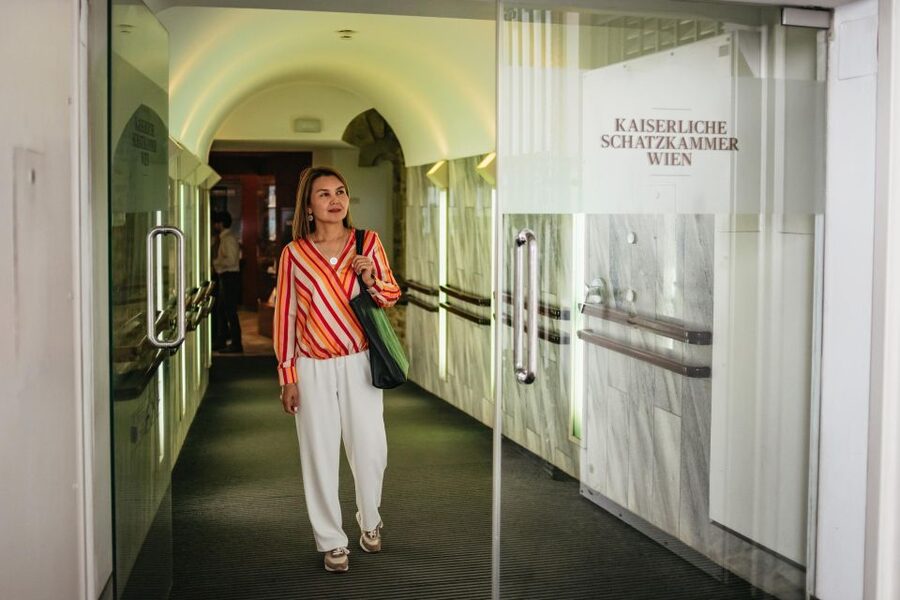
Your meeting point is the Swiss Wing inside the Vienna Hofburg Palace. The Hofburg is a large complex, and finding the correct entrance can take some attention. Clear directions around the palace have been a weak point, so allow extra time rather than arriving at the last minute.
The admission is valid for one day, but the actual museum visit is much shorter. Most people can see the principal displays in about an hour. Give yourself 90 minutes if you want to read the labels, use an audio guide, and pause at the smaller objects.
The ticket price is $18 per person. That is fair for a central Vienna museum with this level of royal and religious material, especially if you care about European dynasties, ceremonial art, or unusual historical objects. It is less compelling if you are mainly looking for grand palace rooms or a long guided tour, since the visit itself is relatively compact and the basic ticket does not include a guide.
One practical point matters: the voucher must be printed. Some people have also had to exchange the voucher for an actual ticket at the counter, which can mean waiting in line. Buying in advance may still help you secure admission, but do not assume it automatically lets you walk straight inside.
The Austrian Imperial Crown and Holy Roman Empire regalia
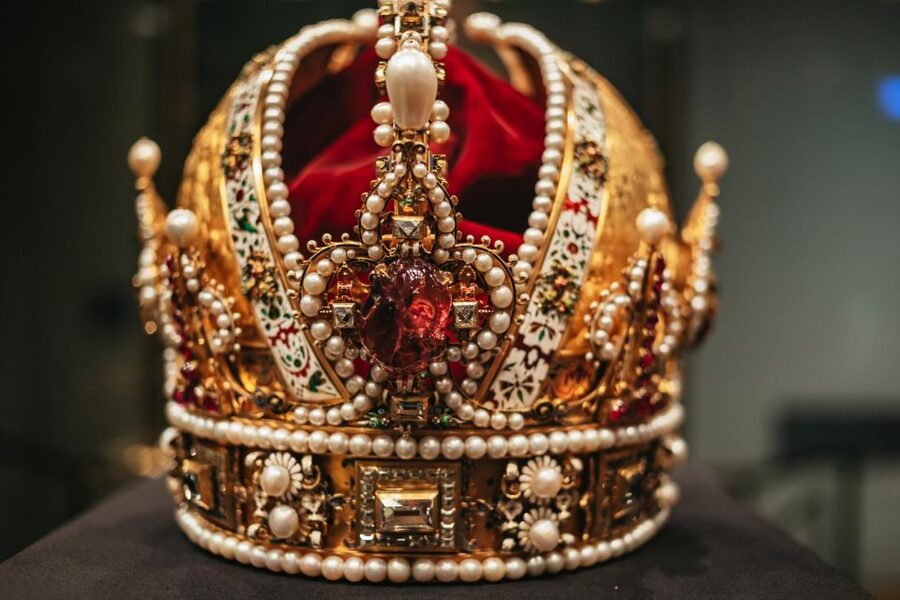
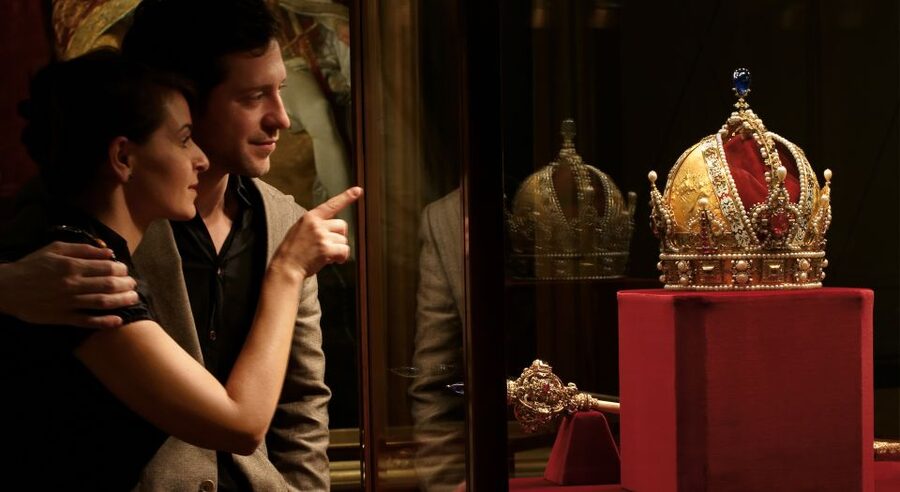
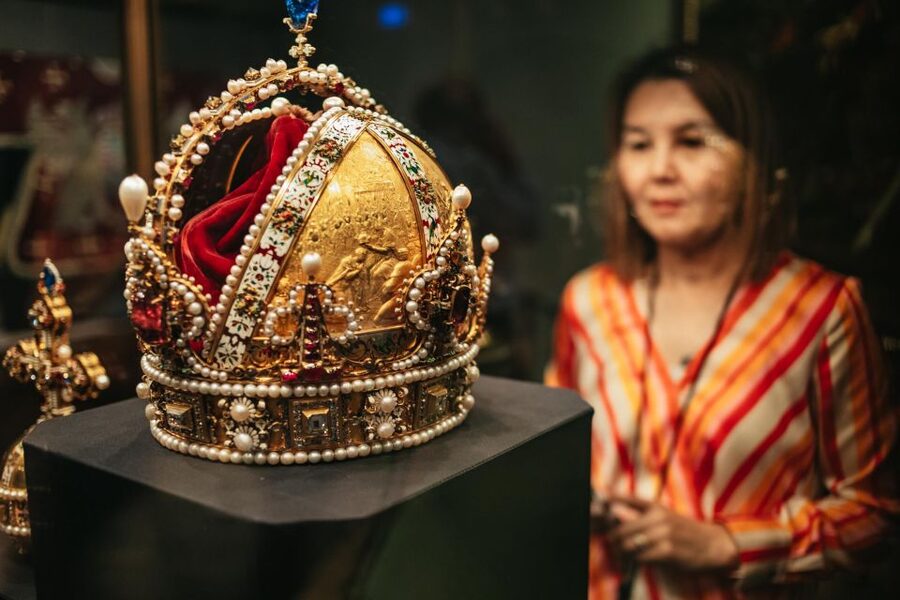
The Austrian Imperial Crown is the main event for many visitors. Its design is formal and powerful rather than delicate, with a shape that immediately communicates ceremony and rank. This is the kind of object that makes the price of admission easy to understand: you are looking directly at a symbol built for public authority, not a modern decorative replica.
Nearby, the crown jewels of the Holy Roman Empire add a wider political story. The Imperial Crown and related regalia belonged to an institution that ruled across much of central Europe for centuries. The objects are important not only because they are old or precious, but because they were used to give a vast and often complicated political system a visible center.
Take time to look at the workmanship, but also ask what each object was meant to do. Crowns, scepters, orbs, robes, and ceremonial pieces turned a ruler into a public figure with a carefully controlled image. The display is strongest when you connect the metalwork to that purpose.
The rooms are well organized overall, though the route can feel a little confusing at first. Signs and labels provide useful information, but the story does not always move in a perfectly clear line. An audio guide can help you connect the objects and understand why they belong together.
Habsburg jewels, Sisi, and court ceremony
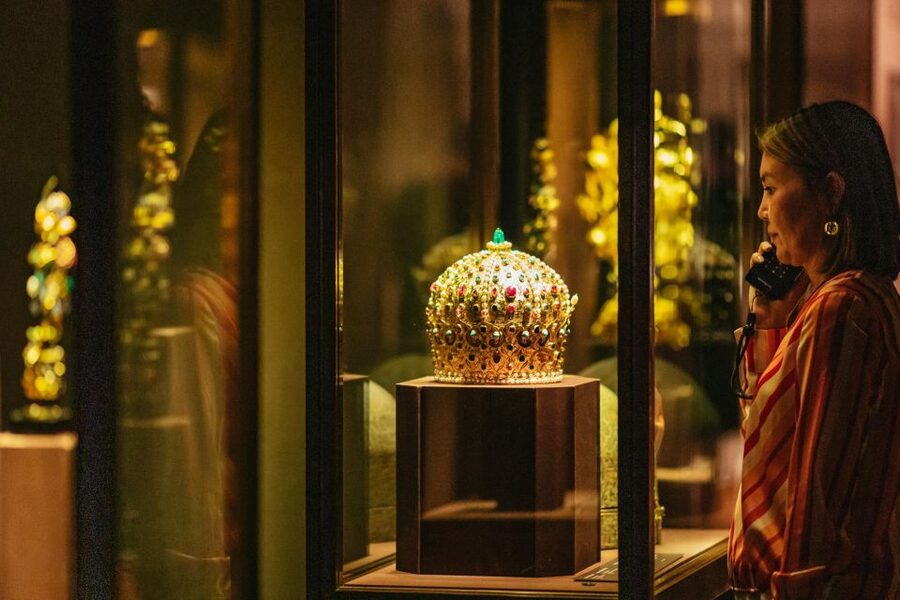
The Treasury includes jewelry connected with Habsburg empresses and princesses, including parts of the original jewelry associated with Empress Elisabeth, better known as Sisi. These pieces offer a more personal counterpoint to the official crowns.
Sisi is one of Vienna’s most familiar historical figures, and it is easy for her story to become romanticized. The jewelry helps bring the imperial court back to physical objects: adornments worn by real people for public appearances, ceremonies, and family events. I find this section useful if you are also visiting other Hofburg sights connected with Franz Joseph and Elisabeth.
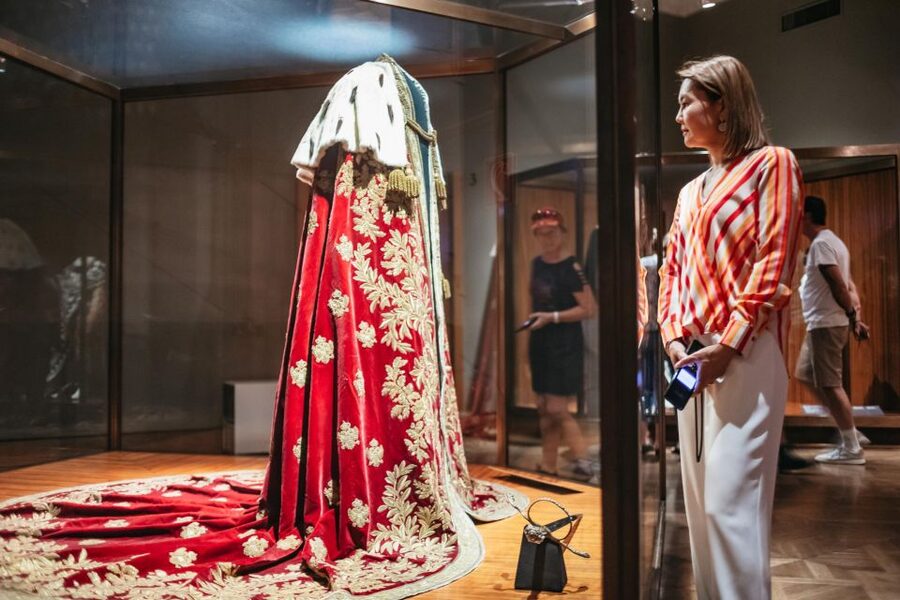
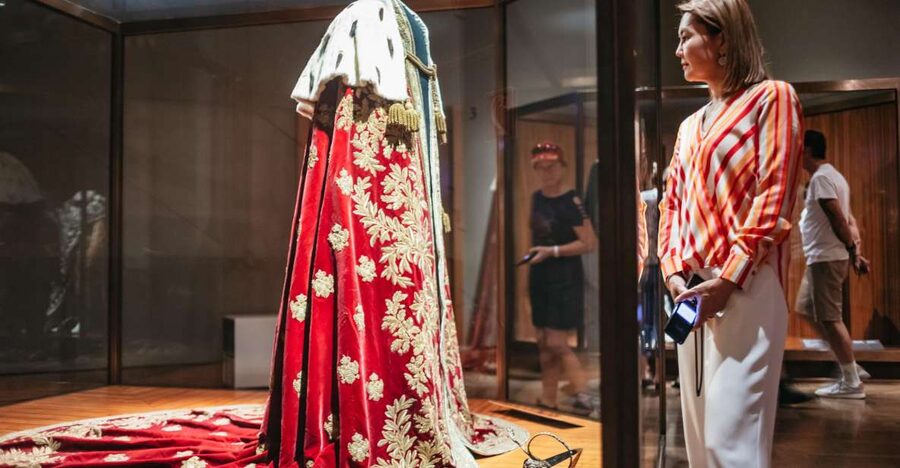
The collection is not limited to necklaces and gemstones. Ceremonial clothing, tabards, keys, and insignia show how court life worked as a system of visible rules. One particularly memorable group includes the tabards and chamberlains’ keys. They may sound less glamorous than a crown, but they reveal how access and rank were managed inside the imperial household.
This variety is one of the museum’s best features. If every case held only gold and diamonds, the experience could become tiring. The mix of clothing, tools of office, religious pieces, and personal jewelry keeps the visit moving.
A few more Vienna half-days to weigh up
- Vienna: Vivaldi’s Four Seasons Concert in Karlskirche
★ 4.7 · 14,951 reviews - Vienna: Spanish Riding School Training
★ 3.9 · 9,281 reviews - Vienna: Skip-the-cashier-desk-line Giant Ferris Wheel Ride
★ 4.5 · 7,859 reviews - Vienna: Schönbrunn Palace & Gardens Skip-the-Line Tour
★ 4.7 · 7,739 reviews
Religious relics and legendary objects
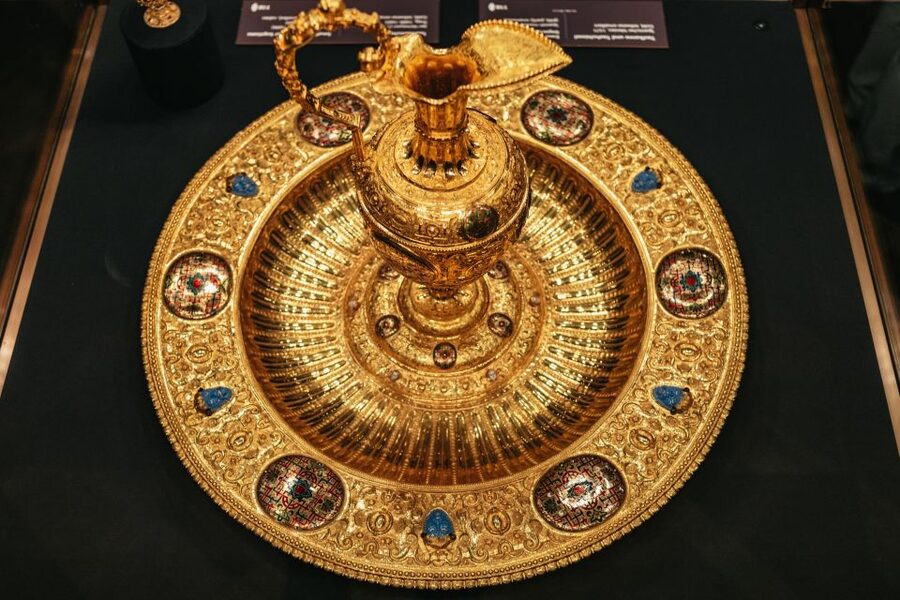
The Imperial Treasury also holds objects that sit between faith, legend, and political history. The Holy Lance, described as dating from the eighth century, is among the most famous. Its importance comes from the story attached to it as much as from the object itself.
The large agate bowl known as the Holy Grail is another unusual highlight. The bowl is presented as one of the world’s largest agate vessels, and its size makes it memorable even before you consider the legend surrounding it. The horn of a unicorn adds a touch of medieval imagination to a collection otherwise filled with carefully documented royal property.
These objects are best understood as evidence of what powerful people once believed, valued, or wanted others to believe. A royal treasury did not separate political authority neatly from religious devotion and legend. Sacred objects could support a ruler’s status, while rare natural materials could be treated as signs of divine favor or marvels from distant places.
The collection also includes a major emerald, described as one of the largest in the world and as the largest cut emerald in the collection’s highlights. It is worth looking beyond the word emerald and noticing the scale, color, and setting. Precious stones here are not simply luxury goods. They are part of a long tradition of collecting objects that few people could own or even see.
Burgundy, the Golden Fleece, and dynastic marriage
The Treasury’s Burgundy collection adds another layer to the Habsburg story. These objects connect the dynasty to the wealth and court culture of 15th-century Burgundy, a region famous for its powerful rulers and elaborate ceremonies.
The Order of the Golden Fleece is another important group. Orders such as this one created bonds among rulers and elite nobles, using badges, robes, and rituals to turn political loyalty into something visible. The objects can seem formal at first, but they make more sense when you view them as tools of diplomacy and status.
This is also where the collection shows how dynasties grew through marriage, inheritance, and carefully arranged alliances. The Habsburgs did not build their power through military force alone. Treasures from Burgundy and other territories point to the family’s connections across Europe.
If you are interested in dynastic politics, do not rush past the ceremonial objects. They may not have the instant appeal of a diamond, but they explain how the royal world operated. You will get more from the Treasury if you give equal attention to the symbols of office and the personal ornaments.
The cradle of Napoleon II
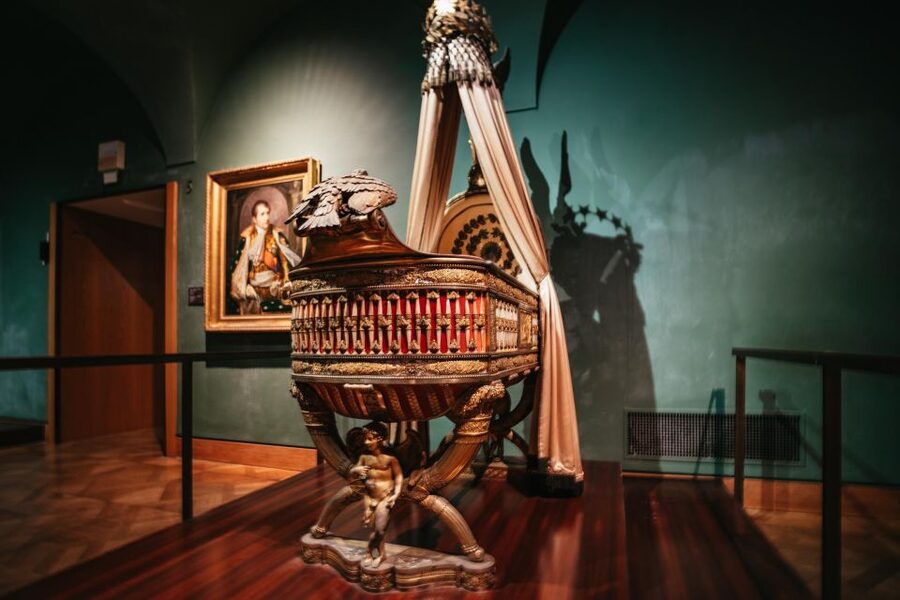
One of the more unexpected objects is the cradle of Napoleon II, the son of Napoleon Bonaparte and Marie Louise of Austria. It gives the museum a direct link to the complicated relationship between the Habsburg family and Napoleonic France.
The cradle is also a useful reminder that the collection is not only about objects used during public ceremonies. Some pieces relate to childhood, family, inheritance, and the private side of dynastic life. Napoleon II’s position was political from birth, and an object associated with his infancy carries that tension.
You may find this section especially interesting if you are visiting Vienna with an interest in Napoleon, Marie Louise, or European royal families. It broadens the story beyond the familiar Austrian crown and shows how the Treasury reaches into the family connections of the wider continent.
How to get the most from the displays
The museum is easy enough to explore without a guide, but the information is better with help. The basic admission does not include an audio guide or guided tour. Some visits have included an audio guide at no extra cost, while the activity details list it as not included, so check the current arrangement before you arrive.
An audio guide is worth considering if you want dates, names, and explanations of the objects. It can also help with the less obvious pieces, such as ceremonial clothing and court insignia. Without added guidance, you can still enjoy the beauty of the objects, but the political and religious connections may be less clear.
A private guide is another option, though it is not part of the standard entry. Guides named Petee and Alex received especially strong personal praise for giving useful background on the Habsburgs, Franz Joseph, and Sisi. If you arrange a guided visit, ask whether the guide is included and confirm the group rules in advance.
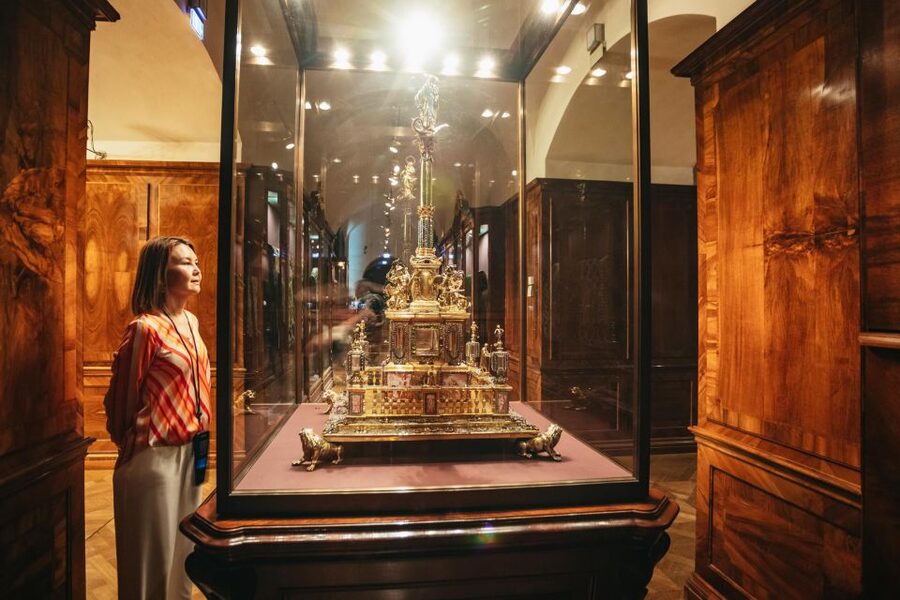
The exhibition lighting has not suited everyone. A few displays can be dim, which protects sensitive objects but may make fine details harder to see. Move slowly, change your position, and give your eyes time to adjust before deciding that you have seen all the detail.
Timing, crowds, and access
The experience is described as a small group activity limited to 10 participants, but the museum visit itself is not a long group excursion. You generally explore the displays at your own pace rather than following a fixed day-long program.
The Treasury can be a good choice when you want a focused indoor stop between larger Hofburg sights. Several people found it uncrowded and easy to navigate once inside. Still, the ticket counter and palace layout can create delays, so your total time should include more than the hour or 90 minutes spent in the exhibition.
Wheelchair access is available. Children and young people under 19 generally enter free, although school groups under 19 must be registered through the museum’s booking department. Adult groups of more than 10 have special rules for complimentary guide admission, while groups under 10 do not receive free guide places under the stated policy.
The flexible cancellation policy allows cancellation up to 24 hours in advance for a full refund, and reserve-now, pay-later booking is available. Those terms are useful if your Vienna schedule is still changing, but the printed-voucher rule remains important.
Who should book the Imperial Treasury?
I would choose this museum if you like crowns, royal families, religious art, old ceremonies, or objects with unusual stories attached to them. It is also a strong choice for anyone already planning to visit the Hofburg, since the Treasury adds meaning to the palace’s imperial rooms and to other Habsburg sights around Vienna.
Families can manage the visit well because it is not too large. Younger children may respond best to the crown, emerald, unicorn horn, and Holy Grail story, while older children and adults can follow the political background.
I would hesitate if you dislike museums that depend on labels or audio material. The objects are impressive on their own, but the collection’s full value comes from understanding who owned them, how they were used, and why certain relics mattered. I would also not choose it as your only palace experience in Vienna. It shows the objects of power, not the full range of imperial rooms and daily court life.
Should you book it?
For $18, the Imperial Treasury offers a focused and unusual look at Habsburg power. The Austrian Imperial Crown and Holy Roman Empire regalia provide the major spectacle, while Sisi’s jewelry, the Golden Fleece collection, Burgundy objects, Napoleon II’s cradle, and legendary relics give the visit real range.
Book it if you can spare 60 to 90 minutes and are willing to handle a possibly confusing ticket exchange. Arrive with a printed voucher, allow time to find the Swiss Wing, and consider an audio guide or private guide if you want more than a quick look at beautiful objects. If you are already exploring the Hofburg, this is one of the most useful add-on visits in the complex.
FAQ
How much does admission to the Imperial Treasury cost?
Admission is listed at $18 per person. Children and young people under 19 generally receive free admission.
How long does the visit take?
The activity is valid for one day, but the museum visit itself usually takes about one hour. Allow around 90 minutes if you want to read the descriptions and use an audio guide.
Is a guided tour included?
No. The entrance ticket includes admission only. A guided tour is not included, although you may come with your own guide. An audio guide is also listed separately from the entrance ticket.
Where do I meet for the visit?
The meeting point is the Swiss Wing in Vienna’s Hofburg Palace. Allow extra time to find the correct part of the large palace complex.
Do I need a printed voucher?
Yes. A printed voucher is required. You may also need to exchange it for an admission ticket at the counter, so advance booking does not always mean entering without a wait.
Is the Imperial Treasury wheelchair accessible?
Yes, the Imperial Treasury is wheelchair accessible.
Recently added around Vienna
- Vienna: Private tour Mauthausen and Linz★ 4.1 · 3 reviews
- 2-Day Prague Tour from Vienna with private Transfers and Lunches★ 5.0 · 3 reviews
- Vienna Self Guided Sherlock Holmes Murder Mystery Game★ 4.5 · 3 reviews
- Vienna Private Schönbrunn Palace Tour, Extra Rooms and Gardens★ 5.0 · 3 reviews
- Salzburg and Lake Region Private Day Trip from Vienna★ 5.0 · 3 reviews
- Small-group Vienna Wine Tour★ 5.0 · 3 reviews
- True Crime mobile puzzle rally Vienna★ 4.0 · 3 reviews
- Exploring the Gutenstein Alps★ 5.0 · 3 reviews
Hofburg and Sisi Museum Tours, compared.
Skip-the-Line Sisi Museum, Hofburg and Gardens Tour
Read our review →
Skip-the-Line Hofburg and Empress Sisi Museum Tour
Read our review →
“Sisi’s Amazing Journey” Virtual Reality Experience
Read our review →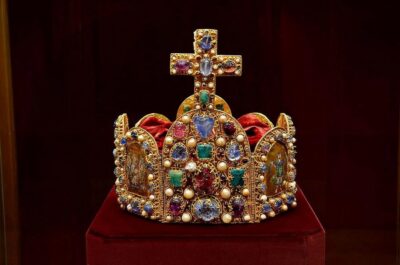
Imperial Treasury & New Hofburg Palace Combo Ticket
Read our review →
New Hofburg Palace Audio-Guided Tour & Entry Ticket
Read our review →
Skip-the-Line Sisi Museum, Hofburg and Gardens Tour Vienna
Read our review →
Browse the lists this tour appears in